Want more images or videos?
Request additional images or videos from the seller
1 of 5

Nicolas Mignard
Portrait of a Man

$127,641.54
£93,000
€110,632.15
CA$179,608.49
A$181,080.07
CHF 103,109.22
MX$2,201,104.29
NOK 1,217,154.60
SEK 1,213,660.42
DKK 826,962.34

About the Item

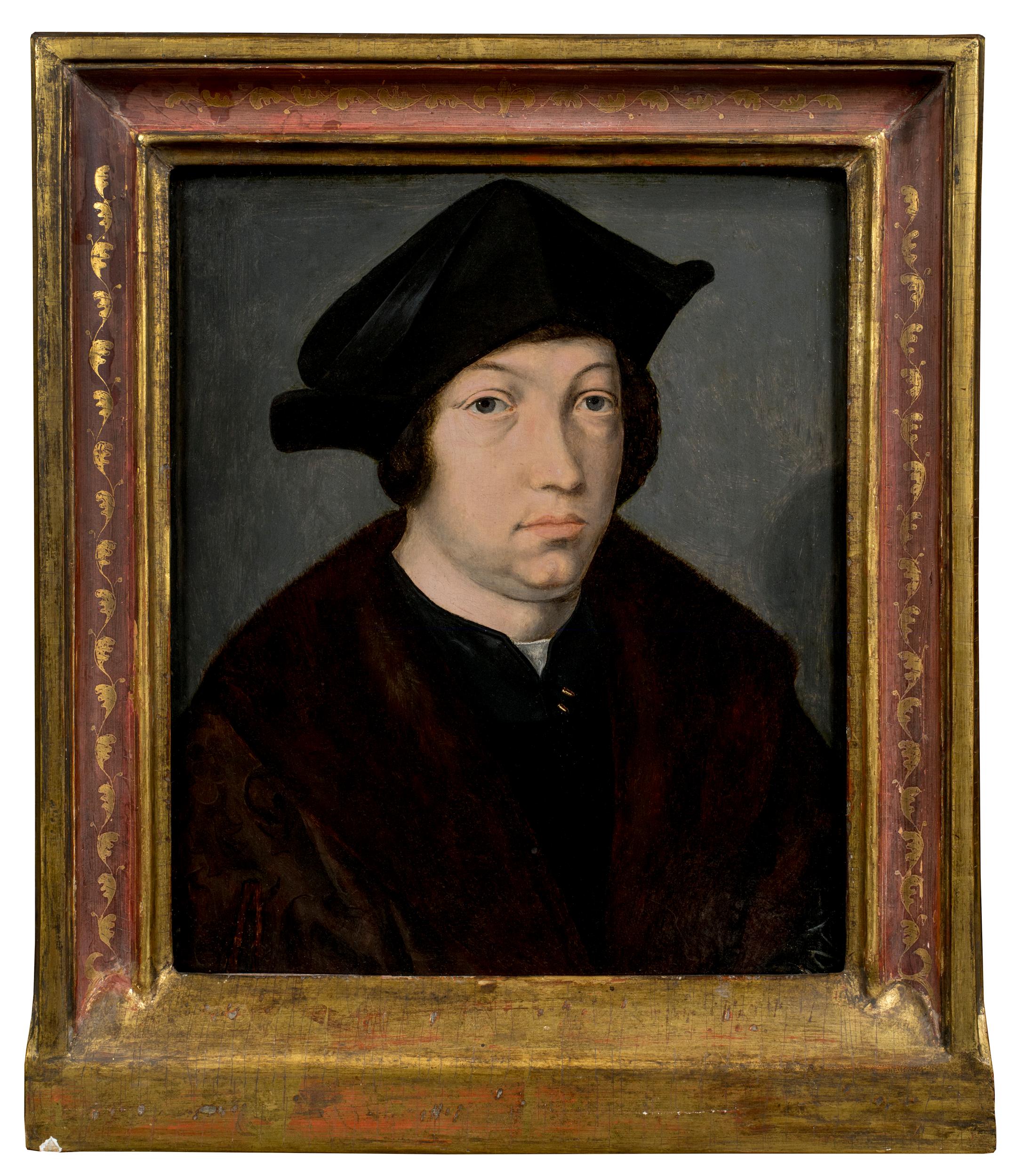
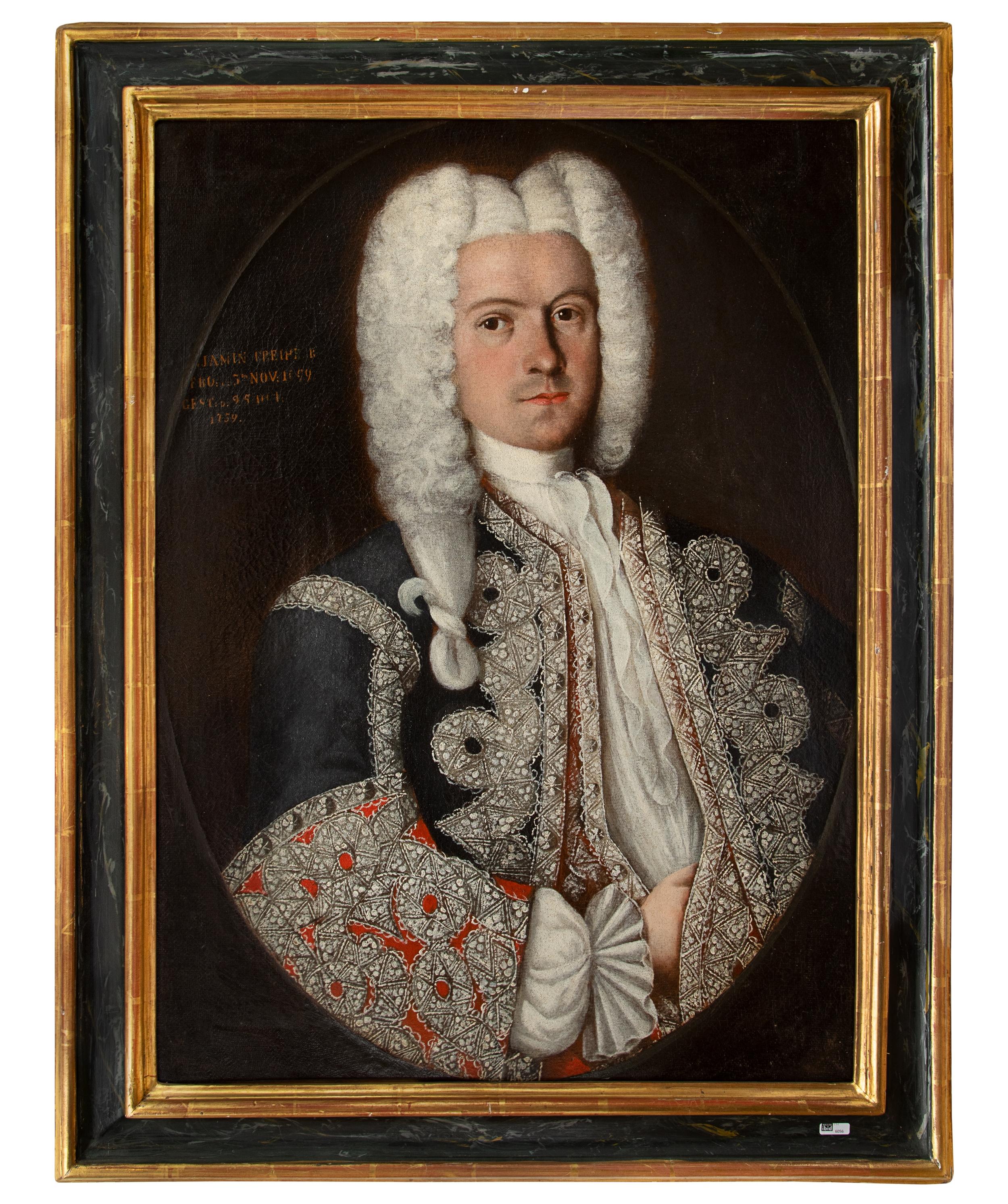
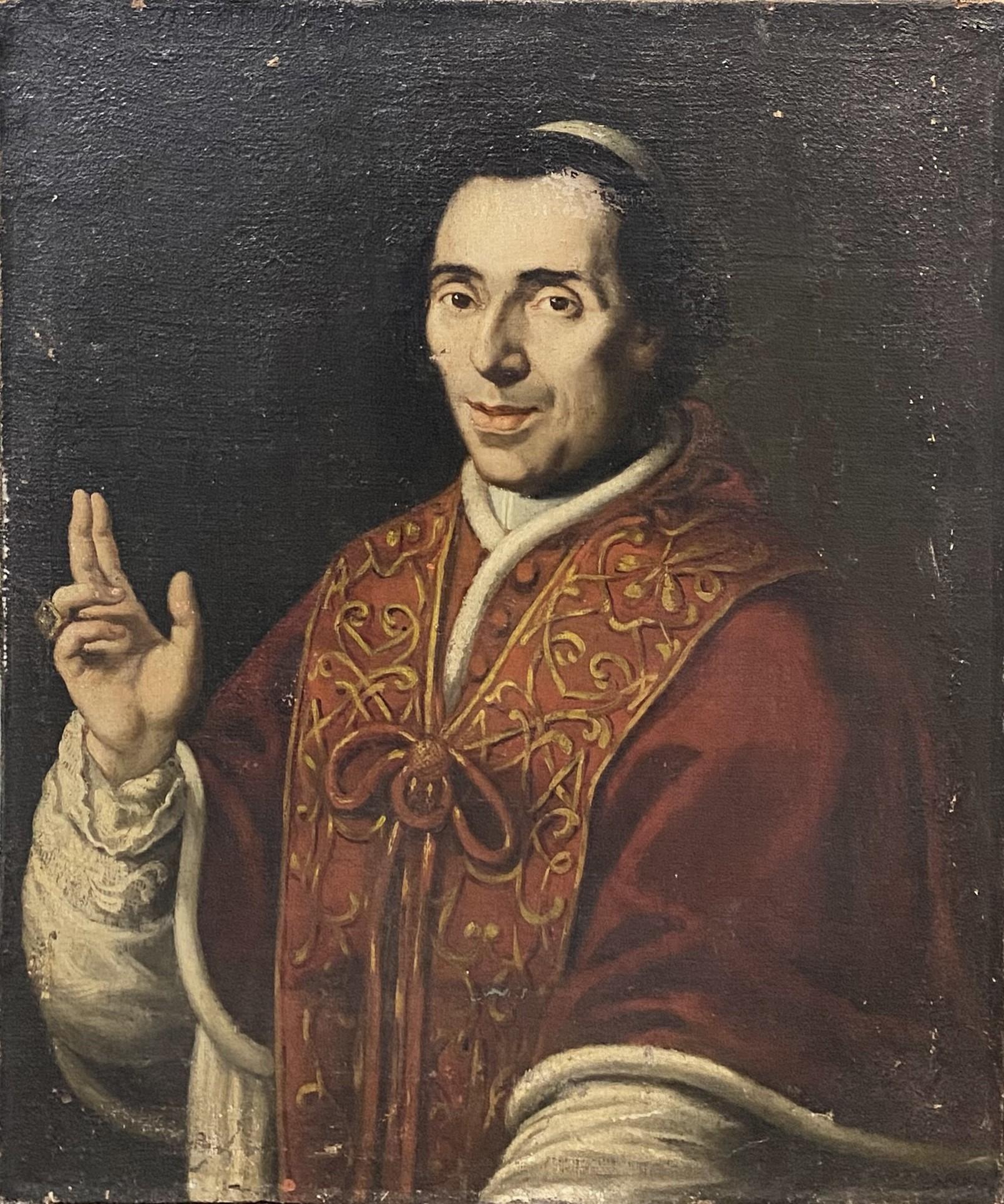
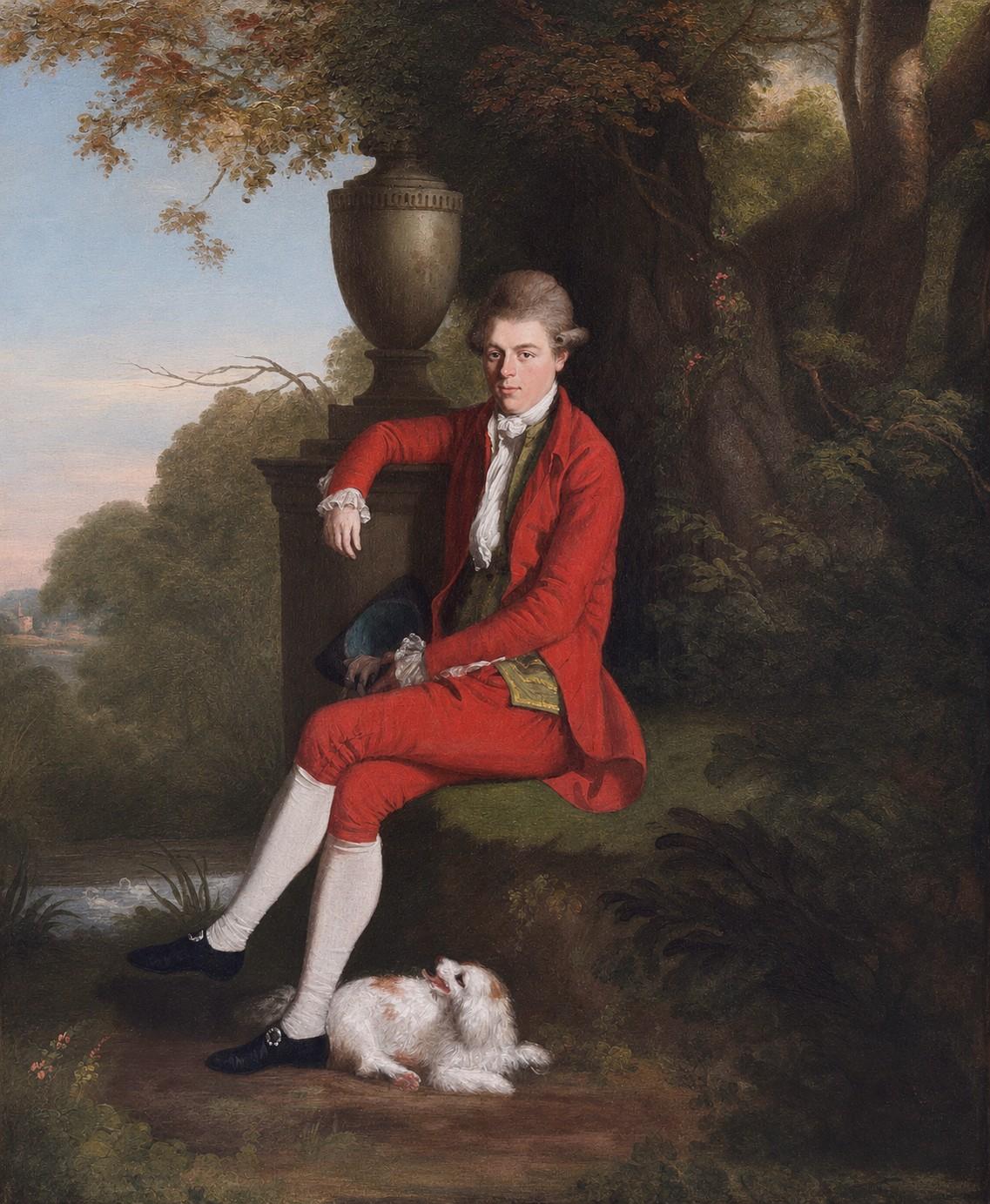
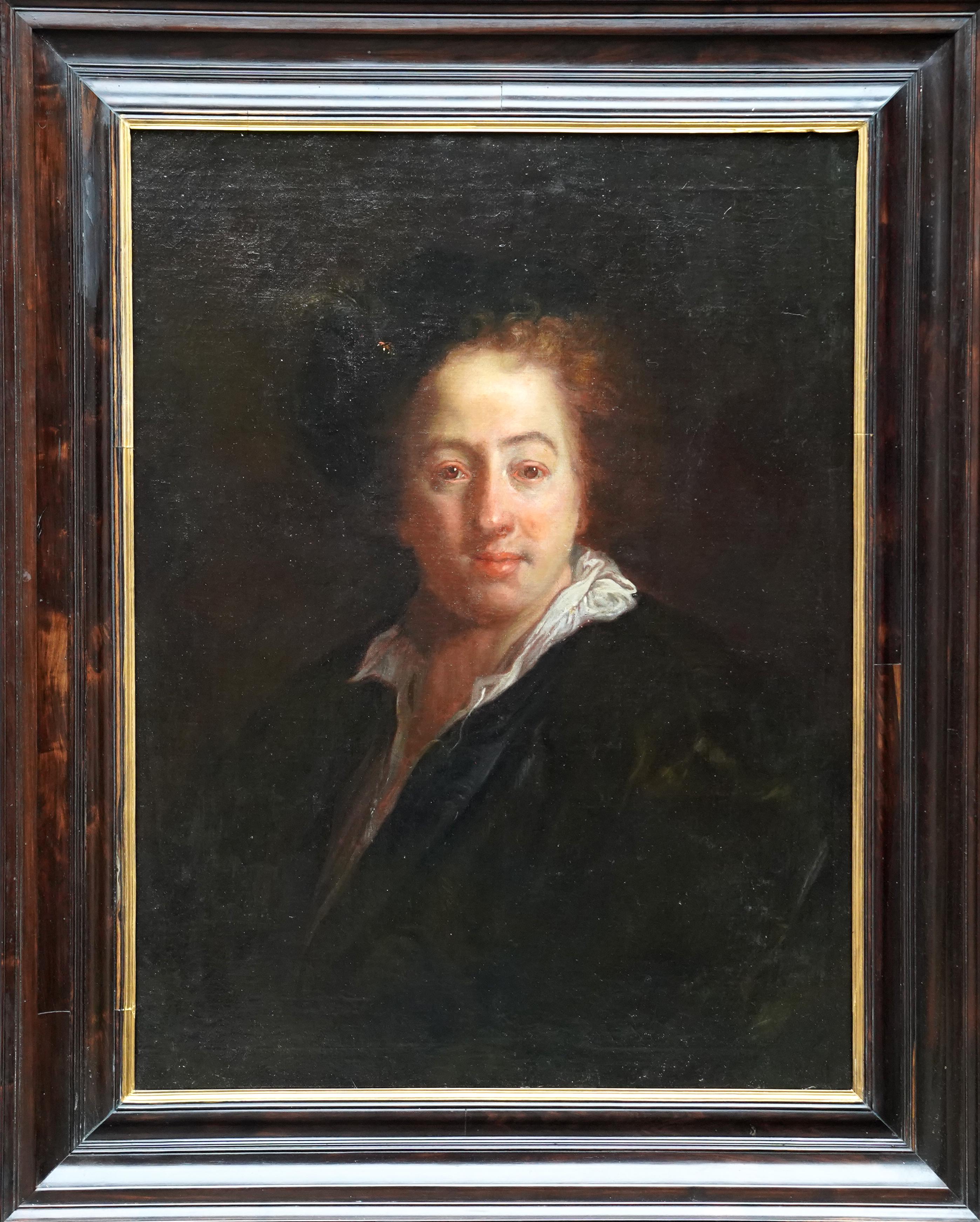
Nicolas Mignard Portrait of a Man 1606 - 1668 Oil on canvas, unsigned Image size: 15 5/8 x 18 1/2 inches (39 x 47 cm) Giltwood frame This finely detailed 17th century portrait of a man exhibits many of the hallmarks of Nicolas Mignard's portraiture style. Mignard's portraits often combine Roman classical ideals with the refinement of the French court, reflecting his studies of Carraci's works in Rome and the works of French Mannerists. Rather than depicting his sitter in standard contemporary clothing, the man is shown wearing a Roman-style mantle, a blue under-shirt beneath rich red and gold brocade drapery, associating him with the virtues of the ancient world. This gold brocade, the embroidery of which is rendered in exquisite detail, signals the wealth and status of the patron. Mignard captured the essence of his sitters using subtle body language, rather than grand gestures. Here, the sitter is shown with a gentle downwards tilt of his head, his eyes half-lowered and looking out to the left of the canvas. This imbues the sitter with a sense of quite intellect and refinement. The sitter is set against a dark background, creating a stark contrast with his rich costume and softly illuminated face, again characteristic of Mignard's work. His soft black curls almost fade into the background, rewarding a careful viewer with their finely detailing. These curls, along with the man's precisely trimmed moustache align with the fashion of the mid-17th century French court indicating that, despite his Roman-style costume, this was a contemporary subject. Nicolas Mignard Nicolas Mignard, also known as Mignard Avignon was a 17th century French painter known for his portraits, as well has his religious and mythological scenes. He came from a family of artists with his younger brother, Pierre Mignard also becoming a renowned painter and rival of Charles Le Brun. Mignard studied painting locally in his hometown of Troyes before travelling to Fontainebleau, Paris and Lyon before moving to Avignon around 1633. He also travelled to Rome where he was particularly influenced by the works of Annibale Carracci before returning to Avignon to paint mostly religious works and portraits and decoration for wealthy patrons with opulent residences. He married Marguerite d'Avril and the couple had two sons: Paul Mignard and Pierre II Mignard, both of whom when on to become painters. Mignard joined Académie royale de peinture et de sculpture in 1663 and became Professor and Assistant Rector of the Académie in 1664 and Rector in 1666. He was a supporter of the artist Charles Le Brun, despite his conflict with Mignard's younger brother, leading to a rift in the family that was passed down to Nicolas' sons.
  • Creator:
    Nicolas Mignard (1606 - 1668, French)
  • Dimensions:
    Height: 18.5 in (46.99 cm)Width: 15.63 in (39.71 cm)
  • Medium:
  • Period:
  • Condition:
  • Gallery Location:
    London, GB
  • Reference Number:
    1stDibs: LU52418375142

More From This Seller

View All
Portrait of a Melancholic Gentleman, 17th century Oil Painting

Portrait of a Melancholic Gentleman, 17th century Oil Painting

Located in London, GB

English School 17th Century Portrait of a Melancholic Gentleman Oil on canvas Image size: 25 x 29 1/4 inches (63.5 x 72.25 cm) Hand made contemporary style frame Provenance South of England Estate This is a striking 17th century half-portrait of a man. He sits with his body turned to the left and his head to the right. His left hand is held in front of him with thumb and finger together. He wears a loose white shirt that is opened low down onto chest while being closed at his neck with a black ribbon. An orange cloak has also been draped across his arms in a rather dramatic manner. This choice of costume is immediately notable and must be compared to other portraits of this time of Elizabethan courtiers wearing slashed silk outfits with ostentatious finery and silver swords. Indeed, if one examines 17th century English...

Category

17th Century Portrait Paintings

Materials

Canvas, Oil

Possible Portrait of William Shakespeare

Possible Portrait of William Shakespeare

Located in London, GB

Oil on oak panel Image size: 17 1/4 x 22 1/4 inches (44 x 56.5 cm) Period oak frame This is a portrait of a Tudor gentleman in an open next shirt with one hand raised to his chest. ...

Category

Early 1600s Portrait Paintings

Materials

Oak, Oil

Portrait of a Gentleman

Portrait of a Gentleman

Located in London, GB

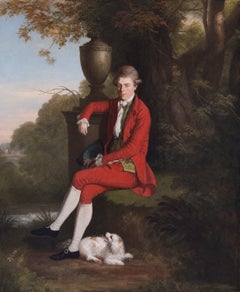
Here we see a finely painted English gentleman, dressed in a crimson suit which boldly stands out against the more muted greens of the garden setting, along with a fashionable wig. D...

Category

18th Century Portrait Paintings

Materials

Canvas, Oil

Portrait of a Gentleman, 17th Century Dutch Old Masters Oil

Portrait of a Gentleman, 17th Century Dutch Old Masters Oil

Located in London, GB

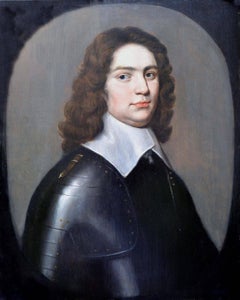
Circle of Gerard van Honthorst 1592 - 1656 Portrait of a Gentleman Oil on wooden panel Image size: 29 x 23 inches Contemporary gilt frame Gerard van Honthorst was a Dutch Golden Age...

Category

17th Century Old Masters Portrait Paintings

Materials

Oil, Wood Panel

Portrait of a Lady

Portrait of a Lady

Located in London, GB

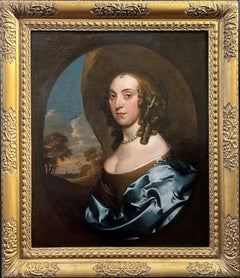
Gilbert Soest 1605-1681 Portrait of a Lady Oil on canvas Image size: 30 x 25 inches (76.2 x 63.5 cm) Original carved gilt frame Provenance Private Estate, England This portrait dep...

Category

17th Century Portrait Paintings

Materials

Canvas, Oil

You May Also Like

Portrait of a Man

Portrait of a Man

Located in New York, NY

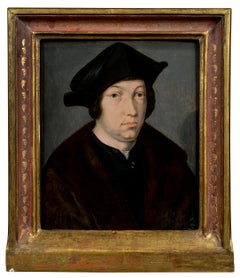
Provenance: with Leo Blumenreich and Julius Böhler, Munich, 1924 Dr. Frederic Goldstein Oppenheimer (1881-1963), San Antonio, Texas; by whom given to: Abraham M. Adler, New York, until 1985; thence by descent to the present owners While old inscriptions on the verso of this panel propose its author to be Hans Holbein and the sitter Sir John More—a lawyer, judge, and the father of Sir Thomas More—this fine portrait has long been recognized to be by a Flemish hand. Max Friedländer gave the painting to Bernard van Orley (1487/1491 – 1541) in 1924, but did not include it in the volume dedicated to the artist in his Early Netherlandish Paintings...

Category

16th Century Old Masters Portrait Paintings

Materials

Oil, Panel

Presumed artist self-portrait

Presumed artist self-portrait

Located in BELEYMAS, FR

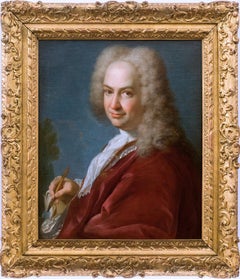
Louis-Gabriel BLANCHET (Versailles, 1701 – Rome, 1772) Presumed self-portrait of the artist Oil on canvas H. 73 cm; W. 60 cm Circa 1730 Originally presented in a Restoration period frame with a "Mignard" cartouche, this beautiful painting initially appeared to us as a work from northern Italy. However, it exuded a rather French form of refinement, suggesting that its artist may have assimilated a dual influence from both sides of the Alps. We thank our colleague and friend Philippe Mendès for spontaneously and judiciously "bringing out" the name of Louis-Gabriel Blanchet, a Romanized French portraitist, whose spirit and stylistic characteristics we clearly recognize here. Blanchet's "French" years, before his final departure for Rome in 1728, following his winning of the second Grand Prix for painting after Subleyras in 1727, are extremely poorly documented. His father, Gabriel, was valet to Blouin, himself Louis XIV's first valet at the time. According to Thierry Lefrançois, Blanchet was one of the few students of Nicolas Bertin (1667-1736), whose studio he is said to have joined in the early 1720s. At a baptism on March 24, 1724, where he was godfather, he is mentioned as a painter in the picture store of the Duke of Antin, the director of buildings between 1708 and 1736. At this time, he was probably already married to Jeanne Quément, with whom he had a daughter also named Jeanne, who would marry Nicolas Aviet, the son of a valet in the queen's wardrobe, in Versailles in 1738. When Blanchet arrived in Rome in October 1728, he was accompanied by Subleyras, Trémolières, and Slodtz. He enjoyed the goodwill of Vleughels, the director of the Académie de France, which had been based at the Palazzo Mancini since 1725, even though the latter was not always kind to our resident. From 1732, he was under the protection of the Duke of Saint-Aignan when he took up his post as ambassador to Rome. Along with Slodtz and Subleyras, they formed a trio of friends, joined by Joseph Vernet shortly after his arrival in Rome in 1734. Slodtz and Blanchet, on the occasion of Subleyras's marriage in 1739, were there to attest that their friend was not bound by any marital commitment, and Blanchet was a witness at Vernet's wedding in 1745. It is most likely from these early years in Rome that our portrait of the artist dates, the expression and turn of his face irresistibly reminiscent of a self-portrait. The still relatively youthful features may correspond to Blanchet's thirty-something years, and the fluffy wig was still fashionable at this time. The painting fits well with the depiction of a young painter wanting to display both the beginnings of success and a certain simplicity or restraint. A slight smile expresses a form of assurance in this man with a gentle, sincere gaze and a face radiating a keen sense of wit. We find here the air of intimacy present in almost all of Blanchet's portraits, even those from the 1750s and 1760s, as well as an almost complicity with the viewer. The spirit of the painting is quite close to that of the presumed portrait of Bouchardon (painted around 1730) and the portrait of Pannini, painted in 1736, but it possesses a more natural quality, notably thanks to the absence of decorum. Our work exhibits the characteristics of Blanchet's paintings: elegance, luminosity (especially in the whites), vibrant and refined colors (here, the harmony of the garnet of the garment and the slate blue of the background, whose uniformity is tempered by a very sketched landscape and a grove of greenery), light complexions, rather rosy cheekbones, often full lips, and rather tight framing. According to the Academy's rules, Blanchet's stay should have ended in the spring of 1732, but, for reasons unknown, he remained in the Eternal City until his death, as did his friend Subleyras, with whom he shared accommodation until the late 1730s. The latter regularly called upon him to collaborate on his paintings, such as The Meal at Simon's. Through Saint-Aignan's intervention, Blanchet was employed in the late 1730s by the Stuart princely family, then exiled in Italy. He notably produced copies (now lost) after Liotard of the portraits of Charles Edward and Henry Benedict, the sons of James III Stuart. The latter also commissioned three other portraits (now in the National Portrait Gallery in London), whose more formal character contrasts with the intimate spirit of Blanchet's portraits. Blanchet frequented English painters, such as the landscape painter Richard Wilson, and studied with the Scottish portraitist Katherine Read...

Category

1730s French School Portrait Paintings
Materials

Oil, Canvas

"Self-Portrait" After Diego Velázquez

"Self-Portrait" After Diego Velázquez

Located in San Francisco, CA

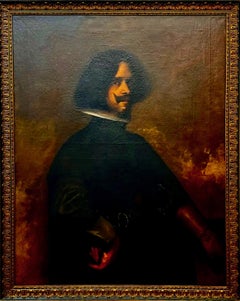
On offer is a striking portrait, a late 19th-century reproduction by an unknown artist of what is widely considered to be an authentic self-portrait of Diego Rodríguez de Silva y Vel...

Category

Late 19th Century Paintings

Materials

Encaustic

Portrait of a Nobleman, French School 17th Century

Portrait of a Nobleman, French School 17th Century

Located in New York, NY

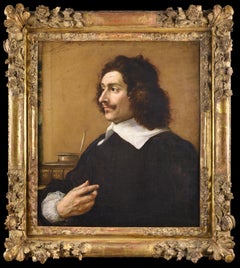
French portrait of a nobleman, 17th Century, great condition. With a beautiful carved wooden frame.

Category

17th Century Baroque Portrait Paintings

Materials

Canvas, Oil

European Portrait of a Priest

European Portrait of a Priest

Located in Milford, NH

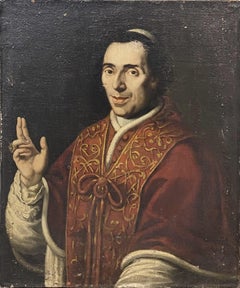
A fine European portrait of a priest, oil on canvas, probably dating to the 17th or 18th century, unsigned, with original stretcher, minor surface losses and damage, craquelure, edge...

Category

17th Century Portrait Paintings

Materials

Canvas, Oil