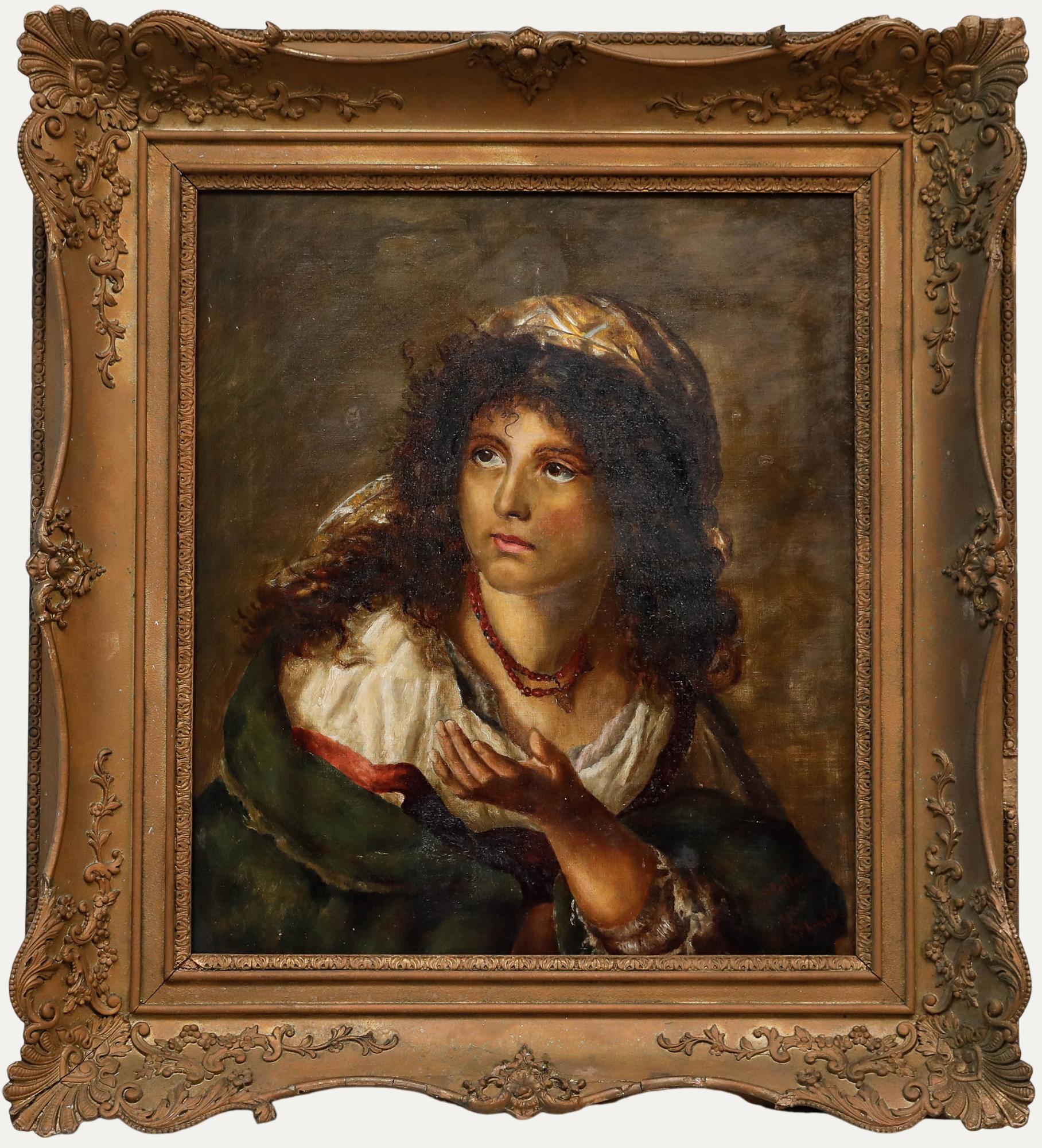
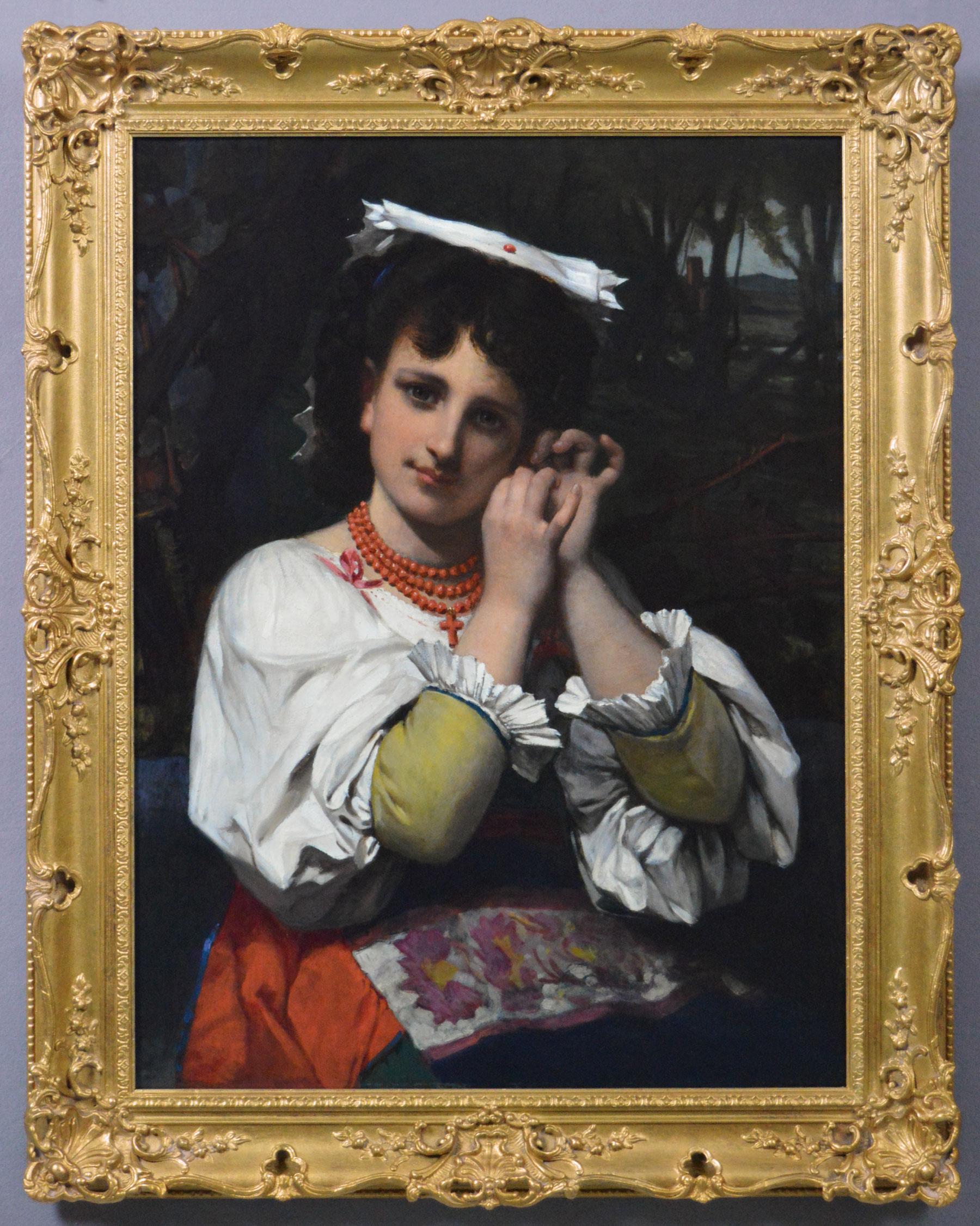
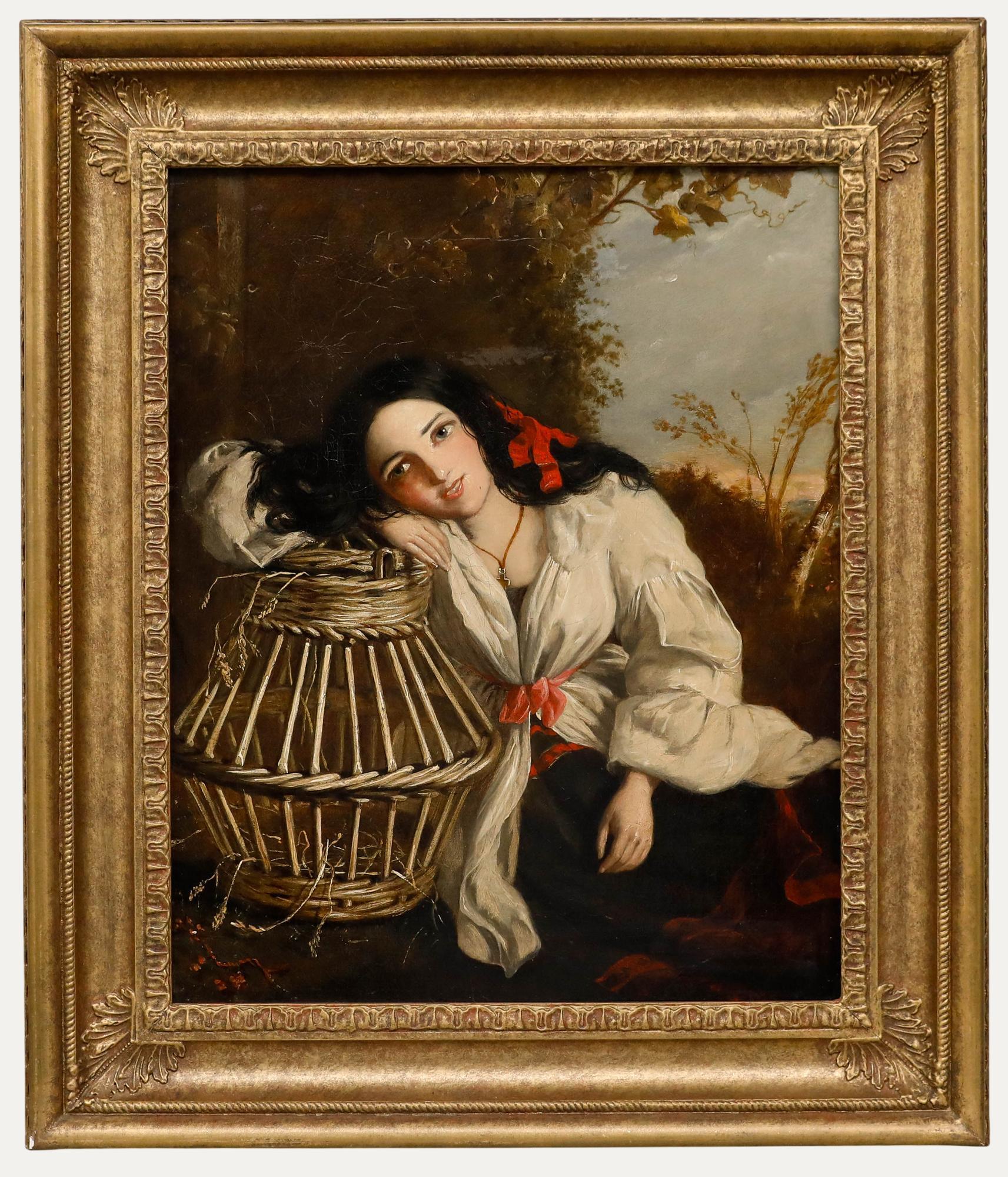
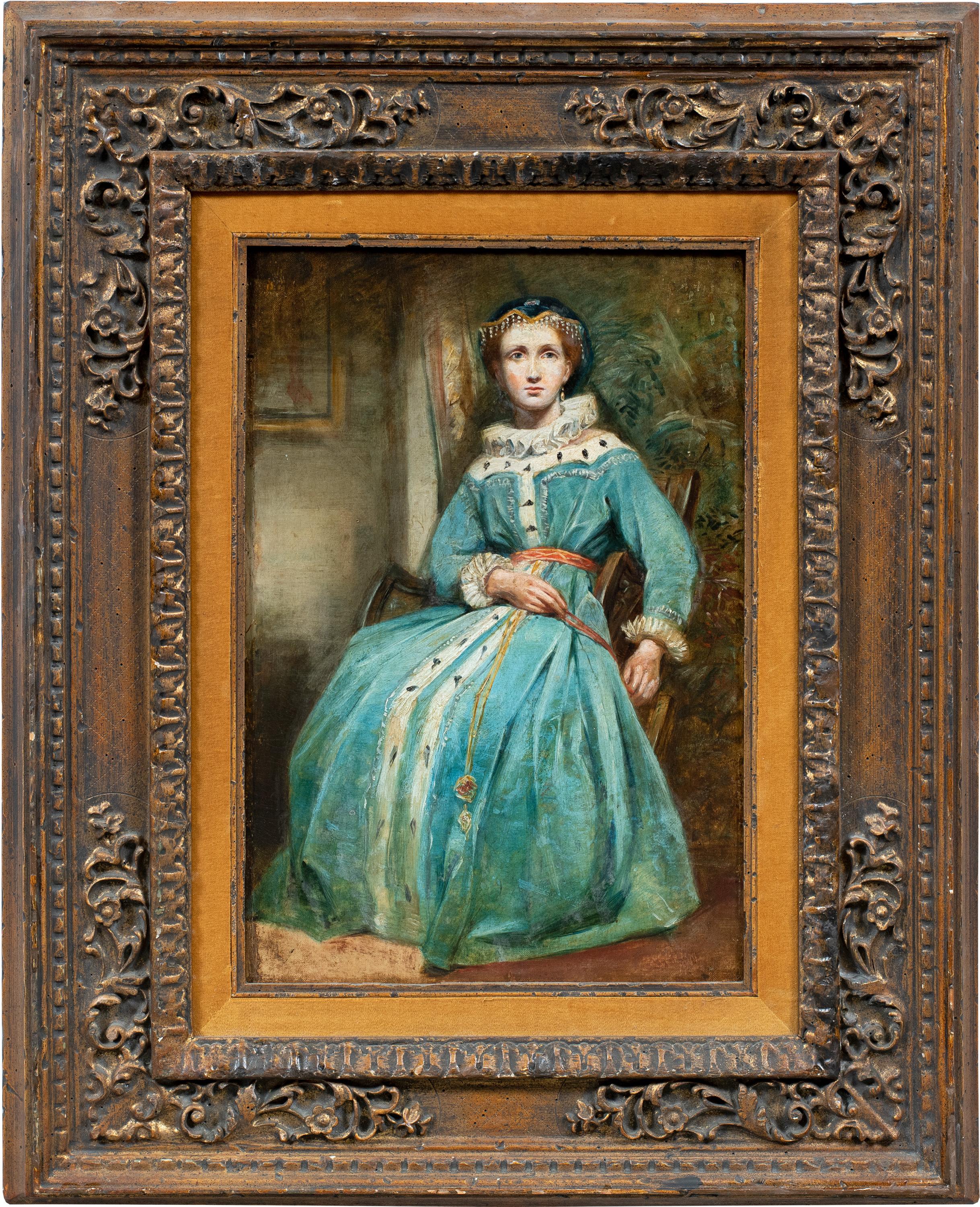
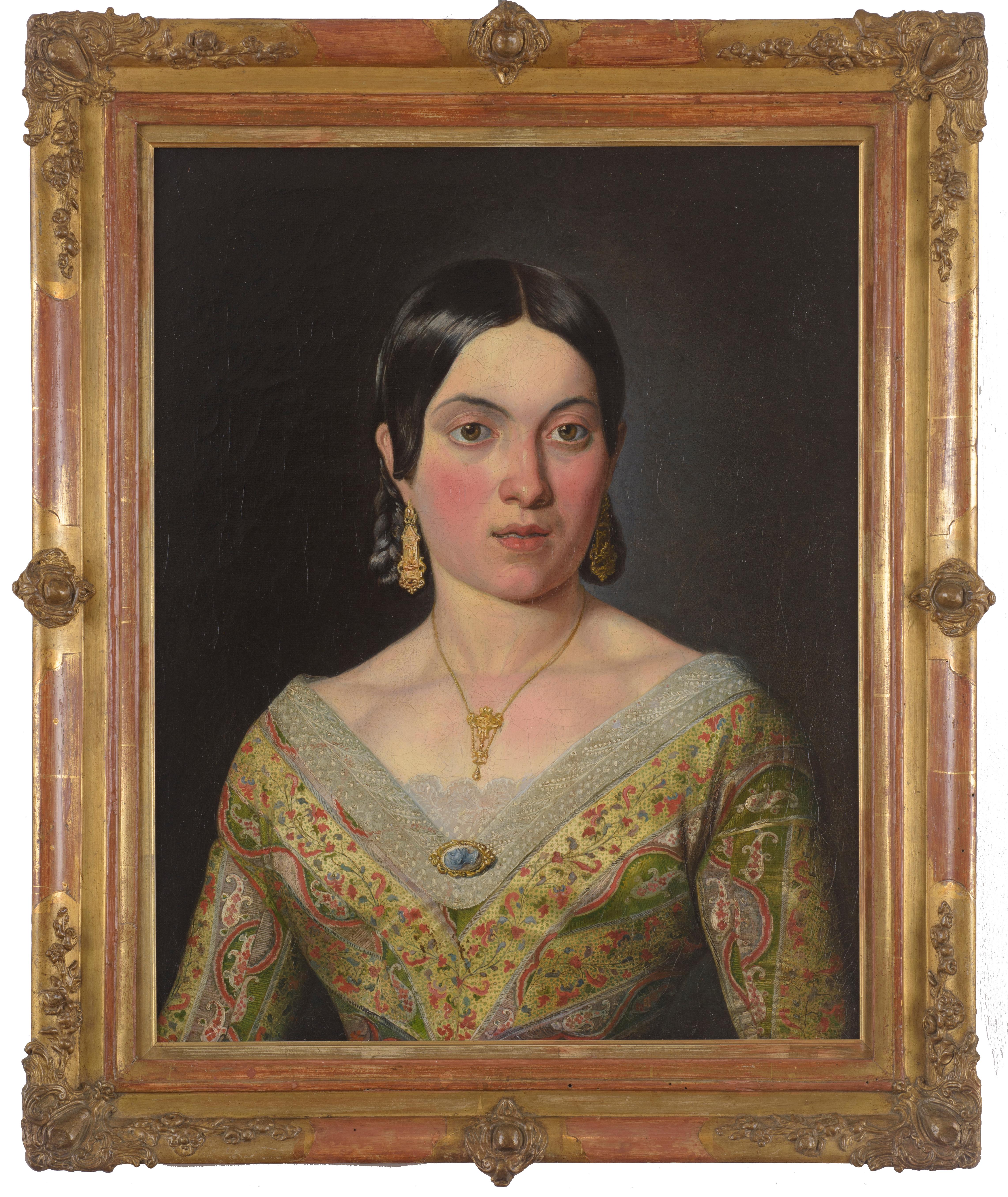
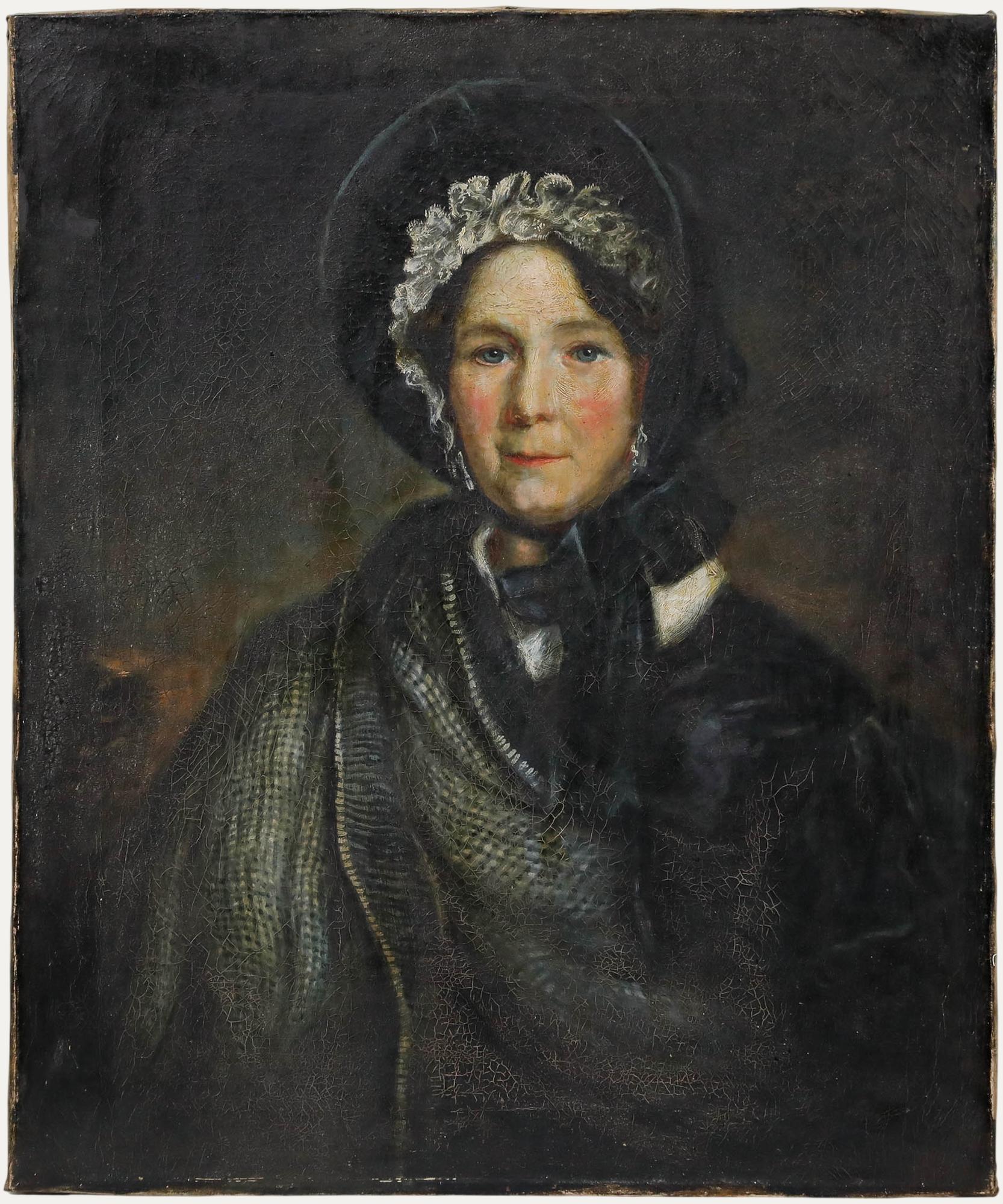
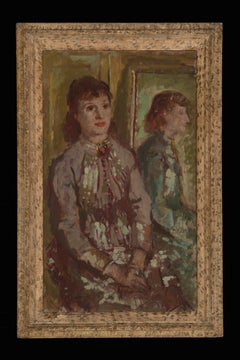
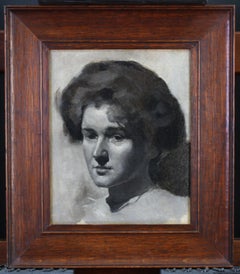
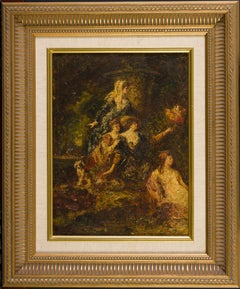
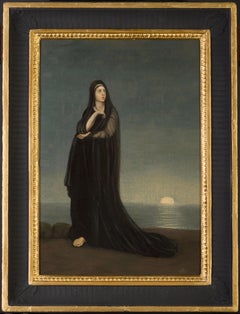
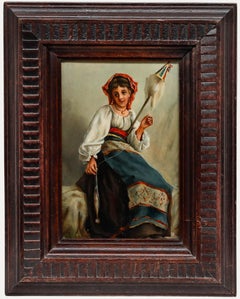
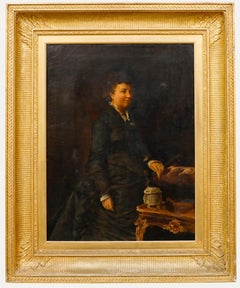
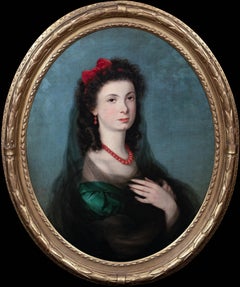
This painting has been produced by a European 19th Century painter who is noted to be working in the style of Rudolf Jordan. This picture is produced in the Romantic style depicting a soft focus representation of a local beauty, possibly Italian, of a regional folk musician theme, showing a warmth feeling of comfortability. There is a faint remnant of a signature, lower left, which is indistinguishable hence the picture is therefore catalogued as unsigned.
Rudolf Jordan 1810 - 1887, was a German born painter, illustrator and etcher, he also taught painting. He became a member of the Prussian Academy of Arts. His biography is listed below.
Rudolf Jordan (4 May 1810 – 20 March 1887) was an influential German Romantic genre painter, illustrator, etcher, and educator associated with the prominent Düsseldorf School of painting. He achieved significant acclaim for pioneering an ethnographic approach to genre art, focusing meticulously on the everyday lives of maritime communities, fishermen, and coastal sailors. Jordan was born in Berlin. His father served on the Judicial Council, and he was a direct descendant of Charles-Étienne Jordan, a prominent adviser to Frederick the Great. He began his foundational artistic education at the private painting school of Karl Wilhelm Wach in Berlin. In 1833, Jordan moved to the renowned Kunstakademie Düsseldorf. He completed master classes under director Friedrich Wilhelm von Schadow and painter Karl Ferdinand Sohn, graduating in 1840. Jordan's career trajectory shifted profoundly following an early visit to the North Sea island of Heligoland. In 1834, he painted "Heiratsantrag auf Helgoland" , its immense success established his reputation, and the painting was purchased by the Berlin National Gallery. Following this breakthrough, Jordan dedicated his career to capturing coastal life. He regularly traveled to the coasts of Holland, Belgium, and France to observe and document local fishing families. In 1848, Jordan opened his own independent studio in Düsseldorf, where he created popular genre scenes and taught aspiring students. Jordan helped establish "Malkasten" in 1848, a progressive independent art society for Düsseldorf artists. Jordan is celebrated as a founder of the ethnographic genre. Instead of romanticising subjects, he carefully replicated traditional coastal costumes, regional interiors, and tools. His compositions were widely reproduced during his lifetime via engravings and lithographs, making his art common in middle-class European homes.
He was named a member of the Prussian Academy of Arts in 1837, awarded a large gold medal at the Berlin Exhibition, and granted the honorary title of Royal "Titularprofessor". Jordan spent his later years in Düsseldorf, where he died in 1887 at the age of 76. Today, his oil paintings are preserved in major European institutions, including the Victoria and Albert Museum in London and the Alte Nationalgalerie in Berlin.