Want more images or videos?
Request additional images or videos from the seller
1 of 4

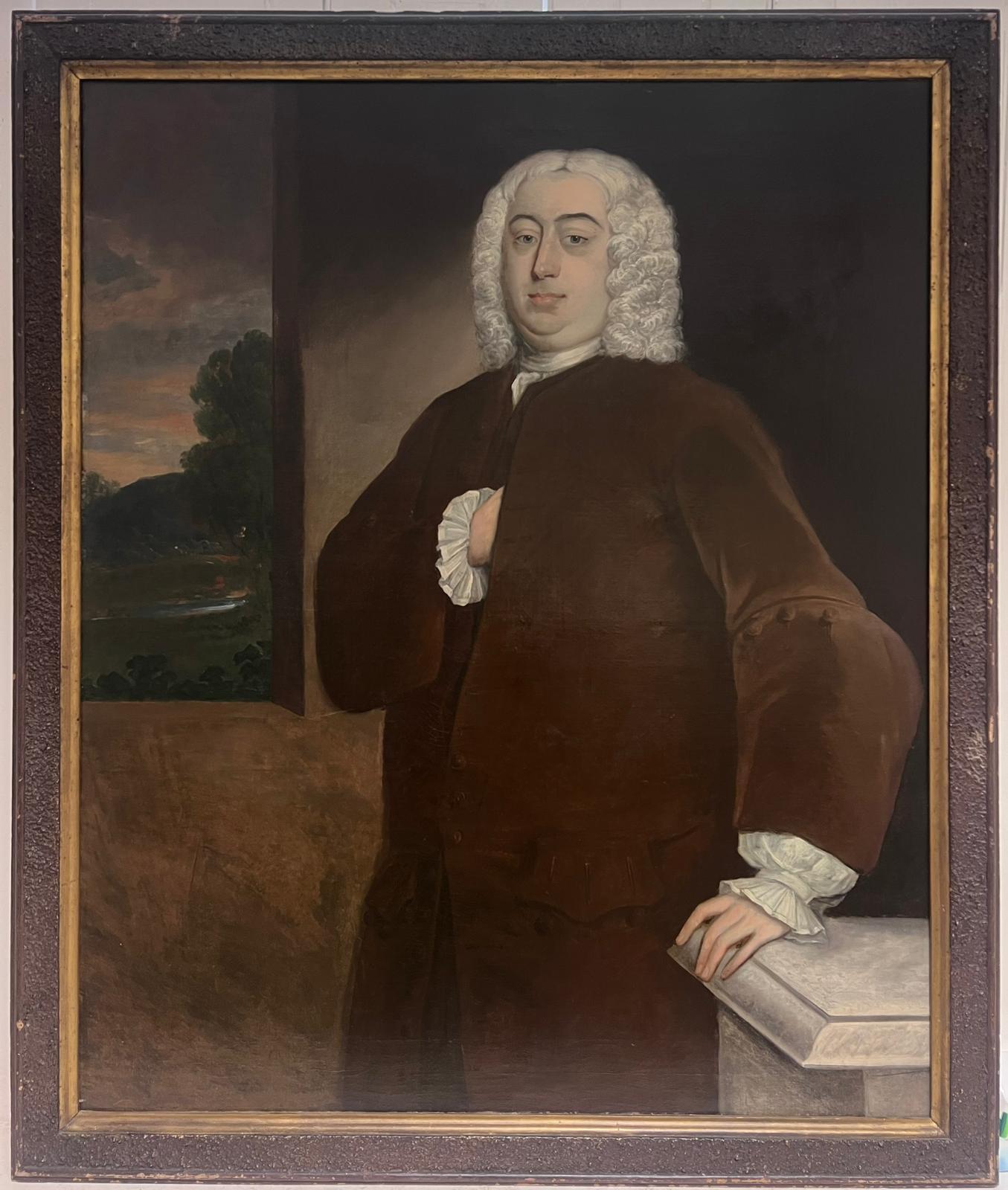
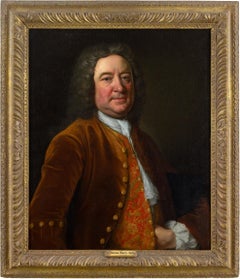
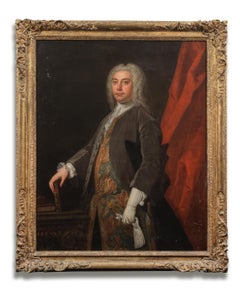
Thomas Hudson
Portrait of Edward Southwell, three quarter length

$52,288.85
£38,000
€45,379.66
CA$72,935.37
A$74,188.57
CHF 42,576.67
MX$891,833.68
NOK 496,655.20
SEK 501,330.76
DKK 339,254.25

About the Item

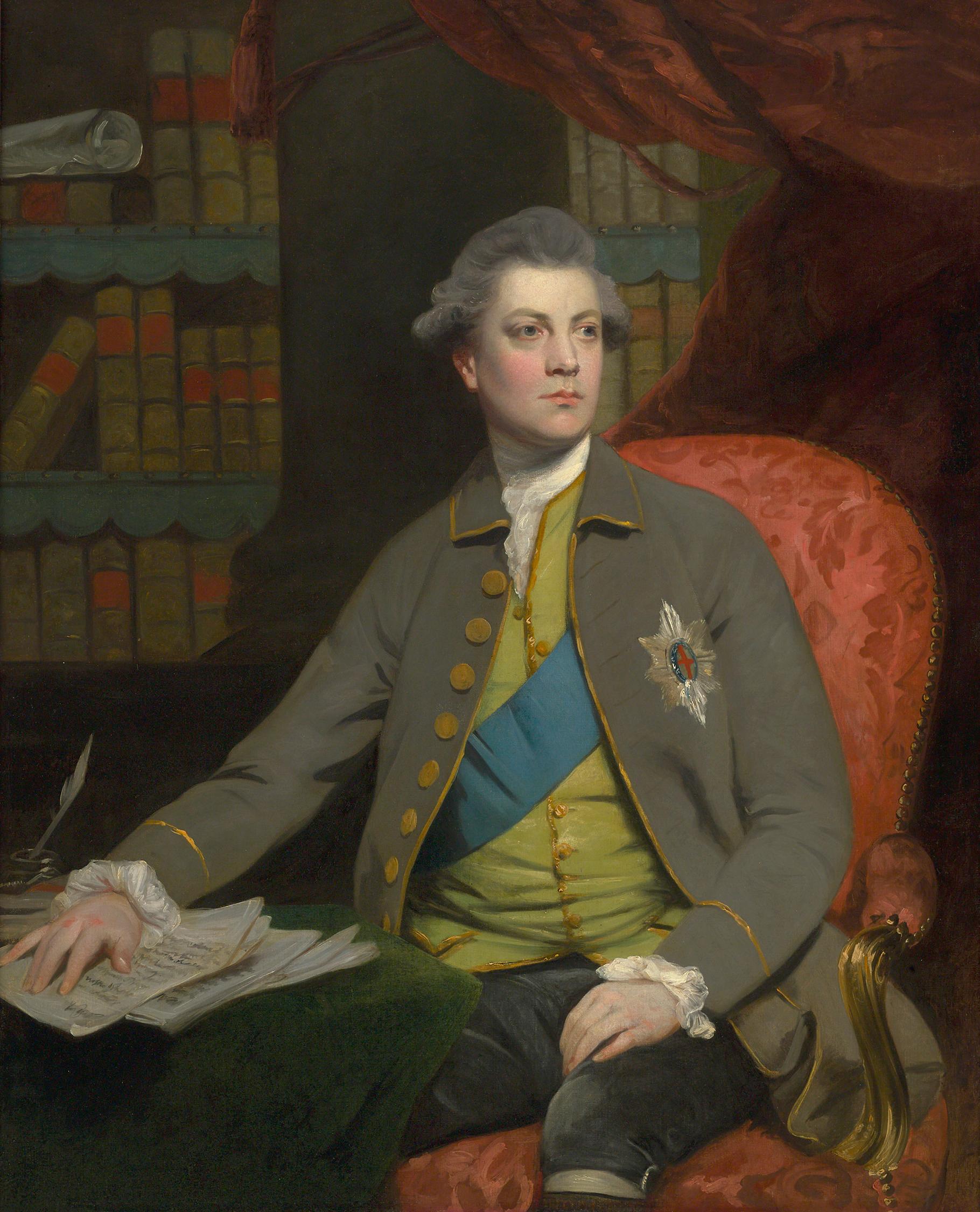
Portrait of Edward Southwell, three quarter length standing in a landscape, wearing a rust coat and a white satin waistcoat holding his cane Inscribed Oil on canvas in a carved wood frame 49 × 39 ½ inches THE ARTIST Thomas Hudson (1701-1779) was a prominent English portraitist whose poised, formal style bridged the Baroque tradition and emerging Georgian elegance. A pupil of Jonathan Richardson and teacher of Joshua Reynolds, Hudson was admired for his balanced compositions and meticulous attention to costume and likeness. His work shaped mid-eighteenth-century portraiture and influenced a new generation of artists. THE SOUTHWELL COLLECTION Everett Fine Art is excited to present this remarkable collection of paintings assembled over generations by the Southwell family, once resident at Kings Weston House, a fine 18th-century estate on the outskirts of Bristol. The collection was first established during the 18th and early 19th centuries, and many of the works were personally chosen for the enjoyment they brought. When Kings Weston was sold in 1833, much of the collection passed to the Russell branch of the family. The Russells continued to enrich the collection through the 19th century, commissioning works that reflected the interests and pastimes they valued-most notably, portraits of family members, horses and beloved pets. Thanks to the generosity of the Inge family, who acted as custodians during the 20th century, the collection remained largely intact. In more recent years, the paintings returned to family ownership, where they have been carefully restored and preserved by Lord de Clifford (27th Baron de Clifford). Now, a number of these works are offered for sale.
  • Creator:
    Thomas Hudson (1701 - 1779, British)
  • Dimensions:
    Height: 49 in (124.46 cm)Width: 39.5 in (100.33 cm)
  • Medium:
  • Period:
  • Condition:
  • Gallery Location:
    Taunton, GB
  • Reference Number:
    1stDibs: LU2028217353712

More From This Seller

View All
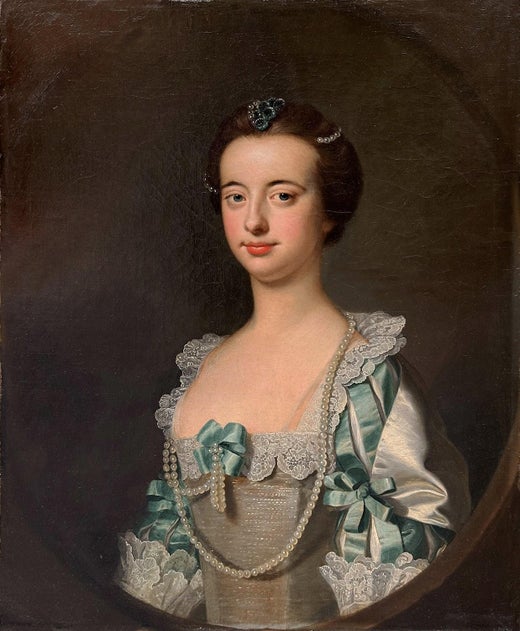
Portrait of Lady Mary Burke, later Wife of Edward Southwell

Portrait of Lady Mary Burke, later Wife of Edward Southwell

Located in Taunton, GB

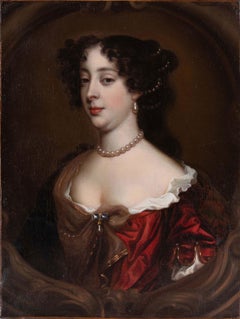
Portrait of Lady Mary Burke, later Wife of Edward Southwell, 2lst Baron, three-quarter length seated, wearing Red Coat and Fur Robes, a Landscape beyond Signed Oil on canvas 55 x ...

Category

18th Century Portrait Paintings

Materials

Oil

Sophia, Lady de Clifford and her Children

Sophia, Lady de Clifford and her Children

By Daniel Gardner

Located in Taunton, GB

Sophia, Lady de Clifford and her Children Pastel Oval THE ARTIST Daniel Gardner (1750-1805) was an inventive portrait painter known for blending pastel, gouache, and graphite to ...

Category

18th Century Portrait Paintings

Materials

Pastel

A group portrait of the Southwell family with a Negro Page and Macaw

A group portrait of the Southwell family with a Negro Page and Macaw

By Charles Philips

Located in Taunton, GB

A group portrait of the Southwell family on the terrace with a negro page and Macaw. Oil on canvas Signed and dated 1731 Canvas size 25 x 30 ¼ inches 63.5 x 77 cms Frame exterior 32 x 37 ¼ inches 81 x 94.5 cms This evocative family portrait offers a glimpse into the life of 18th Century English nobility. The Southwells are a noble family whose roots go back to the early 17th Century. In 1776 Edward Southwell III was granted the Barony of de Clifford (a title in abeyance at the time), and the line extends to today, with the 28th Baron de Clifford sitting in the House of Lords. Charles Phillips (1708-1747) was a leading portraitist of his time, having painted many noble and royal portraits. Two of his paintings are part of the Royal Collection Trust. In this portrait, signed and dated 1731, we see Edward Southwell Sr (1671-1730) and his family on the grounds of their Estate, Kings Weston House near Bristol. On the far left is Mrs. Helena Le Grand (Edward’s sister). Next to her is Mrs. Southwell (Edward’s second wife, the first having died in 1709). On the right is Edward Southwell Jr (1705-1755), Edward’s son by his first marriage and next to him a “Negro Page” (in the euphemistic words of an old label on the painting; more on him below.) Phillips has arranged the figures in an arc, anchoring the composition. The arc stretches from Mrs. Le Grand’s red dress on the left, through the colourful parrot, onward to the heads of Mr. and Mrs. Southwell, down again to the younger Southwell and finishing on the right with the enslaved boy. As Edward Sr. died in 1730, this must be a posthumous portrait, making it especially poignant. (Presumably Phillips used another portrait to capture his likeness.) One can imagine the late Edward’s family looking affectionately at the portrait, remembering the time spent with him on the grounds of Kings Weston House. Southwell stands between wife and son, eyes directed toward one, hand pointed toward the other, symbolically balancing the needs of both. Devoted husband and father? Perhaps. Slave-owner as well. English noble families of the 18th Century often had financial and practical connections with the slave trade. The Southwells themselves were granted a tract of land by the Crown in 1766, which Edward Southwell III (1738-1777) – the son of the younger Southwell in the portrait – developed with partners into a plantation worked by slave labour. This portrait shows us that slave ownership was not always a matter for distant colonies. This young boy, likely deprived of his freedom from birth (born to enslaved parents), was made to serve the Southwell family in their home. We see him here sitting half cross-legged, wearing a house servant’s uniform and a faint smile. He gaze is turned upward; at first we think is looking at his Master, then we realise he must be in fact enjoying the sight of the parrot eating from the hand of his Master’s sister. Phillips has placed him on the ground, beneath the rest of the family in pose as in station. Yet here he is in this portrait just the same, as if he were a member of the family. Was the family fond of him? Was he a playmate of the younger Southwell? Or was he simply there in the Garden that day to serve them their refreshments? The answers to these questions must remain unanswered, known only to the sitters frozen in time by Phillips’ paintbrush. Three centuries later we are fortunate to have this portrait as a snapshot of 18th Century England, both its nobility and its baseness. Charles Philips, the son of a portraitist, likely acquired his artistic skills from his father. He specialised primarily in painting small portraits and conversation pieces. George Vertue observed that in painting small figure portraits and conversation scenes, Philips gained significant recognition and patronage among fashionable circles, including members of the Royal Family. In 1732, he produced conversation works for the Duchess of Portland and the Duke of Somerset. During the 1730s, his conversation pieces became increasingly complex, featuring more numerous subjects engaged in a greater variety of activities. Following the precedent set by contemporaries such as Philippe Mercier and William Hogarth, both prominent painters of small-scale conversation pieces, Philips transitioned into the more lucrative field of portrait painting later in the decade. His career peaked in 1737 when he painted full-length portraits of the Prince and Princess of Wales. The Prince of Wales was renowned for his patronage of the arts, particularly towards immigrant artists including Jacopo Amigoni and Philippe Mercier, who were principal influences on Philips. Two of Philips' paintings in the Royal Collection depict fashionable London clubs not recorded elsewhere. The first, from 1732, shows Frederick...

Category

18th Century Portrait Paintings
Materials

Oil

Portrait of Lord William Russell, three-quarter length

Portrait of Lord William Russell, three-quarter length

By Sir Henry Raeburn

Located in Taunton, GB

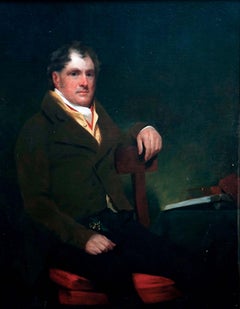
Portrait of Lord William Russell, three-quarter length seated at a table wearing a Brown Coat and a Yellow Waistcoat and a White Stock, a book by his side Oil on canvas 49 ½ x 39 ½...

Category

Late 17th Century Portrait Paintings
Materials

Oil

You May Also Like

Portrait of William Henry Kerr, Earl of Ancram, 4th Marquess of Lothian

Portrait of William Henry Kerr, Earl of Ancram, 4th Marquess of Lothian

Located in London, GB

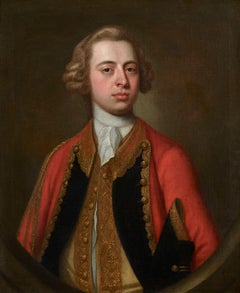
James Fellowes Flourished 1719 - 1750 Portrait of William Henry Kerr, Earl of Ancram, 4th Marquess of Lothian Oil on canvas, signed & dated 1747 Image size: 29 1/2 x 24 1/2 inches (75 x 62 cm) Original gilt wood frame William Henry Kerr was born a member of the Scottish peerage to William, third Marquess of Lothian, and his first wife Margaret, daughter of Sir Thomas Nicholson of Kemnay, first Baronet. William was styled Master Jedburgh until 1722, when his father was elevated to a Marquessate, after which he was referred to as Lord Jedburgh until 1735. Following his father’s military footsteps, on 20 June 1735 Ancram was commissioned as a cornet to the regiment (11th Dragoons) of his grand-uncle, Lord Mark Kerr. Ancram married Lady Caroline...

Category

1740s Old Masters Portrait Paintings

Materials

Oil

18th Century portrait oil painting of a gentleman

18th Century portrait oil painting of a gentleman

Located in Nr Broadway, Worcestershire

Follower of Enoch Seeman the Younger German, (1694-1744) Portrait of Gilbert Sympkin Oil on canvas Image size: 29.25 inches x 24.5 inches Size including frame: 38 inches x 33.25 inches A fine three quarter length portrait of a gentleman traditionally identified as Gilbert Simpkin (Sympkin), follower of Enoch Seeman the younger, C1720. The portrait is set in a feigned sculptured oval cartouche, a device used to give a sense of depth. The sitter is depicted wearing a fashionable blue jacket and matching waistcoat with a white chemise and lace jabot. He wears a powdered wig in the fashionable style of the day and is posed holding his hat under his left arm with the fingers of his right hand stretched out. At court, long fingers signified wealth, culture and intelligence. The painting has clearly been executed by an artist of great ability who has been influenced by Enoch Seeman the younger. Gilbert Simpkin (Sympkin) was born in London on 24 August 1683, the son of John Simpkin and Susannah Butler. His grandfather was also called Gilbert Simpkin. He entered Oxford University in 1700 where he studied at St John’s College. In 1702, he became a student of Middle Temple, which at the time was one of the world’s most important centres of legal education. He later settled in Plymouth and then Bristol. He died in Bristol on 15 May, 1744 and was buried at Bristol Cathedral. He remained unmarried and the portrait may well have been commissioned to commemorate when he was first Called to the Bar or perhaps had established his own practice. Enoch Seeman or Seemann the younger was born in Danzig, Germany now Gdansk, Poland in 1694. His father was Enoch Seeman Senior, an artist of Flemish origin and his brothers Isaac, Noah and Abraham also became artists. He came to London with his father and brothers around 1704 and established himself as a portrait artist. From 1717 he became painter to the Royal court painting...

Category

18th Century Old Masters Portrait Paintings

Materials

Canvas, Oil

Portrait of Ralph William Grey

Portrait of Ralph William Grey

By Bartholomew Dandridge

Located in London, GB

Provenance By descent through the sitter's family to The Collection of R. W. Vivian-Neal of Poundisford Park, Somerset, from whom acquired by With Lane Fine Art, UK, where purchased ...

Category

Mid-18th Century English School Portrait Paintings

Materials

Oil, Canvas

Old Master Portrait of a Gentleman - British 18th century oil painting

Old Master Portrait of a Gentleman - British 18th century oil painting

By Michael Dahl

Located in Hagley, England

This stunning 18th century Old Master portrait oil painting is attributed to Swedish born, England based artist Michael Dahl. Painted circa 1690 it is a sumptuous half length portrai...

Category

17th Century Old Masters Portrait Paintings

Materials

Oil