Homeward Bound
By Worthington Whittredge
Located in New York, NY
Signed lower right: W Whittredge
Category
19th Century Hudson River School Landscape Paintings
Materials
Oil
Homeward Bound
By Worthington Whittredge
Located in New York, NY
Signed lower right: W Whittredge
Oil
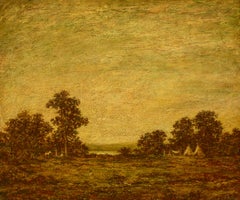
Indian Encampment
By Ralph Albert Blakelock
Located in New York, NY
Signed lower left in arrowhead: R.A. Blakelock (NBI-1611-II)
Canvas, Oil
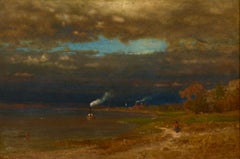
Coming Storm, 1864
By George Inness
Located in New York, NY
George Inness, considered among the foremost American landscape painters of the 19th century, developed a distinctive style blending elements of the Hudson River and Barbizon schools...
Canvas, Oil
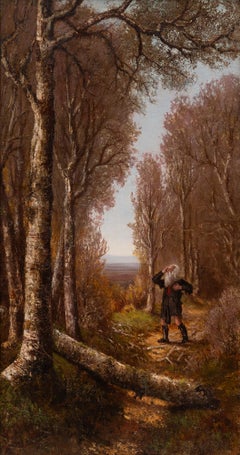
Rip Van Winkle (The Hermit)
By Ralph Albert Blakelock
Located in New York, NY
Ralph Albert Blakelock depicts a disoriented elderly man with a long white beard and hair on a forest path in his oil painting “Rip Van Winkle (The Hermit).”
Canvas, Oil
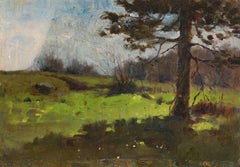
View from the Shade
By Luther E. Van Gorder
Located in New York, NY
Using what Sarah Burn’s calls the nineteenth-century artist’s “transformative power of personal vision,” Luther Emerson Van Gorder created brilliant impres...
Canvas, Oil
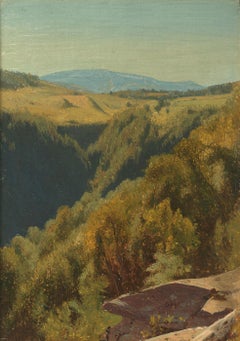
Summer Hills, Hunter Mountain
By Jervis McEntee
Located in New York, NY
Dated lower right: Sept. 67
Oil

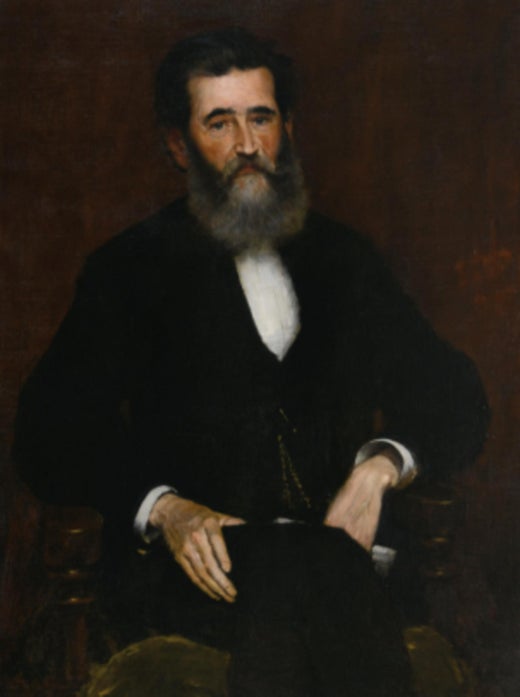
Portrait of William Merritt Chase
By Walter Shirlaw
Located in Douglas, Isle of Man
Attributed to Walter Shirlaw 1838-1909, was a Scottish born American painter who lived in America from the age of two years old. Shirlaw studied in Munich where he befriended America...
Canvas, Oil
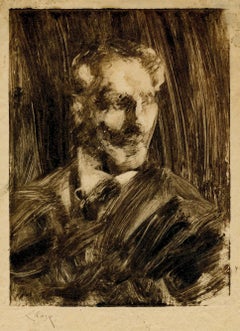
Portrait of a Man Facing Left, Impressionist Monoprint, Circa 1890
By William Merritt Chase
Located in Fairlawn, OH
Portrait of a Man Facing Left Monotype printed in brown ink, c. 1880-1914 Signed in ink lower left: Chase (see photo) Provenance: Helen Chase Storm (the artist's daughter) Jackson Chase Storm (her son) Chapellier Galleries (as agent) James Bergquist, Boston References And Exhibitions: Exhibited at the Museum of Fine Arts, Boston and the Clark Art Institute, Williamstown, MA. (See MFA paperwork in photos) Reference: Ronald G. Pisano, Completed by D. Frederick Baker and Carolyn K. Lane, William Merritt Chase: Still Lifes, Interiors, Figures, Copies of Old Masters, and Drawings, Catalogue Raisonne, Vol. IV (New Haven and London: Yale University Press, 2010), Vol. 1, M. 8. (See photos of entry) William Merritt Chase (1840-2016) Born in Nineveh, Indiana Died New York, New York In 1883 Chase was involved in the organization of an exhibition to help raise funds for a pedestal for the Statute of Liberty. The exhibition featured loans of three works by Manet and urban scenes by the Italian Impressionist Giuseppe de Nittis. Both artists influenced Chase's Impressionistic style that gave rise to a series of New York park scenes. It is also thought that he was influenced by John Singer Sargent's In the Luxembourg Gardens (1879) which was exhibited in New York at this time. Indeed, Chase had met Sargent in Europe in 1881, the two men becoming lifelong friends with Sargent painting Chase's portrait in 1902. On another European trip in 1885, Chase met James McNeill Whistler in London. While Whistler had a reputation for being difficult, the two artists got along famously and agreed to paint one another's portrait. Eventually, however, Whistler's moods began to grate with Chase who wrote home stating "I really begin to feel that I never will get away from here". For his part, Whistler criticized Chase's finished portrait and, according to Hirshler, "complained about Chase for the rest of his life". While no record exists of Whistler's portrait of Chase; Chase's portrait of Whistler remains a well-known piece in his oeuvre. In 1887 Chase married Alice Gerson, the daughter of the manager of a lithography company. Though some fifteen years his junior (Chase was 37), he had known Alice for some time through her family's devotion to the arts. The pair, who would enjoy a happy marriage with Alice in full support of her husband's career, settled initially in Brooklyn...
Monoprint
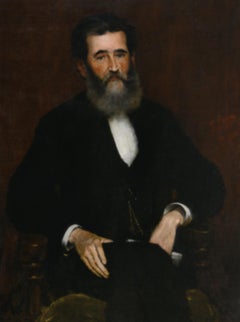
"Portrait of Louis Prang" William Merritt Chase, Impressionist Portrait
By William Merritt Chase
Located in New York, NY
William Merritt Chase Portrait of Louis Prang, 1884 Signed center right "WM M Chase" Oil on canvas 41 1/2 x 30 1/2 inches Provenance The artist Louis Prang Gift from the sitter to R...
Canvas, Oil
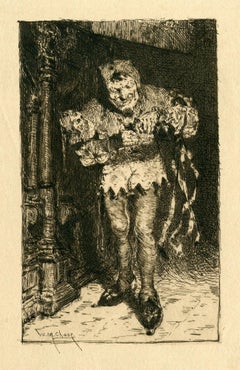
Keying Up - The Court Jester
By William Merritt Chase
Located in Fairlawn, OH
Keying Up - The Court Jester Etching with drypoint, 1879 Signed in the plate lower left corner (see photos) Proof before engraved title and engraved names Printed on thin light golden Japanese tissue paper In the final state, with engraved titled and typeface engraved artist’s signature below the image Condition: excellent Plate size: 6-5/8 x 4-1/4" According to Pisano, this image was very popular during Chase’s life. It is based on his famous painting, Keying Up-The Court Jester, in the collection of the Pennsylvania Academy of Fine Arts. The painting was created in Munich during the artist’s studies there. It was exhibited in the 1876 Centennial Exhibition in Philadelphia where it won a Medal of Honor and helped establish the artist’s reputation as a leading American painter. Chase, always conscious of self promotion, created the etching and had numerous impressions printed. He sold them for a modest price to increase his fame. The etching was later published in Sylvester R. Koehler, American Art Review, September 1878. It was for this American Art Review printing that the engraved titled and type face signature below the image were added to the plate. This example was part of a group of impressions that came down in the Chase family via his daughter Dorothy Bremond Chase, his third daughter. They were acquired at auction in a single auction lot, housed in a paper board folder. The consignor was Associated American Artist’s as they were liquidating their stock prior to closing the gallery. Dorothy was the subject of Chase’s painting, My Little Daughter Dorothy. C. 1894, in the collection of the Detroit Institute of Arts as well as numerous other portraits of her. Reference: Pisano/Bake, Volume 1, Pr. 3, illustrates the rare 1st state, this being a 2nd state before any other the engraved title and Chase's name in the bottom margin which are found in the third state. Artist bio in file (Chase) In 1883 Chase was involved in the organization of an exhibition to help raise funds for a pedestal for the Statute of Liberty. The exhibition featured loans of three works by Manet and urban scenes by the Italian Impressionist Giuseppe de Nittis. Both artists influenced Chase's Impressionistic style that gave rise to a series of New York park scenes. It is also thought that he was influenced by John Singer Sargent's In the Luxembourg Gardens (1879) which was exhibited in New York at this time. Indeed, Chase had met Sargent in Europe in 1881, the two men becoming lifelong friends with Sargent painting Chase's portrait in 1902. On another European trip in 1885, Chase met James McNeill Whistler in London. While Whistler had a reputation for being difficult, the two artists got along famously and agreed to paint one another's portrait. Eventually, however, Whistler's moods began to grate with Chase who wrote home stating "I really begin to feel that I never will get away from here". For his part, Whistler criticized Chase's finished portrait and, according to Hirshler, "complained about Chase for the rest of his life". While no record exists of Whistler's portrait of Chase; Chase's portrait of Whistler remains a well-known piece in his oeuvre. In 1887 Chase married Alice Gerson, the daughter of the manager of a lithography company. Though some fifteen years his junior (Chase was 37), he had known Alice for some time through her family's devotion to the arts. The pair, who would enjoy a happy marriage with Alice in full support of her husband's career, settled initially in Brooklyn where their first child was born. The couple would parent six daughters and two sons and it was only his family that could rival his devotion to his art. Indeed, Chase often combined his two loves by painting several portraits of his wife and children in Brooklyn parks before the couple relocated to Manhattan. Later Period Between 1891 and 1902, Chase and his family spent their summers at a purpose-built home and studio in Shinnecock Hills, a close suburb of the upmarket town of Southampton on the south shore of Long Island (roughly 100 miles east of New York). Chase set up, and taught two days a week, at the nearby Shinnecock Hills Summer School of Art which benefitted from the financial backing of local art collectors. It was at Shinnecock that Chase, taken in by the region's striking natural surroundings, painted several Impressionistic landscapes. As Bettis put it, "There, among the dunes, in the bright sunlight and sea air his painterly impulse was given free sway, and he produced some of his freest and loveliest work". His passion for the area was so felt he even gave his daughter Hazel the middle name of Neamaug, in honor of the rich Native American history of Shinnecock. Chase was equally focused on the students that came to the School and who he encouraged to paint in the modern plein air style favored by the French Impressionists. Although Chase was making a name for himself as an Impressionist, he never abandoned his commitment to the sombre tones and academic tropes he had learned in Munich, though these he reserved for his portraits, and for his series of striking still lifes featuring dead fish. Chase was in fact a successful society portraitist - he painted fashionable women for a fee of $2,000 - and would paint his students as "samples" which he then donated to leading art institutions (such as Lady in Black (1888) which he donated to the Metropolitan Museum in 1891). In 1896, facing financial difficulties, Chase flirted with the idea of giving up his teaching in New York and traveled with his family to Madrid where he developed a passion for bullfighting. Chase returned however to Shinnecock in June to teach his yearly summer art class, and in the fall of that year, established his own art school in Manhattan: the Chase School which was modelled on the Académie Julian in Paris. Chase lacked business savvy, however, and the Chase School lasted only two years before it was placed under new management. It continued as the New York School of Art (changed to Parsons School of Design starting 1941) with Chase as head the School for eleven more years. Chase also taught during this period at the Pennsylvania Academy of Fine Arts. In 1902, following the premature death of his friend John Twachtman, Chase was invited to join the Ten American Painters group (who included amongst its members, Frank Weston Benson, Thomas Wilmer Dewing...
Etching
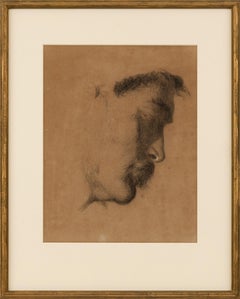
Portrait of a Man’s Head
By William Etty
Located in London, GB
Charcoal and white chalk highlight on paper Label of J.M Maas Gallery (verso) 36cm × 28cm (54cm × 43cm framed) Etty, a student of Thomas Lawrence, R.A., was the first significant Br...
Paper, Chalk, Charcoal
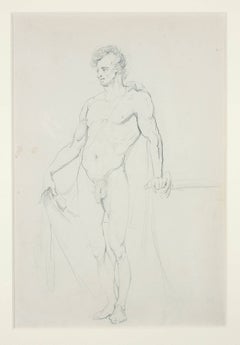
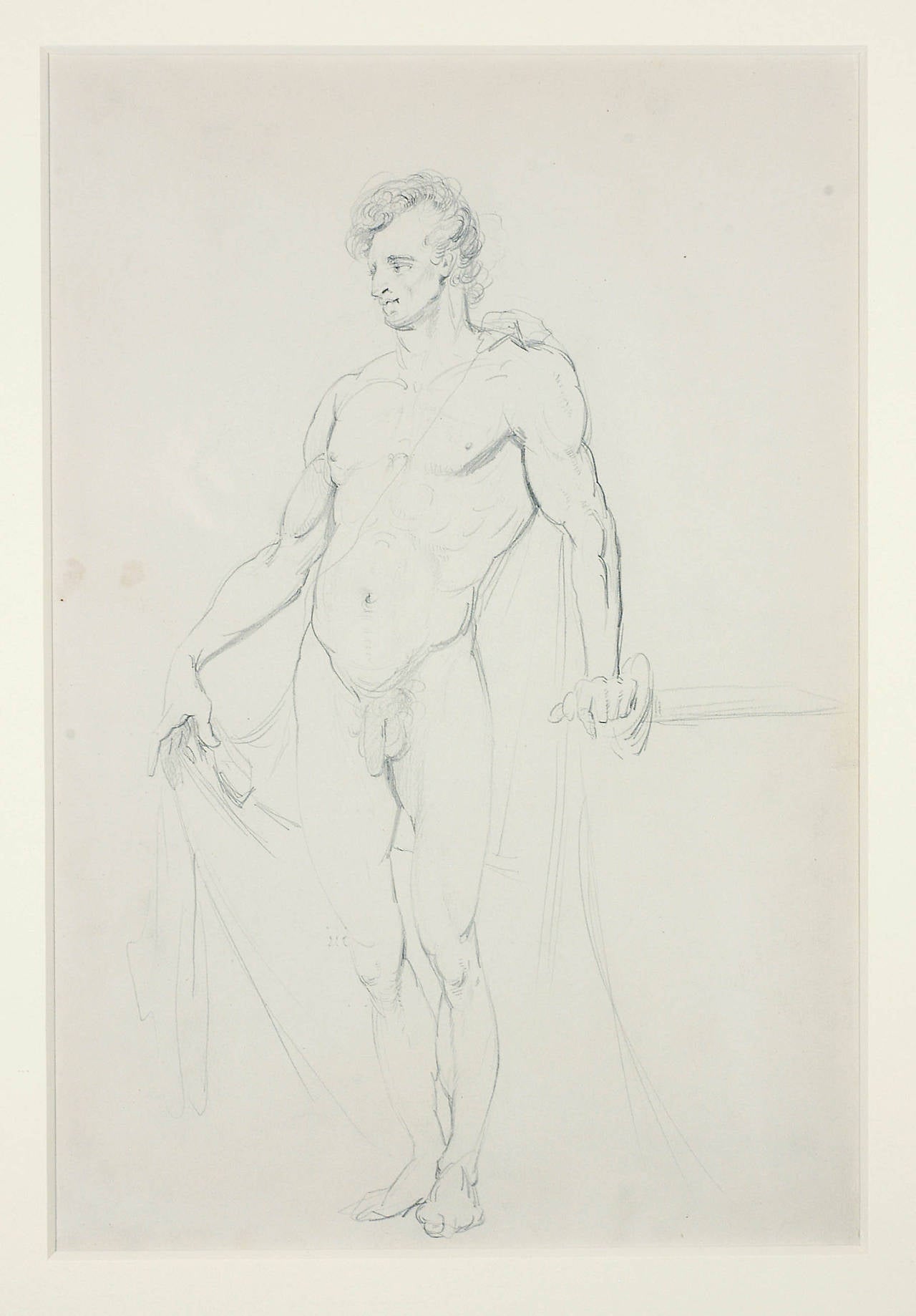
Standing Male Nude (recto) Study of the Head of the Standing Male Nude (verso)
By William Merritt Chase
Located in Fairlawn, OH
Standing Male Nude (recto) Study of the Head of the Standing Male Nude (verso) Unsigned Provenance: Estate of the artist Helen Chase Storm (the artist's daughter) Jackson Chase Storm (the artist's grandson) Baker-Pisano Collection (the author of the William Merritt Chase Catalog Raisonne Project) References And Exhibitions: Pisano D8, reproduced p. 183 Rare. Chase did relatively few drawings, probably no more than 150 in total, according to the catalogue raisonne. William Merritt Chase (1840-2016) Born in Nineveh, Indiana Died New York, New York In 1883 Chase was involved in the organization of an exhibition to help raise funds for a pedestal for the Statute of Liberty...
Graphite