Want more images or videos?
Request additional images or videos from the seller
1 of 8

Fred Reichman
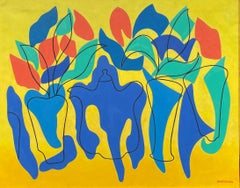
After Sweeping the Garden, Alkyd on Canvas Still Life, Signed, 32x45, minimalist

1984

$10,100
£7,610.07
€8,895.28
CA$14,302.61
A$14,565.66
CHF 8,361.30
MX$175,761.03
NOK 96,903.28
SEK 98,234.39
DKK 66,504.85

About the Item

"After Sweeping the Garden" is an original work in alkyd paint on canvas by Fred Reichman. The artist signed the painting in the darker pink section in the left center. This painting depicts a broom with leaves coming out of it. Signed and dated on the reverse 30 7/8" x 43 3/4" art 32 1/8" x 45 1/8" frame Fred Reichman was a well-known artist and art instructor. He was born in 1925 in Bellingham, Washington and moved to San Francisco in 1934. After receiving his B.A. and M.A. from UC Berkley and living in Europe for two years on a UC Berkley Taussig fellowship, he taught at the University of California at Berkeley, the University of California at Davis, San Francisco Art Institute and the University of California extension in San Francisco. Critics praised his works for their "compositional tautness," and their frequent use of luminous whites and yellows. "The paintings of Fred Reichman are just plain magical," one critic wrote. For many years before his illness, Mr. Reichman taught classes in painting and also in the perception of art -- from the classics to the ultramodern. Major galleries presented one-man shows of Mr. Reichman's works in San Francisco, Los Angeles, Santa Barbara and Taos, N.M., as well as in Japan and Germany. His paintings are also in the permanent collections of many American museums, including San Francisco's Museum of Modern Art, and the UC Berkeley Art Museum. He once described his style as a California painter this way: "There is a unique energy that exists on the Pacific Coast. It is different from our Eastern Seaboard, different from the art of Europe and the Orient -- yet it comes out of all these sources to create inspiration and fresh insights. The light and the land, the atmosphere that exists here, has its own particular ambience. I feel a part of this energy." Fredrick Thomas Reichman was born in Bellingham, Wash., where his grandfather, who was a carpenter as well as a painter, first taught him to paint and draw at the age of 9. He served in the Navy during World War II and earned his bachelor's and master's degrees at UC Berkeley. At Cal, he won a graduate fellowship for travel and study in Europe, where he used Paris as his home base to paint and to study the work of masters such as Piero della Francesco in Italy and El Greco in Spain. In the years after his return from Europe, Mr. Reichman also studied at the San Francisco Art Institute, where he later taught. And because his own enthusiasm for painting had begun as a child, he also taught children's classes for several years at the Junior Center of Art and Science in Oakland. He died in 2005.
  • Creator:
    Fred Reichman (American)
  • Creation Year:
    1984
  • Dimensions:
    Height: 32.125 in (81.6 cm)Width: 45.125 in (114.62 cm)
  • Medium:
  • Period:
  • Framing:
    Framing Options Available
  • Condition:
  • Gallery Location:
    Milwaukee, WI
  • Reference Number:
    Seller: G40721stDibs: LU60532427233

More From This Seller

View All
The Elusive One Abstract Painting, Signed 2017, 30x40 Inches, New

The Elusive One Abstract Painting, Signed 2017, 30x40 Inches, New

By Ananda Kesler

Located in Milwaukee, WI

Signed and dated "Ananda Kessler 2017" in permanent marker on verso lower right corner. Ananda Kesler was born in Haifa, Israel. In 2002 she received her BA in Fine Art from the Uni...

Category

21st Century and Contemporary Abstract Abstract Paintings

Materials

Canvas, Acrylic

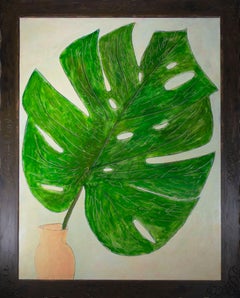
'Leaf in a Jug' original oil on wood painting signed by Robert Richter

'Leaf in a Jug' original oil on wood painting signed by Robert Richter

By Robert Richter

Located in Milwaukee, WI

In this painting, Robert Richter presents the viewer with a still life of a massive Swiss cheese plant leaf emerging from a small ceramic jug. Though the leaf is a common tropical ho...

Category

2010s Outsider Art Still-life Paintings

Materials

Oil, Wood Panel

You May Also Like

"Untitled" Albert Heckman, Still Life, Floral Abstracted Modernist Composition

"Untitled" Albert Heckman, Still Life, Floral Abstracted Modernist Composition

By Albert Heckman

Located in New York, NY

Albert Heckman Untitled, circa 1950 Signed lower right Oil on canvas 25 1/4 x 32 1/4 inches Albert Heckman was born in Meadville, Western Pennsylvania, 1893. He went to New York City to try his hand at the art world in 1915 after graduating from high school and landing a job at the Meadville Post Office. In 1917, at the age of 24, Heckman enrolled part-time in Teachers' College, Columbia University's Fine Arts Department to begin his formal art education. He worked as a freelance ceramic and textile designer and occasionally as a lecturer at the Metropolitan Museum of Art. In the early 1920s, at the age of almost 30, he graduated with a Bachelor of Arts degree from Columbia Teachers College. He was especially impacted by his instructor at Columbia, Arthur Wesley Dow. After graduating, he was hired by the Teachers' College as a Fine Arts instructor. He stayed with Columbia Teachers' College until 1929, when he left to attend the Leipzig Institute of Graphic Arts in Leipzig, Germany. Isami Doi (1903-1965), who was born in Hawaii, was arguably his most impressive student at Columbia. Doi is now regarded as one of the most prominent artists hailing from Hawaii. Heckman became an active member and officer of the Keramic Society and Design Guild of New York in the 1920s as part of his early commercial art career. The Society's mission was to share knowledge and showcase textile and ceramic design exhibits. In 1922, Heckman married Florence Hardman, a concert violinist. Mrs. Heckman's concert schedule during the 1920s kept Albert and Florence Heckman apart for a significant portion of the time, but they spent what little time they had together designing and building their Woodstock, New York, summer house and grounds. A small house and an acre of surrounding land on Overlook Mountain, just behind the village of Woodstock, were purchased by Albert and Florence Heckman at the time of their marriage. Their Woodstock home, with its connections, friendships, and memories, became a central part of their lives over the years, even though they had an apartment in New York City. Heckman's main artistic focus shifted to the house on Overlook Mountain and the nearby towns and villages, Kingston, Eddyville, and Glasco. After returning from the Leipzig Institute of Graphic Arts in 1930, Mr. Heckman joined Hunter College as an assistant professor of art. He worked there for almost thirty years, retiring in 1956. Throughout his tenure at Hunter, Mr. Heckman and his spouse spent the summers at their Woodstock residence and the winters in New York City. They were regular and well-known guests at the opera and art galleries in New York. Following his retirement in 1956, the Heckmans settled in Woodstock permanently, with occasional trips to Florida or Europe during the fall and winter. Mr. Heckman's close friends and artistic career were always connected to Woodstock or New York City. He joined the Woodstock art group early on and was greatly influenced by artists like Paul and Caroline Rohland, Emil Ganso, Yasuo Kuniyoshi, Andre Ruellan, and her husband, Jack Taylor. Heckman operated a summer art school in Woodstock for several years in the 1930s with support from Columbia University, where these and other Woodstock artists gave guest lectures. The Potter's Shop in New York City hosted Mr. Heckman's first art show in December 1928. The exhibit received some positive reviews from critics. The American Institute of Graphic Arts chose the plate of "Wehlen, Saxony" as one of the "Fifty Prints of the Year in 1929." There were sixteen etchings displayed. The remaining plates depicted scenes in Saxony, Germany, while five of the plates were based on scenes in Rondout, New York. Heckman started switching from etching to black and white lithography by the early 1930s. A lifelong admirer of Heckman's artwork, Mr. Gustave von Groschwitz organized a significant exhibition of Heckman etchings and lithographs at the Ferargil Gallery in New York City in 1933. The exhibition traveled to the Stendahl Galleries in Los Angeles (May 1933), the Charles Lessler Gallery in Philadelphia (May 1933), J.L. Hudson in Detroit (June 1933), and Gumps in San Francisco (July 1933). Together with his early etchings, the exhibition featured brand-new black and white lithographs depicting scenes in and around Woodstock as well as "A View from Tudor City...

Category

1950s Abstract Figurative Paintings

Materials

Canvas, Oil

"Untitled" Albert Heckman, 1950s Modernist Abstracted Still Life Painting

"Untitled" Albert Heckman, 1950s Modernist Abstracted Still Life Painting

By Albert Heckman

Located in New York, NY

Albert Heckman Untitled, circa 1950 Signed lower right Oil on canvas 21 1/4 x 29 inches Albert Heckman was born in Meadville, Western Pennsylvania, 1893. He went to New York City to try his hand at the art world in 1915 after graduating from high school and landing a job at the Meadville Post Office. In 1917, at the age of 24, Heckman enrolled part-time in Teachers' College, Columbia University's Fine Arts Department to begin his formal art education. He worked as a freelance ceramic and textile designer and occasionally as a lecturer at the Metropolitan Museum of Art. In the early 1920s, at the age of almost 30, he graduated with a Bachelor of Arts degree from Columbia Teachers College. He was especially impacted by his instructor at Columbia, Arthur Wesley Dow. After graduating, he was hired by the Teachers' College as a Fine Arts instructor. He stayed with Columbia Teachers' College until 1929, when he left to attend the Leipzig Institute of Graphic Arts in Leipzig, Germany. Isami Doi (1903-1965), who was born in Hawaii, was arguably his most impressive student at Columbia. Doi is now regarded as one of the most prominent artists hailing from Hawaii. Heckman became an active member and officer of the Keramic Society and Design Guild of New York in the 1920s as part of his early commercial art career. The Society's mission was to share knowledge and showcase textile and ceramic design exhibits. In 1922, Heckman married Florence Hardman, a concert violinist. Mrs. Heckman's concert schedule during the 1920s kept Albert and Florence Heckman apart for a significant portion of the time, but they spent what little time they had together designing and building their Woodstock, New York, summer house and grounds. A small house and an acre of surrounding land on Overlook Mountain, just behind the village of Woodstock, were purchased by Albert and Florence Heckman at the time of their marriage. Their Woodstock home, with its connections, friendships, and memories, became a central part of their lives over the years, even though they had an apartment in New York City. Heckman's main artistic focus shifted to the house on Overlook Mountain and the nearby towns and villages, Kingston, Eddyville, and Glasco. After returning from the Leipzig Institute of Graphic Arts in 1930, Mr. Heckman joined Hunter College as an assistant professor of art. He worked there for almost thirty years, retiring in 1956. Throughout his tenure at Hunter, Mr. Heckman and his spouse spent the summers at their Woodstock residence and the winters in New York City. They were regular and well-known guests at the opera and art galleries in New York. Following his retirement in 1956, the Heckmans settled in Woodstock permanently, with occasional trips to Florida or Europe during the fall and winter. Mr. Heckman's close friends and artistic career were always connected to Woodstock or New York City. He joined the Woodstock art group early on and was greatly influenced by artists like Paul and Caroline Rohland, Emil Ganso, Yasuo Kuniyoshi, Andre Ruellan, and her husband, Jack Taylor. Heckman operated a summer art school in Woodstock for several years in the 1930s with support from Columbia University, where these and other Woodstock artists gave guest lectures. The Potter's Shop in New York City hosted Mr. Heckman's first art show in December 1928. The exhibit received some positive reviews from critics. The American Institute of Graphic Arts chose the plate of "Wehlen, Saxony" as one of the "Fifty Prints of the Year in 1929." There were sixteen etchings displayed. The remaining plates depicted scenes in Saxony, Germany, while five of the plates were based on scenes in Rondout, New York. Heckman started switching from etching to black and white lithography by the early 1930s. A lifelong admirer of Heckman's artwork, Mr. Gustave von Groschwitz organized a significant exhibition of Heckman etchings and lithographs at the Ferargil Gallery in New York City in 1933. The exhibition traveled to the Stendahl Galleries in Los Angeles (May 1933), the Charles Lessler Gallery in Philadelphia (May 1933), J.L. Hudson in Detroit (June 1933), and Gumps in San Francisco (July 1933). Together with his early etchings, the exhibition featured brand-new black and white lithographs depicting scenes in and around Woodstock as well as "A View from Tudor City...

Category

1950s American Modern Figurative Paintings
Materials

Canvas, Oil

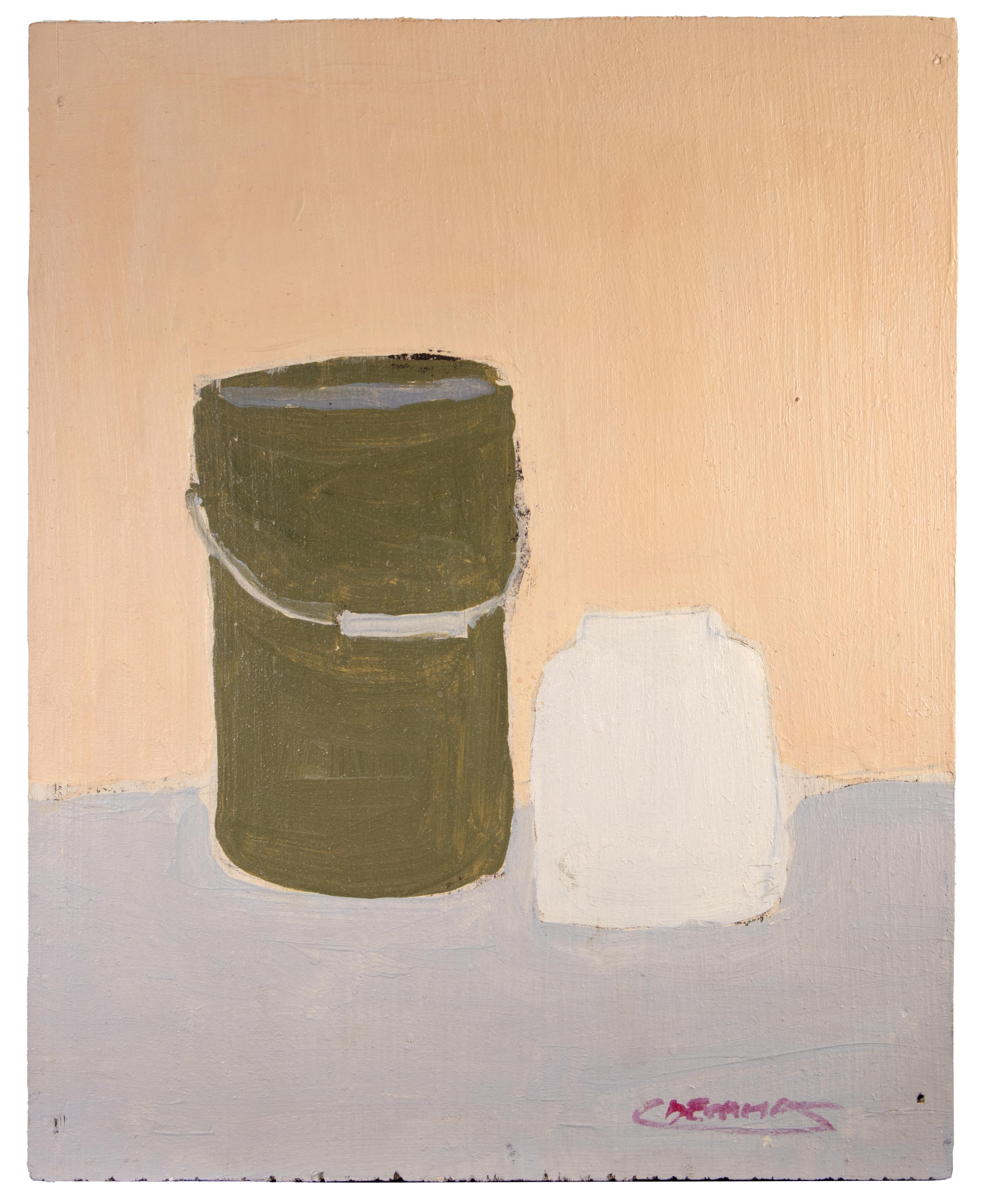
Still life - Oil Painting by Claude Decamps - 1950s

Still life - Oil Painting by Claude Decamps - 1950s

By Claude Decamps

Located in Roma, IT

Still life is an artwork realized by Claude Decamps, mid-20th Century. Oil on wood.  25 x 20 cm. Hadsigned in red in lower margin. Good conditions!

Category

1970s Modern Figurative Paintings
Materials

Oil, Wood