Want more images or videos?
Request additional images or videos from the seller
1 of 8

Tina Modotti
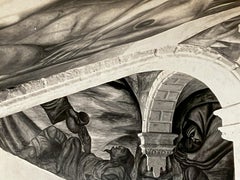
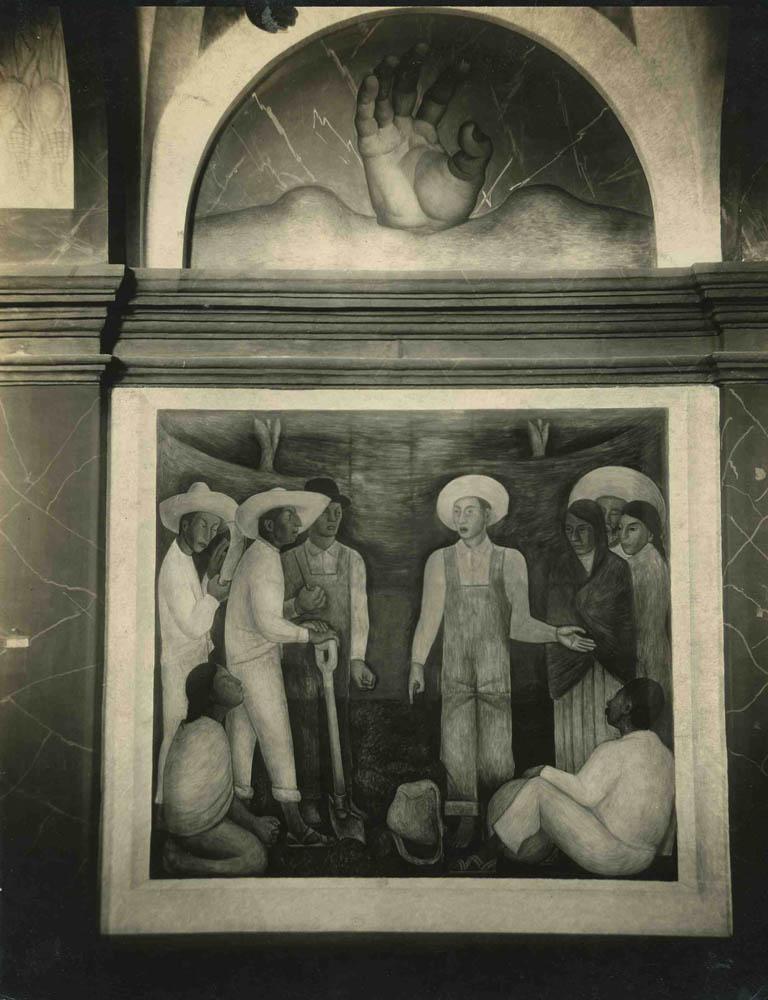
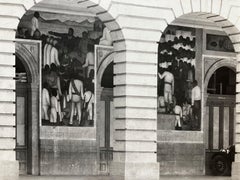
1920s Gelatin Silver Print by Tina Modotti of a Mural Fresco by Diego Rivera

circa 1920's

$2,500
£1,886.51
€2,195.44
CA$3,529.33
A$3,541.67
CHF 2,065.54
MX$43,062.36
NOK 23,735.15
SEK 24,410.39
DKK 16,412.06

About the Item

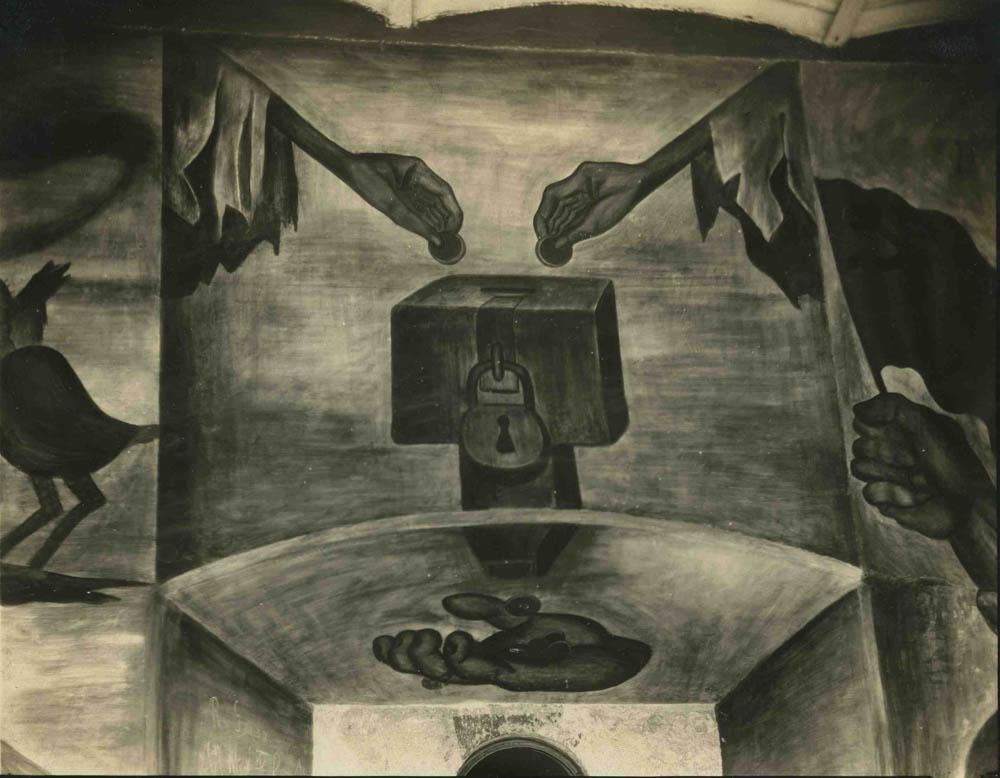
An original 1920s silver gelatin print by famed photographer Tina Modotti, showing a mural fresco in the Secretariat of Education in Mexico City by artist Diego Rivera. Photo is stamped “Photographs-Tina Modotti Mexico, D.F.” on reverse. Photograph size: 9 1/4 x 7 1/4 inches. Archivally matted to 16 x 20 inches. This particular print was exhibited at "Women Artists of Modern Mexico: Frida’s Contemporaries", National Mexican Museum of Art, Chicago, IL, June 22-September 2, 2007. Tina Modotti was born in Udine, Italy in 1896 and by the age of 14 she was supporting her entire family by working in a local silk factory. Modotti’s father emigrated to San Francisco, sending for his family in 1913. Modotti was hired in the sewing room at the I. Magnin department store, but her great beauty attracted the attention of her superiors who then employed her to model the store’s fashions. In 1915, Modotti attended San Francisco’s Pan-Pacific Exposition, where she got her first look at Modern art and photography. She also met her first husband at the Exposition, painter and poet Roubaix de l’Abrie Richey. At this time Modotti began acting in local Italian theatre and was discovered by a talent scout for the new silent film industry in Hollywood. She arrived in Los Angeles in 1918 and was cast in “The Tiger’s Coat” and “I Can Explain”. Through her Hollywood connections, Modotti met the married photographer Edward Weston, with whom she began an affair. Modotti was a favorite subject of Weston’s photographs, but moreover he taught her the art of photography. She actually ran Weston’s studio in exchange for photography lessons. Due to the on-going affair between Modotti and Weston, Modotti’s husband moved to Mexico where he died of smallpox. This tragedy and the death of her father made Modotti dissatisfied with Hollywood. Modotti and Weston arrived in Mexico in 1923 at a time when the country was in the midst of a social, political and cultural revolution. She photographed the Mexican revolutionary culture and these are among her best known works. Modotti became friends with Diego Rivera and other artists, writers and radicals within his circle and was greatly influenced by their Communist ideologies. Rivera, Clemente Orozco and other muralists asked her to photograph their works. The photographs in this collection are from these series. Modotti’s fascination with Communism drove she and Weston apart and they separated in 1926. In 1928 Modotti began living with a Cuban revolutionary in-exile, Julio Antonio Mella. Just a few months into their relationship, Modotti was at Mella’s side when he was gunned-down on a Mexico City street by his political opponents. The Mexican government tried to implicate Modotti in Mella’s death and although she was acquitted, her reputation was ruined. Mella’s death and the subsequent trial pushed Modotti further into a revolutionary Communist zeal. Modotti became preoccupied with producing revolutionary art and in 1929 opened her first solo show called the “First Revolutionary Photography Exhibit”. The secret police kept watch over her house and in 1930 she was arrested an deported to Europe. On the boat to Europe she became re-acquainted with a Soviet agent, Vittorio Vidali who wanted her to accompany him to Moscow. She instead decided to go to Berlin, but her six months in Berlin proved unhappy and she eventually joined Vidali in Moscow. Once in Moscow, she realized that her photography did not comply with Stalin’s concept of “revolutionary” art, so she gave up photography completely and devoted herself to combating fascism by working for International Red Aid. Modotti basically became a spy and entered fascist controlled countries undercover to assist families of political prisoners. In 1940, she quietly retuned to Mexico and was living under the name Dr. Carmen Sanchez. By 1941, she began to contact some old friends such as Clemente Orozco and was attempting to purchase a camera to once again begin her photography. Unfortunately, her life ended as dramatically as it began On the way home from a dinner party on the night of January 6, 1942, 46 year old Modotti died of a heart attack in the back seat of a Mexico City taxicab.
  • Creator:
    Tina Modotti (1896-1942, Italian)
  • Creation Year:
    circa 1920's
  • Dimensions:
    Height: 16 in (40.64 cm)Width: 20 in (50.8 cm)Depth: 0.13 in (3.31 mm)
  • Medium:
  • Movement & Style:
  • Period:
  • Condition:
    Very good, original estate condition. See photos.
  • Gallery Location:
    Chicago, IL
  • Reference Number:
    Seller: #15971stDibs: LU2591214048492

More From This Seller

View All
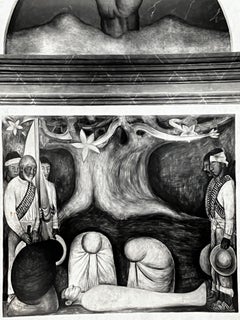
1920's Gelatin Silver Print by Tina Modotti of a Mural Fresco by Diego Rivera

1920's Gelatin Silver Print by Tina Modotti of a Mural Fresco by Diego Rivera

By Tina Modotti

Located in Chicago, IL

Original, vintage gelatin silver print by famed photographer Tina Modotti of a mural fresco by Diego Rivera. "Negative Side of the Church" from the fresco in the Preparatory School ...

Category

1920s Modern Black and White Photography

Materials

Silver Gelatin, Paper
1920s Gelatin Silver Print by Tina Modotti of a Diego Rivera Fresco

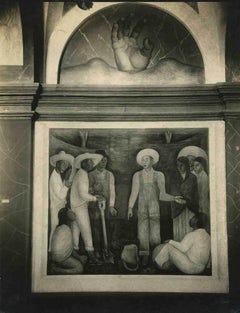
1920s Gelatin Silver Print by Tina Modotti of a Diego Rivera Fresco

By Tina Modotti

Located in Chicago, IL

An original 1920s gelatin silver print by famed photographer Tina Modotti, depicting a mural fresco by Diego Rivera in the Secretariat of Education in Mexico City, Mexico. Photo is ...

Category

1920s Modern Black and White Photography

Materials

Silver Gelatin, Paper
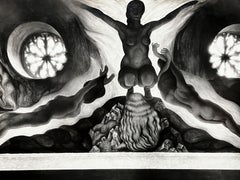
1920s Gelatin Silver Print by Tina Modotti, of Diego Rivera Mural

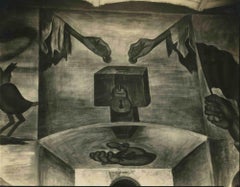
1920s Gelatin Silver Print by Tina Modotti, of Diego Rivera Mural

By Tina Modotti

Located in Chicago, IL

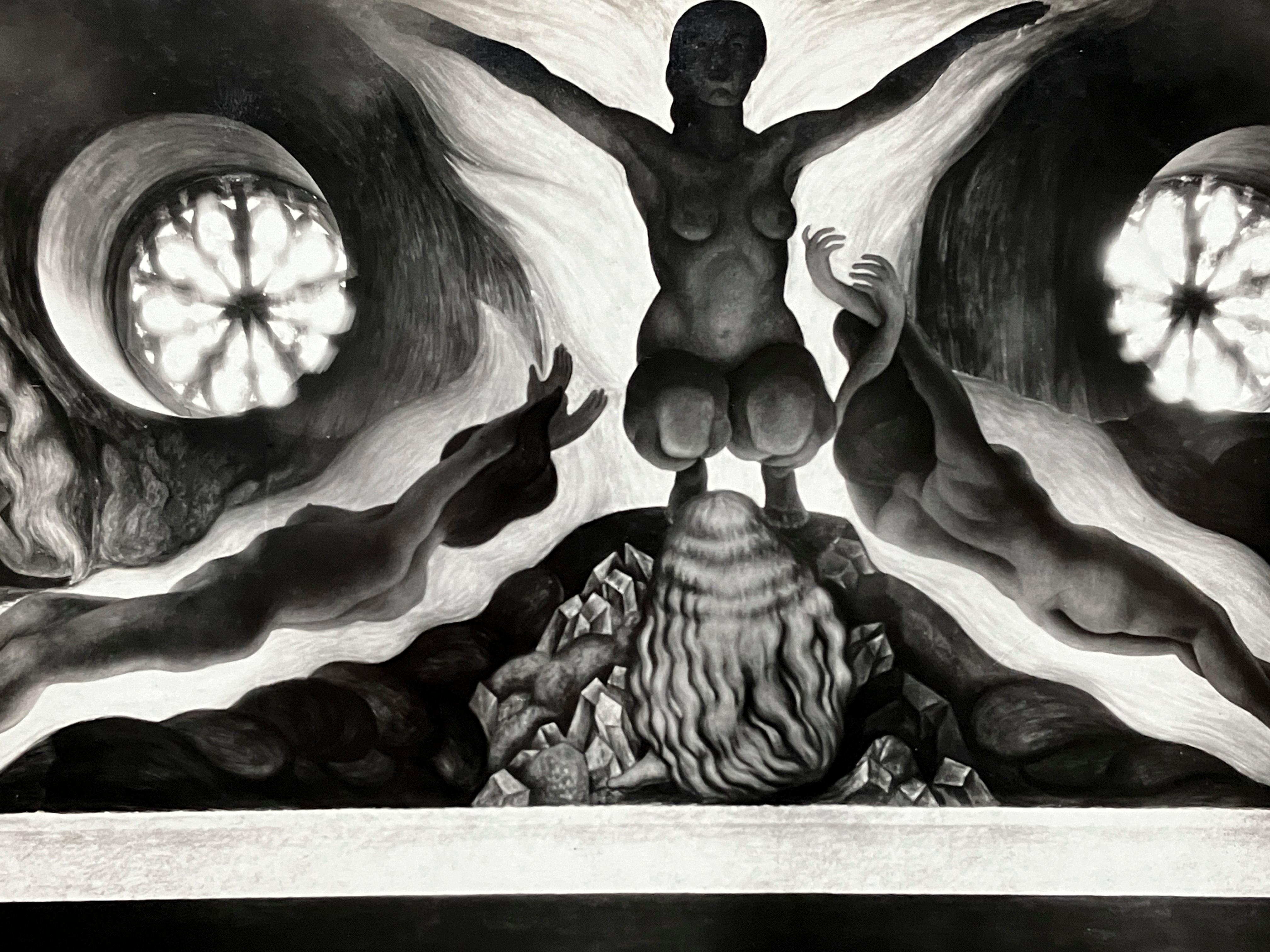
An original 1920s gelatin silver print by famed photographer Tina Modotti, showing a mural fresco by Diego Rivera, "The Spirit of Fire", in the Agricultural School-Chapingo, Mexico. ...

Category

1920s Black and White Photography

Materials

Silver Gelatin, Paper
1920s Gelatin Silver Print by Tina Modotti of Clemente Orozco Fresco

1920s Gelatin Silver Print by Tina Modotti of Clemente Orozco Fresco

By Tina Modotti

Located in Chicago, IL

An original 1920s gelatin silver print by famed photographer Tina Modotti, depicting a detail of an image of St. Francis in a mural fresco in a prep school in Mexico City by Clement...

Category

1920s Modern Black and White Photography

Materials

Silver Gelatin, Paper
You May Also Like

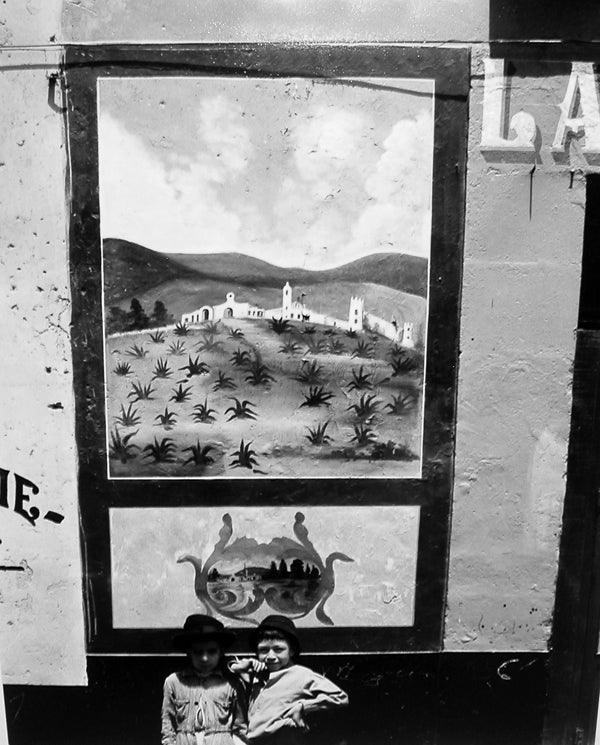
Pulqueria, Mexico, 1926

Pulqueria, Mexico, 1926

By Edward Weston

Located in Carmel-by-the-Sea, CA

Museo De Arte Moderno, Mexico Bosque De Chapultepec, Exposicion Inaugural El Dia 20 De Septiembre De 1964’ stamp on verso with artist, title, collection, EW birth/death date, number,...

Category

20th Century Portrait Photography

Materials

Silver Gelatin

1940s Silver Gelatin Photo of the Diego Rivera Studio

1940s Silver Gelatin Photo of the Diego Rivera Studio

Located in Mexico City, CDMX

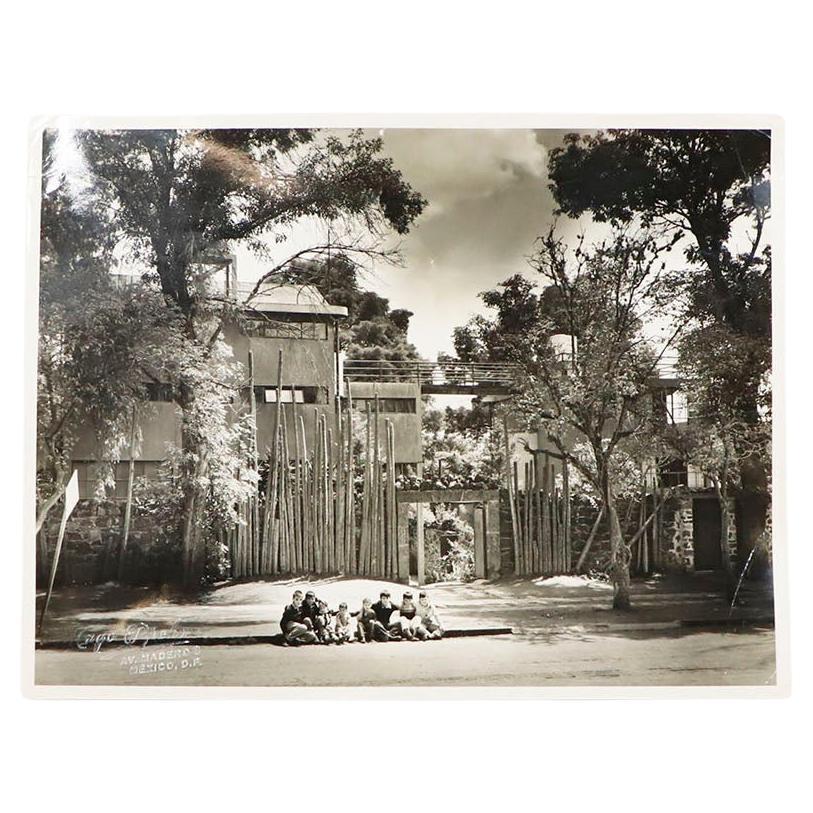
Circa 1940. We offer this Silver Gelatin Photo of the Diego Rivera Studio. In 1931, commissioned by Diego Rivera, Juan O'Gorman designed one of the first functionalist architectural ...

Category

Vintage 1940s Mexican Mid-Century Modern Photography

Materials

Paper

Pulqueria, Mexico, 1926

Pulqueria, Mexico, 1926

By Edward Weston

Located in Carmel-by-the-Sea, CA

Titled with artist's reference number on back of mount. Stamped, 'Edward Weston printed by' and signed by Cole Weston on back of mount. Negative Code 62A. The Weston Gallery is locat...

Category

20th Century Black and White Photography

Materials

Silver Gelatin

Fresco of Cathedral - Vintage Photo - Early 20th century

Fresco of Cathedral - Vintage Photo - Early 20th century

Located in Roma, IT

Fresco of  Cathedral is a black and white photograph realized by Zuecca Uno in the early 20th century. Good conditions, aged with foxing.

Category

Early 20th Century Modern Figurative Photography

Materials

Photographic Paper