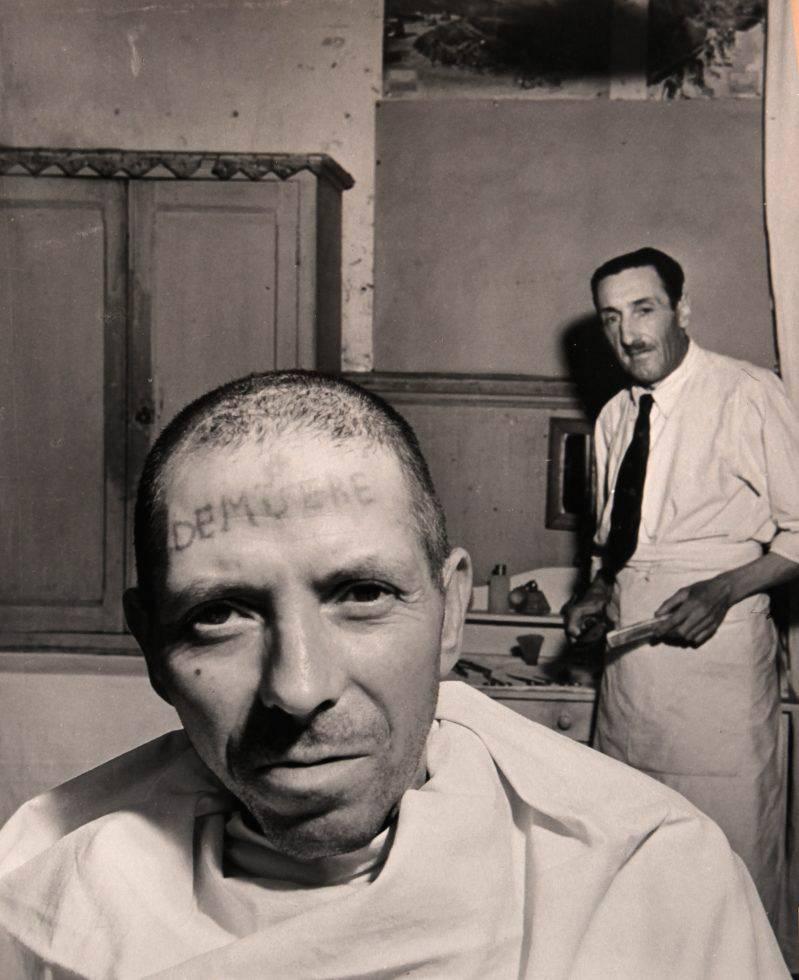
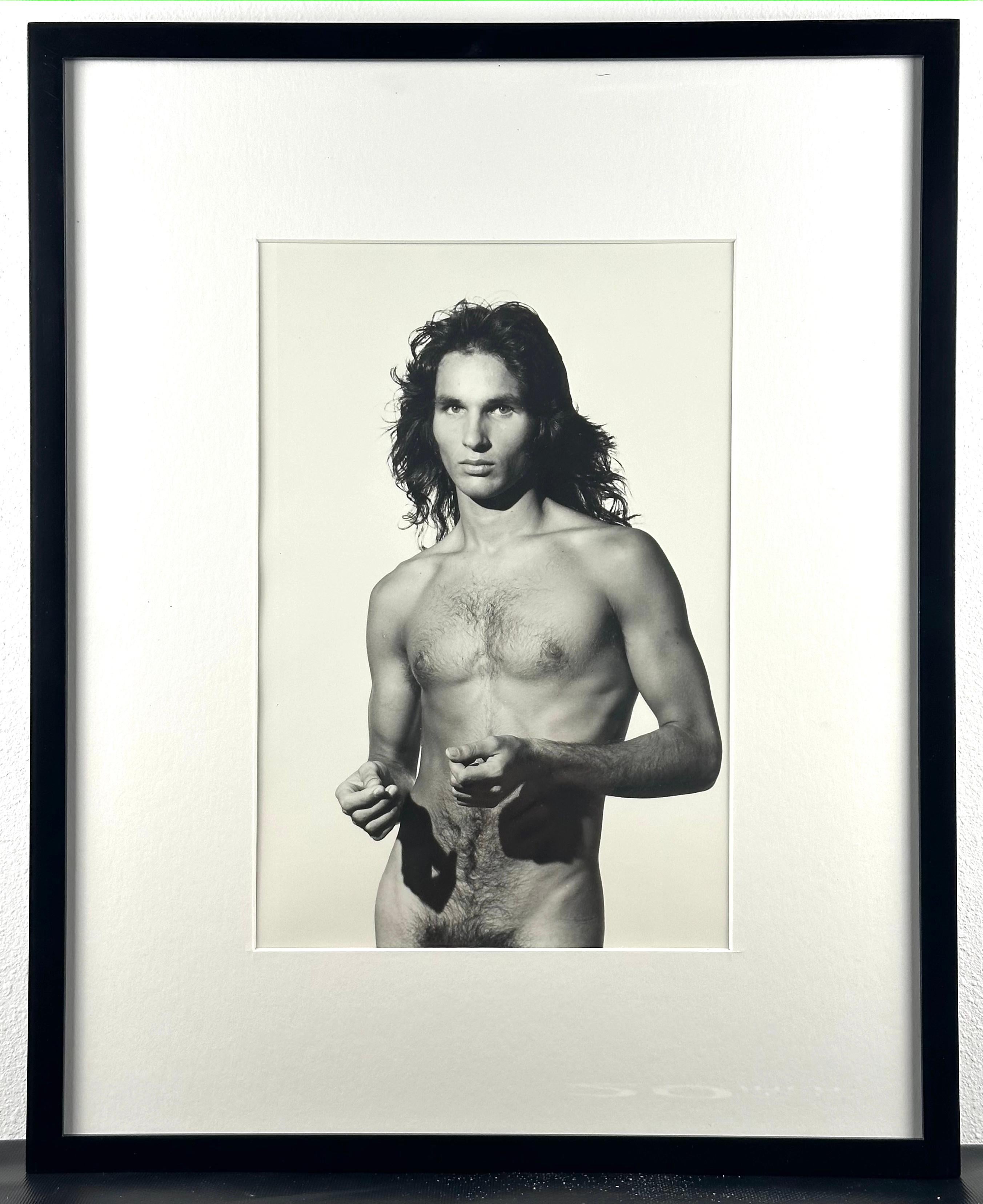
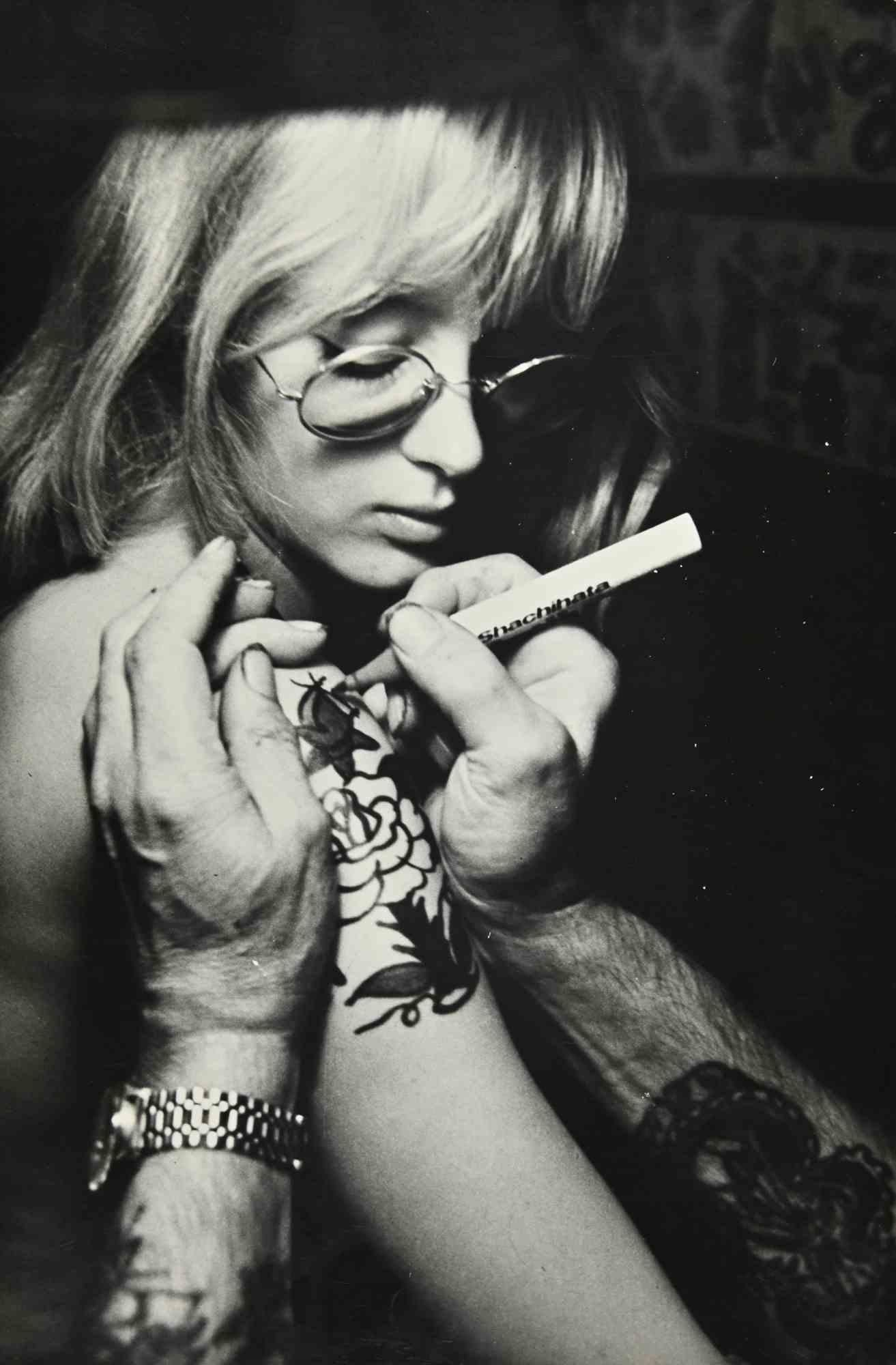
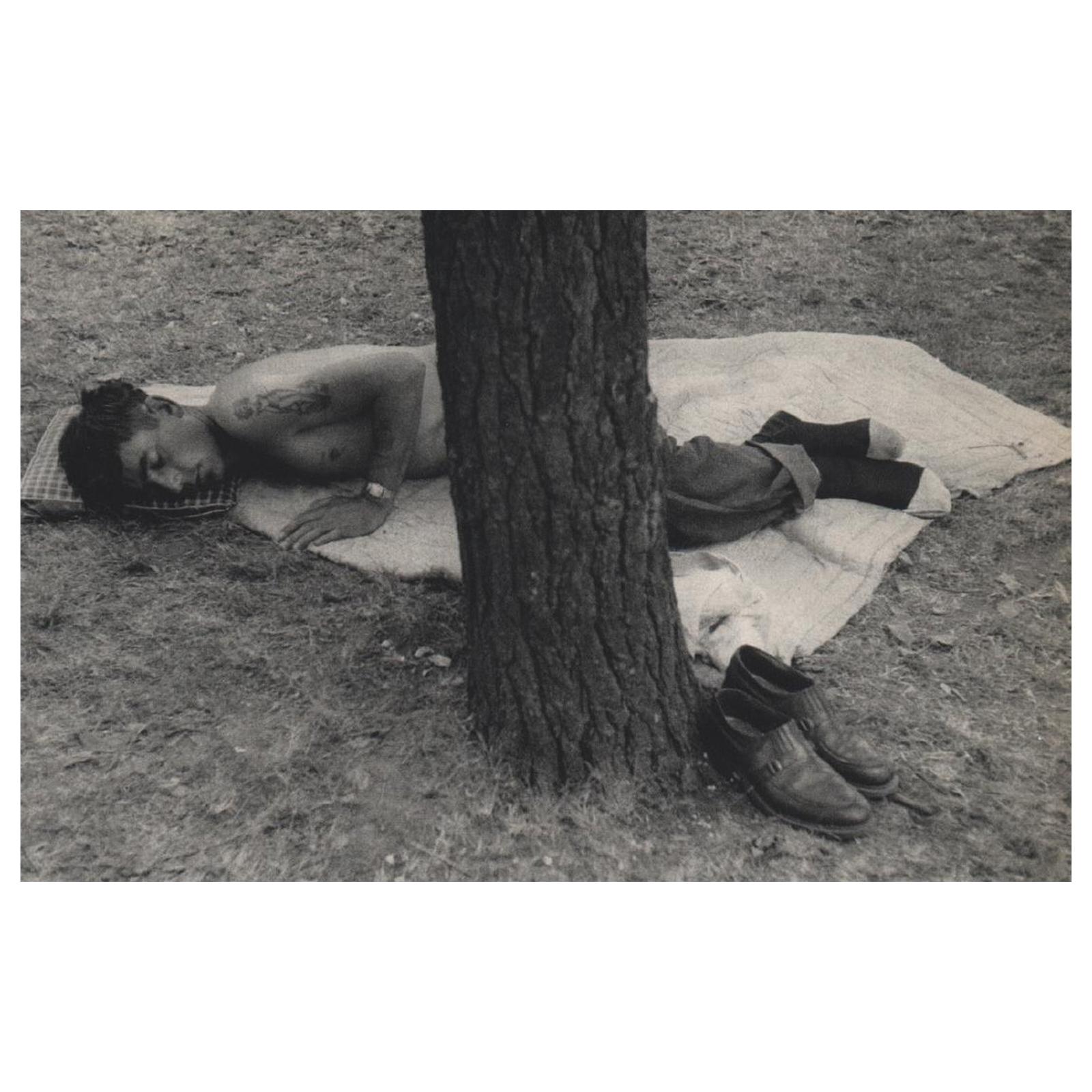
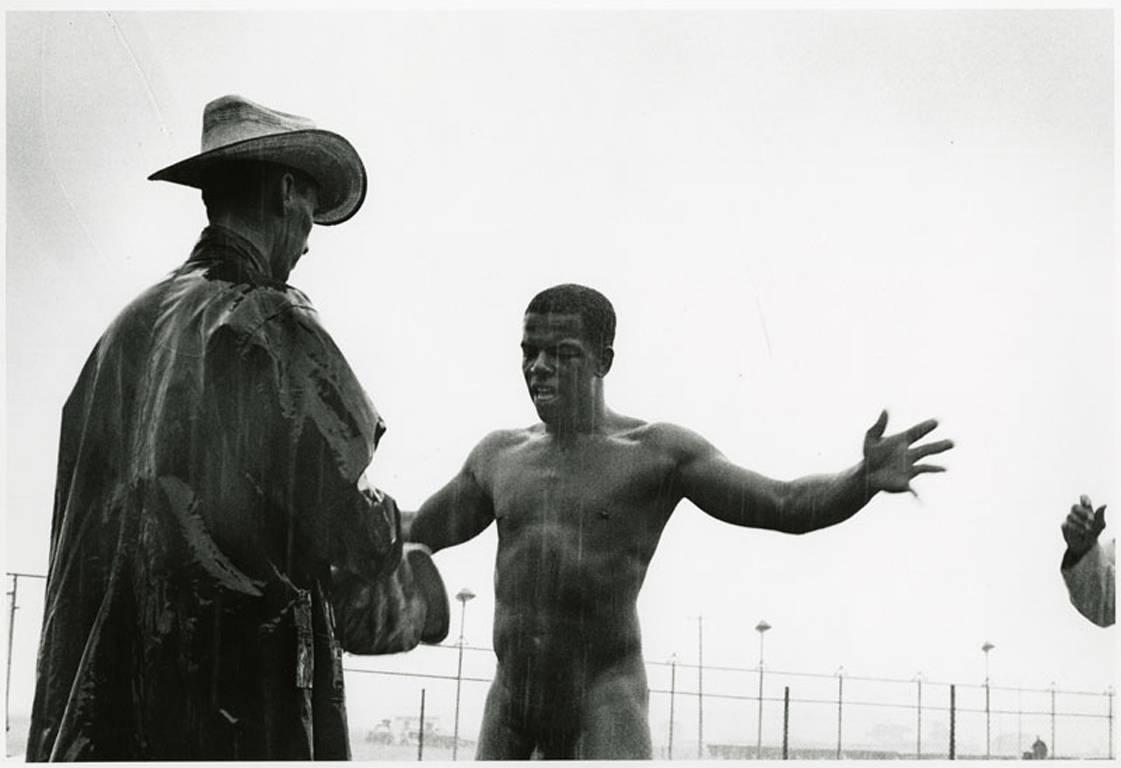
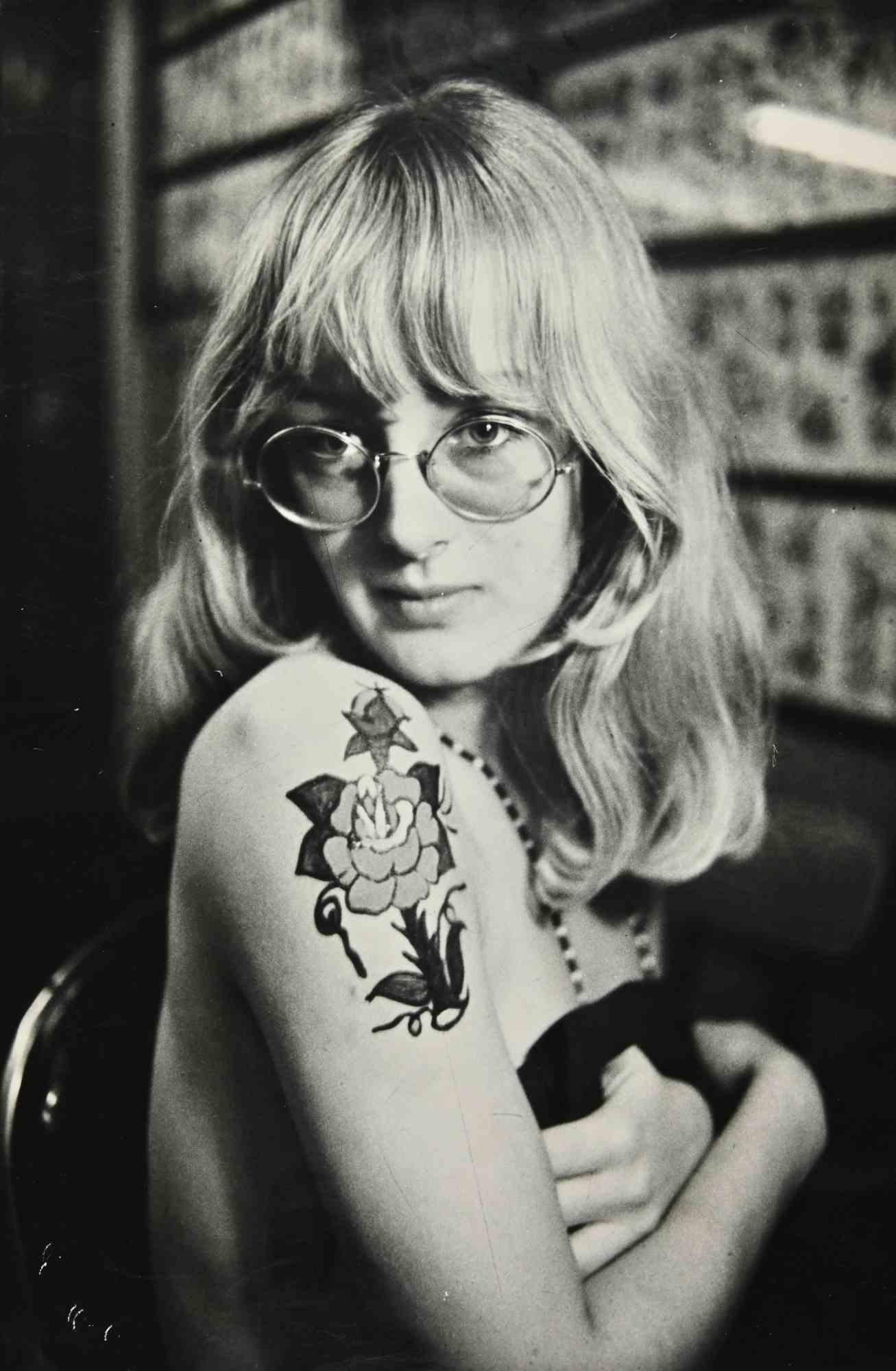
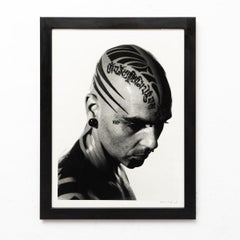
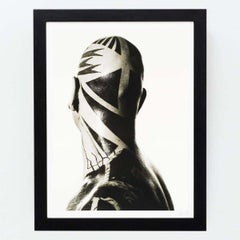
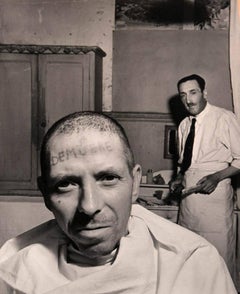
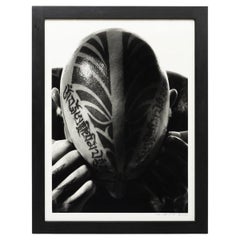
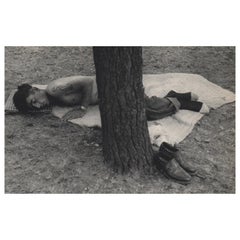
This exquisite heliogravure after Diane Arbus (1923–1971), titled Tattooed Man at a Carnival, M.D., originates from the 1979 folio Diane Arbus, Electa Editrice Portfolios. Published by the United Nations Educational, Scientific and Cultural Organization (UNESCO), Paris, in conjunction with the Municipality of Venice, Italy, and the International Center of Photography, New York, and printed by Gruppo Editoriale Electra, Milano, 1979. This haunting and iconic image captures Arbus's singular vision of modern life—revealing the surreal and psychological dimensions of everyday experience with empathy, precision, and quiet intensity.
Executed as a heliogravure on velin paper, this work measures 15.75 x 11.75 inches. Unsigned and unnumbered as issued. The edition exemplifies the superb craftsmanship of Gruppo Editoriale Electra S.P.A., Milano.
Artwork Details:
Artist: After Diane Arbus (1923–1971)
Title: Tattooed Man at a Carnival, M.D.
Medium: Heliogravure on velin paper
Dimensions: 15.75 x 11.75 inches (40.01 x 29.84 cm)
Inscription: Unsigned and unnumbered as issued
Date: 1979
Publisher: UNESCO, Paris; the Municipality of Venice, Italy; and the International Center of Photography, New York
Printer: Gruppo Editoriale Electra S.P.A., Milano
Condition: Well preserved, consistent with age and medium
Provenance: From the folio Diane Arbus, Electa Editrice Portfolios, published by UNESCO, Paris, in conjunction with the Municipality of Venice, Italy, and the International Center of Photography, New York; printed by Gruppo Editoriale Electra, Milano, 1979
Notes:
Excerpted from the folio (translated from Italian), Diane Arbus. A portfolio of 12 prints published to commemorate Venezia '79 -La Fotografia, an exhibition made possible by Unesco and the Municipality of Venice, in collaboration with the International Center of Photography, New York. Proceeds of sale donated to Unesco. Limited edition of M examples, drawn in heliogravure on special paper, designed specifically for the Portfolios Electa. Printed in Italy. Gruppo Editoriale Electra S.P.A./Milan. Edited on the occasion of Venezia '79–La Fotografia.
About the Publication:
The Diane Arbus, Electa Editrice Portfolios, published in 1979, was produced by UNESCO in collaboration with the Municipality of Venice and the International Center of Photography, New York, to coincide with Venezia '79 – La Fotografia. Conceived as both a cultural tribute and a philanthropic endeavor, the portfolio features twelve of Arbus's most celebrated images reproduced in exquisite heliogravure—a process chosen for its tonal richness and ability to capture the psychological depth and subtle luminosity of her original photographs. Printed by Gruppo Editoriale Electra, Milano, on specially manufactured velin paper designed exclusively for the Electa Portfolios, this edition exemplified Italian fine-print craftsmanship and international collaboration in art publishing. The project was created to celebrate the power of photography as both artistic expression and social reflection, with proceeds benefiting UNESCO. The Venezia '79 edition remains one of the most important posthumous publications of Arbus’s work, uniting technical excellence, historical importance, and emotional intensity.
About the Artist:
Diane Arbus (1923–1971) was an American photographer whose fearless vision and profound psychological insight revolutionized modern photography. Renowned for her raw, unflinching portraits of people living on society’s fringes, she revealed the fragile boundary between normalcy and difference with an empathy and intensity that changed how the world saw itself. Born Diane Nemerov in New York City, she began her career in fashion photography alongside her husband Allan Arbus, contributing to Vogue and Harpers Bazaar, before rejecting the artificial glamour of commercial work to pursue a more personal and honest artistic language. Deeply influenced by pioneers such as Man Ray, Edward Steichen, Laszlo Moholy-Nagy, Ansel Adams, Edward Weston, and Irving Penn, Arbus combined technical mastery with emotional depth, blending the compositional rigor of fine art photography with the intimacy of documentary realism. Like Robert Frank, she used her camera to expose the undercurrents of American life; like Richard Avedon, she transformed portraiture into psychological revelation; and like William Eggleston, she found poetry in the ordinary. Shooting primarily with a Rolleiflex twin-lens reflex camera, Arbus photographed her subjects—twins, nudists, drag queens, giants, suburban families—with unflinching honesty, capturing both their individuality and their shared humanity. Her iconic works, including Child with Toy Hand Grenade in Central Park, N.Y.C. (1962) and Identical Twins, Roselle, New Jersey (1967), became defining images of 20th-century art, confronting viewers with their own assumptions about beauty, difference, and truth. Her influence reshaped generations of artists, inspiring Cindy Sherman, Richard Prince, Robert Mapplethorpe, Helmut Newton, Andreas Gursky, and Gilbert and George, among others, each inheriting her fearless exploration of identity, sexuality, and psychological complexity. Arbus’s work bridged the gap between documentary and conceptual photography, elevating the medium to new heights of emotional and philosophical depth. Celebrated in major retrospectives at the Museum of Modern Art and the Metropolitan Museum of Art, her legacy endures as one of profound courage, empathy, and originality. Standing among the greatest innovators in photographic history—Man Ray, Edward Steichen, Laszlo Moholy-Nagy, Ansel Adams, Edward Weston, Irving Penn, Robert Frank, Richard Avedon, and William Eggleston—Diane Arbus remains a defining force in modern art, a visionary who made vulnerability visible and strangeness universal. Her highest auction record was achieved by Identical Twins, Roselle, New Jersey (1967), which sold for 792,000 USD at Phillips, New York, on April 6, 2023, confirming her enduring impact and status as one of the most important and collectible photographers of the 20th century.
Diane Arbus Tattooed Man at a Carnival, M.D., Venezia 79 La Fotografia, Electa heliogravure 1979, UNESCO Venice portfolio, Arbus collectible print.