Want more images or videos?
Request additional images or videos from the seller
1 of 8

Andy Warhol
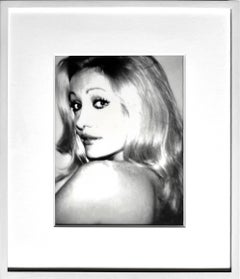
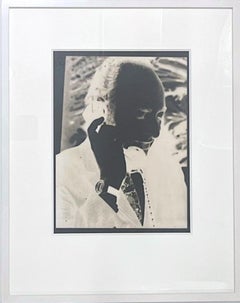
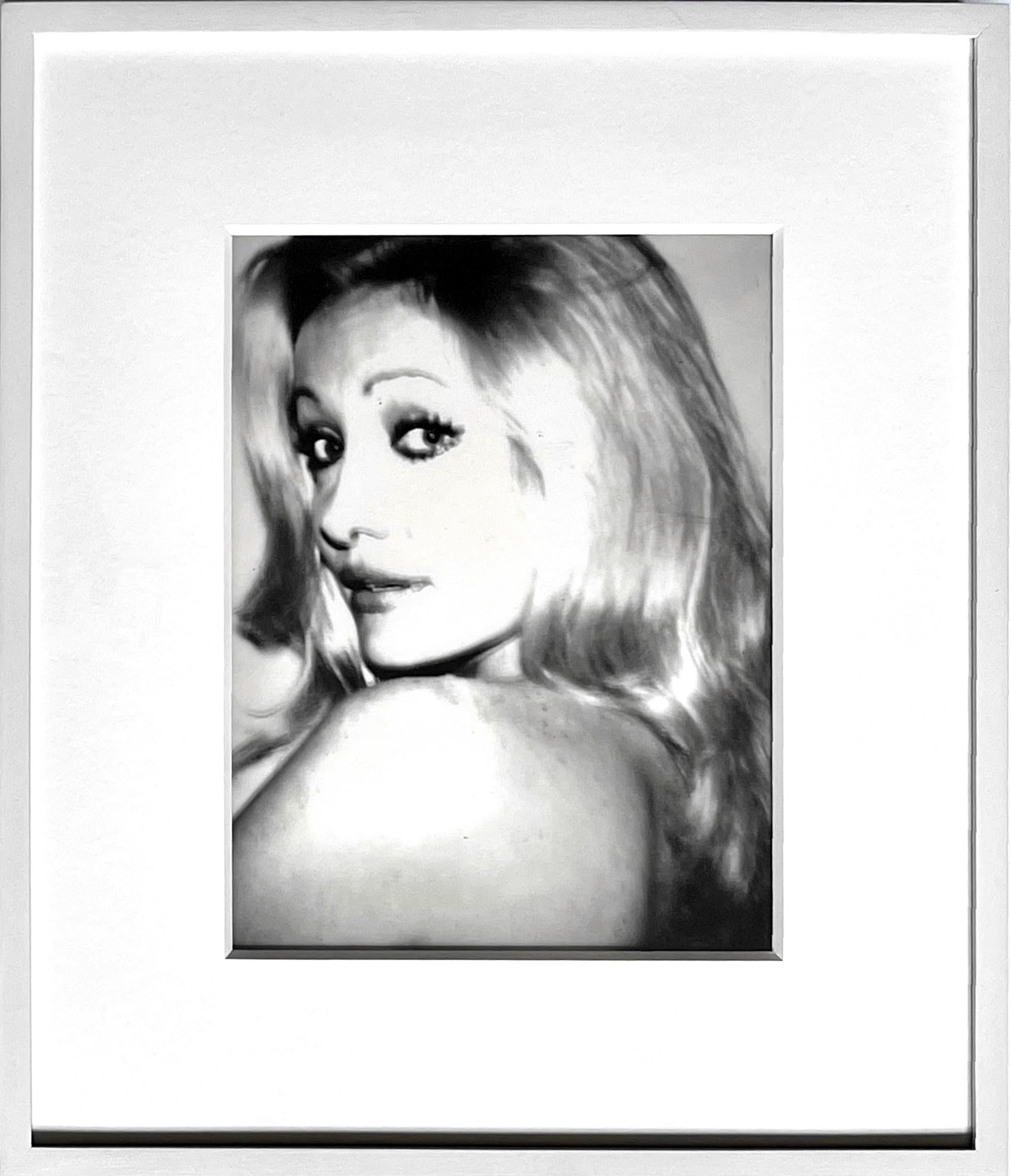
Andy Warhol - Original acetate positive for Ladies & Gentlemen provenance Framed

1975

$5,500
£4,204.64
€4,907.24
CA$7,972
A$8,099.28
CHF 4,513.07
MX$98,058.77
NOK 55,180.60
SEK 54,157.25
DKK 36,681.04

About the Item

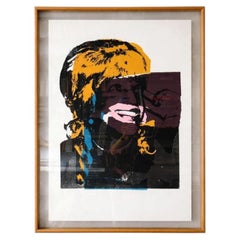
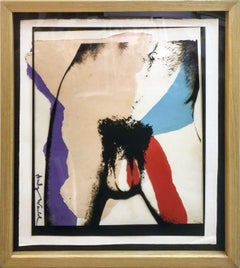
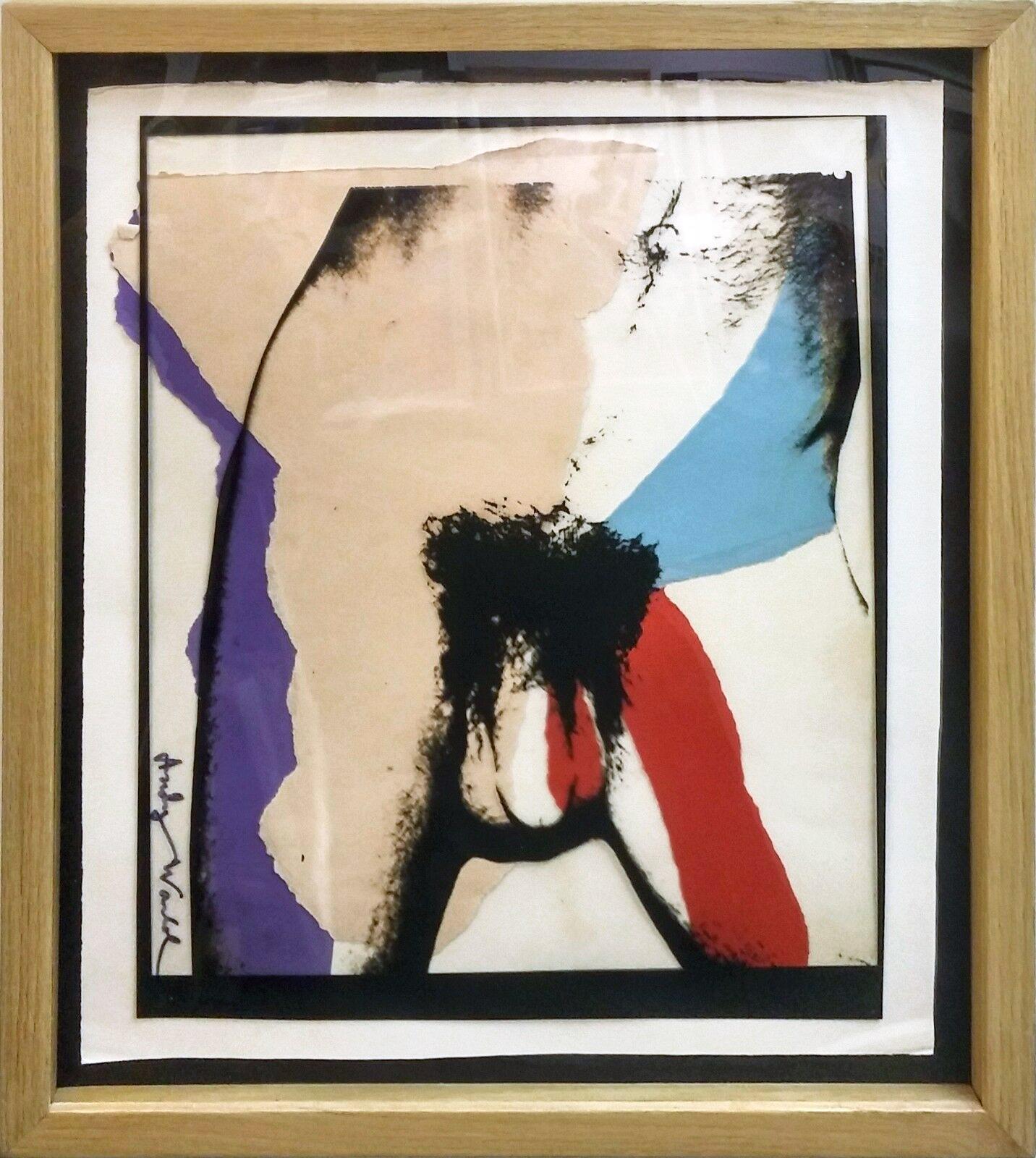
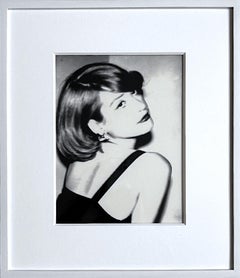
Andy Warhol Ladies & Gentlemen, ca. 1975 Acetate positive photograph Provenance: The Factory, (Andy Warhol's Studio) via Chromacomp (Warhol's printer, owned by Eunice & Jack Lowell) Framed in a museum quality white wood frame under UV plexiglass. Measurements: Framed 21 inches (vertical) by 17.5 inches (horizontal) by 1.5 inches Acetate: 15 inches (vertical) by 12 inches) (horizontal) (approx - unevenly cut by Warhol himself) In April 2014, a selection of Andy Warhol acetates from the "Ladies & Gentlemen" series from the Chromacomp collection - similar to this one - also acquired from our gallery, were featured in a hugely popular exhibition entitled “Andy Warhol Storefronts” at the Palazzo della Arti Napoli, Italia. This is an original, black and white photographic positive acetate taken by Andy Warhol that came directly from Andy Warhol's studio to his printer. As Bob Colacello, Editor in Chief of Interview Magazine and right hand man to Warhol, explained, "many hands were involved in the rather mechanical silkscreening process, but only Andy in all the years I knew him, worked on the acetates." An acetate is a photographic negative transferred to a transparency, allowing an image to be magnified and projected onto a screen. As only Andy worked on the acetates, it was the last original step prior to the screenprinting of an image, and the most important element in Warhol's creative process for silkscreening. The idea for the the Ladies and Gentlemen series (consisting of images of drag queens) came from a protege of art dealer Alexander Iolas named Anselmino, who had previously commissioned Warhol to do an edition of one hundred prints of Warhol's Man Ray portrait. When Warhol went to Torino to sign the prints, Anselmino suggested he do a series of drag queens, suggesting portraits of Jackie Curtis, Holly Woodlawn and Candy Darling - not realizing that Candy Darling was dead. Instead, Warhol used models found at The Gilded Grape, on West 45th Street, frequented by Black and Hispanic transvestites." The Ladies & Gentlemen Series represents some of the most interesting portraits Warhol created while also depicting Warhol's acute awareness of the modernizing and liberalizing world around him. Unlike the portraits commissioned by socialites and celebrities, Warhol paid these sitters to pose in front of his camera. In a statement made by Vincent Fremont about the sitters he says, “Bob Colacello found most of them at a club called the Gilded Grape. After the photo session, I would hand the subjects a model release and a check and send them over to the bank. The cross-dressers were invited to pose and dress as they wished while Warhol took their portraits with his Polaroid Big Shot camera, the same process he used with the Hollywood starlets and socialites. The photographs were then sent to a commercial silkscreen shop where they were transferred onto the silk or silk-like fabric and then returned to Warhol for printing. These paintings are glamorous and feminine, and mimic the celebrity status of his other portraits. To Warhol, the Ladies and Gentlemen were starlets but their ambiguity and anonymity veered these paintings away from the commerciality with which his work was once affiliated.” This acetate was brought by Warhol to Eunice and Jackson Lowell, owners of Chromacomp, a fine art printing studio in NYC, and was acquired directly from the Lowell's private collection. (During the 1970s and 80s, Chromacomp was the premier atelier for fine art limited edition silkscreen prints; indeed, Chromacomp was the largest studio producing fine art prints in the world for artists such Robert Natkin, David Hockney, Warhol and many more.) Famed printer Alexander Heinrici worked for Eunice & Jackson Lowell at Chromacomp and brought Andy Warhol in as an account. Shortly after, Warhol or his workers brought in several boxes of photographs, paper and/or acetates and asked Jackson Lowell to use his equipment to enlarge certain images or portions of images. Warhol made comments and or changes and asked the Lowells to print some editions. After completing the Ladies & Gentlemen series, Warhol left the remaining acetates, including this one, with Eunice and Jackson Lowell. After the Lowells closed the shop, the photographs were packed away where they remained for nearly a quarter of a century. The present work is in the condition that it was delivered to the printer; some is natural wear and some is rouge paste which Warhol used for contouring and shaping; part of his creative process. This acetate was brought by Warhol to Eunice and Jackson Lowell, owners of Chromacomp, a fine art printing studio in New York City. During the 1970s and 1980s, Chromacomp was the premier atelier for fine art limited edition silkscreen prints; indeed, Chromacomp was the largest studio producing fine art prints in the world for artists such as Andy Warhol, Leroy Neiman, Erte, Robert Natkin, Larry Zox, David Hockney and many more. All of the plates were done by hand and in some cases photographically. As a testament to the historical importance of this collection, we recently sold Andy Warhol's acetate of Conceptual Artist Joseph Kosuth (from this collection) -- to the artist Joseph Kosuth - himself
  • Creator:
    Andy Warhol (1928 - 1987, American)
  • Creation Year:
    1975
  • Dimensions:
    Height: 15 in (38.1 cm)Width: 12 in (30.48 cm)
  • Medium:
  • Movement & Style:
  • Period:
  • Condition:
    Good original condition.. There's glue, manipulation, stickiness and rouge paste used for shadowing which was part of Warhol's creative process in working with the acetates. This is not a "clean" positive; it was also unevenly cut by Warhol himself.
  • Gallery Location:
    New York, NY
  • Reference Number:
    1stDibs: LU1745217928942

More From This Seller

View All
Nicola (Nicky) Weymouth, unique acetate positive of British socialite provenance

Nicola (Nicky) Weymouth, unique acetate positive of British socialite provenance

By Andy Warhol

Located in New York, NY

Andy Warhol Nicola (Nicky) Weymouth, ca. 1976 Acetate positive, acquired directly from Chromacomp, Inc. Andy Warhol's printer in the 1970s. Accompanied by a Letter of Provenance from the representative of Chromacomp Unique Frame included: Elegantly framed in a museum quality white wood frame with UV plexiglass: Measurements: Frame: 18 x 15.5 x 1.5 inches Acetate: 11 x 8 inches This is the original, unique photographic acetate positive taken by Andy Warhol as the basis for his portrait of Nicky Weymouth, that came from Andy Warhol's studio, The Factory to his printer. It was acquired directly from Chromacomp, Inc. Andy Warhol's printer in the 1970s. It is accompanied by a Letter of Provenance from the representative of Chromacomp. This is one of the images used by Andy Warhol to create his iconic portrait of the socialite Nicola Samuel Weymouth, also called Nicky Weymouth, Nicky Waymouth, Nicky Lane Weymouth or Nicky Samuel. Weymouth (nee Samuel) was a British socialite, who went on to briefly marry the jewelry designer Kenneth Lane, whom she met through Warhol. This acetate positive is unique, and was sent to Chromacomp because Warhol was considering making a silkscreen out of this portrait. As Bob Colacello, former Editor in Chief of Interview magazine (and right hand man to Andy Warhol), explained, "many hands were involved in the rather mechanical silkscreening process... but only Andy in all the years I knew him, worked on the acetates." An acetate is a photographic negative or positive transferred to a transparency, allowing an image to be magnified and projected onto a screen. As only Andy worked on the acetates, it was the last original step prior to the screenprinting of an image, and the most important element in Warhol's creative process for silkscreening. Warhol realized the value of his unique original acetates like this one, and is known to have traded the acetates for valuable services. This acetate was brought by Warhol to Eunice and Jackson Lowell, owners of Chromacomp, a fine art printing studio in NYC, and was acquired directly from the Lowell's private collection. During the 1970s and 80s, Chromacomp was the premier atelier for fine art limited edition silkscreen prints; indeed, Chromacomp was the largest studio producing fine art prints in the world for artists such as Andy Warhol, Leroy Neiman, Erte, Robert Natkin, Larry Zox, David Hockney and many more. All of the plates were done by hand and in some cases photographically. Famed printer Alexander Heinrici worked for Eunice & Jackson Lowell at Chromacomp and brought Andy Warhol in as an account. Shortly after, Warhol or his workers brought in several boxes of photographs, paper and/or acetates and asked Jackson Lowell to use his equipment to enlarge certain images or portions of images. Warhol made comments and or changes and asked the Lowells to print some editions; others were printed elsewhere. Chromacomp Inc. ended up printing Warhol's Mick Jagger Suite and the Ladies & Gentlemen Suite, as well as other works, based on the box of photographic acetates that Warhol brought to them. The Lowell's allowed the printer to be named as Alexander Heinrici rather than Chromacomp, since Heinrici was the one who brought the account in. Other images were never printed by Chromacomp- they were simply being considered by Warhol. Warhol left the remaining acetates with Eunice and Jackson Lowell. After the Lowells closed the shop, the photographs were packed away where they remained for nearly a quarter of a century. This work is exactly as it was delivered from the factory. Unevenly cut by Warhol himself. This work is accompanied by a signed letter of provenance from the representative of Chromacomp, Andy Warhol's printer for many of his works in the 1970s. About Andy Warhol: Isn’t life a series of images that change as they repeat themselves? —Andy Warhol Andy Warhol’s (1928–1987) art encapsulates the 1960s through the 1980s in New York. By imitating the familiar aesthetics of mass media, advertising, and celebrity culture, Warhol blurred the boundaries between his work and the world that inspired it, producing images that have become as pervasive as their sources. Warhol grew up in a working-class suburb of Pittsburgh. His parents were Slovak immigrants, and he was the only member of his family to attend college. He entered the Carnegie Institute of Technology (now Carnegie Mellon University) in 1945, where he majored in pictorial design. After graduation, he moved to New York with fellow student Philip Pearlstein and found steady work as a commercial illustrator at several magazines, including Vogue, Harper’s Bazaar, and the New Yorker. Throughout the 1950s Warhol enjoyed a successful career as a commercial artist, winning several commendations from the Art Directors Club and the American Institute of Graphic Arts. He had his first solo exhibition at the Hugo Gallery in 1952, showing drawings based on the writings of Truman Capote; three years later his work was included in a group show at the Museum of Modern Art for the first time. The year 1960 marked a turning point in Warhol’s prolific career. He painted his first works based on comics and advertisements, enlarging and transferring the source images onto canvas using a projector. In 1961 Warhol showed these hand-painted works, including Little King (1961) and Saturday’s Popeye (1961), in a window display at the department store Bonwit Teller; in 1962 he painted his famous Campbell’s Soup Cans, thirty-two separate canvases, each depicting a canned soup of a different flavor. Soon after, Warhol began to borrow not only the subject matter of printed media, but the technology as well. Incorporating the silkscreen technique, he created grids of stamps, Coca-Cola bottles, shipping and handling labels, dollar bills, coffee labels...

Category

1970s Pop Art Black and White Photography

Materials

Photographic Film

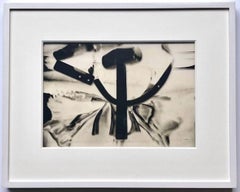
Hammer & Sickle, acetate of iconic image, given by Warhol to Chromacomp Inc.

Hammer & Sickle, acetate of iconic image, given by Warhol to Chromacomp Inc.

By Andy Warhol

Located in New York, NY

Andy Warhol Hammer & Sickle, 1976 Acetate negative acquired directly from Chromacomp, inc. Andy Warhol's printer in the 1970s. accompanied by a signed letter of provenance from t...

Category

1970s Pop Art Black and White Photography

Materials

Photographic Film, Mixed Media, Photographic Paper

You May Also Like

Andy Warhol Postcard Print, Framed Offset Print, 1980s, Mint Condition

Andy Warhol Postcard Print, Framed Offset Print, 1980s, Mint Condition

By Andy Warhol

Located in Brooklyn, NY

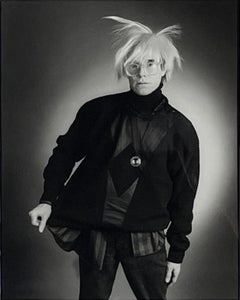
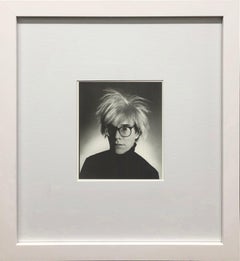
Vintage postcard featuring a photograph of Andy Warhol from Andy Warhol Taught Me How to See, taken by Christopher Makos. In this playful image, Warhol wears a wig with hair flaring ...

Category

1980s Prints and Multiples

Materials

Offset

Archival Photographic Print 'Portrait of Andy Warhol', 1985/2025

Archival Photographic Print 'Portrait of Andy Warhol', 1985/2025

By Andrew Unangst

Located in New York, NY

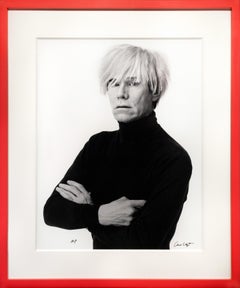
The archival ‘Portrait of Andy Warhol’ in black and white is a photographic pop-art print. This print is an edition of 50 and the photo was taken in 1985 by photographer Andrew Unang...

Category

1980s Pop Art Black and White Photography

Materials

Archival Ink, Archival Paper

Vintage 1960s Andy Warhol Photo Silkscreen Serigraph Pop Art

Vintage 1960s Andy Warhol Photo Silkscreen Serigraph Pop Art

By John Brower

Located in Surfside, FL

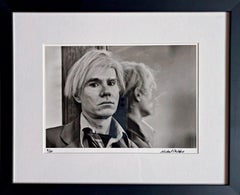
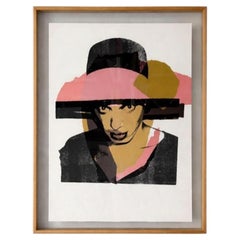
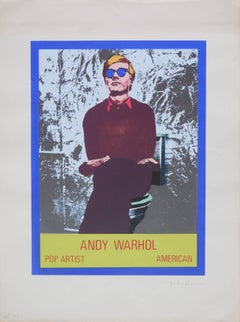
This is for a Photo Silkscreen Serigraph it is Titled Andy Warhol :Pop Artist American. light creasing to paper outside of image John Brower worked in Chicago as a billboard designe...

Category

1960s Pop Art Figurative Prints

Materials

Screen