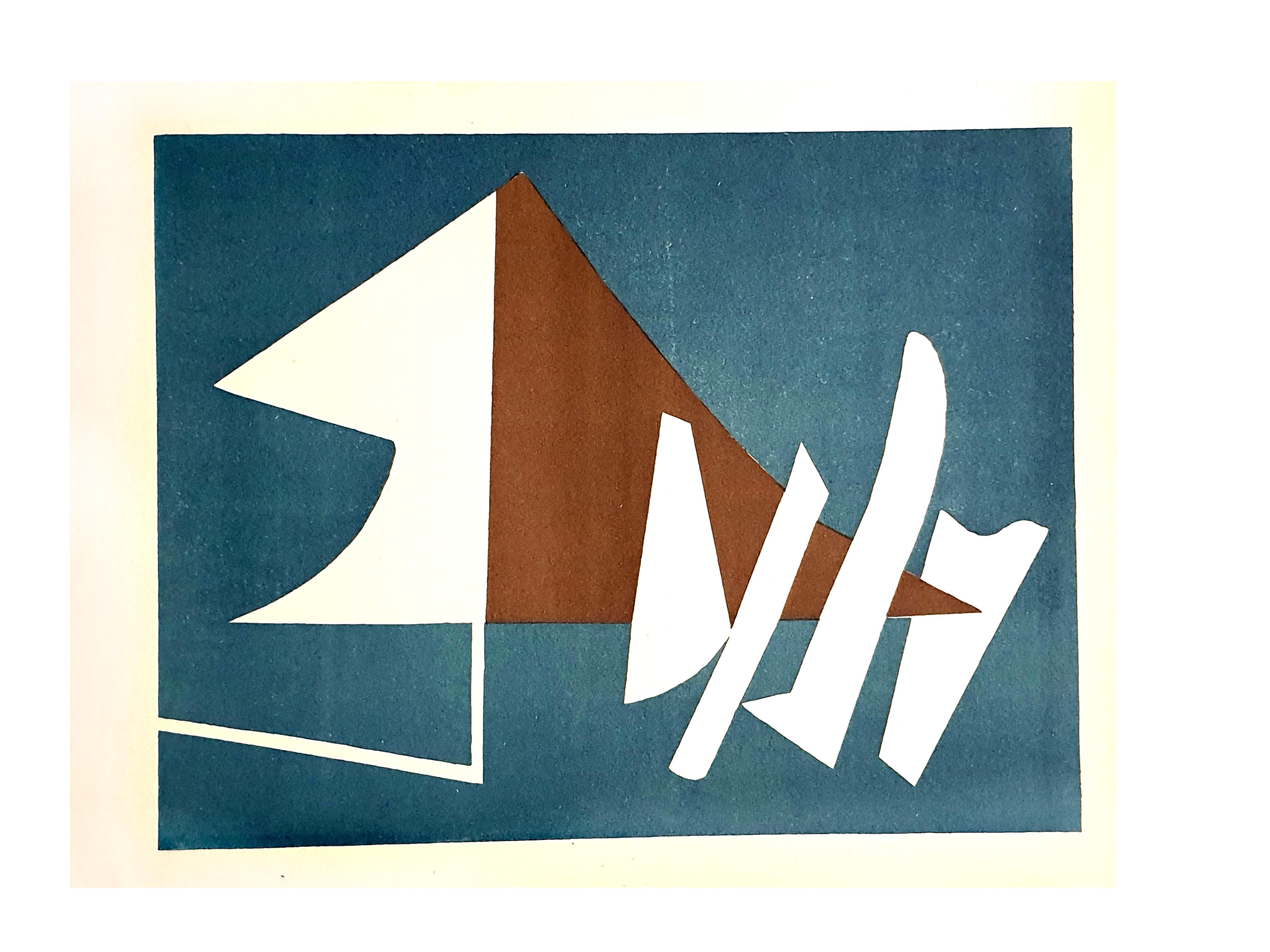
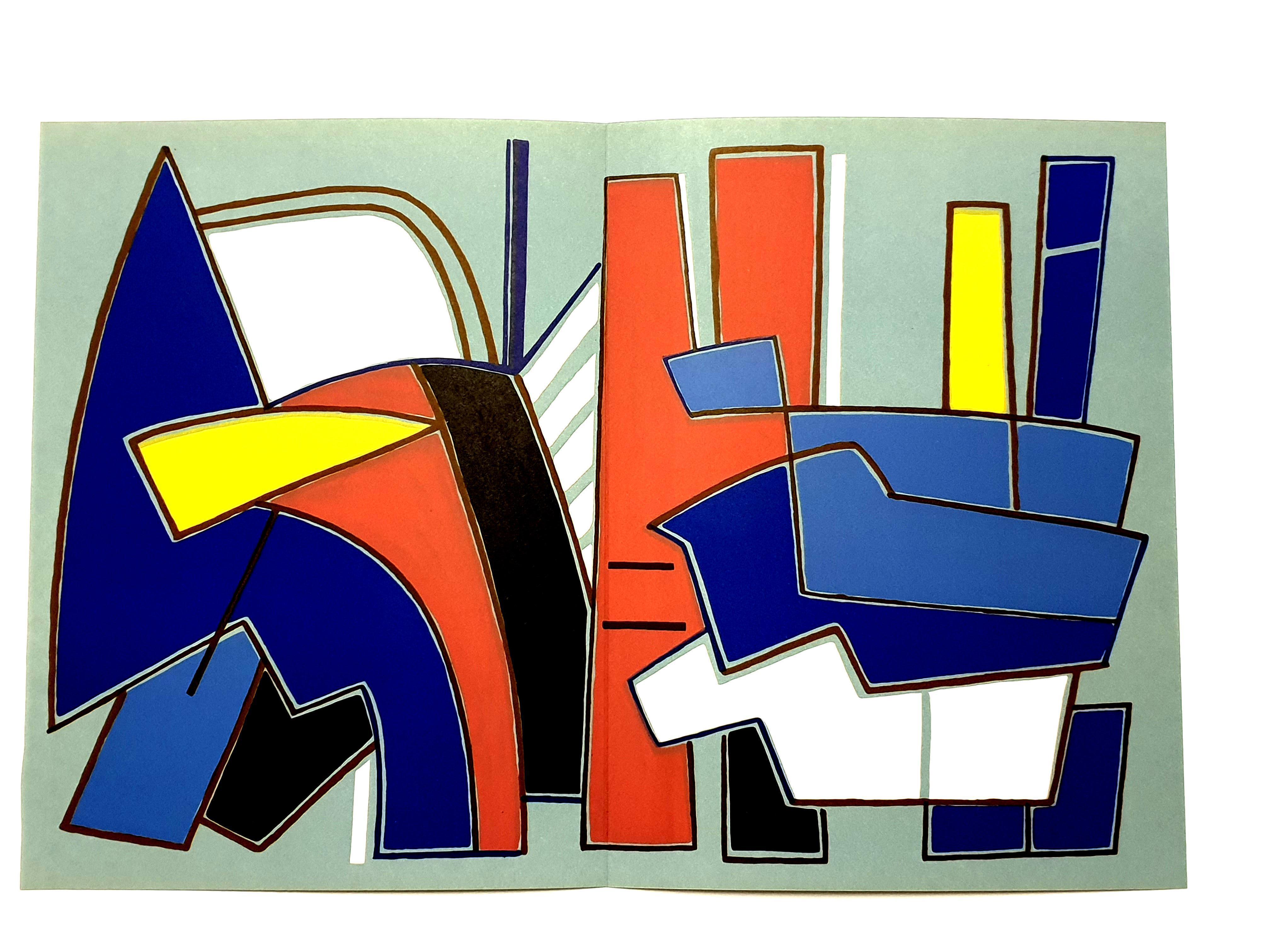
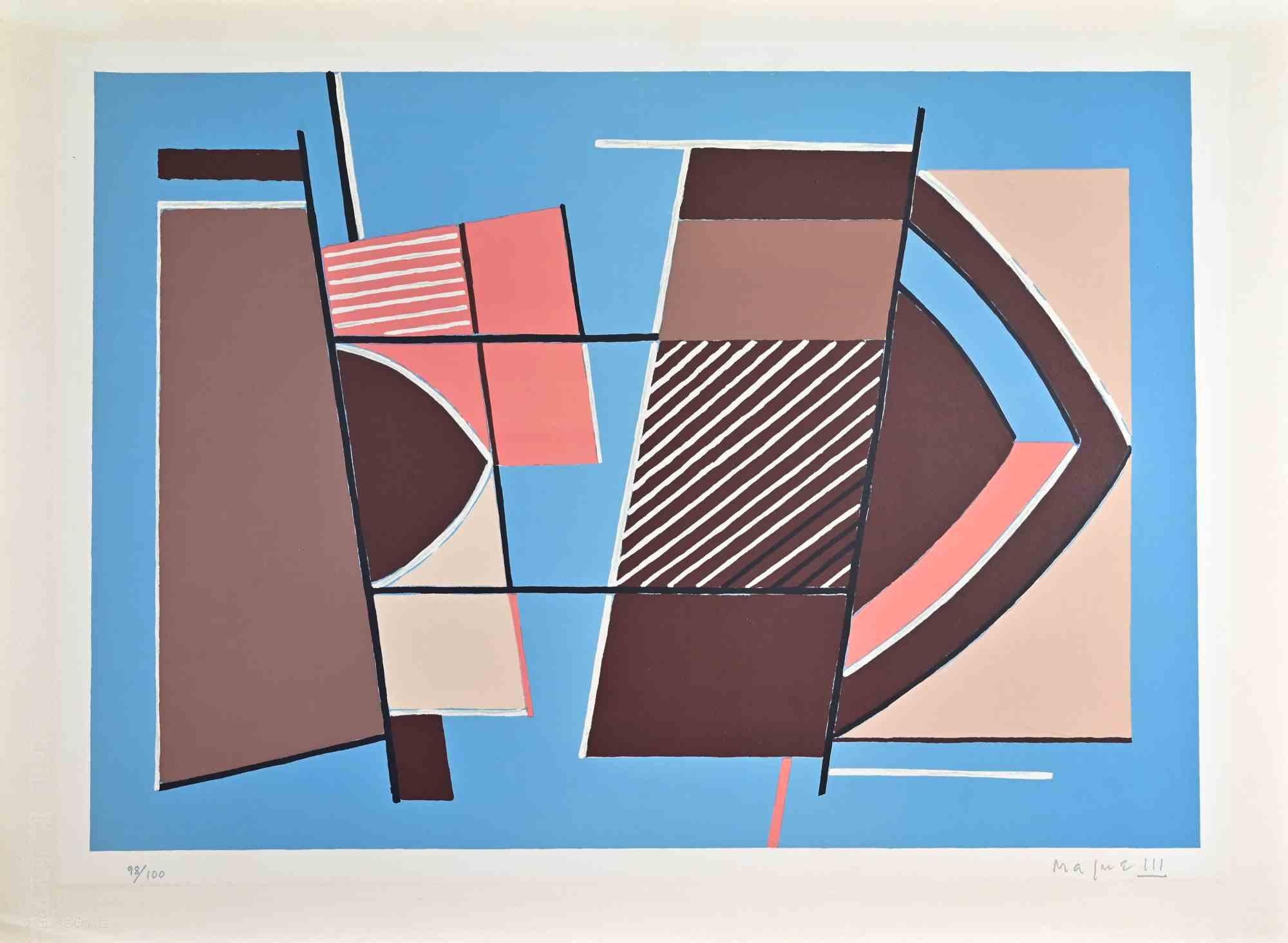
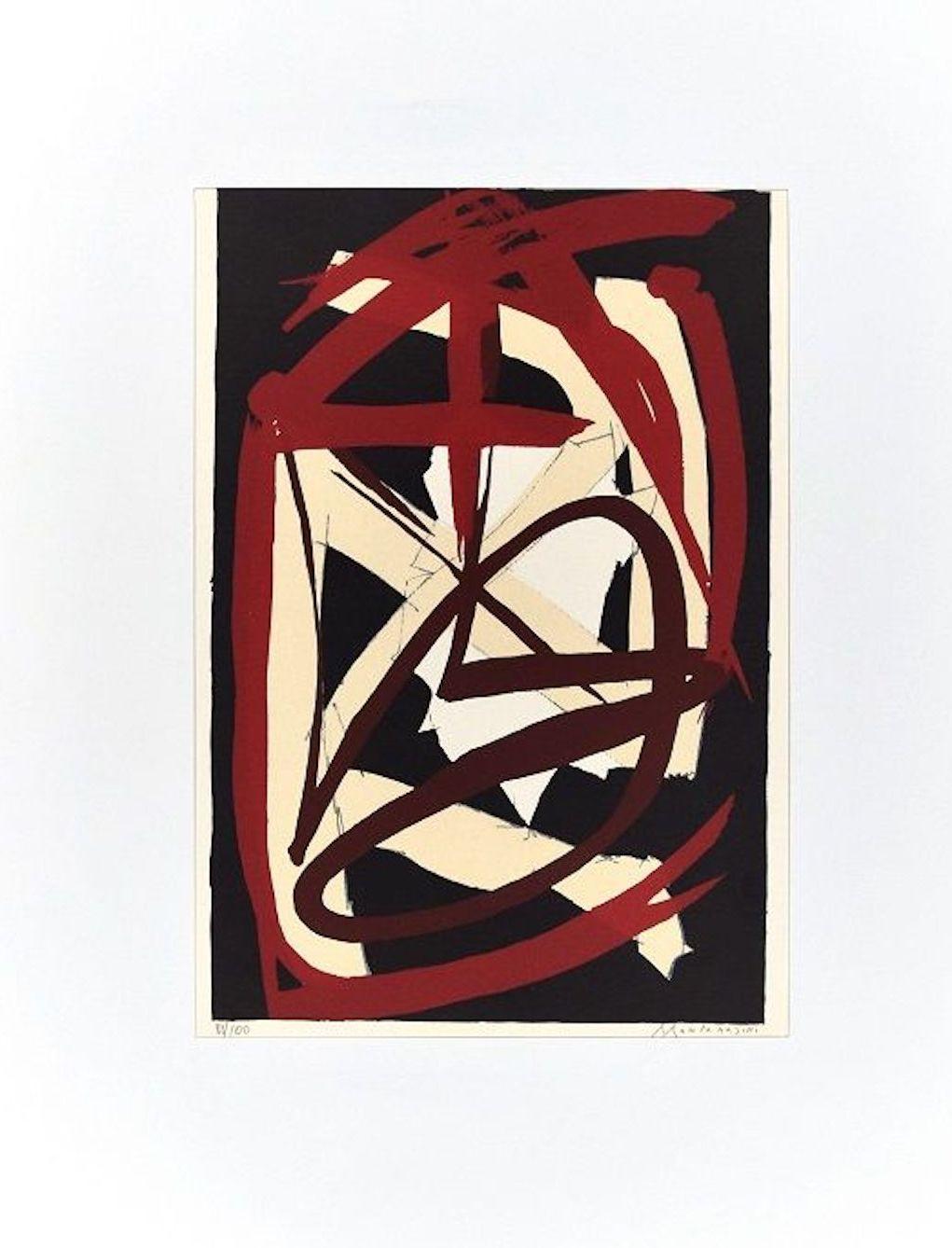
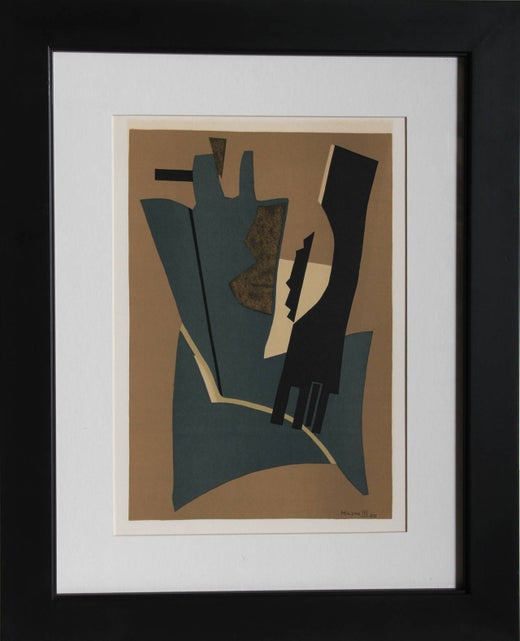
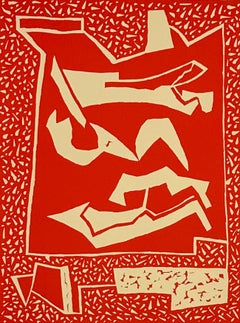
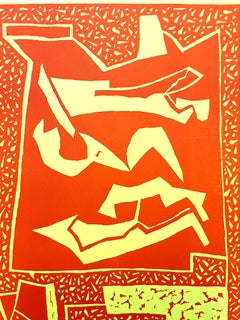
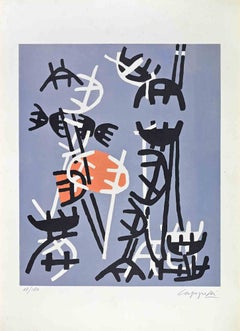
This exquisite linocut and pochoir by Alberto Magnelli (1888–1971), titled Composition 66, from the album XXe Siecle, Nouvelle serie, XXIe Annee, N°13, Noel 1959, originates from the 1959 edition published by Societe Internationale dArt XXe Siecle, Paris, under the direction of Gualtieri di San Lazzaro, editeur, Paris, and printed by Mourlot Freres, Paris, 1959. A refined example of Magnellis postwar geometric abstraction, it reflects the harmony, structural clarity, and rhythmic precision that define his celebrated oeuvre.
Executed as a linocut and pochoir on velin paper, this work measures 12.5 x 9.75 inches. Unsigned and unnumbered as issued. Printed by Mourlot Freres, Paris, one of the foremost ateliers of the 20th century.
Artwork Details:
Artist: Alberto Magnelli (1888–1971)
Title: Composition 66
Medium: Linocut and pochoir on velin paper
Dimensions: 12.5 x 9.75 inches (31.75 x 24.77 cm)
Inscription: Unsigned and unnumbered as issued
Date: 1959
Publisher: Societe Internationale dArt XXe Siecle, Paris, under the direction of Gualtieri di San Lazzaro, editeur, Paris
Printer: Mourlot Freres, Paris
Catalogue raisonne reference: Magnelli, Alberto, and Daniel Abadie. Magnelli: Les Estampes: Catalogue Raisonne. Ides et Calendes, 2011, illustration 66.
Condition: Well preserved, consistent with age and medium
Provenance: From the album XXe Siecle, Nouvelle serie, XXIe Annee, N°13, Noel 1959, published by Societe Internationale dArt XXe Siecle, Paris; printed by Mourlot Freres, Paris, 1959
About the Publication:
Gualtieri di San Lazzaros XXe Siecle (Twentieth Century) was one of the most influential art journals of the modern era, founded in Paris in 1938 to unite the greatest painters, sculptors, and writers of the 20th century. San Lazzaro, a visionary editor and champion of modernism, believed deeply in the synthesis of art and literature, creating a publication that served as both a scholarly platform and a collectors object. Across its many issues, XXe Siecle featured original lithographs, pochoirs, linocuts, and wood engravings by leading modern masters including Picasso, Matisse, Chagall, Miro, Braque, Leger, Kandinsky, and Calder, printed by premier ateliers such as Mourlot, Atelier Jacomet, and Lacouriere. The double issues of the 1950s reflect a flourishing period of postwar abstraction, sculpture, and avant garde experimentation. Today, XXe Siecle remains an essential reference point in 20th century art history, prized by collectors, museums, and scholars worldwide.
About the Artist:
Alberto Magnelli (1888–1971) was an Italian born pioneer of geometric abstraction whose visionary synthesis of structure, rhythm, and color established him as one of the central figures of modern art. A self taught artist from Florence, Magnelli began within the Italian Futurist movement before developing a lyrical and intellectual abstraction that bridged Cubism, Constructivism, and the postwar Nouvelle Ecole de Paris. His evolution was shaped by his encounters with Pablo Picasso, Alexander Calder, Alberto Giacometti, Salvador Dali, Joan Miro, Wassily Kandinsky, Marcel Duchamp, and Man Ray artists whose innovations helped inspire his exploration of form and spirit. From Picasso, he learned the analytical construction of space; from Kandinsky, the spiritual power of abstraction; from Miro and Calder, the poetry of rhythm and geometry; and from Duchamp and Man Ray, the conceptual depth of visual thought. By the 1920s, Magnelli had moved beyond representation to create compositions of pure form and color interlocking planes that evoke harmony and equilibrium rather than chaos or emotion. After moving to Paris in 1932, he became part of an avant garde circle that included Miro, Arp, and Taeuber Arp, and during World War II, while exiled in Grasse with Miro and Arp, he produced his celebrated periode des pierres (stone period), a series of meditative abstractions that expressed calm and resilience through balanced geometric forms and luminous tones. In the postwar years, Magnelli emerged as a leading figure of European abstraction, his compositions growing increasingly architectural and musical painted harmonies of shape and proportion that prefigured the minimalist and color field movements. He believed that abstraction could express universal truths through structure and rhythm, combining the intellectual rigor of Constructivism with the lyrical sensibility of spiritual modernism. Exhibited widely in the Venice Biennale, Documenta, and major retrospectives, his works entered the permanent collections of the Centre Pompidou, Tate Modern, Peggy Guggenheim Collection, and MoMA, where they remain celebrated for their timeless balance of clarity and warmth. Magnellis art influenced later generations, including Victor Vasarely, Ellsworth Kelly, and Sean Scully, who admired his fusion of geometry and emotion. Standing alongside Pablo Picasso, Alexander Calder, Alberto Giacometti, Salvador Dali, Joan Miro, Wassily Kandinsky, Marcel Duchamp, and Man Ray, Alberto Magnelli endures as one of the great architects of modern abstraction a visionary who transformed geometry into poetry and color into spiritual resonance. His highest auction record was achieved by Fleurs et coquillages (1931), which sold for 1.26 million USD at Sothebys, Paris, on December 3, 2014, reaffirming Magnellis enduring legacy as one of the most refined, influential, and collectible abstract painters of the 20th century.
Alberto Magnelli, Composition 66, XXe Siecle 1959, linocut and pochoir printed by Mourlot.