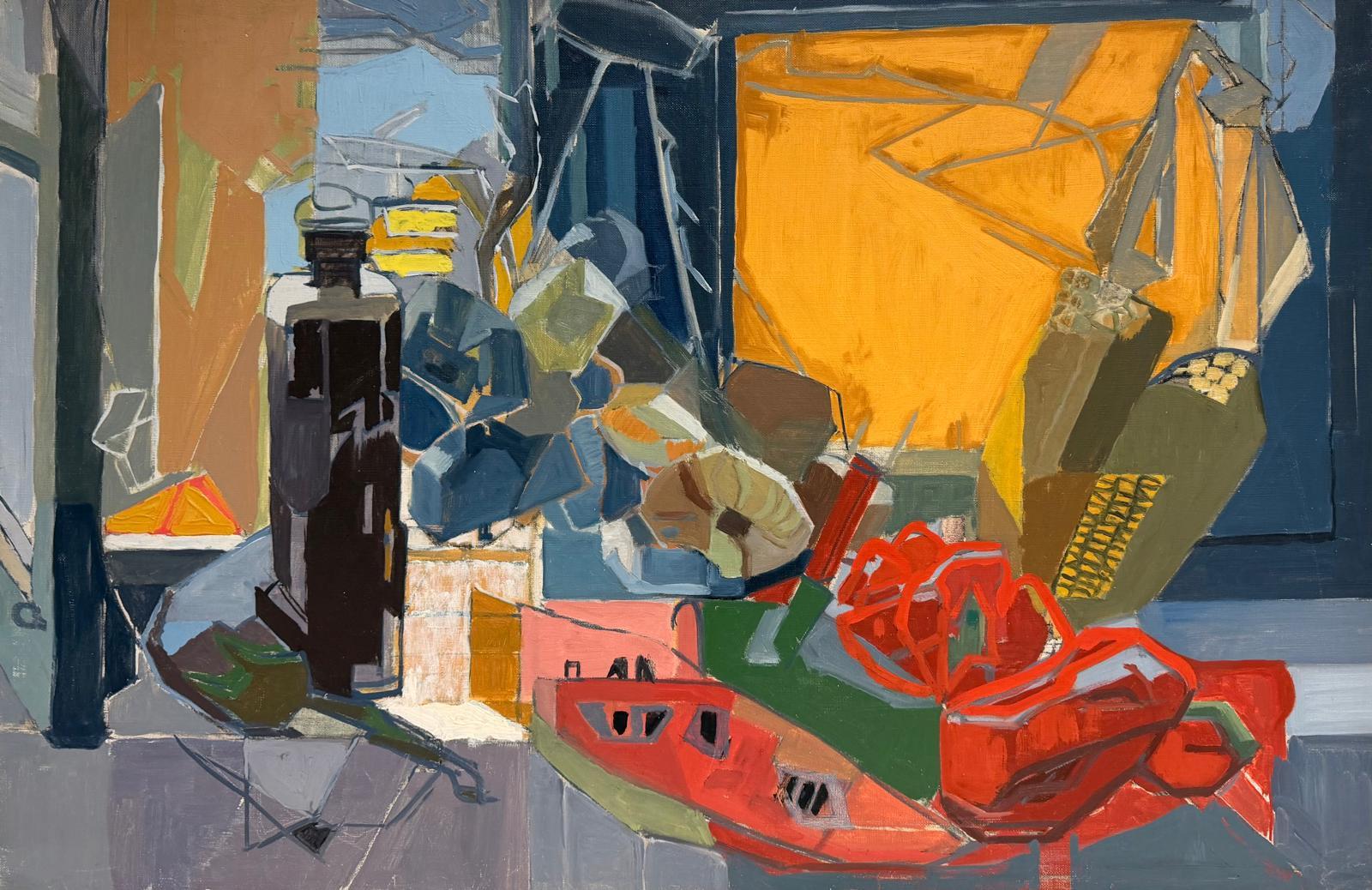
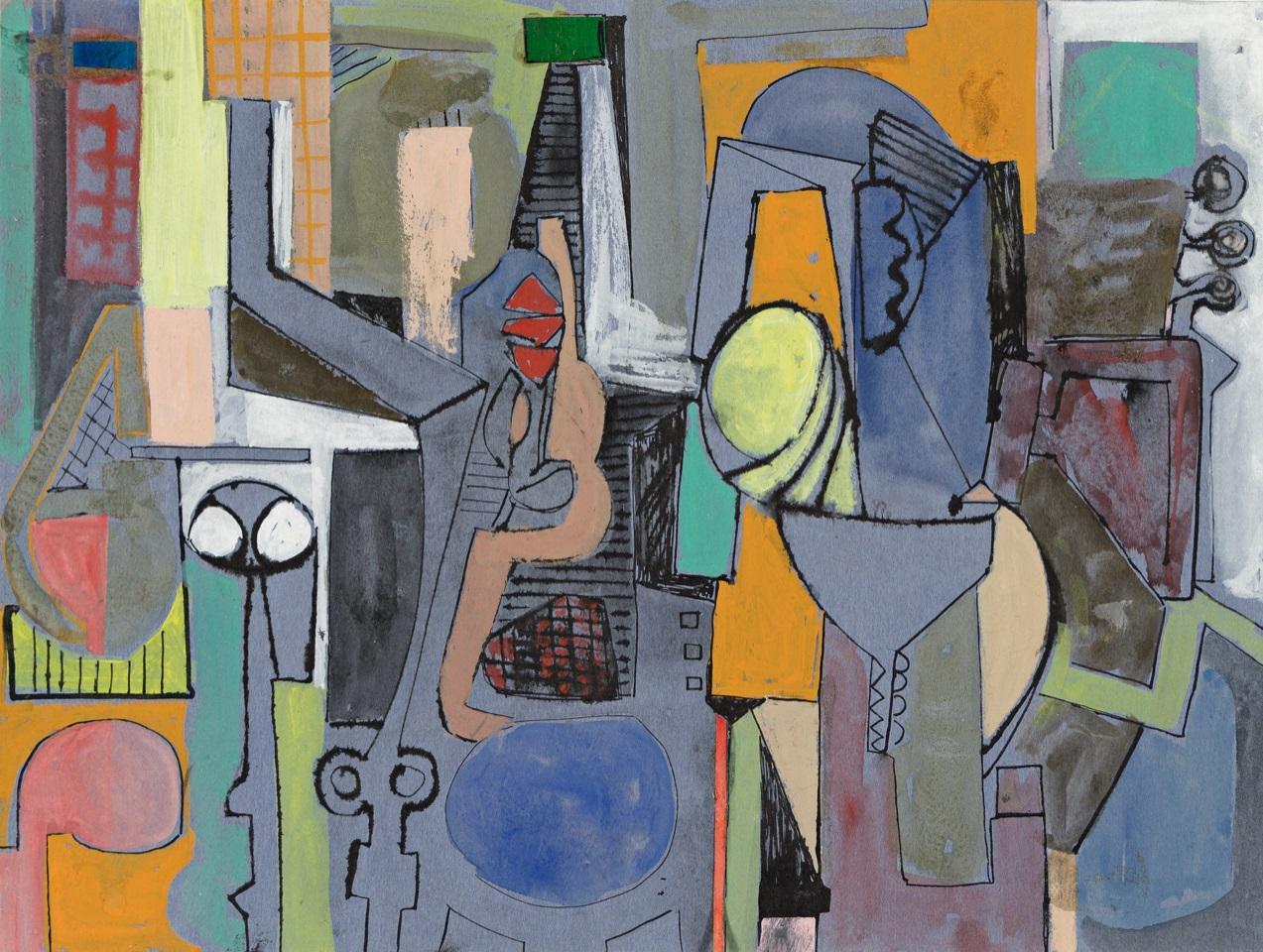
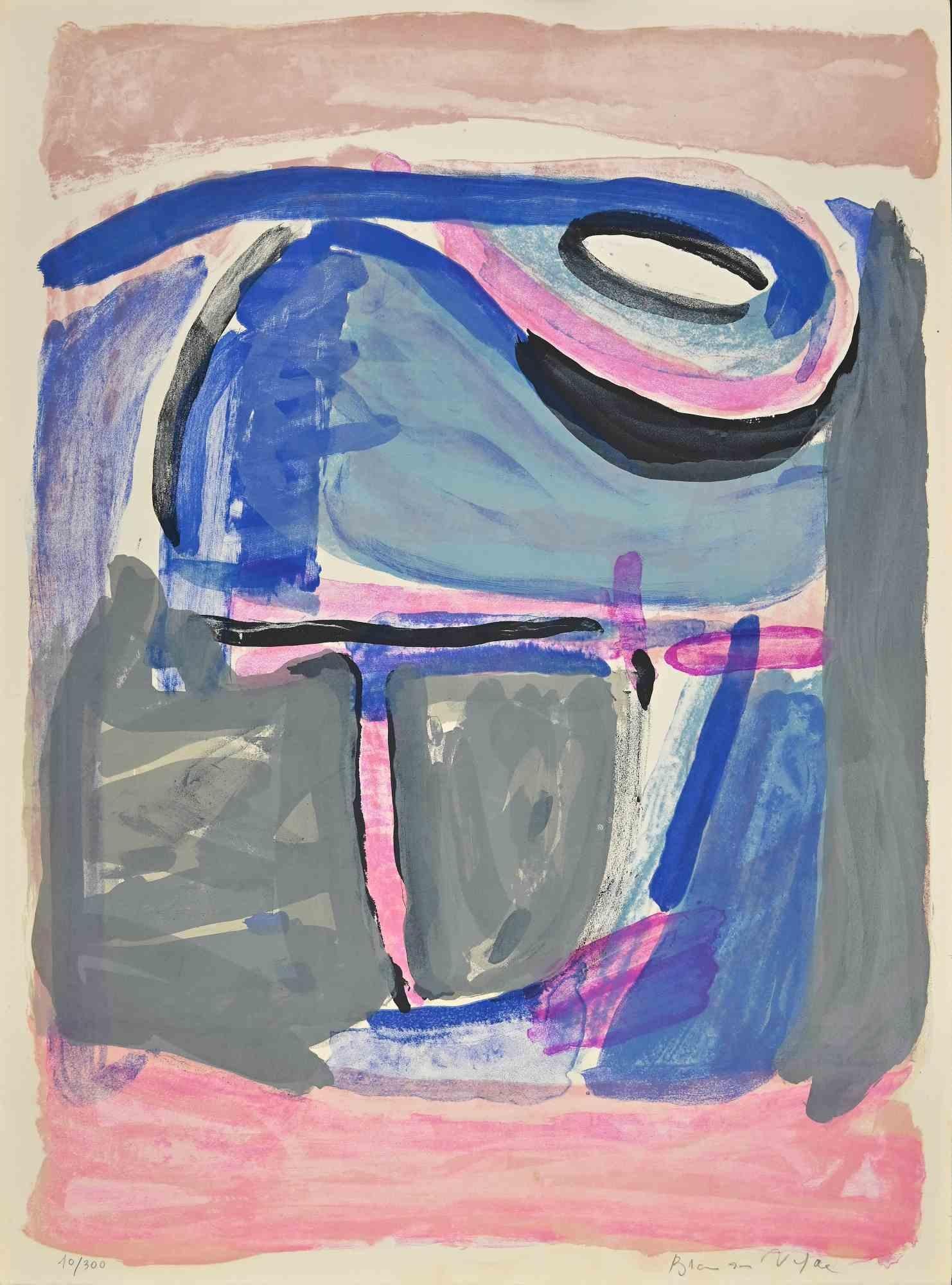
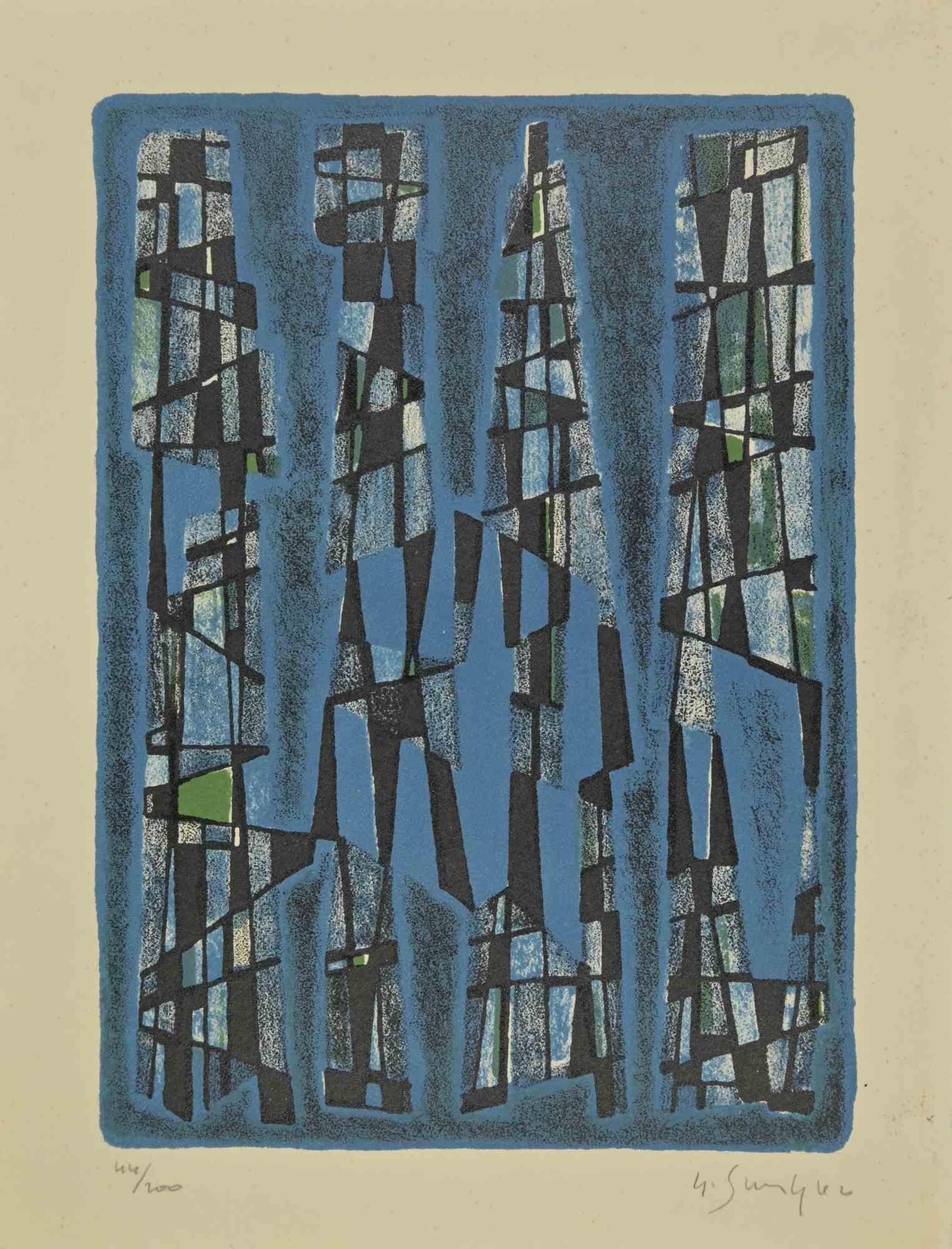
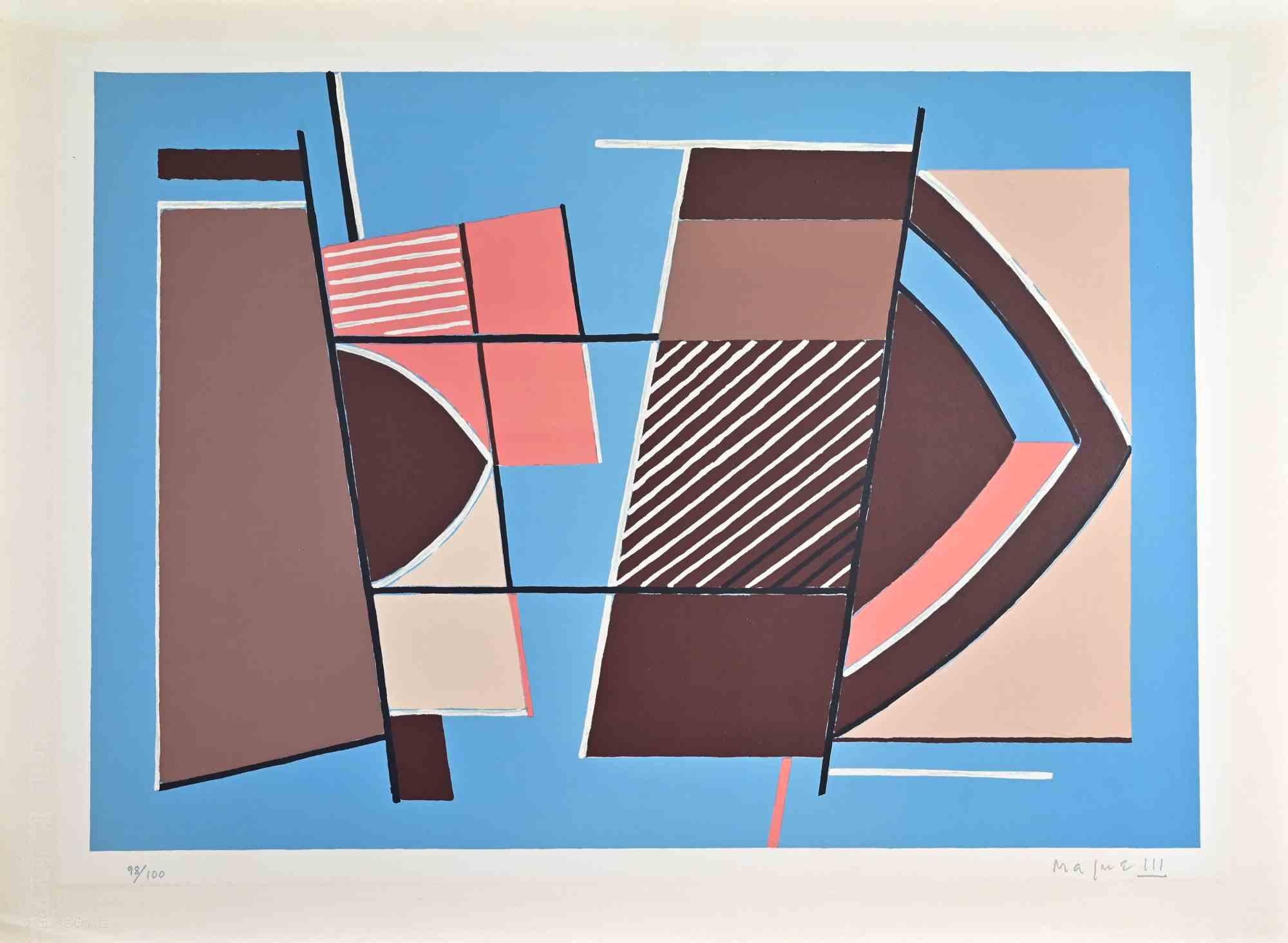
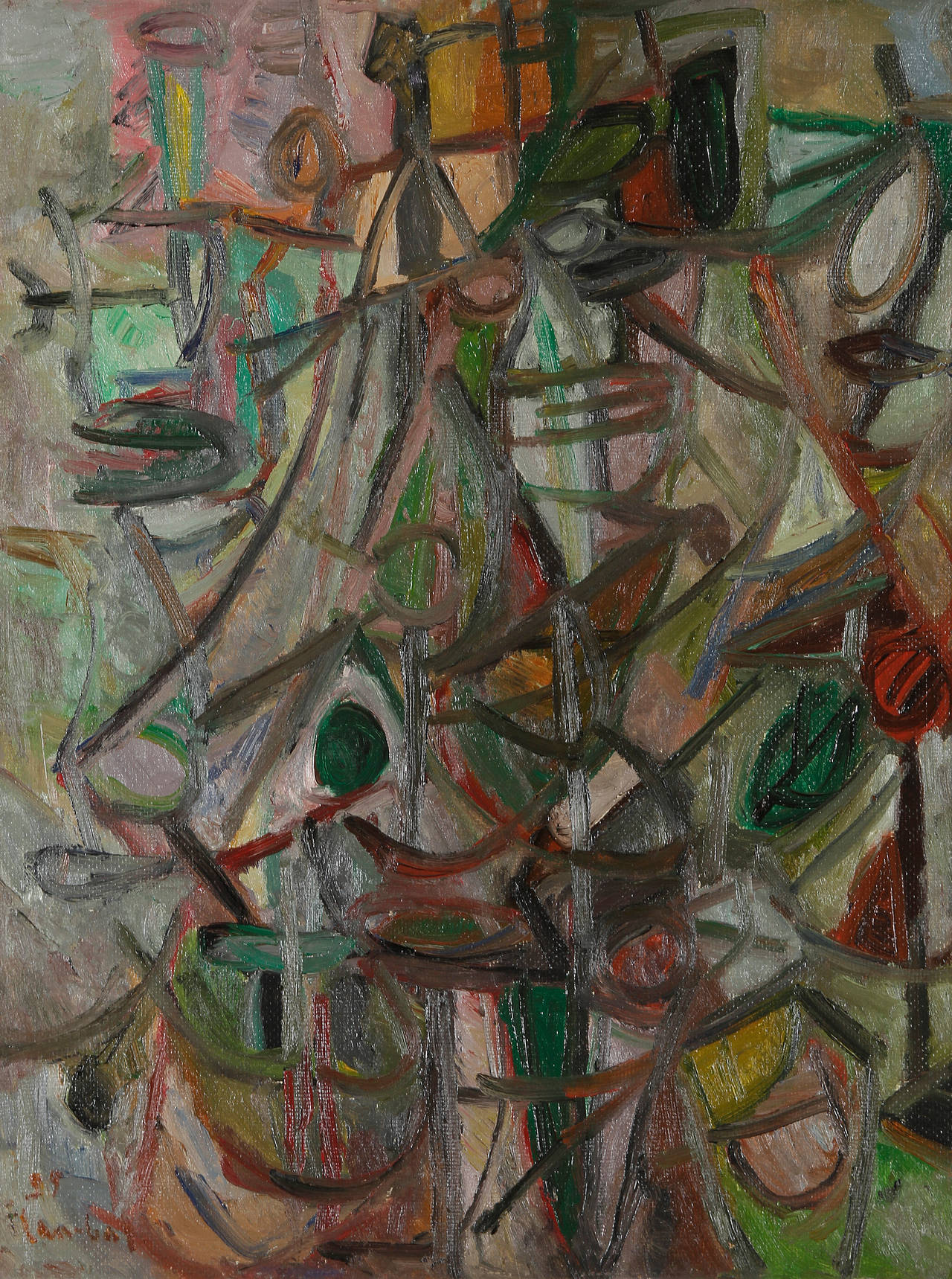
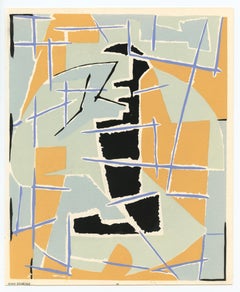
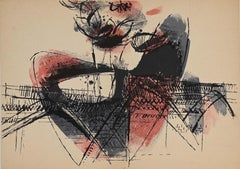
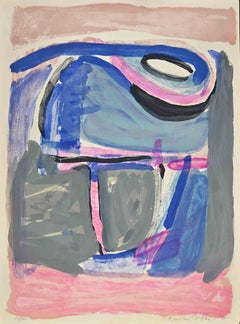
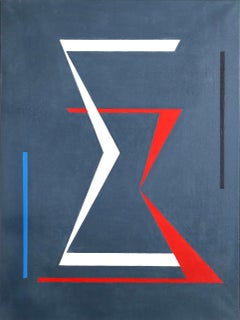
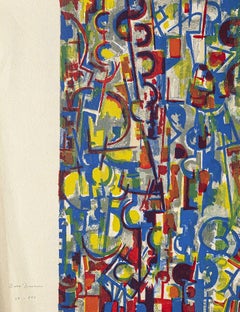
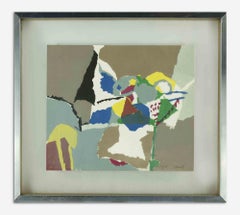
This exquisite lithograph by Geer van Velde (1898–1977), titled Sans titre (Untitled), from the folio Derriere le miroir, No. 51, originates from the 1952 edition published by Maeght Editeur, Paris, and printed by Mourlot Freres, Paris, 1952. With its poised geometry, quiet luminosity, and meditative rhythm, this composition exemplifies van Velde’s serene and architectural approach to abstraction—an art of balance, harmony, and contemplation.
Executed as a lithograph on velin paper, this work measures 15 x 22 inches, with centerfold as issued. Signed in the plate and unnumbered as issued. The edition exemplifies the superb craftsmanship of Mourlot Freres, Paris.
Artwork Details:
Artist: Geer van Velde (1898–1977)
Title: Sans titre (Untitled), from the folio Derriere le miroir, No. 51
Medium: Lithograph on velin paper
Dimensions: 15 x 22 inches (38.1 x 55.9 cm), with centerfold as issued
Inscription: Signed in the plate and unnumbered as issued
Date: 1952
Publisher: Maeght Editeur, Paris
Printer: Mourlot Freres, Paris
Condition: Well preserved, consistent with age and medium
Provenance: From the folio Derriere le miroir, No. 51, published by Maeght Editeur, Paris; printed by Mourlot Freres, Paris, 1952
About the Publication:
Derriere le miroir (Behind the Mirror) was one of the most important art publications of the 20th century, created and published by Maeght Editeur in Paris from 1946 to 1982. Founded by the visionary art dealer and publisher Aime Maeght, the series served as both an exhibition catalogue and a work of art in its own right, uniting original lithographs by leading modern and contemporary artists with critical essays, poetry, and design of the highest quality. Printed by master lithographers such as Mourlot Freres and Arte, Derriere le miroir became synonymous with the artistic vanguard of postwar Europe. Each issue was devoted to a single artist or theme and published to accompany exhibitions at the Galerie Maeght in Paris, featuring works by Pablo Picasso, Henri Matisse, Georges Braque, Joan Miro, Marc Chagall, Alexander Calder, Fernand Leger, and Alberto Giacometti, among others. The publication reflected Maeght’s belief that art should be both accessible and elevated—an ideal realized through its luxurious production values, meticulous printing, and collaboration with the greatest creative minds of its time.
About the Artist:
Geer van Velde (1898–1977) was a Dutch painter whose luminous abstractions, architectural precision, and meditative restraint established him as one of the quiet masters of modern European painting. Born in Lisse, the Netherlands, he was the younger brother of Bram van Velde, and though both shared a devotion to abstraction, their sensibilities diverged dramatically—Bram’s art was emotive and existential, while Geer’s was ordered, rational, and imbued with an inner harmony that reflected his search for balance and transcendence through form. Largely self-taught, Geer began as a house painter before dedicating himself fully to art, developing through close study of the modern masters. When he moved to Paris in the 1920s, the city’s avant-garde profoundly shaped his vision. Immersed in the circles of Pablo Picasso, Wassily Kandinsky, Joan Miro, Salvador Dali, Alexander Calder, Marcel Duchamp, and Man Ray, he absorbed the formal lessons of Cubism, the lyrical symbolism of Surrealism, and the structural clarity of Constructivism. Over time, van Velde synthesized these influences into an aesthetic that sought serenity through geometric precision and the orchestration of color and light. His paintings, defined by interlocking planes, transparency, and quiet tonal variation, achieve a sense of equilibrium that merges intellect with emotion and structure with contemplation. A key figure of the School of Paris, he exhibited alongside Jean Helion, Jean Fautrier, and Nicolas de Stael, who shared his pursuit of a lyrical abstraction that transcended mere form. Critics often described his compositions as “architectures of silence,” noting how their subtle rhythm and balance evoked an almost spiritual calm. His work stands in dialogue with that of Piet Mondrian and Ben Nicholson but with a more human and introspective sensitivity, his restrained palette creating a meditative space between materiality and light. His influence extended to later artists including Pierre Soulages, Serge Poliakoff, Hans Hartung, and Zao Wou-Ki, as well as American minimalists who admired his disciplined spatial awareness and compositional purity. Van Velde’s art, while tranquil, carries immense emotional depth, revealing his belief that abstraction could serve as a bridge between order and feeling. Exhibited widely in Paris, Brussels, and Amsterdam, his works now reside in the Centre Pompidou, the Stedelijk Museum Amsterdam, the Musee d’Art Moderne de la Ville de Paris, and the Kunstmuseum Basel. The highest auction record for Geer van Velde was achieved in 2014 when his painting Composition (1955) sold for 463,000 USD at Sotheby’s Paris, affirming his legacy as one of the most contemplative and refined abstractionists of the 20th century.
Geer van Velde Sans titre Derriere le miroir No. 51, Geer van Velde Mourlot Freres, Geer van Velde Maeght Editeur, Geer van Velde velin paper, Geer van Velde collectible lithograph.