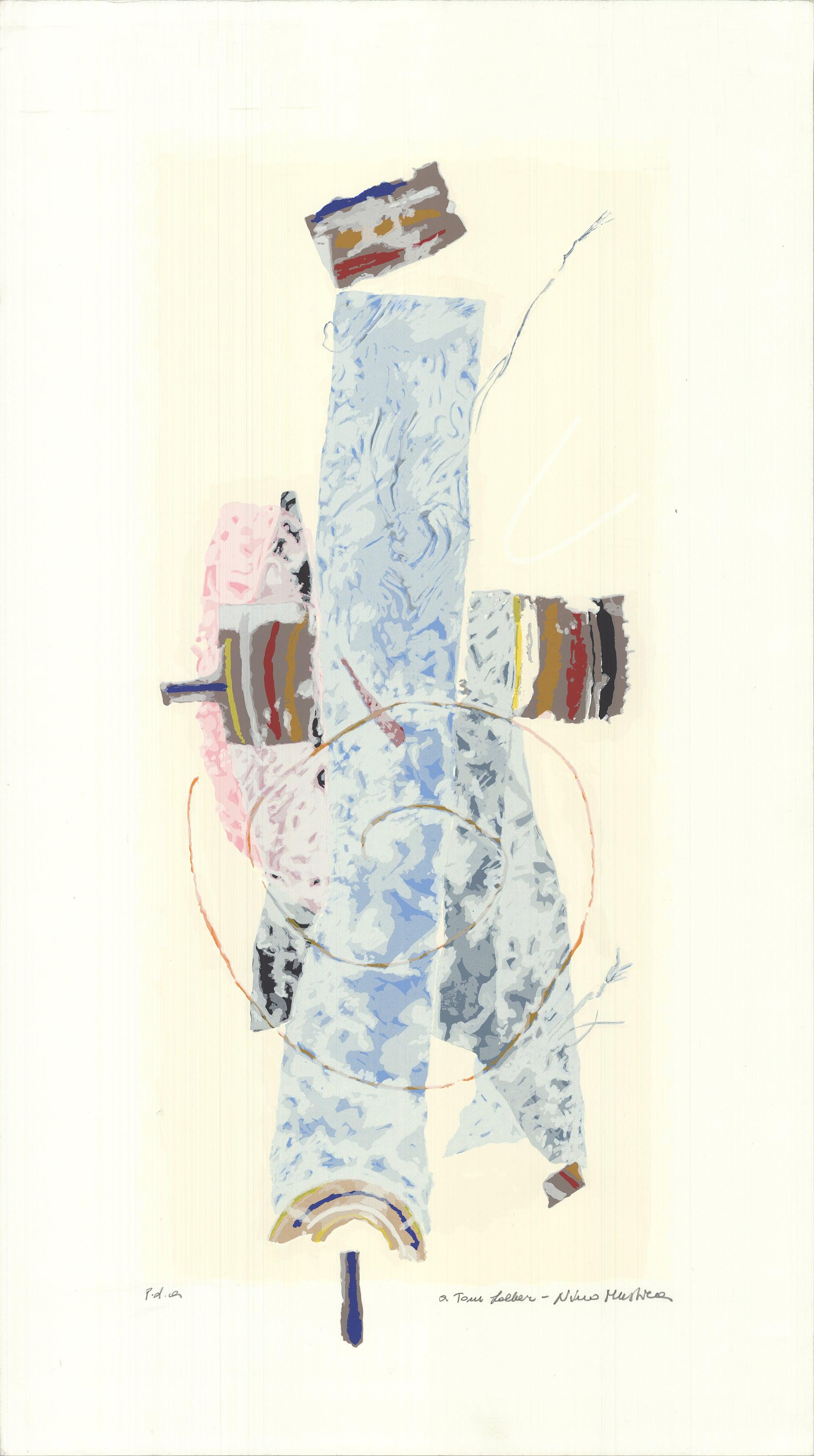
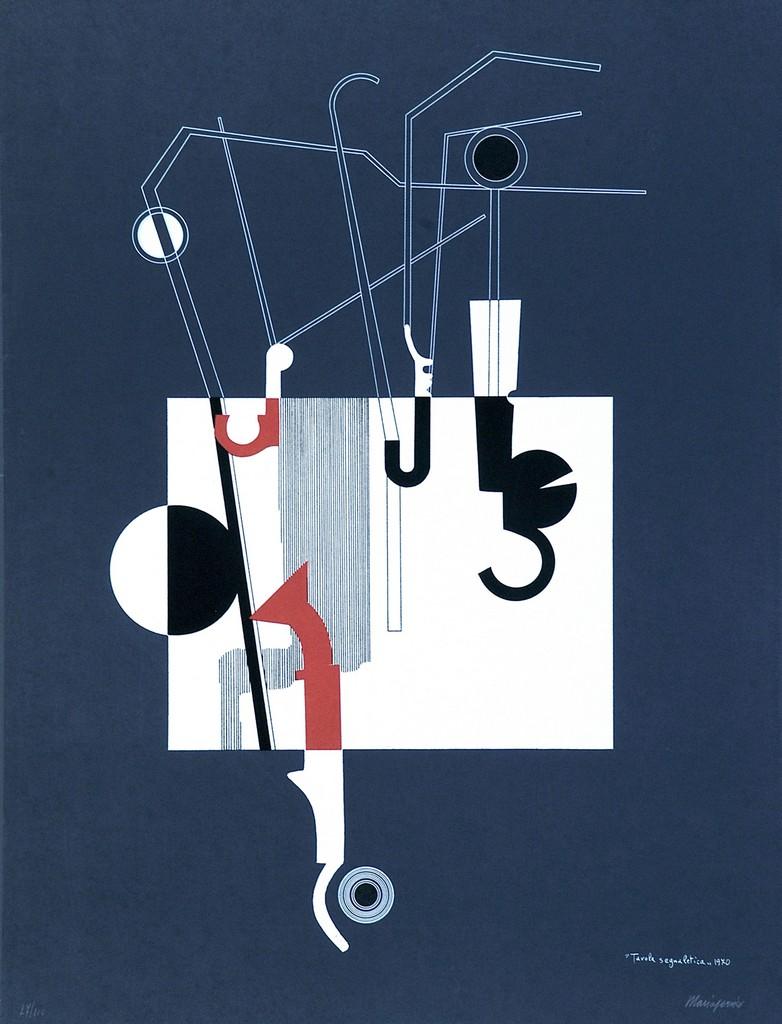
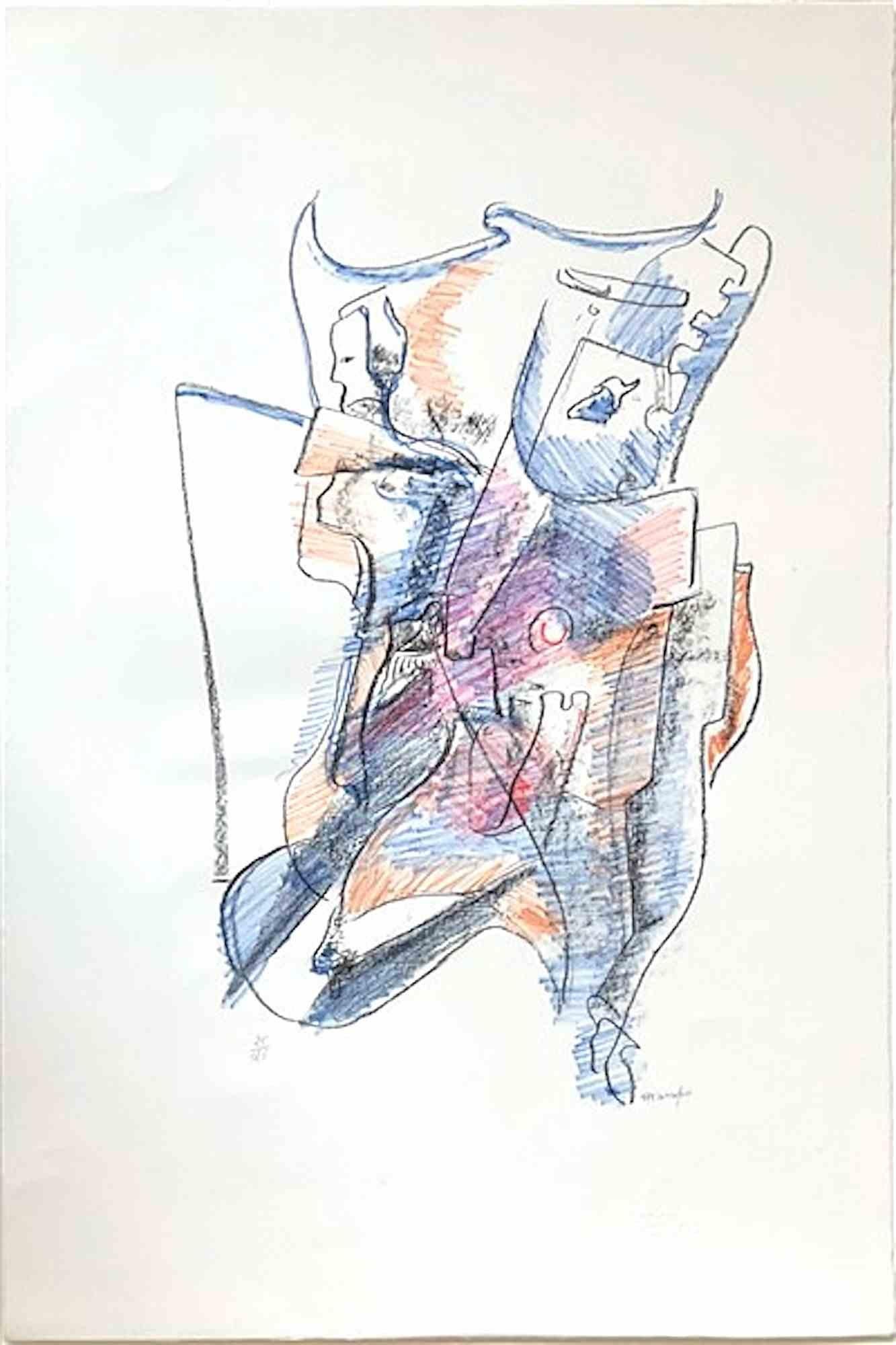
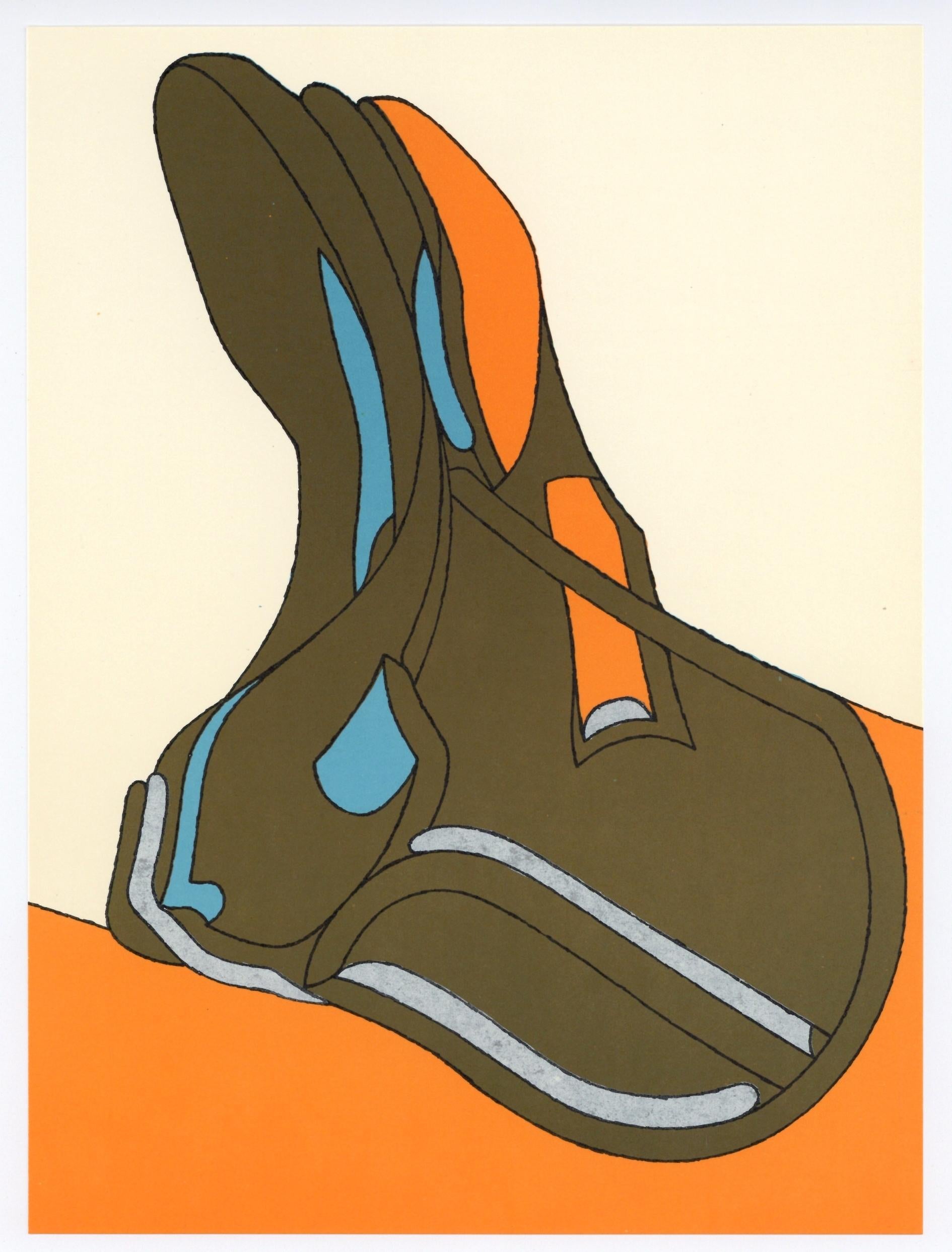
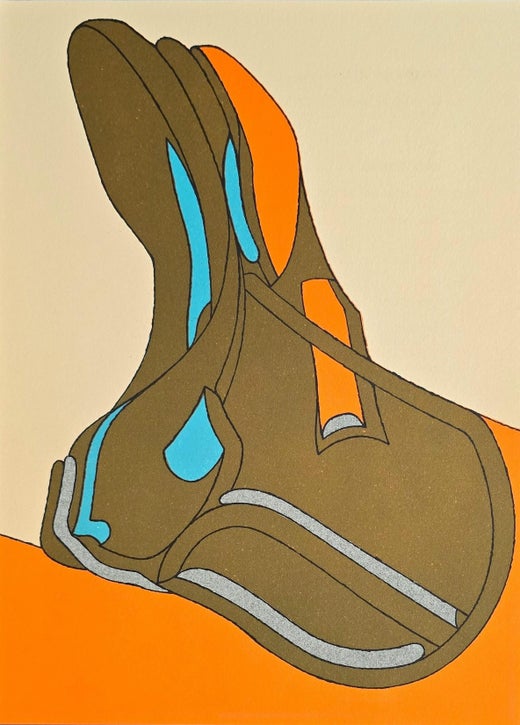
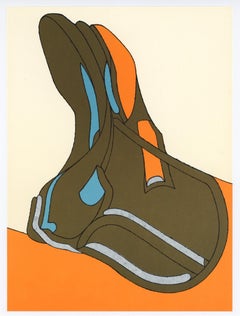
This exquisite lithograph by Herve Telemaque (1937–2022), titled Sin titulo (Untitled), from the album Ediciones Poligrafa, Barcelona - Redfern Gallery, London, originates from the 1979 edition published by Ediciones Poligrafa, Barcelona, in collaboration with Redfern Gallery, London; printed by La Poligrafa, S.A., Barcelona, October 23, 1979. This artwork reflects Telemaque’s incisive and conceptually layered visual language, where fragmented imagery, symbolic forms, and graphic clarity converge to explore themes of identity, language, and the structures of visual culture.
Executed as a lithograph on velin d'Arches paper. 10 x 7.5 inches. Unsigned and unnumbered as issued. The edition exemplifies the refined craftsmanship of La Poligrafa atelier, one of the most important print workshops in postwar Spain.
Artwork Details:
Artist: Herve Telemaque (1937–2022)
Title: Sin titulo (Untitled), from Ediciones Poligrafa, Barcelona - Redfern Gallery, London, 1979
Medium: Lithograph on velin d'Arches paper
Dimensions: 10 x 7.5 inches
Inscription: Unsigned and unnumbered as issued
Date: 1979
Publisher: Ediciones Poligrafa, Barcelona, in collaboration with Redfern Gallery, London
Printer: La Poligrafa, S.A., Barcelona
Condition: Well preserved, consistent with age and medium
Provenance: From Ediciones Poligrafa, Barcelona - Redfern Gallery, London, 1979
Notes:
Excerpted from the album, This album has been published for the exhibition of artists who have worked for Ediciones Poligrafa, Barcelona, at the Redfern Gallery, 20 Cork Street, London W. 1, from December 4th, 1979, to January 31st, 1980. This album was finished in Barcelona on 23rd October 1979 on the presses of La Poligrafa, S.A. The English edition for the Redfern Gallery has been limited to M examples. There is also a deluxe edition with a portfolio containing a selection of the lithographs with full margins, 37 1/2 x 27 cm., specially made for this album, signed and limited to C examples. Ediciones Poligrafa, Barcelona - Redfern Gallery, London
About the Publication:
Ediciones Poligrafa, Barcelona - Redfern Gallery, London, published in 1979, represents a significant collaborative exhibition album produced to accompany an international presentation of artists associated with Ediciones Poligrafa, one of Spain’s most influential postwar publishing houses. Conceived as both a documentation of artistic production and a collectible portfolio, the album brought together works by leading contemporary artists whose practices reflected the dynamic evolution of European abstraction and printmaking in the late twentieth century. Produced at the renowned La Poligrafa workshop in Barcelona, the publication exemplifies the high technical standards and collaborative spirit that defined Spanish printmaking during this period. Issued in conjunction with the exhibition at the Redfern Gallery in London, the album underscores the growing international dialogue between Spanish and British art institutions, while serving as a testament to the role of publishers and print ateliers in disseminating modern and contemporary art across cultural boundaries.
About the Artist:
Herve Telemaque (1937–2022) was a Haitian-born French painter, draughtsman, printmaker, and conceptual artist whose incisive, politically charged imagery and hybrid visual language established him as a central figure of Narrative Figuration and one of the most intellectually sophisticated artists of postwar European art, creating a body of work that bridges Surrealism, Pop Art, and conceptual practice while addressing themes of identity, language, power, and postcolonial critique. Born in Port-au-Prince, Haiti, Telemaque was raised in a culturally engaged environment before moving to New York in the late 1950s, where he encountered Abstract Expressionism and the emerging language of American Pop Art, experiences that would inform his early development before relocating to Paris in 1961, where he became fully integrated into the European avant-garde and developed his mature and highly distinctive artistic voice. Working within the broader lineage shaped by Pablo Picasso, Joan Miro, and Salvador Dali, Telemaque absorbed the lessons of modernism while engaging deeply with the conceptual provocations of Marcel Duchamp and Man Ray, the abstraction of Wassily Kandinsky, and the formal innovations of Alexander Calder and Alberto Giacometti, synthesizing these influences into a complex visual language that merges fragmented imagery, text, symbols, and graphic elements into layered compositions that challenge perception and meaning. His works frequently incorporate references drawn from comics, advertising, maps, diagrams, and everyday objects, reassembled into striking visual constructions that oscillate between clarity and ambiguity, reflecting his sustained interest in the instability of language, the circulation of images, and the structures of power embedded within visual culture. Closely associated with contemporaries such as Bernard Rancillac, Eduardo Arroyo, Erro, and other leading figures of Narrative Figuration, Telemaque positioned himself both in dialogue with and in critique of American Pop Art, offering a more politically engaged and conceptually rigorous alternative that foregrounded issues of race, colonial history, and global inequality, while also reflecting his own experience navigating Caribbean and European identities. Throughout his career, he explored the relationship between image and language, often embedding textual elements into his compositions or constructing visual systems that function as coded narratives, inviting interpretation while resisting fixed meaning and reinforcing his role as both a painter and a thinker. His work represents a unique synthesis of Caribbean heritage and European intellectual traditions, situating him within a broader transnational discourse that expanded the possibilities of painting in the second half of the twentieth century. Over the decades, Telemaque exhibited extensively across Europe, the United States, and internationally, gaining recognition for his originality, conceptual depth, and formal innovation, and his influence has extended to later generations of artists working in conceptual figuration, political painting, and interdisciplinary practices, including contemporary artists exploring identity, language, and postcolonial narratives through hybrid visual strategies. Today, his works are held in major institutional collections including the Centre Pompidou in Paris, the Musee d’Art Moderne de la Ville de Paris, and numerous international museums and private collections, confirming his enduring importance within the global history of modern and contemporary art, and his paintings and works on paper continue to gain increasing recognition in the international art market. The highest auction record for Herve Telemaque was achieved at Christie’s Paris on October 24, 2019, when a major painting sold for approximately 550,000 EUR, underscoring his rising market strength and his significance as a key figure in postwar European and Caribbean-influenced contemporary art.
Herve Telemaque Sin titulo 1979 lithograph Poligrafa Redfern Gallery narrative figuration print Telemaque collectible lithograph.