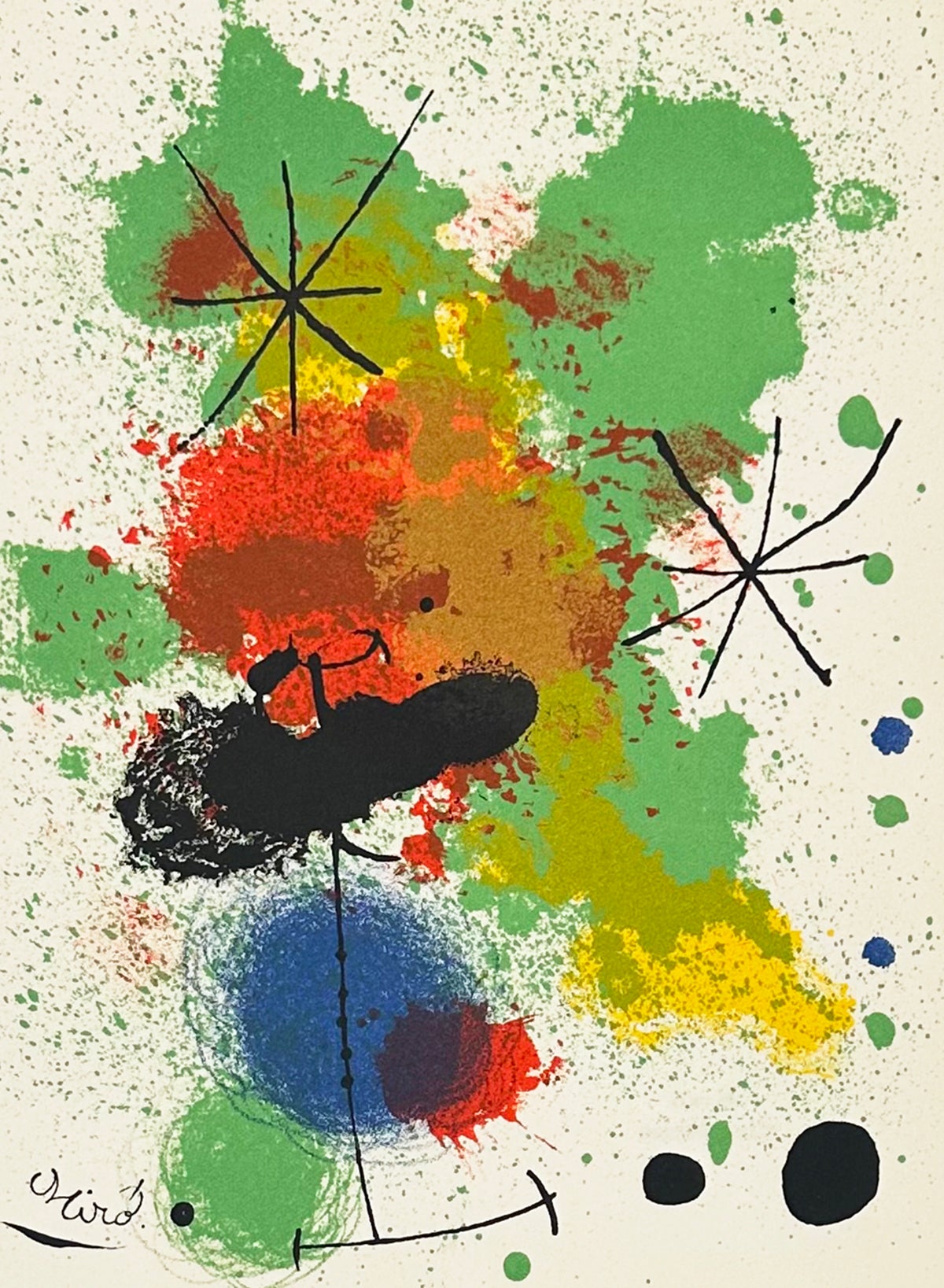
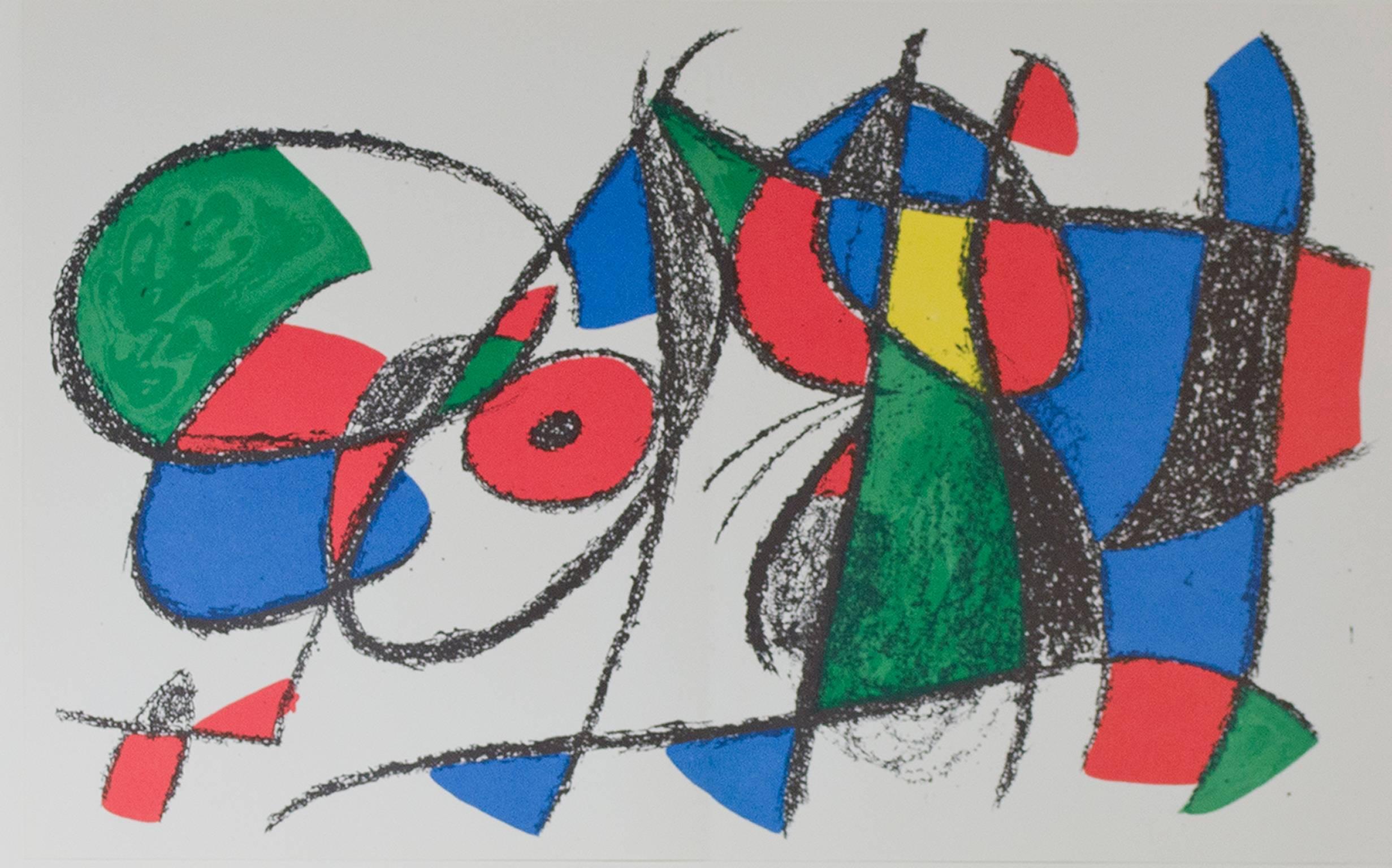
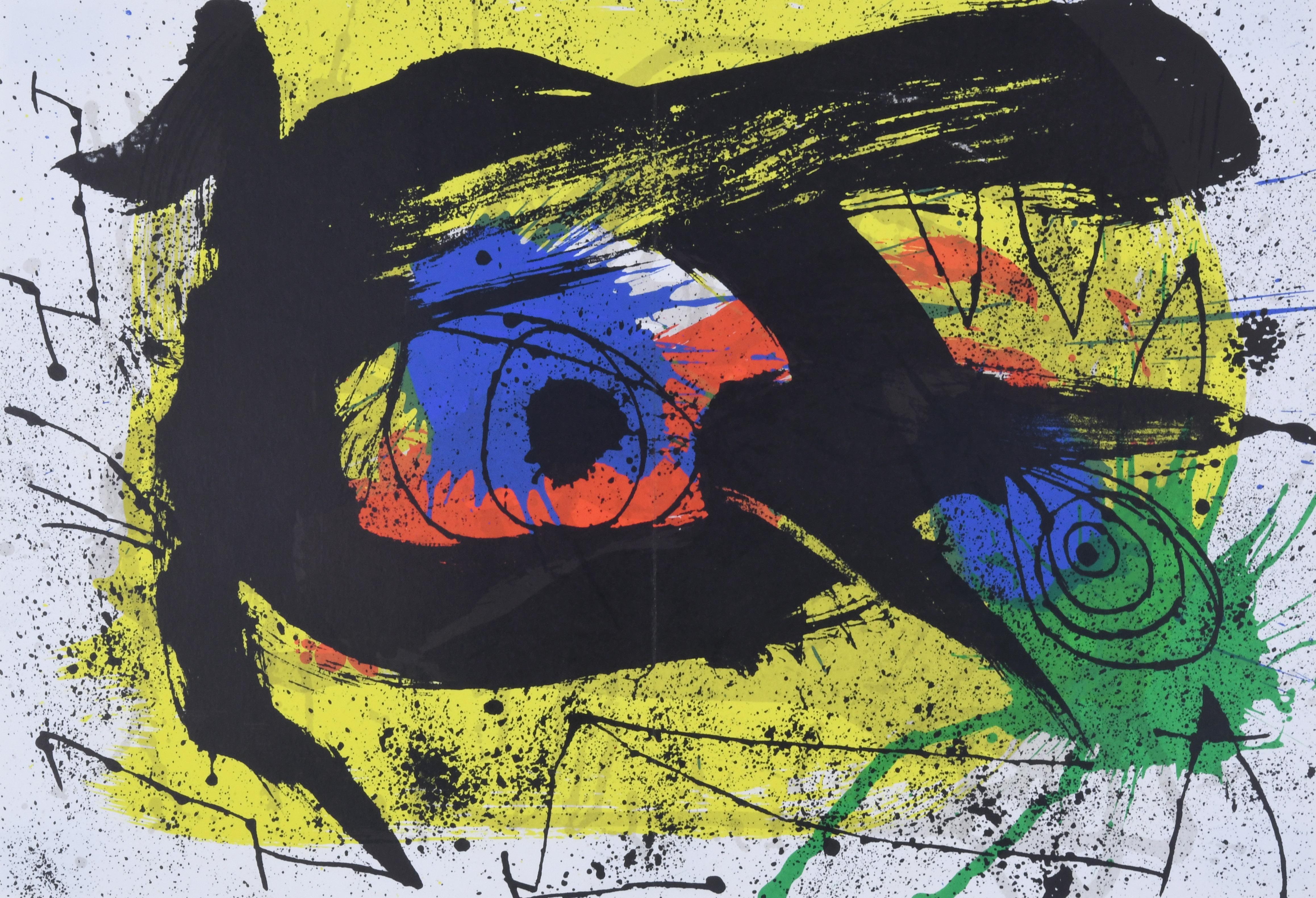
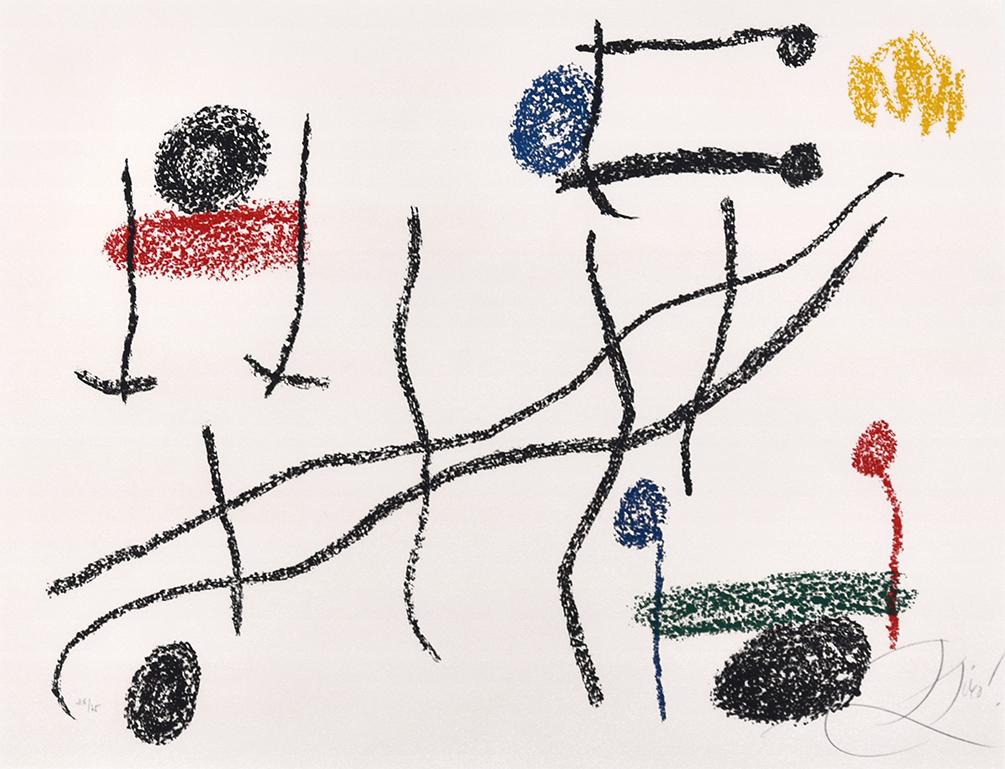
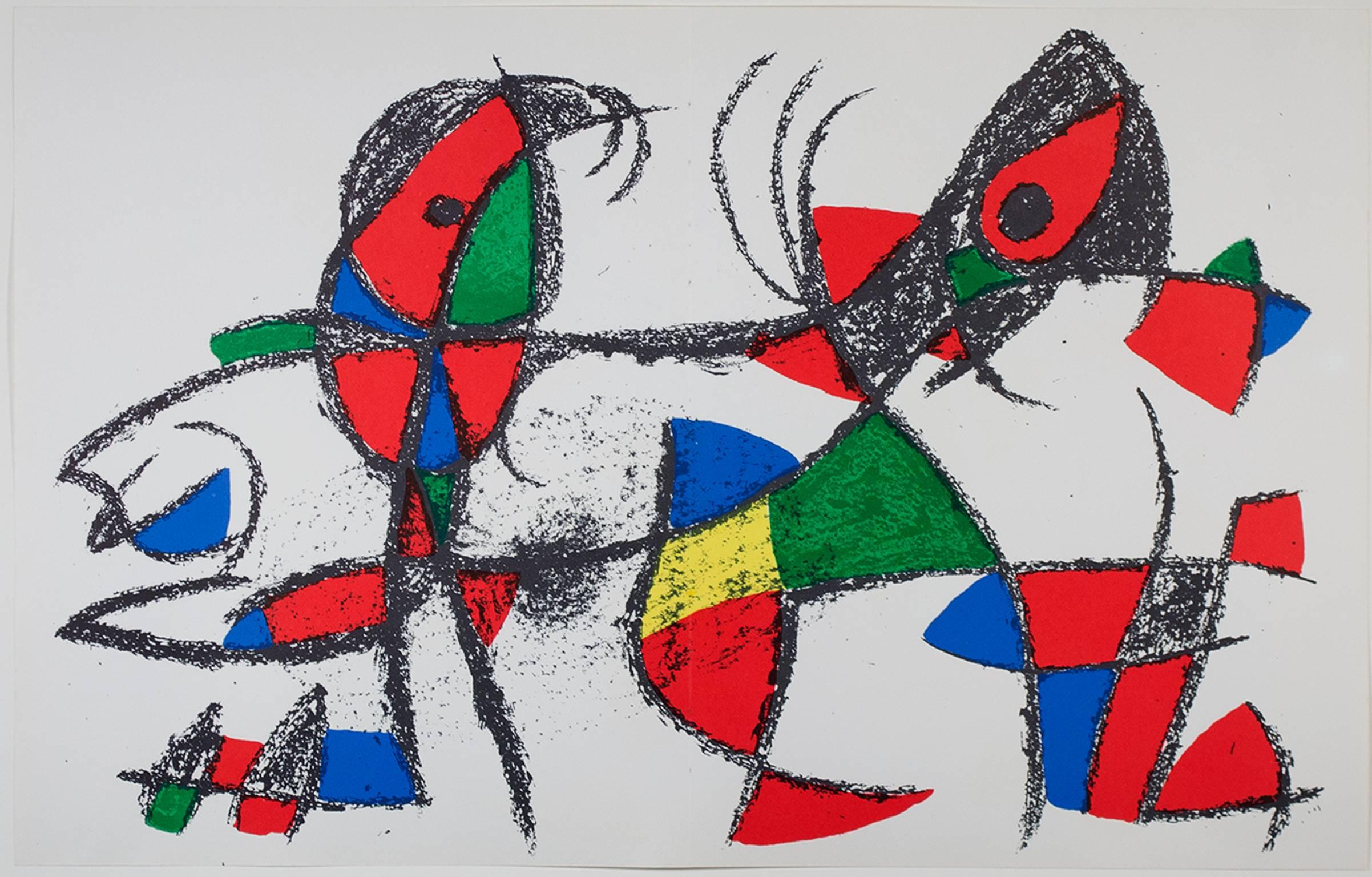
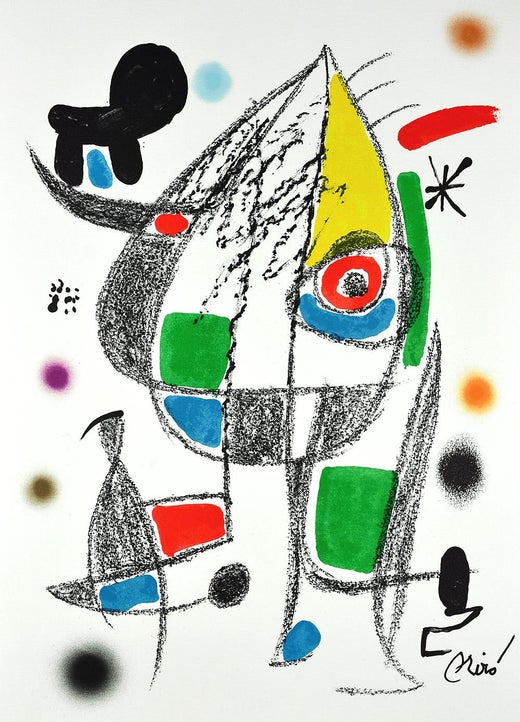
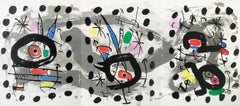
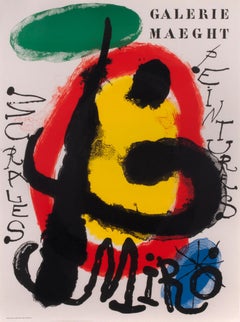
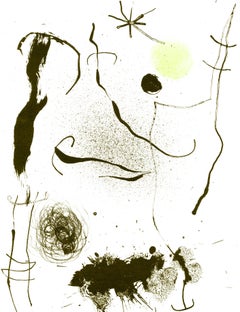
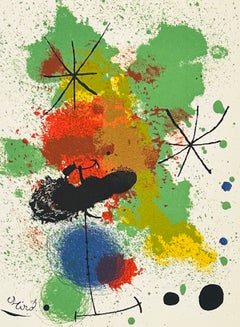
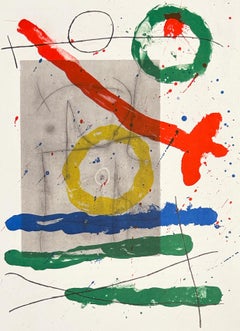
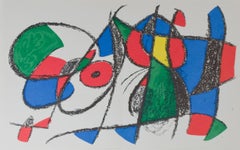
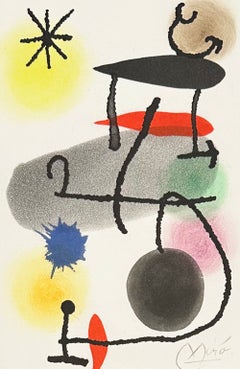
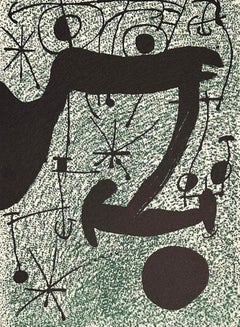
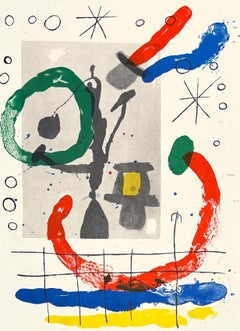
Les Mans (The Hinds)
Color lithograph, 1971
Unsigned (as issued)
From: Derrière le Miroir, No. 193-194, Peintures sur papier, dessins
Large edition
Published by Maeght Éditeur, Paris
Lithographs printed by Lourlot, Paris
Printed by ARTE–Adrien Maeght
Condition: Very fresh colors
Centerfold as issued
Sheet size: 15 x 22 inches
Reference: Cramer 145
Derrière Le Miroir: Aimé Maeght's Masterpiece of Twentieth-Century Art Publishing
Among the most influential art publications of the twentieth century, Derrière Le Miroir (commonly abbreviated DLM) occupies a unique position. Neither a conventional exhibition catalogue nor merely an illustrated magazine, it became a collaborative workshop in which artists, poets, critics, printers, and publishers produced original works of graphic art. Published by the Paris dealer and publisher Aimé Maeght between 1946 and 1982, the series remains one of the finest achievements in modern lithographic publishing and an indispensable reference for collectors of original prints.
Aimé Maeght: Dealer, Printer, and Publisher
Before becoming one of Europe's leading art dealers, Aimé Maeght (1906–1981) trained as a lithographer. His understanding of stone lithography distinguished him from most gallery owners of his generation. Rather than treating prints as secondary reproductions, he viewed lithography as an original artistic medium capable of matching painting in expressive power.
After opening the Galerie Maeght in Paris following the Second World War, Maeght sought a publication that would extend each exhibition beyond the gallery walls. The result was Derrière Le Miroir ("Behind the Mirror"), first issued in 1946. Every number functioned simultaneously as an exhibition catalogue, literary review, and portfolio of original prints. Over its lifetime, the publication ultimately comprised 253 numbered issues (published in approximately 200 physical volumes because of numerous double and triple issues) before ending in 1982.
Unlike commercial magazines, DLM celebrated only artists represented by Galerie Maeght or associated with its exhibitions. Consequently, the publication became an extraordinary visual record of the gallery's central role in postwar modernism.
Original Lithographs Rather than Reproductions
The greatest importance of Derrière Le Miroir lies in its original lithographs.
Unlike ordinary exhibition catalogues that reproduce paintings photographically, many issues of DLM contained lithographs drawn directly by the artists onto lithographic stones or zinc plates. These were printed by master workshops, especially those of Fernand Mourlot and later Maeght's own printing facilities.
The artists were encouraged to treat each lithograph as an autonomous artwork rather than an illustration. Covers frequently became original lithographs themselves, while interior pages often included:
• single-page color lithographs
• double-page lithographs
• fold-out compositions
• black-and-white lithographs
• experimental combinations of text and image
Many deluxe editions included additional signed original lithographs unavailable in the standard editions.
Because these images were conceived specifically for lithography, they occupy an important place within each artist's graphic oeuvre. For collectors, an original DLM lithograph is considered an authentic original print rather than a reproduction.
A Laboratory for Modern Art
One remarkable aspect of Derrière Le Miroir was the close collaboration between artists and writers.
Each issue typically combined:
• essays by leading critics
• poetry
• artists' statements
• original graphic art
• installation photographs
• reproductions of paintings and sculpture
Contributors included writers such as Jacques Dupin, René Char, Michel Leiris, Francis Ponge, and Jean Paulhan, creating an unusually rich dialogue between literature and visual art.
Major Artists Who Produced Original Lithographs
The list of artists who created original lithographs for Derrière Le Miroir reads like a history of twentieth-century European modernism. Among the most significant contributors were:
• Joan Miró
• Marc Chagall
• Alexander Calder
• Georges Braque
• Henri Matisse
• Alberto Giacometti
• Eduardo Chillida
• Pierre Tal-Coat
• Raoul Ubac
• Jean-Paul Riopelle
• Antoni Tàpies
• Ellsworth Kelly
• Pierre Alechinsky
• Bram van Velde
• Pol Bury
• Francis Bacon
• Saul Steinberg
• Isamu Noguchi
• Takis
• Karel Appel (associated with Maeght publications)
• Valerio Adami
• Claude Garache
Several artists appeared repeatedly. Miró alone contributed to numerous issues over three decades, while Chagall produced original lithographs for approximately thirteen separate issues, culminating in the celebrated 1981 issue devoted entirely to his lithographs.
Outstanding Individual Issues
Among the most celebrated issues are:
• No. 14–15 (1948) — devoted to Joan Miró, containing eight original lithographs.
• Braque issues featuring original color lithographs and important essays.
• Calder issues with multiple original lithographs, including deluxe signed editions.
• Miró–Artigas issues documenting the ceramic collaborations.
• Chagall issues of the 1950s–1980s containing original color lithographs.
• Giacometti, Riopelle, Tàpies, Ubac, and Chillida issues, now regarded as major publications within each artist's print catalogue.
Lithographic Excellence
The quality of printing distinguishes Derrière Le Miroir from virtually every contemporary art periodical.
Many images were printed by the finest Parisian ateliers using traditional limestone lithography. Registration of multiple colors was accomplished entirely by hand, allowing subtle tonal transitions impossible in ordinary offset printing.
Artists often supervised proofs personally, adjusting colors until they matched their intentions. As a result, the lithographs display exceptional richness of color, texture, and line.
Influence on Collecting
For collectors, Derrière Le Miroir has long served as an accessible entry into original twentieth-century printmaking. Individual lithographs are frequently removed from damaged copies and framed, though intact issues are increasingly prized because they preserve the complete artistic and literary context.
Collectors distinguish between:
• complete issues
• deluxe editions
• signed editions
• individual original lithographs removed from issues
The finest complete copies, especially those devoted to Miró, Chagall, Calder, Braque, Giacometti, and Tàpies, have become highly sought after in the international art market.
Legacy
More than any other postwar art publication, Derrière Le Miroir blurred the boundaries between exhibition catalogue, artist's book, literary journal, and print portfolio. It transformed the exhibition catalogue into an original work of art, while simultaneously documenting the development of postwar European modernism.
Aimé Maeght's understanding of lithography allowed artists to exploit the medium with remarkable freedom, producing thousands of original prints that today form an essential chapter in twentieth-century graphic art. The publication also preserved collaborations between artists and writers that might otherwise have disappeared, making Derrière Le Miroir not only one of the greatest achievements of modern publishing but also one of the most significant documentary records of postwar artistic culture. More than four decades after its final issue, the series remains indispensable to museum curators, print scholars, collectors, and historians of modern art.