1 of 5

Marc Chagall
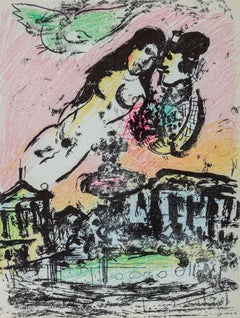
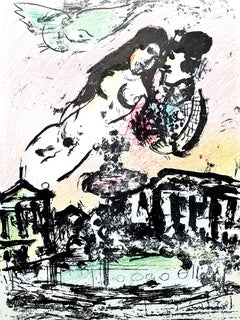
Marc Chagall, The Lover's Heaven, from Chagall Lithographer II, 1963

1963

$956
$1,19520% Off
£722.03
£903.4620% Off
€845.33
€1,054.6820% Off
CA$1,358.20
CA$1,700.4320% Off
A$1,381.80
A$1,724.7820% Off
CHF 791.91
CHF 984.9020% Off
MX$16,637.69
MX$20,887.6220% Off
NOK 9,255.94
NOK 11,594.6320% Off
SEK 9,296.56
SEK 11,556.1520% Off
DKK 6,319.59
DKK 7,883.8520% Off

Follow Marc Chagall Prints and Multiples to receive alerts when new items arrive

About the Item

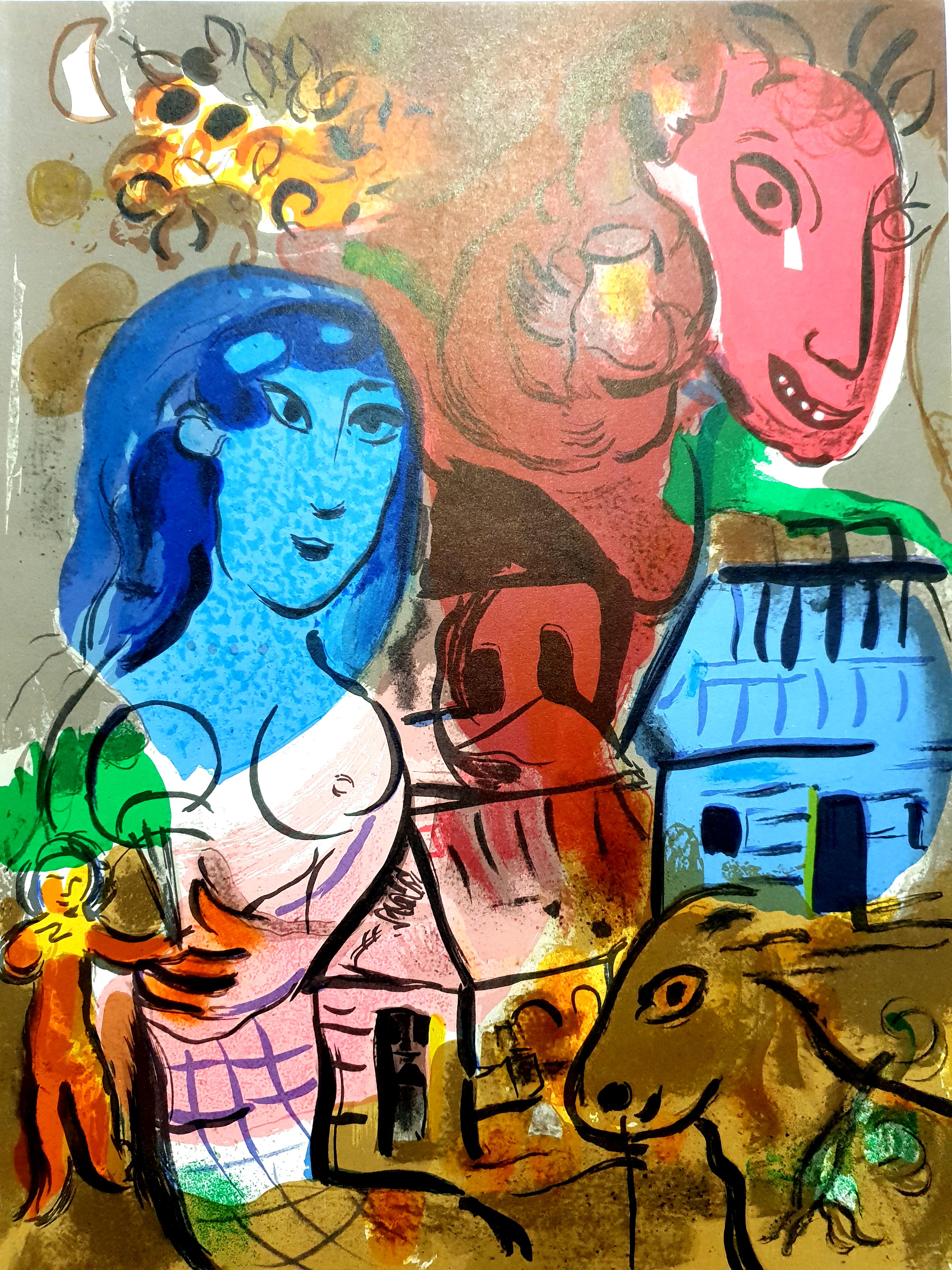
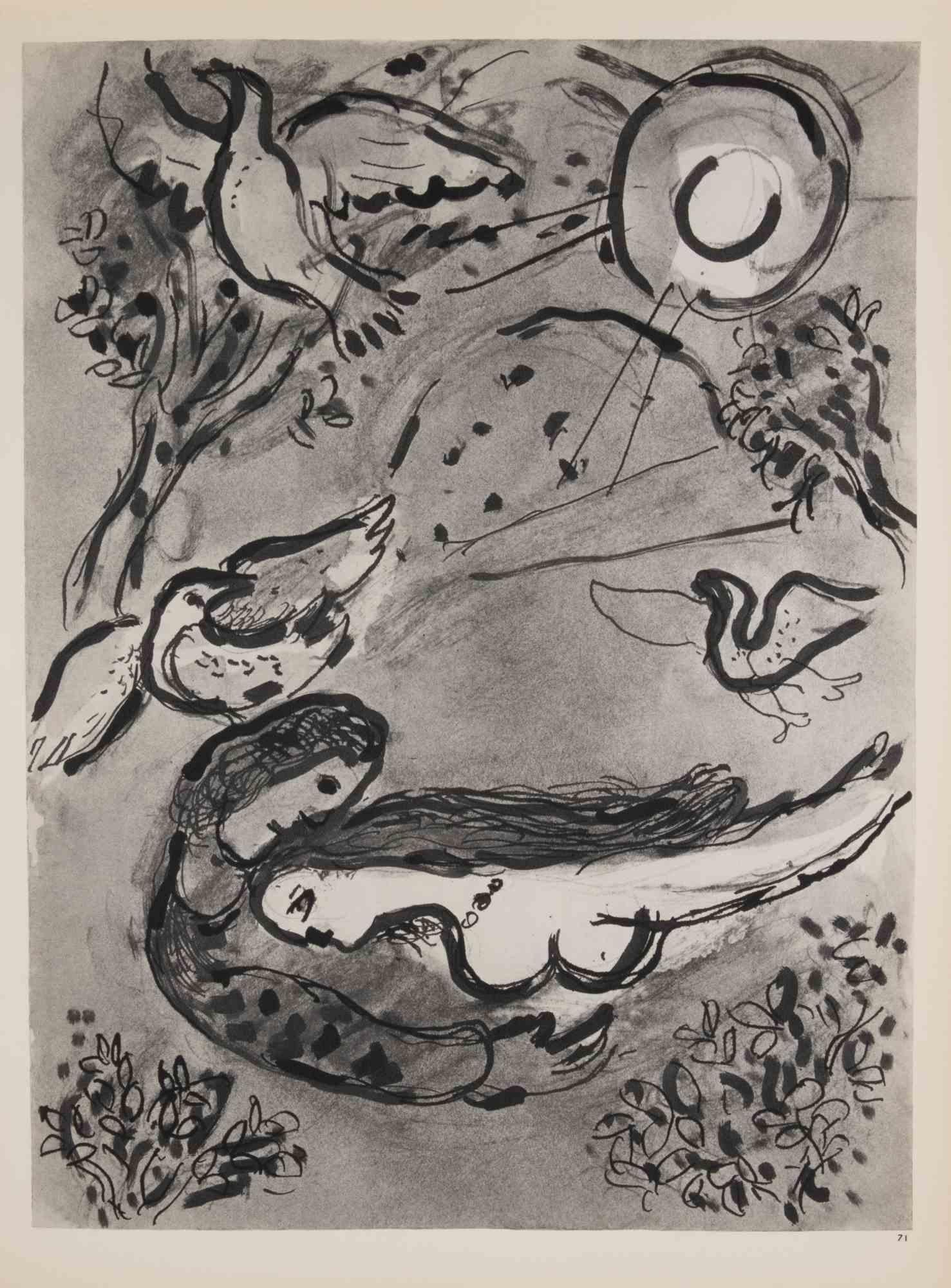
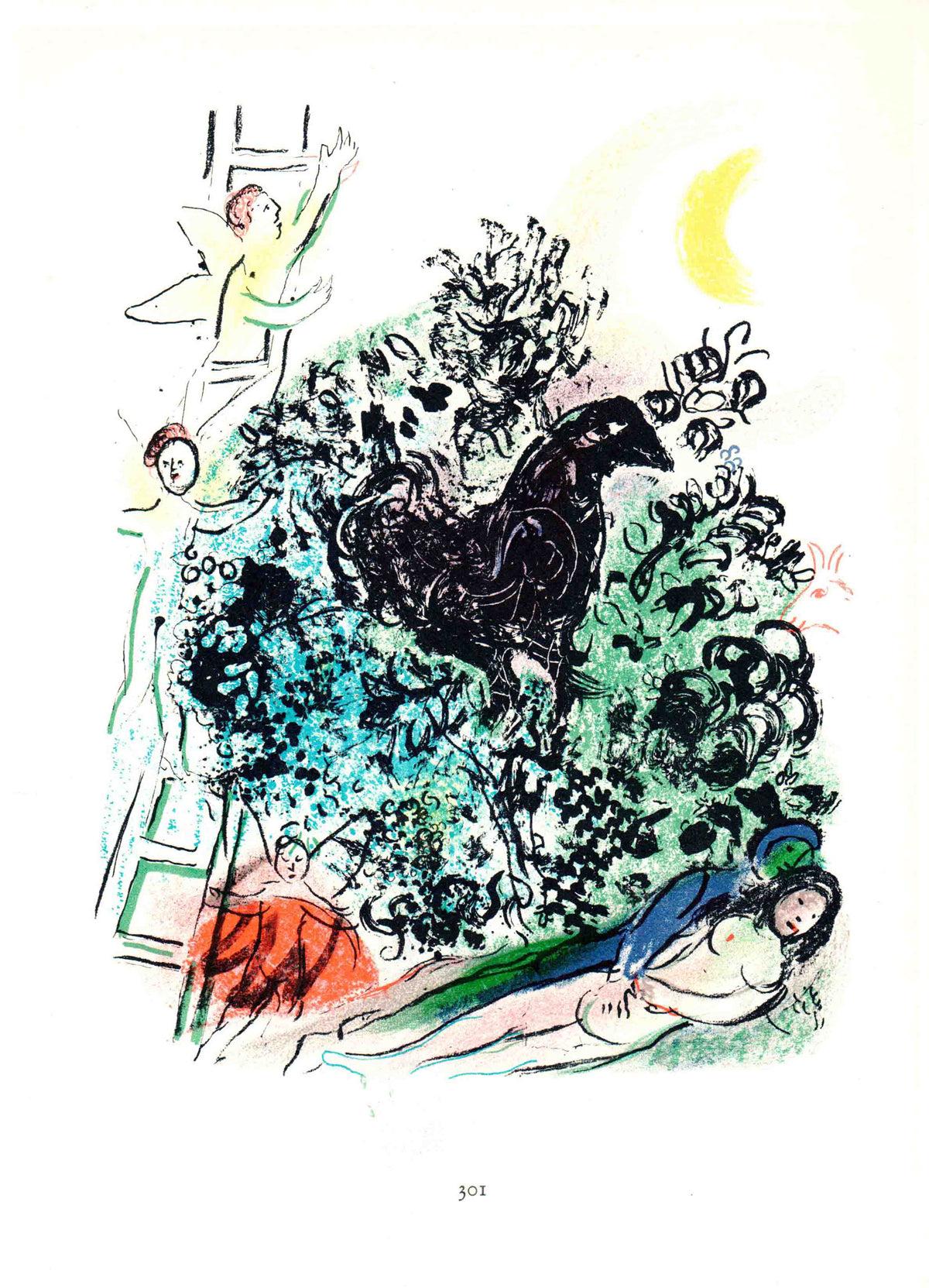
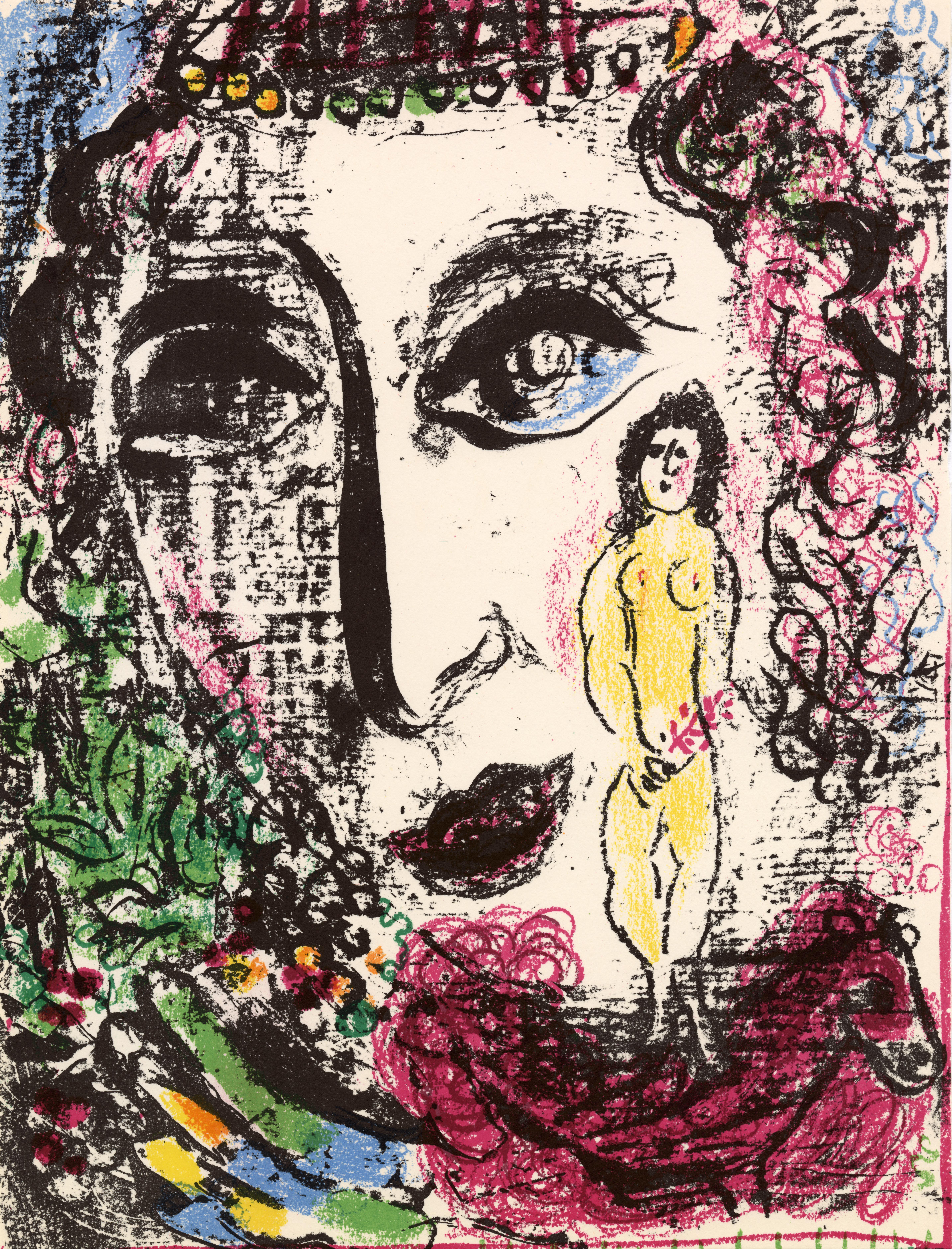
This exquisite lithograph by Marc Chagall (1887–1985), titled Le paradis de l'amoureux (The Lover's Heaven), from Chagall Lithographe II (Chagall Lithographer II), originates from the September 1963 issue published by Andre Sauret, Editeur, Monte-Carlo, and printed by Mourlot Freres, Paris, 1963. This visionary composition reflects Chagall’s mastery of the lithographic medium, embodying his poetic imagination through fluid line, expressive form, and a luminous sense of movement. The work conveys the artist’s unique ability to merge memory, symbolism, and emotion into a cohesive visual language, transforming even the simplest subject into a deeply evocative and dreamlike image. Infused with lyricism and spiritual resonance, the composition exemplifies Chagall’s enduring exploration of identity, mythology, and the transcendent power of art. The piece forms part of Chagall Lithographe II, a landmark publication that documents and celebrates the artist’s achievements in lithography, offering insight into one of the most significant aspects of his graphic oeuvre. Executed as a lithograph on velin paper, this work measures 12.5 x 9.625 inches (31.75 x 24.45 cm). Unsigned and unnumbered as issued. The edition exemplifies the superb craftsmanship of the Mourlot Freres atelier, renowned for its collaborations with the greatest modern masters of the 20th century. Artwork Details: Artist: Marc Chagall (1887–1985) Title: Le paradis de l'amoureux (The Lover's Heaven), from Chagall Lithographe II (Chagall Lithographer II), September 1963 Medium: Lithograph on velin paper Dimensions: 12.5 x 9.625 inches (31.75 x 24.45 cm) Inscription: Unsigned and unnumbered as issued Date: 1963 Publisher: Andre Sauret, Editeur, Monte-Carlo Printer: Mourlot Freres, Paris Catalogue raisonne references: Chagall, Marc, et al. Chagall Lithographe. Andre Sauret, 1960-1986, illustration 391-402. Cramer, Patrick, and Meret Meyer. Marc Chagall: Catalogue Raisonne des Livres Illustres. P. Cramer ed., 1995, illustration 56. Condition: Well preserved, consistent with age and medium Provenance: From Chagall Lithographe II, published by Andre Sauret, Editeur, Monte-Carlo, 1963 Notes: Excerpted from the album (translated from French), This work, which was designed and compiled by Fernand Mourlot and Andre Sauret, was finished in September 1963. The reproductions were printed on the presses of Draeger Freres, and the original lithographs on the presses of Mourlot Freres. About the Publication: Chagall Lithographe II, published in September 1963 by Andre Sauret in Monte-Carlo and printed by Mourlot Freres, represents the continuation and expansion of the definitive survey of Marc Chagall’s lithographic work. Produced in close collaboration with master printer Fernand Mourlot, this second installment builds upon the foundation established by the first volume, documenting Chagall’s lithographic production from 1957 through 1962. The publication provides a comprehensive record of the artist’s evolving techniques and thematic explorations during a particularly dynamic period in his career, highlighting his increasing mastery of color lithography and his continued engagement with subjects such as biblical narratives, folklore, and personal symbolism. Featuring a combination of high-quality reproductions and original lithographs, the work underscores the technical brilliance of the Mourlot atelier, whose expertise enabled the faithful translation of Chagall’s painterly sensibility into print form. Widely regarded as an essential reference for scholars and collectors alike, Chagall Lithographe II stands as a critical document of mid-century printmaking and a testament to one of the most important artist-printer collaborations of the 20th century. About the Artist: Marc Chagall (1887–1985) was a Belarus-born French painter, printmaker, and designer whose visionary imagination, radiant color, and deeply poetic symbolism made him one of the most beloved and influential artists of the 20th century. Rooted in the imagery of his Jewish heritage and the memories of his childhood in Vitebsk, Chagall’s art wove together themes of faith, love, folklore, and fantasy with a dreamlike modern sensibility. His unique style—merging elements of Cubism, Fauvism, Expressionism, and Surrealism—defied categorization, transforming ordinary scenes into lyrical meditations on memory and emotion. Influenced by Russian icon painting, medieval religious art, and the modern innovations of artists such as Pablo Picasso, Henri Matisse, and Georges Braque, Chagall developed a profoundly personal visual language filled with floating figures, vibrant animals, musicians, and lovers that symbolized the transcendent power of imagination and love. During his early years in Paris, he became an integral part of the Ecole de Paris circle, forming friendships with Amedeo Modigliani, Fernand Leger, and Sonia Delaunay, and his creative spirit resonated with that of his peers and successors—Alexander Calder, Alberto Giacometti, Salvador Dali, Joan Miro, Wassily Kandinsky, Marcel Duchamp, and Man Ray—artists who, like Chagall, sought to push the boundaries of perception, emotion, and form. Over a prolific career that spanned painting, printmaking, stained glass, ceramics, and stage design, Chagall brought an unparalleled poetic sensibility to modern art, infusing even the most abstract subjects with human warmth and spiritual depth. His works are held in the most prestigious museums around the world, including the Museum of Modern Art, the Centre Pompidou, the Tate, and the Guggenheim, where they continue to inspire generations of artists and collectors. The highest price ever paid for a Marc Chagall artwork is approximately $28.5 million USD, achieved in 2017 at Sotheby’s New York for Les Amoureux (1928). Marc Chagall Le paradis de l'amoureux, Chagall Mourlot Freres, Chagall Andre Sauret, Chagall 1963 lithograph, Chagall velin paper, Chagall Lithographe II, Chagall collectible print, Chagall modernist lithograph.
  • Creator:
    Marc Chagall (1887 - 1985, French)
  • Creation Year:
    1963
  • Dimensions:
    Height: 12.5 in (31.75 cm)Width: 9.625 in (24.45 cm)
  • Medium:
  • Movement & Style:
  • Period:
  • Condition:
  • Gallery Location:
    Southampton, NY
  • Reference Number:
    1stDibs: LU1465217864952

You May Also Like

Le Ciel des Amoureux Lithograph, Figurative Print, 1960s, Unframed

Le Ciel des Amoureux Lithograph, Figurative Print, 1960s, Unframed

By Marc Chagall

Located in Milwaukee, WI

Framed 23 x 19.75 in No. 393 in the Catalogue Raisonne of Chagall's lithographs This lithograph came from "The Lithographs of Chagall: Volume II" by Fernand Mourlot and Marc Chaga...

Category

1960s Figurative Prints

Materials

Lithograph

Le Paradis des Amoureux

Le Paradis des Amoureux

By Marc Chagall

Located in London, GB

Original lithograph by Marc Chagall, printed during the artist's lifetime directly from Chagall's own lithographic stones.

Category

Mid-20th Century Figurative Prints

Materials

Lithograph

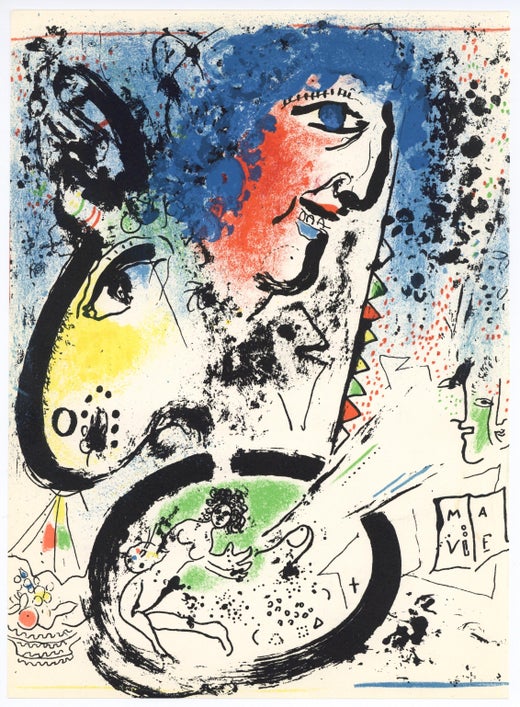
Marc Chagall - Original Lithograph

Marc Chagall - Original Lithograph

By Marc Chagall

Located in Collonge Bellerive, Geneve, CH

Marc Chagall Original Lithograph 1963 Dimensions: 32 x 24 cm Reference: Chagall Lithographe 1957-1962. VOLUME II. Condition : Excellent Marc Chagall (born in 1887) Marc Chagall was born in Belarus in 1887 and developed an early interest in art. After studying painting, in 1907 he left Russia for Paris, where he lived in an artist colony on the city’s outskirts. Fusing his own personal, dreamlike imagery with hints of the fauvism and cubism popular in France at the time, Chagall created his most lasting work—including I and the Village (1911)—some of which would be featured in the Salon des Indépendants exhibitions. After returning to Vitebsk for a visit in 1914, the outbreak of WWI trapped Chagall in Russia. He returned to France in 1923 but was forced to flee the country and Nazi persecution during WWII. Finding asylum in the U.S., Chagall became involved in set and costume design before returning to France in 1948. In his later years, he experimented with new art forms and was commissioned to produce numerous large-scale works. Chagall died in St.-Paul-de-Vence in 1985. The Village Marc Chagall was born in a small Hassidic community on the outskirts of Vitebsk, Belarus, on July 7, 1887. His father was a fishmonger, and his mother ran a small sundries shop in the village. As a child, Chagall attended the Jewish elementary school, where he studied Hebrew and the Bible, before later attending the Russian public school. He began to learn the fundamentals of drawing during this time, but perhaps more importantly, he absorbed the world around him, storing away the imagery and themes that would feature largely in most of his later work. At age 19 Chagall enrolled at a private, all-Jewish art school and began his formal education in painting, studying briefly with portrait artist Yehuda Pen. However, he left the school after several months, moving to St. Petersburg in 1907 to study at the Imperial Society for the Protection of Fine Arts. The following year, he enrolled at the Svanseva School, studying with set designer Léon Bakst, whose work had been featured in Sergei Diaghilev's Ballets Russes. This early experience would prove important to Chagall’s later career as well. Despite this formal instruction, and the widespread popularity of realism in Russia at the time, Chagall was already establishing his own personal style, which featured a more dreamlike unreality and the people, places and imagery that were close to his heart. Some examples from this period are his Window Vitebsk (1908) and My Fianceé with Black Gloves (1909), which pictured Bella Rosenfeld, to whom he had recently become engaged. The Beehive Despite his romance with Bella, in 1911 an allowance from Russian parliament member and art patron Maxim Binaver enabled Chagall to move to Paris, France. After settling briefly in the Montparnasse neighborhood, Chagall moved further afield to an artist colony known as La Ruche (“The Beehive”), where he began to work side by side with abstract painters such as Amedeo Modigliani and Fernand Léger as well as the avant-garde poet Guillaume Apollinaire. At their urging, and under the influence of the wildly popular fauvism and cubism, Chagall lightened his palette and pushed his style ever further from reality. I and the Village (1911) and Homage to Apollinaire (1912) are among his early Parisian works, widely considered to be his most successful and representative period. Though his work stood stylistically apart from his cubist contemporaries, from 1912 to 1914 Chagall exhibited several paintings at the annual Salon des Indépendants exhibition, where works by the likes of Juan Gris, Marcel Duchamp and Robert Delaunay were causing a stir in the Paris art world. Chagall’s popularity began to spread beyond La Ruche, and in May 1914 he traveled to Berlin to help organize his first solo exhibition, at Der Sturm Gallery. Chagall remained in the city until the highly acclaimed show opened that June. He then returned to Vitebsk, unaware of the fateful events to come. War, Peace and Revolution In August 1914 the outbreak of World War I precluded Chagall’s plans to return to Paris. The conflict did little to stem the flow of his creative output, however, instead merely giving him direct access to the childhood scenes so essential to his work, as seen in paintings such as Jew in Green (1914) and Over Vitebsk (1914). His paintings from this period also occasionally featured images of the war’s impact on the region, as with Wounded Soldier (1914) and Marching (1915). But despite the hardships of life during wartime, this would also prove to be a joyful period for Chagall. In July 1915 he married Bella, and she gave birth to a daughter, Ida, the following year. Their appearance in works such as Birthday (1915), Bella and Ida by the Window (1917) and several of his “Lovers” paintings give a glimpse of the island of domestic bliss that was Chagall’s amidst the chaos. To avoid military service and stay with his new family, Chagall took a position as a clerk in the Ministry of War Economy in St. Petersburg. While there he began work on his autobiography and also immersed himself in the local art scene, befriending novelist Boris Pasternak, among others. He also exhibited his work in the city and soon gained considerable recognition. That notoriety would prove important in the aftermath of the 1917 Russian Revolution when he was appointed as the Commissar of Fine Arts in Vitebsk. In his new post, Chagall undertook various projects in the region, including the 1919 founding of the Academy of the Arts. Despite these endeavors, differences among his colleagues eventually disillusioned Chagall. In 1920 he relinquished his position and moved his family to Moscow, the post-revolution capital of Russia. In Moscow, Chagall was soon commissioned to create sets and costumes for various productions at the Moscow State Yiddish Theater...

Category

1960s Surrealist Figurative Prints

Materials

Lithograph

Songe d'un Amoureux Offset Print by Marc Chagall, 1963, Mint Condition

Songe d'un Amoureux Offset Print by Marc Chagall, 1963, Mint Condition

By Marc Chagall

Located in Brooklyn, NY

Book page 117 in Chagall Lithographe II (1957-1962). Reproduction of image from 1961. ‘Chagall Lithographe II' Andre Sauret, Paris, 1963. Text in French by Fernand Mourlot. The seco...

Category

1960s Prints and Multiples

Materials

Offset

The Beloved of Jerusalem - Héliogravure by Marc Chagall - 1960

The Beloved of Jerusalem - Héliogravure by Marc Chagall - 1960

By Marc Chagall

Located in Roma, IT

Héliogravure on brown-toned paper, no signature. Héliogravure  on bot sheets, recto and verso. Edition of 6500 unsigned copies. Printed by Mourlot and published by Tériade on the A...

Category

1960s Surrealist Figurative Prints

Materials

Photogravure

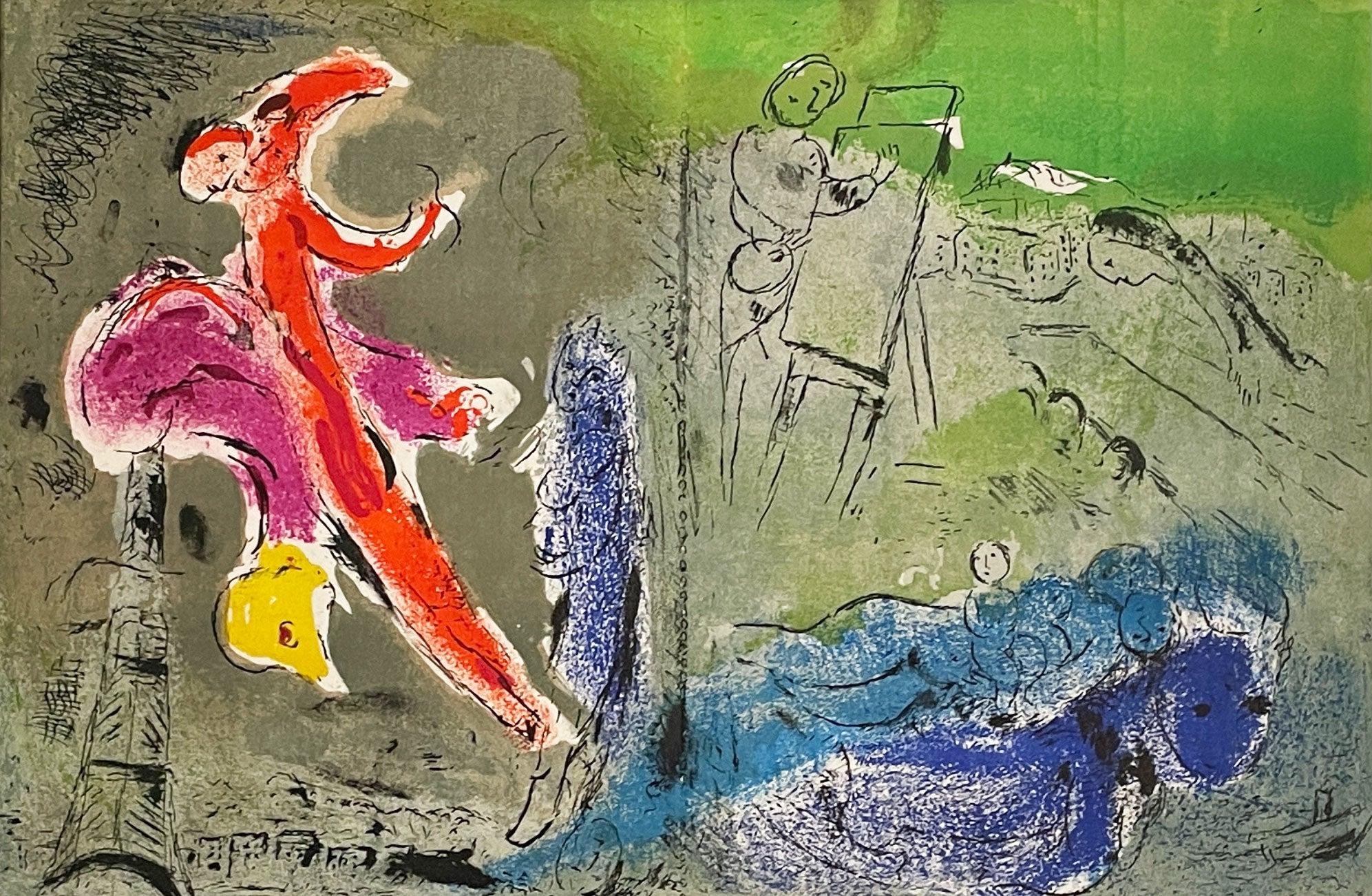
Marc Chagall Vision de Paris II Lithograph Print, 1953

Marc Chagall Vision de Paris II Lithograph Print, 1953

By Marc Chagall

Located in Washington, DC

Artist: Marc Chagall Title: Vision de Paris II Portfolio: 1953 Verve Vol VII No. 27-28 Medium: Lithograph Date: 1953 Edition: 6000 Frame Size: 28 1/4" x 21 1/2" Sheet Size: 14" x 20"...

Category

1950s Landscape Prints

Materials

Lithograph