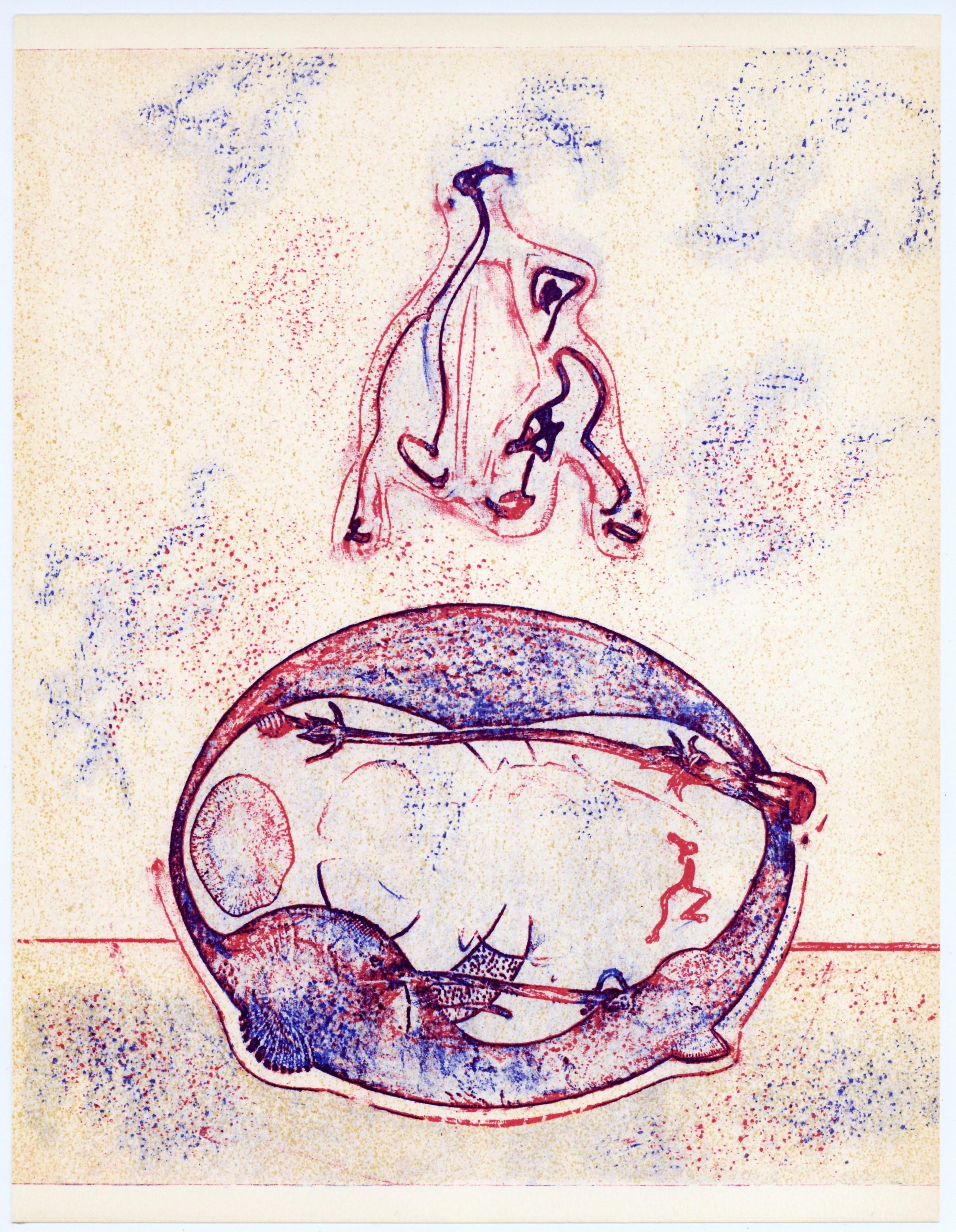
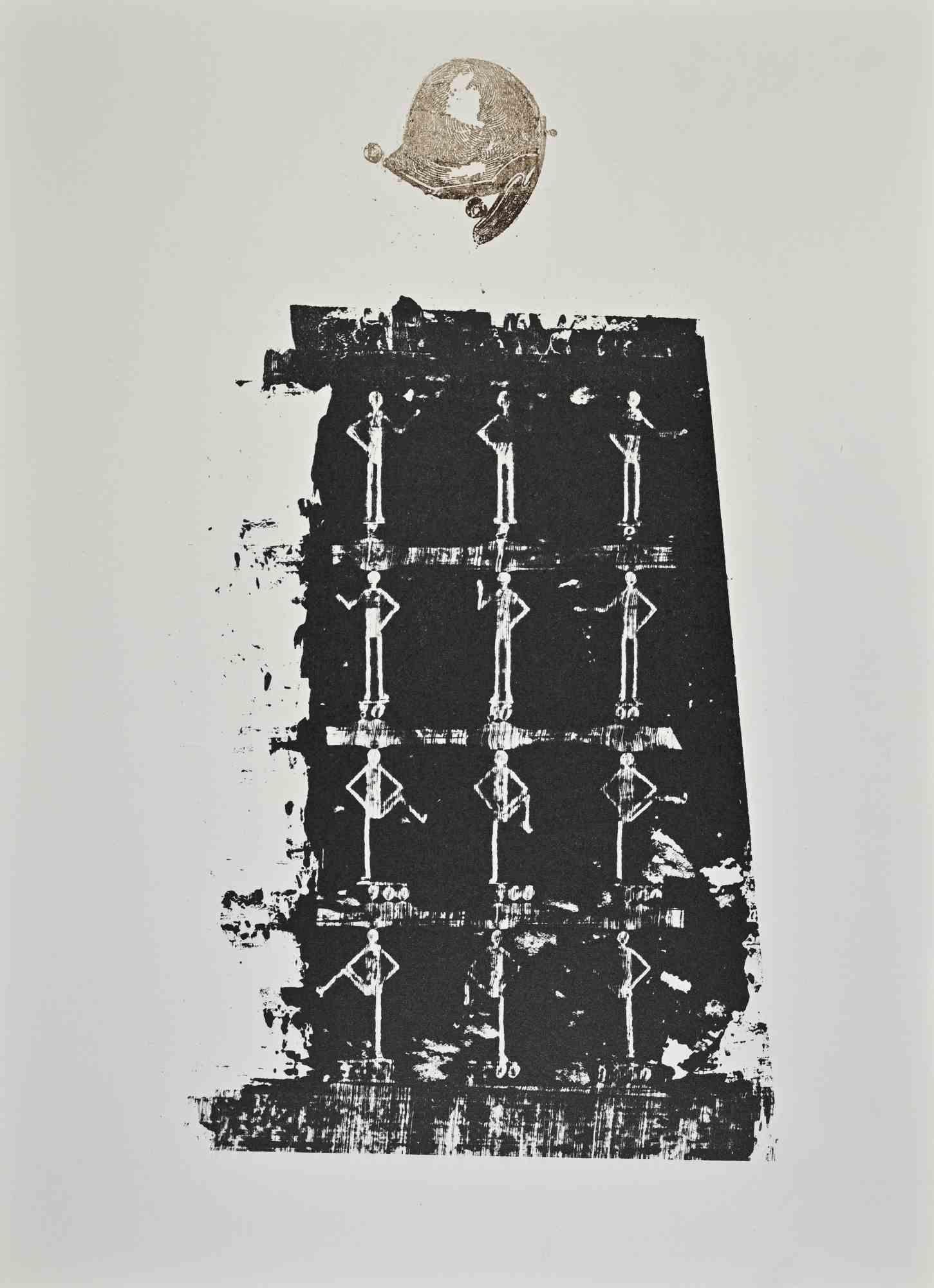
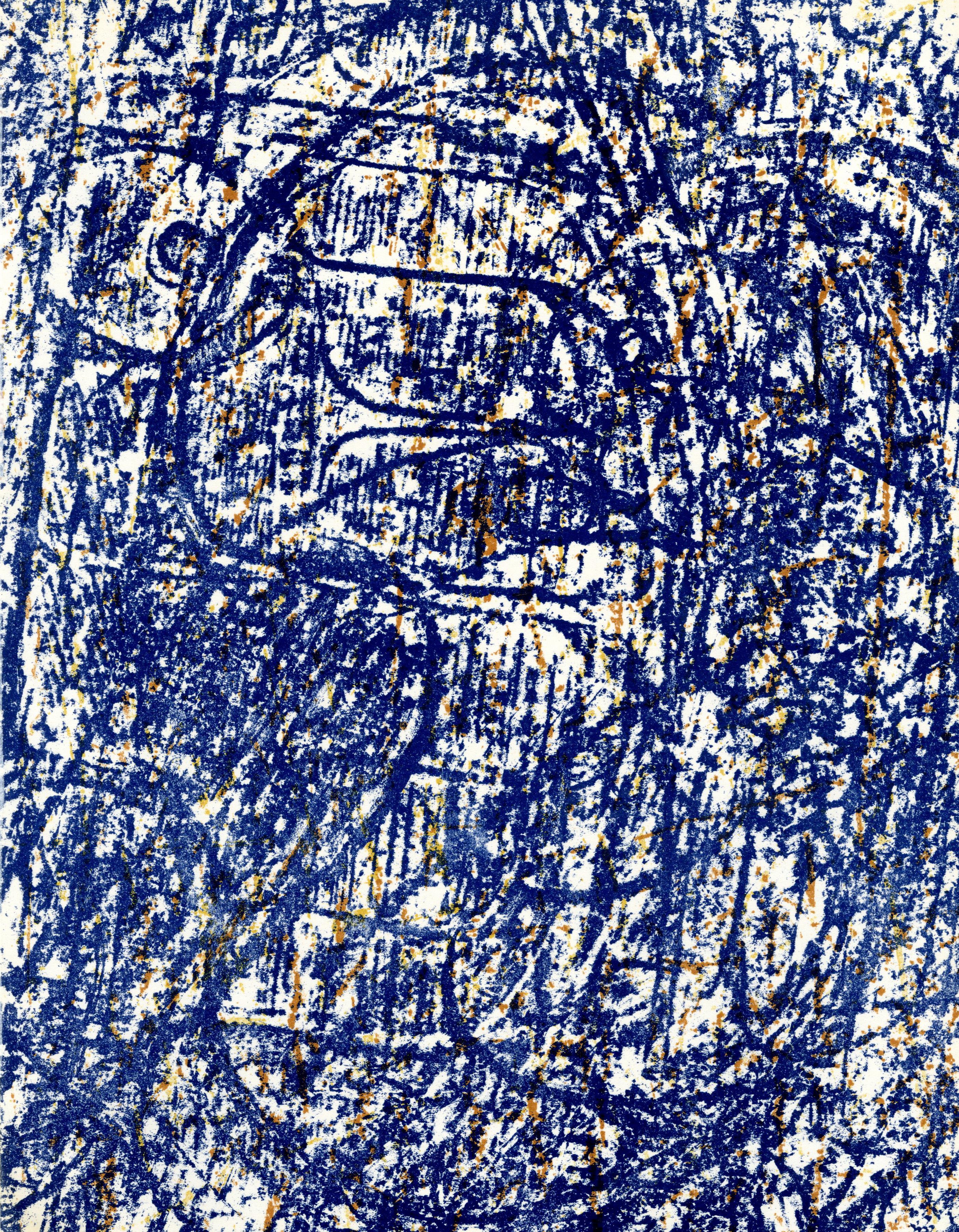
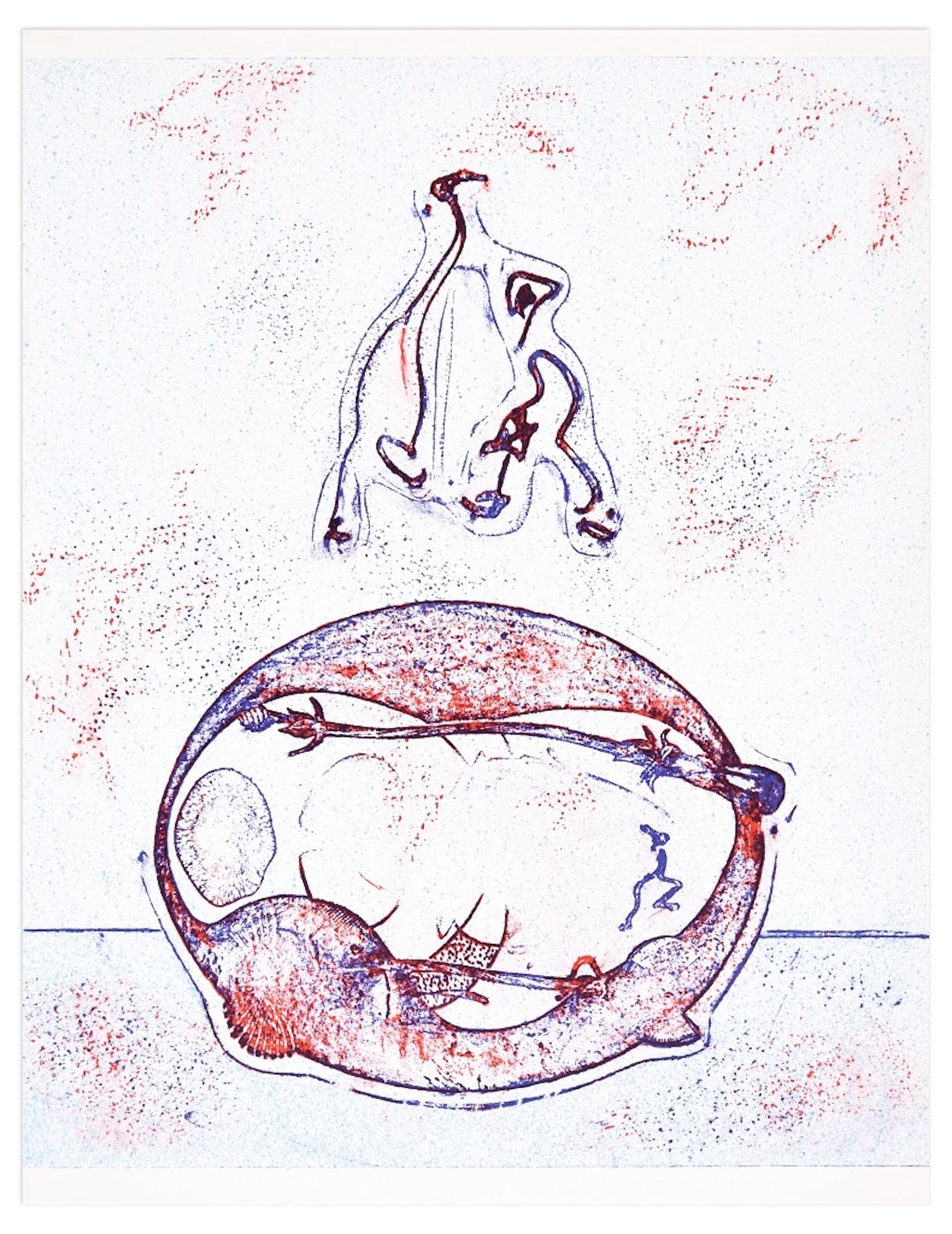
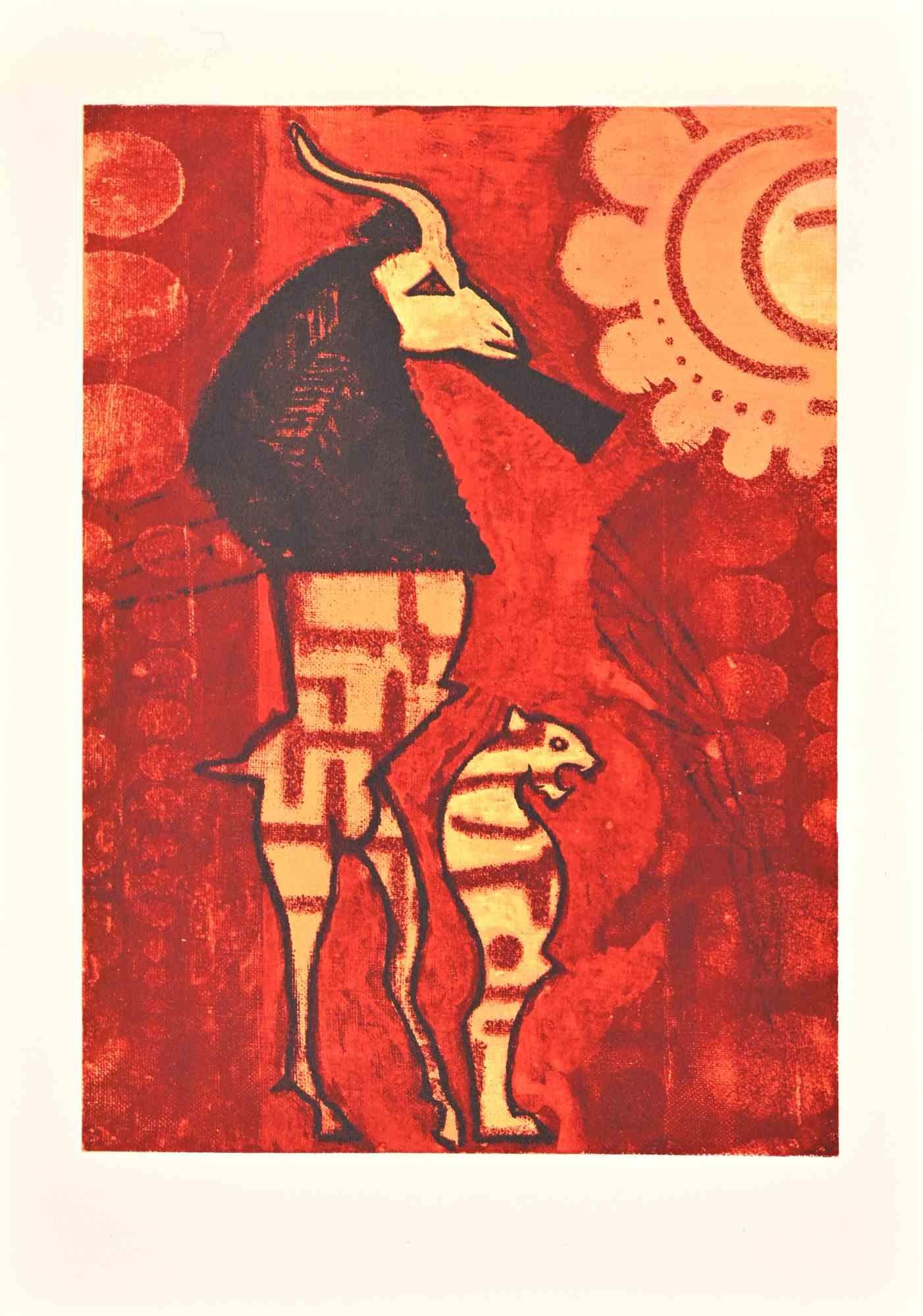
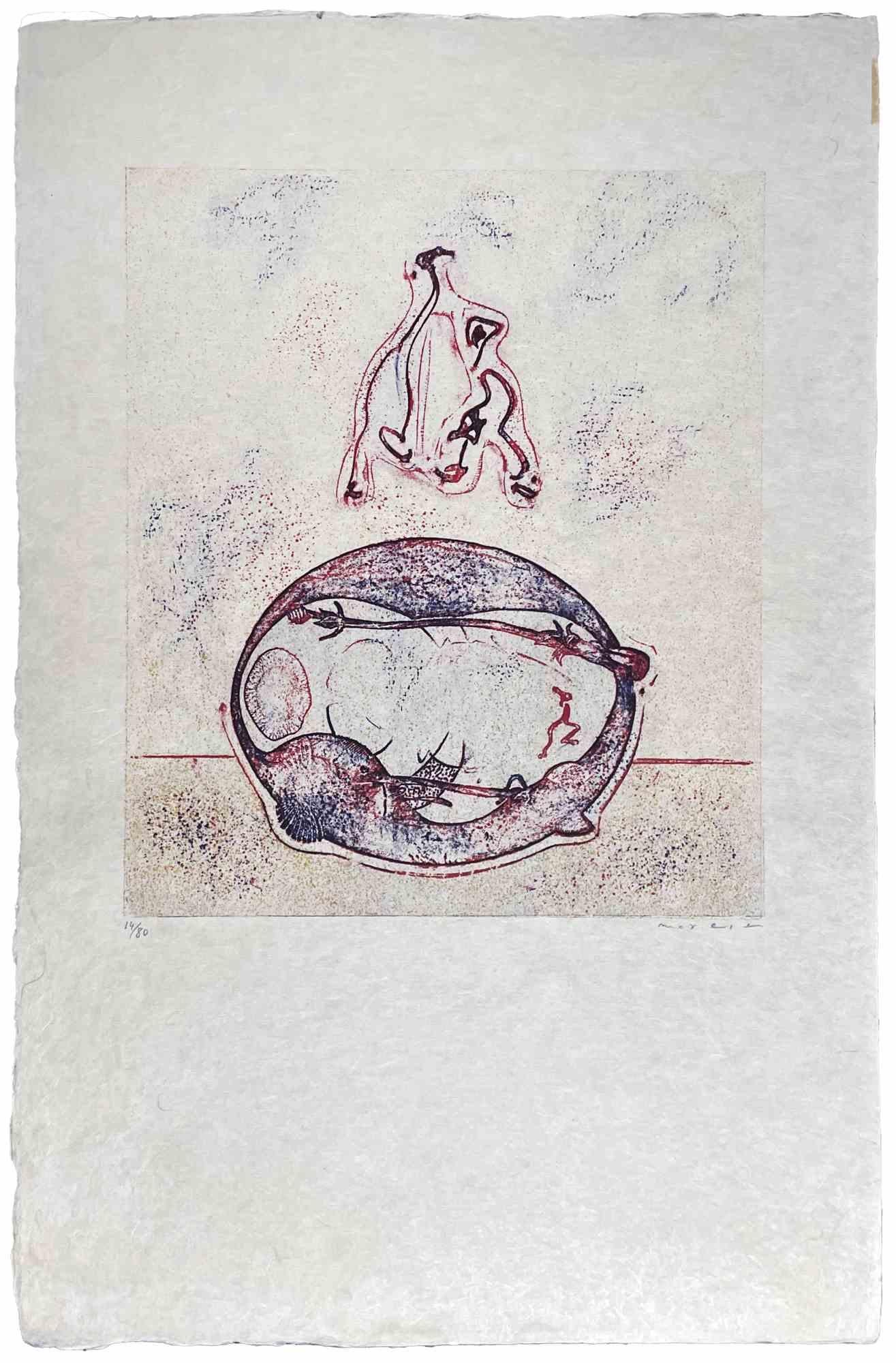
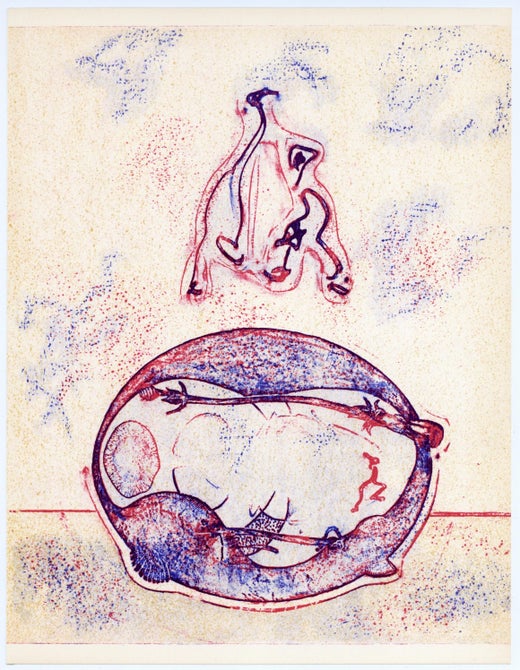
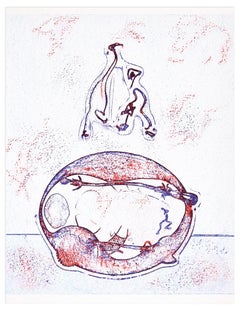
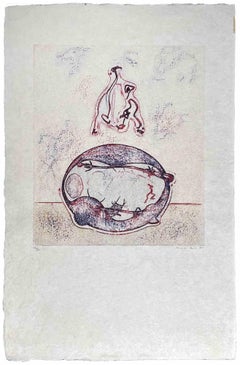
This exquisite lithograph and pochoir by Max Ernst (1891–1976), titled La femme 100 tetes (The Woman with 100 Heads), from the album XXe Siecle, Nouvelle serie, XXe Annee, No. 10 (double) Mars 1958, originates from the 1958 edition published by Societe Internationale dArt XXe Siecle, Paris, under the direction of Gualtieri di San Lazzaro, editeur, Paris, and printed by Atelier Daniel Jacomet et Cie, Paris, 1958. La femme 100 tetes reflects Ernsts distinctive synthesis of dream logic, visual poetry, and psychological transformation during one of the most influential periods of his Surrealist production.
Executed as a lithograph and pochoir on velin paper, this work measures 12.5 x 9.75 inches. Unsigned and unnumbered as issued. The edition exemplifies the superb craftsmanship of Atelier Daniel Jacomet et Cie, Paris.
Artwork Details:
Artist: Max Ernst (1891–1976)
Title: La femme 100 tetes (The Woman with 100 Heads)
Medium: Lithograph and pochoir on velin paper
Dimensions: 12.5 x 9.75 inches (31.75 x 24.77 cm)
Inscription: Unsigned and unnumbered as issued
Date: 1958
Publisher: Societe Internationale dArt XXe Siecle, Paris, under the direction of Gualtieri di San Lazzaro, editeur, Paris
Printer: Atelier Daniel Jacomet et Cie, Paris
Condition: Well preserved, consistent with age and medium
Provenance: From the album XXe Siecle, Nouvelle serie, XXe Annee, No. 10 (double) Mars 1958, published by Societe Internationale dArt XXe Siecle, Paris; printed by Atelier Daniel Jacomet et Cie, Paris, 1958
About the Publication:
Gualtieri di San Lazzaros XXe Siecle (Twentieth Century) was one of the most influential art journals of the modern era, founded in Paris in 1938 as a platform for the greatest painters, sculptors, and writers of the 20th century. San Lazzaro, a visionary editor, critic, and champion of modernism, believed that art and literature should coexist as expressions of a shared human imagination. Under his direction, XXe Siecle became a cultural bridge between Europe and the wider world, publishing special issues devoted to leading figures such as Picasso, Matisse, Chagall, Braque, Calder, Miro, Kandinsky, and Leger. Each edition combined essays by renowned critics and poets with original lithographs and woodcuts printed by the foremost ateliers of Paris, Milan, and New York, including Mourlot, Curwen, and Amilcare Pizzi, creating a uniquely rich dialogue between text and image. The 1960 issue, XXe Siecle, Nouvelle serie, No. 14, showcased Daphnis et Chloe, one of Chagalls most celebrated lithographic subjects, coinciding with his work on the monumental suite of lithographs inspired by the same pastoral tale, published by Teriade. Through this publication, San Lazzaro further cemented Chagalls reputation as the modern poet of color and love, uniting myth, nature, and emotion in visual form. Today, XXe Siecle remains an essential record of 20th century modernism, celebrated for its seamless integration of fine art, literature, and design.
About the Artist:
Max Ernst (1891–1976) was a German-French painter, sculptor, printmaker, and poet whose groundbreaking imagination and experimental techniques made him one of the most revolutionary figures of 20th century art, a founding member of both Dada and Surrealism who dismantled traditional notions of art through chance, dream imagery, and psychological exploration; born in Bruhl, Germany, he studied philosophy and psychology at the University of Bonn before rejecting academic convention to pursue art, inspired by Symbolism, Cubism, and the early abstractions of Pablo Picasso and Wassily Kandinsky; after the trauma of World War I propelled him toward the Dada movement in Cologne, he began creating seminal collages that fused scientific diagrams and Victorian engravings into surreal dreamscapes; by 1922 he had moved to Paris and joined a circle of avant-garde luminaries including Picasso, Alexander Calder, Alberto Giacometti, Salvador Dali, Joan Miro, Marcel Duchamp, Man Ray, and Andre Breton, each of whom shared his fascination with the irrational and the unseen; Ernsts invention of frottage (rubbing) and grattage (scraping) revolutionized modern painting, revealing textures and hidden images below the surface and allowing chance to participate in creation; his visionary paintings—from The Elephant Celebes and Two Children Are Threatened by a Nightingale to Europe After the Rain II—blend myth, science, and dream into symbolic landscapes that remain among the defining masterpieces of Surrealism; a restless innovator, he expanded into sculpture with enigmatic totemic forms such as Capricorne, echoing the equilibrium of Calders mobiles and the conceptual wit of Duchamp; fleeing Nazi-occupied France during World War II, he emigrated to the United States with the support of Peggy Guggenheim, influencing Abstract Expressionists including Jackson Pollock, Robert Motherwell, and Willem de Kooning before returning to Europe to refine his poetic, alchemical approach to art; represented in MoMA, the Tate, the Centre Pompidou, and major museums worldwide, Ernst remains a cornerstone of modern art whose legacy continues to influence generations of artists. His highest auction record was achieved by Le roi jouant avec la reine (The King Playing with the Queen) (1944), which sold for approximately 24.4 million USD at Christies New York in November 2022.
Max Ernst XXe Siecle 1958, Max Ernst lithograph, Ernst La femme 100 tetes.