1920s Abstract Prints

to
98
125
2
2
2
3
Overall Width
to
Overall Height
to
99
11
5
4
3
1
97
4
2
2
2
14
85
14,616
6,557
3
43
169
511
1,060
2,627
4,993
2,159
1,176
5
80
52
1
1
1
103
11
11
3
3
8
12
119
16
Period: 1920s
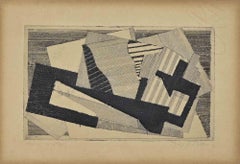
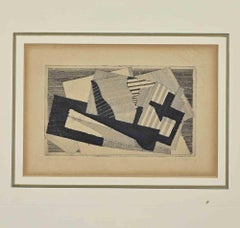
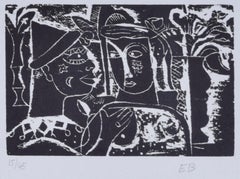
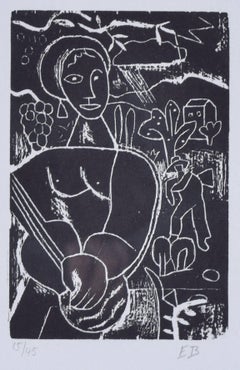
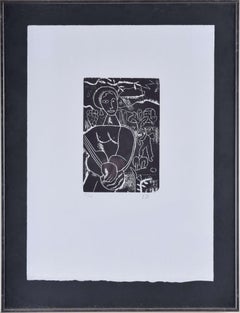
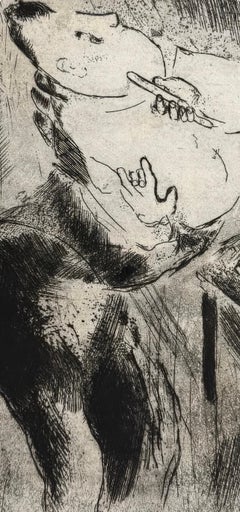
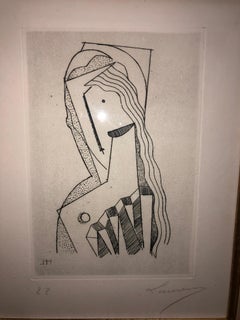
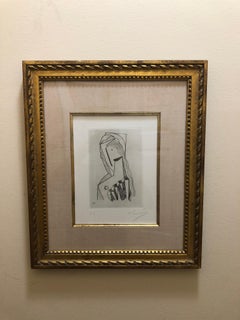
Henri Laurens “Tete de Femme a L’eventail’

Henri Laurens “Tete de Femme a L’eventail’

By Henri Laurens

Located in San Francisco, CA

Henri Laurens: 1885-1954. Well listed French artist with Auction records in the millions of dollars and over $8000 for a print. This rare print came in a small edition of Which I bel...

Category

Cubist 1920s Abstract Prints

Materials

Etching

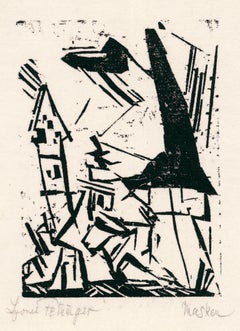
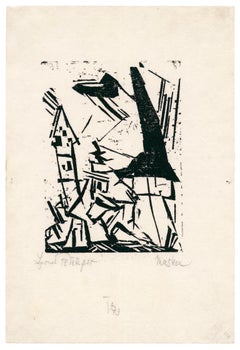
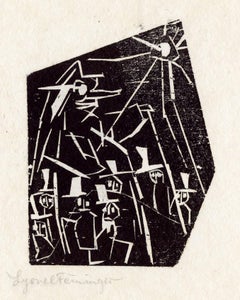
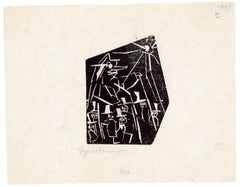
'Da - Da I' — German Expressionism, Rare

'Da - Da I' — German Expressionism, Rare

By Lyonel Feininger

Located in Myrtle Beach, SC

Lyonel Feininger, 'Da-Da I' also titled by the artist 'Der Abgott' (The Idol), woodcut, 1918, a proof impression. Prasse W91. Signed in pencil and annotated '1876', the artist’s inv...

Category

Bauhaus 1920s Abstract Prints

Materials

Woodcut

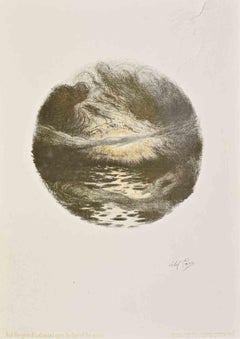
L'Éventail rose

L'Éventail rose

By Marie Laurencin

Located in New York, NY

A very good impression of this scarce color etching and drypoint. Fourth state (of 4). Signed and numbered 54/100 in pencil, lower margin.

Category

Cubist 1920s Abstract Prints

Materials

Color, Drypoint, Etching

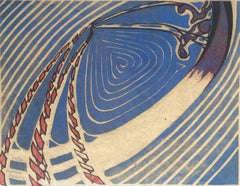
SWING BOATS
SWING BOATS

Claude FlightSWING BOATS, 1921

$22,500Sale Price|25% Off

SWING BOATS

By Claude Flight

Located in Santa Monica, CA

CLAUDE FLIGHT (1881 -1955) SWING BOATS 1921 (Coppel CF5) Color linocut, signed & no. 23/50, 8 5/8 x 11”. Sheet 10 x 13” on thin paper tipped to bla...

Category

Futurist 1920s Abstract Prints

Materials

Linocut

Gewerbemuseum, Basel/Licht Reklame. 1928.

Gewerbemuseum, Basel/Licht Reklame. 1928.

By Charles Karl Hidenlang

Located in New York, NY

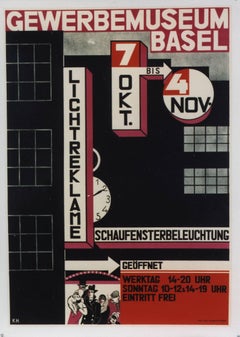
Hindenlang, Charles [Karl]. Gewerbemuseum, Basel/Licht Reklame. 1928. Color lithograph. Printed by Wasserman, Basel. 35 1/5 x 50 1/4." Hiddenlang was known primarily as a muralist with interests in painting, glassware, ceramics, stage and graphic design. Born in Basel and educated at the city's Gewerbeschule. The Kunsthalle Basel dedicated to him in 1965 along with Dick and Karl Otto...

Category

Bauhaus 1920s Abstract Prints

Materials

Lithograph

Broom, Modern Woodcut by Fernand Léger

Broom, Modern Woodcut by Fernand Léger

By Fernand Léger

Located in Long Island City, NY

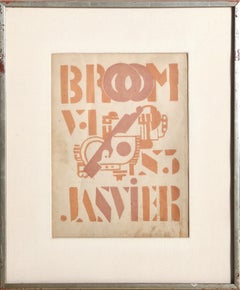
Fernand Léger, French (1881 -1955) - Broom, Year: 1922, Medium: Woodcut, Image Size: 11.5 x 8.5 inches, Size: 12.5 x 9 in. (31.75 x 22.86 cm), Frame Size: 18 x 15 inches, Descri...

Category

Modern 1920s Abstract Prints

Materials

Woodcut

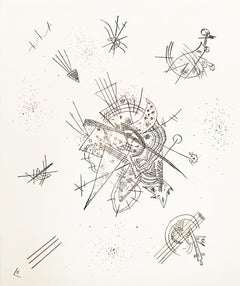
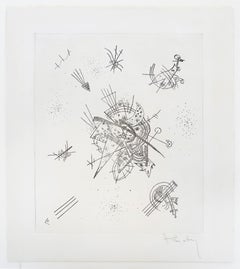
Small Worlds X - German Expressionism Russian

Small Worlds X - German Expressionism Russian

By Wassily Kandinsky

Located in London, GB

This original drypoint is hand signed in pencil by the artist “Kandinsky” at the lower right margin. It is also monogrammed and dated in the plate “VK 22” at the lower left image. It...

Category

Expressionist 1920s Abstract Prints

Materials

Drypoint

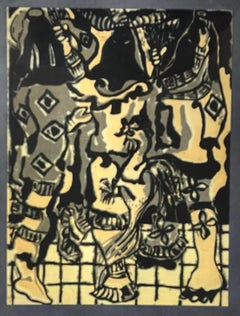
NANIGOS - CUBA, 1927

NANIGOS - CUBA, 1927

By Adja Yunkers

Located in Portland, ME

Yunkers, Adja (American, born Latvia, 1900-1983). NANIGOS - CUBA, 1927. Miller 1. Color Woodcut. Edition of 250 published in Sweden in 1942 in the magazine Creation (Miller notes an ...

Category

1920s Abstract Prints

Materials

Woodcut

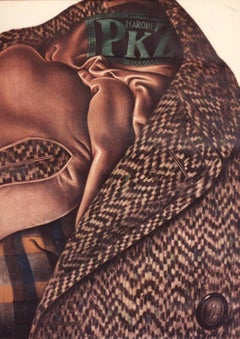
PKZ Coat

PKZ Coat

By Otto Baumberger

Located in New York, NY

Baumberger, Otto. PKZ 1923, Color lithograph, On Linen 50 1/2 x 35 1/2” Baumberger was one of the most prolific Swiss poster artists, with well over 200 designs to his credit. Beginning in 1917, he regularly worked for PKZ. This poster is not only the best he produced for the company but is also an icon in poster history. The tweed coat is rendered in near-photographic perfection to the point where you can practically feel the fabric. Baumberger took a totally new approach to advertising by ingeniously incorporating the poster's text into the image in the form of the label in the coat. With this poster Baumberger cemented his role as master of the "Object Poster," (a title he earned four years earlier with a classic image of a top hat), and began the trend of "New Objectivity" within the Swiss school of Graphic Design. A sensation from the day it was issued, this image remains compelling and proves to be one of the finest of the PKZ posters...

Category

Art Deco 1920s Abstract Prints

Materials

Lithograph

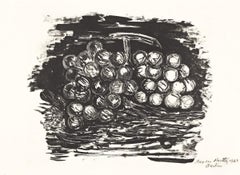
Grapes
Grapes

Grapes

By Marsden Hartley

Located in New York, NY

A superb, richly-inked impression of this early, very scarce lithograph. Signed and dated in pencil, lower right. Inscribed "Babcock #10877" and "Hartley Estate #492" in pencil lowe...

Category

American Modern 1920s Abstract Prints

Materials

Lithograph

'Descente de Croix' (Descent from the Cross) — 1920s French Cubism

'Descente de Croix' (Descent from the Cross) — 1920s French Cubism

By Albert Gleizes

Located in Myrtle Beach, SC

Albert Gleizes, 'Descente de Croix', color pochoir, 1928, edition c. 50. Signed and dated in pencil. A fine, painterly impression, with fresh colors, on heavy, cream wove paper; the full sheet with margins (3 to 4 inches), in very good condition. The publisher's ink stamp 'EDITIONS MOLY-SABATA' beneath the image, lower left. Matted to museum standards, unframed. Image size 12 x 14 inches (305 x 356 mm); sheet size 18 x 22 inches (457 x 559 mm). ABOUT THE IMAGE After the 1927 painting 'Descente de Croix', one of three religious-themed works that Gleizes developed as preliminaries for murals at the church at Serrières, France, the project was terminated at its final phase, and Gleizes commissioned master printer Robert Pouyaud to create prints of the paintings, closely overseeing the production. ABOUT THE MEDIUM Pochoir is a refined stencil-based technique employed to create multiples or to add color to prints produced in other mediums. Characterized by its crisp lines and rich color, the print-making process was most popular from the late 19th century through the 1930s, with its center of activity in Paris. The pochoir process began with the analysis of an image’s composition, including color tones and densities. The numerous stencils (made of aluminum, copper, or zinc) necessary to create a complete image were then designed and hand-cut by the 'découpeur.' The 'coloristes' applied watercolor or gouache pigments through the stencils, skillfully employing a variety of different brushes and methods of paint application to achieve the desired depth of color and textural and tonal nuance. The pochoir process, by its handcrafted methodology, resulted in the finished work producing the effect of an original painting, and in fact, each print was unique. ABOUT THE ARTIST Albert Gleizes (1881-1953), born in Paris, France, was a pioneering figure in the development of abstract art and one of the leading proponents of Cubism. His contributions to the art world extended beyond his paintings; he was also a prolific writer and theoretician, advocating for a new approach to art that emphasized the geometric abstraction of form and a departure from representational traditions. Gleizes initially studied painting at the Académie Julian and the École des Beaux-Arts in Paris, where he was exposed to the academic conventions of the time. However, his artistic vision was profoundly influenced by encounters with avant-garde movements, including Fauvism and the work of Paul Cézanne. These influences led Gleizes to experiment with form and color, gradually moving away from traditional representation toward a more abstract and geometric style. After completing his secondary schooling, Gleizes spent four years in the French army and then began pursuing a career as a painter, primarily doing landscapes. Initially influenced by the Impressionists, he was only twenty-one years of age when his work titled ‘La Seine à Asnières’ was exhibited at the Société Nationale des Beaux-Arts in 1902. The following year, he was part of the first Salon d'Automne and soon came under the influence of Fernand Léger, Robert Delaunay, Jean Metzinger, and Henri Le Fauconnier. In 1907, Gleizes and some of his friends pursued the idea of creating a self-supporting community of artists that would allow them to develop their art free of any commercial concerns. For nearly a year, Gleizes  , with other painters, poets, musicians, and writers, lived at a large house in Créteil, but a lack of funds forced them to give up their facility in early 1908, and Gleizes moved temporarily into La Ruche, the artist commune in the Montparnasse Quarter of Paris. In the early 1910s, Gleizes became associated with the Cubist movement, which was spearheaded by artists such as Pablo Picasso and Georges Braque...

Category

Cubist 1920s Abstract Prints

Materials

Stencil

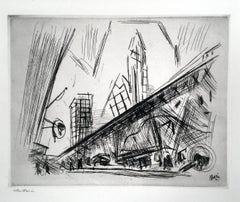
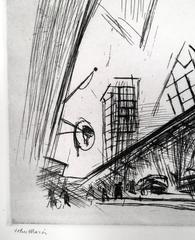
Downtown, The El
Downtown, The El

Downtown, The El

By John Marin

Located in New York, NY

John Marin (1870-1953), Downtown, The El, etching, 1921, signed in pencil lower left (also signed and dated in the plate). Reference: Zigrosser 134, only state. Published initially by Alfred Stieglitz and then included as part of the Folio of American Etchings by the magazine The New Republic in 1924, in an edition of unknown size but probably above 500. In very good condition, the full sheet, on Van Gelder wove paper, 6 3/4 x 8 3/4, the sheet 11 x 13 3/4 inches. Provenance: Hirschl and Adler Galleries, Inc., New York, New York. A fine bright impression. Initially the New Republic Set, sometimes known as Six American Etchings, contained Marin’s Brooklyn Bridge No. 6 (Swaying) (Zigrosser 112). But after a small number of sets were completed, Downtown the El was substituted for Zigrosser 112 (and so the number of Downtown The Els in the set would have been a bit fewer than the others in the set). Zigrosser, who apparently had not seen a complete set at the time he created the catalogue raisonne, conjectured that the substitution might have been because the original plate was damaged. But since the printer, Peter Platt, was the most renowned artist’s printer of his time, and worked alone, it is unlikely that he would have damaged the plate; a more likely possibility is that he switched to a print that was more comparable in size to the others in the set (The Brooklyn Bridge print...

Category

Futurist 1920s Abstract Prints

Materials

Etching

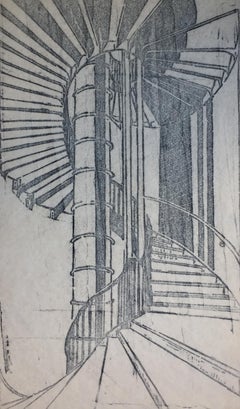
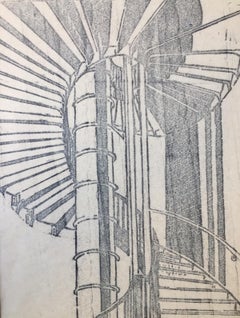
TUBE STAIRCASE - Unique Trial Proof

TUBE STAIRCASE - Unique Trial Proof

By Cyril Power

Located in Santa Monica, CA

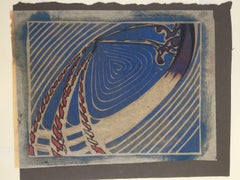
CYRIL POWER (1874 - 1951) THE TUBE STAIRCASE, 1929 (Coypel CEP 11) Linocut, a likely unique proof impression of the key block in reverse, suggesting a counterproof. Unsigned. 17 ½” x 10”, sheet 20 x 14 ¾”. On a sheet of brown wove paper similar to newsprint. A few repaired tears in the margins. Provenance: Redfern Gallery, 2014 with label and inventory no. Redfern Gallery has represented the Grosvenor School...

Category

Modern 1920s Abstract Prints

Materials

Linocut

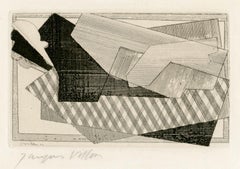
Le Cheval
Le Cheval

Le Cheval

By Jacques Villon

Located in Fairlawn, OH

Le Cheval Etching, 1921 Signed in pencil lower left Edition: Signed edition of 50 (as here) Unsigned edition is 400 for the book Du Cubisme Printer: R. Girard et Cie Pr...

Category

Cubist 1920s Abstract Prints

Materials

Etching

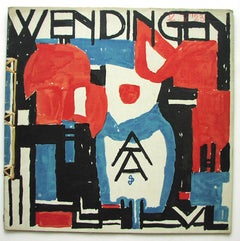
Wendingen -  Cover Jan Sluijters . Issue No 2 of the 5th series 1923.

Wendingen - Cover Jan Sluijters . Issue No 2 of the 5th series 1923.

By Jan Sluijters

Located in New York, NY

WENDINGEN - Number 2 of the 5th series 1923 dedicated to posters of Dutch artists author Jac.Jongert Color Lithograph after a drawing by Jan Sluijters. Dutch text cover designed by Jan Sluijters In good condition with minor wear. JAN SLUYTERS. Posters by Dutch Artists. Published March 1923. Introduction by Jac. Jongert, twenty-seven illustrations after designs by Roland Holst...

Category

Modern 1920s Abstract Prints

Materials

Lithograph

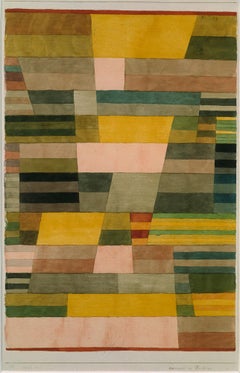
Ecce Homo VII
Ecce Homo VII

Ecce Homo VII

By Werner Drewes

Located in Fairlawn, OH

Ecce Homo VII Woodcut, 1921 Signed, titled, and dated in pencil by the artist One of only three known impressions Created while the artist was studying at the Bauhaus in Weimar, Germany. Extreme rarity-One of three know impressions Note: In 1921 Drewes went to the Bauhaus in Weimar, where, after completing the compulsory preliminary course with Johannes Itten, he continued to study with Paul Klee, Oskar Schlemmer and Georg Muche and initially went to the wall painting workshop. He then traveled extensively through Europe, North America and Asia. After returning to Germany in 1927, he went back to the Bauhaus, this time to his new location in Dessau, where he studied in the classes of László Moholy-Nagy and Wassily Kandinsky. He was one of the first artists to introduce the groundbreaking concepts of the Bauhaus School in the United States through his painting, printmaking, and teaching. Condition: Excellent Missing small voids in the upper margin from removal of the original hinges. Image size: 9 7/8 x 8 3/16 inches Reference: Rose 30 Provenance: From the estate of Drewes's teacher at the Bauhaus. During the post WW2 the professor lived in East Germany. WERNER DREWES 1899-1985 Werner Drewes initially studied architecture before enrolling, in 1921-22, at the Bauhaus in Weimar under Klee, Kandinsky, Itten and Feininger. For four years - 1923 to 1927 - he travelled the world with his bride, before completing his Bauhaus training in Dessau in 1929. He immigrated to the United States in 1930, documenting that move to New York through series of woodcuts. In 1936/37 he was an active founder of the American Abstract Artists and participated in the Federal Arts Project in New York before moving on to a teaching career at Washington University in St. Louis. As an artist for over sixty five years, he employed various media from drawing and watercolor, through woodcut and etching, to painting and collage. Translating an early interest in subjective cubistic forms, his work evolved into nonobjective abstraction. He was creative until the day of his death. Courtesy: Toby C. Moss Werner Drewes (1899–1985) was a painter, printmaker, and art teacher. Considered to be one of the founding fathers of American abstraction, he was one of the first artists to introduce concepts of the Bauhaus school within the United States. His mature style encompassed both nonobjective and figurative work and the emotional content of this work was consistently more expressive than formal. Drewes was as highly regarded for his printmaking as for his painting. In his role as teacher as well as artist he was largely responsible for bringing the Bauhaus aesthetic to America. Early life and education Drewes was born in 1899 to Georg Drewes, a Lutheran pastor, and Martha Schaefer Drewes. The family lived in the village of Canig within Lower Lusatia, Germany. From age eight to eighteen he attended the Saldria Gymnasium, a boarding school in Brandenburg an der Havel. There, he showed talent both for painting and woodblock printing. Graduating from Saldria in 1917, he was drafted by the German army and served in France from then until the close of the war. About this period of his life he is reported to have said that the horrors of life at the front were only made tolerable by his sketchbook, a copy of Goethe's Faust and a volume of Nietzsche. For a decade following the close of the war he studied, made paintings and prints, and traveled widely. His friend, Herwarth Walden, helped shape his appreciation for expressionist literature and art. Walden produced the quarterly magazine, Der Sturm and ran a gallery of contemporary art, Galerie Der Sturm, from which, in 1919, Drewes purchased an expressionist painting by William Wauer titled Blutrausch (Bloodlust). In the same year he made the acquaintance of Heinrich Vogeler and participated in Vogeler's socialist utopian artists' commune, Barkenhoff, at Worpswede, Lower Saxony. In 1919 Drewes also enrolled at the Königlich Technischen Hochschule Charlottenburg to study architecture and the following year he studied the same subject at the Technischen Hochschule Stuttgart. Preferring art over architecture, he then enrolled in Stuttgart's school of applied arts (Kunstgewerbeschule) where he studied life drawing and learned to work with colored glass. At this time he joined a group of artists and architects associated with the newly formed Merz Akademie, a college of design, art, and media in Stuttgart. In 1921 his friendship with a French artist, Sébastien Laurent, led him to begin studies in Weimar at Bauhaus, then a new school which taught an integrated approach to the fine and applied arts. His instructors were Johannes Itten and Lyonel Feininger, whose paintings were expressionist and abstract, and Paul Klee, who taught bookbinding, stained glass, and murals. While at Bauhaus Drewes produced a portfolio of ten woodblock prints entitled "Ecce Homo." In 1923 and 1924 he studied art during travels throughout Italy, Spain, the United States, and Central America and in 1926 he traveled to San Francisco, Japan, and Korea, thence taking the Trans-Siberian railway to Manchuria, Moscow, and Warsaw. He later said the El Grecos he saw proved to be most influential in his work. While traveling, he exhibited: (1) etchings in Madrid (1923) and Montevideo (1924), oils and etchings in Buenos Aires and St. Louis (1925), and (3) etchings in San Francisco (1926). He paid his way by the sales these exhibits produced and by taking commissions to paint portraits. While in San Francisco he set up a shop from which he sold prints he had made in Spain and South America. After his return to Germany in 1927 he resumed study at Bauhaus, which had been forced to relocate in Dessau, Saxony-Anhalt. His instructors at that time were László Moholy-Nagy (metal work), Wassily Kandinsky, and (painting), and Lyonel Feininger (prints). At this time he also worked and exhibited in Frankfurt. With the rise of Nazism abstract artists found it increasingly difficult to sell their work and, in 1930, Drewes, finding the political pressure unbearable, emigrated to the United States. There, despite the world economic crisis, Drewes was able to earn a living as a professional artist. Mature style After Drewes moved to New York, Kandinsky, who was both friend and mentor, continued to exert a strong influence over his style. Later in life he said he had a hard time getting away from Kandinsky's influence as he developed his own style. In time he was able to bring a more emotional approach to his work and to base it, more than Kandinsky did, on natural forms. In 1930 Drewes had a solo exhibition at the 135th Street Branch of the New York Public Library and a two-person show at the S.P.R. Penthouse Gallery...

Category

Expressionist 1920s Abstract Prints
Materials

Woodcut

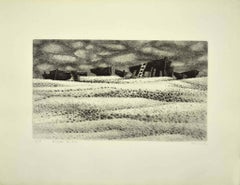
South Shore - Etching by Maurice Chot Plassot - 1929

South Shore - Etching by Maurice Chot Plassot - 1929

Located in Roma, IT

South shore is an original etching by Maurice Chot Plassot (1929). Hand- signed by the artist on the lower right corner and the title on the left corner. In very good contitions, ...

Category

Modern 1920s Abstract Prints

Materials

Etching

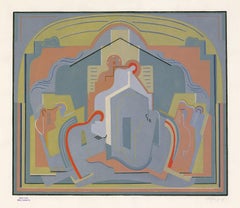
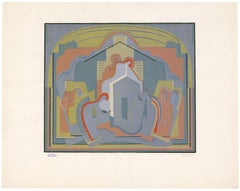
Serge Gladky - Art Deco Colorful Composition - Original Pochoir

Serge Gladky - Art Deco Colorful Composition - Original Pochoir

By Serge Gladky

Located in Collonge Bellerive, Geneve, CH

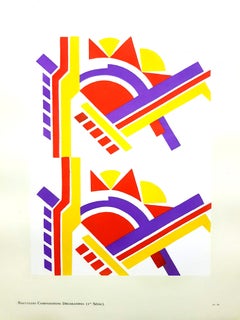
Serge Gladky - Art Deco Colorful Composition Original Pochoir Circa 1925 33 x 26 cm So what is a "pochoir?" In its most basic sense, it is a stencil. By the 1920’s and 1930’s, th...

Category

Art Deco 1920s Abstract Prints

After Pablo Picasso - The Basket

After Pablo Picasso - The Basket

Located in Collonge Bellerive, Geneve, CH

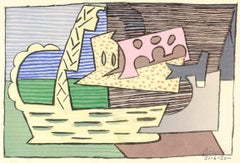
With the printed signature of Picassp and date, as issued Based on an original composition of 1920, printed in 1946 Picture Dimensions: 21 x 31 cm. Sheet Dimensions: 31 x 41 cm Prin...

Category

American Modern 1920s Abstract Prints

Materials

Lithograph

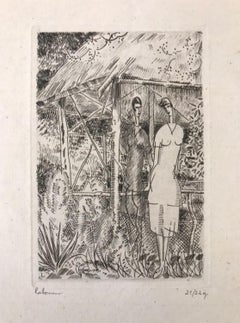
La tonnelle rustique

La tonnelle rustique

By Jean-Emile Laboureur

Located in Paris, FR

Engraving, ca1926 Handsigned by the artist in pencil and numbered 21/22 26.00 cm. x 17.00 cm. 10.24 in. x 6.69 in. (paper) 12.00 cm. x 8.00 cm. 4.72 in. x 3.15 in. (image) LCD4844

Category

Abstract 1920s Abstract Prints

Materials

Engraving

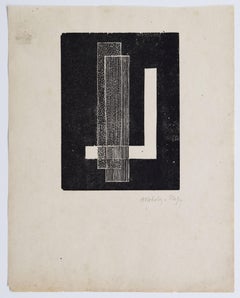
Composition  Komposition - Hungarian Constructivism Hand Printed

Composition Komposition - Hungarian Constructivism Hand Printed

By László Moholy-Nagy

Located in London, GB

This linocut in black ink is hand signed in pencil by the artist ‘Moholy-Nagy’ in the lower right margin. It was hand printed by the artist in 1922. Note: Another dedicated impressi...

Category

Constructivist 1920s Abstract Prints

Materials

Linocut

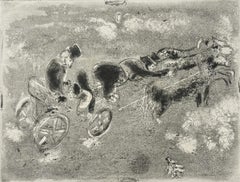
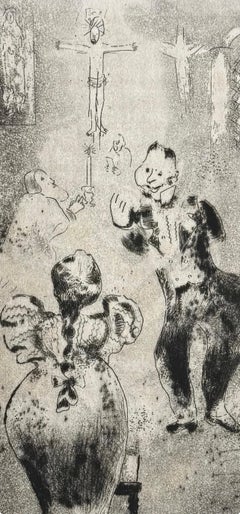
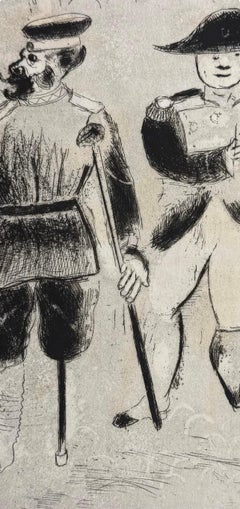
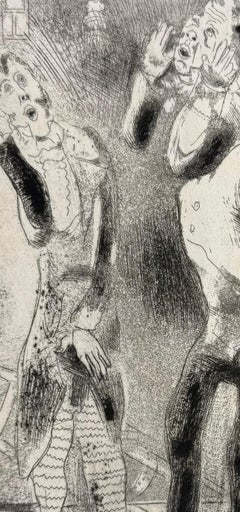
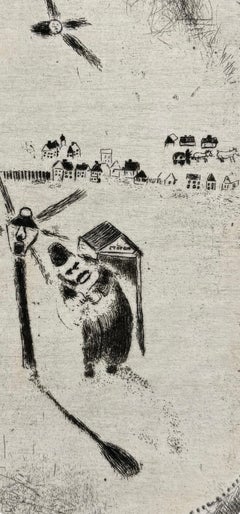
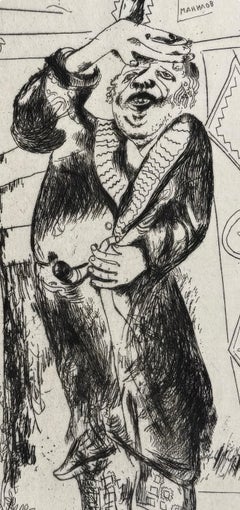
Marc Chagall, Tchitchikov the Customs Officer, from Dead Souls, 1923–1927

Marc Chagall, Tchitchikov the Customs Officer, from Dead Souls, 1923–1927

By Marc Chagall

Located in Southampton, NY

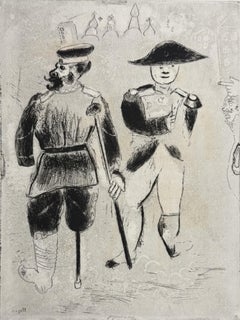
This exquisite etching by Marc Chagall (1887–1985), titled Tchitchikov douanier (Tchitchikov the Customs Officer), originates from the celebrated folio Nicolas Gogol, Les Ames mortes...

Category

Expressionist 1920s Abstract Prints
Materials

Etching

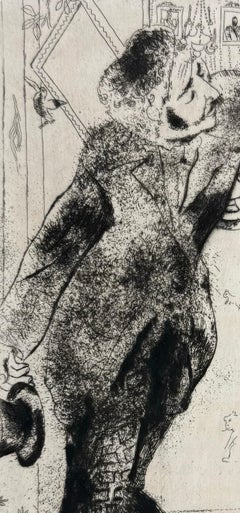
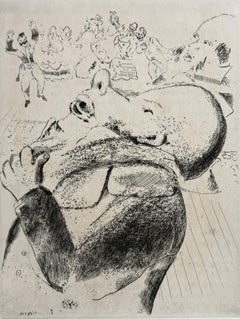
Marc Chagall, At the Treasury, the New Chief, from Dead Souls, 1923–1927

Marc Chagall, At the Treasury, the New Chief, from Dead Souls, 1923–1927

By Marc Chagall

Located in Southampton, NY

This exquisite etching by Marc Chagall (1887–1985), titled A la tresorerie, le nouveau chef (At the Treasury, the New Chief), originates from the celebrated folio Nicolas Gogol, Les ...

Category

Expressionist 1920s Abstract Prints
Materials

Etching

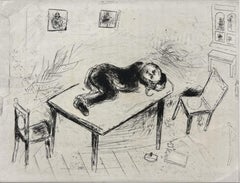
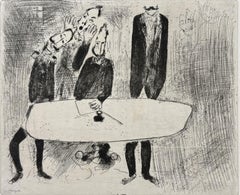
Marc Chagall, Tchitchikov Slept at the Office, from Dead Souls, 1923–1927

Marc Chagall, Tchitchikov Slept at the Office, from Dead Souls, 1923–1927

By Marc Chagall

Located in Southampton, NY

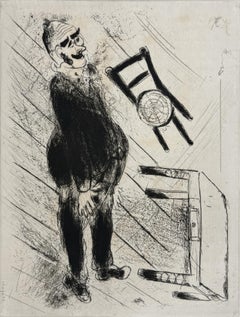
This exquisite etching by Marc Chagall (1887–1985), titled Tchitchikov couchait au bureau (Tchitchikov Slept at the Office), originates from the celebrated folio Nicolas Gogol, Les A...

Category

Expressionist 1920s Abstract Prints
Materials

Etching

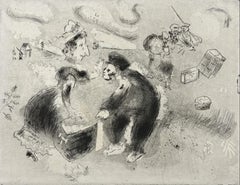
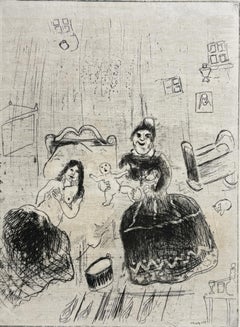
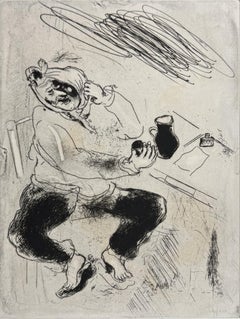
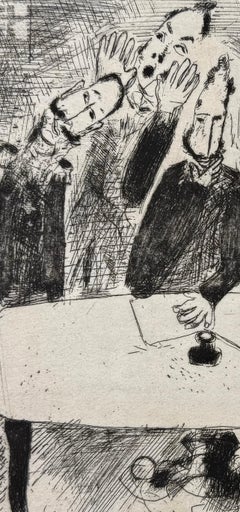
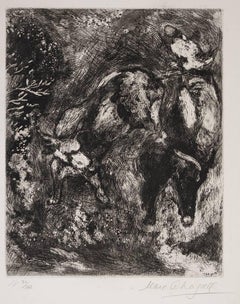
Marc Chagall, Toothache, from Dead Souls, 1923–1927

Marc Chagall, Toothache, from Dead Souls, 1923–1927

By Marc Chagall

Located in Southampton, NY

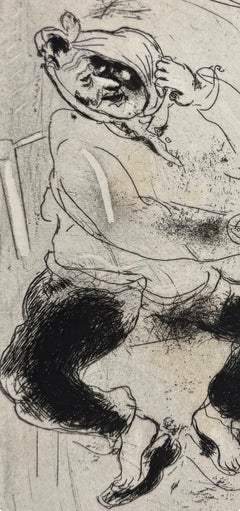
This exquisite etching by Marc Chagall (1887–1985), titled Mal de dents (Toothache), originates from the celebrated folio Nicolas Gogol, Les Ames mortes, Eaux-fortes originales de Ma...

Category

Expressionist 1920s Abstract Prints
Materials

Etching

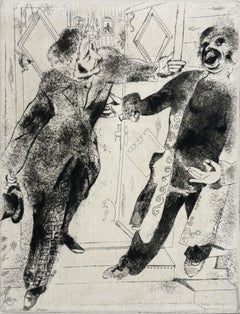
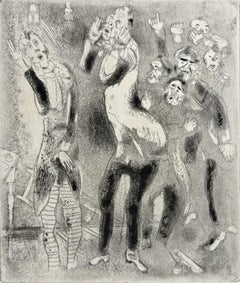
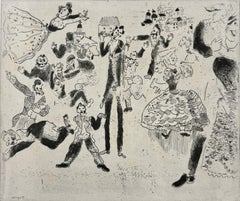
Marc Chagall, The Orgy Degenerates into a Brawl, from Dead Souls, 1923–1927

Marc Chagall, The Orgy Degenerates into a Brawl, from Dead Souls, 1923–1927

By Marc Chagall

Located in Southampton, NY

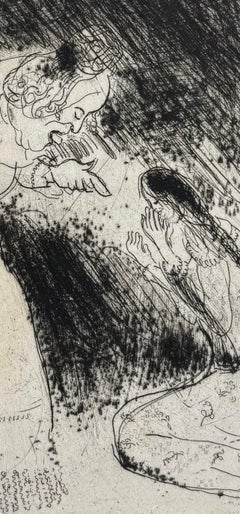
This exquisite etching by Marc Chagall (1887–1985), titled L'orgie degenere en rixe (The Orgy Degenerates into a Brawl), originates from the celebrated folio Nicolas Gogol, Les Ames ...

Category

Expressionist 1920s Abstract Prints
Materials

Etching

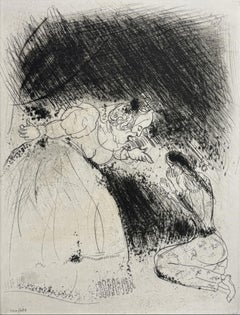
Marc Chagall, The Governor's Wife Scolds Her Daughter, Dead Souls, 1923–1927

Marc Chagall, The Governor's Wife Scolds Her Daughter, Dead Souls, 1923–1927

By Marc Chagall

Located in Southampton, NY

This exquisite etching by Marc Chagall (1887–1985), titled La femme du gouverneur gronde sa fille (The Governor's Wife Scolds Her Daughter), originates from the celebrated folio Nico...

Category

Expressionist 1920s Abstract Prints
Materials

Etching

Marc Chagall, Charming Ladies and Ladies Charming in Every Respect, 1923–1927

Marc Chagall, Charming Ladies and Ladies Charming in Every Respect, 1923–1927

By Marc Chagall

Located in Southampton, NY

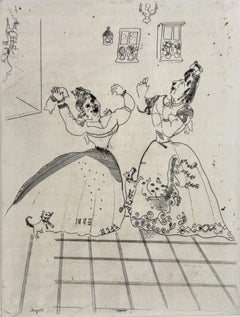
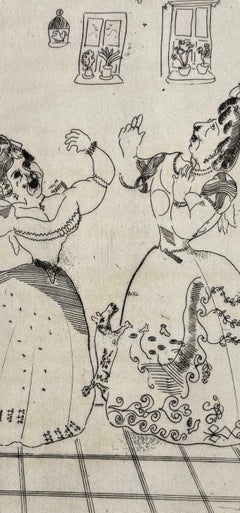
This exquisite etching by Marc Chagall (1887–1985), titled Dames charmante et charmante a tous egards (Charming Ladies and Ladies Charming in Every Respect), originates from the cele...

Category

Expressionist 1920s Abstract Prints
Materials

Etching

Marc Chagall, Revelations of Nozdriov, from Dead Souls, 1923–1927

Marc Chagall, Revelations of Nozdriov, from Dead Souls, 1923–1927

By Marc Chagall

Located in Southampton, NY

This exquisite etching by Marc Chagall (1887–1985), titled Revelations de Nozdriov (Revelations of Nozdriov), originates from the celebrated folio Nicolas Gogol, Les Ames mortes, Eaux-fortes originales de Marc Chagall (Nicolas Gogol, Dead Souls, Original Etchings by Marc Chagall), published by Teriade Editeur, Paris, 1948, and printed by Fort, Impressions artistiques, Paris, under the direction of Louis Fort, 1923–1927. The composition captures Chagalls poetic transformation of gesture and character into a symbolic and dreamlike encounter, infusing the scene with narrative vitality, quiet tension, and psychological nuance. Executed as an etching on velin d’Arches filigrane paper, this work measures 17.764 x 10.827 inches (45.12 x 27.5 cm). Signed in the plate and unnumbered as issued. Printed by Fort, Impressions artistiques, Paris, under the direction of Louis Fort. Artwork Details: Artist: Marc Chagall (1887–1985) Title: Revelations de Nozdriov (Revelations of Nozdriov), from Nicolas Gogol, Les Ames mortes, Eaux-fortes originales de Marc Chagall (Nicolas Gogol, Dead Souls, Original Etchings by Marc Chagall), 1948 Medium: Etching on velin d’Arches filigrane paper Dimensions: 17.764 x 10.827 inches (45.12 x 27.5 cm) Inscription: Signed in the plate and unnumbered as issued Date: 1948, published; 1923–1927, printed Publisher: Teriade Editeur, Paris Printer: Fort, Impressions artistiques, Paris, under the direction of Louis Fort Catalogue raisonne reference: Cramer, Patrick, and Meret Meyer. Marc Chagall: Catalogue Raisonne Des Livres Illustres. P. Cramer ed., 1995 Condition: Well preserved, consistent with age and medium Provenance: From Nicolas Gogol, Les Ames mortes, Eaux-fortes originales de Marc Chagall (Nicolas Gogol, Dead Souls, Original Etchings by Marc Chagall), published by Teriade Editeur, Paris, 1948 Notes: Excerpted from the folio (translated from French), It was taken from this album, on velin d’Arches filigrane Les Ames mortes, including a suite on japon nacre and non commerce examples reserved for collaborators. All colophons are signed by the artist. About the Publication: Nicolas Gogol, Les Ames mortes, Eaux-fortes originales de Marc Chagall (Nicolas Gogol, Dead Souls, Original Etchings by Marc Chagall) stands among the most important illustrated literary works of the twentieth century. Conceived over several decades and rooted in Chagalls deep emotional connection to Gogols satirical vision of Russian society, the album unites text and image in a profoundly imaginative synthesis. Published by Teriade in 1948 and printed by Fort, Impressions artistiques, Paris, under the direction of Louis Fort, the album embodies the high standards of Parisian printmaking and continues to be regarded as one of the great illustrated works of the twentieth century, admired for its fusion of literature, etching, and the distinctively dreamlike vision of Marc Chagall. About the Artist: Marc Chagall (1887–1985) was a Belarus born French painter, printmaker, and designer whose visionary imagination, radiant color, and deeply poetic symbolism made him one of the most beloved and influential artists of the twentieth century. Rooted in the imagery of his Jewish heritage and the memories of his childhood in Vitebsk, Chagalls art wove together themes of faith, love, folklore, and fantasy with a dreamlike modern sensibility. His unique style merging elements of Cubism, Fauvism, Expressionism, and Surrealism defied categorization, transforming ordinary scenes into lyrical meditations on memory and emotion. Over a prolific career spanning painting, printmaking, stained glass, ceramics, and stage design, Chagall brought an unparalleled poetic sensibility to modern art. His works are held in major museums worldwide, including the Museum of Modern Art, the Centre Pompidou, the Tate, and the Guggenheim. The highest price ever paid for a Marc Chagall artwork is approximately 28.5 million USD, achieved in 2017 at Sothebys New York for Les Amoureux (1928). Marc Chagall etching...

Category

Expressionist 1920s Abstract Prints

Materials

Etching

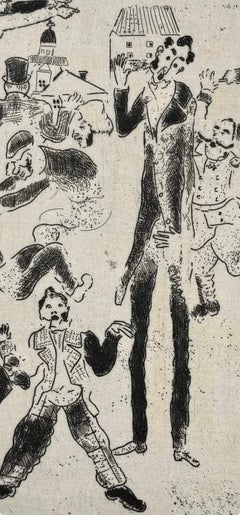
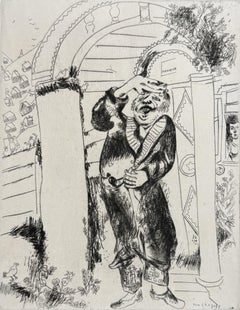
Marc Chagall, Manilov, from Dead Souls, 1923–1927

Marc Chagall, Manilov, from Dead Souls, 1923–1927

By Marc Chagall

Located in Southampton, NY

This exquisite etching by Marc Chagall (1887–1985), titled Manilov (Manilov), originates from the celebrated folio Nicolas Gogol, Les Ames mortes, Eaux-fortes originales de Marc Chag...

Category

Expressionist 1920s Abstract Prints
Materials
Etching