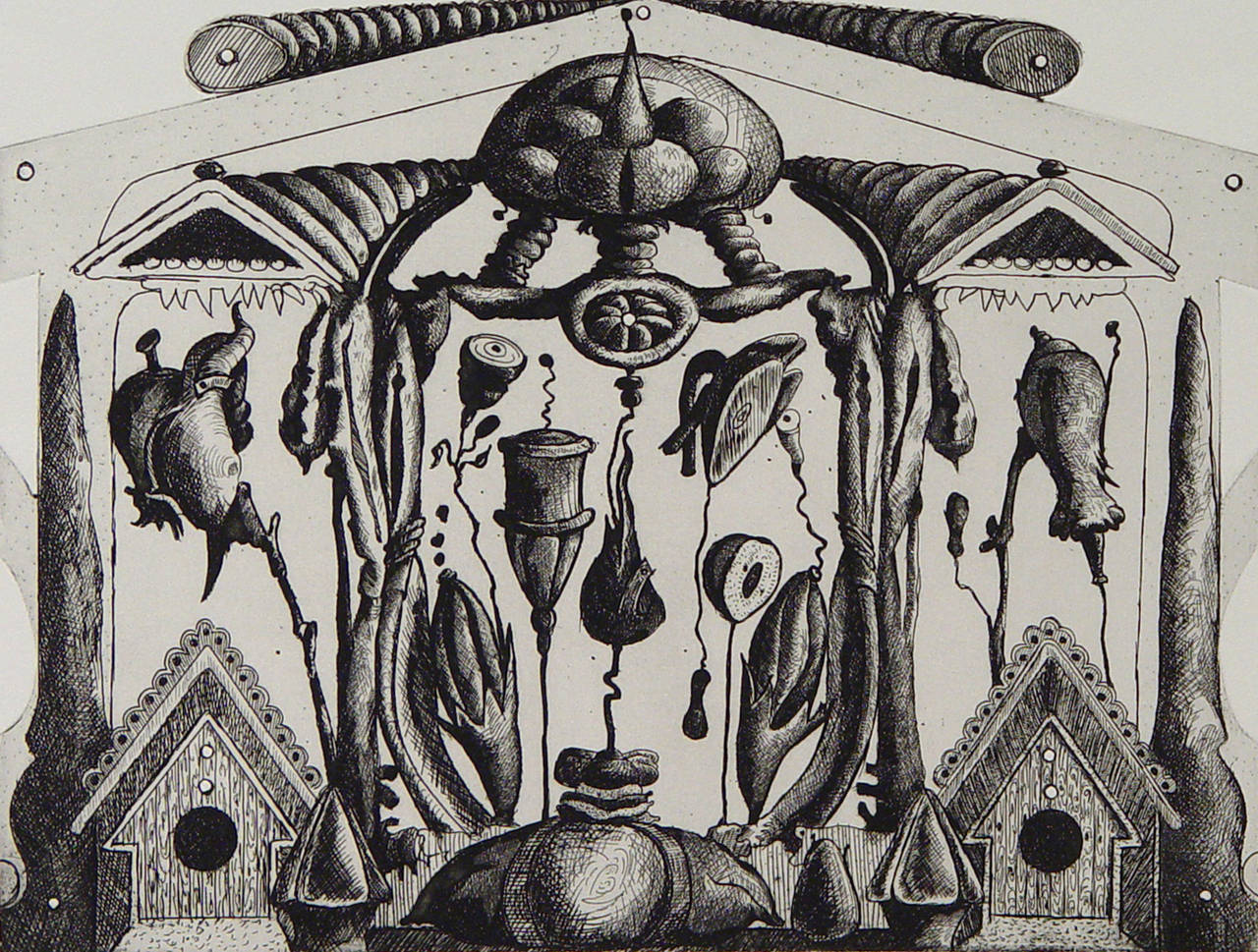
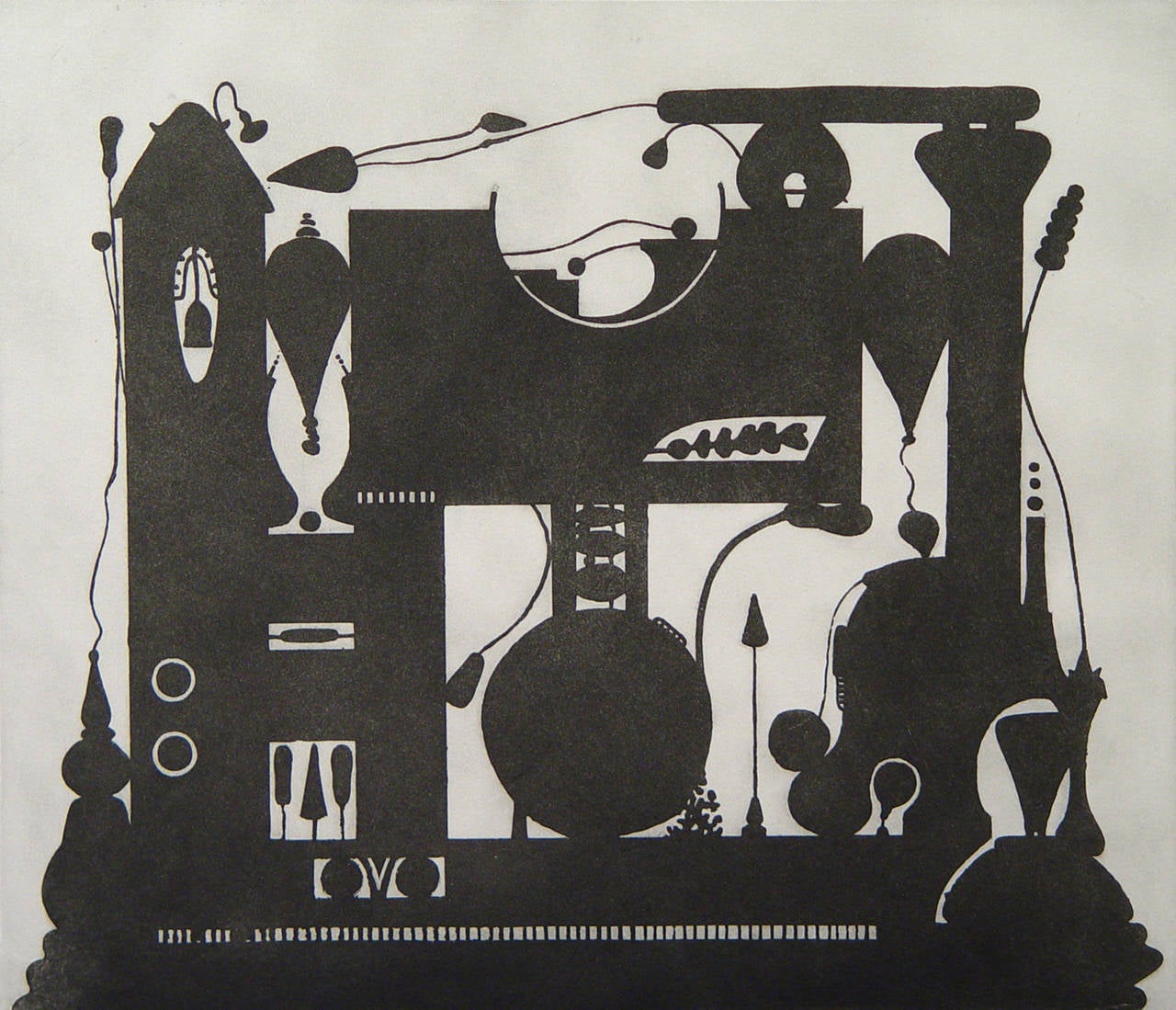
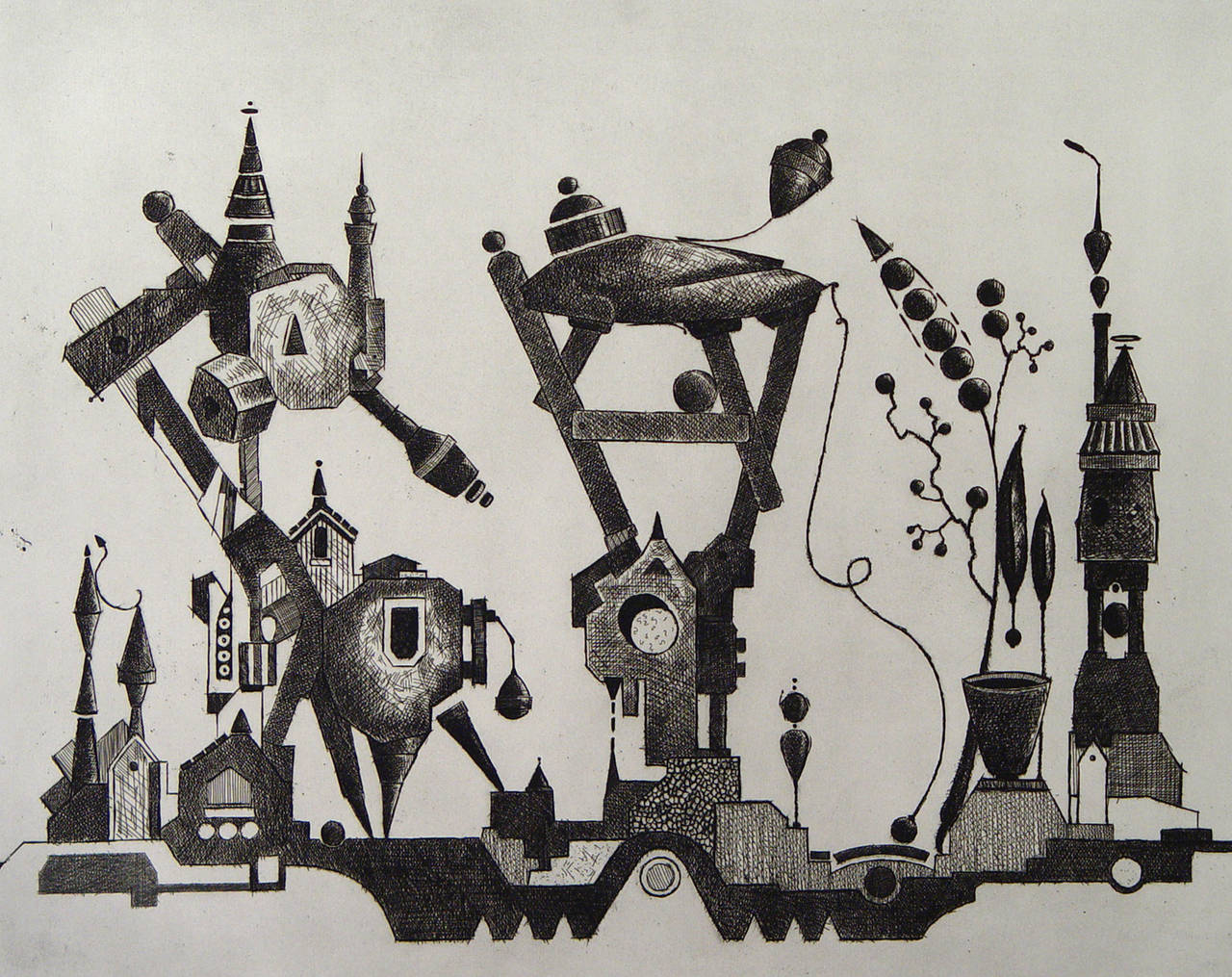
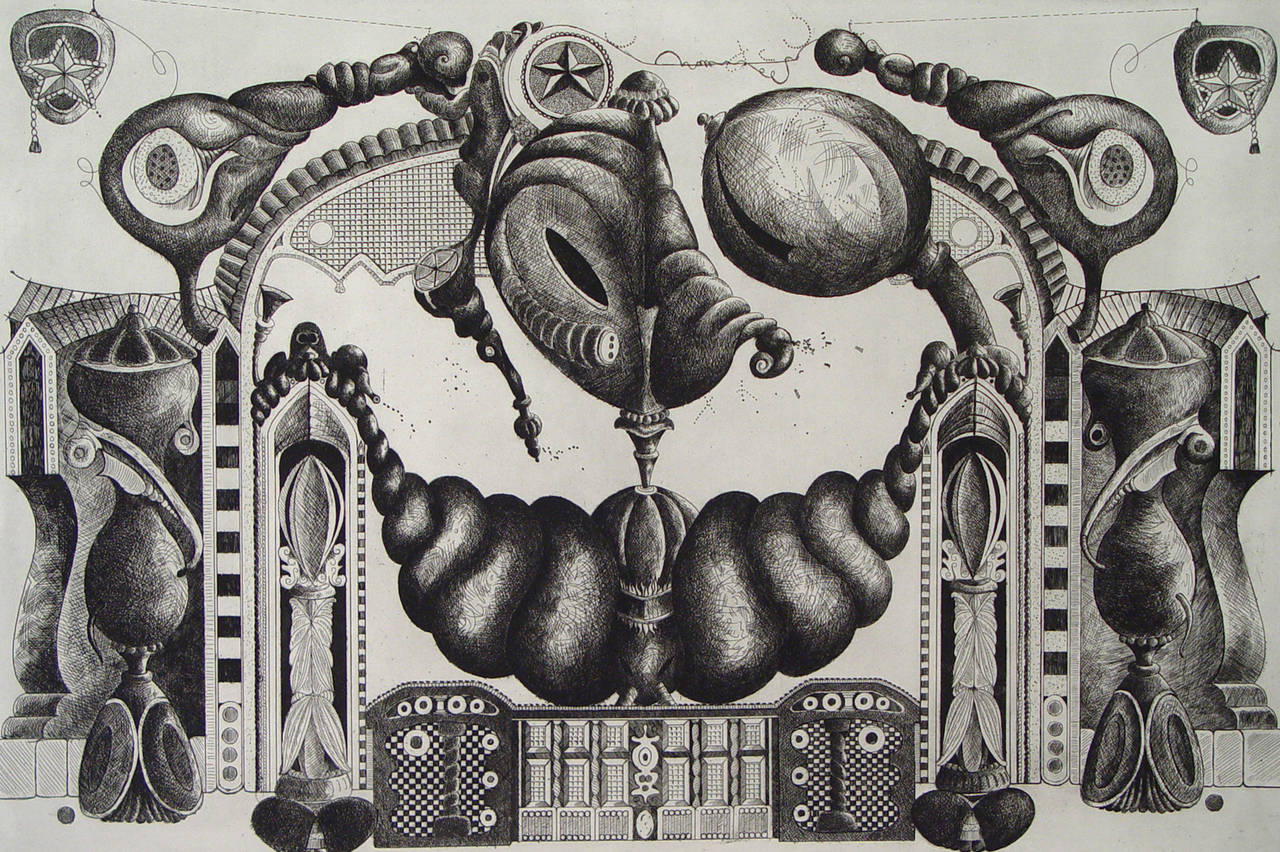
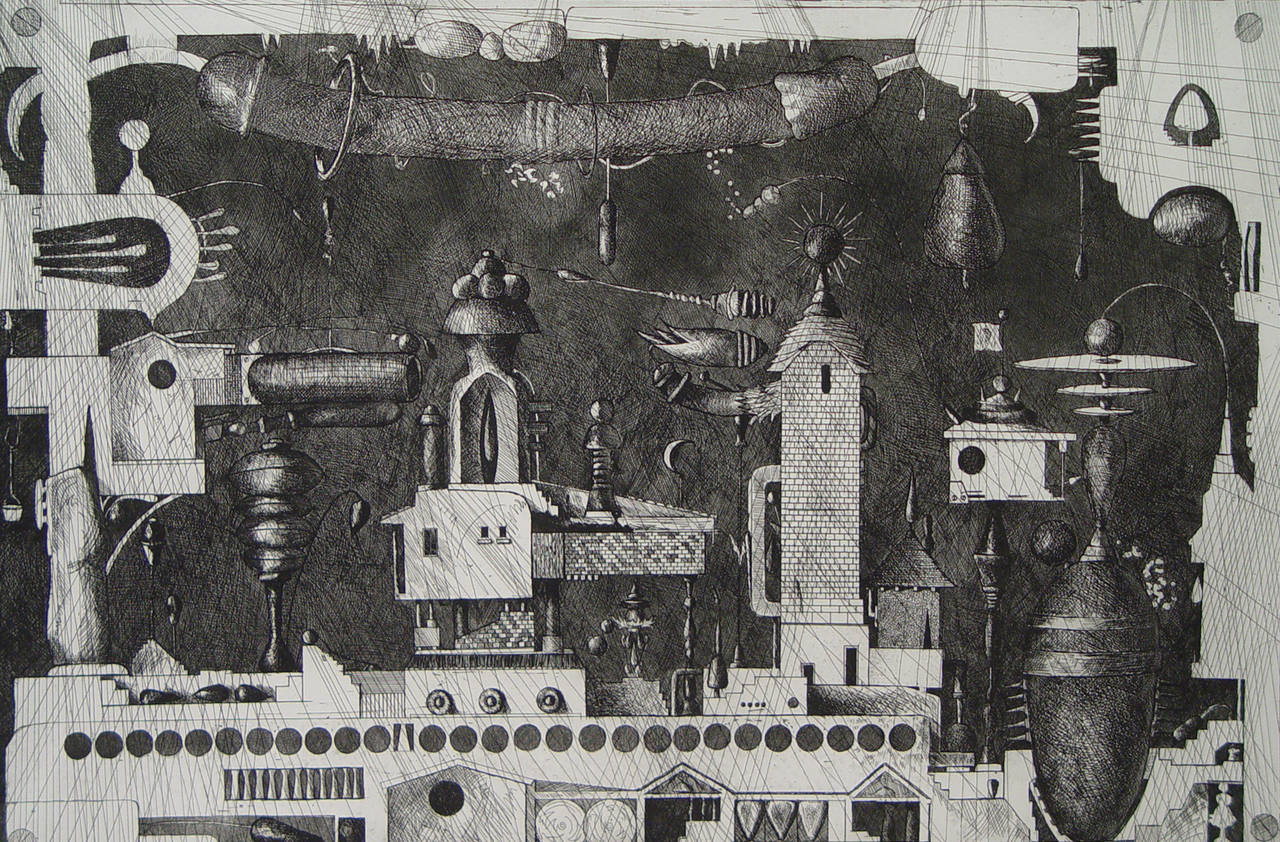
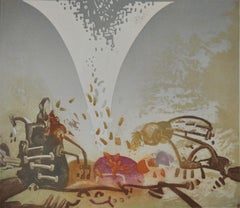
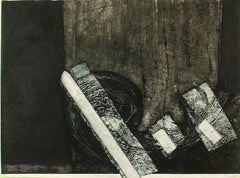
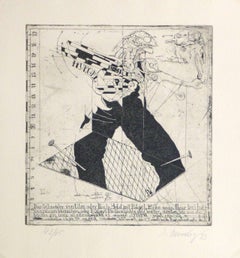
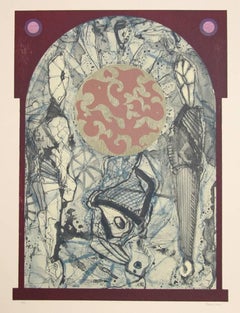
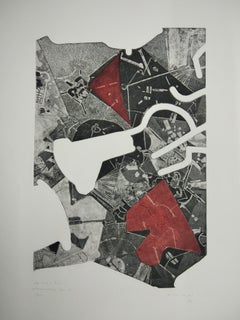
In The New York Times Arts in America column, Edward M. Gomez wrote of Valton Tyler, "visionary seems the right word for describing his vivid, unusual and technically refined paintings, prints and drawings, whose style defies convenient labels. Abstract, surreal, cartoonish, sci-fi fantastic, metaphysical, apocalyptic-Baroque - all of these fit but also fall short of fully describing his art." (The Living Arts, June 13, 2000, p. B2)
Valton Tyler was born in 1944 in Texas, where "the industrial world of oil refineries made a long-lasting impression on Valton as a very young child living in Texas City. He was three years old when the terrible explosion occurred there and can remember the terrifying confusion and 'the beautiful red sky and objects flying everywhere in the air.'" (Reynolds, p. 25) While growing up in Texas City, Valton's father worked in auto repair, and was known for his skill in mixing colors for paint jobs. After leaving Texas City, Valton made his way to Dallas, where he briefly enrolled at the Dallas Art Institute, but found it to be too social and commercial for his taste. After Valton's work was introduced to Donald Vogel (founder of Valley House Gallery), "Vogel arranged for Tyler to use the printmaking facilities in the art department of the Southern Methodist University in Dallas, where the young artist essentially taught himself several demanding printmaking techniques. 'It was remarkable,' Vogel says. 'Not only did he learn complicated etching methods, but he was able to express himself powerfully in whatever medium he explored.' Vogel became the publisher of Tyler's prints. Among them, the artist made editions of some 50 different images whose sometimes stringy abstract forms and more solid, architecturally arresting elements became the precursors of his later, mature style." (Gomez, Raw Vision #35, p. 36)
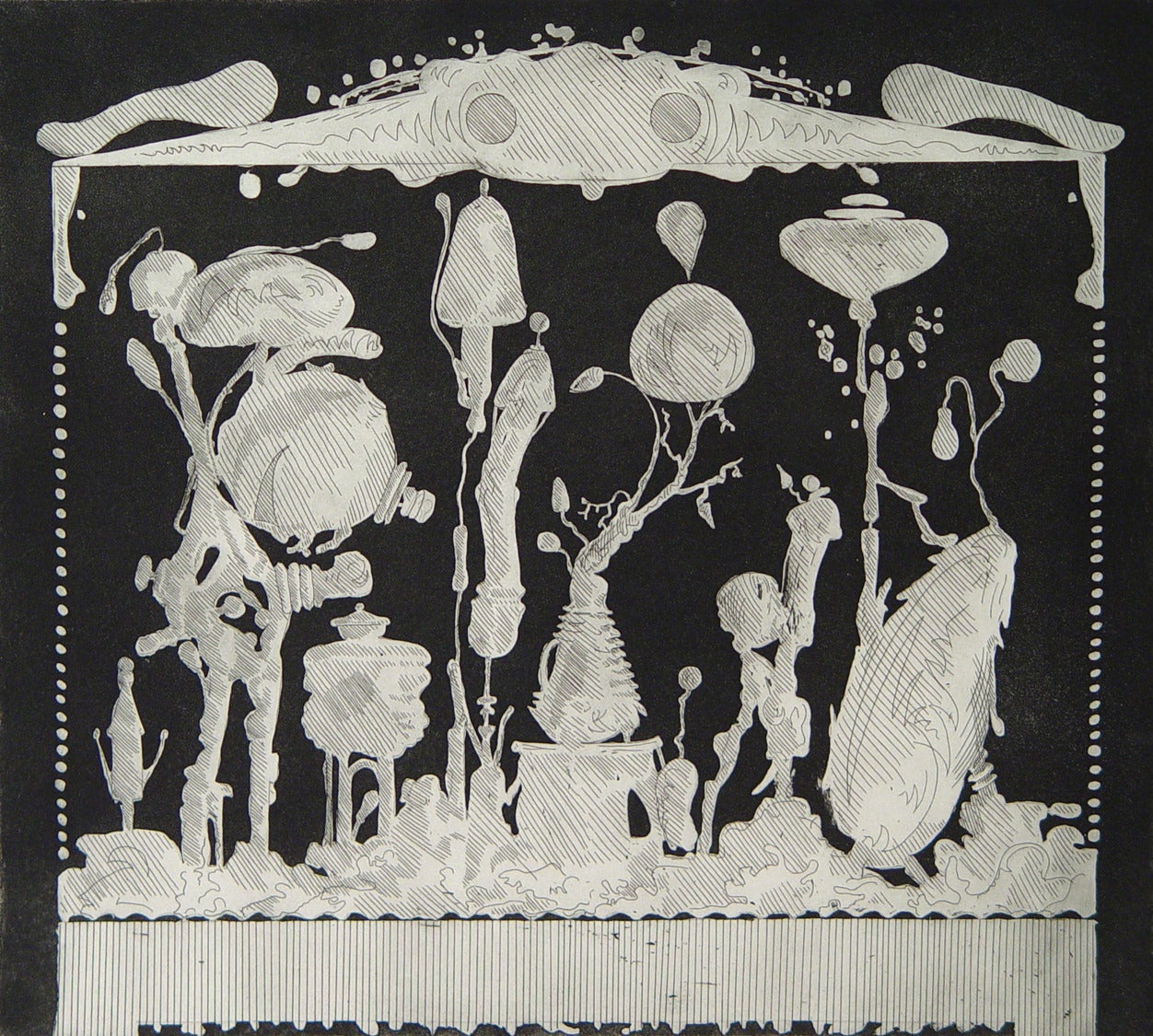
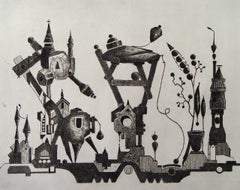
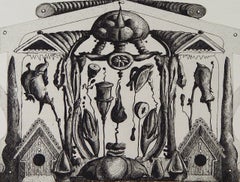
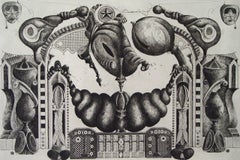
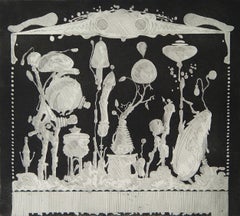
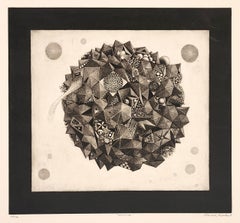
“Pillow Machine” is plate number 15, and is reproduced in "The First Fifty Prints: Valton Tyler" with text by Rebecca Reynolds, published for Valley House Gallery by Southern Methodist University Press, Dallas, Texas, 1972.
In “The First Fifty Prints,” Reynolds provides the following quote from the artist:
"The soft atmosphere and the floating movement within this structure suggested a pillow machine to me. The simple lines of the heavy frame of the machine contrast with the delicate movable parts. Although your eye is first attracted to the symmetry of the design, which is similar to plates that concern a design on a stage, the movement of the small weights that are suspended on small arcs, or curve up the side of a wall, lead your eye all around the print. 'Music Box,' Plate No. 16, is based on this same idea of using heavy static forms to focus on small details that give the composition life." (Reynolds, page 68)
Paper size: 24 1/2 x 25 3/4 inches
Edition: 5 Artists Proofs Imp. 50 Signed Prints Imp.
Bibliography:
Edward M. Gomez, "Futuristic Forms Frolic Under Eerie Texan Skies," The New York Times, June 13, 2000, page B2.
Edward M. Gomez, "Valton Tyler's Techno-Organic Landscapes," Raw Vision 35, Summer 2001, pages 34-39.
Rebecca Reynolds, "The First Fifty Prints: Valton Tyler," published for Valley House Gallery by Southern Methodist University Press, Dallas, Texas, 1972.