Want more images or videos?
Request additional images or videos from the seller
1 of 12

Victor Vasarely
Vintage Hardback Monograph: Planetary Folklore (Hand signed by Victor Vasarely)

1973

$750
£565.20
€660.45
CA$1,064.31
A$1,067.54
CHF 619.23
MX$13,031.39
NOK 7,172.49
SEK 7,340.56
DKK 4,936.85

About the Item

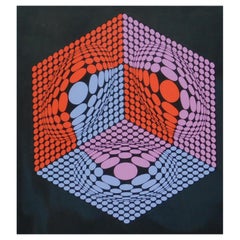
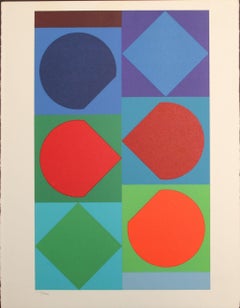
Victor Vasarely Planetary Folklore (Hand signed by Victor Vasarely), 1973 Hardback monograph with dust jacket Hand signed by Victor Vasarely on the first front end page 9 1/2 × 9 7/20 × 3/4 inches This vintage hardback monograph with dust jacket is hand signed by Victor Vasarely on the first front end page. A true collectible when hand signed by Vasarely himself in his inimitable hand - rarely found! Book information: Publisher: New York Graphic Society (January 1, 1973) English; Hardcover; 88 pages with color and bw illustrations About Victor Vasarely; Born in 1906 in Pécs, Hungary, Victor Vasarely is one of the creators of Kinetic and Op Art. Before immigrating to France in 1930, Vasarely attended Mühely, the Academy of Painting based on the teachings of the Bauhaus, in Budapest in 1929. It was during this time that he painted Blue Study and Green Study (1929). In his early works, he explored Symbolism, Post-Cubism, Surrealism and Gestural Painting. When he first arrived in Paris in 1930, Vasarely began working commercially at Havas advertising agency and then at Draeger, one of the most renowned print houses. 1929-1946 was known as Vasarely’s “Graphic” period. During this time, he created The Zebras (1938), Chess Board (1935), and Girl-Flower (1934). Vasarely was deeply concerned with light, shadow, contrast, and outline. Through this period, two dimensional weight and contrast was explored, beginning to define the dominant style that he would develop over the rest of the century. From 1935 to 1947, a period which Vasarely calls “my false routes,” he became influenced with many of the popular movements, especially Surrealism and Cubism. This early period of his was one of the only times Vasarely would go figurative, painting the human form in portraits and even translating his ideals to still lifes and genre paintings. He painted Self Portrait (1941) and The Blind Man (1946) which, although figurative, move towards Vasarely’s more signature style and a more simplified version of his perspective. Dubbed the “Belle-Isle” (Belle-Île) period after his favorite vacation spot in France, between 1947 and 1958, Vasarely truly reached abstraction for the first time. This was a very geometric period for the artist, heavily based on the shape of the oval, inspired by the pebbles on the beach of Belle-Île. From 1948 to 1951, Vasarely focused on contrast more than before. From a flat perspective, he was able to blaze the trail to kineticism, applying contradictory colors to create movement within a composition. In this period, his most suggestive work was Homage to Malevitch (1952-1958). The artist’s “Black and White” period was from 1950 to 1965, developing the basic ideas inherent to the creation of Op-Art through the use of only these two colors. Throughout the 1950s, as kinetic art flourished in Paris, Vasarely continued to research, publishing his “Yellow Manifest.” This would be the precursor to his ideas regarding the Fine Arts Alphabet (alphabet plastique) that would attempt to turn the realm of the visual arts into a universal language that everyone could understand. He was most excited to define this alphabet, incorporating this language within popular culture of architecture and urban planning. In 1965, he participated in the “Responsive Eye” exhibit at the New York Museum of Modern Art. This exhibition was publically dedicated exclusively to “Optical Art,” redefining the relationship between the spectator and work of art, communicating in an entirely abstract and subjective manner. Throughout the seventies, the artist pushed through multiple transitions in his art, cultivating an entirely new perspective for his paintings and graphic works. He focused on the spherical presence within each composition and the presence within the special plane, incorporating color and repetition to create his desired visual effects, and ultimately, a connection to the greater universe. Vasarely was known as a visionary. He combined techniques in science, architecture, painting, and movement, breeching disciplines and creating a style that would change many of the principals of modern art. Vasarely once said, “all architects, painters, sculptors must learn to work together. It is not a matter of negating the masterpieces of the past but we have to admit that human aspirations have changed. We must transform our ancient way of thinking and conceiving art. Particularly in the cities, we must share it… make it accessible to all. Art must be generous.” It’s no surprise that Cezanne was Vasarely’s role-model and inspiration. Building his foundation more than a century later in 1976 in Aix-en-Provence, where Cezanne lived and painted, may have been a happy coincidence. They were two farsighted men, changing the facets of modernity once again. A superb graphic artist, Vasarely studiously developed his techniques before he even began painting. His prints reveal the quality of his artistry since his first published print in 1949. He has been widely exhibited throughout the world and has had more than one hundred one-person shows. There have also been over one hundred commissioned monumental architectural works created by Vasarely. March 15, 1997 was the day that Vasarely finally passed, living to the age of 91. -Courtesy of Park West Gallery
  • Creator:
    Victor Vasarely (1906 - 1997, French, Hungarian)
  • Creation Year:
    1973
  • Dimensions:
    Height: 9.5 in (24.13 cm)Width: 9.35 in (23.75 cm)Depth: 0.75 in (1.91 cm)
  • Medium:
  • Movement & Style:
  • Period:
  • Condition:
    In very good vintage condition with minor over age wear on the dust jacket; inside pages are in excellent condition.
  • Gallery Location:
    New York, NY
  • Reference Number:
    1stDibs: LU1745213552582

More From This Seller

View All
Rare 1960s Victor Vasarely offset lithograph poster, Op Art print

Rare 1960s Victor Vasarely offset lithograph poster, Op Art print

By Victor Vasarely

Located in New York, NY

Victor Vasarely Rare 1960s Victor Vasarely poster, 1967 Offset lithograph 35 × 19 1/4 inches Unframed, unsigned Published by London Arts Group Rare 1967 offset lithograph The work...

Category

1960s Op Art Abstract Prints

Materials

Lithograph, Offset

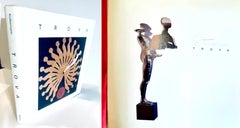
Hardback monograph of renowned sculptor: TROVA (hand signed by Ernest Trova)

Hardback monograph of renowned sculptor: TROVA (hand signed by Ernest Trova)

By Ernest Trova

Located in New York, NY

Ernest Tino Trova TROVA (hand signed by Ernest Trova), 1978 Hardback monograph with dust jacket (hand signed by Ernest Trova) Hand signed by Ernest Trova on the half title page 11 × ...

Category

1970s Abstract Abstract Prints

Materials

Paper, Ink, Mixed Media, Lithograph, Offset

Josef Albers -Deluxe Hand Signed edition Munich Olympic Silkscreen Op Art 63/200

Josef Albers -Deluxe Hand Signed edition Munich Olympic Silkscreen Op Art 63/200

By Josef Albers

Located in New York, NY

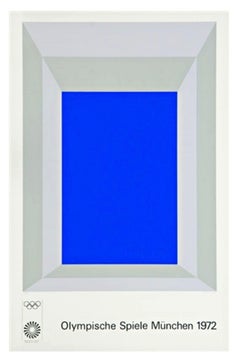
This work is NOT to be confused with a separate poster edition, which is on different quality paper and bears a printed signature. This is the much-coveted HAND SIGNED and numbered edition. Josef Albers Large: Munich 1972 Olympic Games (Danilowitz 213), 1970 Color silkscreen on 250-gram Schöllers Hammer paper. Signed, dated and numbered 63/200 in graphite pencil on the front 40 inches (vertical) × 25 1/2 inches (horizontal) Catalogue Raisonne Reference: Danilowitz, 213 Unframed Pencil signed and numbered 63/200 - silkscreen from the Deluxe, hand signed edition on Schollers hammer paper (aside from the unsigned regular edition of 4000 on wove paper) Printed by Sirocco Screenprints, New Haven. Published by Ives-Sillman, Inc., New Haven, for Edition Olympia 72 By Josef Albers - famous color theorist and longtime influential head of the Yale University Art Department. It features Albers signature ‘cinetic window’, and is an impressive piece of art and sports history. This is one of only 200 hand signed, dated and numbered prints - (NOT to be confused with the open poster edition of the same image on different paper, which, unlike the present work, only bears the artist's printed signature.) The present work was created in 1970 for the 1972 Munich Olympics. In anticipation of hosting the 1972 summer Olympics, Germany sought to create a positive image for itself. As Arnold Schwarzenegger would write in his memoir "Holding the Olympic Games in Munich was meant to symbolize West Germany's transformation and reemergence in to the community of nations as a modern democratic power". The Munich Olympics were billed as "the happy games" - a term that would become tragically ironic. In spite of, or rather because of, the ruthless killing of Israeli athletes by terrorists during the Munich Olympics, prints like this Albers silkscreen have become a powerful symbol of the enduring power of art to bring cultures together and promote peace. This Josef Albers Olympic...

Category

1970s Abstract Geometric Abstract Prints

Materials

Screen

You May Also Like

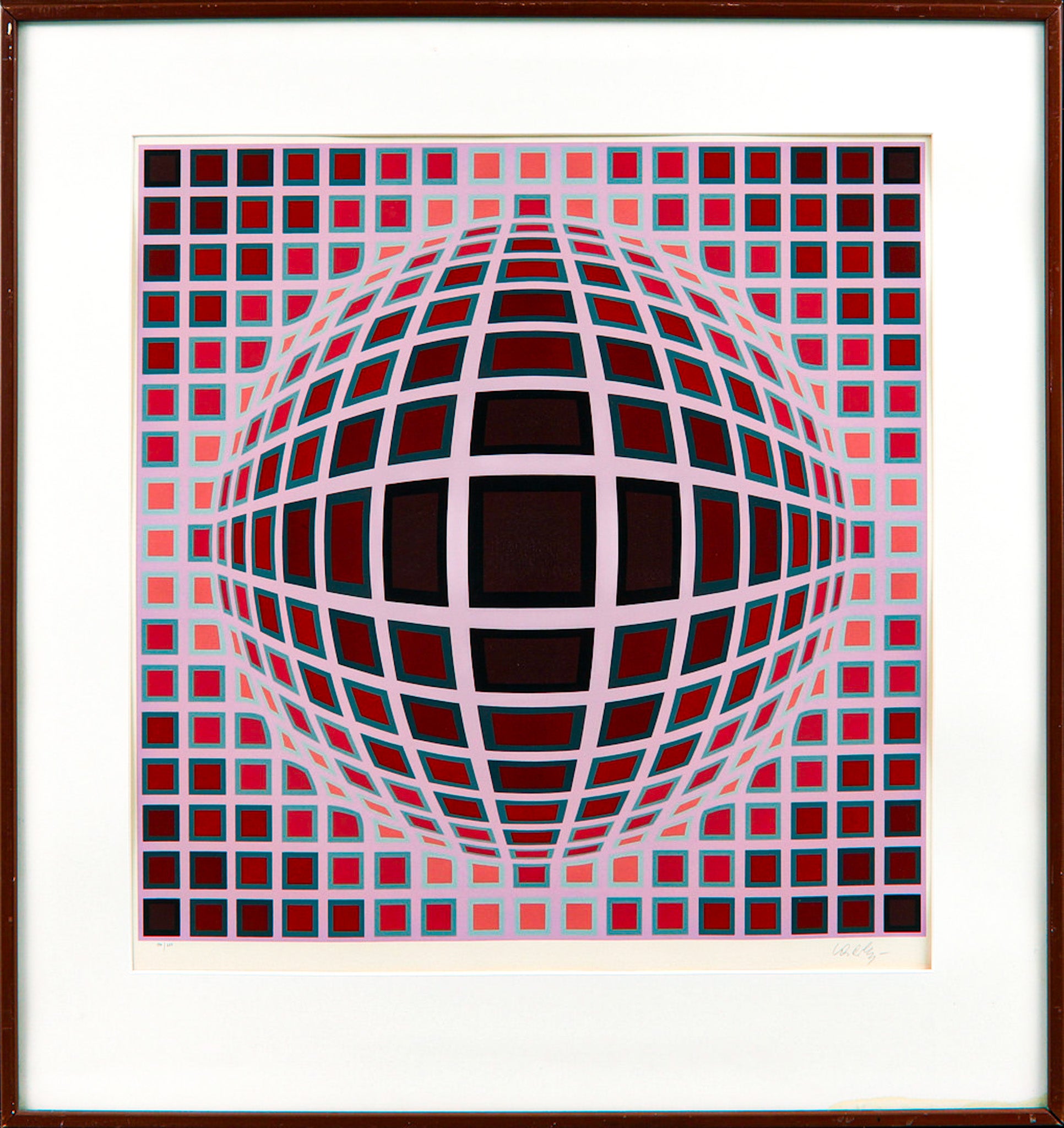
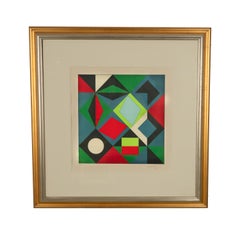
Original Op Art Abstract Color Screenprint "Planetary Folklore" Signed #2/250

Original Op Art Abstract Color Screenprint "Planetary Folklore" Signed #2/250

By Victor Vasarely

Located in Portland, OR

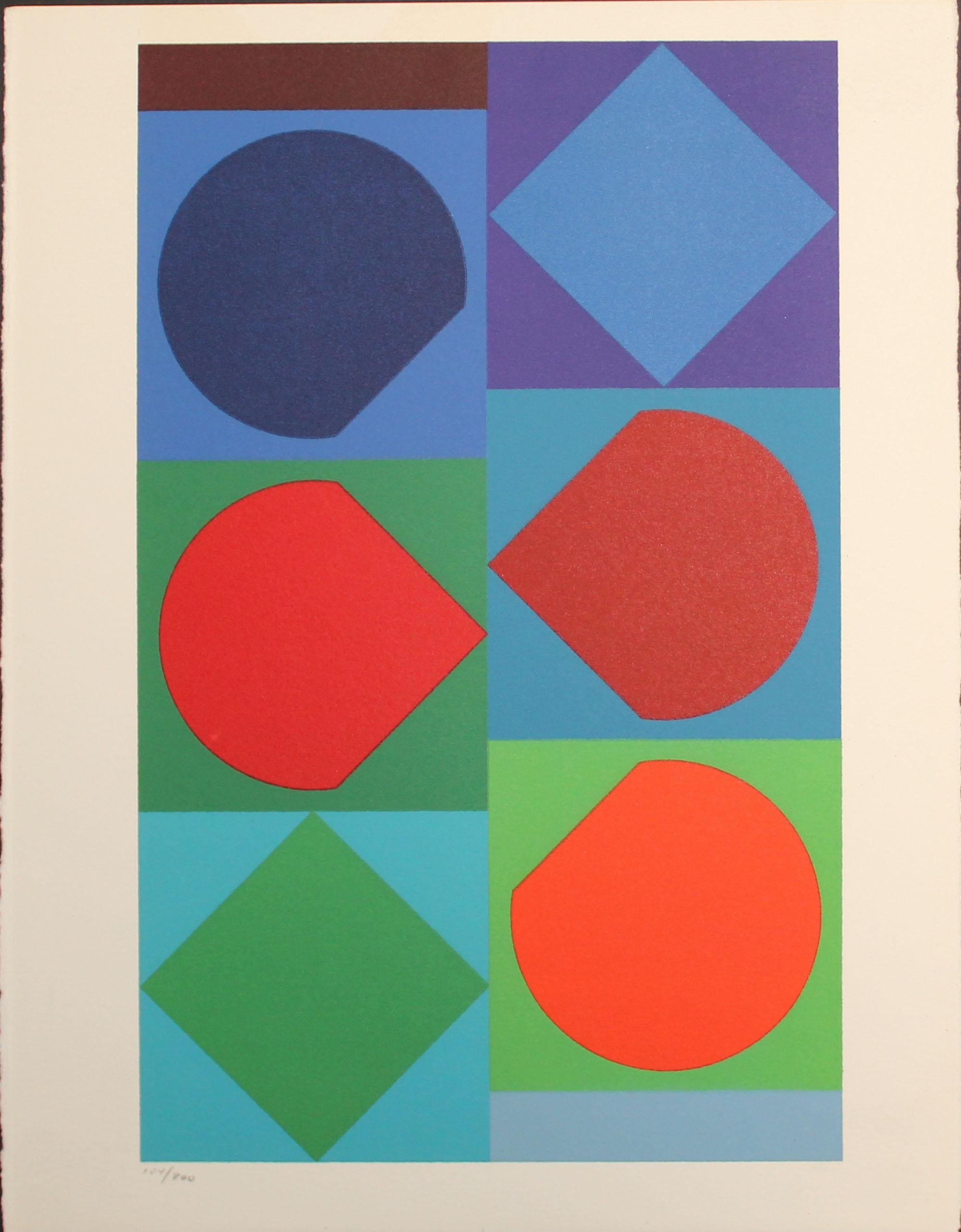
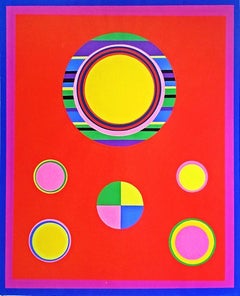
A Op Art abstract color screenprint, "Planetary Folklore" 1968, by Victor Vasarely (1906-1997). This very striking work by Vasarely is comprised of various colorful geometric shapes, the work is signed lower right "Vasarely" and numbered lower left "2/250. This is an early and crisp impression in excellent condition and housed under glass in a gilt & silvered hardwood frame. This very eye-catching work by one of the 20th century's leading Op artists is ready to hang on your wall. 14" x 14.50" at sight without frame Numered 2/250 A Franco-Hungarian painter, Victor Vasarely (1906-1997) first studied medicine before turning to art. In Budapest, he frequented artists from the Hungarian Bauhaus...

Category

1960s Op Art Abstract Prints

Materials

Lithograph, Handmade Paper, Color, Screen

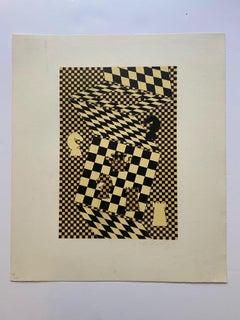
"L’échiquier" by Victor Vasarely

"L’échiquier" by Victor Vasarely

By Victor Vasarely

Located in Saint-Didier, Provence-Alpes-Côte d'Azur

The Exchequer - Victor Vasarely - 1935 Lithography Inscribed on the back "L'échiquier - Lithog (1935)". Paper size: 40x46cm Size of the work: 33x23cm Signature at bottom right in p...

Category

1930s Op Art Abstract Prints

Materials

Lithograph

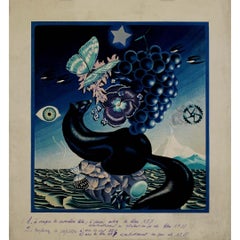
Victor Vasarely 1940 original lithograph - Op Art - symbolism

Victor Vasarely 1940 original lithograph - Op Art - symbolism

By Victor Vasarely

Located in PARIS, FR

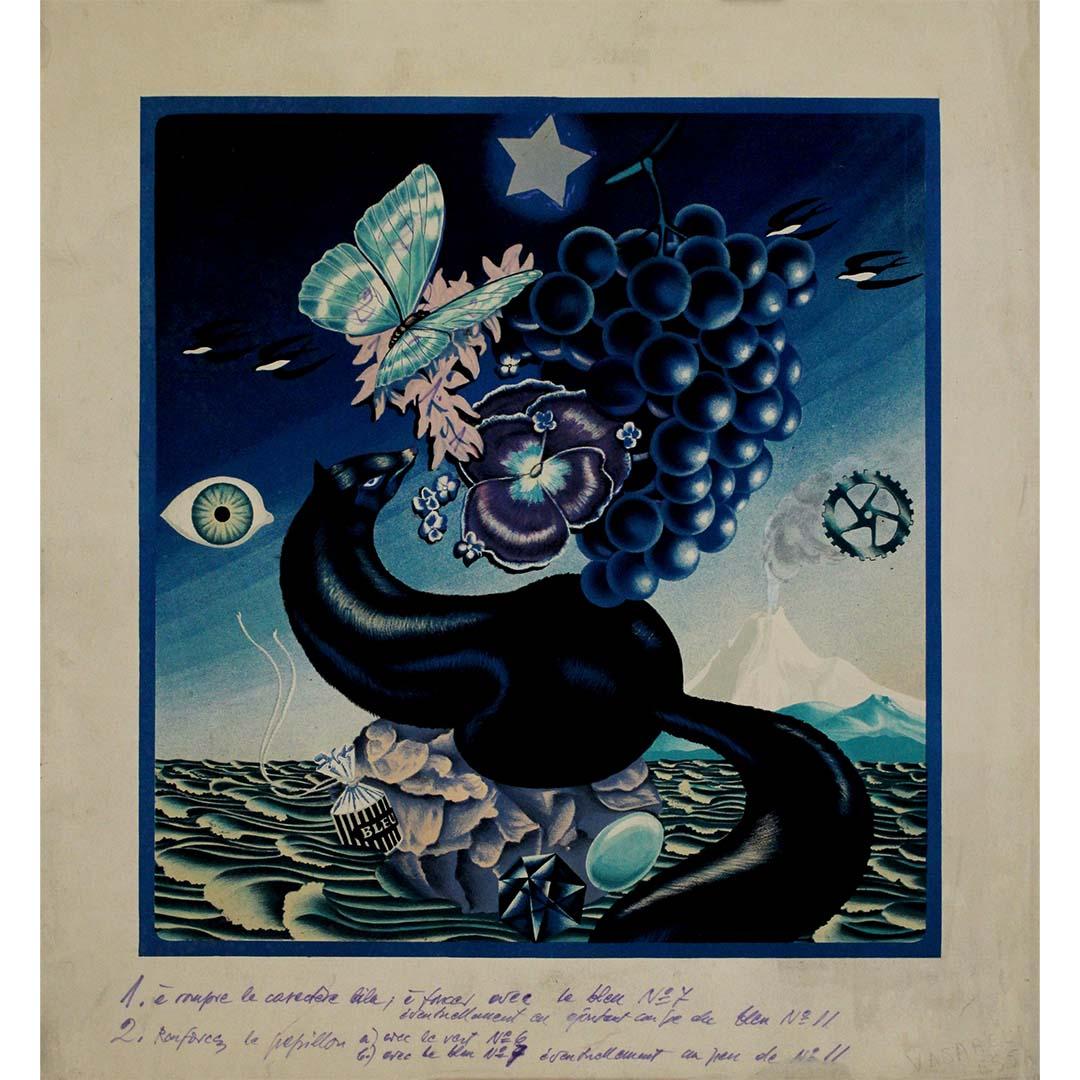
Long before becoming the father of Op Art, Victor Vasarely explored an entirely different visual language — one deeply rooted in surrealism, symbolism, and dreamlike imagery. This or...

Category

1940s Prints and Multiples

Materials

Paper, Lithograph

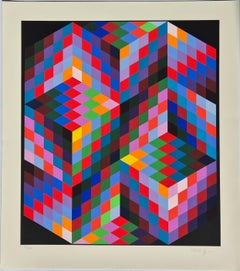
Victor Vasarely -- Diam the album Diam

Victor Vasarely -- Diam the album Diam

By Victor Vasarely

Located in BRUCE, ACT

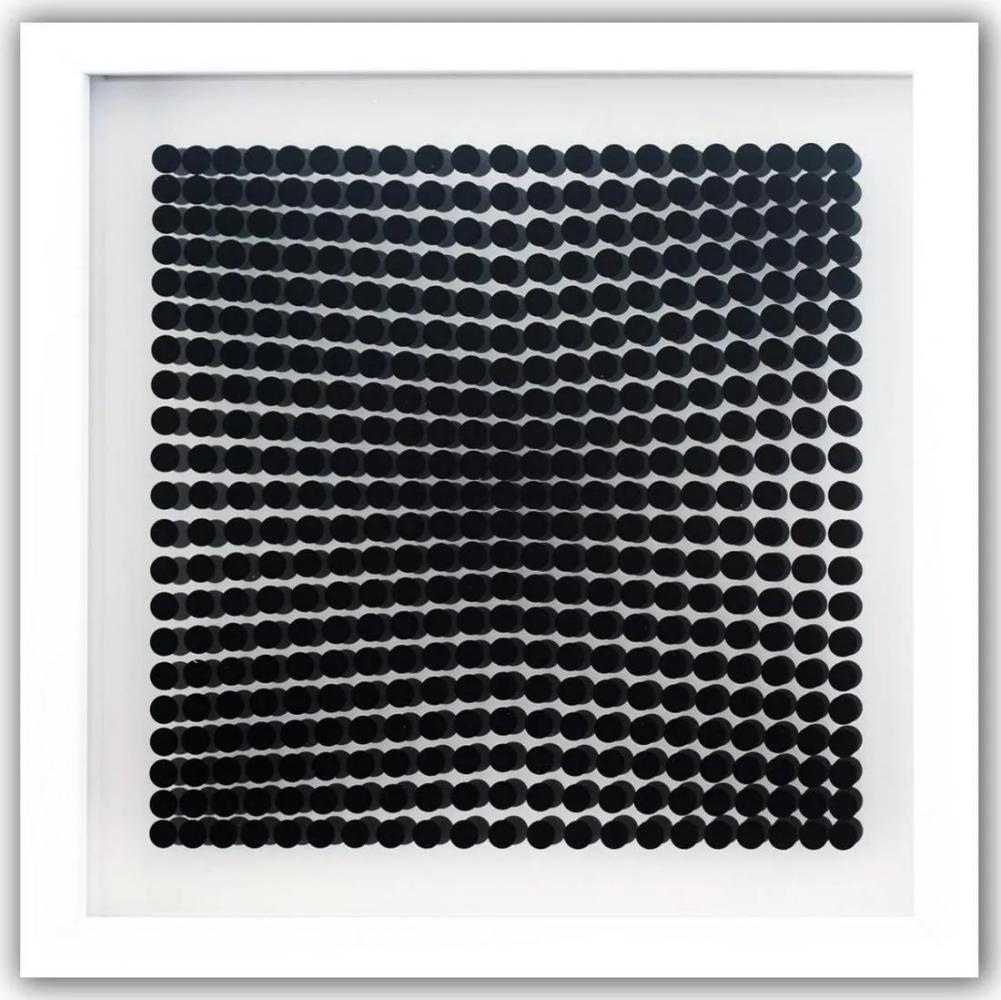
Victor Vasarely Diam the album Diam, 1988 Serigraph in colors on paper Hand signed lower right Numbered 35/250 Sheet size 70 x 62 cm Published by : AC Mazo - Paris Printed by : Siliu...

Category

1980s Abstract Prints

Materials

Screen