American Modern Animal Prints

to
18
48
19
17
24
11
Overall Width
to
Overall Height
to
1,954
1,812
310
282
239
151
103
82
67
60
46
39
20
1
8
6
6
5
5
114
5
2
1
18
13
17
16
9
6
6
69
43
2
43
23
22
20
19
19
18
13
12
12
12
12
11
9
7
7
7
7
5
3
49
20
19
10
10
15
8
119
Style: American Modern
Original "Wonderful Copenhagen" vintage travel poster

Original "Wonderful Copenhagen" vintage travel poster

Located in Spokane, WA

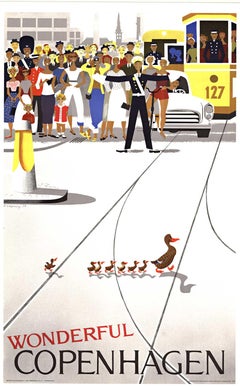
Original vintage poster: WONDERFUL COPENHAGEN created by the artist Viggo Vagnby. This antique poster is archival linen-backed, in excellent condition, and ready to frame. No da...

Category

1950s American Modern Animal Prints

Materials

Lithograph

Fir Play Intaglio Print, American Modern, Artist Proof #4/5, 2010+

Fir Play Intaglio Print, American Modern, Artist Proof #4/5, 2010+

By Carol Wax

Located in New Orleans, LA

A series of prints was commissioned by the Metropolitan Museum in New York in a regular edition of 40. This impression is from an edition of 5 artist proofs. This impression is #4/5. Carol Wax originally trained to be a classical musician at the Manhattan School of Music but fell in love with printmaking. Soon after she began engraving mezzotints she was asked by the renowned print dealer Sylvan Cole to exhibit at Associated American Artists Gallery, launching her career as a professional artist/printmaker. With the publication of her book, The Mezzotint: History and Technique, published by Abrams, 1990 and 1996, Carol added author and teacher to her credits. In the ensuing years she has expanded her repertoire of mediums beyond printmaking into other works on paper and painting. In compositions reflecting an appreciation for antiquated machinery and vintage textiles, Wax creates imagery that, in her own words, “… speaks to an inner life perceived in inanimate objects.” She uses stylization and imagination to reinvent subjects, transforming an ordinary typewriter into a monumental icon...

Category

2010s American Modern Animal Prints

Materials

Intaglio

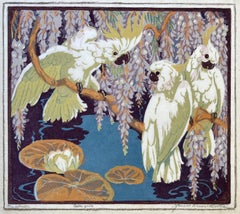
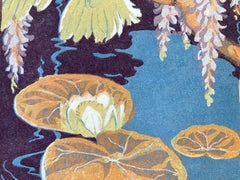
THE INTRUDER - Arts and Crafts Woodcut

THE INTRUDER - Arts and Crafts Woodcut

By Jessie Arms Botke

Located in Santa Monica, CA

JESSIE ARMS BOTKE (1883 – 1971) THE INTRUDER c. 1930 Color woodcut, signed, titled and inscribed “Botke prints” Image 9 ¾ x 11”, sheet 11 7/8 x 14 3/4" On cream laid paper. Califor...

Category

1930s American Modern Animal Prints

Materials

Color

Alexander Calder Circus Reproduction Lithograph After a Drawing

Alexander Calder Circus Reproduction Lithograph After a Drawing

By (after) Alexander Calder

Located in Surfside, FL

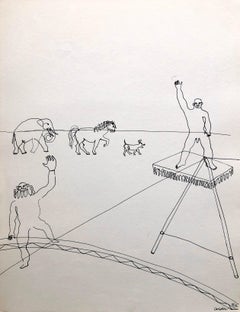
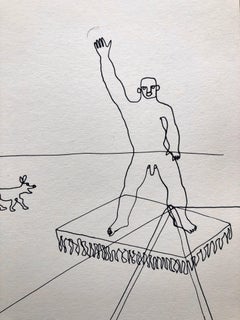
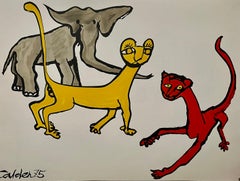
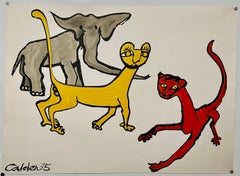
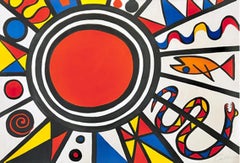
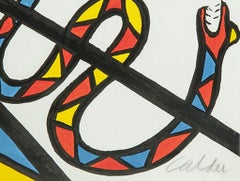
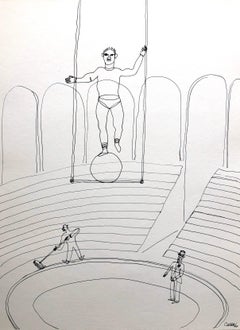
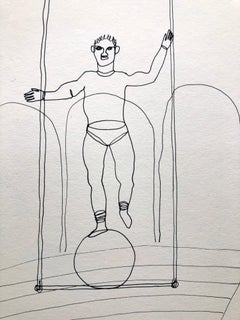
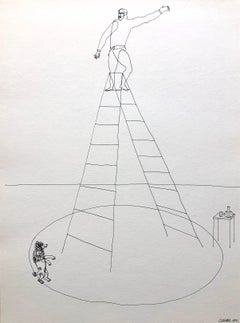
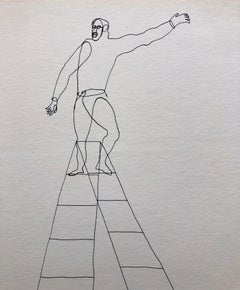
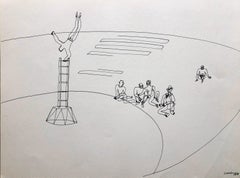
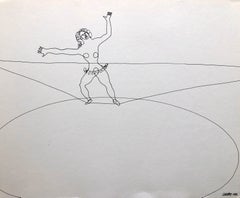
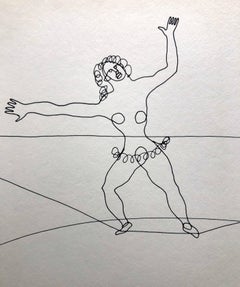
(after) Alexander Calder "Calder's Circus" offset lithograph on wove paper after drawings by the artist Published by Art in America and Perls gallery in 1964 (from drawings done in the 1930's) these range slightly in size but they are all about 13 X 17 inches (with minor variations in size as issued.) These have never been framed. The outer folio is not included just the one lithograph. James Sweeny from the introduction “The fame of Calder’s circus spread quickly between the years 1927 and 1930. All the Paris art world came to know it. It brought him his first great personal success. But what was more important, the circus also provided the first steps in Calder’s development as an original sculptor” Clive Gray wrote ”A visit to the studio of Alexander Calder led to the chance discovery of some hundred masterful circus drawings completed over thirty years ago. We publish, for the first time, a choice of sixteen from that group.” With signed introduction by Miro. These whimsical drawings, done in the style of wire sculpture, include acrobats, clowns, jugglers, trapeeze artists, an elephant, dog and lion. they are great. Alexander Calder is widely considered to be one of the most important American sculptors of the 20th century. He is best known for his colorful, whimsical abstract public sculptures and his innovative mobiles, kinetic sculptures powered by motors or air currents, which embraced chance in their aesthetic. Born into a family of accomplished artists, Calder's work first gained attention in Paris in the 1930s and was soon championed by the Museum of Modern Art in New York, resulting in a retrospective exhibition in 1943. Major retrospectives were also held at the Solomon R. Guggenheim Museum (1964) and the Museum of Contemporary Art, Chicago (1974). Calder’s work is in many permanent collections, most notably in the Whitney Museum of American Art, but also the Guggenheim Museum; the Museum of Modern Art; the National Gallery of Art, Washington, D.C.; and the Centre Georges Pompidou. He produced many large public works, including .125 (at JFK Airport, 1957), Pittsburgh (Carnegie International prize winner 1958, Pittsburgh International Airport) Spirale (UNESCO in Paris, 1958), Flamingo and Universe (both in Chicago, 1974), and Mountains and Clouds (Hart Senate Office Building, Washington, D.C., 1976). Although primarily known for his sculpture, Calder was a prodigious artist with a restless creative spirit, whose diverse practice included painting and printmaking, miniatures (such as his famous Cirque Calder), children’s book illustrations, theater set design, jewelry design, tapestry and rug works, and political posters. Calder was honored by the US Postal Service with a set of five 32-cent stamps in 1998, and received the Presidential Medal of Freedom, posthumously in 1977, after refusing to receive it from Gerald Ford one year earlier in protest of the Vietnam War. Calder moved to New York and enrolled at the Art Students League, studying briefly with Thomas Hart Benton, George Luks, Kenneth Hayes Miller, and John Sloan. While a student, he worked for the National Police Gazette where, in 1925, one of his assignments was sketching the Ringling Bros. and Barnum & Bailey Circus. Calder became fascinated with the action of the circus, a theme that would reappear in his later work. In 1926, Calder moved to Paris, enrolled in the Académie de la Grande Chaumière, and established a studio at 22 rue Daguerre in the Montparnasse Quarter. In June 1929, while traveling by boat from Paris to New York, Calder met his future wife, Louisa James (1905-1996), grandniece of author Henry James and philosopher William James. They married in 1931. While in Paris, Calder met and became friends with a number of avant-garde artists, including Fernand Léger, Jean Arp, and Marcel Duchamp. Cirque Calder (on view at the Whitney Museum of American Art at present) became popular with the Parisian avant-garde. He also invented wire sculpture, or "drawing in space," and in 1929 he had his first solo show of these sculptures in Paris at Galerie Billiet. Hi! (Two Acrobats) in the collection of the Honolulu Museum of Art is an early example of the artist's wire sculpture. The painter Jules Pascin, a friend of Calder's from the cafes of Montparnasse, wrote the preface to the catalog. A visit to Piet Mondrian's studio in 1930, where he was impressed by the environment-as-installation, "shocked" him into fully embracing abstract art, toward which he had already been tending. Dating from 1931, Calder’s sculptures of discrete movable parts powered by motors were christened “mobiles” by Marcel Duchamp, a French pun meaning both "motion" and "motive." At the same time, Calder was also experimenting with self-supporting, static, abstract sculptures, dubbed "stabiles" by Jean Arp in 1932 to differentiate them from mobiles. Public commissions increasingly came his way in the 1960s. Notable examples are .125 for JFK Airport in 1957, Spirale for UNESCO in Paris 1958 and Trois disques, commissioned for Expo 67 in Montreal, Quebec, Canada. Calder's largest sculpture at 25.7 meters high was El Sol Rojo, constructed outside the Aztec Stadium for the 1968 Summer Olympics "Cultural Olympiad" events in Mexico City. Many of his public works were commissioned by renowned architects; I.M. Pei commissioned his La Grande Voile (1966), a 25-ton, 40-foot high stabile for the Massachusetts Institute of Technology. Part of Calder's repertoire includes pivotal stage sets for more than a dozen theatrical productions, including Nucléa, Horizon, and most notably, Martha Graham’s Panorama (1935), a production of the Erik Satie symphonic drama Socrate (1936), and later, Works in Progress (1968). In addition to sculptures, Calder painted throughout his career, beginning in the early 1920s. He picked up his study of printmaking in 1925, and continued to produce illustrations for books and journals.As Calder’s professional reputation expanded in the late 1940s and 1950s, so did his production of prints. Masses of lithographs based on his gouache paintings hit the market, and deluxe editions of plays, poems, and short stories illustrated with fine art prints by Calder became available for sale. One of Calder's most celebrated and unconventional undertakings was a commission from Dallas-based Braniff International Airways to paint a full-size Douglas DC-8-62 four-engined jet as a "flying canvas." Calder created over 2,000 pieces of jewelry over the course of his career, many of them as gifts for friends and relatives. For his lifelong friend Joan Miró, he set a shard of a broken porcelain vessel in a brass ring. Peggy Guggenheim received enormous silver mobile earrings and later commissioned a hammered silver headboard...

Category

1930s American Modern Animal Prints
Materials

Lithograph

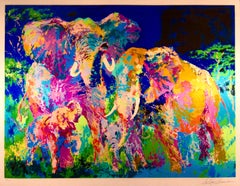
"Elephant Family" Large original serigraph.

"Elephant Family" Large original serigraph.

By LeRoy Neiman

Located in San Francisco, CA

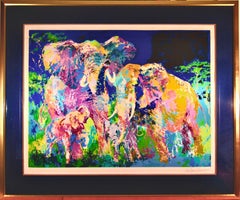
This artwork titled "Elephant Family" 1983 is an original large color serigraph on paper by noted American artist Leroy Neiman, 1921-2012. It is hand signed and numbered 63/300 in pe...

Category

Late 20th Century American Modern Animal Prints

Materials

Screen

Original 1942 Pour L'An II COMPAGNONS  Rooster vintage French poster

Original 1942 Pour L'An II COMPAGNONS Rooster vintage French poster

Located in Spokane, WA

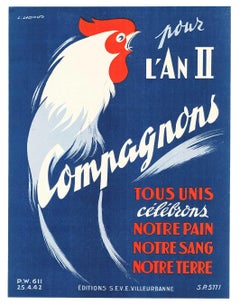
Professionally archival linen-backed vintage French poster: pour L'An II COMPAGONS Tous Unis Celebrons, Notre Pain, Notre Sang, Notre Terre. This full lithograph antique poster fe...

Category

1940s American Modern Animal Prints

Materials

Lithograph

Robert Marx, Blind Hunter

Robert Marx, Blind Hunter

Located in New York, NY

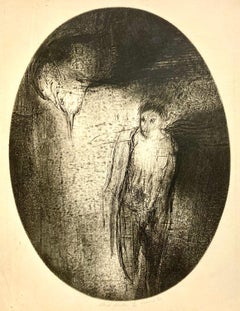
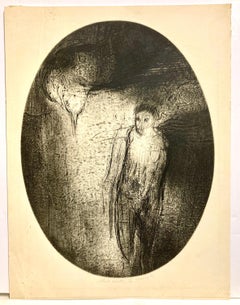
German-born Robert Ernst Marx was a painter, printmaker, and teacher. His main subject was the human condition. This intaglio is somewhat unusual in ...

Category

1960s American Modern Animal Prints

Materials

Intaglio

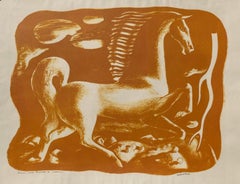
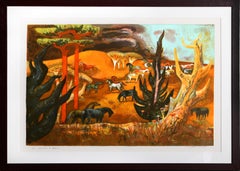
HORSE FRIGHTENED BY LIGHTNING - Proof imp - One of Sheet's Most Important Prints

HORSE FRIGHTENED BY LIGHTNING - Proof imp - One of Sheet's Most Important Prints

By Millard Sheets

Located in Santa Monica, CA

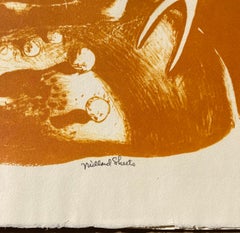
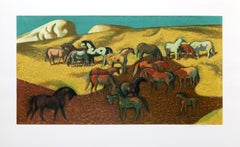
MILLARD SHEETS (1987 – 1989) HORSE FRIGHTENED BY LIGHTNING, 1939 Lithograph signed in pencil, annotated “TRIAL PROOF”. The published edition is 75. Image, 17 x 22”. Sheet 19 ½” x 2...

Category

1930s American Modern Animal Prints

Materials

Lithograph

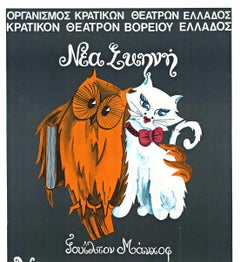
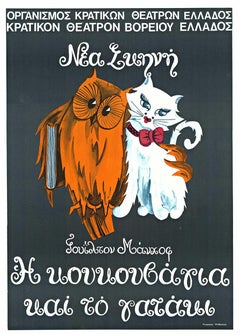
Original Owl and Pussy Cat - Greek theater poster

Original Owl and Pussy Cat - Greek theater poster

Located in Spokane, WA

Original The Owl And The Pussycat, by Edward Lear with all text in Greek. Linen backed and in very good condition. One tiny printing flaw under the foot of the cat. Translation:...

Category

1960s American Modern Animal Prints

Materials

Lithograph

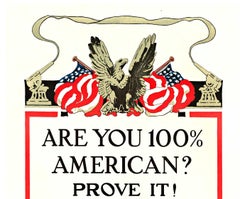
Original "Are You 100% American, Prove It!  Third Liberty Loan vintage poster

Original "Are You 100% American, Prove It! Third Liberty Loan vintage poster

Located in Spokane, WA

Original " Are You 100% American? Prove it! Buy US government bonds. Third Liberty Loan" vintage poster. This poster from World War I questions whether the viewer is genuinely A...

Category

1910s American Modern Animal Prints

Materials

Lithograph

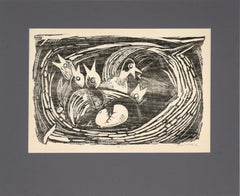
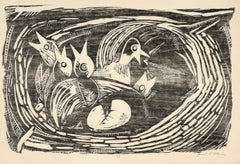
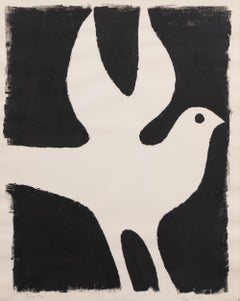
Birds in a Nest - Woodblock Print on Paper #3/6

Birds in a Nest - Woodblock Print on Paper #3/6

By Janet P Wheeler

Located in Soquel, CA

Birds in a Nest - Woodblock Print on Paper #3/6 Black and white woodblock by Janet Wheeler (American, 1922-2001). Four birds are shown in a nest, along with a cracked eggshell. The birds and the nest are depicted in a bold, stylized manner, with clever use of negative space. Numbered "3/6" at bottom center. Signed "Janet P Wheeler...

Category

Mid-20th Century American Modern Animal Prints

Materials

Paper, Ink, Woodcut

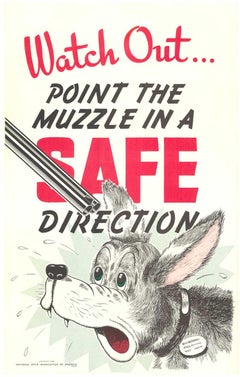
Original Watch Out .. Safe Direction  NRS vintage gun safety poster

Original Watch Out .. Safe Direction NRS vintage gun safety poster

Located in Spokane, WA

Original “Watch Out .. Point the Muzzle in a SAFE Direction” vintage National Rifle Association of America vintage poster. Printed in 1946 on a thick cardboard stock. Excellent ...

Category

1940s American Modern Animal Prints

Materials

Lithograph

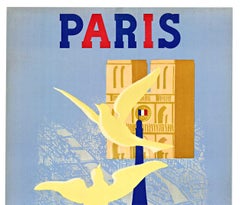
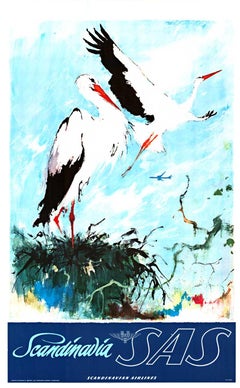
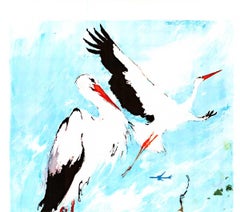
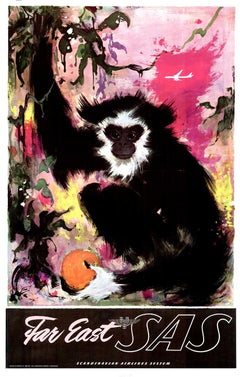
Original "S.A.S. Scandinavia Airlines" vintage travel poster with 2 storks

Original "S.A.S. Scandinavia Airlines" vintage travel poster with 2 storks

By Otto Nielsen 1

Located in Spokane, WA

Scandinavia by SAS - Storks. Original vintage European travel poster created by the artist Otto Nielsen. This poster features the prop plane and would be SAS's earliest printing of the image. Archival linen-backed, fine condition, ready to frame. Beautiful travel poster for Scandinavian Airlines. Excellent condition with wonderful artistry and soft warm colors. SAS was founded in 1946 as a consortium of the national airlines of Denmark, Norway, and Sweden. Over the years, it has played a crucial role in connecting Scandinavia with the rest of the world. Otto Nielsen was a Danish artist known for contributing to Scandinavian Airlines System (SAS) posters. Born on December 29, 1916, in Copenhagen, Denmark, Nielsen became a prominent figure in the world of graphic design and illustration, particularly for his work with SAS. Otto Nielsen created a series of iconic posters for SAS during the mid-20th century. His artwork often featured stylized and colorful depictions of Scandinavian landscapes, culture, and landmarks. These posters were part of SAS's marketing campaigns to promote air travel to and from Scandinavia. This is an Original Lithograph Vintage Poster; it is not a reproduction. The Vintage Poster has been working with collectors worldwide, helping them with their original vintage poster collections...

Category

1960s American Modern Animal Prints

Materials

Offset

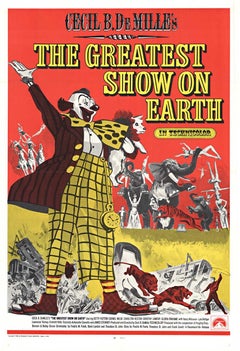
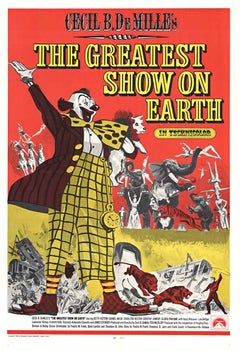
Original "The Greatest Show on Earth" 1951 vintage movie poster US 1-sheet

Original "The Greatest Show on Earth" 1951 vintage movie poster US 1-sheet

Located in Spokane, WA

Original “The Greatest Show on Earth” vintage US 1 sheet movie poster. Cecil B DeMille’s 1951 movie. Archival linen backed in very good condition, ready to frame. Original theater-issued fold marks restored during linen backing. Over 70 years old, 1st printing. Welcome to the circus. The Greatest Show on Earth starring Betty Hutton, Cornel Wilde, Charlton Heston, James Stewart (Jimmy Stewart...

Category

1950s American Modern Animal Prints

Materials

Offset

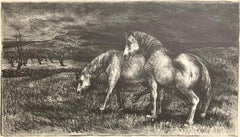
Reginald Wilson, Horses

Reginald Wilson, Horses

By Reginald Wilson

Located in New York, NY

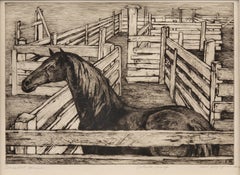
Although this work is titled Horses. It nice to think it could be (Horses in a Field in Woodstock, NY), but it was printed by Will Barnet at the Art Students League, about 1938, and Wilson, who visited Woodstock with Arnold Blanche...

Category

1930s American Modern Animal Prints

Materials

Lithograph

Vienna Lipizzaner
Vienna Lipizzaner

Vienna Lipizzaner

By Ray H. French

Located in Fairlawn, OH

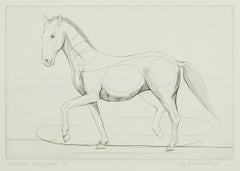
Vienna Lipizzaner Engraving, 1962 Signed and dated lower right (see photo) Titled and numbered lower left (see photo) This impression is from the second edtition printed c. 1992 1st ...

Category

1960s American Modern Animal Prints

Materials

Engraving

"Arena" First 3 Dimension Western vintage movie poster  1953  US 1-sheet

"Arena" First 3 Dimension Western vintage movie poster 1953 US 1-sheet

Located in Spokane, WA

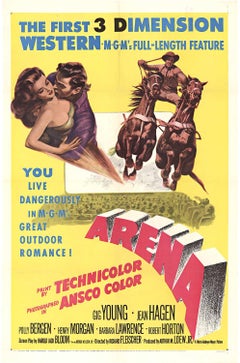
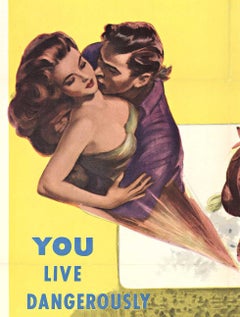
“Arena” The First 3 Dimension Western. Original theater issued vintage movie poster - 1953. Professional archival linen backed with the original theater-issued fold marks restored. Ready to frame. Size: 27" x 41.5" Original linen-backed 1953 first 3-D Western movie poster. The FIRST 3-D Dimension Western MGM full-length feature. You live dangerously in MGM's great outdoor romance! Print by Technicolor. Photographed in Technicolor Ansco Color. Gig Young, Jean Hagen, Polly Bergen...

Category

1950s American Modern Animal Prints

Materials

Offset

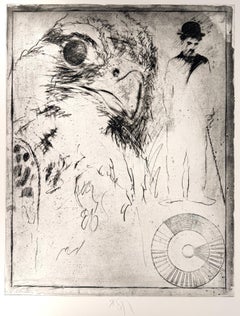
Chaplin and Red Tailed Hawk

Chaplin and Red Tailed Hawk

By Donald Saff

Located in Middletown, NY

Etching with aquatint on white wove paper with a deckle edge, 23 1/2 x 17 1/2 inches (598 x 317 mm); sheet 30 x 22 1/2 inches (762 x 571 mm), full margins. Signed and numbered 23/50 ...

Category

Late 20th Century American Modern Animal Prints

Materials

Handmade Paper, Etching, Aquatint

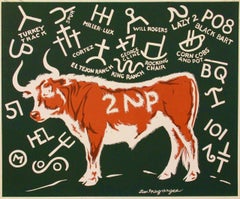
2 Lazy 2 P

2 Lazy 2 P

By Lon Megargee 1

Located in Phoenix, AZ

2 Lazy 2P, ca. 1939 Lon Megargee Serigraph 20 x 24 inches Signed in screen Original serigraph print by Lon Megargee 1883 - 1960 Featured in "Hot Irons" by Oren Arnold and John Hale, 1940 SHIPPING CHARGES INCLUDE SHIPPING, PACKAGING & INSURANCE Lon Megargee created this serigraph from his commission with Oren Arnold and John Hale to do their dust jacket for the book, " Hot Irons", 1940. Arnold and Hale wanted to establish a reference work, an "authority", with a entertaining history about the evolution of the brand. Megargee created a painting of a steer that was branded with the script, 2 Lazy 2 P. Surrounding the steer is a random display of famous brands of ranches in the Southwest. It was well received and must have prompted Megargee to create the likeness as a print. The brand is described in chapter thirteen, page 207-208 and says, " Ed Stram, who was Arizona state veterinarian for sixteen years, fire-branded his cattle with this peculiar crest. It isn't peculiar unless you have an equally peculiar sense of humor. At a glance it appears to be just another typically unimaginative brand, but it has been used to make many a thousand girls blush, and a few thousand bashful young men as well". COLLIER GALLERY, FINE ART ESTATE OF LON MEGARGEE Born and raised in Philadelphia, Pennsylvania, Lon Megargee, at age 13, ran away from his upper class home and went West in 1896 led by his zest for the wild and adventuresome life. There he established a reputation as a cowboy painter and illustrator with work most associated with Arizona Brewing Company ads featuring humorous aspects of cowboy life. In his youth, he worked as a free-lance cowboy, exhibition roper, poker dealer, and bronco buster in Arizona, and then went east again to study art in Philadelphia at the Pennsylvania Academy of Fine Arts, and to New York at the Art Students League and Pratt Institute. He returned to Arizona, living in Cave Creek, Salt River Canyon, Phoenix and the last years of his life near Sedona. His Phoenix home later became a popular hotel and dining place called the Hermosa Inn. Megargee was a ranch owner and also did oil canvases of the places he loved and the cowboy life he admired. By 1910, he was among the earliest resident artists, and was probably the best known artist in Arizona. His name was first associated with a landscape series of 15 large murals for the Capitol Building, newly constructed just after Arizona became a state in 1912. Another one of his paintings, Elemental, was the first painting by an artist living in Arizona to be acquired for the Municipal Collection of Phoenix. These works were chosen from entries in the State Fair, where he continued to win prizes for figure and landscape painting. From 1911 to 1953, he did numerous commission works for the Santa Fe Railroad, including a work titledNavajos Watching a Santa Fe Train. Between 1915 and 1930, he also painted in the Los Angeles area of California and had entries in the California State Fair. He died in Cottonwood, Arizona. After his death, theSaturday Evening Post had a double-page reproduction of his painting Cowboy's Dream. Creator of the iconic logo for the Stetson Hat Company, " Last Drop From his Stetson", still in use today. Fine Art Estate of Lon Megargee We offer signed in print and original signature block prints. Custom, hand carved, signature frames, with archival standards and a speciality in hand dyed mats and french matting are provided for a beautiful and timeless presentation. Megargee explored different mediums; printmaking captivated him in particular. The contrast of the black and white block print method captured perfectly his interpretation of a bold American West. The first print was produced around 1921 and culminated with the creation of “The Cowboy Builds a Loop” in 1933 with 28 images and poetry by his friend, Roy George. Megargee continued producing prints throughout the 1940s and early 50s. At age 13, Lon Megargee came to Phoenix in 1896 following the death of his father in Philadelphia. For several years he resided with relatives while working at an uncle’s dairy farm and at odd jobs. He returned to Philadelphia in 1898 – 1899 in order to attend drawing classes at the Pennsylvania Academy of the Fine Arts. Back in Phoenix in 1899, he decided at the age of 16 to try to make his living as a cowboy. Lon moved to the cow country of Wickenburg where he was hired by Tex Singleton’s Bull Ranch. He later joined the Three Bar Ranch . . . and, after a few years, was offered a job by Billy Cook...

Category

1930s American Modern Animal Prints

Materials

Screen

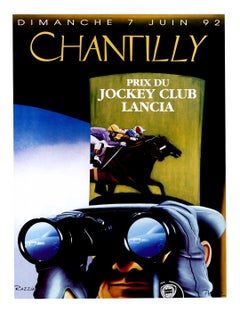
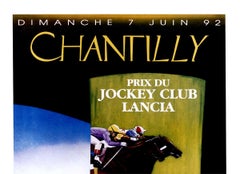
Original Chantilly Prix du Jockey Club, Lancia, 1992 linen-backed, hand-signed

Original Chantilly Prix du Jockey Club, Lancia, 1992 linen-backed, hand-signed

Chantilly Prix du Jockey Club — Luxury, Sport & Visual Elegance Experience the refined artistry of Razzia's 1992 Chantilly Prix du Jockey Club poster, a masterwork of French graphic...

Category

1990s American Modern Animal Prints

Materials

Lithograph

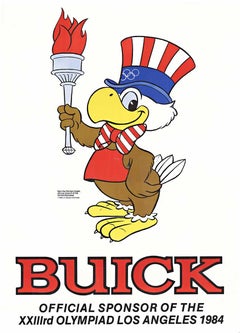
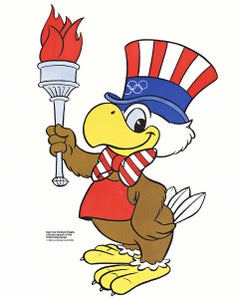
Original Sam the Olympic Eagle, XXIII Olympiad, 1984 vintage sports poster

Original Sam the Olympic Eagle, XXIII Olympiad, 1984 vintage sports poster

Located in Spokane, WA

Original "Sam the Olympic Eagle" Linen-backed poster with holding the Olympic torch for the 1984 XXIII Olympiad Los Angles. The Olympic poster was sponsored by Buick. Excellent condition original L.A. Olympics poster. Created in 1980 for the 1984 World Olympics. This 1984 Olympics poster...

Category

1980s American Modern Animal Prints

Materials

Lithograph

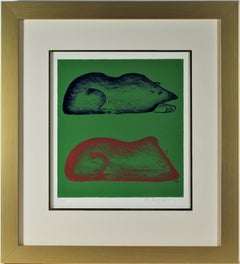
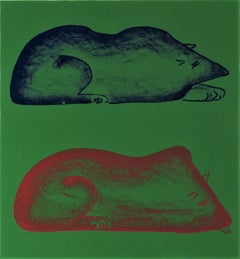
Sleeping Wolves
Sleeping Wolves

Sleeping Wolves

By Beniamino Bufano

Located in San Francisco, CA

This artwork titled "Sleeping Wolves" 1970 is an original color lithograph on B.F.K Rives paper by noted Italian/American artist Beniamino Benevenuto Bufano, 1890-1970. It is hand signed and numbered 81/100 in pencil by the artist. The image size is 12.35 x 11.35 inches, framed size is 23.75 x 21.5 inches. it is beautifully custom framed in a wooden gold frame, with gold color spacer. It is in excellent condition. About the artist: Beniamino Benvenuto Bufano was born in San-Fele, Italy on Oct. 14, 1889. At age three Bufano's family brought him to NYC where he spent his childhood and was educated by private tutors. He studied at the ASL in NYC from 1913-15, the pupil of James L. Fraser, Herbert Adams, and Paul Manship. He came to San Francisco in 1915 to work on a sculpture for the PPIE. For awhile he worked in the studio of coppersmith Dirk van Erp. He then traveled extensively for four years in France, Italy, India, and China. After returning to San Francisco in 1921, he remained there the rest of his life except for visits to the Orient and Europe. Always a radical, he lost his teaching position at San Francisco Institute of Art in 1923 because he was too modern for the conservative faculty. He later taught at UC Berkeley and the CCAC (1964-65). Henry Miller wrote of him, "He will outlive our civilization and probably be better known, better understood, both as a man and artist, five thousand years hence." His work, simple in style and monumental in scale, includes smoothly rounded animals in granite and icons sheathed in stainless steel. Only five feet tall, Bufano was a controversial, free spirit until his death in San Francisco on Aug. 16, 1970. Member: SFAA; NSS; American Artists Congress. Exh: Whitney Museum (NYC), 1917; Arden Gallery...

Category

Late 20th Century American Modern Animal Prints

Materials

Lithograph

Alexander Calder Circus Reproduction Lithograph After a Drawing

Alexander Calder Circus Reproduction Lithograph After a Drawing

By (after) Alexander Calder

Located in Surfside, FL

(after) Alexander Calder "Calder's Circus" offset lithograph on wove paper after drawings by the artist Published by Art in America and Perls gallery in 1964 (from drawings done in the 1930's) these range slightly in size but they are all about 13 X 17 inches (with minor variations in size as issued.) These have never been framed. The outer folio is not included just the one lithograph. James Sweeny from the introduction “The fame of Calder’s circus spread quickly between the years 1927 and 1930. All the Paris art world came to know it. It brought him his first great personal success. But what was more important, the circus also provided the first steps in Calder’s development as an original sculptor” Clive Gray wrote ”A visit to the studio of Alexander Calder led to the chance discovery of some hundred masterful circus drawings completed over thirty years ago. We publish, for the first time, a choice of sixteen from that group.” With signed introduction by Miro. These whimsical drawings, done in the style of wire sculpture, include acrobats, clowns, jugglers, trapeeze artists, an elephant, dog and lion. they are great. Alexander Calder is widely considered to be one of the most important American sculptors of the 20th century. He is best known for his colorful, whimsical abstract public sculptures and his innovative mobiles, kinetic sculptures powered by motors or air currents, which embraced chance in their aesthetic. Born into a family of accomplished artists, Calder's work first gained attention in Paris in the 1930s and was soon championed by the Museum of Modern Art in New York, resulting in a retrospective exhibition in 1943. Major retrospectives were also held at the Solomon R. Guggenheim Museum (1964) and the Museum of Contemporary Art, Chicago (1974). Calder’s work is in many permanent collections, most notably in the Whitney Museum of American Art, but also the Guggenheim Museum; the Museum of Modern Art; the National Gallery of Art, Washington, D.C.; and the Centre Georges Pompidou. He produced many large public works, including .125 (at JFK Airport, 1957), Pittsburgh (Carnegie International prize winner 1958, Pittsburgh International Airport) Spirale (UNESCO in Paris, 1958), Flamingo and Universe (both in Chicago, 1974), and Mountains and Clouds (Hart Senate Office Building, Washington, D.C., 1976). Although primarily known for his sculpture, Calder was a prodigious artist with a restless creative spirit, whose diverse practice included painting and printmaking, miniatures (such as his famous Cirque Calder), children’s book illustrations, theater set design, jewelry design, tapestry and rug works, and political posters. Calder was honored by the US Postal Service with a set of five 32-cent stamps in 1998, and received the Presidential Medal of Freedom, posthumously in 1977, after refusing to receive it from Gerald Ford one year earlier in protest of the Vietnam War. Calder moved to New York and enrolled at the Art Students League, studying briefly with Thomas Hart Benton, George Luks, Kenneth Hayes Miller, and John Sloan. While a student, he worked for the National Police Gazette where, in 1925, one of his assignments was sketching the Ringling Bros. and Barnum & Bailey Circus. Calder became fascinated with the action of the circus, a theme that would reappear in his later work. In 1926, Calder moved to Paris, enrolled in the Académie de la Grande Chaumière, and established a studio at 22 rue Daguerre in the Montparnasse Quarter. In June 1929, while traveling by boat from Paris to New York, Calder met his future wife, Louisa James (1905-1996), grandniece of author Henry James and philosopher William James. They married in 1931. While in Paris, Calder met and became friends with a number of avant-garde artists, including Fernand Léger, Jean Arp, and Marcel Duchamp. Cirque Calder (on view at the Whitney Museum of American Art at present) became popular with the Parisian avant-garde. He also invented wire sculpture, or "drawing in space," and in 1929 he had his first solo show of these sculptures in Paris at Galerie Billiet. Hi! (Two Acrobats) in the collection of the Honolulu Museum of Art is an early example of the artist's wire sculpture. The painter Jules Pascin, a friend of Calder's from the cafes of Montparnasse, wrote the preface to the catalog. A visit to Piet Mondrian's studio in 1930, where he was impressed by the environment-as-installation, "shocked" him into fully embracing abstract art, toward which he had already been tending. Dating from 1931, Calder’s sculptures of discrete movable parts powered by motors were christened “mobiles” by Marcel Duchamp, a French pun meaning both "motion" and "motive." At the same time, Calder was also experimenting with self-supporting, static, abstract sculptures, dubbed "stabiles" by Jean Arp in 1932 to differentiate them from mobiles. Public commissions increasingly came his way in the 1960s. Notable examples are .125 for JFK Airport in 1957, Spirale for UNESCO in Paris 1958 and Trois disques, commissioned for Expo 67 in Montreal, Quebec, Canada. Calder's largest sculpture at 25.7 meters high was El Sol Rojo, constructed outside the Aztec Stadium for the 1968 Summer Olympics "Cultural Olympiad" events in Mexico City. Many of his public works were commissioned by renowned architects; I.M. Pei commissioned his La Grande Voile (1966), a 25-ton, 40-foot high stabile for the Massachusetts Institute of Technology. Part of Calder's repertoire includes pivotal stage sets for more than a dozen theatrical productions, including Nucléa, Horizon, and most notably, Martha Graham’s Panorama (1935), a production of the Erik Satie symphonic drama Socrate (1936), and later, Works in Progress (1968). In addition to sculptures, Calder painted throughout his career, beginning in the early 1920s. He picked up his study of printmaking in 1925, and continued to produce illustrations for books and journals.As Calder’s professional reputation expanded in the late 1940s and 1950s, so did his production of prints. Masses of lithographs based on his gouache paintings hit the market, and deluxe editions of plays, poems, and short stories illustrated with fine art prints by Calder became available for sale. One of Calder's most celebrated and unconventional undertakings was a commission from Dallas-based Braniff International Airways to paint a full-size Douglas DC-8-62 four-engined jet as a "flying canvas." Calder created over 2,000 pieces of jewelry over the course of his career, many of them as gifts for friends and relatives. For his lifelong friend Joan Miró, he set a shard of a broken porcelain vessel in a brass ring. Peggy Guggenheim received enormous silver mobile earrings and later commissioned a hammered silver headboard...

Category

1930s American Modern Animal Prints
Materials

Lithograph

Flora
Flora

Flora

By Donald Saff

Located in Middletown, NY

Etching with aquatint on white wove paper with a deckle edge, 23 1/2 x 17 1/2 inches (598 x 317 mm); sheet 30 x 22 1/2 inches (762 x 571 mm), full margins. Signed and numbered 38/50 ...

Category

Late 20th Century American Modern Animal Prints

Materials

Handmade Paper, Etching, Aquatint

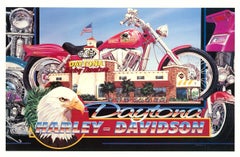
Original Harley-Davidson / Daytona motorcycles horizontal poster

Original Harley-Davidson / Daytona motorcycles horizontal poster

Located in Spokane, WA

Original Harley-Davidson Daytona Poster - Iconic Motorcycle Brand Artwork for Enthusiasts. Archival linen backed and ready to frame. The poster from the 1980s was created by the ...

Category

1980s American Modern Animal Prints

Materials

Offset

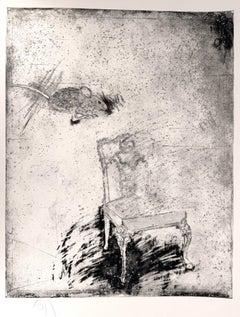
Mouse and Chair
Mouse and Chair

Mouse and Chair

By Donald Saff

Located in Middletown, NY

Etching with aquatint on white wove paper with a deckle edge, 23 1/2 x 17 1/2 inches (598 x 317 mm); sheet 30 x 22 1/2 (762 x 571 mm), full margins. Signed and numbered 20/50 in penc...

Category

Late 20th Century American Modern Animal Prints

Materials

Handmade Paper, Etching, Aquatint

Wolfman
Wolfman

Wolfman

By Donald Saff

Located in Middletown, NY

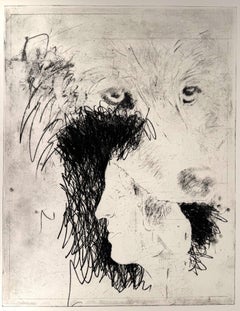
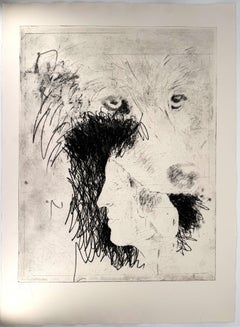
Etching with aquatint on white wove paper with a deckle edge, 23 1/2 x 17 1/2 inches (598 x 317 mm); sheet 30 x 22 1/2 inches (762 x 571 mm), full margins. Signed and numbered 4/10 i...

Category

Late 20th Century American Modern Animal Prints

Materials

Handmade Paper, Etching, Aquatint

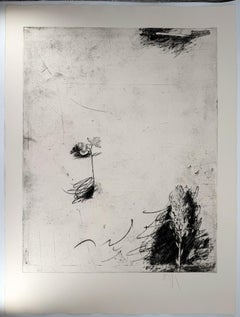
Head of a Man, Fish and Morning Glory

Head of a Man, Fish and Morning Glory

By Donald Saff

Located in Middletown, NY

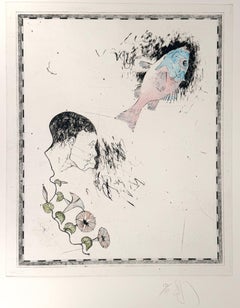
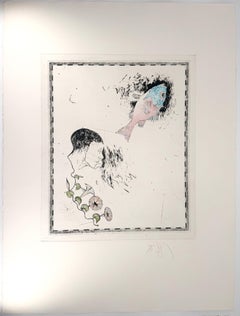
Etching with aquatint in colors on white wove paper with a deckle edge, 18 x 15 inches (457 x 381 mm); sheet 30 x 22 1/2 inches (762 x 571 mm), full margins. Signed and numbered 123/...

Category

Late 20th Century American Modern Animal Prints

Materials

Handmade Paper, Etching, Aquatint

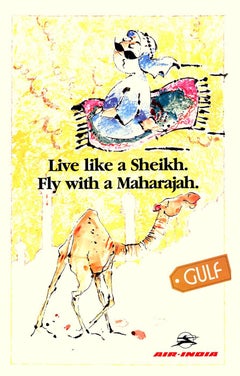
Original Air India - Live like a Sheikh Gly with a Maharajah  Travel Poster

Original Air India - Live like a Sheikh Gly with a Maharajah Travel Poster

Located in Spokane, WA

Original vintage Air-India airline poster A playful and evocative Air India advertisement featuring the iconic Maharajah reclining in effortless luxury, paired with a loosely render...

Category

1980s American Modern Animal Prints

Materials

Offset

Jon Corbino, Montana Earthquake, 1936, lithograph

Jon Corbino, Montana Earthquake, 1936, lithograph

By Jon Corbino

Located in New York, NY

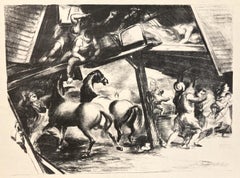
Works by Jon Corbino (1905-1964) feature drama. Here he's showing us the chaos produced by a major earthquake in rural Montana in 1936 -- an actual historical event. The horses (ear...

Category

1930s American Modern Animal Prints

Materials

Lithograph

Original Loterie nationale L'arc de Triomphe vintage poster

Original Loterie nationale L'arc de Triomphe vintage poster

By Bernard Villemot

Located in Spokane, WA

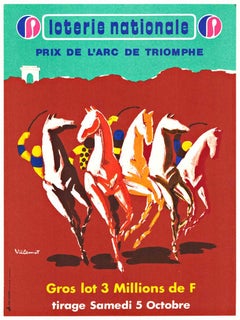
Original Loterie Nationale, Prix de L’Arc de Triomphe vintage French poster. Artist: Bernard Villemot. Archival linen backed in excellent, mint condition, ready to frame. The image features five modernism-style jockeys on racehorses for this 1974 poster...

Category

1970s American Modern Animal Prints

Materials

Lithograph

Alexander Calder Circus Reproduction Lithograph of a Drawing

Alexander Calder Circus Reproduction Lithograph of a Drawing

By (after) Alexander Calder

Located in Surfside, FL

(after) Alexander Calder "Calder's Circus" offset lithograph on wove paper a reproduction lithograph after the drawings by the artist Published by Art in America and Perls gallery in 1964 (from drawings done in the 1930's) these range slightly in size but they are all about 13 X 17 inches (with minor variations in size as issued.) These have never been framed. The outer folio is not included just the one lithograph. James Sweeny from the introduction “The fame of Calder’s circus spread quickly between the years 1927 and 1930. All the Paris art world came to know it. It brought him his first great personal success. But what was more important, the circus also provided the first steps in Calder’s development as an original sculptor” Clive Gray wrote ”A visit to the studio of Alexander Calder led to the chance discovery of some hundred masterful circus drawings completed over thirty years ago. We publish, for the first time, a choice of sixteen from that group.” With signed introduction by Miro. These whimsical drawings, done in the style of wire sculpture, include acrobats, clowns, jugglers, trapeeze artists, an elephant, dog and lion. they are great. Alexander Calder is widely considered to be one of the most important American sculptors of the 20th century. He is best known for his colorful, whimsical abstract public sculptures and his innovative mobiles, kinetic sculptures powered by motors or air currents, which embraced chance in their aesthetic. Born into a family of accomplished artists, Calder's work first gained attention in Paris in the 1930s and was soon championed by the Museum of Modern Art in New York, resulting in a retrospective exhibition in 1943. Major retrospectives were also held at the Solomon R. Guggenheim Museum (1964) and the Museum of Contemporary Art, Chicago (1974). Calder’s work is in many permanent collections, most notably in the Whitney Museum of American Art, but also the Guggenheim Museum; the Museum of Modern Art; the National Gallery of Art, Washington, D.C.; and the Centre Georges Pompidou. He produced many large public works, including .125 (at JFK Airport, 1957), Pittsburgh (Carnegie International prize winner 1958, Pittsburgh International Airport) Spirale (UNESCO in Paris, 1958), Flamingo and Universe (both in Chicago, 1974), and Mountains and Clouds (Hart Senate Office Building, Washington, D.C., 1976). Although primarily known for his sculpture, Calder was a prodigious artist with a restless creative spirit, whose diverse practice included painting and printmaking, miniatures (such as his famous Cirque Calder), children’s book illustrations, theater set design, jewelry design, tapestry and rug works, and political posters. Calder was honored by the US Postal Service with a set of five 32-cent stamps in 1998, and received the Presidential Medal of Freedom, posthumously in 1977, after refusing to receive it from Gerald Ford one year earlier in protest of the Vietnam War. Calder moved to New York and enrolled at the Art Students League, studying briefly with Thomas Hart Benton, George Luks, Kenneth Hayes Miller, and John Sloan. While a student, he worked for the National Police Gazette where, in 1925, one of his assignments was sketching the Ringling Bros. and Barnum & Bailey Circus. Calder became fascinated with the action of the circus, a theme that would reappear in his later work. In 1926, Calder moved to Paris, enrolled in the Académie de la Grande Chaumière, and established a studio at 22 rue Daguerre in the Montparnasse Quarter. In June 1929, while traveling by boat from Paris to New York, Calder met his future wife, Louisa James (1905-1996), grandniece of author Henry James and philosopher William James. They married in 1931. While in Paris, Calder met and became friends with a number of avant-garde artists, including Fernand Léger, Jean Arp, and Marcel Duchamp. Cirque Calder (on view at the Whitney Museum of American Art at present) became popular with the Parisian avant-garde. He also invented wire sculpture, or "drawing in space," and in 1929 he had his first solo show of these sculptures in Paris at Galerie Billiet. Hi! (Two Acrobats) in the collection of the Honolulu Museum of Art is an early example of the artist's wire sculpture. The painter Jules Pascin, a friend of Calder's from the cafes of Montparnasse, wrote the preface to the catalog. A visit to Piet Mondrian's studio in 1930, where he was impressed by the environment-as-installation, "shocked" him into fully embracing abstract art, toward which he had already been tending. Dating from 1931, Calder’s sculptures of discrete movable parts powered by motors were christened “mobiles” by Marcel Duchamp, a French pun meaning both "motion" and "motive." At the same time, Calder was also experimenting with self-supporting, static, abstract sculptures, dubbed "stabiles" by Jean Arp in 1932 to differentiate them from mobiles. Public commissions increasingly came his way in the 1960s. Notable examples are .125 for JFK Airport in 1957, Spirale for UNESCO in Paris 1958 and Trois disques, commissioned for Expo 67 in Montreal, Quebec, Canada. Calder's largest sculpture at 25.7 meters high was El Sol Rojo, constructed outside the Aztec Stadium for the 1968 Summer Olympics "Cultural Olympiad" events in Mexico City. Many of his public works were commissioned by renowned architects; I.M. Pei commissioned his La Grande Voile (1966), a 25-ton, 40-foot high stabile for the Massachusetts Institute of Technology. Part of Calder's repertoire includes pivotal stage sets for more than a dozen theatrical productions, including Nucléa, Horizon, and most notably, Martha Graham’s Panorama (1935), a production of the Erik Satie symphonic drama Socrate (1936), and later, Works in Progress (1968). In addition to sculptures, Calder painted throughout his career, beginning in the early 1920s. He picked up his study of printmaking in 1925, and continued to produce illustrations for books and journals.As Calder’s professional reputation expanded in the late 1940s and 1950s, so did his production of prints. Masses of lithographs based on his gouache paintings hit the market, and deluxe editions of plays, poems, and short stories illustrated with fine art prints by Calder became available for sale. One of Calder's most celebrated and unconventional undertakings was a commission from Dallas-based Braniff International Airways to paint a full-size Douglas DC-8-62 four-engined jet as a "flying canvas." Calder created over 2,000 pieces of jewelry over the course of his career, many of them as gifts for friends and relatives. For his lifelong friend Joan Miró, he set a shard of a broken porcelain vessel in a brass ring. Peggy Guggenheim received enormous silver mobile earrings and later commissioned a hammered silver headboard...

Category

1930s American Modern Animal Prints
Materials

Lithograph

American Modern animal prints for sale on 1stDibs.
Find a wide variety of authentic American Modern animal prints available for sale on 1stDibs. Works in this style were very popular during the 21st Century and Contemporary, but contemporary artists have continued to produce works inspired by this movement. If you’re looking to add animal prints created in this style to introduce contrast in an otherwise neutral space in your home, the works available on 1stDibs include elements of purple, orange, green, red and other colors. Many Pop art paintings were created by popular artists on 1stDibs, including Carol Wax, Shane Russeck, Beniamino Bufano, and Alfred Bendiner. Frequently made by artists working with Lithograph, and Engraving and other materials, all of these pieces for sale are unique and have attracted attention over the years. Not every interior allows for large American Modern animal prints, so small editions measuring 1.5 inches across are also available. Prices for animal prints made by famous or emerging artists can differ depending on medium, time period and other attributes. On 1stDibs, the price for these items starts at $36 and tops out at $8,017, while the average work sells for $700.