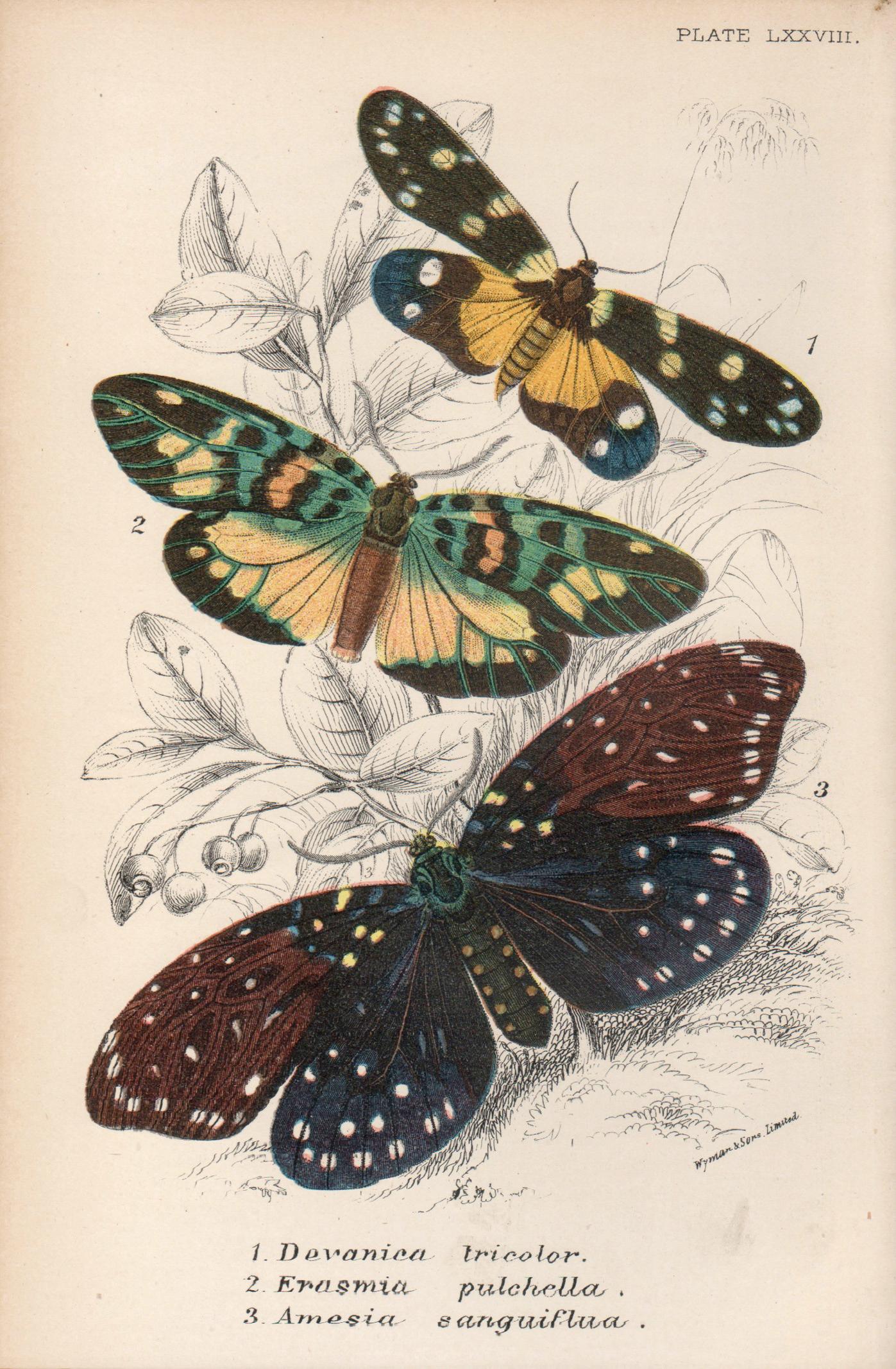
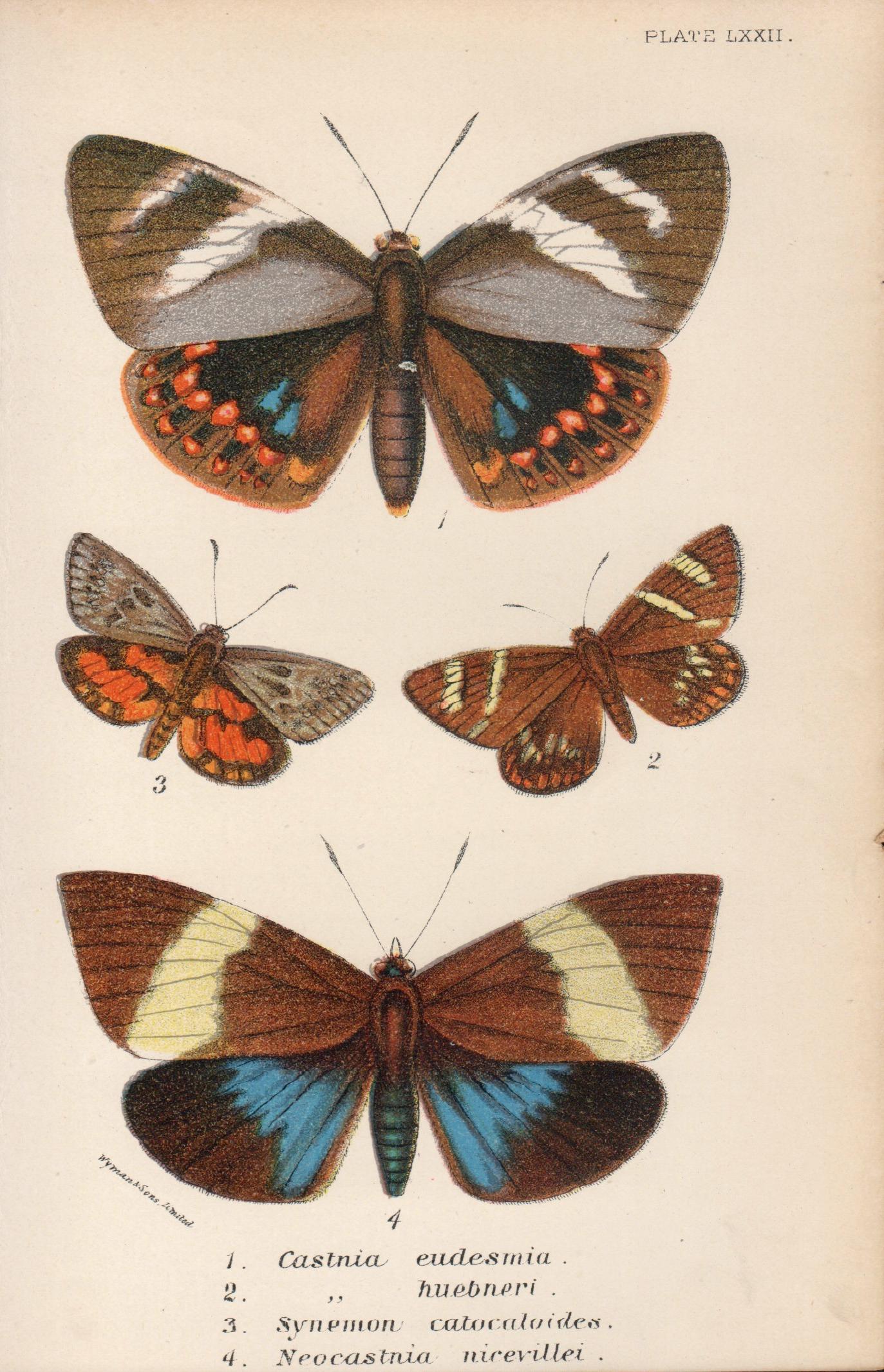
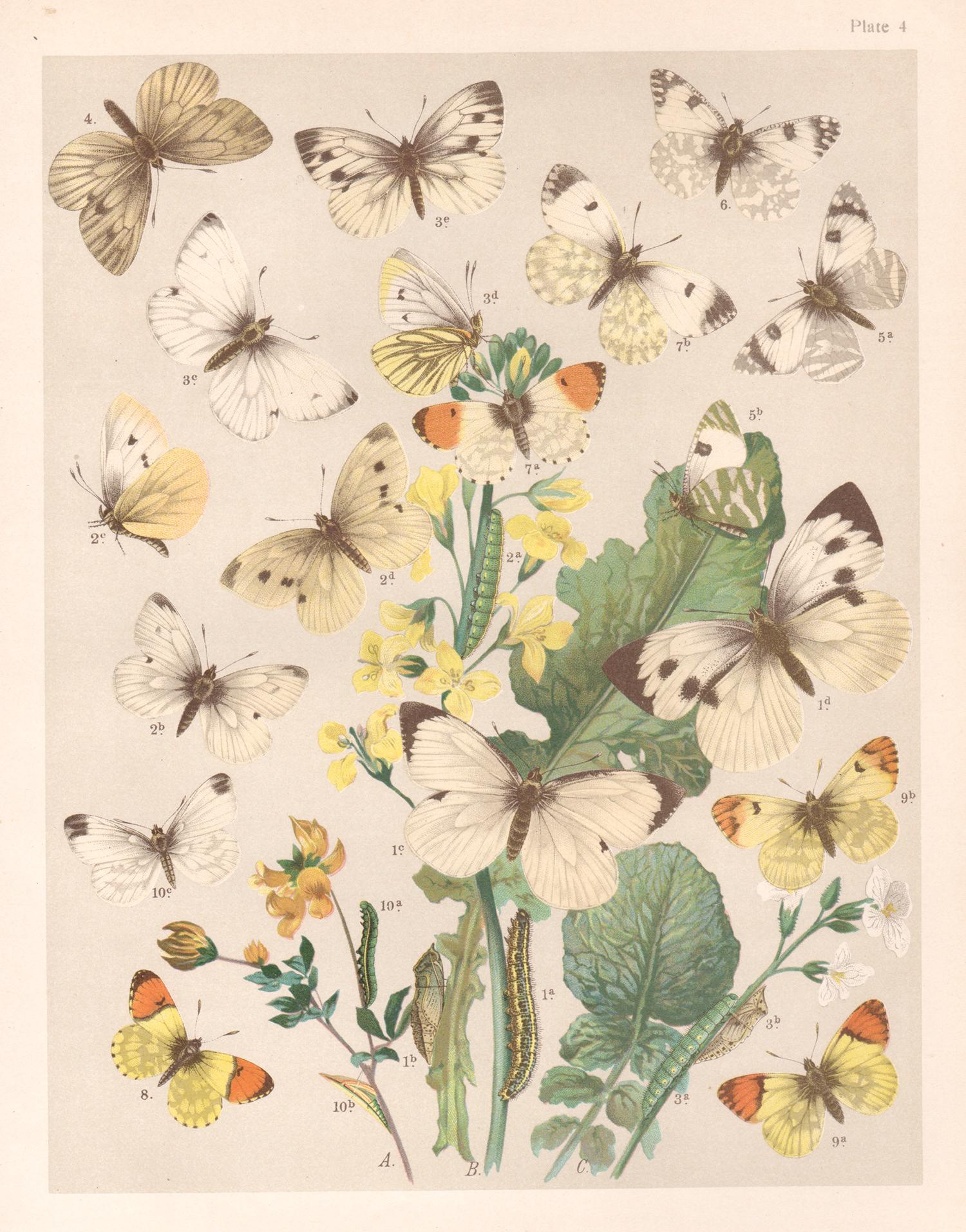
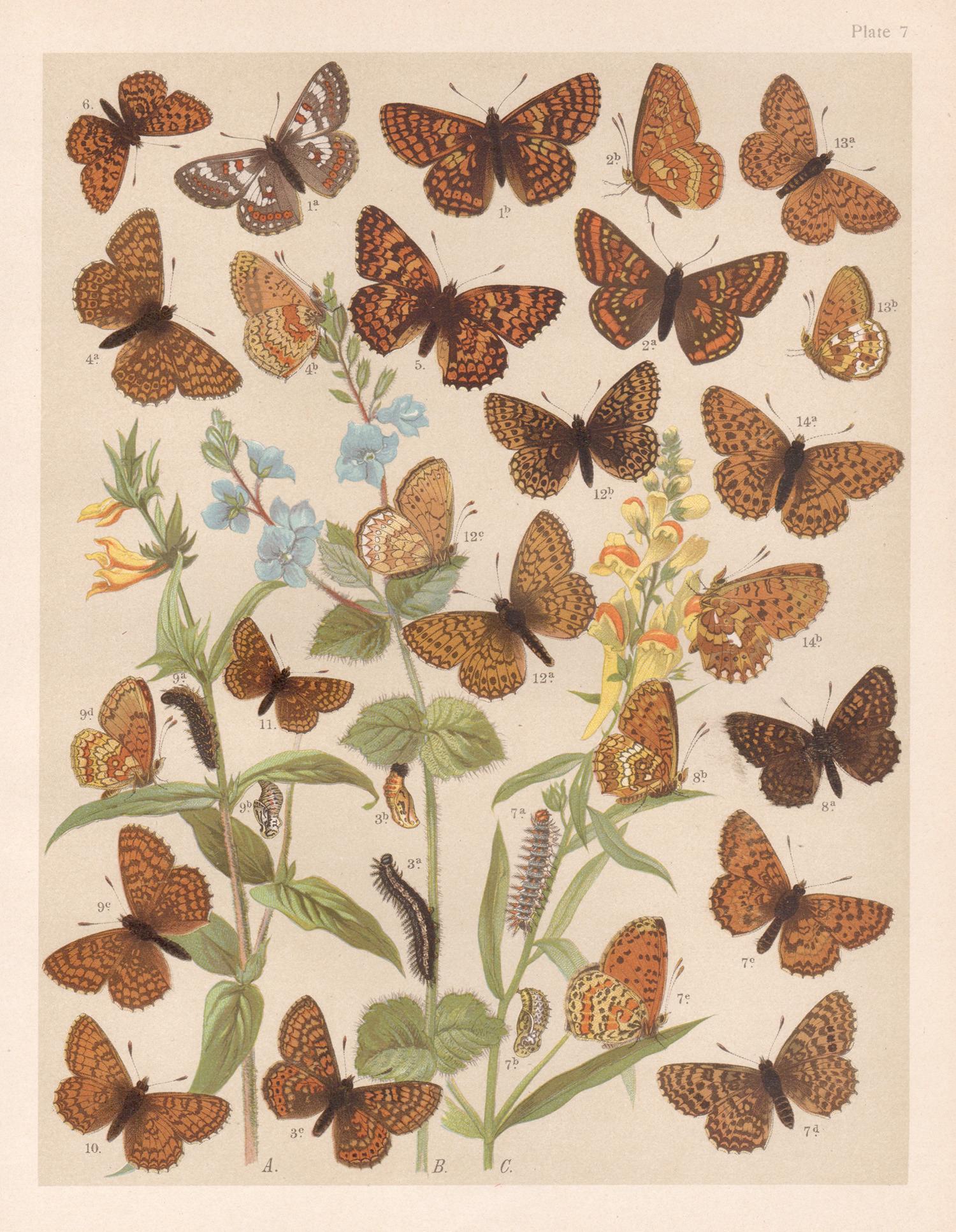
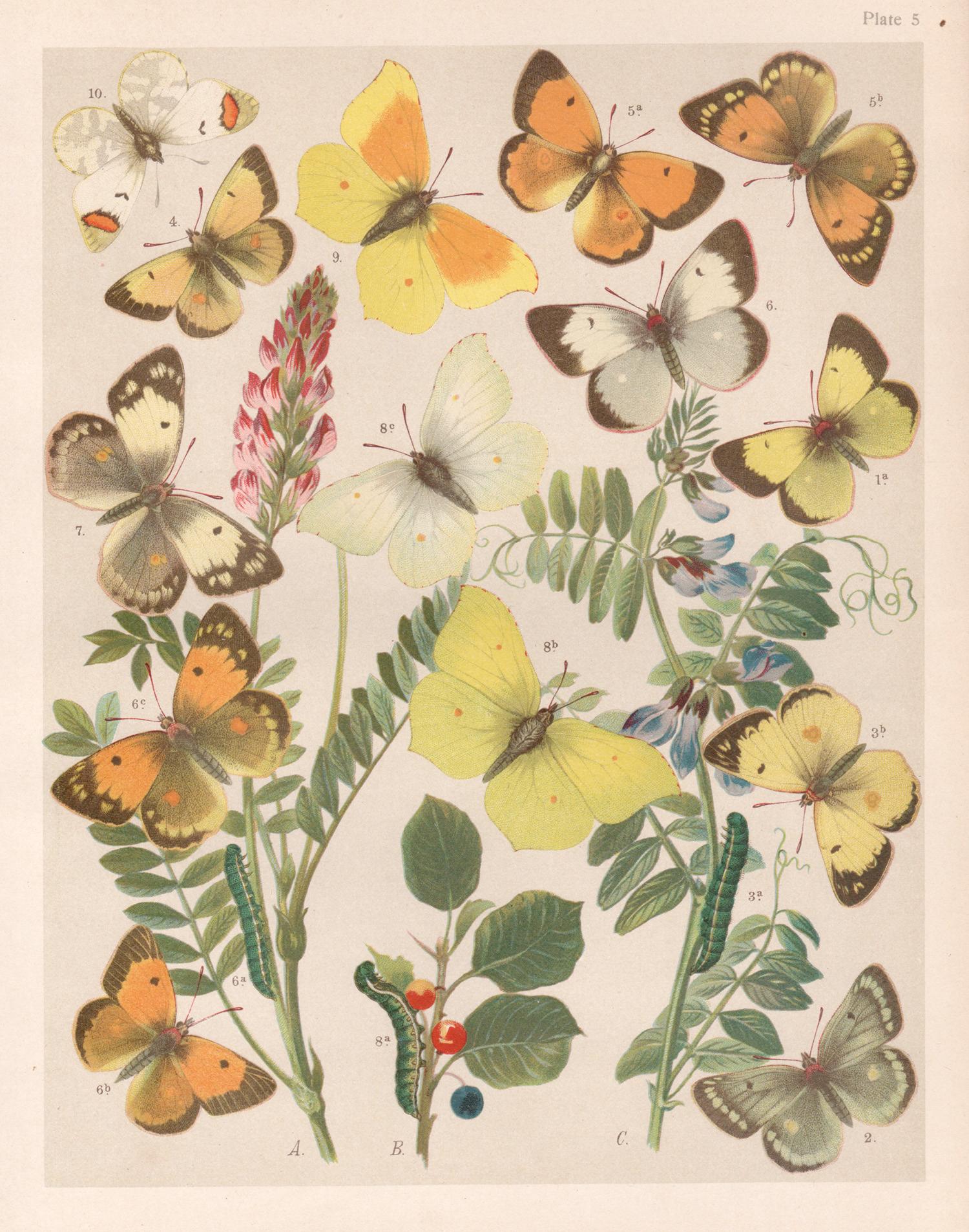
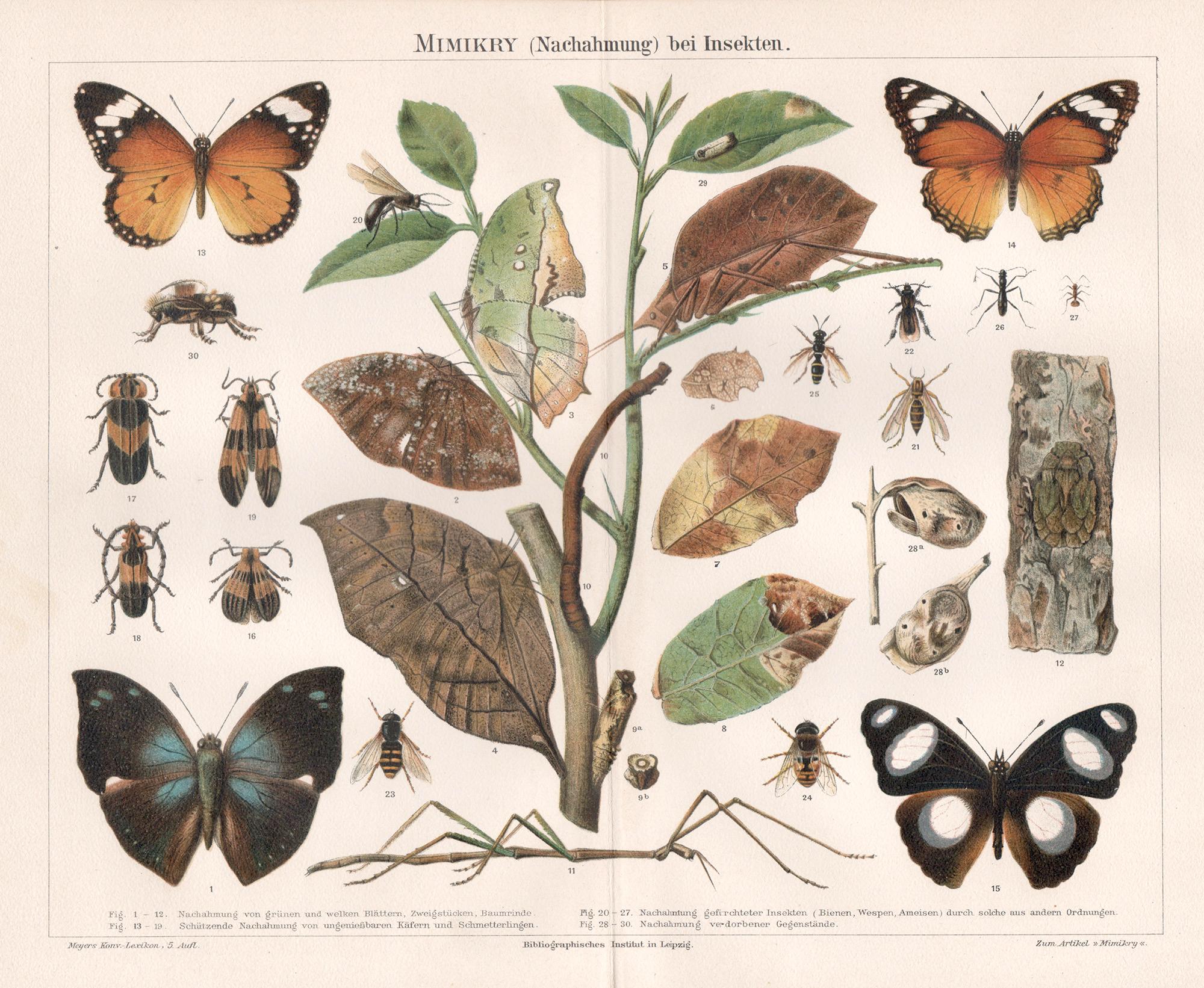
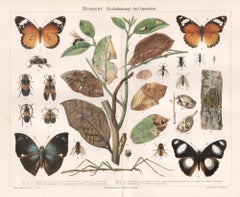
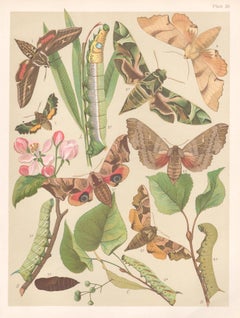
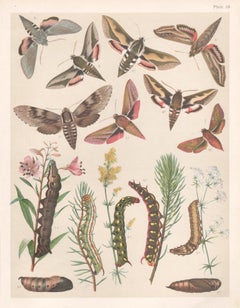
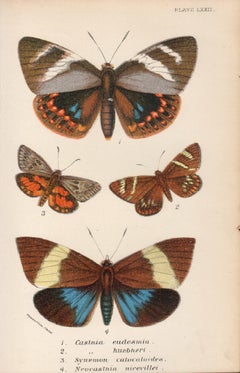
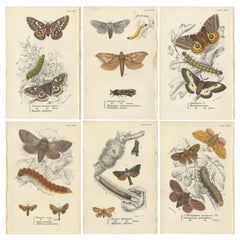
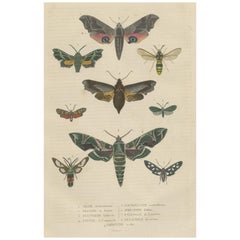
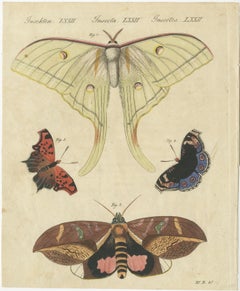
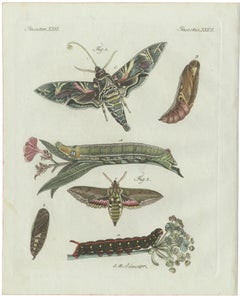
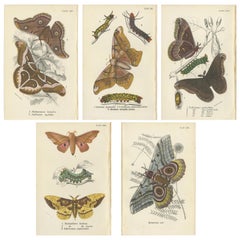
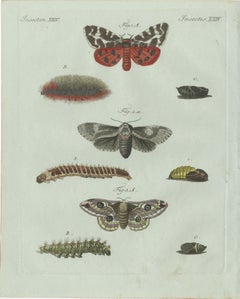
An antique hand-colored engraving. This particular illustration focuses on various moth and butterfly species, showcasing their wing patterns and body shapes in vibrant colors and with a high level of detail.
The different specimens are numbered and named at the bottom, likely corresponding to their scientific names, which are partially legible and written in French. These include various types of moths and butterflies with distinct markings, such as eye-like spots on their wings, which are often used in nature as a form of mimicry or to ward off predators.
The artistic style is consistent with scientific illustrations of the 19th century, aimed at providing an accurate representation of the insects for study and reference. The paper shows signs of aging, indicating the historical value of the print. This type of illustration would have been a vital educational tool at the time, combining scientific interest with an appreciation for the beauty of these creatures. The illustrator has captured both the structural and aesthetic qualities of the insects, which would have been important for both scientific taxonomy and for those with a general interest in natural history.
The image appears to be a caption section from an antique hand-colored engraving, listing the names of various moth and butterfly species. The names are in French and are likely to correspond to the illustrations of the specimens on the main engraving. Here's the list of the species with a description based on the names provided:
1. **SÉSIE freloniforme**: This is likely a species of clearwing moth, which mimics the appearance of a hornet or wasp (hence "freloniforme", resembling a hornet). Clearwing moths are known for their transparent wings and mimicry for defense against predators.
2. **PROCRIS du Statice**: This could refer to a species of moth or butterfly associated with sea-lavender plants...
Category
Antique 1840s French Prints