Want more images or videos?
Request additional images or videos from the seller
1 of 13

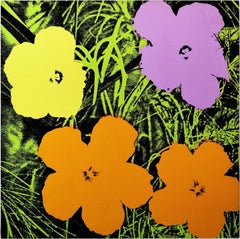
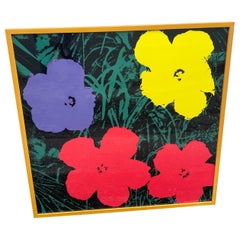
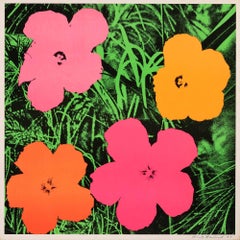
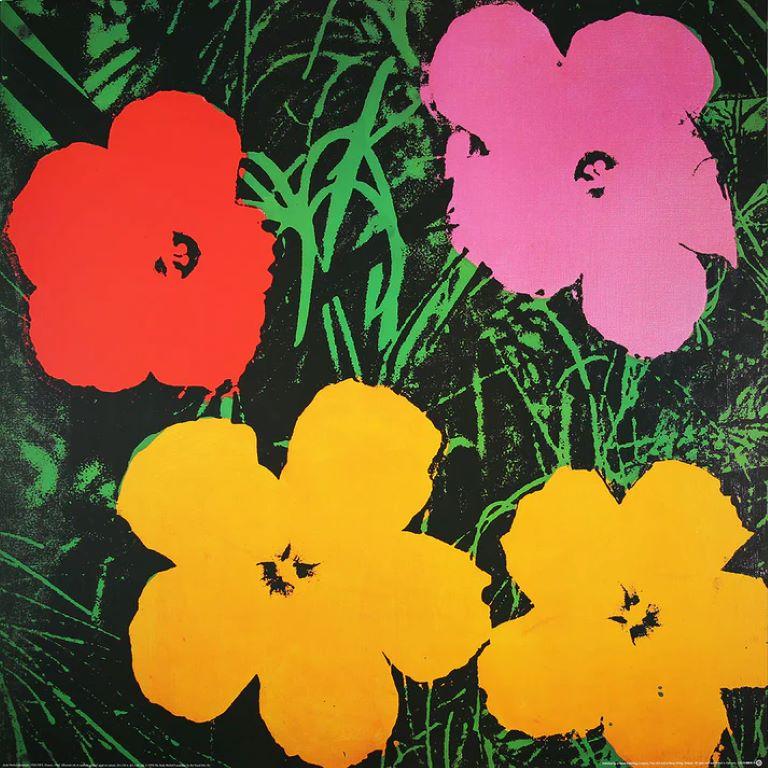
Flowers, (After) Andy Warhol -Pop Art, Tapestry, Edition, Contemporary, Design

Circa 1980

$30,974.07
$50,034.3438% Off
£22,706.60
£36,752.6738% Off
€26,000
€42,00038% Off
CA$42,665.23
CA$69,043.3338% Off
A$43,211.59
A$70,278.9838% Off
CHF 24,822.87
CHF 40,004.1538% Off
MX$523,996.11
MX$848,319.6338% Off
NOK 287,942.31
NOK 466,470.2838% Off
SEK 293,092.15
SEK 472,094.6438% Off
DKK 198,265.03
DKK 320,253.0838% Off

About the Item

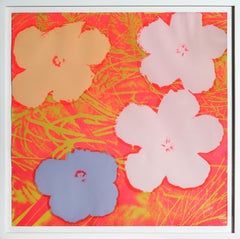
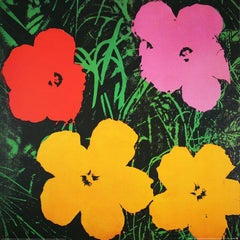
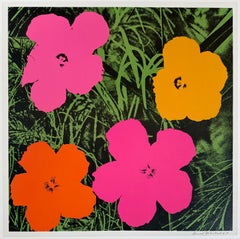
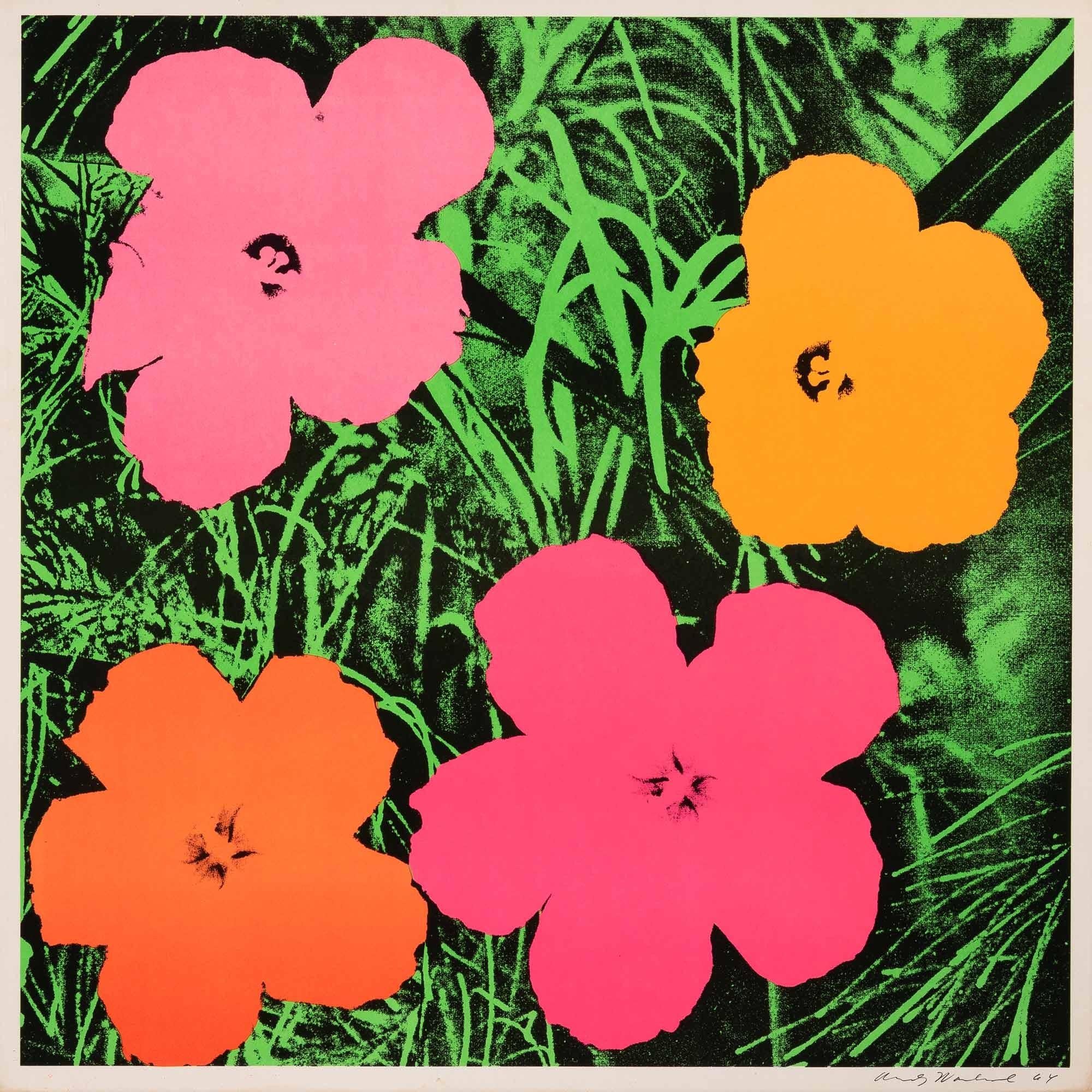
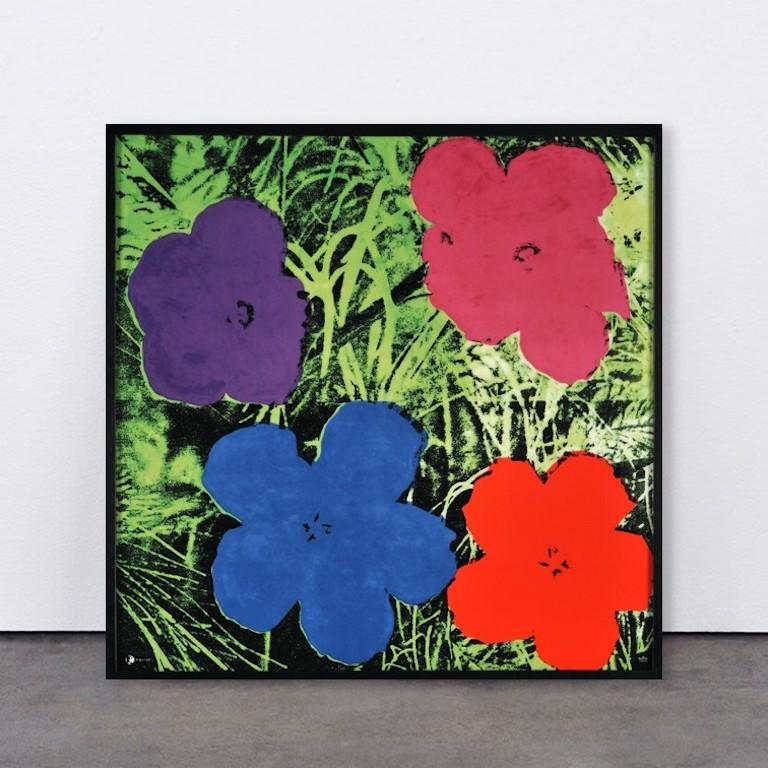
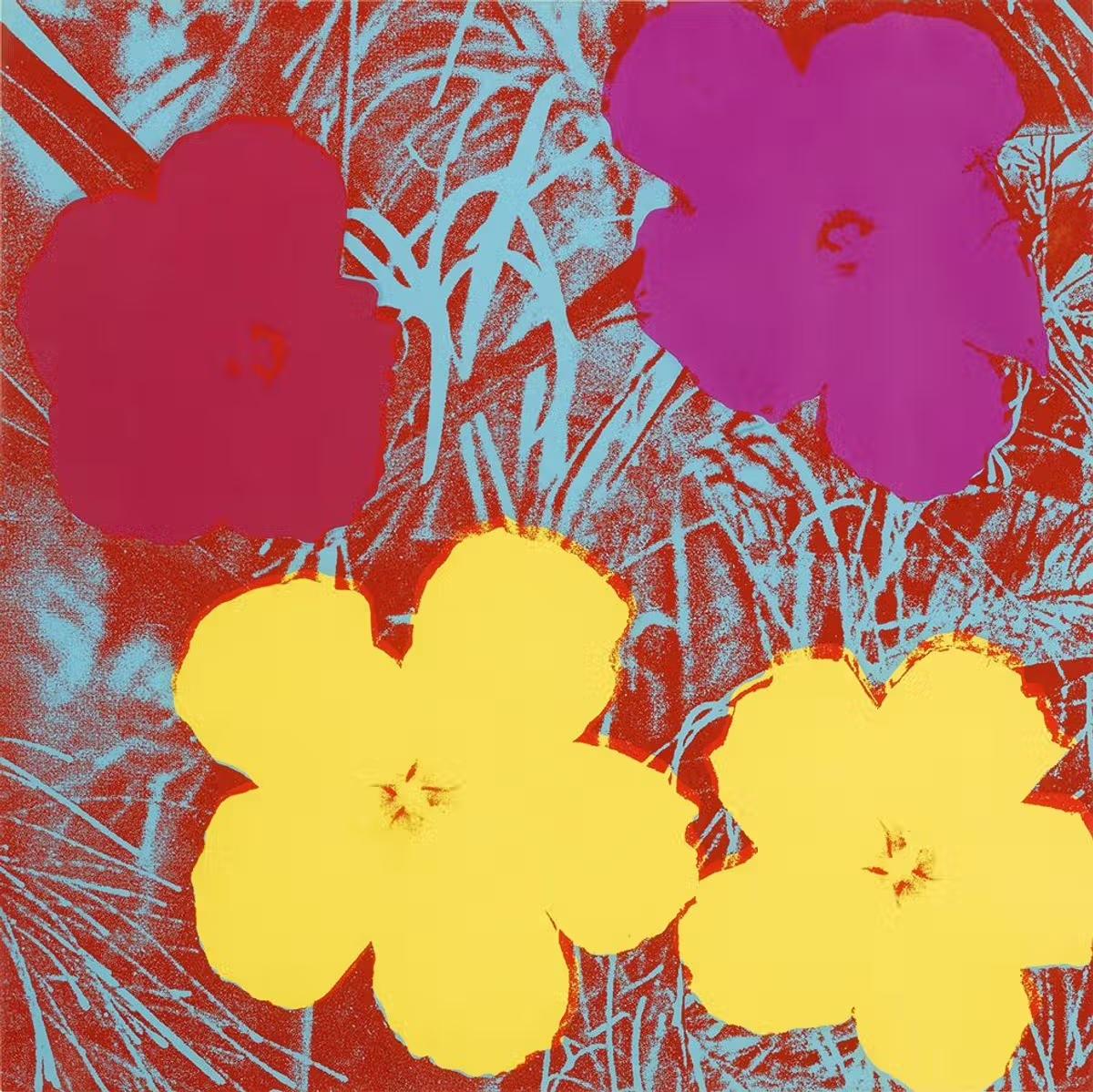
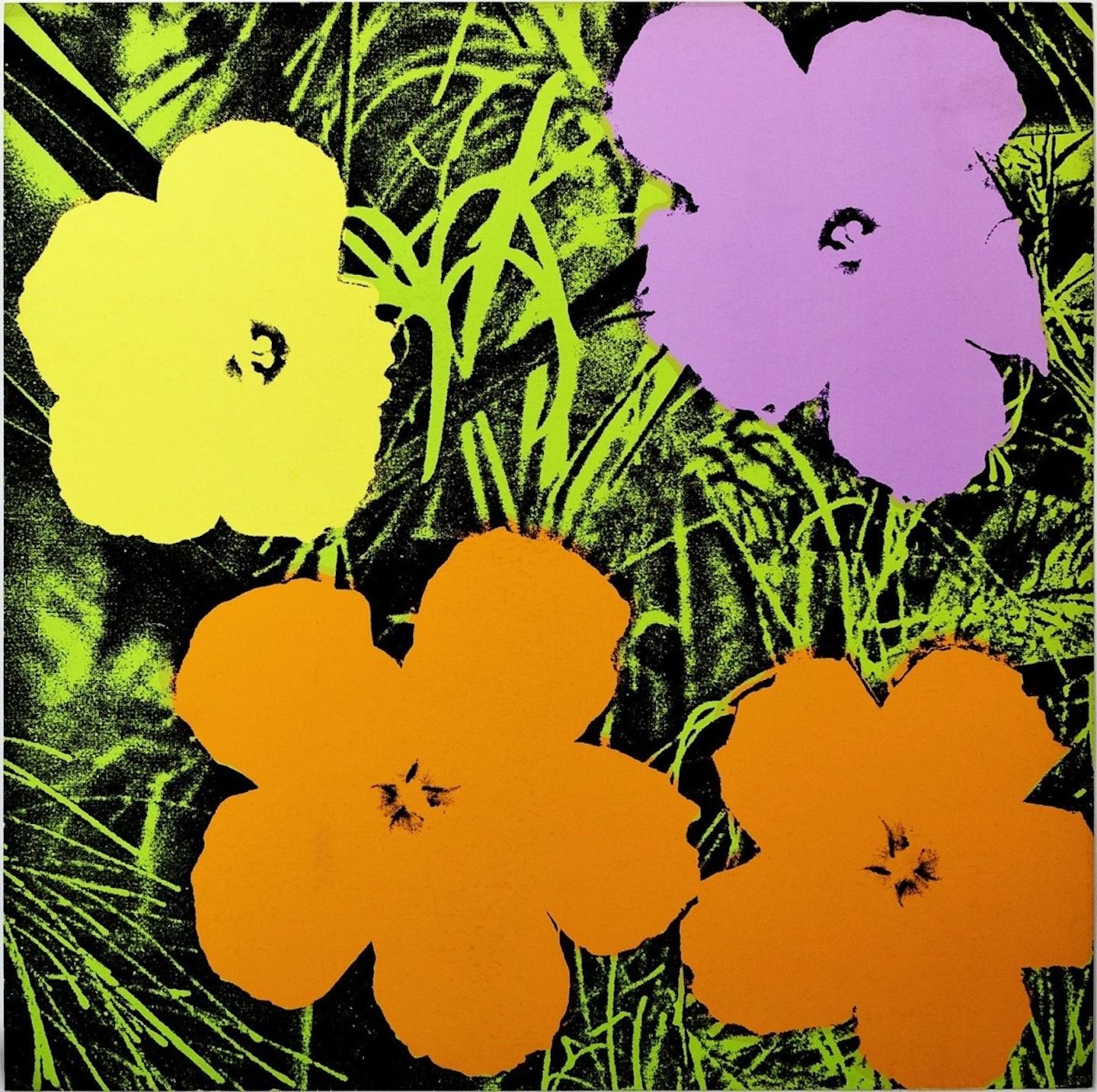
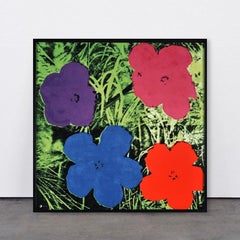
(After) Andy Warhol Flowers, 1968 Hand Woven Wool Tapestry 183 x 183 cm (72 x 72 in) Edition of 20 With the knotted name ‘ANDY WARHOL’ lower right and the embroidered annotation ‘WARHOL ©’ on the reverse Published by Modern Master Tapestries, NY Throughout art history, the flower and its symbolism have been a subject matter for many renowned artists. Andy Warhol explored the qualities of the flower image through his Pop Art prism in the Flower series of 1964, thus creating cartoon-like symbols that would be instantly recognized. The 1964 Flower series became one of his most iconic and successful works. Based on a discovered photograph of hibiscus blossoms, Warhol drenched the flowers’ floppy shapes with a variation of vibrant colors, transforming them into psychedelic indoor décor. Playing with traditional art historical themes, Andy Warhol gave a particular twist to this historically accepted symbol of life. The electric colors of his flowers, drawn from a darker and rich undergrowth background might be the indicator of an extreme vision of life, a life lived on the edge. Andy Warhol (1928-1987) was an American artist, a leading figure of the Pop Art movement. ​Using a variety of media materials from photographs up to computer-generated art, Warhol's works explore the relationship between artistic expression, celebrity, culture and advertisement that flourished by the 1960s. Emerging from the poverty and obscurity of an Eastern European immigrant family in Pittsburgh, Warhol became a charismatic magnet for bohemian New York. In 1960, he began to produce his first canvases depicting Popeye and Dick Tracy. After Marilyn Monroe’s death in August 1962, he started working from snapshots of the star’s already legendary face, which had been widely distributed by the world’s press. His choice of subjects clearly relates to an obsession with demise – his Marilyns, his Ten Lizies (created when the actress Elizabeth Taylor was seriously ill), and also his Elvis. Part of the “Death and Disaster” series, Andy Warhol´s Marilyn Monroes are undoubtedly iconic portraits of our era, exploring as they do the artist’s fascination for images of death and beauty. He worked across many media as a painter, printmaker, illustrator, film-maker, and writer, and produced many world-famous series. Andy Warhol Flower´s series reinterprets a traditional motif spanning the history of art, while Warhol´s Cambell´s Soup Can series represents the mass-produced, printed advertisements that inspired him since his childhood. Towards the end of 1962, the artist turned to the photo-silkscreen process, which became his signature medium. From 1963 up until 1968, the year in which he was shot, Warhol – surrounded by assistants in his studio The Factory – took the industrial character of his work to its climax. Warhol has been the subject of numerous retrospective exhibitions and books, as well as feature and documentary films. The Andy Warhol Museum in his native city, Pittsburgh, is the largest museum in the United States dedicated to a single artist. Andy Warhol´s artworks are some of the most influential works of art of the second half of the twentieth century, representing the most recognizable images ever produced. “Cheerful and refreshing Flowers series includes some of Warhol's most lushly colored, decorative, and ingratiating works.„ —Andy Warhol
  • Creation Year:
    Circa 1980
  • Dimensions:
    Height: 72.05 in (183 cm)Width: 72.05 in (183 cm)Depth: 1.19 in (3 cm)
  • Medium:
  • Movement & Style:
  • After:
    Andy Warhol (1928 - 1987, American)
  • Period:
  • Condition:
  • Gallery Location:
    Zug, CH
  • Reference Number:
    1stDibs: LU1562211179452

More From This Seller

View All
Flowers, After Andy Warhol -Pop Art, Enamel on porcelain, Contemporary, Edition

Flowers, After Andy Warhol -Pop Art, Enamel on porcelain, Contemporary, Edition

By Andy Warhol

Located in Zug, CH

Andy Warhol Flowers, 1980 Enamel on porcelain Edition of 49 51 x 51 x 2 cm (20 x 20 x 0.7 in) In wooden box. Screenprint on porcelain in wooden frame signed in the glazing, numbered on label verso In mind condition. The piece is offered unframed. Throughout art history, the flower and its symbolism have been a subject matter for many renowned artists. Andy Warhol explored the qualities of the flower image through his Pop Art prism in the Flower series of 1964, thus creating cartoon-like symbols that would be instantly recognised. The 1964 Flower series became one of his most iconic and successful works.
 Based on a discovered photograph of hibiscus blossoms, Warhol drenched the flowers’ floppy shapes with a variation of vibrant colours, transforming them into psychedelic indoor décor. Playing with traditional art historical themes, Andy Warhol gave a particular twist to this historically accepted symbol of life. The electric colours of his flowers, drawn from a darker and rich undergrowth background might be the indicator of an extreme vision of life, a life lived on the edge. Andy Warhol (1928-1987) was an American artist, a leading figure of the Pop Art movement. ​Using a variety of media materials from photographs up to computer-generated art, Warhol's works explore the relationship between artistic expression, celebrity, culture and advertisement that flourished by the 1960s. Emerging from the poverty and obscurity of an Eastern European immigrant family in Pittsburgh, Warhol became a charismatic magnet for bohemian New York. In 1960, he began to produce his first canvases depicting Popeye and Dick Tracy. After Marilyn Monroe’s death in August 1962, he started working from snapshots of the star’s already legendary face, which had been widely distributed by the world’s press. His choice of subjects clearly relates to an obsession with demise – his Marilyns, his Ten Lizies (created when the actress Elizabeth Taylor was seriously ill), and also his Elvis. Part of the “Death and Disaster” series, Andy Warhol´s...

Category

20th Century Pop Art Figurative Prints

Materials

Enamel

Blue Elvis -Contemporary Art, Editions, Andy Warhol, Framed, Enamel, Pop Art

Blue Elvis -Contemporary Art, Editions, Andy Warhol, Framed, Enamel, Pop Art

By (after) Andy Warhol

Located in Zug, CH

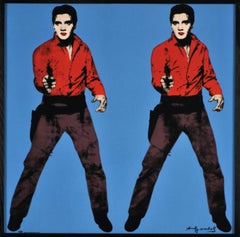
ANDY WARHOL (after) Blue Elvis Edition of 49 From Rosenthal Studio Line 51 x 51 cm (20.1 x 20.1 in.) Signed in glaze (fac-simile signature), numbered on the reverse on label In woode...

Category

21st Century and Contemporary Contemporary More Art

Materials

Porcelain, Digital

Portraits of Landscapes (Portfolio of 8) by Marc Quinn

Portraits of Landscapes (Portfolio of 8) by Marc Quinn

By Marc Quinn

Located in Zug, CH

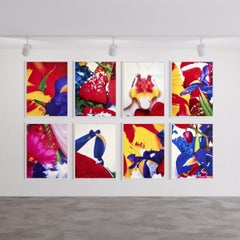
Marc Quinn Portraits of Landscapes (Portfolio of 8) 2007 Pigment Print 100 × 75 cm (39.4 × 29.5 in) Signed and numbered Edition of 59 In excellent condition PLEASE NOTE: Edition num...

Category

Early 2000s Contemporary Landscape Prints

Materials

Pigment

Yellow Mimosa, July 23, 2015 - Contemporary, 21st Century, Screenprint

Yellow Mimosa, July 23, 2015 - Contemporary, 21st Century, Screenprint

By Donald Sultan

Located in Zug, CH

Donald Sultan, Yellow Mimosa, July 23, Screenprint in colors with yellow flocking on 4-ply museum board. Edition of 50. 81.3 x 114.3 cm (32.2 x 45.5 in) Signed, dated, numbered, and titled accompanied by Certificate of Authenticity Published by Lococo Fine Art, St. Louis. In mint condition, as acquired from the publisher PLEASE NOTE: Edition numbers could vary from the one shown in the pictures. The piece is offered unframed. Sultan’s work incorporates basic geometric and organic forms with a formal purity that is both subtle and monumental. His images are weighty, with equal emphasis on both negative and positive areas. His powerfully sensual, fleshy object representations are rendered through a labor-intensive and unique method. "The image in the front is very fragile, but it conveys the loaded meaning of everything that is contained in the painting." — Donald Sultan This print of flowing yellow mimosa blossoms, which shows all the textural qualities that the artist excels at in his printmaking projects, is made with several layers of color silkscreen, some matte finish inks, and some glossy. Mimosas depicts the flowering plant Mimosa, which is also called the sensitive plant or sleepy plant. Sultan seems to have taken inspiration from the name with the dark black, chalky stems flowing down and covering most of the page and the clusters of white spots symbolizing the blossoms. DONALD SULTAN Donald Sultan (born 1951, Asheville, US) is a distinguished painter, sculptor, and printmaker, who rose to prominence in the late 1970s as part of the “New Image” movement. He is best known for the use of abstracted, geometric black forms against organic areas of bright color. Donald Sultan (USA, born 1951) is a distinguished painter, sculptor, and printmaker, who rose to prominence in the late 1970s as part of the New Yorker “New Image” movement. He has a unique artistic method and innovative approach to traditional subject matter. Known as Abstract Representation, Donald Sultan´s art is characterized by the use of geometric black forms set against organic areas of bright color, thus bringing an abstract sensibility to his iconographic images of still life. Throughout his career he has revisited and reinvented still life, using images of lemons, poppies, playing cards, fruits, flowers, and other objects. Donald Sultan’s Lemons...

Category

2010s Contemporary Figurative Prints

Materials

Screen

You May Also Like

Flowers (FS II.69)

Flowers (FS II.69)

By Andy Warhol

Located in Long Island City, NY

Andy Warhol was the most prolific of all pop artists and used repeat motifs of elements of pop culture regularly in his work. This screenprint, signed and dated in ballpoint pen and numbered with a rubber stamp...

Category

1970s Pop Art Abstract Prints

Materials

Screen

Flowers by Andy Warhol (1964) Art Print – Iconic Pop Art Design

Flowers by Andy Warhol (1964) Art Print – Iconic Pop Art Design

By (after) Andy Warhol

Located in Winterswijk, NL

A bold and vibrant reproduction of Andy Warhol’s iconic 1964 Flowers series, this striking artwork is printed on heavy art paper, showcasing the enduring brilliance of Pop Art. The c...

Category

1960s Pop Art Abstract Prints

Materials

Paper

Flowers

Flowers

By Andy Warhol

Located in New York, NY

One of the earliest examples of Andy Warhol’s iconic imagery, Flowers, 1964 was printed as an offset lithograph in colors, and is hand-signed and dated in ink. Measuring 23 x 23 in. ...

Category

20th Century Pop Art Prints and Multiples

Materials

Lithograph

Flowers, FS II.67

Flowers, FS II.67

By Andy Warhol

Located in Miami, FL

Technical Information: Andy Warhol Flowers, FS II.67 1970 Screenprint 36 x 36 in. Edition of 250 Signed and stamped number on verso

Category

1970s Pop Art Still-life Prints

Materials

Screen

Iconic Flowers Serigraph by Andy Warhol, 20th Century, Framed Art

Iconic Flowers Serigraph by Andy Warhol, 20th Century, Framed Art

Located in West Palm Beach, FL

Serigraph from The Iconic Flower Series by Andy Warhol. A wonderful example with vibrant colors in a wood frame.

Category

20th Century American Contemporary Art

Materials

Paper

Flowers II.6

Flowers II.6

By Andy Warhol

Located in New York, NY

1964 Offset lithograph in colors, on wove paper Sheet: 23 x 23 in. (58.4 x 58.4 cm) Edition of 300 Signed and dated in black ink, lower right

Category

1960s Pop Art Interior Prints

Materials

Lithograph, Offset