Want more images or videos?
Request additional images or videos from the seller
1 of 6

Auguste Raffet
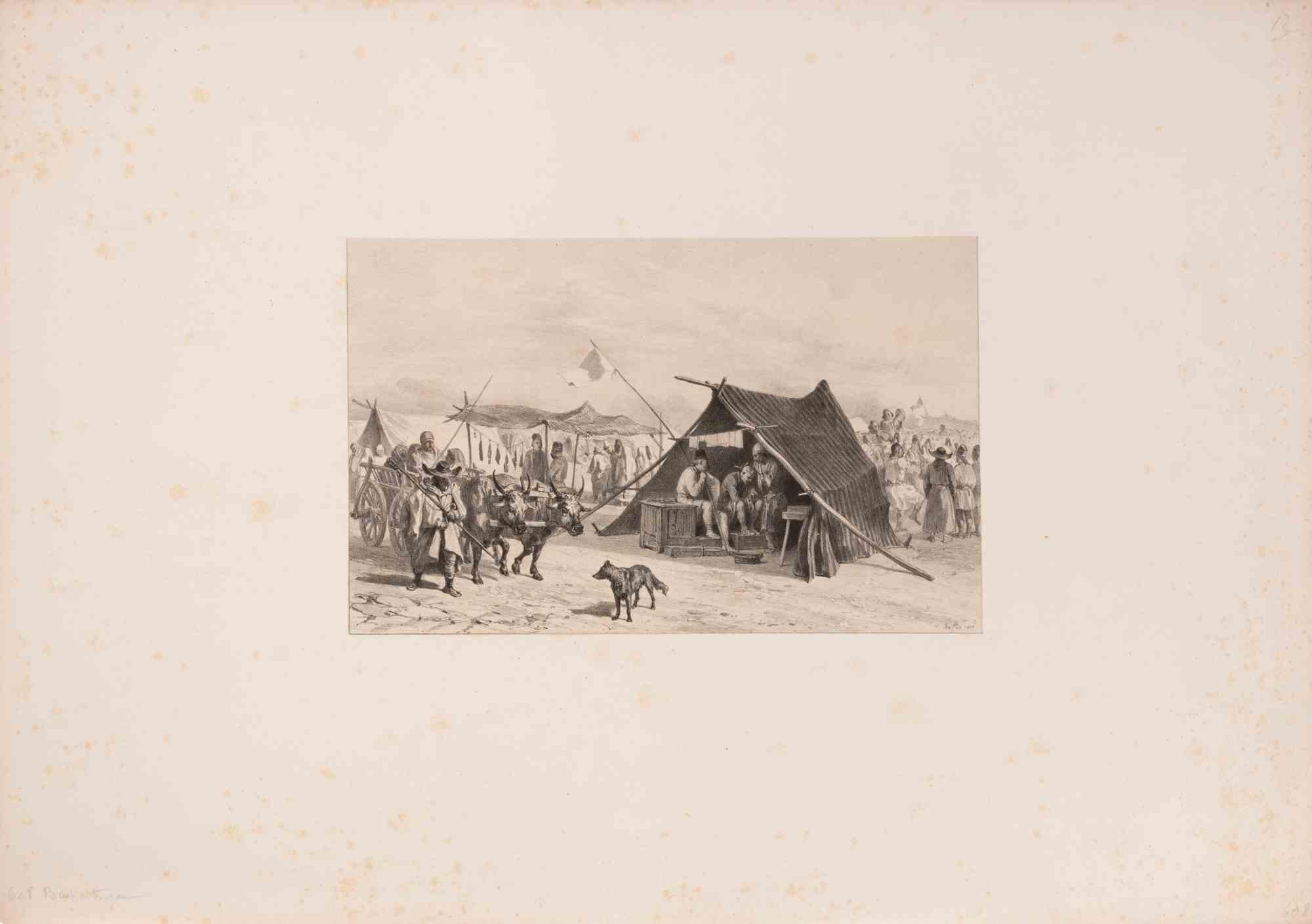
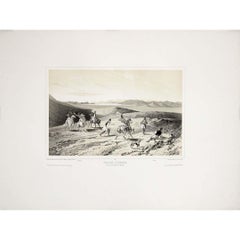
Tabagie en Orient - Lithograph by Auguste Raffet - 1838

1838

$518.68
£384.45
€440VAT Included
CA$723.58
A$733.94
CHF 419.10
MX$8,888.31
NOK 4,933.86
SEK 4,917.49
DKK 3,354.81

About the Item

Lithograph on wove paper. Signed and dated in the plate. Image dimension 19-5x28 cm. This finely detailed lithograph by Auguste Raffet captures an Orientalist interior scene, portraying a group of men gathered in a traditional tabagie (smoking room). Arranged in a circle, they recline on low divans around a central brazier, their long pipes resting on the floor in front of them. Raffet’s sensitive treatment of facial expressions and body language imbues the scene with a sense of calm intimacy, while the play of light and shadow highlights the richness of the cultural setting. Raffet, a master lithographer and a pupil of Nicolas-Toussaint Charlet, was celebrated for his vivid depictions of military campaigns and travel impressions. His Orientalist subjects, inspired by the 19th-century fascination with the East, remain among his most atmospheric works. Condition: Slight overall toning with scattered foxing, particularly in the margins; image well preserved with strong contrasts. Wide margins present.
  • Creator:
  • Creation Year:
    1838
  • Dimensions:
    Height: 15.75 in (40 cm)Width: 22.05 in (56 cm)Depth: 0.04 in (1 mm)
  • Medium:
  • Movement & Style:
  • Period:
  • Condition:
    Insurance may be requested by customers as additional service, contact us for more information.
  • Gallery Location:
    Roma, IT
  • Reference Number:
    Seller: T-1579871stDibs: LU650317273682

More From This Seller

View All
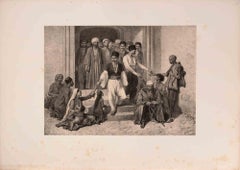
Tatars Faisant des Aumônes - Lithograph by Auguste Raffet - 1840

Tatars Faisant des Aumônes - Lithograph by Auguste Raffet - 1840

By Auguste Raffet

Located in Roma, IT

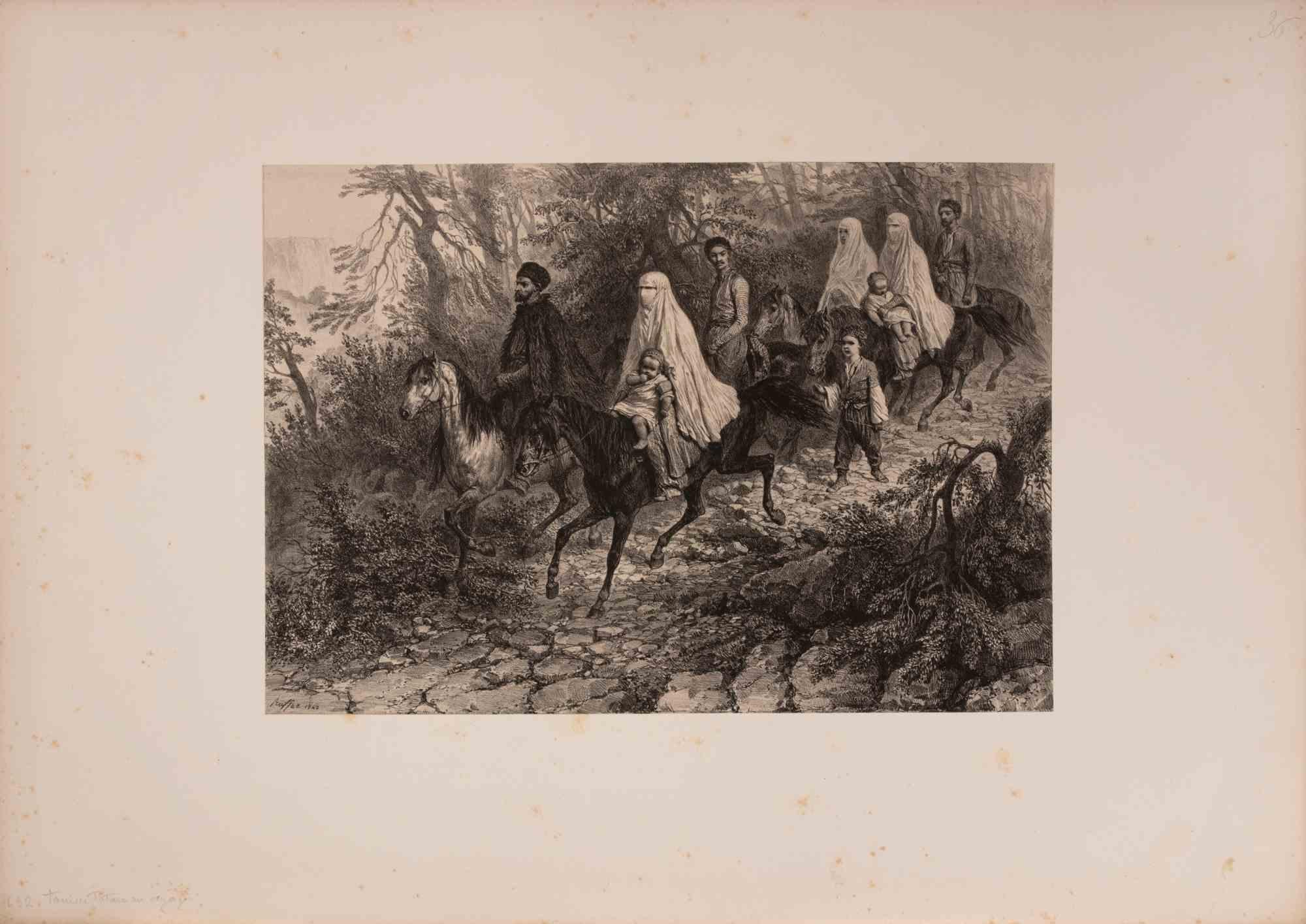
Lithograph on paper realized by Auguste Raffet in 1840. It is part of the suite "Crimée". The lithograph shows a group of Tatar men exiting a mosque or religious building, surround...

Category

1840s Modern Figurative Prints

Materials

Lithograph

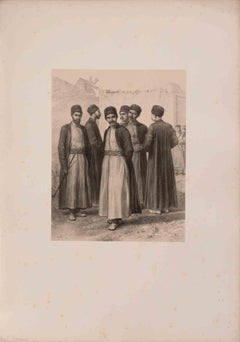
Les Karamans - Lithograph by Auguste Raffet - 1844

Les Karamans - Lithograph by Auguste Raffet - 1844

By Auguste Raffet

Located in Roma, IT

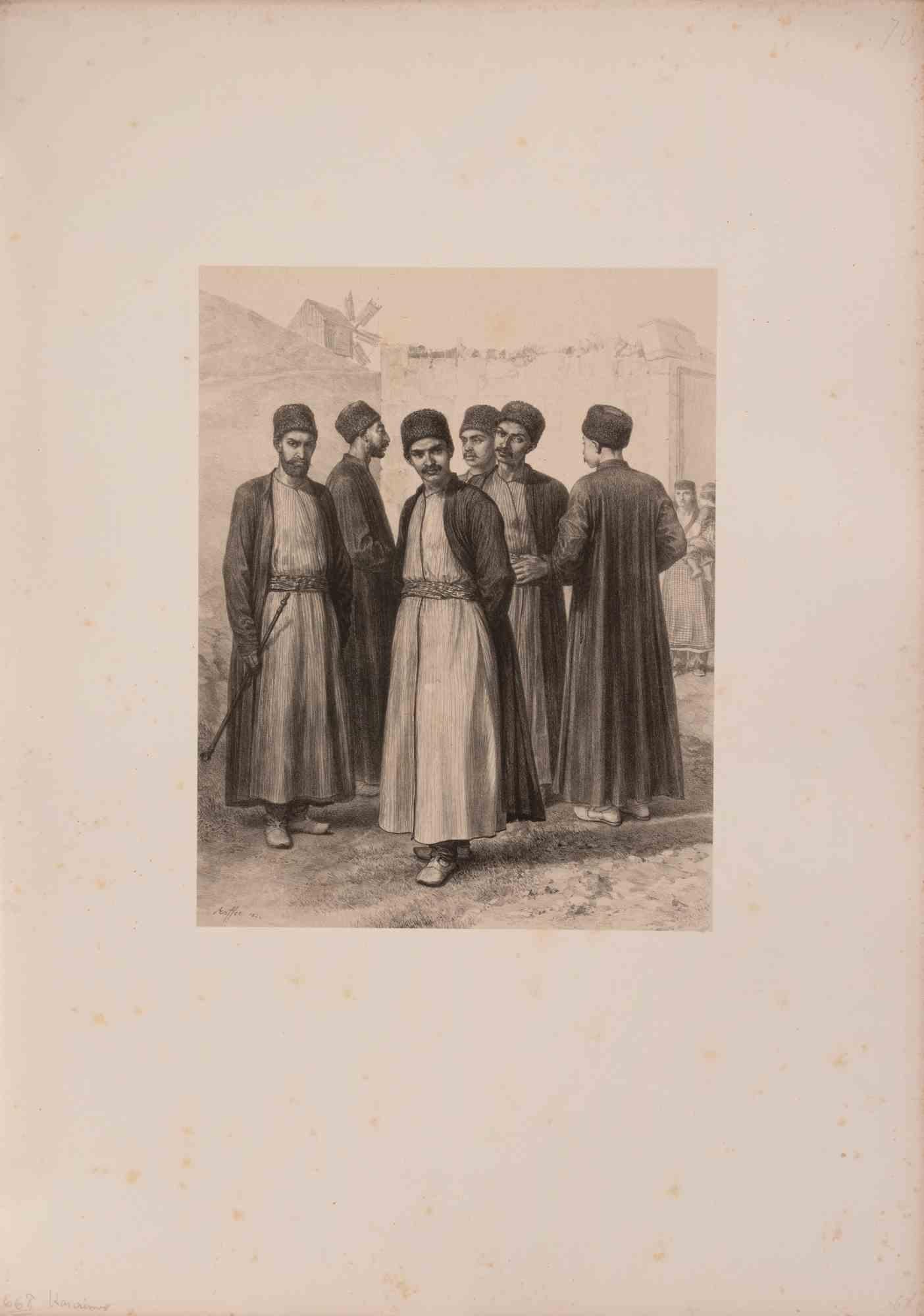
Lithograph on wove paper realized by Raffet in 1844. Signed and dated in the plate. Image dimension: 28x22 cm. This finely executed lithograph by Auguste Raffet depicts a group of ...

Category

1840s Modern Figurative Prints

Materials

Lithograph

Femmes Tatars en Bessarabie - Lithograph by Auguste Raffet - 1842

Femmes Tatars en Bessarabie - Lithograph by Auguste Raffet - 1842

By Auguste Raffet

Located in Roma, IT

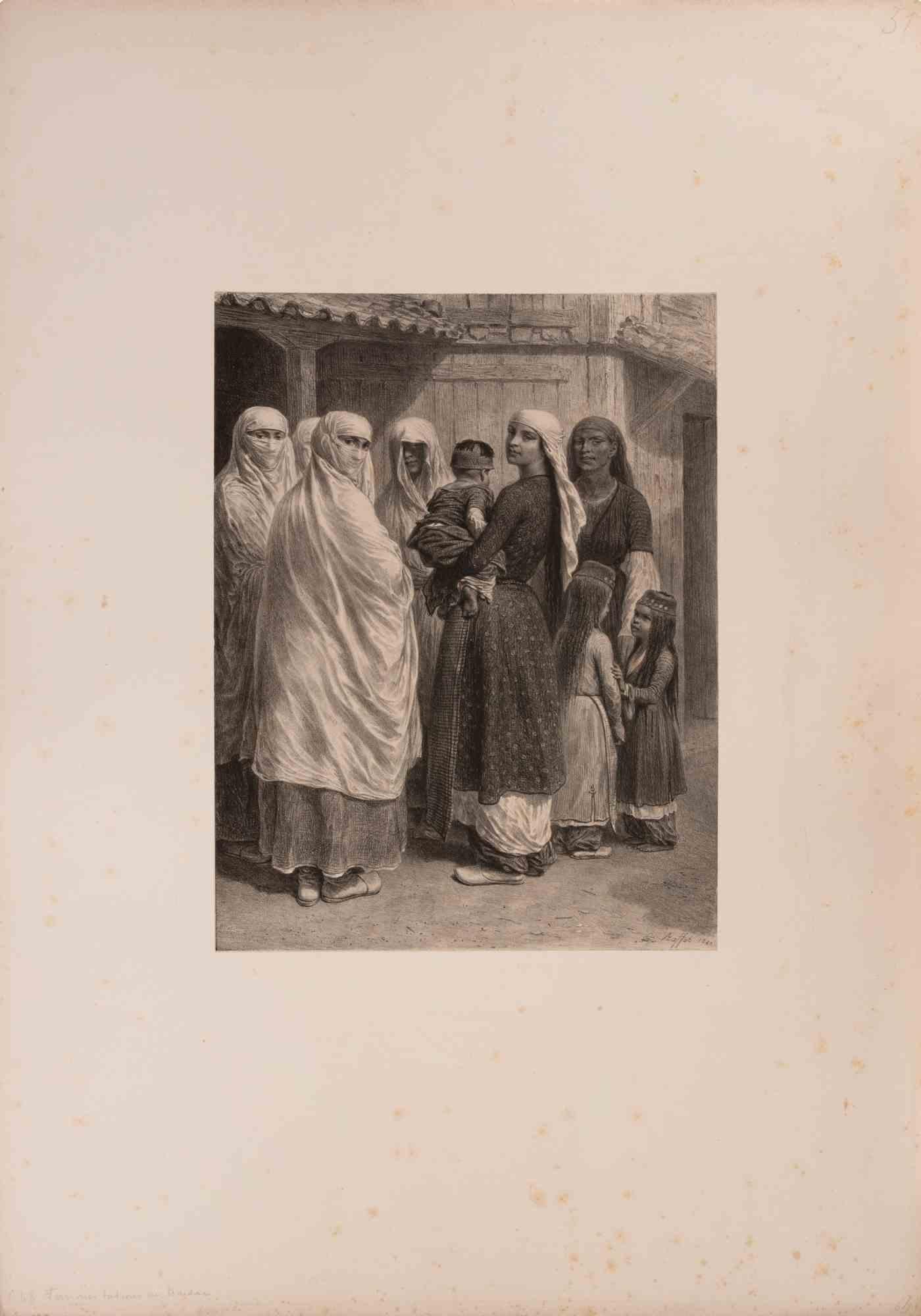
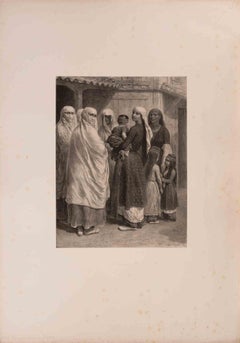
Lithograph on paper realized by Auguste Raffet in 1842. It is part of the suite "Crimée". The scene depicts a group of Tatar women, standing together in a courtyard-like space. Th...

Category

1840s Modern Figurative Prints

Materials

Lithograph

Fantassin Regulier d'Abdel Kader - Lithograph by Auguste Wahlen - 1844

Fantassin Regulier d'Abdel Kader - Lithograph by Auguste Wahlen - 1844

By Auguste Wahlen

Located in Roma, IT

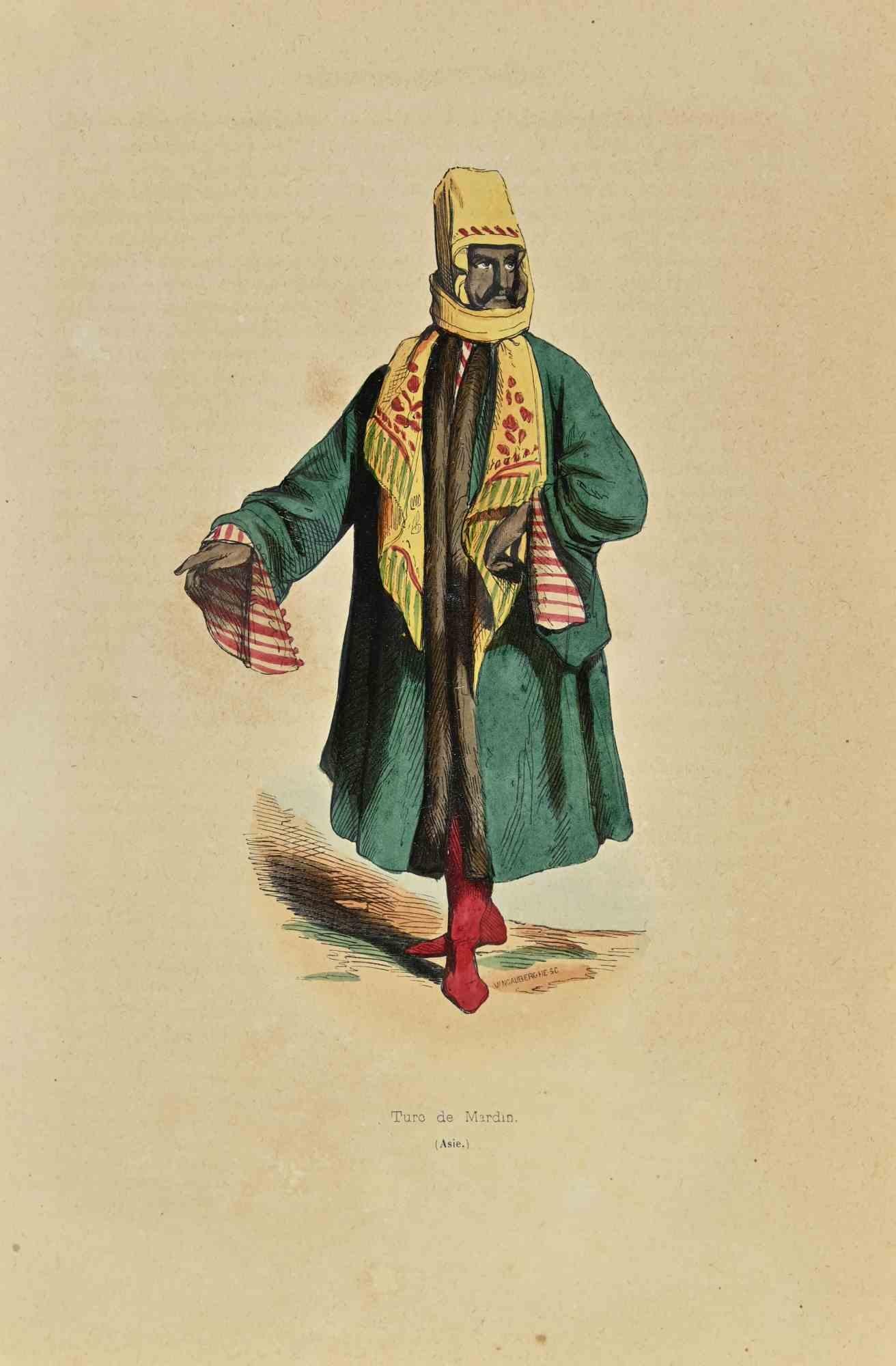
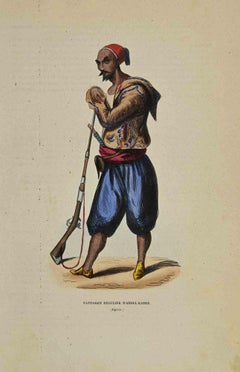
Fantassin Regulier d'Abdel Kader is a hand colored lithographs realized by Auguste Wahlen in 1844. Good conditions. The artwork belongs to the Suite Moeurs, usages et costumes de t...

Category

1840s Modern Figurative Prints

Materials

Lithograph

Croquis d'Orient - Etching by Charles Longueville - 1870s

Croquis d'Orient - Etching by Charles Longueville - 1870s

By Charles Longueville

Located in Roma, IT

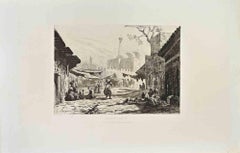
Croquis d'Orient is a black and white etching realized by Charles Longueville (1829-1899) in 1870s. Titled in the lower. Image size: 29cmx20cm. Very Good condition. Realized by C...

Category

1870s Modern Figurative Prints

Materials

Etching

You May Also Like

Islamic Sufi Ritual Print The Tschillé and the Dausa, 1863 Dutch Lithograph

Islamic Sufi Ritual Print The Tschillé and the Dausa, 1863 Dutch Lithograph

Located in Langweer, NL

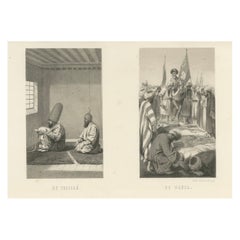
Islamic Sufi Ritual Print The Tschillé and the Dausa, 1863 Dutch Lithograph This unique lithograph from 1863 features two related but distinct scenes of Islamic devotional practice,...

Category

Antique 1860s Prints

Materials

Paper

1846 original engraving by Théodore Du Moncel - Plaine d'Argos

1846 original engraving by Théodore Du Moncel - Plaine d'Argos

By Théodore du Moncel

Located in PARIS, FR

This 1846 original lithographic engraving after Théodore Du Moncel depicts the Plain of Argos seen from the Heights of Mycenae (Plaine d’Argos vue prise des hauteurs de Mycènes), and...

Category

1840s More Prints

Materials

Paper, Engraving

1846 original engraving by Théodore Du Moncel - Megare

1846 original engraving by Théodore Du Moncel - Megare

By Théodore du Moncel

Located in PARIS, FR

This 1846 original lithographic engraving after Théodore Du Moncel depicts the historic Greek town of Mégare (Megara), rendered as part of the celebrated publication Athènes monument...

Category

1840s More Prints

Materials

Paper, Engraving

1844 Lithograph of a Bukharan Uzbek: Traditional Attire and Craft

1844 Lithograph of a Bukharan Uzbek: Traditional Attire and Craft

Located in Langweer, NL

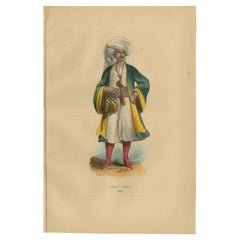
"1844 Lithograph of a Bukharan Uzbek: Traditional Attire and Craft" Description: This 1844 lithograph captures a traditional Bukharan Uzbek man, from the renowned series "Moeurs, Usages et Costumes de tous les Peuples de Monde" by Auguste Wahlen. Published in Paris using the technique of handcoloured lithography, enhanced with Arabic gum on vellin paper, this print vividly portrays the rich cultural attire unique to Bukhara, Uzbekistan. The man's elaborate robe and distinctive headwear highlight the regional fashion and craftsmanship. The print’s appeal lies in its detailed depiction of historical dress and accessories, offering a window into the cultural diversity of Central Asia. Such prints are treasured for their historical value and intricate artistry, making them highly desirable to collectors and enthusiasts of ethnographic art. The lithograph depicting a man from Bukhara, Uzbekistan, offers several intriguing cultural and historical insights: 1. Traditional Attire: The attire of the Bukharan man, particularly the elaborate robe and turban, is a rich display of Uzbek textile craftsmanship. Traditional robes, often made from silk and cotton, are adorned with intricate ikat patterns—a dyeing technique where threads are dyed before weaving. This style is emblematic of Uzbekistan's well-known textile industry. 2. Turban Significance: The turban, known locally as a "doppa" or "tubeteika," is more than just practical headwear; it serves as a cultural symbol of status and identity. The style, color, and way it is worn can convey information about the wearer's social status, region, and even his clan affiliations. 3. Historical Context: Bukhara was a pivotal Silk Road city, making it a melting pot of cultures, languages, and religions. The diverse influences are reflected in the traditional clothing, which blends Persian, Turkic, and nomadic styles. 4. Artistic Technique: The use of handcoloured lithography in the 19th century allowed for high-quality, detailed prints that were more accessible to the European public. This technique involved drawing on limestone with a greasy medium, then using water and oil-based ink to print vibrant images, which were then painted by hand. 5. Cultural Preservation: Prints like this serve not only as artwork but also as historical documents that preserve and share the cultural heritage of regions less known to the Western world at the time. They played a crucial role in educating and influencing perceptions about distant cultures during the 19th century. This print, therefore, is not just a beautiful piece of art but a deep well of cultural history and craftsmanship, reflecting the rich tapestry of life in Central Asia during the 19th century. Keywords: - Antique Uzbek prints - Handcoloured lithography - 19th-century Central Asian costumes - Auguste Wahlen lithographs - Traditional Bukharan attire - Ethnographic art prints - Collectible cultural lithographs - Historical Uzbek fashion - Asian historical prints - Vintage Uzbek art...

Category

Antique 1840s Prints
Materials

Paper

Elegant 1844 Lithograph of a Persian Woman in Traditional Attire

Elegant 1844 Lithograph of a Persian Woman in Traditional Attire

Located in Langweer, NL

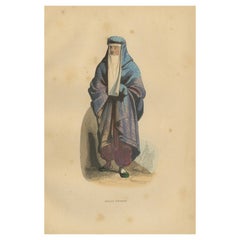
This handcoloured lithograph titled "Femme Persane" vividly captures the traditional attire of a Persian woman, showcasing the rich cultural heritage and detailed craftsmanship of 19th-century Persia. The print is part of Auguste Wahlen's "Moeurs, Usages et Costumes de tous les Peuples de Monde," published in 1844 in Paris. The image stands out for its intricate detailing, especially the veil and robe, which are adorned with elaborate patterns and vibrant colors typical of Persian fashion. The woman's attire includes a veil that covers the face partially, known as a "ruband," which was commonly worn in public by women in some regions of Persia as a sign of modesty and status. Her robe, layered and colorful, reflects the sophisticated textile techniques of the time, including embroidery and fabric dyeing, which were highly regarded skills in Persian society. The attractiveness of such prints lies in their ability to convey the elegance and intricacy of Persian women's fashion, providing a window into the everyday life and social customs of the time. The use of handcoloured lithography, a popular printing technique of the era, allows for vivid coloration and detailed representation, making these prints highly desirable for collectors and enthusiasts of historical fashion and cultural heritage. Keywords: - Antique Persian prints...

Category

Antique 1840s Prints
Materials

Paper