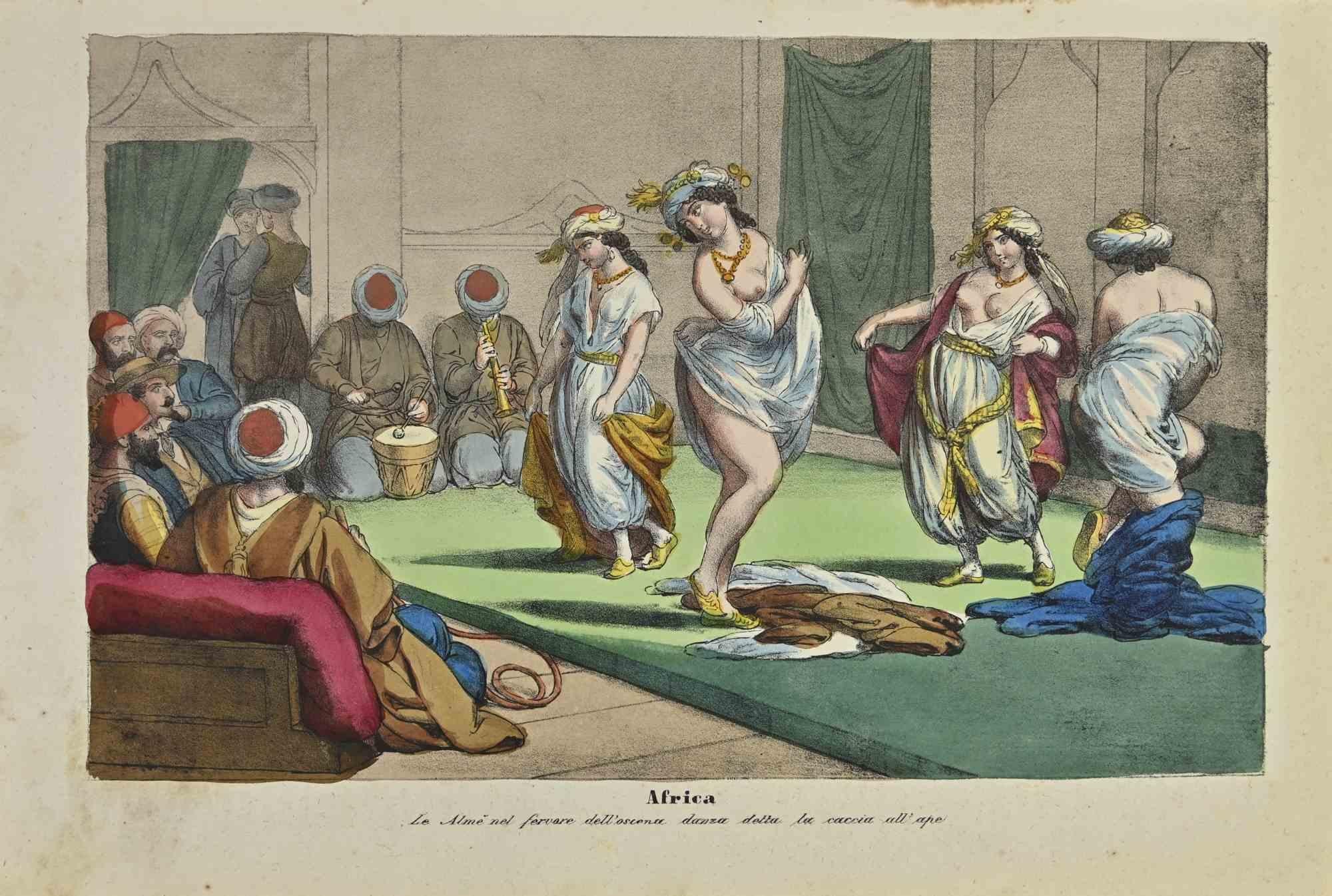
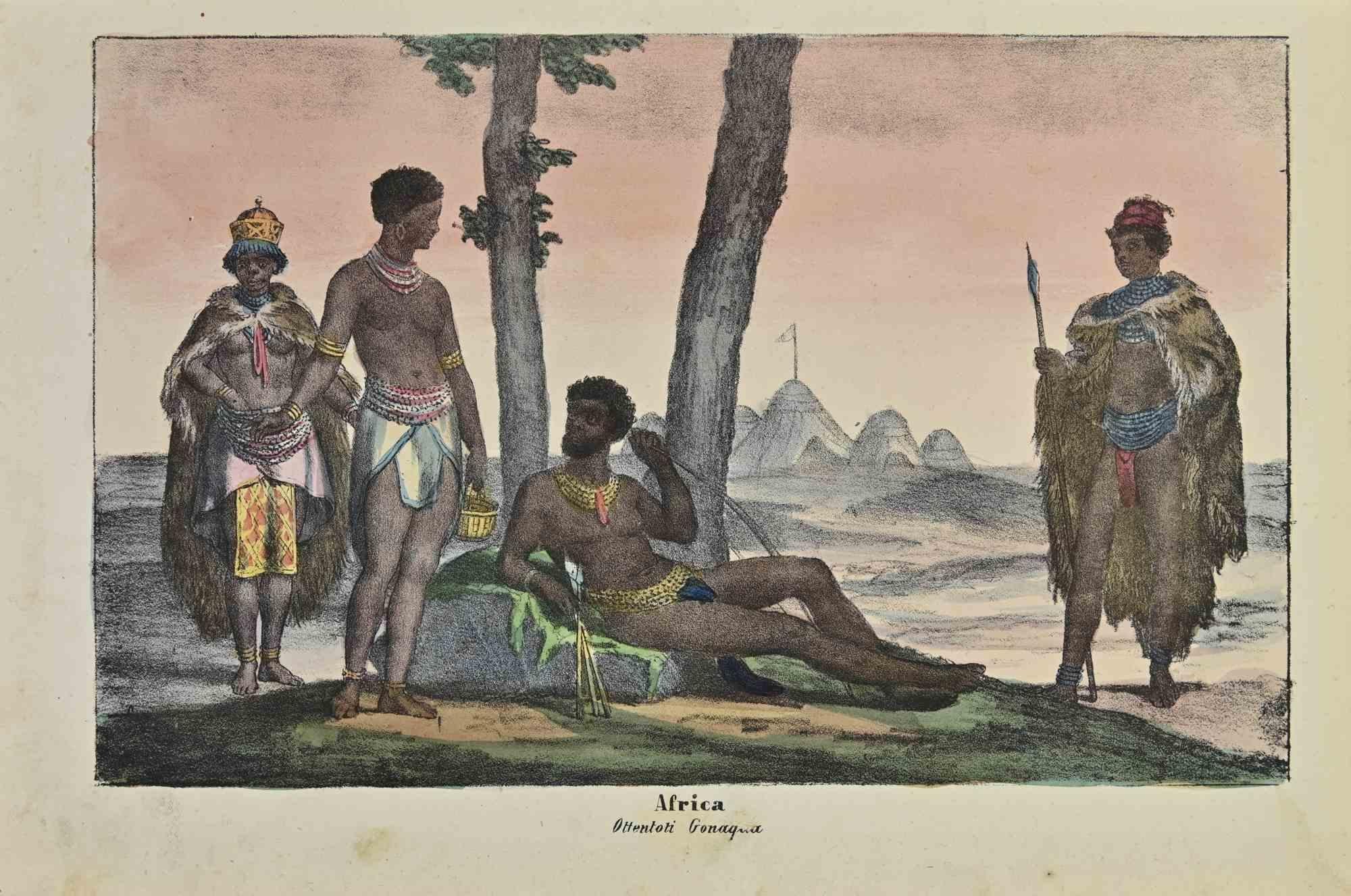
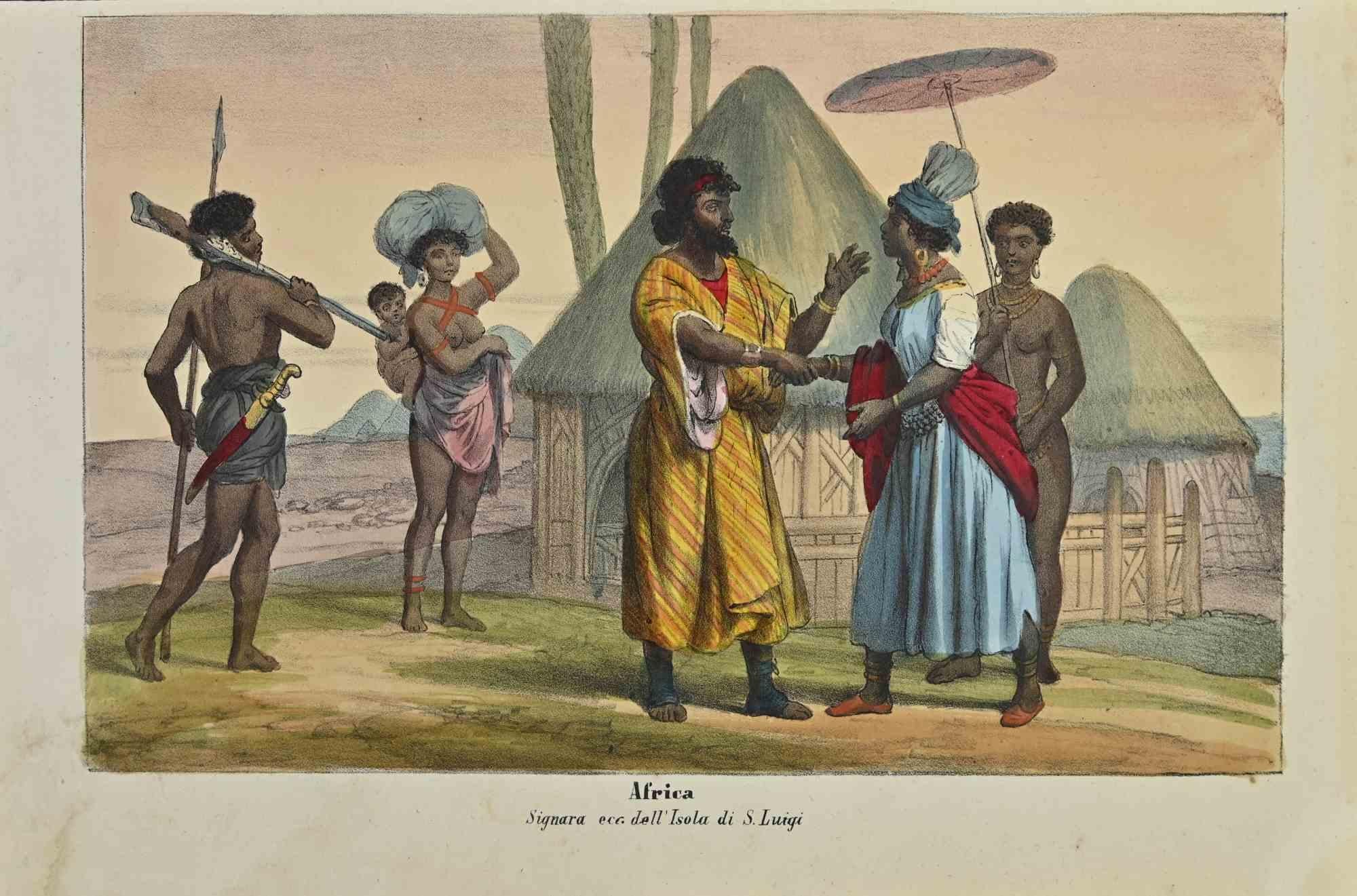
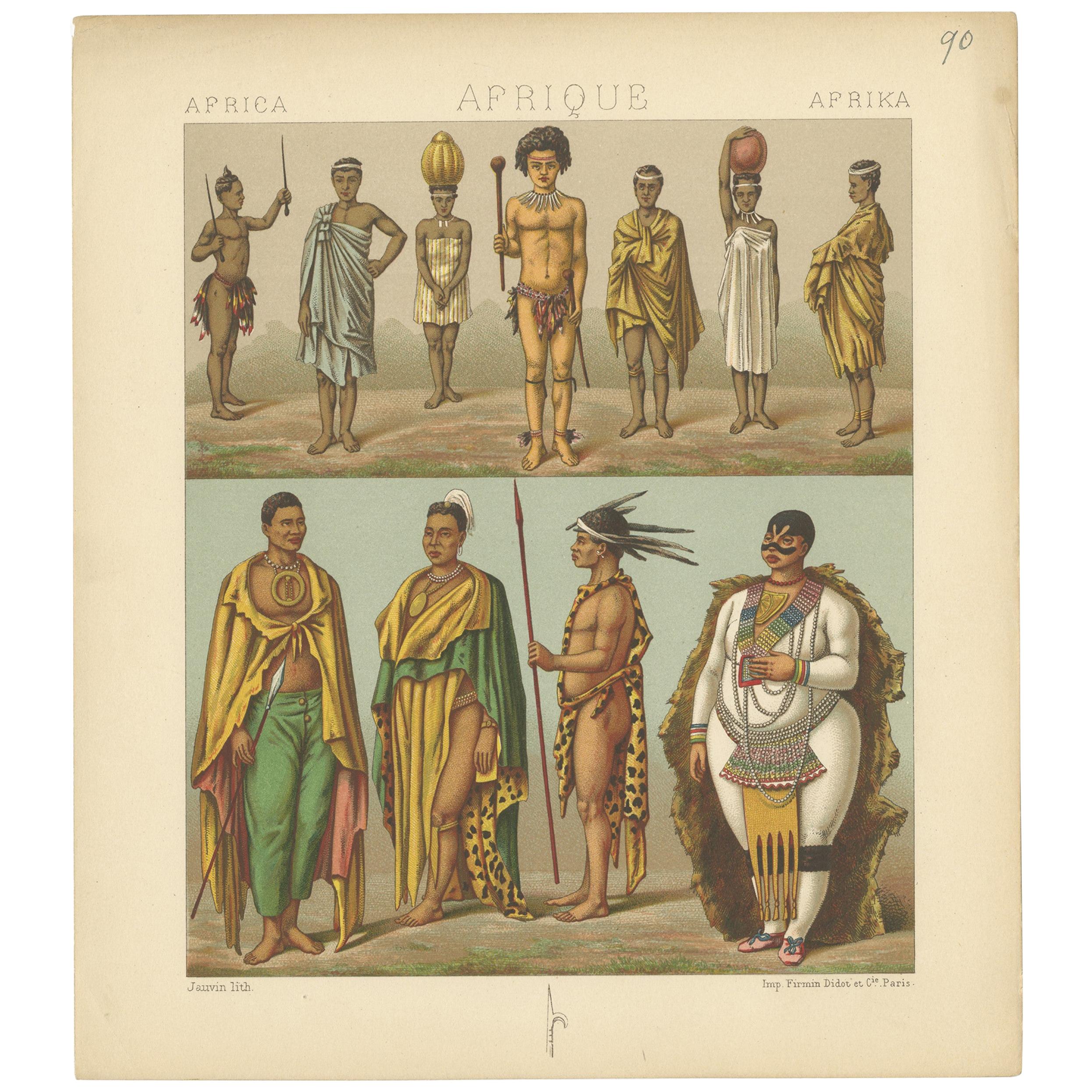
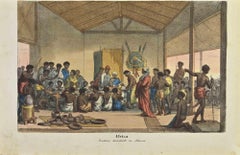
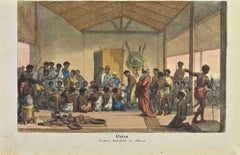
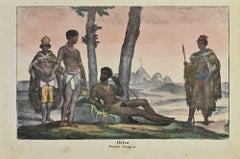
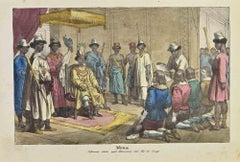
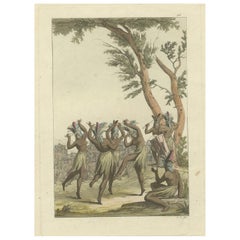
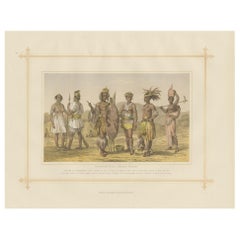
The print is from "Il Costume Antico e Moderno" by Giulio Ferrario, specifically depicting the "Le Lullunge" feast in Senegambia. This festival is illustrated as part of the extensive series detailing the customs, costumes, and daily life of people from different parts of the world. The illustration captures a lively and culturally significant dance that forms part of the "Le Lullunge" celebrations, showcasing traditional attire and communal participation, which are central to the event in Senegambian culture. The illustration not only serves as a vibrant representation of the dance and celebration but also as an ethnographic record from the early 19th century, emphasizing the richness of Senegambian traditions.
The term "Senegambia" historically referred to a region in West Africa that encompassed parts of what are today known as Senegal and The Gambia. This area is known for its rich cultural heritage, including vibrant festivals and communal celebrations like the one depicted in the illustration. The "Le Lullunge" feast, as illustrated in Giulio Ferrario's "Il Costume Antico e Moderno," captures the traditional dances and social practices of the peoples in this West African region.
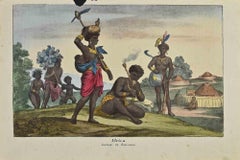
This original antique hand-colored print depicts a vibrant scene of Native African dance, possibly part of a ceremonial or ritualistic activity. The individuals are animatedly engaged in dance, with their limbs dynamically positioned, suggesting vigorous movement. Each figure is adorned with elaborate feathered headdresses and carries feathers or other items as part of their dance. These accessories likely have cultural significance, possibly denoting status, role in the ceremony, or spiritual symbolism.
The attire of the dancers is simple yet functional for their vigorous activity, consisting of skirts that allow for ease of movement. Their outfits are decorated with additional elements that may indicate tribal affiliation or personal achievement. The dancers are barefoot, connecting them physically and symbolically to the earth, which is a common aspect in many African cultural practices emphasizing a connection to nature.
The setting of the dance is outdoors, under a large tree, indicating the importance of natural surroundings for the event. This could be a communal gathering place, chosen for its significance within their community or for its natural beauty and tranquility.
Overall, this image captures a moment of cultural expression, highlighting the importance of dance in Native African traditions as a form of communication, celebration, or spiritual practice. The detail and color used in the depiction aim to convey the vibrancy and energy of the scene, reflecting the artist’s perspective on these cultural practices.
In more detail:
From: ‘Il Costume Antico e Moderno …, l’America.’ , by Giulio Ferrario, published in Milan in 21 volumes by Antonio Fortunato Stella in 1827 (first edition, second issue). The 17 volumes of the first issue were published sequentially between c. 1815/1816 until 1826 after first being issued in 143 weekly installments. The work appeared in Italian and French. Smaller size editions with smaller much less elaborate plates were published in Florence (1823-38), Naples (1831-42) and even a 16mo. editon in Livorno (1830). Original blindstamp at bottom right image. The sources used for this work are wide.
Made by ‘Gallo Gallina’ after ‘Giulio Ferrario’. Giulio Ferrario was founder of the ‘Societa Tipografica de Classici Italiani’ and served as the director of the Braidense National Library in Milan, Italy. Artists that worked on this monumental work are: Gallo Gallina, D.K. Bonatti, A. Biasioli, L. Rossi, Paolo Fumagalli, Gaetano Zancon (1771-1816), G. Bigatti, C. Bramati, G. Gallo, C. Bottiglia, G. Castellini, Antonio Rancati (1784-1816), Vittorio Raineri, Sydney Parkinson...
Category
Antique 1820s Prints