Esser’s Giverny series revisits Monet’s famous garden from an unexpected angle, whereby the common visual memory of this iconic art destination is deconstructed and recreated in an abstract fashion.
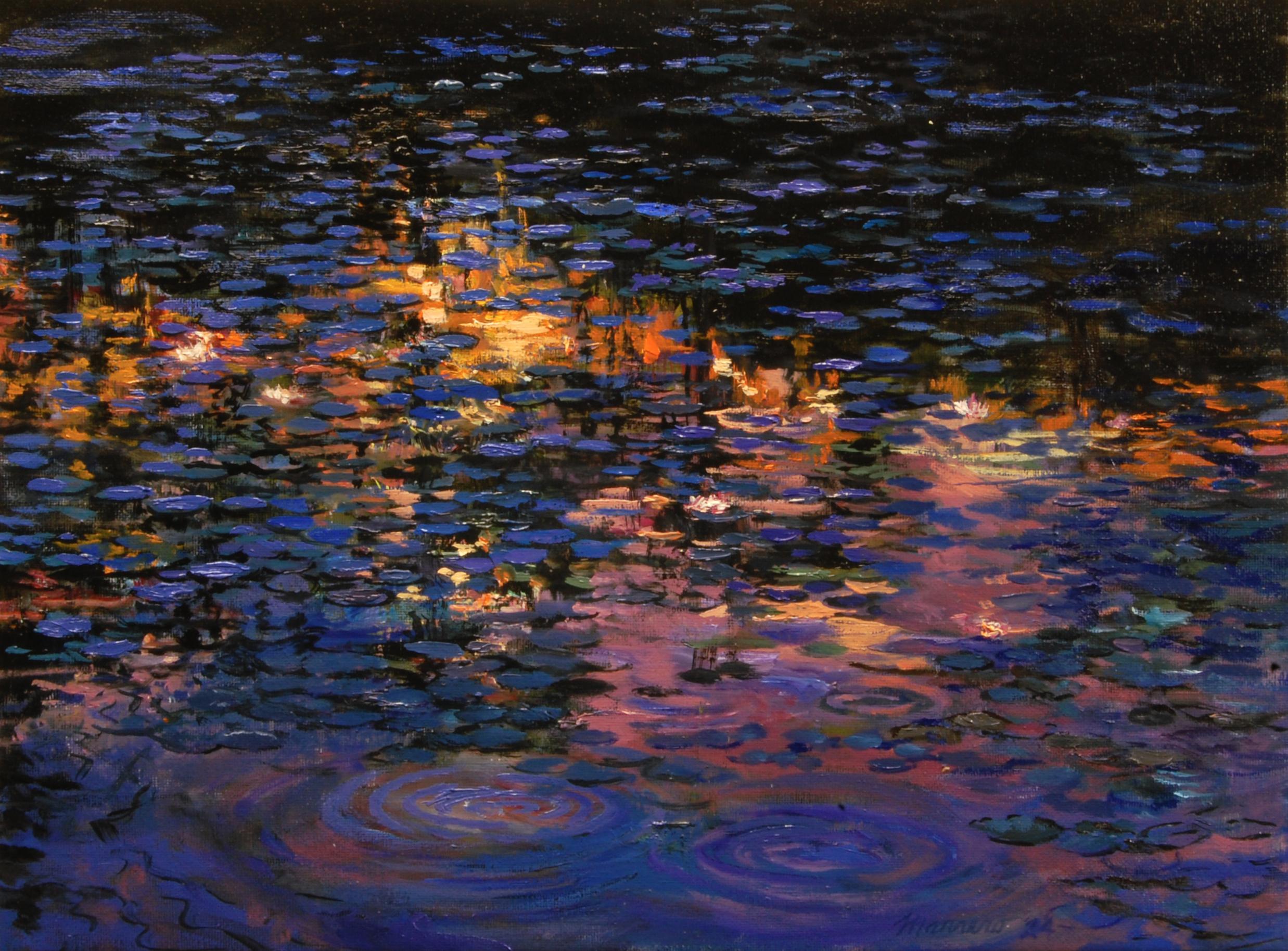
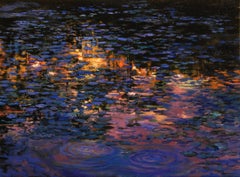
Nocturnes à Giverny - Contemporary, 21st Century, C Print, Realism, Edition
C-Print
Edition of 50
21,1 x 26,4 cm (8.3 x 10.3 in.)
Signed and numbered
In mint condition
With certificate of authenticity
PLEASE NOTE: Edition numbers could vary from the one shown in the images.
The pictures are only for illustrative reasons, the work is offered unframed.
Esser’s „Giverny“ Series depict Monet’s famous garden from a different angle than what we are used to seeing, exploring the common visual memory of this place and deconstructing it by taking the images to a level of abstraction where the place itself becomes almost unrecognizable.
Esser’s „Giverny“ Series depict Monet’s famous garden from a different angle than what we are used to seeing, exploring the common visual memory of this place and deconstructing it by taking the images to a level of abstraction where the place itself becomes almost unrecognizable.
"Landscapes are like states of mind. Everyone carries a landscape within them, one they naturally idealize." —Elger Esser
“Nocturnes à Giverny”, from the original large-scale “Giverny VII”, is a view of the famous water lily lake at sunset, shortly before nightfall. With its warm golden-red colors, it evokes a romantic atmosphere. However, this atmosphere is obliterated by the level of extreme abstraction Esser takes the image to. With its extremely low skyline, barely visible through the reflection of the trees in the lake, and with the strong contrast of almost black shadows and reflections against the golden water, this image is an unsettling deconstruction of any romantic topic of the water lily lake.
ELGER ESSER
Elger Esser (born 1967 in Stuttgart, raised in Rome) is known for his silent, almost meditative large-format landscapes. Although a student of Bernd and Hilla Becher, Esser nevertheless backed away from their characteristic industrial and architectural landscapes to pursue the exploraiton of nature.
German photographer Elger Esser (born 1967 in Stuttgart, raised in Rome) is usually associated with silent, almost meditative landscapes in large formats and with earthy colors. Esser was a student of Bernd and Hilla Becher at the Academy of Arts in Dusseldorf, the same school where talents such as Andreas Gursky, Candida Höfer, and Thomas Struth were formed. While clearly influenced by their teachings, Esser nevertheless backed away from their characteristic industrial and architectural landscapes and the rigorous style connected with them.
"Romanticism was a movement which shook-up very elementary things; it was an insurrectionary movement." —Elger Esser
Esser’s semi-romantic landscapes are unmanipulated and usually work with a very low horizon line in a simple, almost empty composition. Nature becomes a totality, indefinite and mysterious, but yet also calming and steady. Sky and water blur into each other to a point of complete disappearance, where everything seems to be mirrored by the same vast emptiness of the sky. As one of the most prominent photographic artists in Germany, Esser's works can be found in the collections of top museums and galleries in New York, Paris, and Amsterdam.