Want more images or videos?
Request additional images or videos from the seller
1 of 2

Ferdinand Bac 1
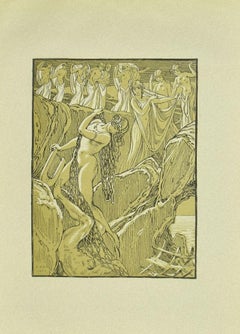
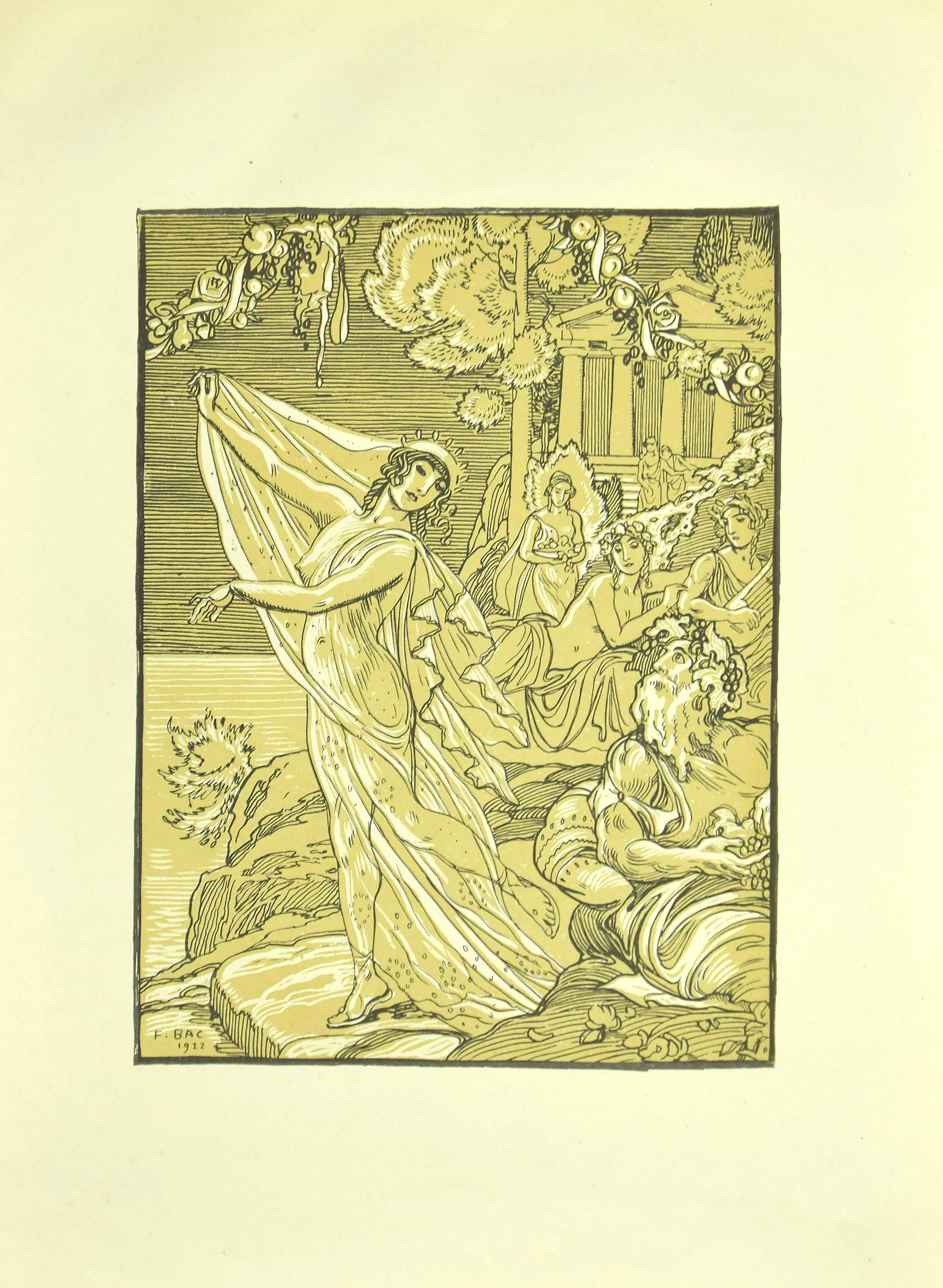
The Carriers of the Amphorae - Lithograph by F. Bac - 1922

1922

$264.74
£196.02
€225VAT Included
CA$368.74
A$375.15
CHF 215
MX$4,517
NOK 2,512.91
SEK 2,523.94
DKK 1,715.72

About the Item

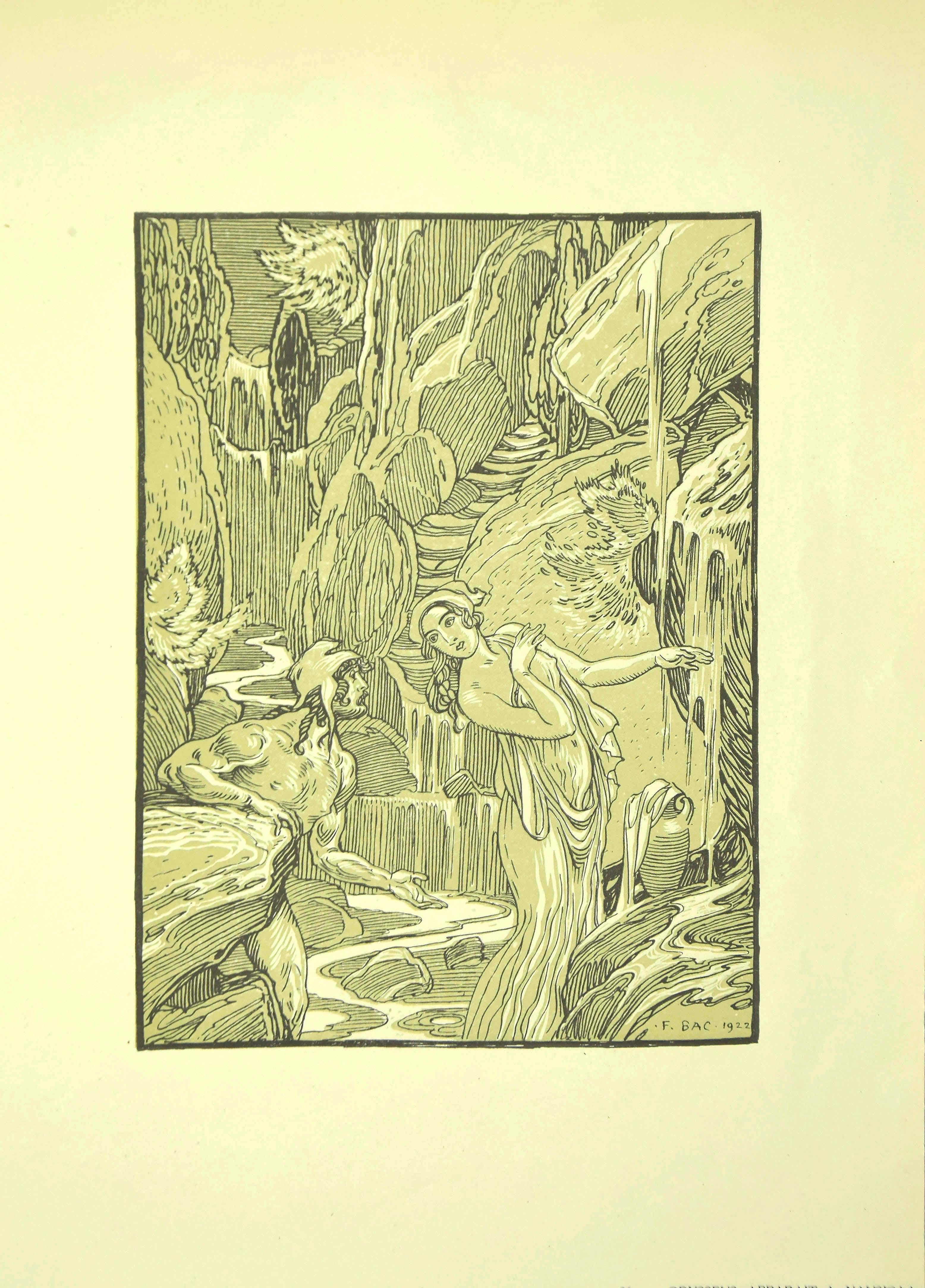
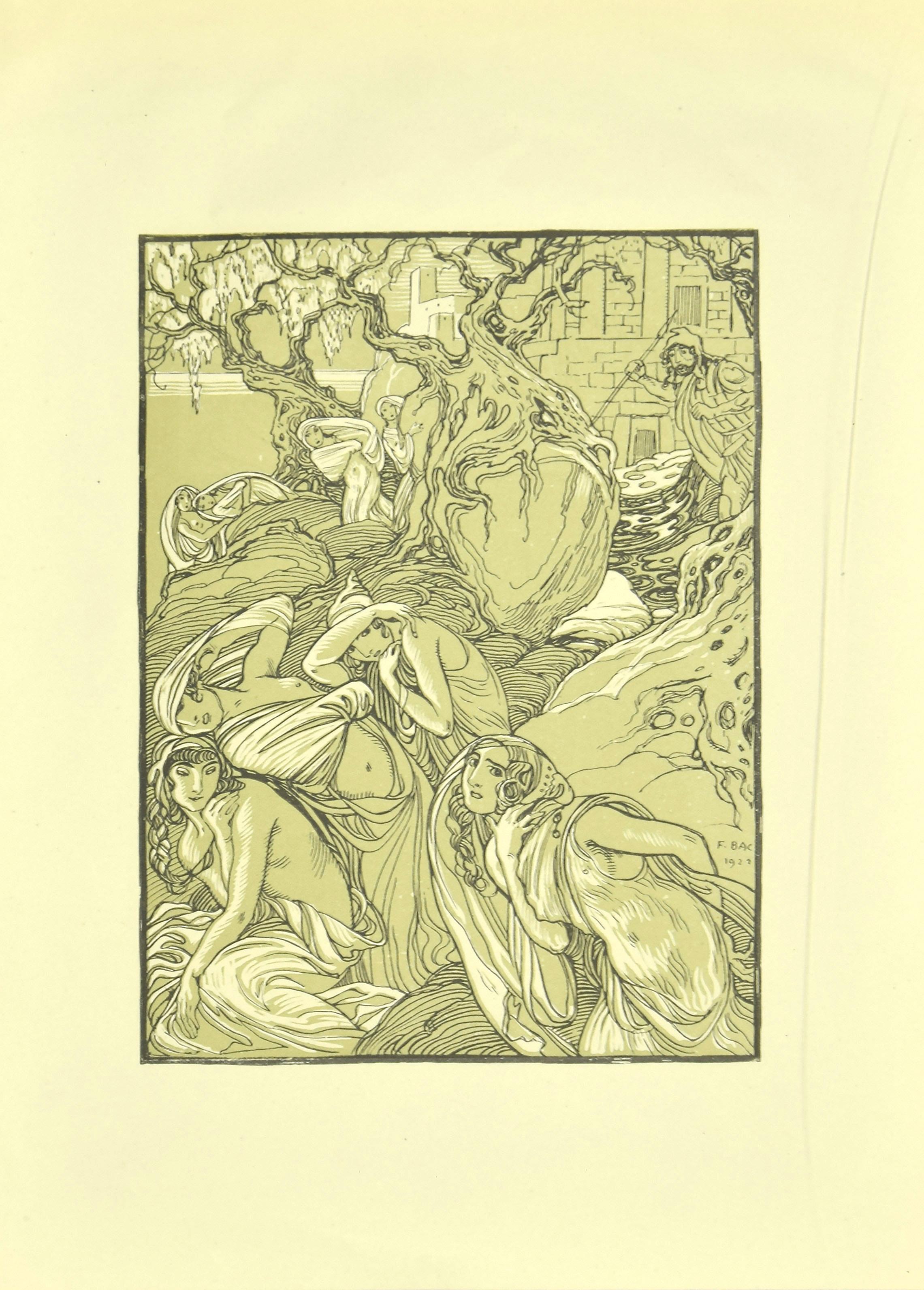
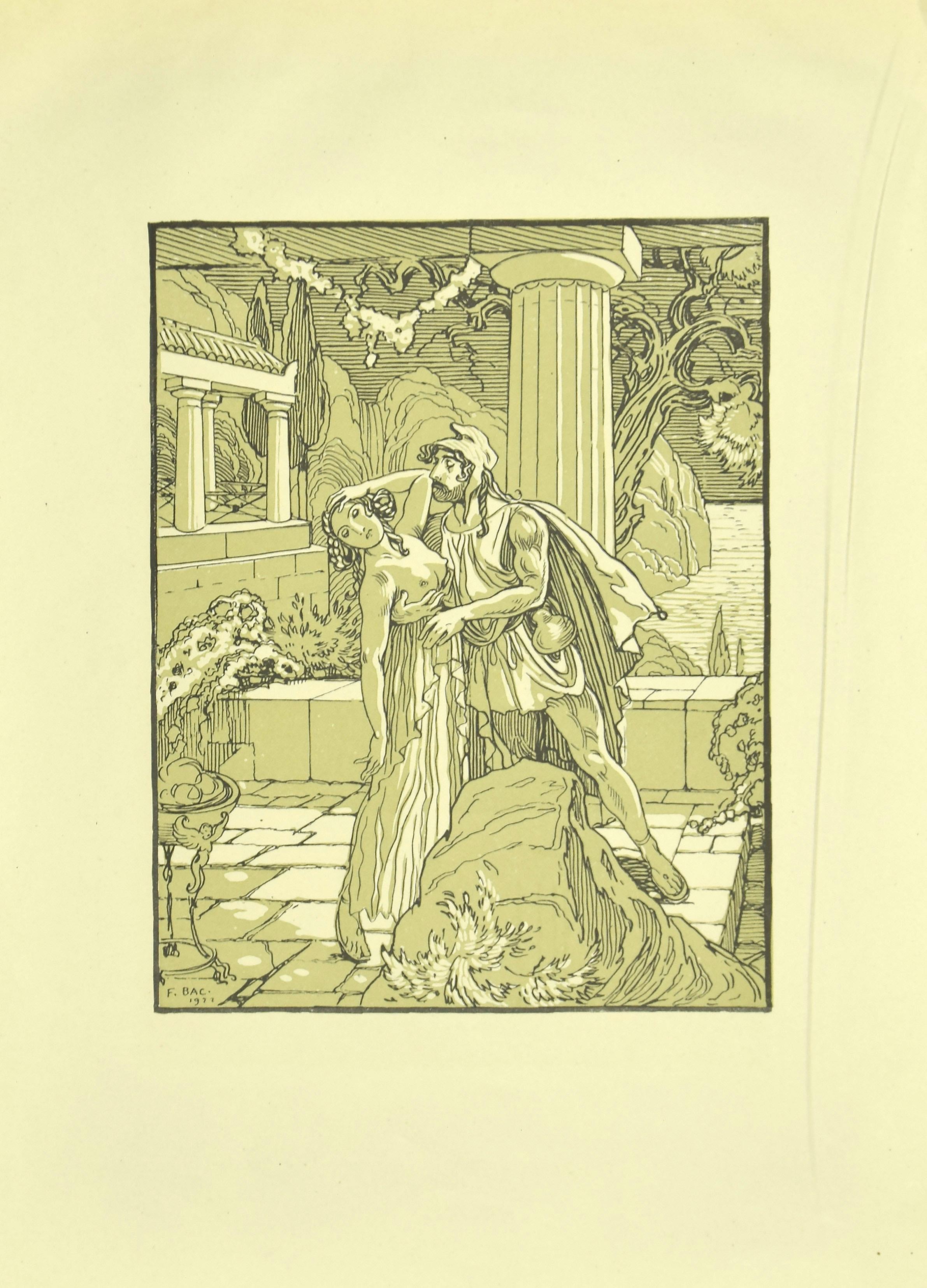
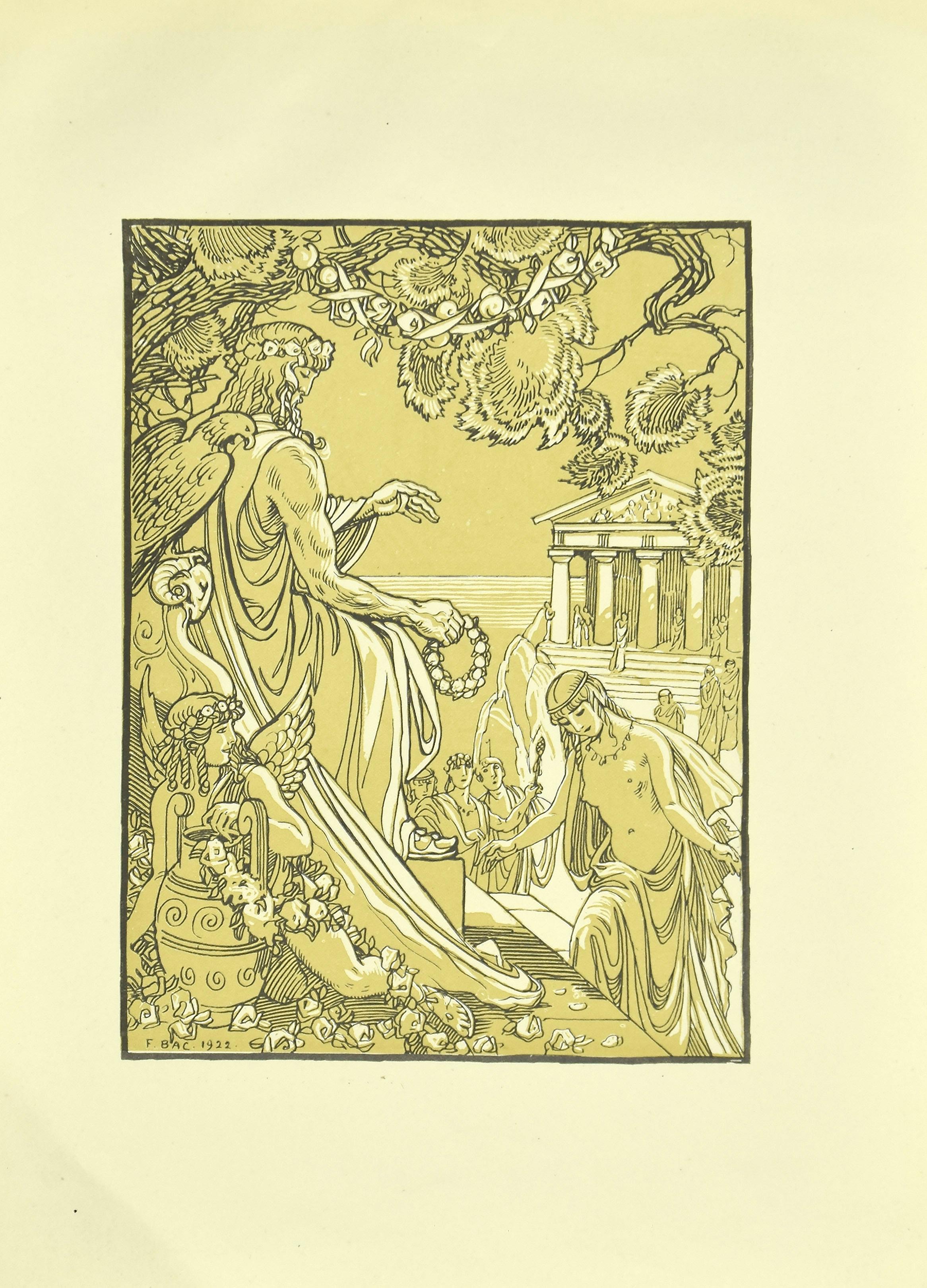
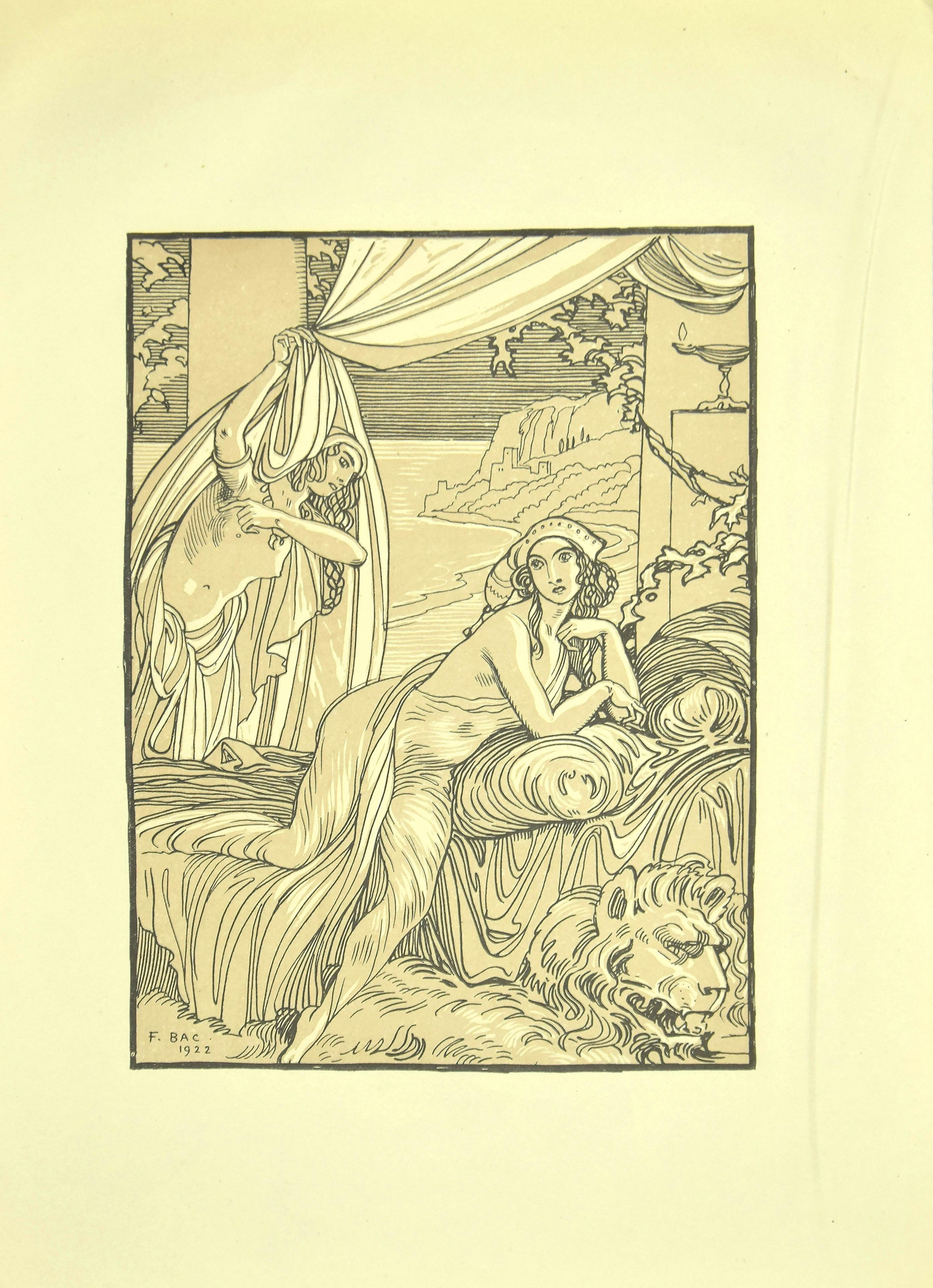
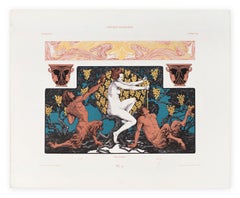
The Carriers of Amphorae is an original modern artwork realized by Ferdinand Bac (1859 - 1952) in 1922. Original Lithograph on ivory paper. Signed and dated on plate on the lower right corner: F. Bac 1922. Very good conditions. The Carriers of Amphorae is an very beautiful Liberty Style lithograph realized by the French artist Ferdinand Bac in the Second decade of the XX Century. The work depicts some women carrying amphorae on their heads. Some of them cover up with their clothes and turn to a man. In the background we see a seascape with buildings and columns. This work has been realized the French artist Ferdinand Bac (1859 - 1952). Ferdinand-Sigismond Bach, known as Ferdinand Bac was a French cartoonist, artist and writer, son of an illegitimate nephew of the Emperor Napoleon. As a young man, he mixed in the fashionable world of Paris of the Belle Époque, and was known for his caricatures, which appeared in popular journals. He also traveled widely in Europe and the Mediterranean. In his fifties, he began a career as a landscape gardener. He attended Adolphe Thiers, Gambetta, Richard Wagner, Victor Hugo, Taine, Villiers de L'Isle-Adam, Paul Verlaine, Maurice Barrès, Barbey d'Aurevilly, Alphonse Daudet, Guy de Maupassant, Verdi, Gounod, Pierre de Nolhac, and many more other famous people of the time. He established himself as one of the first cartoonists and caricaturists of his time, as famous as Albert Robida, Job, Sem, Jean-Louis Forain or Caran d'Ache. Ferdinand alternated between Colombières and a beautiful mansion in Compiègne that also belonged to the Ladan-Bockairys. There he met Marcel Proust, Jean Cocteau, Gabriele D'Annunzio and Anna de Noailles. Until the end of his life, Ferdinand Bac continued to travel, write and draw, reflecting on the political and historical development of the world.
  • Creator:
    Ferdinand Bac 1 (1859 - 1952)
  • Creation Year:
    1922
  • Dimensions:
    Height: 11.42 in (29 cm)Width: 8.47 in (21.5 cm)Depth: 0.04 in (1 mm)
  • Medium:
  • Movement & Style:
  • Period:
  • Framing:
    Framing Options Available
  • Condition:
    Insurance may be requested by customers as additional service, contact us for more information.
  • Gallery Location:
    Roma, IT
  • Reference Number:
    Seller: M-1126171stDibs: LU65037208402

More From This Seller

View All
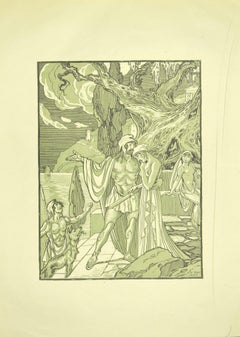
The Escape of Women - Lithograph by F. Bac - 1922

The Escape of Women - Lithograph by F. Bac - 1922

By Ferdinand Bac 1

Located in Roma, IT

The Escape of the Women is an original modern artwork realized by Ferdinand Bac (1859 - 1952) in 1922. Original Lithograph on ivory paper. Signed and dated on plate on the lower ri...

Category

1920s Art Nouveau Figurative Prints

Materials

Lithograph

The Escape of the Bacchantes - Original Lithograph by Ferdinand Bac - 1922

The Escape of the Bacchantes - Original Lithograph by Ferdinand Bac - 1922

By Ferdinand Bac 1

Located in Roma, IT

The Escape of the Bacchantes is an original modern artwork realized by Ferdinand Bac (1859 - 1952) in 1922. Signed and dated on plate on the lower right corner: F. Bac 1922. Original Lithograph on ivory paper. Perfect conditions. The Escape of the Bacchantes is an elegant Liberty Lithograph realized by Ferdinand Bac in the second decade of the XX Century in France. The work, in full Liberty style, represents some women covered by transparent veils who are running with amphorae on their heads. The scene is very dynamic; behind them, several men are running behind them. The figures are in a structure covered by sqared bricks and are walking quickly up the stairs. Ferdinand Bac (1859 - 1952). Ferdinand-Sigismond Bach, known as Ferdinand Bac was a French cartoonist, artist and writer, son of an illegitimate nephew of the Emperor Napoleon. As a young man, he mixed in the fashionable world of Paris of the Belle Époque, and was known for his caricatures, which appeared in popular journals. He also traveled widely in Europe and the Mediterranean. In his fifties, he began a career as a landscape gardener. He attended Adolphe Thiers, Gambetta, Richard Wagner, Victor Hugo, Taine, Villiers de L'Isle-Adam, Paul Verlaine, Maurice Barrès, Barbey d'Aurevilly, Alphonse Daudet, Guy de Maupassant, Verdi, Gounod, Pierre de Nolhac, and many more other famous people of the time. He established himself as one of the first cartoonists and caricaturists of his time, as famous as Albert Robida...

Category

1920s Art Nouveau Figurative Prints

Materials

Lithograph

The Couple - Original Lithograph by F. Bac - 1922

The Couple - Original Lithograph by F. Bac - 1922

By Ferdinand Bac 1

Located in Roma, IT

The Couple is an original modern artwork realized by Ferdinand Bac (1859 - 1952) in 1922. Original Lithograph on ivory paper. Signed and dated on plate on the lower right corner: F...

Category

1920s Art Nouveau Figurative Prints

Materials

Lithograph

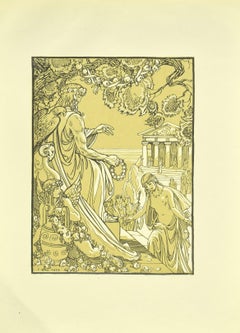
The Coronation - Original Lithograph by F. Bac - 1922

The Coronation - Original Lithograph by F. Bac - 1922

By Ferdinand Bac 1

Located in Roma, IT

The Coronation is an original modern artwork realized by Ferdinand Bac (1859 - 1952) in the 1920s. Original Lithograph on ivory paper.Image dimensions: 19 x 14 cm. Signed and dated on plate on the lower right corner: F. Bac 1922. Excellent conditions. The Coronation is an excellent Liberty Style artwork realized by the French artist Ferdinand Bac in the Second decade of the XX Century. The work depicts a female figure bent over a man seated on a throne who is offering her a crown of flowers. The scene is enriched by the other characters that are carrying vases full of flowers. This work has been realized the French artist Ferdinand Bac (1859 - 1952). Ferdinand-Sigismond Bach, known as Ferdinand Bac was a French cartoonist, artist and writer, son of an illegitimate nephew of the Emperor Napoleon. As a young man, he mixed in the fashionable world of Paris of the Belle Époque, and was known for his caricatures, which appeared in popular journals. He also traveled widely in Europe and the Mediterranean. In his fifties, he began a career as a landscape gardener. He attended Adolphe Thiers, Gambetta, Richard Wagner, Victor Hugo, Taine, Villiers de L'Isle-Adam, Paul Verlaine, Maurice Barrès, Barbey d'Aurevilly, Alphonse Daudet, Guy de Maupassant, Verdi, Gounod, Pierre de Nolhac, and many more other famous people of the time. He established himself as one of the first cartoonists and caricaturists of his time, as famous as Albert Robida...

Category

1920s Art Nouveau Figurative Prints

Materials

Lithograph

You May Also Like

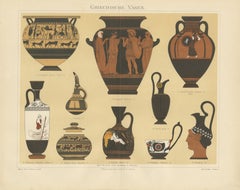
Greek Vases and Amphorae – Classical Antiquity Chromolithograph, Meyers 1898

Greek Vases and Amphorae – Classical Antiquity Chromolithograph, Meyers 1898

Located in Langweer, NL

Greek Vases and Amphorae – Classical Antiquity Chromolithograph, Meyers 1898 This decorative antique chromolithograph illustrates ten examples of ancient Greek terracotta vessels, carefully reproduced from archaeological originals. The plate presents a variety of classical ceramic forms, including an amphora, krater, stamnos, lekythos, wine vessel, oil bottles, pouring vessels, and ceremonial containers used throughout ancient Greece. Each example demonstrates the distinctive shapes and decorative styles that made Greek pottery one of the defining artistic achievements of the classical world. Published in Germany in 1898 as part of the renowned Meyers Konversations-Lexikon, this educational plate was produced during a period of intense scholarly interest in archaeology and classical antiquity. The lithograph was printed by the Bibliographisches Institut in Leipzig, one of Germany's most respected publishing houses. The illustrations faithfully reproduce the black-figure and red-figure decoration found on surviving Greek ceramics, depicting mythological scenes, warriors, horses, deities, and ornamental motifs. The arrangement is both informative and visually striking, with the warm terracotta tones contrasting beautifully against the dark painted surfaces of the vessels. The large Panathenaic amphora and stamnos dominate the composition, while smaller vessels provide a survey of the many forms used for storing wine, oil, perfumes, and other valuable commodities in daily Greek life. Beyond its educational value, the print possesses a strong decorative quality that makes it particularly suitable for display in libraries, studies, museums, classical interiors, and contemporary spaces inspired by archaeology and ancient art. It appeals equally to collectors of antiquities, classical scholars, and those interested in the history of design and ceramics. This print is an original 1898 chromolithograph, not a modern reproduction. Any images showing the print framed are for visual inspiration only. The print is supplied unframed. Condition: Good antique condition with age-related toning and minor handling wear. Original center fold as issued. Please examine the accompanying images carefully for a detailed impression of condition. Framing tips: Displays beautifully in a museum-black, dark walnut, or ebonized frame with a wide warm ivory mat. A thin gilt liner can further enhance the terracotta colors and classical character of the composition. Technique: Chromolithograph Maker: Meyers Konversations-Lexikon, Bibliographisches Institut, Leipzig, Germany, 1898 Keywords: Greek vases, Greek pottery, amphora, krater, stamnos, lekythos, wine jar, oil bottle, ancient Greece, classical antiquity, archaeology, terracotta vessel, red figure pottery, black figure pottery...

Category

Antique Late 19th Century German Prints
Materials

Paper

Gerlach's Allegorien Plate #116: "Force, Thirst, Love" Lithograph

Gerlach's Allegorien Plate #116: "Force, Thirst, Love" Lithograph

By Carl Otto Czeschka

Located in Palm Beach, FL

after Carl Otto Czeschka, (1878-1960), Austrian A leading member of the Vienna Secession and later the Wiener Werkstätte (Viennese Workshop), Carl Otto Czeschka was a vital figur...

Category

1890s Vienna Secession Figurative Prints

Materials

Lithograph

Le chemin de la mort - original lithograph (1897/98)

Le chemin de la mort - original lithograph (1897/98)

By Eugène Trigoulet

Located in Paris, IDF

Eugène Trigoulet Le chemin de la mort Original lithograph Plate signed 1897/98 Printed on paper Vélin Size 40 x 31 cm (c. 16 x 12") INFORMATION : Published by 'Estampe Moderne, Pa...

Category

1890s Art Nouveau Figurative Prints

Materials

Lithograph

Gerlach's Allegorien Plate #47: "Morning in the Spring" Lithograph

Gerlach's Allegorien Plate #47: "Morning in the Spring" Lithograph

By Koloman Moser

Located in Palm Beach, FL

Koloman Moser (1868 –1918), AUSTRIAN Instead of applying his flair and art education solely to painting, Koloman Moser embodied the idea of Gesamt Kunstwerk (all-embracing art work) by designing architecture, furniture, jewelry, graphics, and tapestries meant to coordinate every detail of an environment. His work transcended the imitative decorative arts of earlier eras and helped to define Modernism for generations to come. Moser achieved a remarkable balance between intellectual structure (often geometric) and hedonistic luxury. Collaborating with Gustav Klimt and Josef Hoffmann, the artist was an editor and active contributor to Ver Sacrum, (Sacred Spring), the journal of the Viennese Secession that was so prized for its aesthetics and high quality production that it was considered a work of art. The magazine featured drawings and designs in the Jugendstil style (Youth) along with literary contributions from distinguished writers from across Europe. It quickly disseminated both the spirit and the style of the Secession. In 1903 Moser and Hoffmann founded and led the Wiener Werkstatte (Viennese Workshop) a collective of artisans that produced elegant decorative arts items, not as industrial prototypes but for the purpose of sale to the public. The plan, as idealistic then as now, was to elevate the lives of consumers by means of beautiful and useful interior surroundings. Moser’s influence has endured throughout the century. His design sensibility is evident from the mid-century modern furniture of the 1950s and ‘60s to the psychedelic rock posters...

Category

1890s Vienna Secession Figurative Prints

Materials

Paper