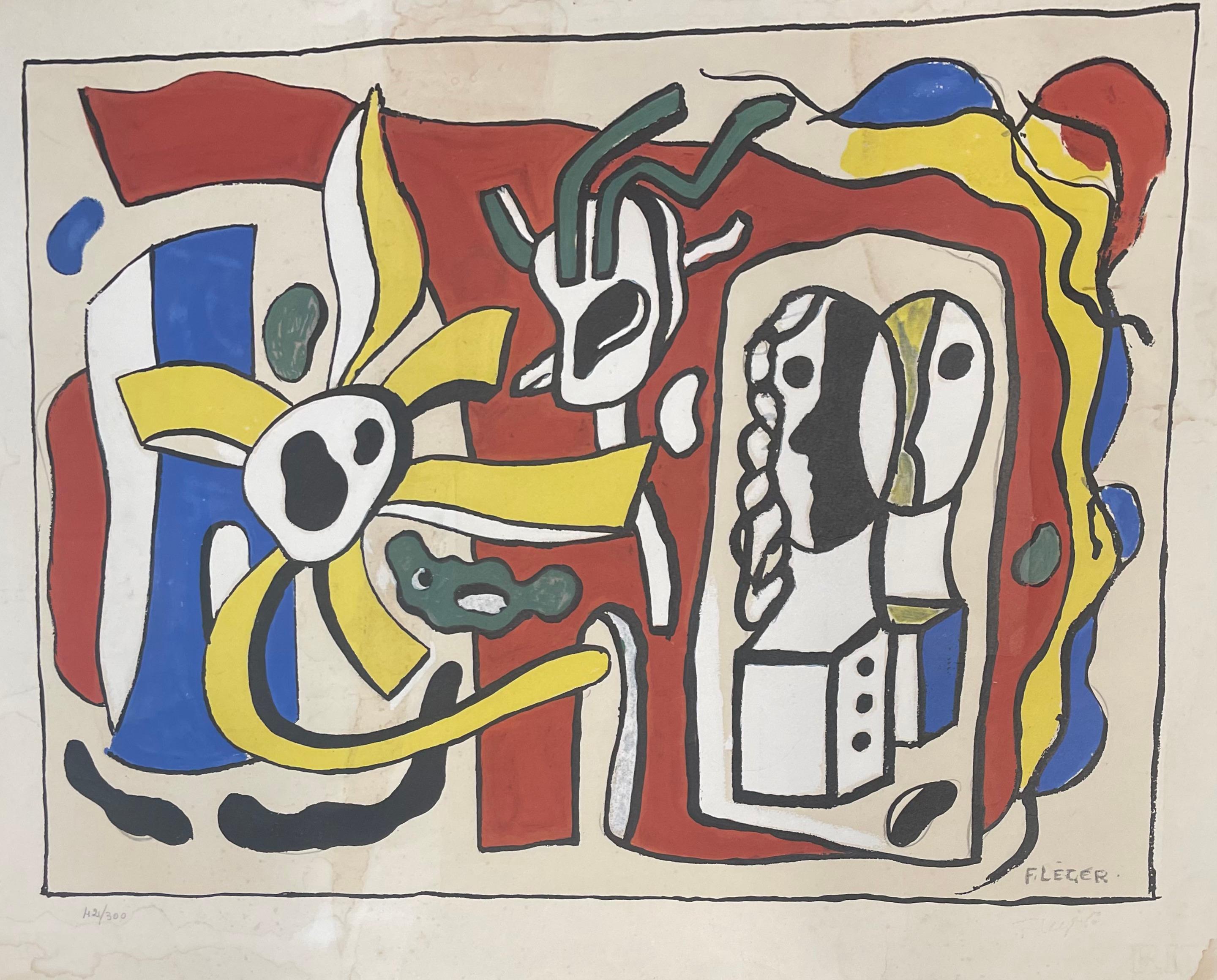
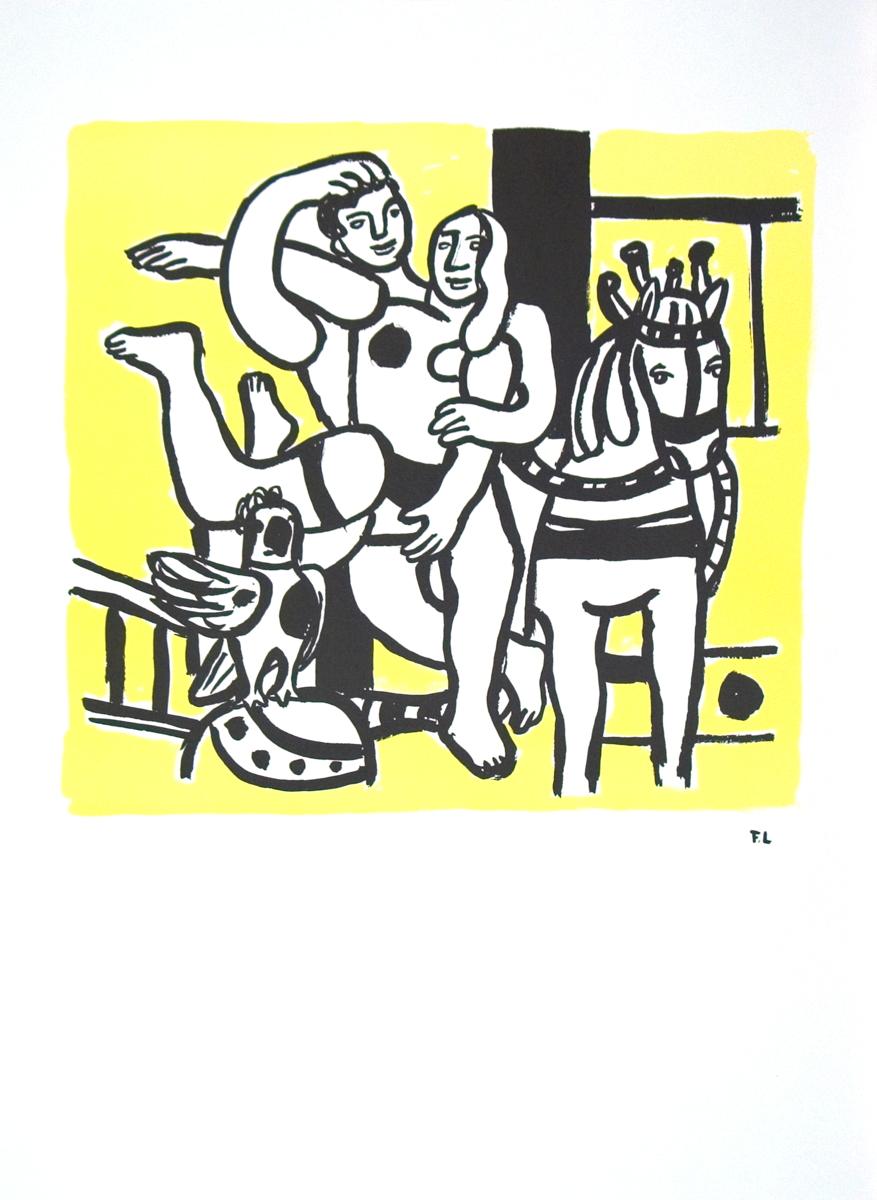
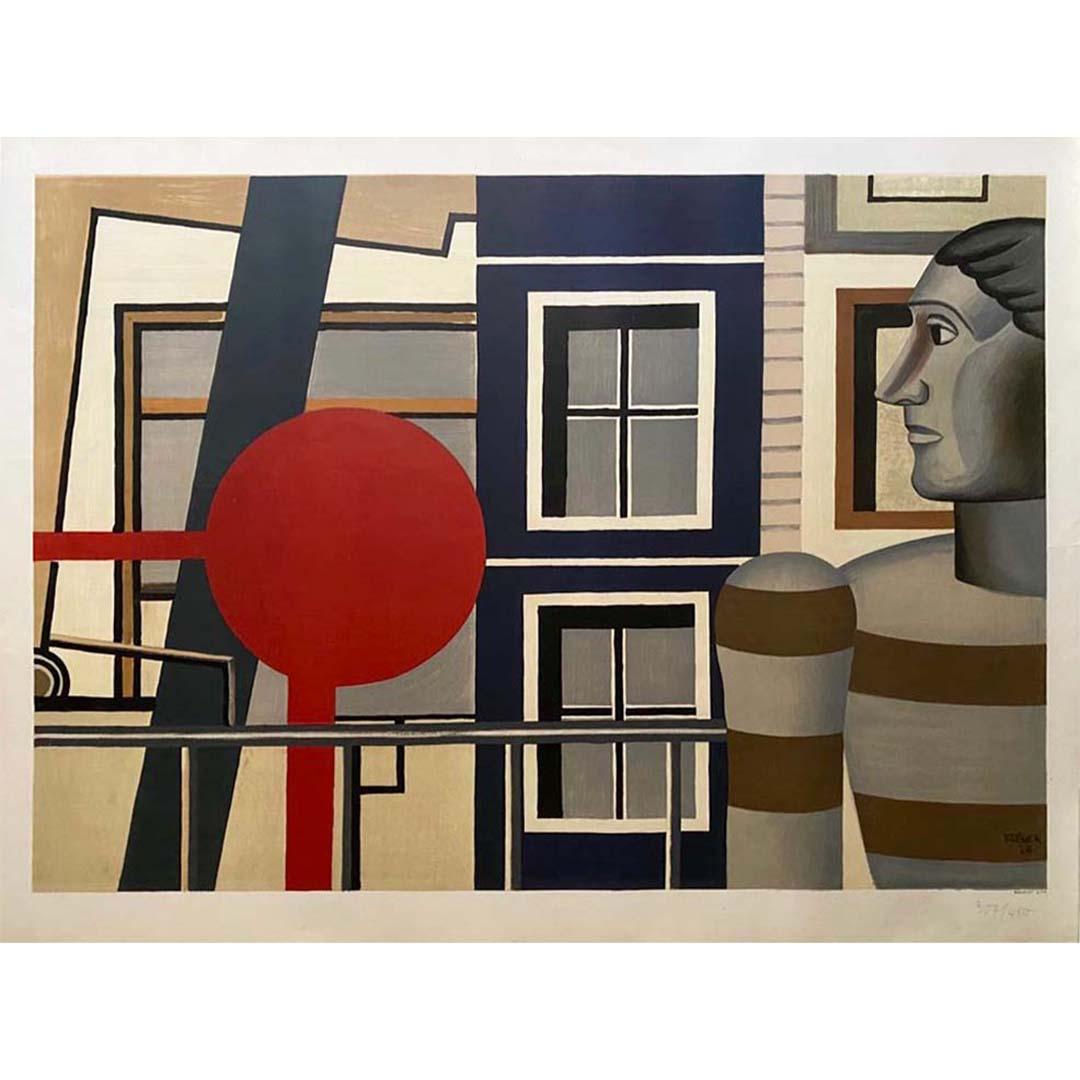
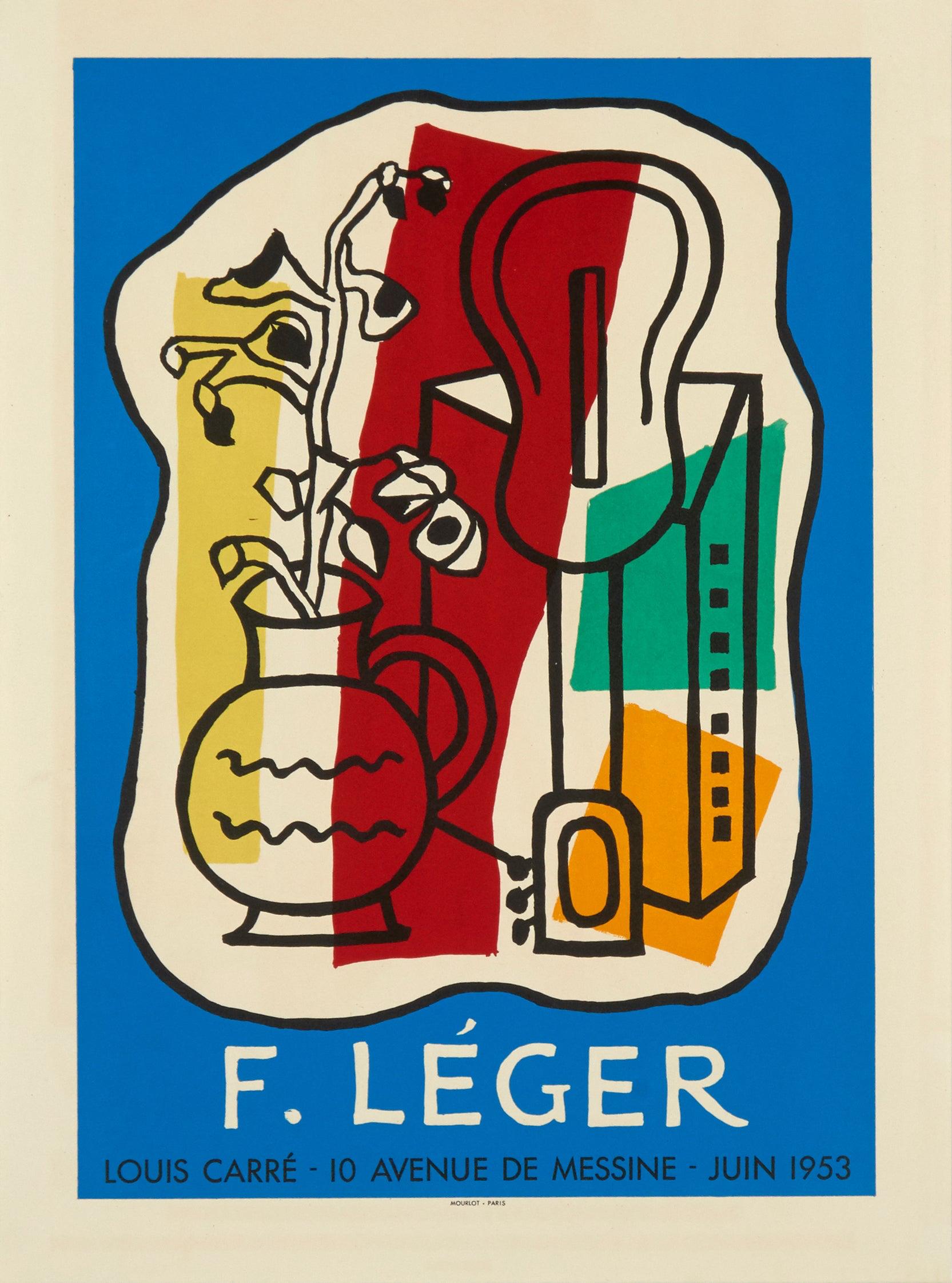
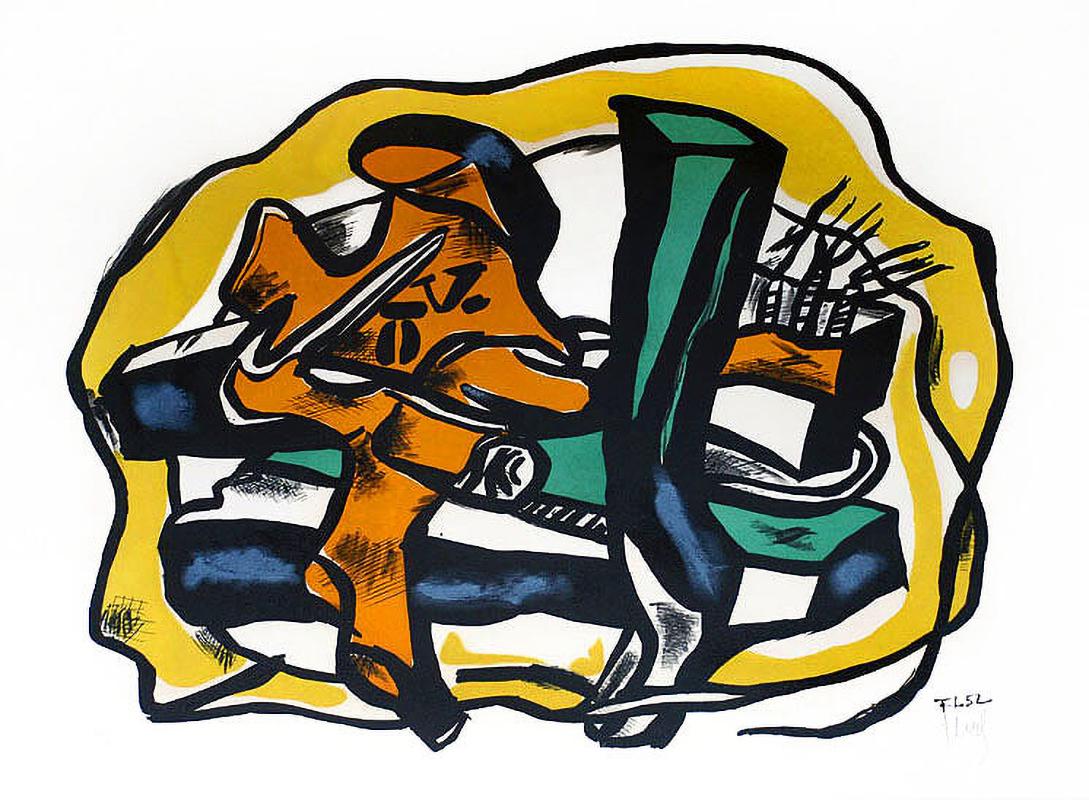
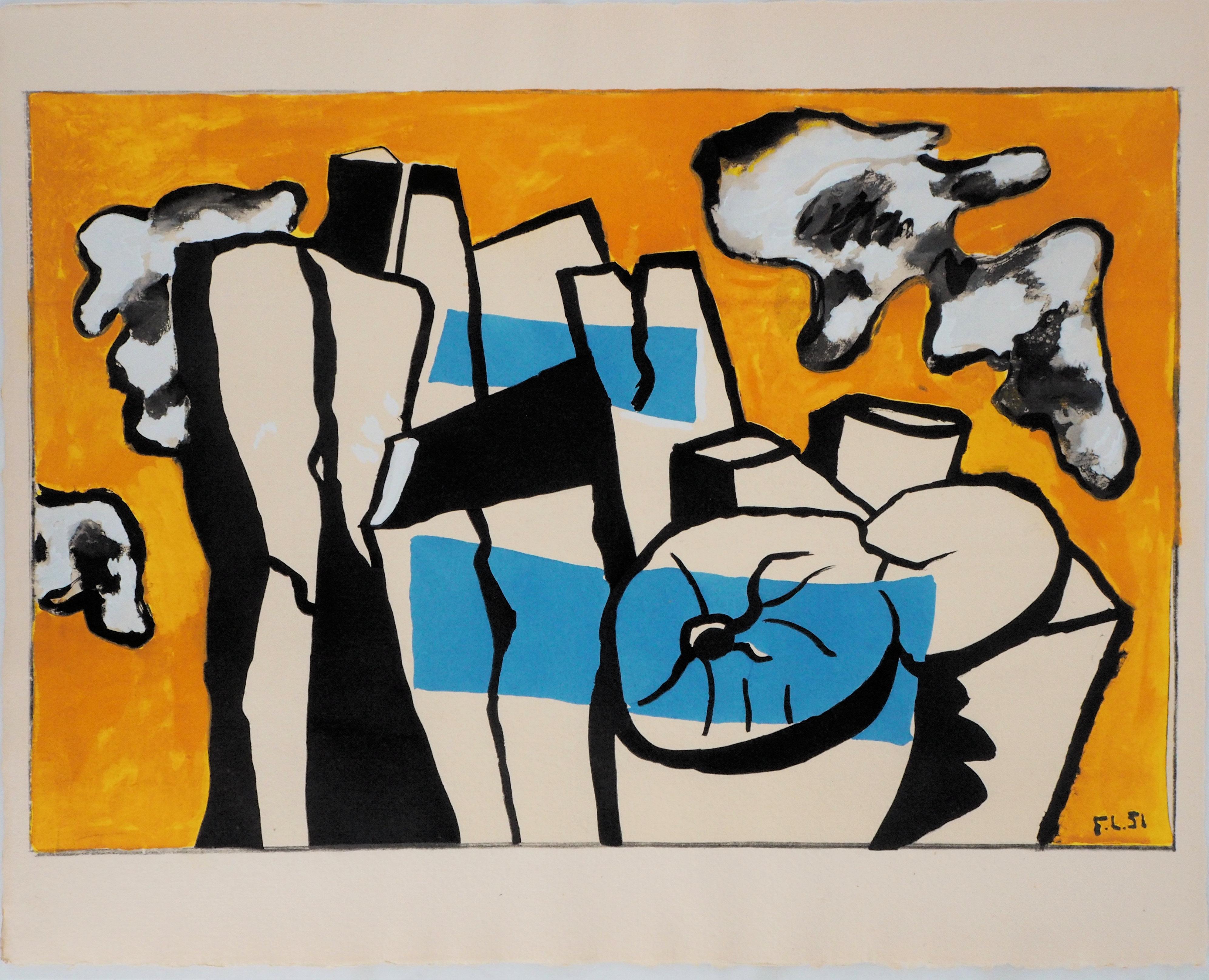
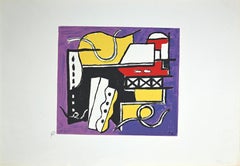
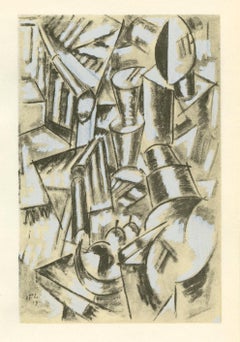
This exquisite lithograph and pochoir after Fernand Leger (1881–1955), titled Etude pour La Partie de Cartes (Study for The Card Game), from the album Fernand Leger, Dessins de Guerre 1915-16 (Fernand Leger, War Drawings 1915-16), originates from the 1956 edition published by Berggruen et Cie, Paris, and printed by Atelier Daniel Jacomet et Cie, Paris, under the direction of Daniel Jacomet, Paris, February 1956. The work embodies Legers mastery of tonal contrast, structural rhythm, and mechanized form, distilling the stark emotional tension and modernist clarity that define his wartime graphic vision.
Executed as a lithograph and pochoir on velin paper, this work measures 7.75 x 10 inches (19.7 x 25.4 cm). Unsigned and unnumbered as issued. The edition exemplifies the refined craftsmanship of Atelier Daniel Jacomet et Cie, Paris.
Artwork Details:
Artist: After Fernand Leger (1881–1955)
Title: Etude pour La Partie de Cartes (Study for The Card Game), from the album Fernand Leger, Dessins de Guerre 1915-16 (Fernand Leger, War Drawings 1915-16)
Medium: Lithograph and pochoir on velin paper
Dimensions: 7.75 x 10 inches (19.7 x 25.4 cm)
Inscription: Unsigned and unnumbered as issued
Date: February 1956
Publisher: Berggruen et Cie, Paris
Printer: Atelier Daniel Jacomet et Cie, Paris, under the direction of Daniel Jacomet, Paris
Condition: Well preserved, consistent with age and medium
Provenance: From the album Fernand Leger, Dessins de Guerre 1915-16 (Fernand Leger, War Drawings 1915-16), published by Berggruen et Cie, Paris; printed by Atelier Daniel Jacomet et Cie, Paris, under the direction of Daniel Jacomet, Paris, February 1956
Notes:
Excerpted from the folio (translated from French), Fernand Leger wanted this album to be dedicated to the memory of Jeanne Leger (1895-1950). I dedicate this album to the memory of my dear friend Fernand Leger (1881-1955), who died before the publication of the album could be completed. D.C. This album, whose plates were shot in pochoir by the procede Daniel Jacomet, was completed to print on the presses of L'Imprimerie Union in Paris in February 1956. The circulation is limited to DC numbered examples and L examples out of trade.
About the Publication:
Fernand Leger, Dessins de Guerre 1915-16 (Fernand Leger, War Drawings 1915-16), published in 1956 by Berggruen et Cie, stands as one of the most historically resonant posthumous albums devoted to Legers early wartime graphic work. Produced using the pochoir technique perfected by Daniel Jacomet, the publication meticulously interprets Legers original wartime drawings, preserving their stark tonalities, mechanical precision, and emotional intensity. Completed on the presses of L'Imprimerie Union and issued in a controlled edition including numbered and out-of-trade impressions, the album serves as a powerful visual document of Legers artistic transformation during World War I—a period that profoundly shaped the development of his monumental machine-age style.
About the Artist:
Fernand Leger (1881–1955) was a French painter, sculptor, and filmmaker whose pioneering fusion of modern life, mechanization, and visual abstraction made him one of the most influential artists of the 20th century. Emerging from the Cubist movement, Leger developed a highly personal style distinguished by bold contrasts, cylindrical forms, and rhythmic compositions that celebrated the beauty of industrial progress and the vitality of modern urban life. Deeply influenced by the innovations of Paul Cezanne and the structural experimentation of Pablo Picasso and Georges Braque, Leger transformed Cubisms fragmented perspective into a dynamic, machine-age aesthetic that bridged fine art, architecture, and design. His work often depicted workers, machinery, and everyday objects as monumental symbols of harmony between humanity and technology, reflecting both his optimism for modernity and his belief in the democratization of art. During his career, Leger was part of an extraordinary artistic circle that included Henri Matisse, Marc Chagall, Alexander Calder, Alberto Giacometti, Salvador Dali, Joan Miro, Wassilly Kandinsky, Marcel Duchamp, and Man Ray—visionaries who shared his commitment to pushing the boundaries of artistic form and expression. A leading figure in the international avant-garde, Leger also explored large-scale murals, public art, and film, expanding the reach of modern art beyond the gallery. His works are represented in major museum collections worldwide, including the Museum of Modern Art, the Centre Pompidou, the Tate, and the Guggenheim, where they continue to inspire admiration for their bold geometry, humanist vision, and timeless modernity. The highest price ever paid for a Fernand Leger artwork is approximately 70 million USD, achieved in 2017 at Christies New York for Contraste de formes (1913).
Fernand Leger Etude pour La Partie de Cartes Dessins de Guerre 1915-16 1956, Leger Daniel Jacomet, Leger velin paper, Leger collectible lithograph.