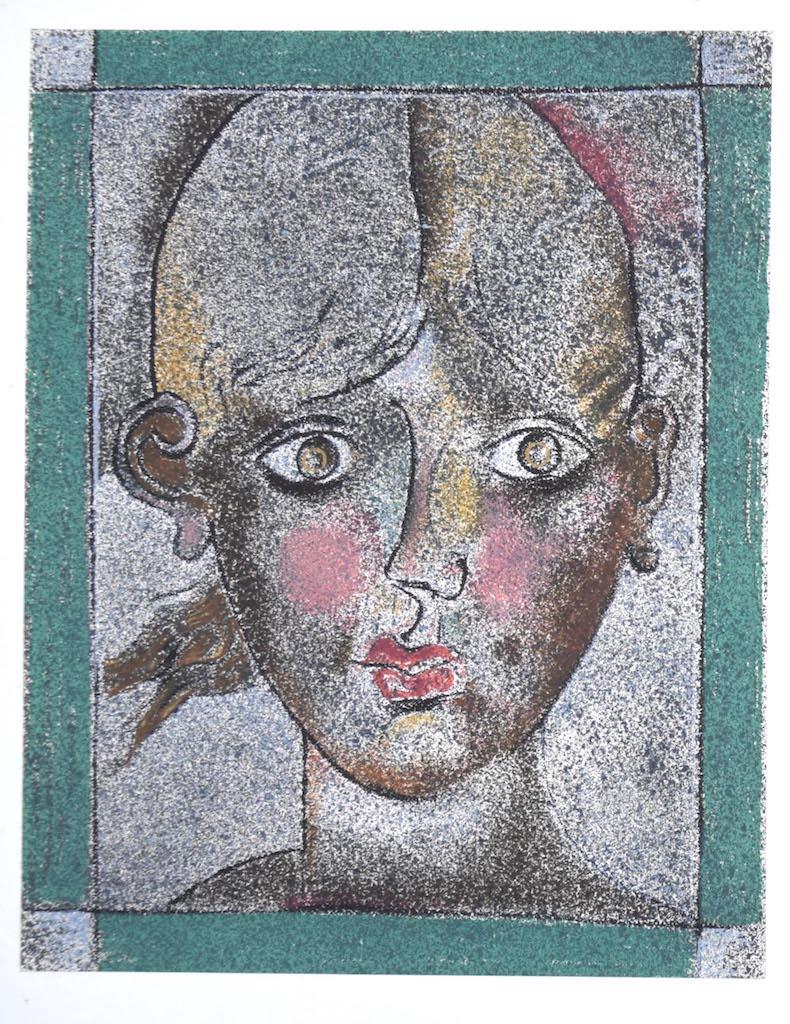
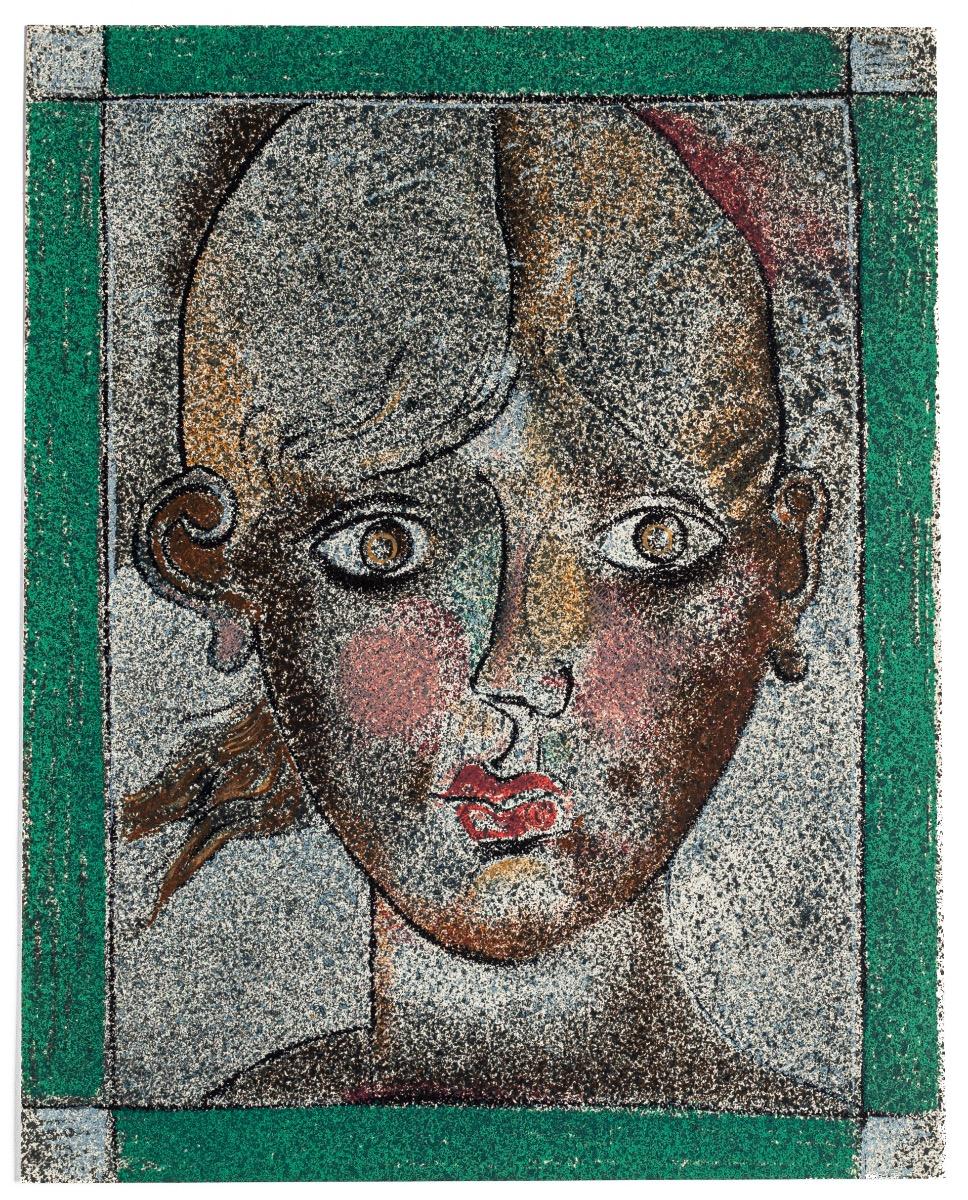
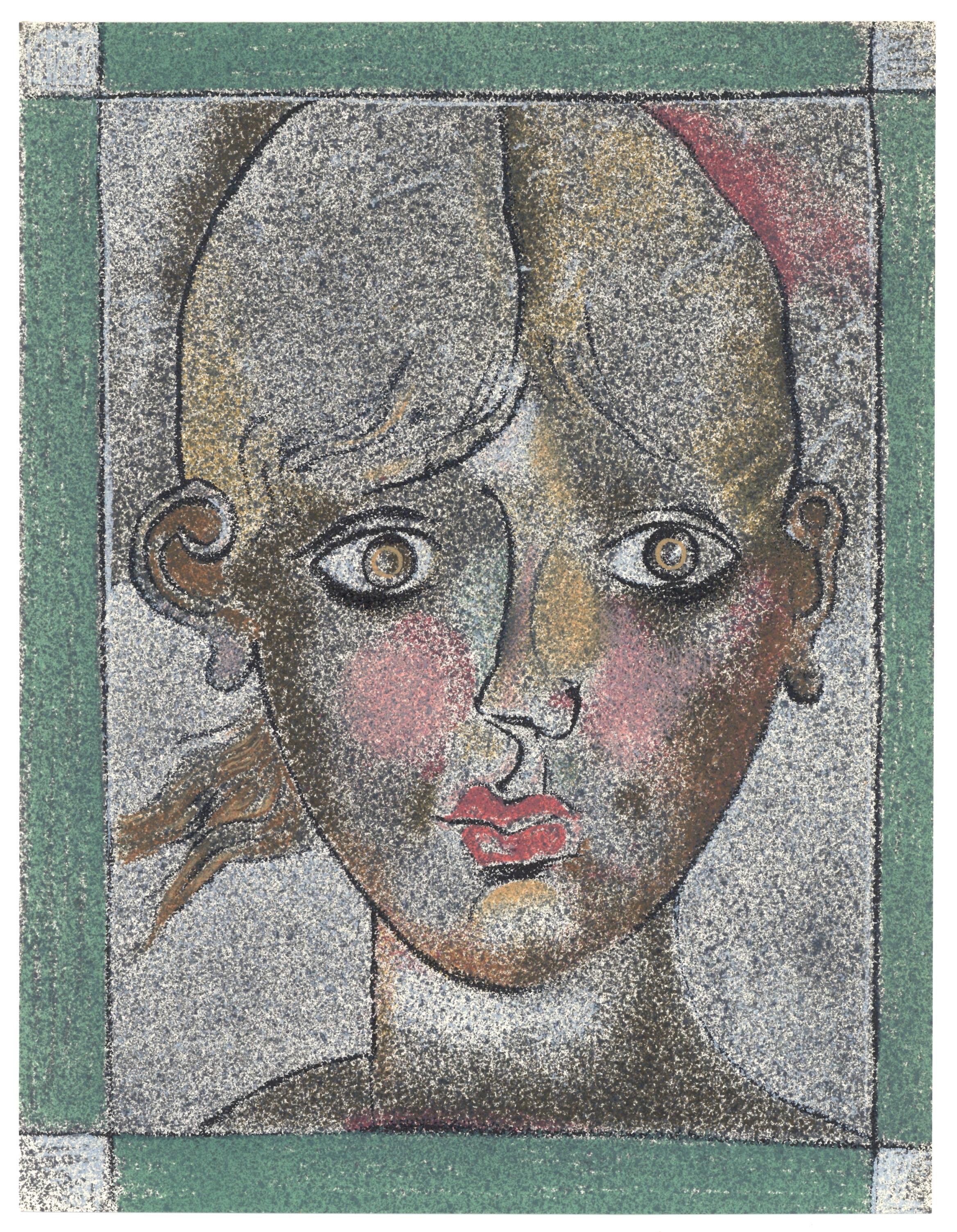
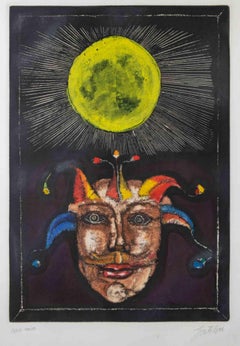
This exquisite lithograph by Franco Gentilini (1909–1981), titled Testa di paggio (Page’s Head), from the album XXe siecle, Nouvelle serie, XLIIe Annee, No. 55, originates from the 1980 edition published by Leon Amiel Publisher, New York, in collaboration with Societe Internationale d'Art XXe siecle, Paris, and printed by Image, Paris, 1980. Testa di paggio exemplifies Gentilini’s poetic union of architecture, spirituality, and modern form—an elegant synthesis of classical geometry and lyrical abstraction that celebrates beauty, balance, and the harmony of human experience.
Executed as a lithograph on velin paper, this work measures 12.5 x 9.75 inches. Unsigned and unnumbered, as issued. The edition exemplifies the superb craftsmanship of Image, Paris.
Artwork Details:
Artist: Franco Gentilini (1909–1981)
Title: Testa di paggio (Page’s Head), from the album XXe siecle, Nouvelle serie, XLIIe Annee, No. 55
Medium: Lithograph on velin paper
Dimensions: 12.5 x 9.75 inches (31.75 x 24.77 cm)
Inscription: Unsigned and unnumbered, as issued
Date: 1980
Publisher: Leon Amiel Publisher, New York, in collaboration with Societe Internationale d'Art XXe siecle, Paris
Printer: Image, Paris
Condition: Well preserved, consistent with age and medium
Provenance: From the album XXe siecle, Nouvelle serie, XLIIe Annee, No. 55, published by Leon Amiel Publisher, New York, in collaboration with Societe Internationale d'Art XXe siecle, Paris, and printed by Image, Paris, 1980
About the Publication:
Gualtieri di San Lazzaro's XXe Siecle (Twentieth Century) was one of the most influential art journals of the modern era, founded in Paris in 1938 as a platform for the greatest painters, sculptors, and writers of the 20th century. San Lazzaro, a visionary editor, critic, and champion of modernism, believed that art and literature should coexist as expressions of a shared human imagination. Under his direction, XXe Siecle became a cultural bridge between Europe and the wider world, publishing special issues devoted to leading figures such as Picasso, Matisse, Chagall, Braque, Calder, Miro, Kandinsky, and Leger. Each edition combined essays by renowned critics and poets with original lithographs printed by the foremost ateliers of Paris, London, and New York, including Mourlot, Curwen, and Universal Graphics, creating a uniquely rich dialogue between text and image. Through XXe Siecle, San Lazzaro preserved the creative spirit of the avant-garde during and after World War II, championing freedom of expression and the evolution of abstraction, surrealism, and modern thought. Over nearly four decades, the journal shaped international taste and defined the intellectual landscape of postwar art publishing. Today, XXe Siecle remains celebrated for its extraordinary synthesis of art, literature, and design, an enduring testament to Gualtieri di San Lazzaro's belief that the visual arts are the soul of the modern age.
About the Artist:
Franco Gentilini (1909–1981) was an Italian painter, draftsman, and printmaker whose lyrical balance of modernism, spirituality, and architectural order made him one of the most revered figures in 20th-century Italian art. Renowned for his ability to fuse the sacred and the everyday, Gentilini’s art radiates harmony between geometry and emotion, intellect and intuition. Born in Faenza, Italy—a city celebrated for its Renaissance ceramics and frescoes—he was immersed from an early age in the traditions of Italian craftsmanship and humanist design. After early training in decorative arts, he moved to Bologna and later to Rome, where he joined the avant-garde milieu of artists such as Pablo Picasso, Alexander Calder, Alberto Giacometti, Salvador Dali, Joan Miro, Wassily Kandinsky, Marcel Duchamp, and Man Ray. Influenced by these modern masters yet deeply rooted in Italy’s spiritual and architectural heritage, Gentilini developed a unique visual language that blended classical order with modern abstraction. His paintings, often populated by stylized figures, saints, lovers, musicians, and cityscapes, combine the clarity of Giotto and Piero della Francesca with the metaphysical poise of Giorgio de Chirico, the rhythmic playfulness of Miro, and the symbolic color harmonies of Kandinsky. Arches, towers, cats, bicycles, and domes recur as poetic symbols of timeless human experience. In postwar Italy, as the nation sought to rebuild, Gentilini’s art became a beacon of serenity and renewal, reflecting both the endurance of history and the optimism of modern life. His mastery extended beyond painting to fresco, lithography, and ceramics, reaffirming his belief in the unity of art and craft. Exhibited at multiple editions of the Venice Biennale and in major European capitals, his work was praised for reconciling Renaissance balance with modernist freedom. Like Calder and Giacometti, he treated space and structure as expressive elements; like Picasso and Dali, he transformed familiar imagery into symbolic form; and like Duchamp and Man Ray, he approached modernism as an intellectual and spiritual quest. Later Italian artists such as Renato Birolli, Afro Basaldella, and Giuseppe Capogrossi drew inspiration from his disciplined harmony and luminous restraint. Gentilini’s art remains housed in leading museums including the Galleria Nazionale d’Arte Moderna (Rome), the Vatican Museums, and the Museo del Novecento (Milan), where it continues to captivate collectors and scholars alike. Standing alongside Pablo Picasso, Alexander Calder, Alberto Giacometti, Salvador Dali, Joan Miro, Wassily Kandinsky, Marcel Duchamp, and Man Ray, Franco Gentilini endures as a visionary who bridged the sacred and the modern, translating Italy’s artistic legacy into a timeless visual language of geometry, faith, and poetry. His highest auction record was achieved by Le Donne di Ferrara (1952), which sold for $379,000 USD at Sotheby’s, Milan, on December 1, 2008, reaffirming his legacy as one of Italy’s most visionary, spiritually resonant, and collectible modern masters.
Franco Gentilini Testa di paggio, Gentilini XXe siecle, Gentilini 1980 lithograph, Gentilini velin paper, Gentilini Leon Amiel, Gentilini Image Paris, Gentilini collectible print.