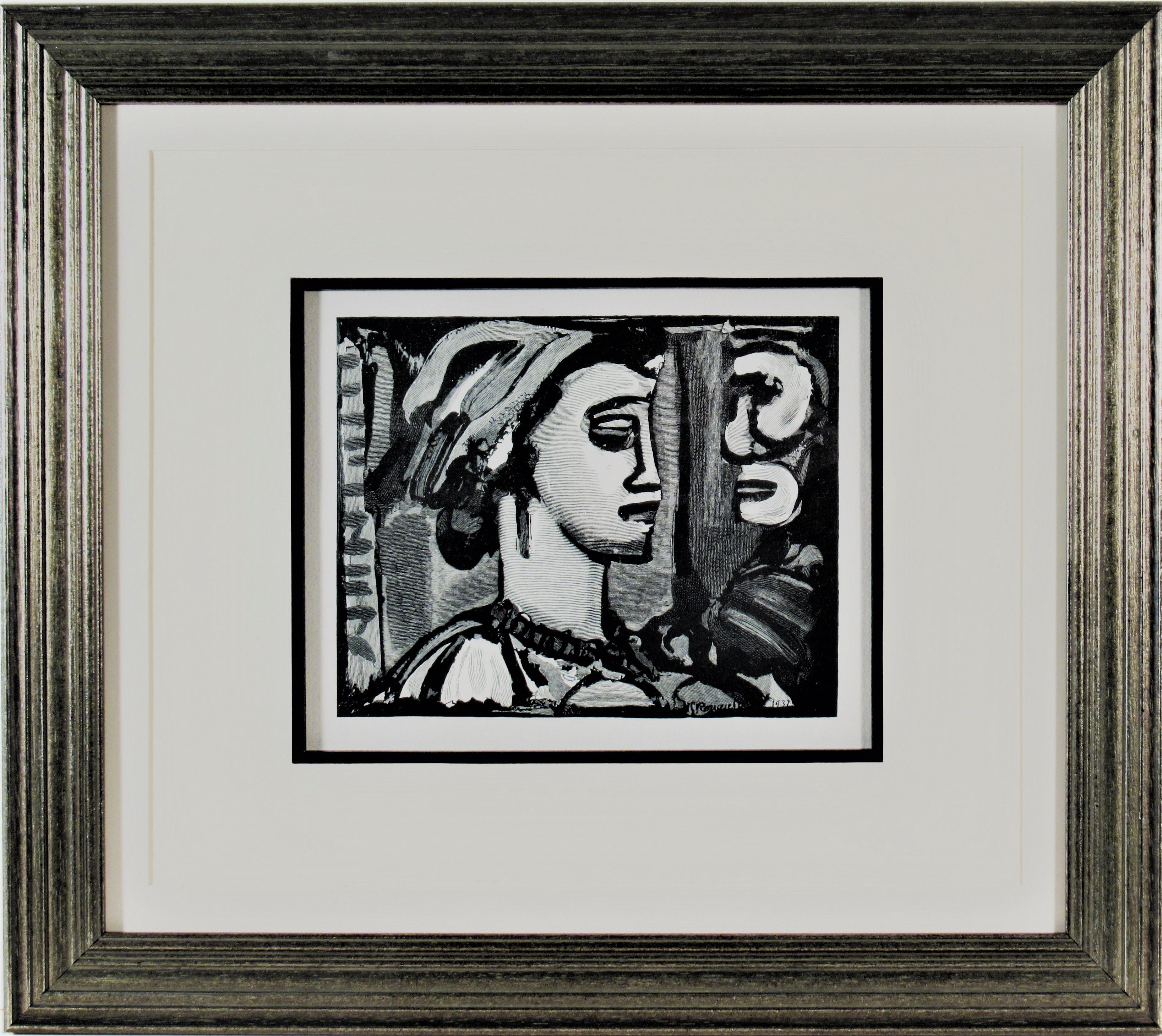
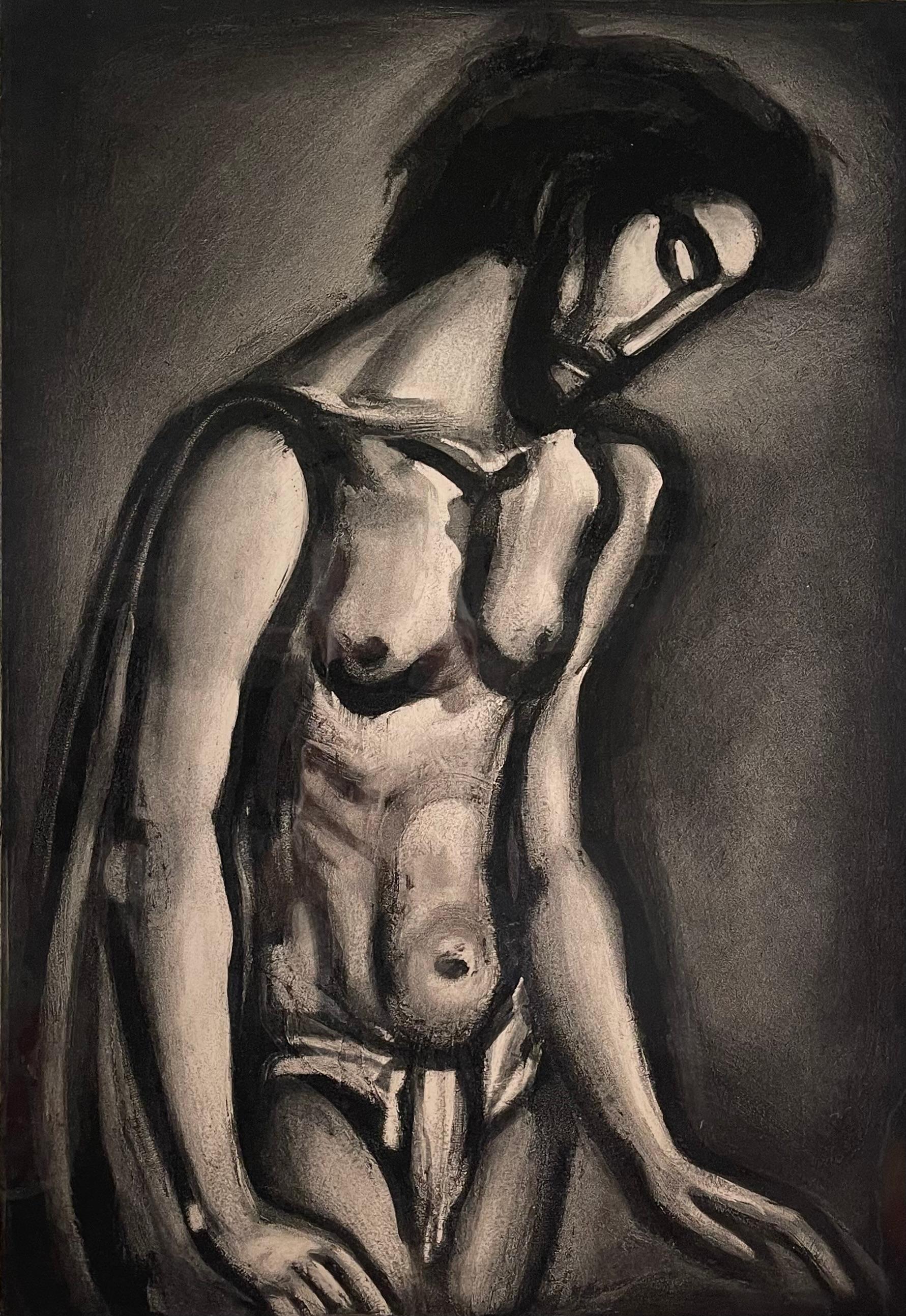
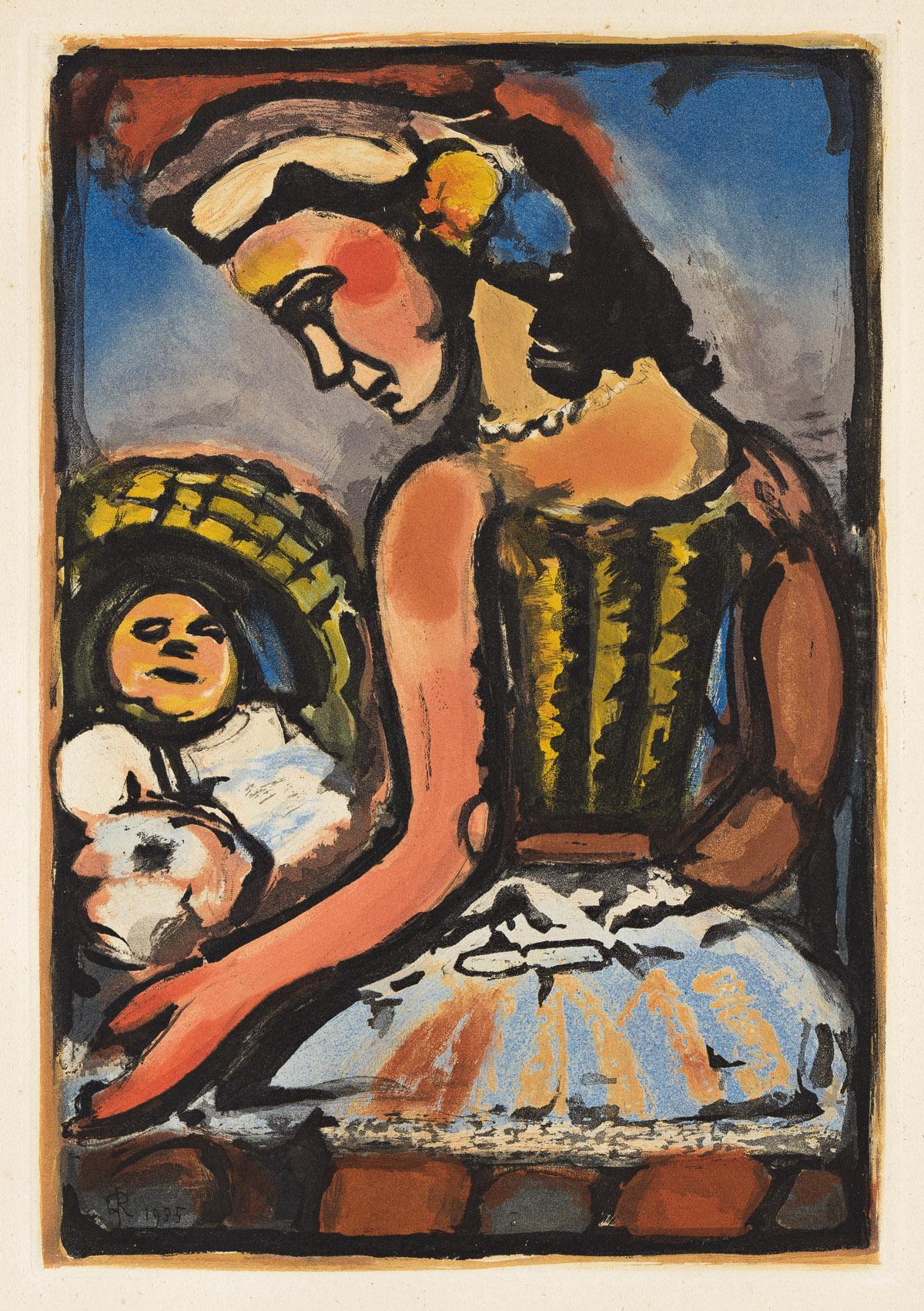
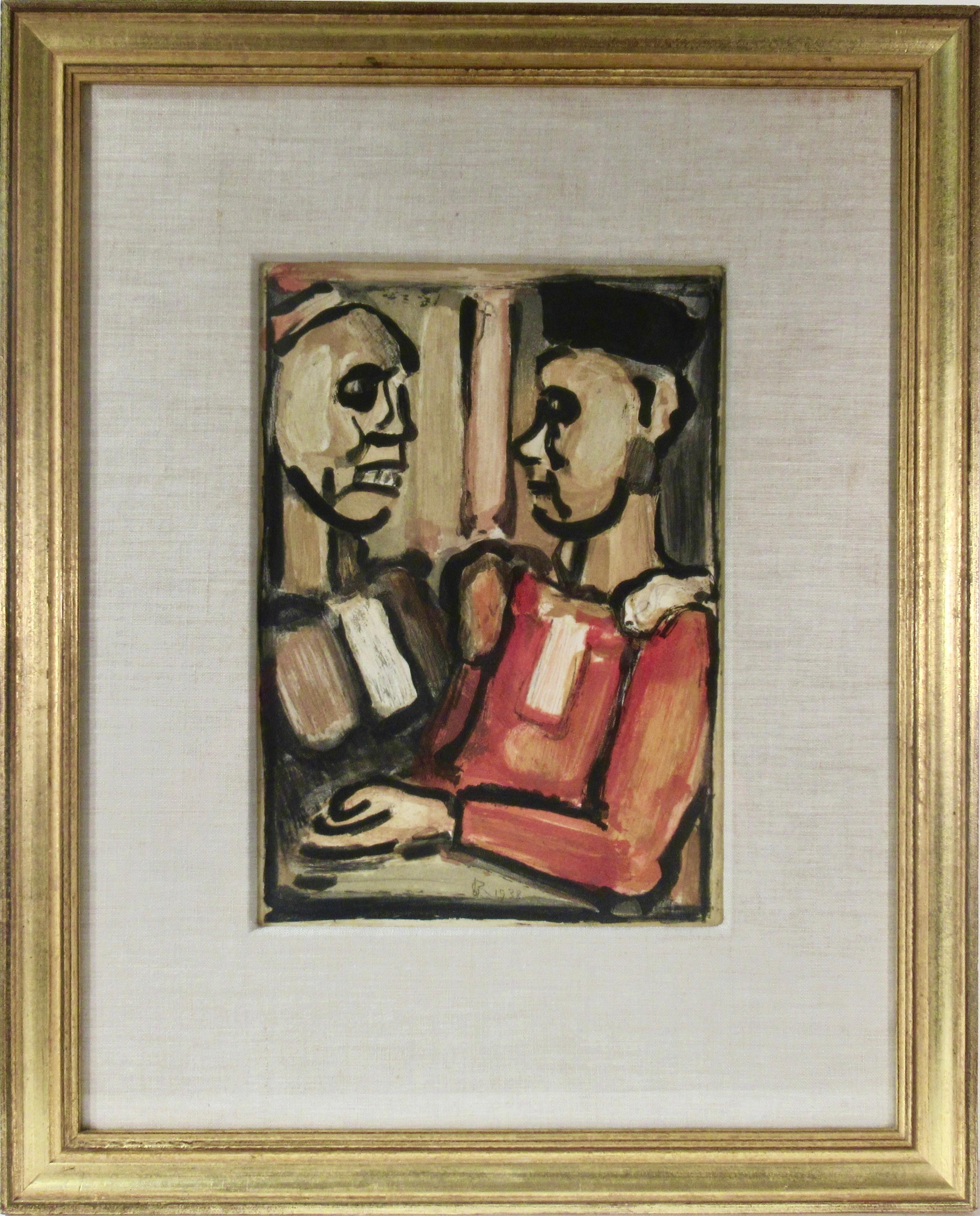
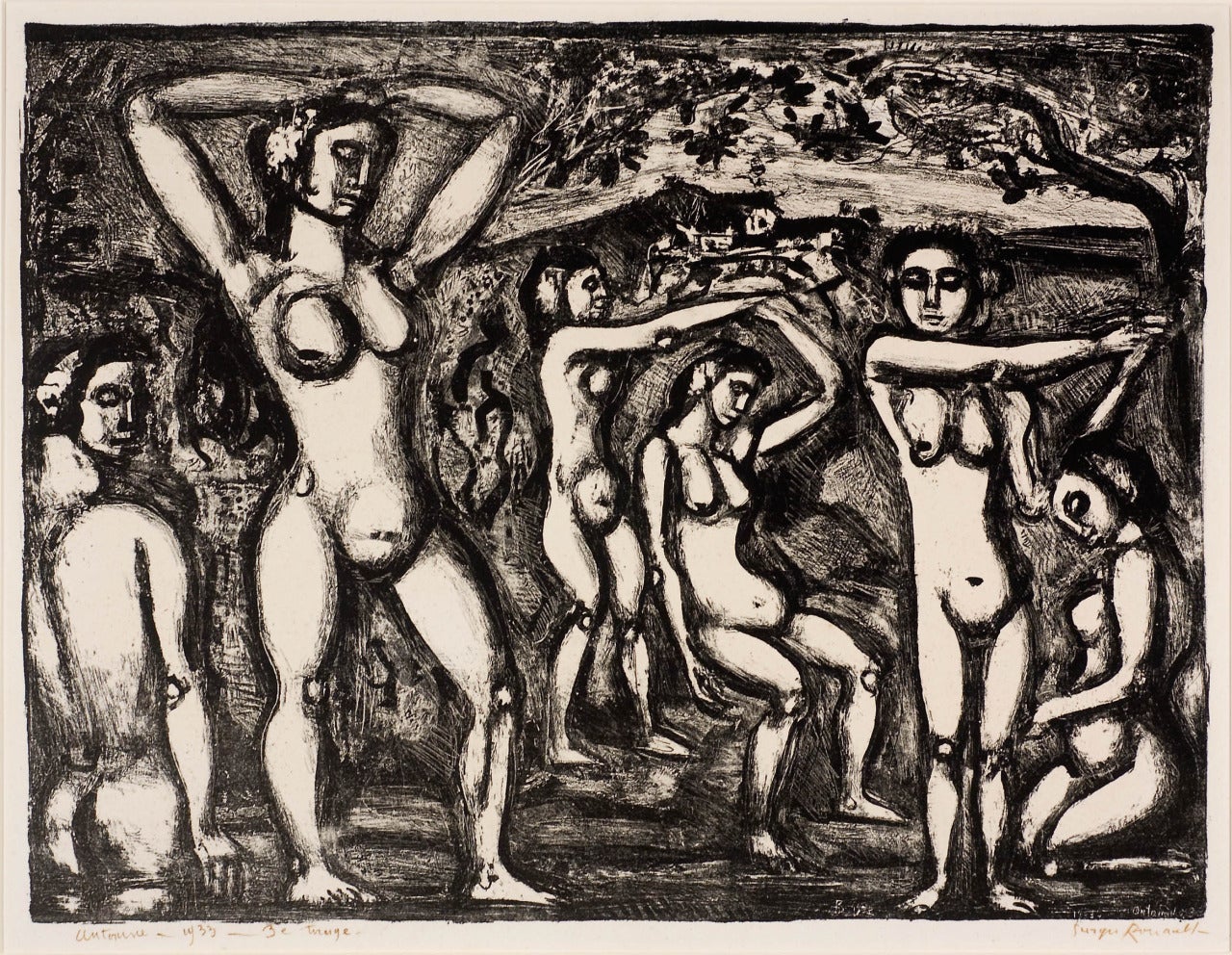
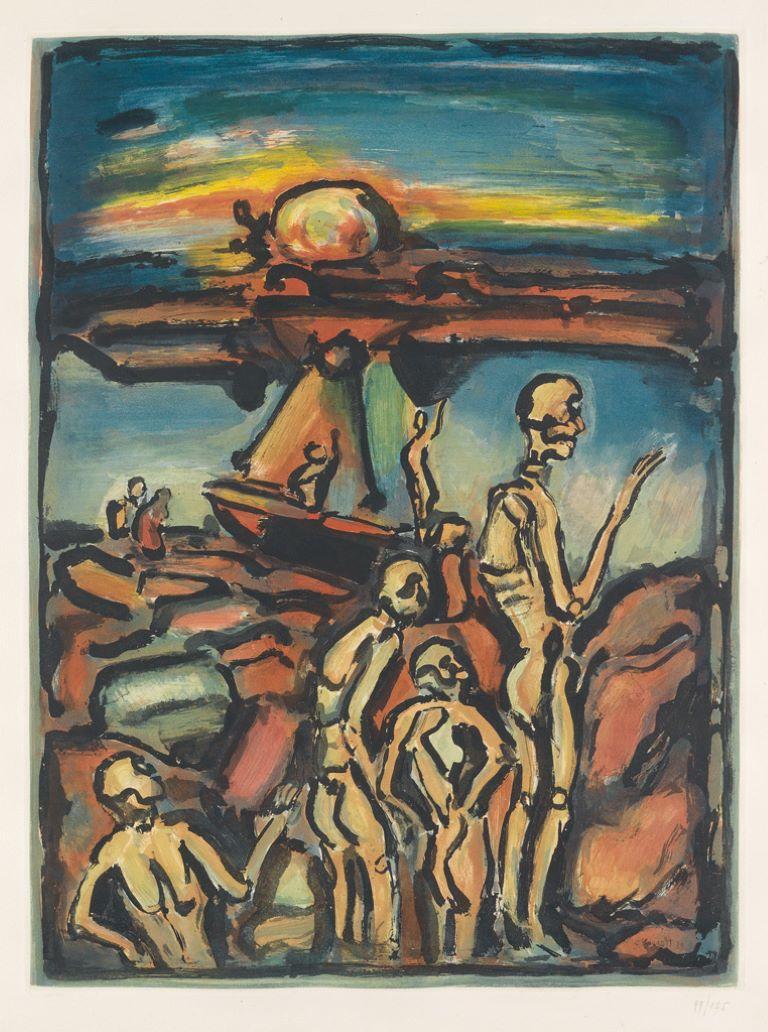
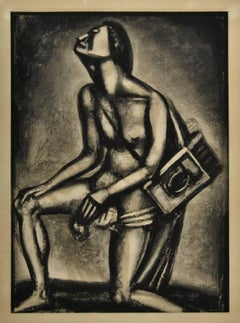
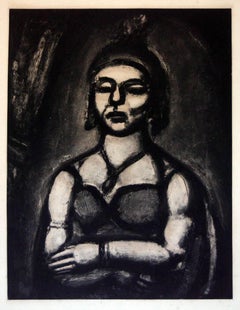
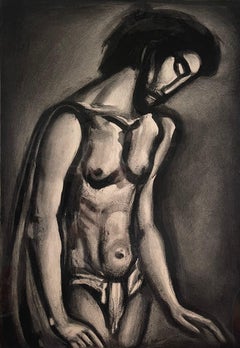
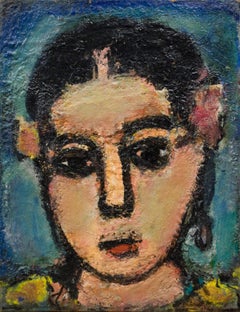
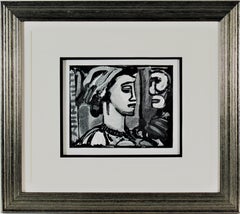
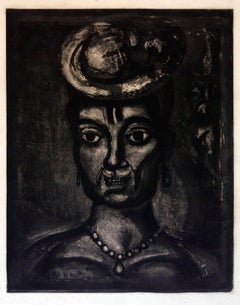
This exquisite heliogravure after Georges Rouault (1871–1958), titled Clair de lune (Moonlight), from the album Georges Rouault, Stella Vespertina (Evening Star), originates from the 1947 edition published by Rene Drouin, Editeur, Paris, and printed by Drager Freres, Maitres-Imprimeurs, Paris, 1947. The work embodies Rouaults mastery of spiritual luminosity and expressive contour, distilling emotional gravity and meditative force into a composition that reflects the height of his mature devotional vision.
Executed as a heliogravure on velin pur fil du Marais paper, archivally mounted to velin pur fil du Marais paper as issued, this work measures 19.25 x 15.25 inches overall, with an image size of 9.25 x 11.5 inches. Signed in the plate and unnumbered, as issued. The edition exemplifies the refined craftsmanship of Drager Freres, Maitres-Imprimeurs, Paris.
Artwork Details:
Artist: After Georges Rouault (1871–1958)
Title: Clair de lune (Moonlight), from the album Georges Rouault, Stella Vespertina (Evening Star)
Medium: Heliogravure on velin pur fil du Marais paper, archivally mounted to velin pur fil du Marais paper, as issued
Dimensions: 19.25 x 15.25 inches overall; 9.25 x 11.5 inches image (48.9 x 38.7 cm overall; 23.5 x 29.2 cm image)
Inscription: Signed in the plate and unnumbered, as issued
Date: 1947
Publisher: Rene Drouin, Editeur, Paris
Printer: Drager Freres, Maitres-Imprimeurs, Paris
Catalogue Raisonne References:
Monod, Luc. Manuel de lamateur de livres illustres modernes: 1875–1975. Ides and Calendes, 1992, no. 9971.
Chapon, Francois, and Isabelle Rouault. Le livre des livres de Georges Rouault: The Illustrated Books by Rouault. Andre Sauret and Michele Trinckvel, 1992.
Condition: Well preserved, consistent with age and medium
Provenance: From the album Georges Rouault, Stella Vespertina (Evening Star), published by Rene Drouin, Editeur, Paris; printed by Drager Freres, Maitres-Imprimeurs, Paris, 1947
Notes:
Excerpted from the folio (translated from French), It was taken from this album: V examples on Japon Imperial, including II of the brasses used in the print run, marked from A to E; XXV examples on Velin pur fil dArches, including a cure used for the print run, numbered from I to XXV; MM examples on Velin pur fil du Marais, numbered from I to MM.
About the Publication:
Georges Rouault, Stella Vespertina (Evening Star), published by Rene Drouin, Editeur, Paris, in 1947, stands among the artists most profound and introspective achievements in the realm of illustrated albums. Conceived in the later decades of Rouaults life, the publication reflects his spiritual humanism, his lifelong dialogue with suffering and redemption, and his visionary use of the printed medium as an extension of both devotional art and modern experimentation. Printed with extraordinary technical precision by Drager Freres, Maitres-Imprimeurs, the album was issued in multiple paper states, ranging from deluxe Japon Imperial to Velin dArches and Velin pur fil du Marais. Stella Vespertina exemplifies Rouaults belief that the graphic arts could convey the luminous intensity of stained glass and the moral weight of his painted oeuvre, making the folio a landmark in both French printmaking and twentieth-century spiritual modernism.
About the Artist:
Georges Rouault (1871–1958) was a French painter, printmaker, and stained-glass artist whose profound emotional intensity, luminous color palette, and moral vision made him one of the most original and spiritual figures in 20th-century modern art. Rooted in both the Symbolist and Fauvist movements, Rouaults work transcended stylistic boundaries to express a deep empathy for humanity, exploring themes of suffering, compassion, faith, and redemption. Trained under Symbolist master Gustave Moreau at the Ecole des Beaux-Arts in Paris, Rouault absorbed Moreaus emphasis on imagination and spiritual meaning while forging a bold visual language that combined the radiance of stained glass with the expressive realism of Rembrandt and the structural innovation of Paul Cezanne. His heavy black contours and jewel-like colors imbued his images with sacred resonance, whether depicting clowns, judges, or Christ figures—subjects through which he revealed the tension between sin and grace within the human condition. A leading participant in the Fauvist circle alongside Henri Matisse, Andre Derain, and Albert Marquet, Rouaults art bridged modernist color with profound spiritual clarity. His contemporaries included Pablo Picasso, Georges Braque, Marc Chagall, Alexander Calder, Alberto Giacometti, Salvador Dali, Joan Miro, Wassily Kandinsky, Marcel Duchamp, and Man Ray—artists similarly committed to redefining the expressive and symbolic boundaries of modern art. Rouaults works are housed in major museums including the Musee dOrsay, the Centre Pompidou, the Museum of Modern Art, the Tate, and the Art Institute of Chicago. The highest price ever paid for a Georges Rouault artwork is approximately 2.5 million USD, achieved in 2011 at Christies London for Le Dernier Roman du clown (circa 1917–1920).
Georges Rouault print, Rouault heliogravure, Stella Vespertina, Clair de lune, Rene Drouin Editeur, Drager Freres, velin pur fil du Marais, French spiritual modernism, Rouault collectible print, twentieth century devotional art.