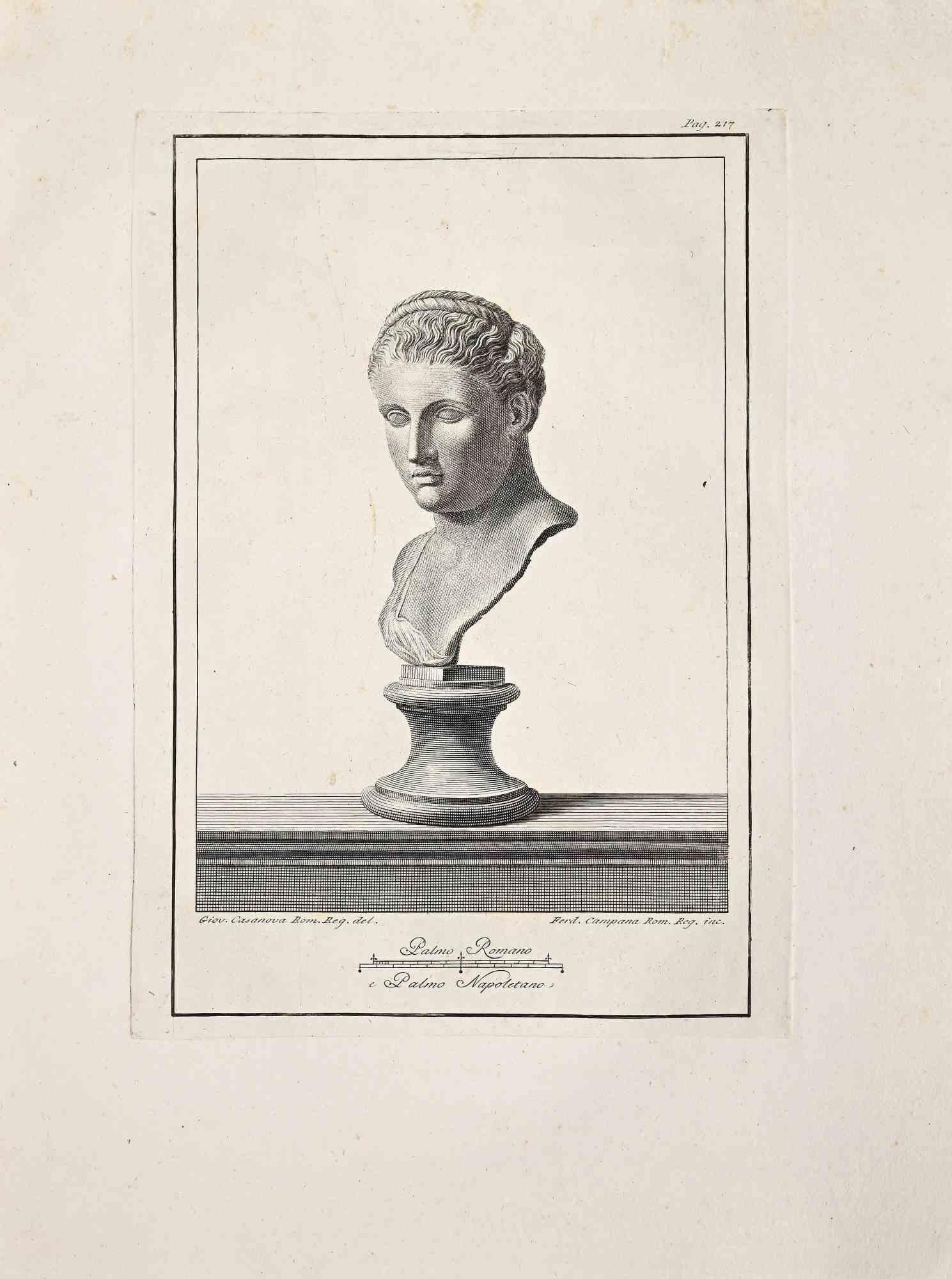
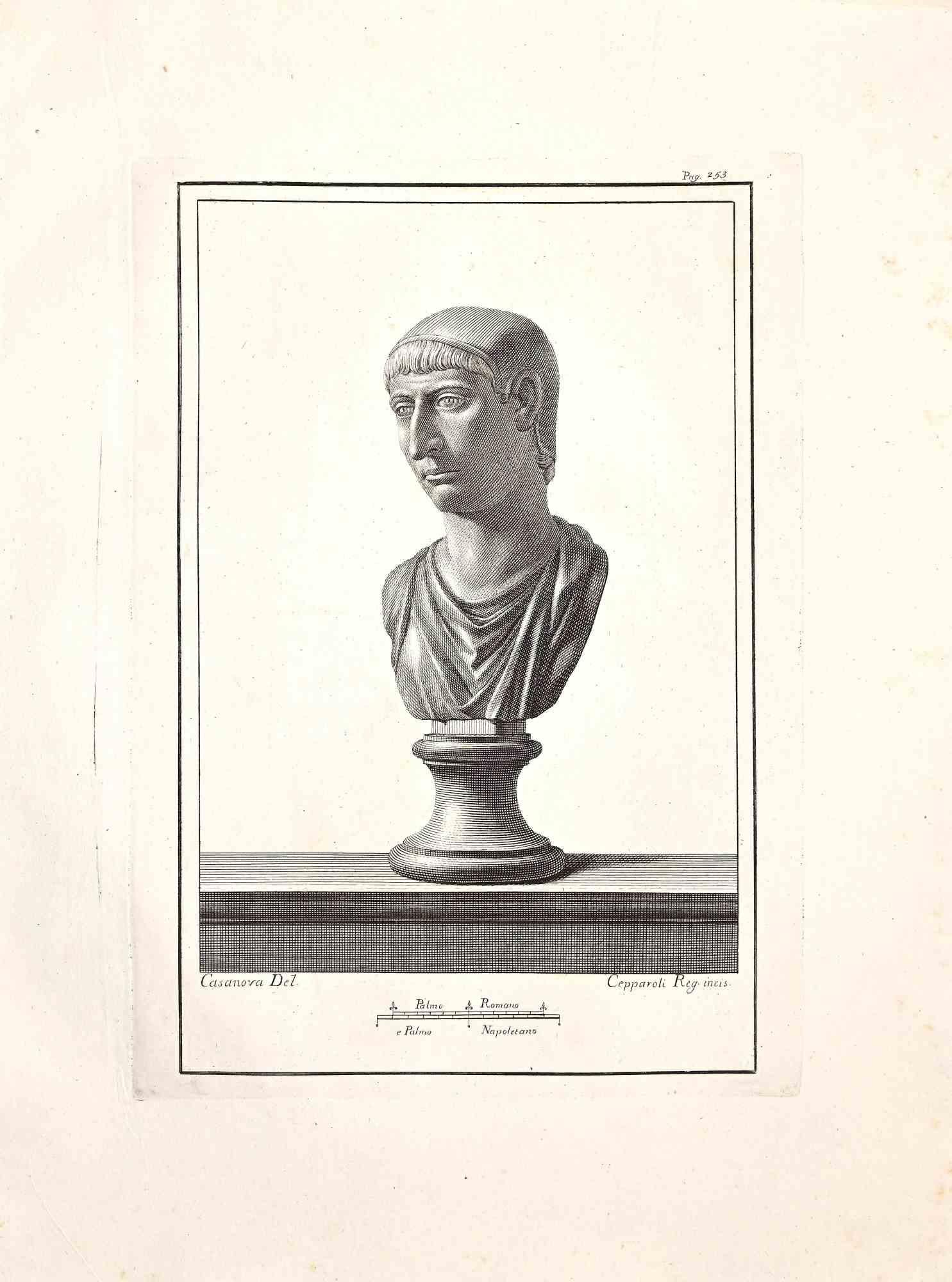
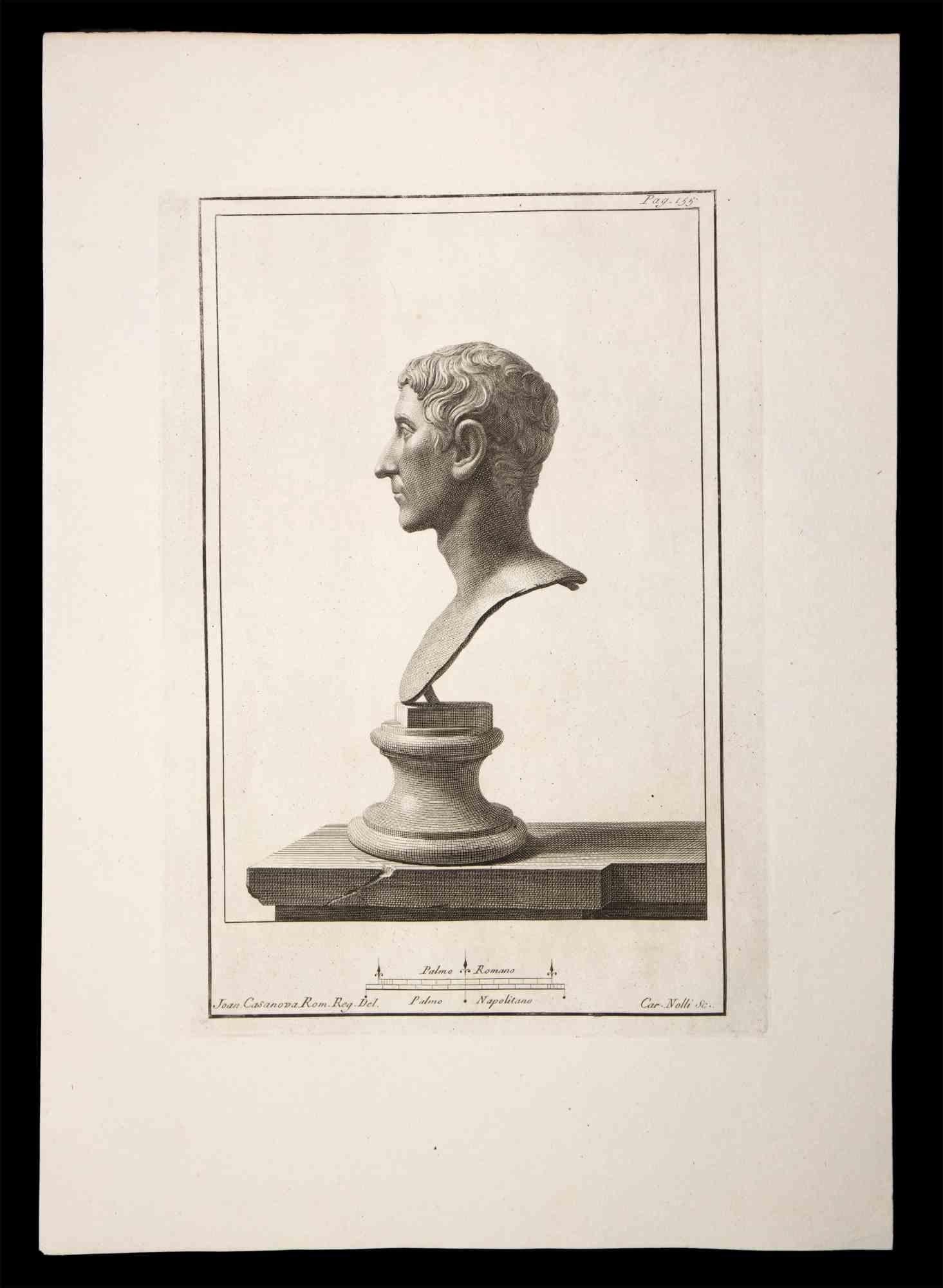
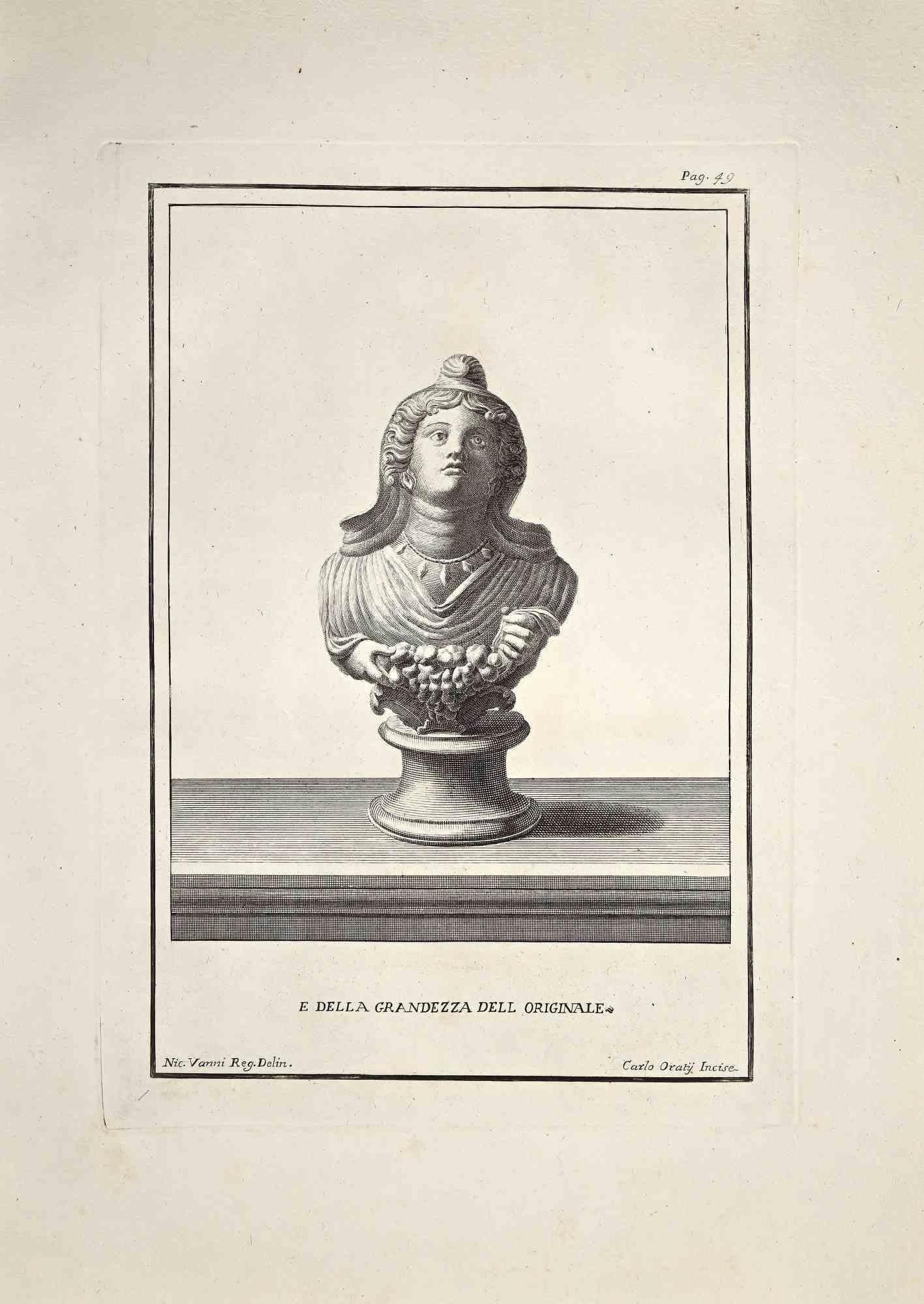
Want more images or videos?
Request additional images or videos from the seller
1 of 5

Giovanni Brunetti da Ravenna
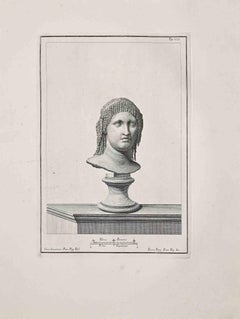
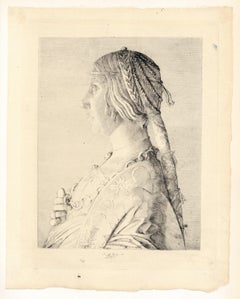
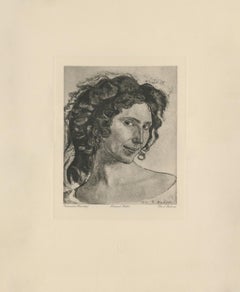
Head of Woman - Original Etching by Giovanni Brunetti da Ravenna

1821

$715.69
£524.48
€600
CA$985.27
A$1,002.23
CHF 572.29
MX$12,122.55
NOK 6,673.19
SEK 6,775.44
DKK 4,575.15

About the Item

“Testa muliebre” (Head of a woman) is a beautiful black and white burin and etching on paper, realized by the artist Giovanni Brunetti da Ravenna, after Bernardino Nocchi, as the inscriptions on plates on lower margins report “Bernardino Nocchi delineò/ Gio. Brunetti incise Roma”. This original print is numbered on plate in Roman numerals on higher margin: “Tom II. /Tav. XIII" and is a plate from the series "Illustrazioni de'Monumenti scelti Borghesiani già esistenti nella Villa sul Pincio (..)date ora per la prima volta in luce dal cav. Gio. Gherardo De Rossi e da Stefano Piale sotto la guida di Vincenzo Feoli", by Ennio Quirino Visconti, published by Stamperia de Romanis in Rome, 1821. Original title: Testa muliebre maggiore del naturale di bizzarra acconciatura creduta di Berenice Regina d'Egitto Translated Title: A woman's head greater than the natural one with a bizarre hairstyle believed to be that of Berenice, queen of Egypt This old master’s original prints shows a beautiful piece of the Borghese's collection represented in a neoclassical style with a bizzarre haistyle. In excellent conditions with some light signs of the time with some sporadic minor stains along the lower margins, some thinning of the paper on the left margin, a usual and imperceptible yellowing of the paper on the margins, this wonderful etching has preserved still today his beauty and his fresh impression. Illustrazioni de' Monumenti scelti Borghesiani This collection in two volumes is a beautifully detailed catalog of classical sculptures collected by Prince Borghese (1730-1800) in his Villa on the Pincio. Ennio Quirino Visconti (1751 - 1818) wrote the texts that accompany the large branches depicting. To these writings, which were available by the son of the illustrious archaeologist, the publishers added only a few illustrations relating to some minor monument of which copper had already been engraved. The engraved title-plate are signed by draughtsmen like Agostino Tofanelli, Stefano Tofanelli, Bernardino Nocchi, Domenico de Angelis or Teodoro Matteini, and by engravers Pietro Fontana Veneto, P. Vitali, Pietro Bettelini, Giovanni Folo Veneto, Giovanni Brunetti da Ravenna, Giovanni Ottaviani, Francesco Cecchini, Gio. Batta. Leonetti, Girolamo Carattoni, Domenico Cunego, Luigi Cunego, Alessandro Mochetti, Luigi Pizzi, Angelo Campanella or Giacomo Bossi. The Volume I shows ancient full-length statues, of the Borghese warrior by Agasias (two plates), Greek gods and heroes and Roman famous historical figures; the last two plates represents antique Egyptian deities. There are plates representing ancient bas-reliefs, sarcophagi, of mythological subjects, the Borghese Vase, portrait busts, a vase on an altar, two statues of Amor; and two modern statues, by Bernini (the Apollo and Daphne, and the David). «Très bel ouvrage» writes Brunet, «Grand ouvrage, le seul qui mérite, parmi ceux sur la villa Borgese, de figurer dans le chapitre aux Galeries et Collections» Vinet said, looking at this plate. Bernardino Nocchi (Lucca, 1741 - Rome, 1812) Bernardino Nocchi moved to Rome in 1769 with his colleague Stefano Tofanelli, entering the school of Niccolò Lapiccola where he developed a baroque style with neoclassical suggestions. Bernardino Nocchi was noticed by Pope Pius VI, who in 1780 entrusted him with the painting of the Sacred Apostolic Palaces and then in 1785 with the Print Room of the Vatican Library. But he also works outside the capital, in Gubbio where in 1797 he realizes the transit of St. Joseph in the Church of San Secondo, in Spoleto, in Lucca and in Catania. Returning to Rome, Nocchi painted some of his best paintings: Prince Camillo Borghese in 1799, The apotheosis of Saint Prudenziana, Saint Novato and Saint Timothy in 1803 and Pius VII in 1807.
  • Creator:
  • Creation Year:
    1821
  • Dimensions:
    Height: 23.23 in (59 cm)Width: 17.33 in (44 cm)Depth: 0.04 in (1 mm)
  • Medium:
  • Movement & Style:
  • Period:
  • Framing:
    Framing Options Available
  • Condition:
    Insurance may be requested by customers as additional service, contact us for more information.
  • Gallery Location:
    Roma, IT
  • Reference Number:
    Seller: M-1015731stDibs: LU65034441021

More From This Seller

View All
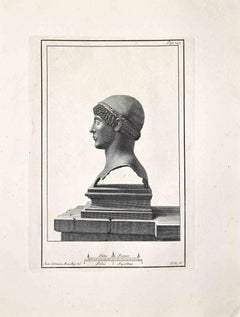
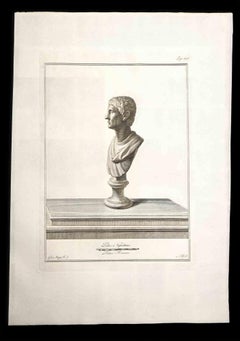
Ancient Roman Bust - Original Etching - 18th Century

Ancient Roman Bust - Original Etching - 18th Century

Located in Roma, IT

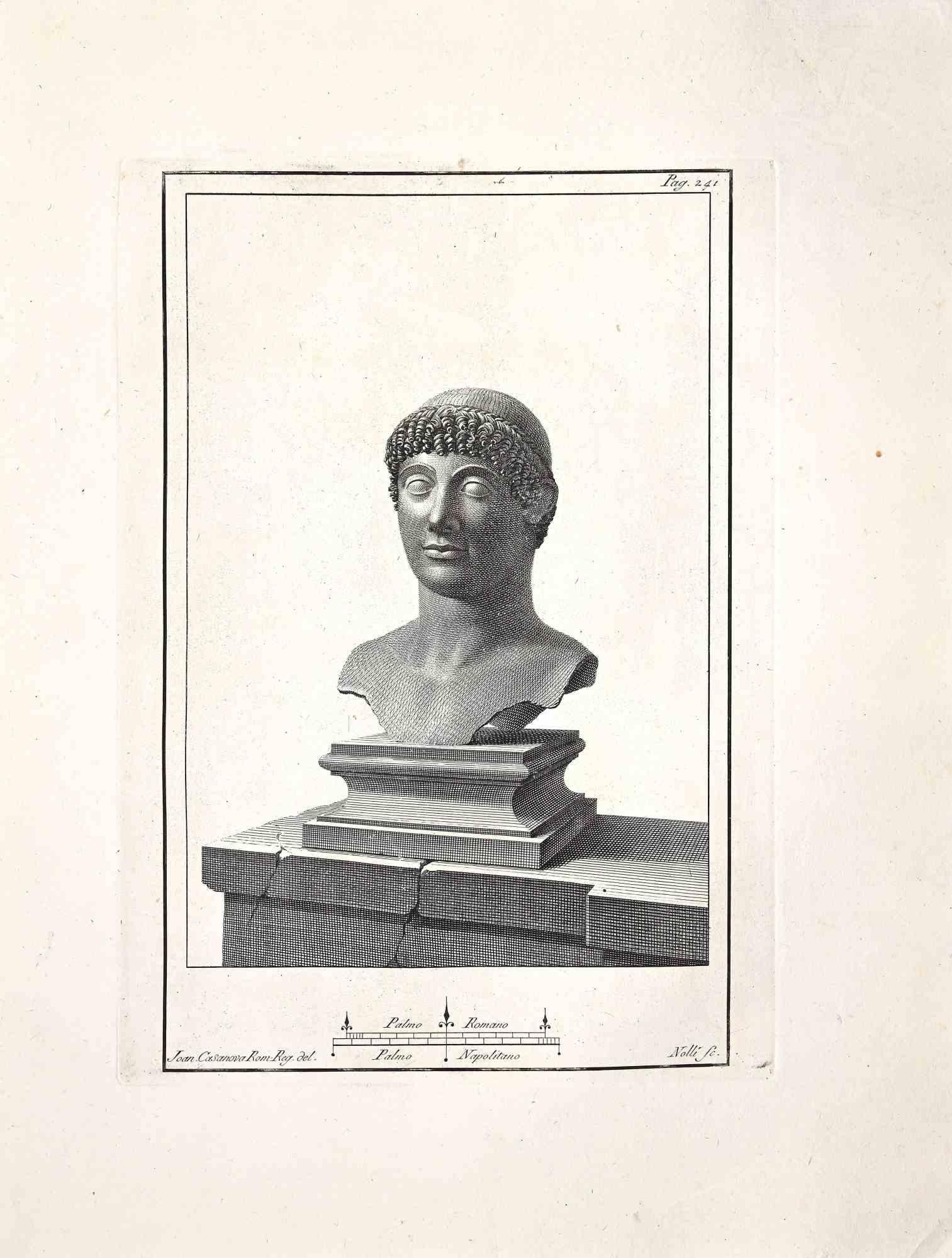
Ancient Roman Bust, original etching from the end of the 18th century, made by Various Old Masters. Good condition. Units of measurements typical of the period in the lower center...

Category

Late 18th Century Old Masters Figurative Prints

Materials

Etching

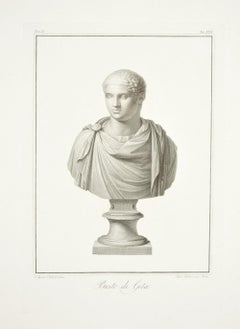
Bust of Geta Etching by Pietro Fontana, Old Masters, 1821, Unframed

Bust of Geta Etching by Pietro Fontana, Old Masters, 1821, Unframed

By Pietro Fontana

Located in Roma, IT

Image dimensions: 48.4 x 33.2 cm Busto di Geta (Bust of Geta) is a superb black and white burin and etching on paper, realized by the artist Pietro Fontana, after Agostino Tofanelli, as the inscriptions on plate on the lower margin report “Agostino Tofanelli delineò / Pietro Fontana incise Roma”. This original print is numbered on plate in Roman numerals on the higher margin: “Tom II. / Tav. XXII" and is a plate from the series "Illustrazioni de' Monumenti scelti Borghesiani già esistenti nella Villa sul Pincio (..) date ora per la prima volta in luce dal cav. Gio. Gherardo De Rossi e da Stefano Piale sotto la guida di Vincenzo Feoli", by Ennio Quirino Visconti, published by Stamperia de Romanis in Rome in 1821. This old master’s original print shows a beautiful piece of the Borghese's collection: a marble bust of Geta in a neoclassical style. Geta (full name Publius Septimius Geta) was the son of Septimius Severus and Julia Domna, and the brother of Caracalla. He was a Roman co-emperor from 209 to 212 AD, first with his father and then with his brother. His biography is very interesting: he was the younger son of Septimius Severus and his second wife; his face was obliterated because of the damnatio memoriae ordered by his brother Caracalla, who had him assassinated. In excellent conditions, with some light signs of time, some sporadic minor stains along the lower margin, and a usual and imperceptible yellowing of the paper on the margins. This wonderful etching has preserved its charming and fresh impression. Pietro Fontana (Bassano Romano, 1762 – Rome, 1837) The Italian artist and engraver Pietro Fontana was active in Rome and specialized in subjects dealing with the Vatican and the Papacy. He started his career as student of Raffaello Morghen...

Category

1820s Old Masters Figurative Prints

Materials

Etching

You May Also Like

"Buste de femme" etching

"Buste de femme" etching

By Paul Edme LeRat

Located in Henderson, NV

Medium: etching. Etched by Paul Edme Le Rat after Mino da Fiesole. This impression on thin japon paper was printed in 1875 at the Alfred Salmon imprimerie (before letters were added)...

Category

1870s Prints and Multiples

Materials

Etching

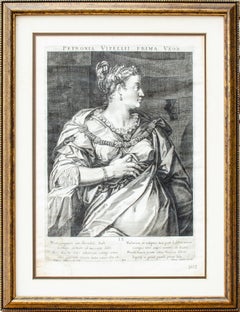
Aegidius Sadeler II Engraving "Petronia, First Wife of Vitellius, Roman Emperor"

Aegidius Sadeler II Engraving "Petronia, First Wife of Vitellius, Roman Emperor"

By Aegidius Sadeler II

Located in New York, NY

Artist: Aegidius Sadeler II Petronia, First Wife of Vitellius, from set of Roman Emperors and Empresses, c. 16th-17th century Engraving Publisher: Marcus Christoph Sadeler Sight: 15 1/4 x 10 3/4 in. Framed: 19 3/4 x 15 1/4 x 1 in. This image was conceived in the 16th century by Aegidius Sadeler II and published by Marcus Christoph Sadeler. It is unclear when the present version was executed. Aegidius Sadeler or Aegidius Sadeler II[1] (1570–1629) was a Flemish engraver who was principally active at the Prague court of Rudolf II, Holy Roman Emperor and his successors. Sadeler was born in Antwerp in the Sadeler family of print dealers and engravers. He was the son of Emmanuel de Sayeleer and the nephew of Aegidius I, Jan I en Raphael Sadeler.[2] He was trained by his uncle Jan I and became a member of the Antwerp Guild of St. Luke in 1589. He was active in Munich the next year in 1590, in Rome in 1593, in Naples and then again in Munich in 1594–1597. From 1597 he settled in Prague where he became court engraver for Rudolf II and made engraved portraits of notables and engravings after artworks there, most notably paintings by Bartholomeus Spranger, Roelant Savery, Hans von Aachen, Giuseppe Arcimboldo, and sculptures by Giambologna and Adriaen de Vries. His early engravings were mostly faithful copies of works by Albrecht Dürer in the Imperial collection and copies of paintings by notable Italian painters such as Raphael, Tintoretto, Parmigianino, Barocci and Titian or by Northern painters who worked there, such as Paul Bril and Denys Calvaert. In Prague he also engraved portraits of the notables of Rudolf's court, and collaborated with Spranger, Joseph Heintz the Elder, Jacobus Typotius and his friend Anselmus Boece de Boodt (1550-1632), Rudolf II's gemologist and physician.[3] After Rudolf II died he enjoyed the favour and protection of the two succeeding Emperors, Matthias and Ferdinand II.[4][5] According to Michael Bryan...

Category

16th Century Old Masters Portrait Prints

Materials

Engraving

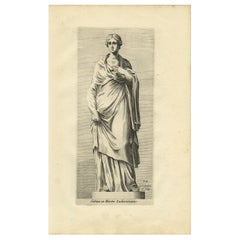
Original Antique Engraving of a Statue of a Sabine Woman in Rome, Italy

Original Antique Engraving of a Statue of a Sabine Woman in Rome, Italy

Located in Langweer, NL

Antique print, titled: 'Sabina in Hortis Ludovisianis.' - Statue of a Sabine woman in Rome. The Sabines were an Italic tribe which lived in the central Apennines of ancient Italy. From the 1660 Dutch edition of 'Icones et Segmenta Nobil. Signorum et Statuarum quae Romae extant' by Francois Perrier. This first Dutch edition was published by Nicolaas Visscher, printed in 1660 (Amsterdam). Although Perrier was French, he fell in love with Rome when he traveled there first in 1628 and then returning in 1635 and remaining for 10 years. While there, he completed this series of 100 views of Roman statuary in the various palaces and gardens, including the Medici and Vatican gardens and the Palazzo Farnese. Artists and Engravers: Made by 'Cornelis van Dalen...

Category

Antique 1660s Prints

Materials

Paper

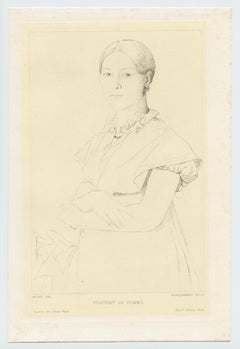
"Portrait de femme" etching

"Portrait de femme" etching

By Félix Bracquemond

Located in Henderson, NV

Medium: etching (etched by Felix Bracquemond after Ingres). This impression on chine-colle paper was printed in 1903 and published in Paris by the Gazette des Beaux-Arts. The image m...

Category

Early 1900s Prints and Multiples

Materials

Etching