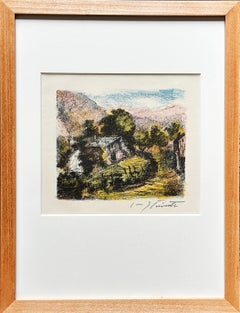
Want more images or videos?
Request additional images or videos from the seller
1 of 5

Lovis Corinth
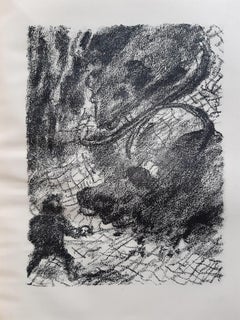
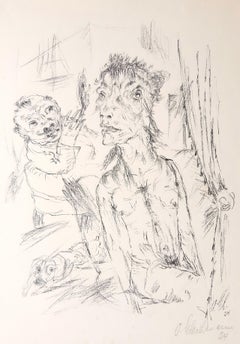
Tod und Jungling - Lithograph by L. Corinth - 1921

1921

$1,073.54
£786.73
€900VAT Included
CA$1,477.91
A$1,503.35
CHF 858.43
MX$18,183.83
NOK 10,009.78
SEK 10,163.15
DKK 6,862.72

About the Item

Tod und Jungling is an original lithograph, realized by Lovis Corinth in 1921, hand-signed and numbered n°33/95. Included a wooden frame. In very good conditions. Here the artworks represented a man with a strong expression of lines drawn, who has caught with his hand a skeleton, interestingly the skeleton has a sense of fear although the man is free of any frightening emotions. Lovis Corinth (1858-1925) was a German artist and writer whose mature work as a painter and printmaker realized a synthesis of impressionism and expressionism. known for his dramatic figurative and landscape paintings also for his landscapes of the Walchensee area of Bavaria and for his portraits, Corinth also painted religious scenes, often violent . He also made etchings and lithographs in which he reveal his capacity for Expressionist power. This artwork is shipped from Italy. Under existing legislation, any artwork in Italy created over 70 years ago by an artist who has died requires a licence for export regardless of the work’s market price. The shipping may require additional handling days to require the licence according to the final destination of the artwork.
  • Creator:
    Lovis Corinth (1858 - 1925, German)
  • Creation Year:
    1921
  • Dimensions:
    Height: 13.78 in (35 cm)Width: 9.85 in (25 cm)Depth: 0.08 in (2 mm)
  • Medium:
  • Period:
  • Condition:
    Insurance may be requested by customers as additional service, contact us for more information.
  • Gallery Location:
    Roma, IT
  • Reference Number:
    Seller: M-1064391stDibs: LU65036138082

More From This Seller

View All
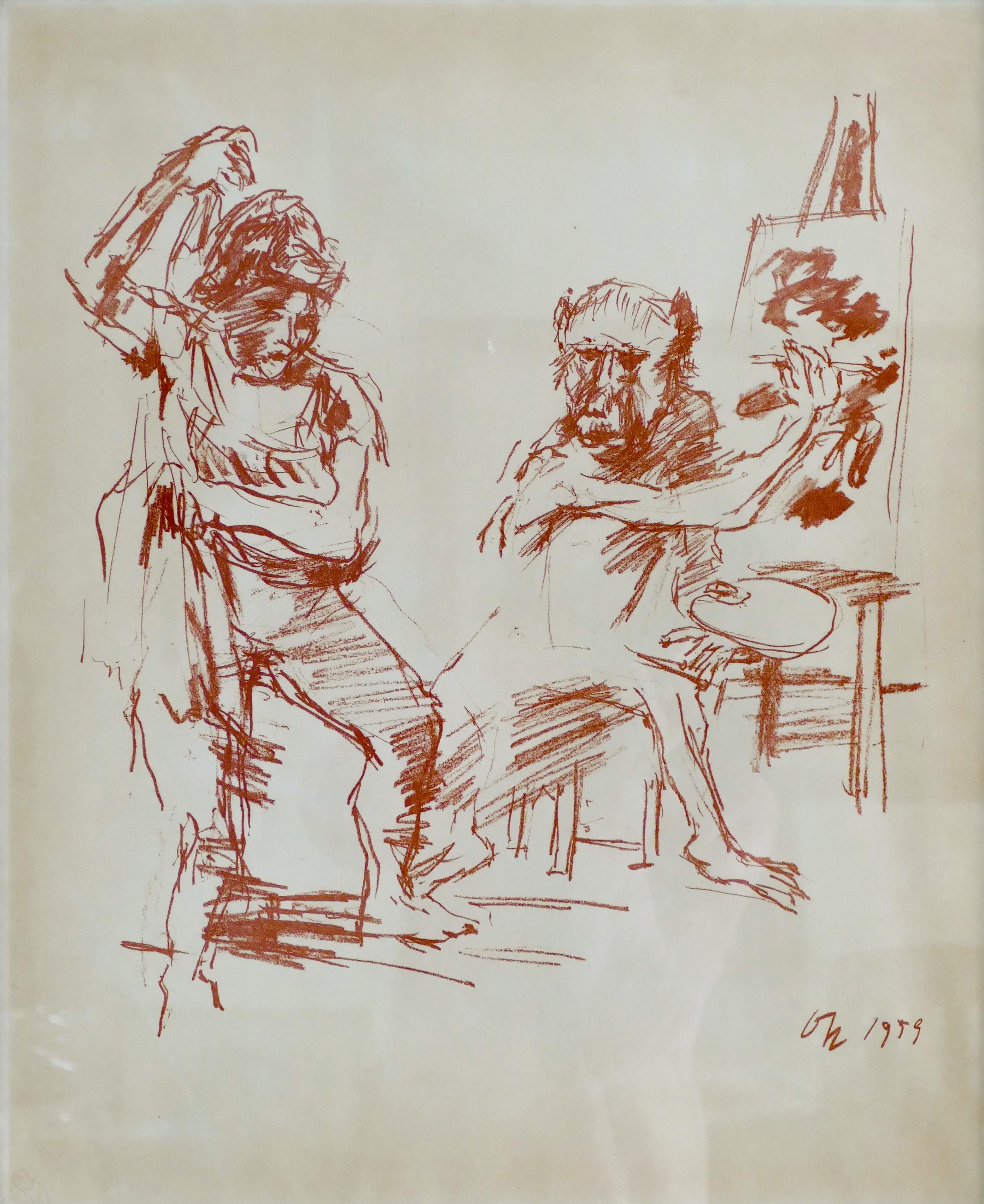
Painter and Model - Oskar Kokoschka - Original Lithograph 1959

Painter and Model - Oskar Kokoschka - Original Lithograph 1959

By Oskar Kokoschka

Located in Roma, IT

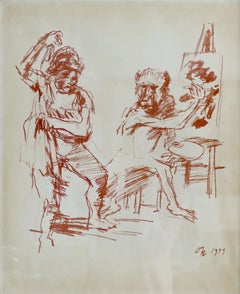
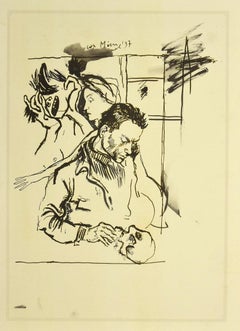
Image dimensions: 43 x 40 cm. Painter and Model is an original burnt-Sienna color lithograph on paper, realized in 1959 by the Austrian Expressionist master Oskar Kokoschka (1886-19...

Category

1950s Modern Figurative Prints

Materials

Lithograph

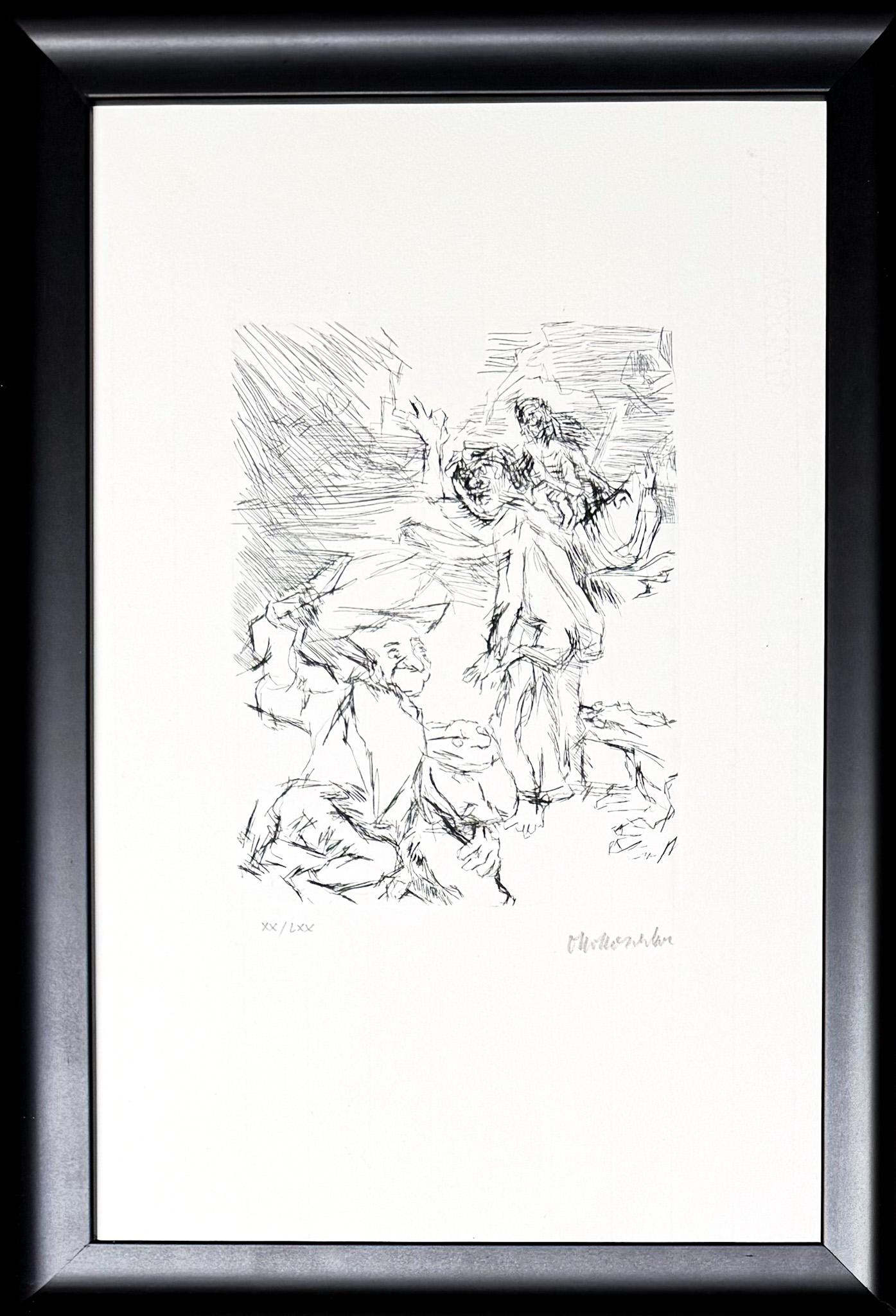
Bordellszene - Original Lithograph by Otto Gleichmann - 1924

Bordellszene - Original Lithograph by Otto Gleichmann - 1924

By Otto Gleichmann

Located in Roma, IT

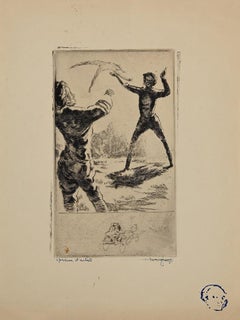
Bordellszene is an original lithograph, realized by Otto Gleichmann in 1924, hand- signed and dated. In very good conditions. Here the artwork represents two men in Expressionistic...

Category

1920s Expressionist Figurative Prints

Materials

Lithograph

Nude - Vintage Offset Print after Renato Guttuso - 1980s

Nude - Vintage Offset Print after Renato Guttuso - 1980s

By Renato Guttuso

Located in Roma, IT

Figure is a vintage offset print realized after a drawing of the Sicilian artist Renato Guttuso, 1980s. Signed on plate. Good conditions. Renato Guttuso (Bagheria, Palermo 1912 -...

Category

1930s Contemporary Portrait Prints

Materials

Paper, Offset

Selbstmörder - Original Etching and Drypoint by Magnus Zeller - 1919

Selbstmörder - Original Etching and Drypoint by Magnus Zeller - 1919

By Magnus Zeller

Located in Roma, IT

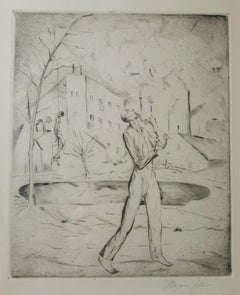
Selbstmörder is an original drypoint, realized by Magnus Zeller in 1919, signed and inscribed, Included a frame. In very good conditions. The artwork is representing a desperate m...

Category

1910s Expressionist Figurative Prints

Materials

Drypoint, Etching

You May Also Like

Lovis Corinth, Badeanstalt 1920, Lithograph, Hand-Signed , German Impressionist

Lovis Corinth, Badeanstalt 1920, Lithograph, Hand-Signed , German Impressionist

By Lovis Corinth

Located in Eltville am Rhein, DE

Lovis Corinth Tapiau 1858 - 1925 Zandvoort Bathing Establishment, 1920 Lithograph on handmade paper Signed in pencil lower right Marked "Probedruck" (proof print) lower left Image size: 32 x 36.8 cm Frame: 57 x 60 cm Good original condition, under passe-partout (additional photos available upon request) Rare proof print prior to the original edition of 115 copies Published by Fritz Gurlitt, Berlin Catalogue raisonné Schwarz 442 Handcrafted model frame, museum glass Viewing and pickup possible by appointment Authenticity confirmed in writing. Lovis Corinth was born on July 21, 1858, in the town of Tapiau in East Prussia (now Gwardejsk, Russia). While attending high school in Königsberg, he developed an interest in Greek and Roman mythology as well as the Christian stories of the Bible. From 1876, Lovis Corinth attended the art academy in Königsberg, where he studied under Otto Günther, who introduced him to Weimar plein air painting. In 1880, he transferred to the Munich Academy. Works from his Munich period demonstrate his orientation towards the naturalistic painting style of Wilhelm Leibl's circle. In 1883, Lovis Corinth traveled to Italy with his father, and in 1884 he spent three months in Antwerp, where he took painting lessons from Paul Eugène Gorge. From 1884 to 1887, Corinth studied at the Académie Julian in Paris. The artist then traveled to Berlin, where he probably painted his first self-portrait in 1887/88, which was followed by numerous others over the years. From 1891 to 1899, Corinth lived as a freelance painter in Munich, where he belonged to the Secession. After meeting Max Liebermann and Walter Leistikow in the winter of 1898/99, he decided to move to Berlin, where he settled in 1901. Prior to this, his work "Salomé with the Head of John the Baptist...

Category

1920s Impressionist Figurative Prints

Materials

Lithograph

Rudolf v. Rittner as Florian Geyer - Last man standing -

Rudolf v. Rittner as Florian Geyer - Last man standing -

By Lovis Corinth

Located in Berlin, DE

Lovis Corinth (1858 Tapiau - 1925 Zandvoort), Rudolf von Rittner as Florian Geyer, 1924 (Müller 854), drypoint signed in pencil. 20.4 × 14.2 (plate size), 37.7 × 30.6 cm (sheet size). Published by Karl Nierendorf, Berlin. Framed in a passepartout. - Strong, precise impression. Frame a little bit rubbed and with two small damages. About the artwork The knight is a leitmotif in Lovis Corinth's work, culminating in his Self-Portrait in Armour of 1914. Of all the paintings on this theme, Corinth most often depicted Florian Geyer. Descended from a Franconian noble family, he fought for the freedom of the peasants during the peasant wars of the Reformation, first diplomatically and then militarily, leading the legendary Schwarzen Haufen (Black Troops). The name derives from the black uniforms with which Geyer dressed the peasants willing to fight. During the Napoleonic occupation, the freedom fighter Florian Geyer was sung about by the Romantics, and the free corps Die Schwarze Schaar, founded in 1813 by Major von Lützow, succeeded the Schwarzer Haufen. It was against this historical background that Gerhard Hauptmann wrote the revolutionary drama Florian Geyer, which premiered at the Deutsches Theater in Berlin in 1896. While the actor Rudolf Rittner, who would later appear in Fritz Lang's films, initially played the role of Schäferhans, he took over the leading role in the new production at Berlin's Lessing Theatre in 1904, again directed by Emil Lessing, which established his fame as an actor. Hauptmann himself praised the acting. He wrote to Hugo von Hofmannsthal: "It went quite well with Florian Geyer. In any case, I had the great pleasure of seeing the play again in an admirable performance". And Lovis Corinth was so taken with Rittner's performance that he painted an oil portrait of him in the role of Florian Geyer in 1906. After two further graphic versions in 1915 and 1920/21, Corinth returned to the painting a year before his death and almost twenty years after the oil painting to create this graphic version in 1924. Even the inscription in the picture was taken over. This proves all the more the importance of the knight and freedom fighter for Corinth's self-image. The oil painting, in particular, proclaims the single-minded determination to fight to the last for the values defended, manifested in the oil painting by the tattered flag held out to the enemy. There is a parallel with Rainer Maria Rilke's 1899 story The Cornet, in which the protagonist goes down with the flag that he first saved at the risk of his life. Consequently, the portrait is also a self-portrait, and the knight's armour is not an academic costume or an ironic refraction, but an expression of Corinth's self-image, which also includes his self-representation as an artist. The Secession poster...

Category

1920s Expressionist Figurative Prints
Materials

Etching

"Der Heilige Georg" original etching

"Der Heilige Georg" original etching

By Lovis Corinth

Located in Henderson, NV

Medium: original etching and drypoint. The English translation of the German title is "The Hug". Published in Leipzig, Germany by Zeitschrift fur bildende Kunst in 1915. The plate me...

Category

1910s Prints and Multiples

Materials

Etching

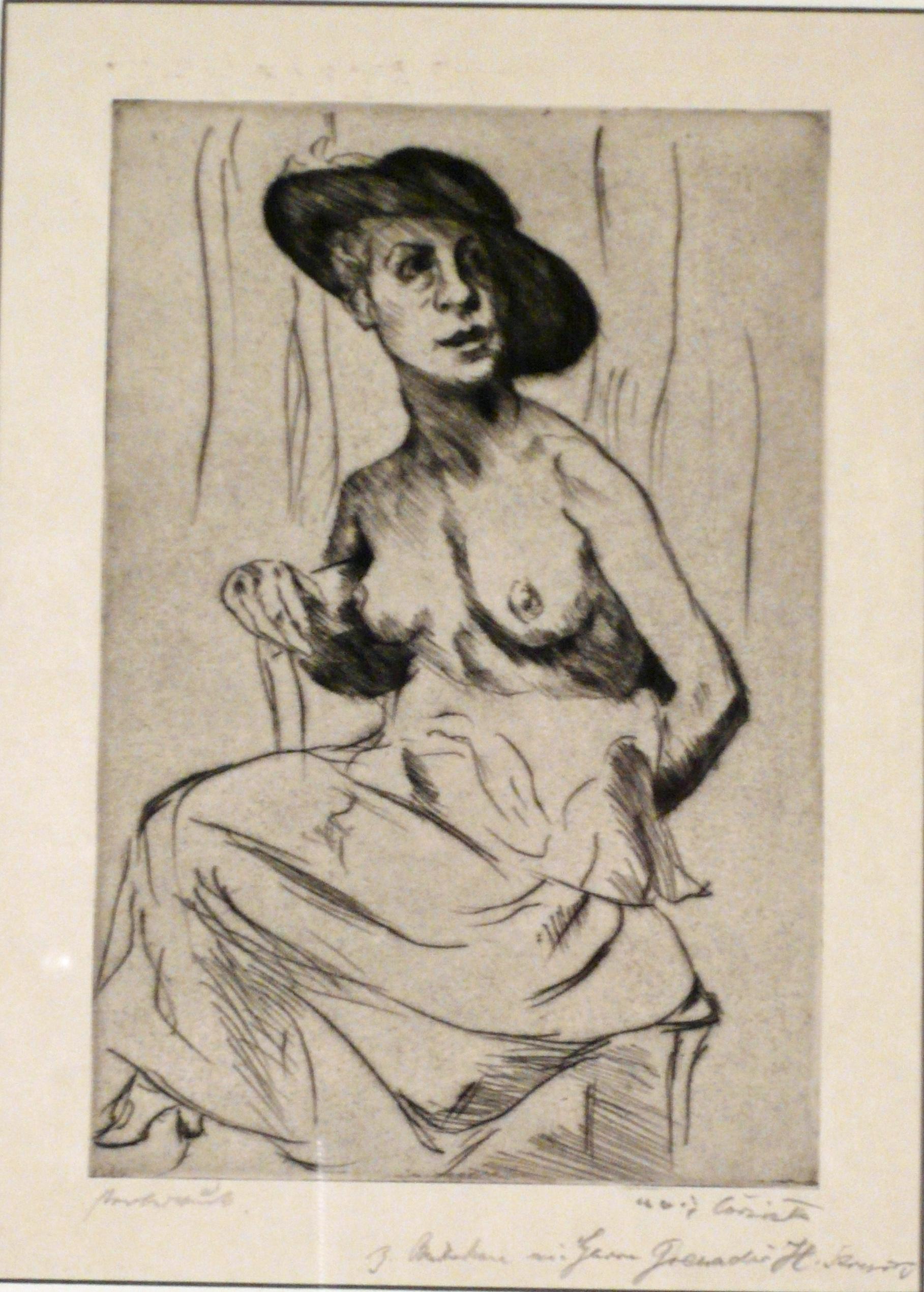
WEIBLICHER AKT MIT BREITKREMPIGEM HUT

WEIBLICHER AKT MIT BREITKREMPIGEM HUT

By Lovis Corinth

Located in Portland, ME

Corinth, Lovis. WEIBLICHER AKT MIT BREITKREMPIGEM HUT (Female Nude with Broad-Brimmed Hat). Schwartz 226A. Etching, 1916. 11 3/4 x 7 3/4 inches, 300 x 198 mm. The earlier version, be...

Category

1910s Portrait Prints

Materials

Etching

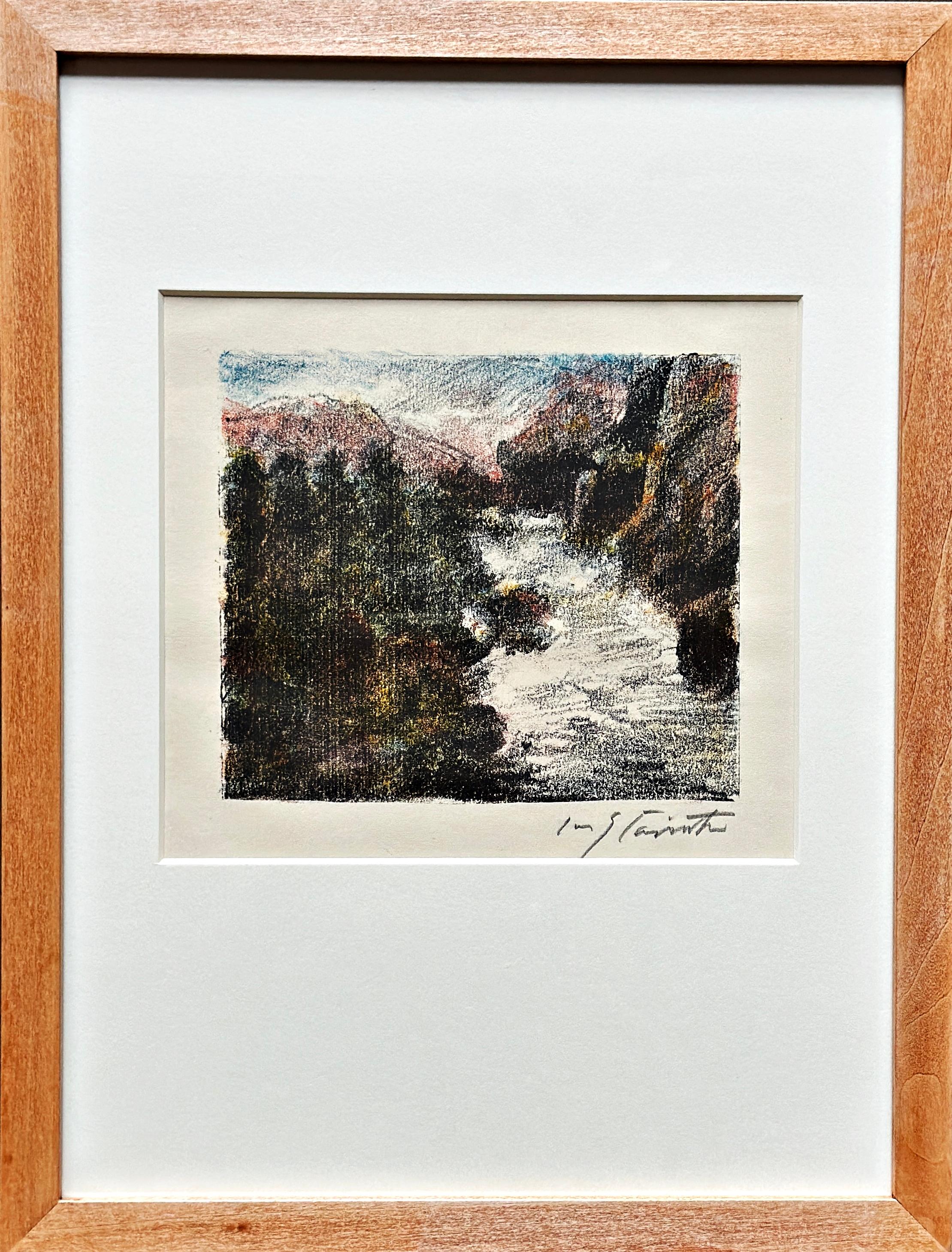
Lovis Corinth "Alphütte 1923" Color Lithograph, German Impressionist, Signed

Lovis Corinth "Alphütte 1923" Color Lithograph, German Impressionist, Signed

By Lovis Corinth

Located in Eltville am Rhein, DE

Lovis Corinth Born 1858 - 1925 Zandvoort Alpine Hut, 1923 Color lithograph on handmade paper Signed in pencil lower right Sheet 3 of the portfolio Swiss Landscapes One of 75 copies on this paper Image size: 15.5 x 18 cm Sheet size: 40 x 30 cm Frame: 43 x 33 cm Catalogue raisonné Müller 794 Further photos available on request Viewing and collection possible by prior appointment Authenticity will be confirmed in writing. Lovis Corinth was born on July 21, 1858, in the town of Tapiau in East Prussia (now Gwardejsk, Russia). While attending high school in Königsberg, he developed an interest in Greek and Roman mythology as well as the Christian stories of the Bible. From 1876, Lovis Corinth attended the art academy in Königsberg, where he studied under Otto Günther, who introduced him to Weimar plein air painting. In 1880, he transferred to the Munich Academy. Works from his Munich period demonstrate his orientation towards the naturalistic painting style of Wilhelm Leibl's circle. In 1883, Lovis Corinth traveled to Italy with his father, and in 1884 he spent three months in Antwerp, where he took painting lessons from Paul Eugène Gorge. From 1884 to 1887, Corinth studied at the Académie Julian in Paris. The artist then traveled to Berlin, where he probably painted his first self-portrait in 1887/88, which was followed by numerous others over the years. From 1891 to 1899, Corinth lived as a freelance painter in Munich, where he belonged to the Secession. After meeting Max Liebermann and Walter Leistikow in the winter of 1898/99, he decided to move to Berlin, where he settled in 1901. Prior to this, his work "Salomé with the Head of John the Baptist...

Category

1920s Impressionist Landscape Prints

Materials

Lithograph