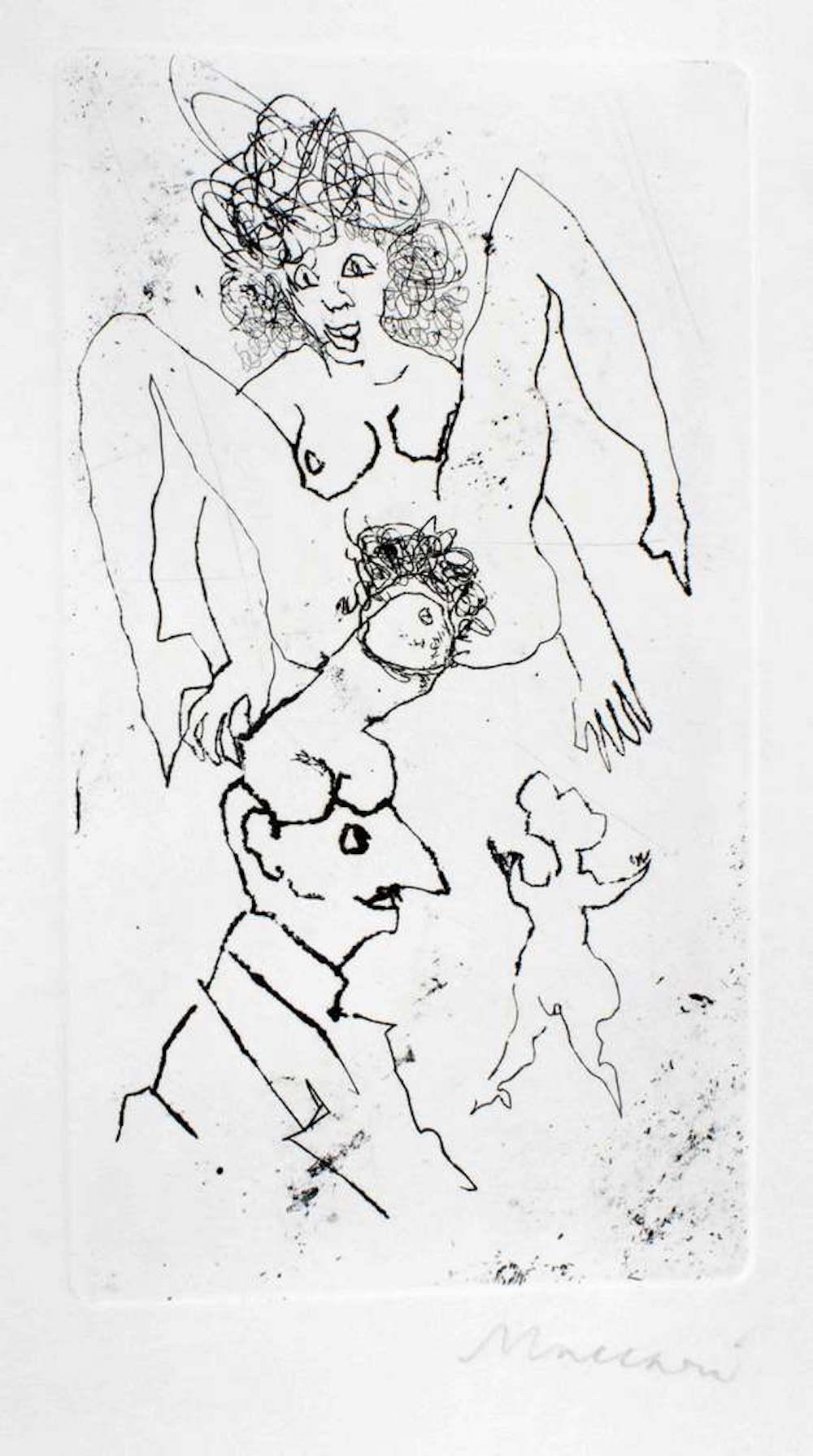
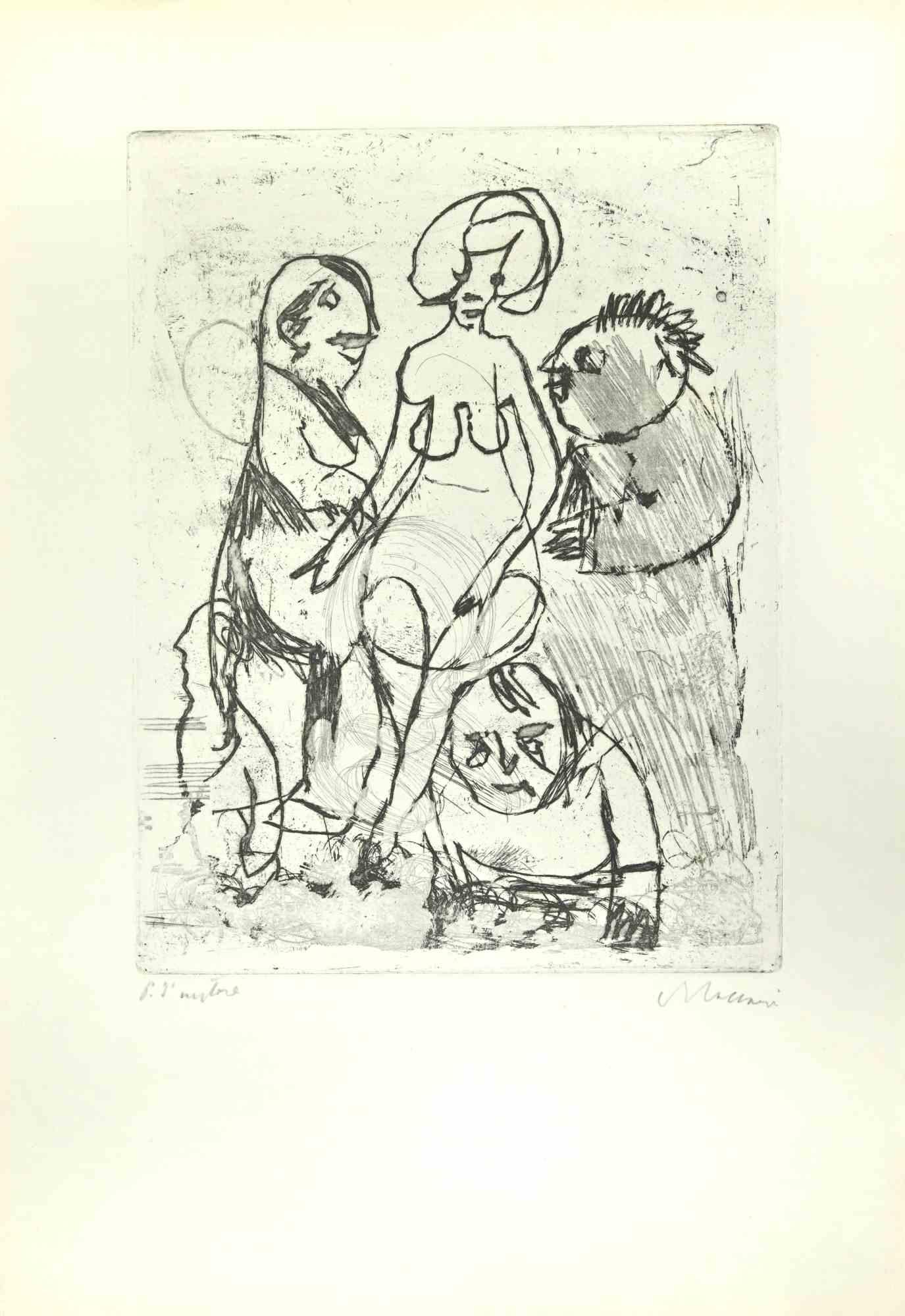
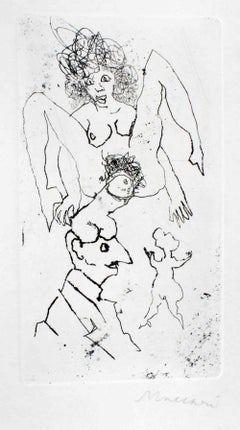
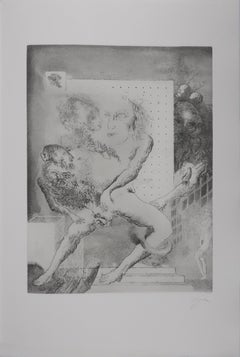
Sexual - Original Etching and Drypoint by Mino Maccari - 1960s
By Mino Maccari
Located in Roma, IT
Image dimensions: 18x11 cm. Hand signed. Artist's Proof. Very good conditions.
Category
1960s Figurative Prints
Materials
Aquatint, Etching
1950/55
Popular painter, engraver and journalist Mino Maccari is known for his often controversial and explosive prints, drawings and paintings, and is considered to be one of the most important Italian satirical artists of the 20th century.
Born in 1898 in Siena, Maccari joined the Italian Army at age 19 to serve in World War I as an artillery officer. Afterward, he attended law school, graduating in 1920 and working as a lawyer until 1926.
While working as a lawyer, Maccari developed an interest in painting and engraving, moonlighting as an artist. Despite his lack of formal training, his works captured the attention of local critics, and he debuted with the Group Labronico, an organization of like-minded Italian artists that included painter Beppe Guzzi.
In 1924, publisher Angiolo Bencini contacted Maccari to oversee the printing operations of Il Selvaggio, a fascist magazine in which Maccari’s first satirical illustrations and engravings appeared. Until 1942, Maccari was editor-in-chief of the controversial magazine, which featured contributions from Futurist artists such as Ardengo Soffici, Carlo Carrà and others.
Throughout his career, Maccari participated in numerous notable exhibitions and shows throughout Italy and Europe. His figurative drawings and paintings, portraits and exotic nude works gained considerable acclaim from critics and collaborative artists.
In 1927, he participated in the "Second International Exhibition of Modern Engraving" and the "Third Exhibition of the Tuscan Union of Arts." The following year, Maccari exhibited at the Venice Biennale, where he would win the International Prize for engraving in 1948.
From the late 1940s to 1963, Maccari collaborated with the liberal magazine Il Mondo, contributing several satirical illustrations and engravings. By this time, he had become a well-established and respected artist in Italy and, in 1959, was named director of the Academy of Fine Arts in Rome.
In 1963, Maccari was recognized again for his works, winning the Antonio Feltrinelli Prize for painting. That same year, he became president of the San Luca Academy.
Throughout the 1970s, Maccari continued painting and drawing, creating provocative works such as Dominatrix Woman, a bold work in watercolor and pastel, the diminutive pen drawing Trampled and his erotic charcoal and watercolor drawing Mata Hari.
Even after Maccari’s death in 1989, his works continue to be a talking point among avid modern art collectors.
Find original Mino Maccari drawings and watercolor paintings, prints and other art on 1stDibs.
Sexual - Original Etching and Drypoint by Mino Maccari - 1960s
By Mino Maccari
Located in Roma, IT
Image dimensions: 18x11 cm. Hand signed. Artist's Proof. Very good conditions.
Aquatint, Etching
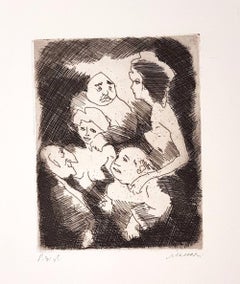
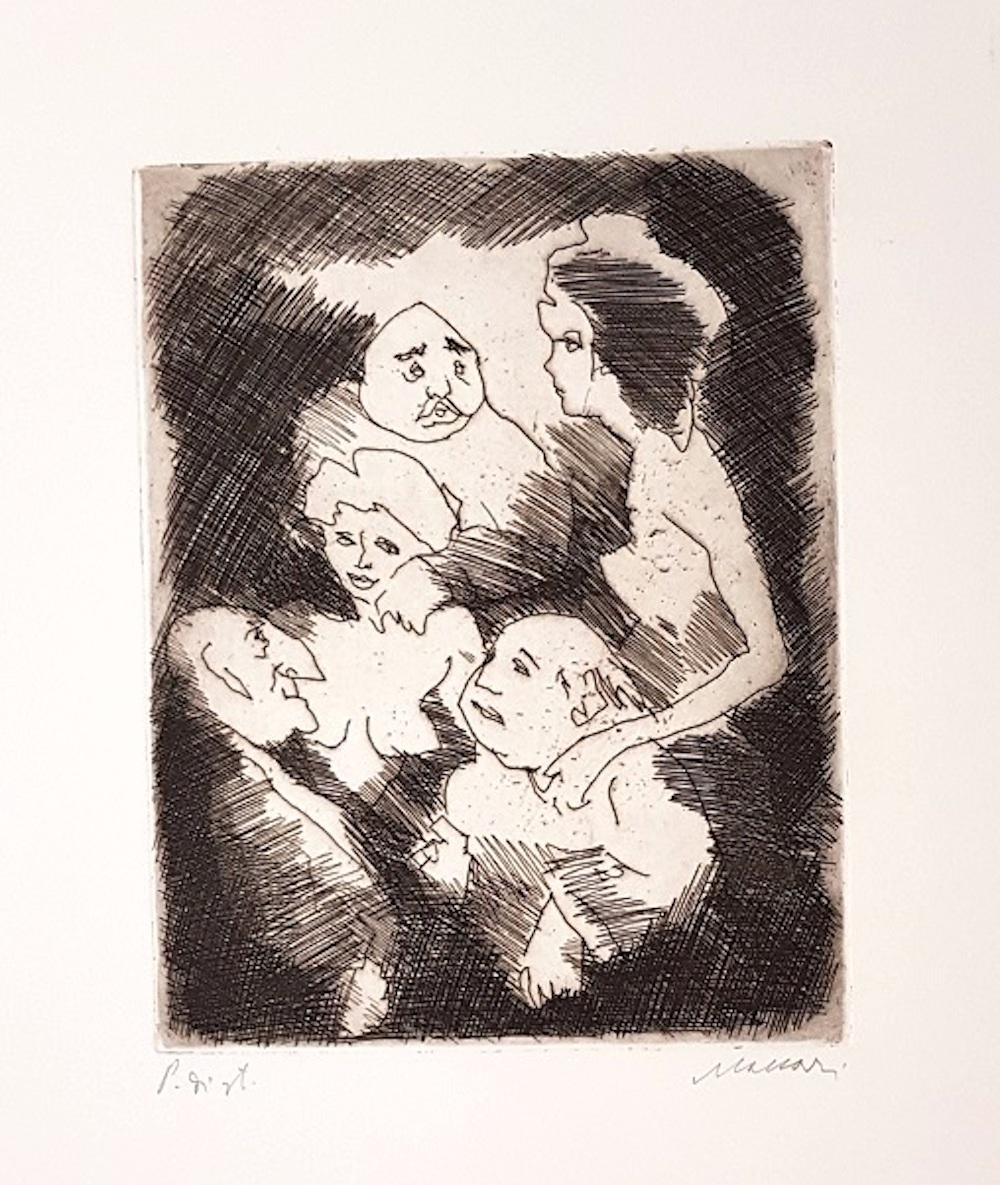
Untitled - Etching and Aquatint by Mino Maccari - 1960s
By Mino Maccari
Located in Roma, IT
Image dimensions: 28 x 22 cm. Hand signed on the lower right margin. Artist's proof. Etching and Aquatint, wide margins with a very fresh line. In very good conditions. Referenc...
Etching, Aquatint
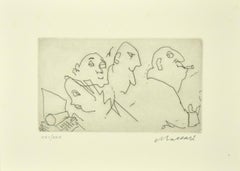
Figure - Original Etching on Paper by Mino Maccari - 1980s
By Mino Maccari
Located in Roma, IT
Figure is an original modern artwork realized the 1980s by the Italian artist Mino Maccari (Siena, 1898 - Rome, 1989). Original etching on Ivory paper. Hand-signed in pencil by th...
Etching
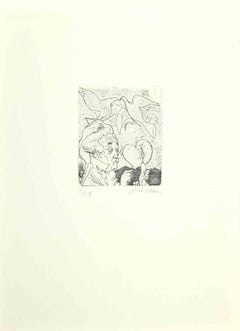
Portrait - Etching by Mino Maccari - Mid-20th Century
By Mino Maccari
Located in Roma, IT
Portrait is an Etching and Drypoint realized by Mino Maccari in the Mid-20th Century. Hand-signed in the lower right part. Numbered. Edition,8/19. Good conditions. Mino Maccari (...
Paper, Etching
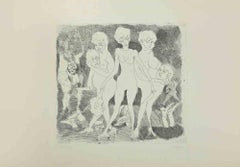
Figures - Drypoint by Mino Maccari - Mid-20th Century
By Mino Maccari
Located in Roma, IT
Mid-20th Century. Hand-signed in the lower right part. Numbered. Edition 1/12. Good conditions. Mino Maccari (Siena, 1924-Rome, June 16, 1989) was an Italian writer, painter, engraver and journalist, winner of the Feltrinelli Prize for Painting in 1963 and first winner of the Forte dei Marmi Satira Prize in 1973.After completing his secondary education, he enrolls in university. An interventionist like many young people of his time, he took part in the Great War at the age of nineteen as a field artillery officer. At the end of the conflict he resumed his university studies in Siena and in 1920 he graduated in law. In 1924 he was called by Angiolo Bencini to take care of the printing of the magazine Il Selvaggio, openly uncompromising fascist, revolutionary and anti-bourgeois, where his first engravings were published. After a few years of coexistence between work at the newspaper and the law firm, at the beginning of 1926 he left the legal profession to take over the direction of Il Selvaggio which he would hold until 1942. In 1928 he was the author of the small book published by Vallecchi (Florence), Il Trastullo di Strapaese (little songs and engraved woodwinds) which collected fascist songs (the same book was seized several times from Antonio Gramsci during his detention). With the transfer of the editorial staff of the Selvaggio in 1925 from Colle di Val d'Elsa to Florence, Maccari collaborated with Ardengo Soffici, Ottone Rosai and Achille Lega. In the meantime, between 1927 and 1930, he made himself known to the general public as a painter by participating in various national exhibitions. Also in 1930 Maccari works in Turin at La Stampa as editor-in-chief and has the writer Curzio Malaparte as director. His presence in the cultural and editorial world of the fascist regime is very intense, he writes and collaborates with various magazines: Quadrivio, L'Italia Letteraria, L'Italiano and Omnibus by Leo Longanesi; then, during the war, in il Primato di Bottai and, subsequently again, in Il Mondo di Pannunzio (from the first number, in 1949), up to Documento by Federigo Valli. His graphic production is also vast, ranging from the Album of Vallecchi (1925), Il trastullo di Strapaese (1928) to Linoleum (1931). Maccari illustrated in 1934 La vecchia del Bal Bullier by Antonio Baldini and in 1942 he published the Album folder, followed by Come quando fuori Piove and Il superfluo illustrata.For his pictorial work full of evident chromatic accentuations and fast brushstrokes, the violent drawing combined with the lively stroke of the graphic sign of his engravings, he is recognized by critics as a complete artist. In 1962 he was also entrusted with the presidency of the Accademia di San Luca in Rome and managed to obtain a personal exhibition at Gallery 63 in New York. His production of drawings, watercolors, temperas, etc. is endless, sometimes in collaboration with prestigious publishing houses; it is worth mentioning, just as an excellent example, the 32 b/w and color drawings with which he illustrated Il gusto di vivere, a volume that collects writings by Giancarlo Fusco, edited by Natalia Aspesi and published by Laterza in 1985. Maccari, Sienese and great contradaiolo della Torre, painted the Palio...
Drypoint, Paper, Etching
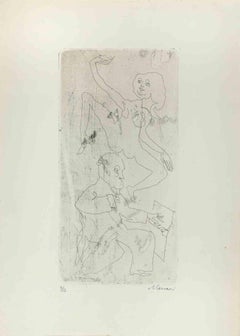
Figures - Etching by Mino Maccari - Mid-20th Century
By Mino Maccari
Located in Roma, IT
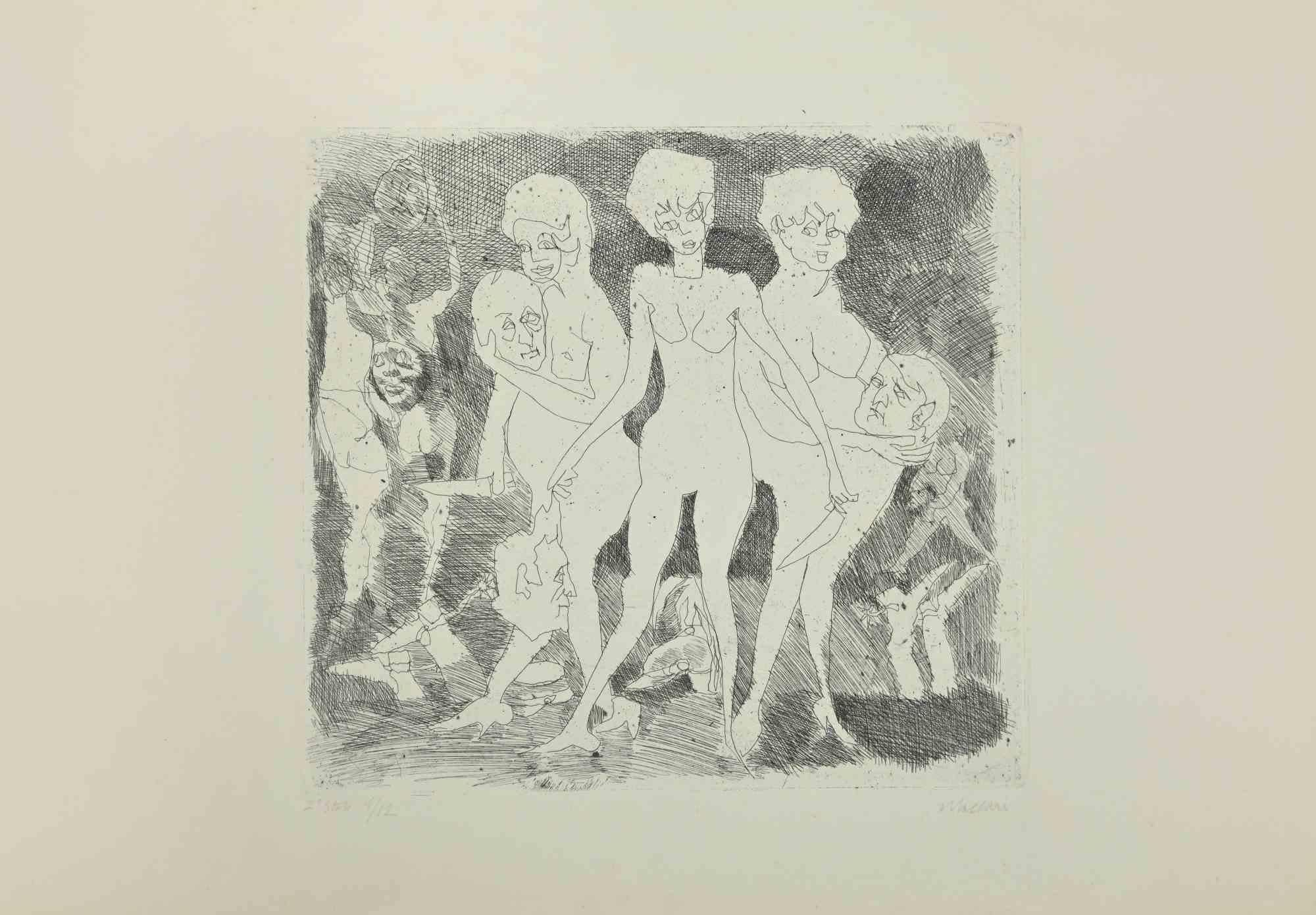
Figures is an Etching realized by Mino Maccari in the Mid-20th Century. Handisigned in the lower right part. Numbered. Edition 4/12. Good conditions. Mino Maccari (Siena, 1924-Rome, June 16, 1989) was an Italian writer, painter, engraver and journalist, winner of the Feltrinelli Prize for Painting in 1963 and first winner of the Forte dei Marmi Satira Prize in 1973.After completing his secondary education, he enrolls in university. An interventionist like many young people of his time, he took part in the Great War at the age of nineteen as a field artillery officer. At the end of the conflict he resumed his university studies in Siena and in 1920 he graduated in law. In 1924 he was called by Angiolo Bencini to take care of the printing of the magazine Il Selvaggio, openly uncompromising fascist, revolutionary and anti-bourgeois, where his first engravings were published. After a few years of coexistence between work at the newspaper and the law firm, at the beginning of 1926 he left the legal profession to take over the direction of Il Selvaggio which he would hold until 1942. In 1928 he was the author of the small book published by Vallecchi (Florence), Il Trastullo di Strapaese (little songs and engraved woodwinds) which collected fascist songs (the same book was seized several times from Antonio Gramsci during his detention). With the transfer of the editorial staff of the Selvaggio in 1925 from Colle di Val d'Elsa to Florence, Maccari collaborated with Ardengo Soffici, Ottone Rosai and Achille Lega. In the meantime, between 1927 and 1930, he made himself known to the general public as a painter by participating in various national exhibitions. Also in 1930 Maccari works in Turin at La Stampa as editor-in-chief and has the writer Curzio Malaparte as director. His presence in the cultural and editorial world of the fascist regime is very intense, he writes and collaborates with various magazines: Quadrivio, L'Italia Letteraria, L'Italiano and Omnibus by Leo Longanesi; then, during the war, in il Primato di Bottai and, subsequently again, in Il Mondo di Pannunzio (from the first number, in 1949), up to Documento by Federigo Valli. His graphic production is also vast, ranging from the Album of Vallecchi (1925), Il trastullo di Strapaese (1928) to Linoleum (1931). Maccari illustrated in 1934 La vecchia del Bal Bullier by Antonio Baldini and in 1942 he published the Album folder, followed by Come quando fuori Piove and Il superfluo illustrata.For his pictorial work full of evident chromatic accentuations and fast brushstrokes, the violent drawing combined with the lively stroke of the graphic sign of his engravings, he is recognized by critics as a complete artist. In 1962 he was also entrusted with the presidency of the Accademia di San Luca in Rome and managed to obtain a personal exhibition at Gallery 63 in New York. His production of drawings, watercolors, temperas, etc. is endless, sometimes in collaboration with prestigious publishing houses; it is worth mentioning, just as an excellent example, the 32 b/w and color drawings with which he illustrated Il gusto di vivere, a volume that collects writings by Giancarlo Fusco, edited by Natalia Aspesi and published by Laterza in 1985. Maccari, Sienese and great contradaiolo della Torre, painted the Palio...
Paper, Etching
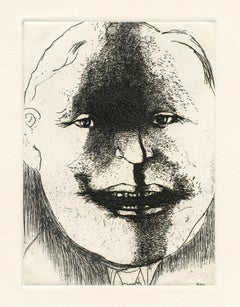
original etching
By Leonard Baskin
Located in Henderson, NV
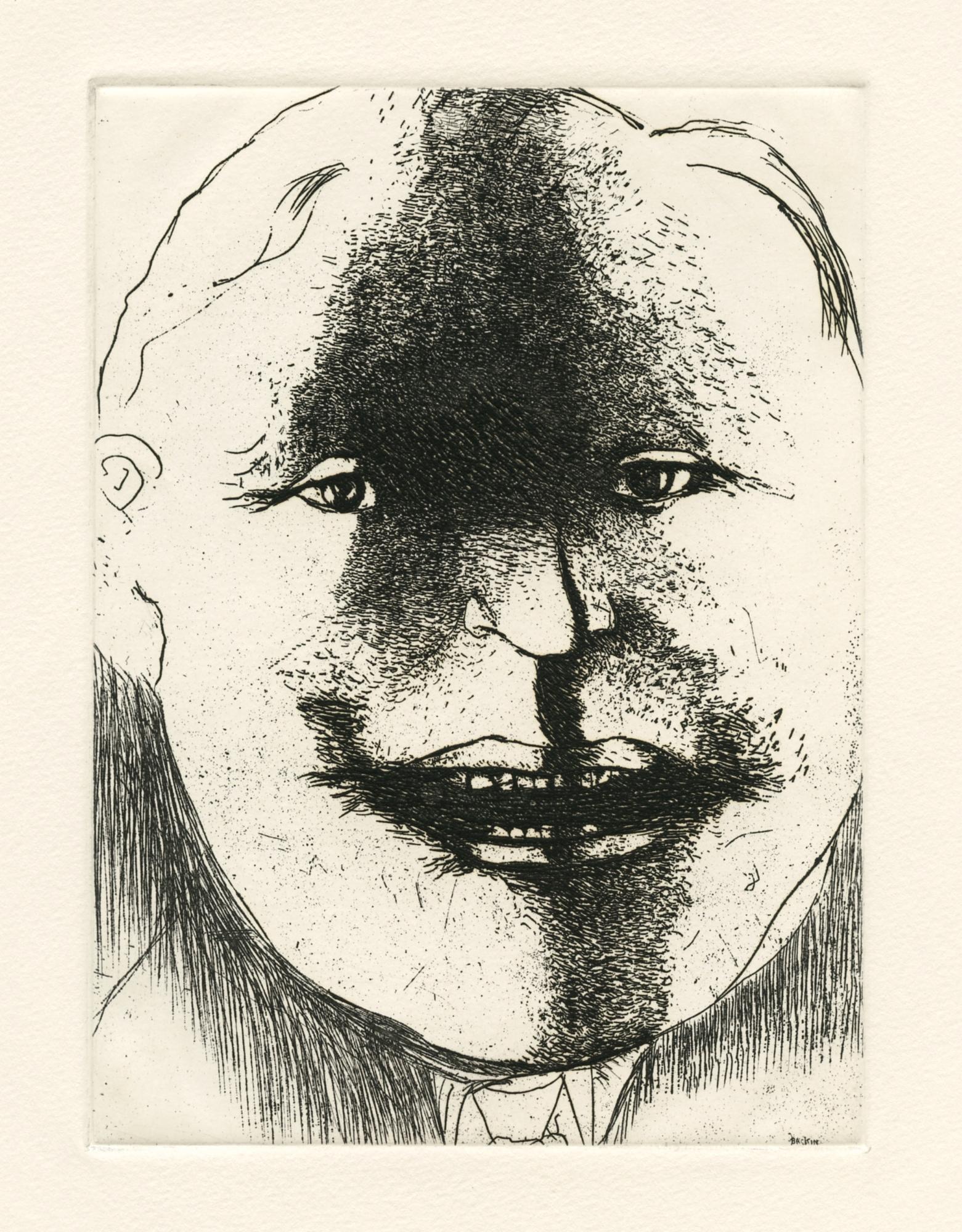
Medium: original etching. Printed in 1984 on Cartiere Magnani paper at the atelier of Bruce Chandler in an edition of 1500. This work was executed by Leonard Baskin to illustrate the...
Etching
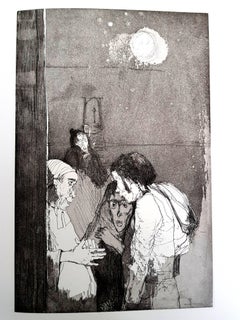
Jean Jansem - Original Etching
By Jean Jansem
Located in Collonge Bellerive, Geneve, CH
Jean Jansem - Original Etching Title: Loneliness Dimensions: 40 x 30 cm Edition of 175 Paper: vélin de Rives 1974 Jean Jansem was born in 1920 at Seuleuze in Asia Minor and spent h...
Etching
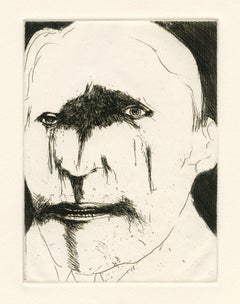
original etching
By Leonard Baskin
Located in Henderson, NV
Medium: original etching. Printed in 1984 on Cartiere Magnani paper at the atelier of Bruce Chandler in an edition of 1500. This work was executed by Leonard Baskin to illustrate the...
Etching
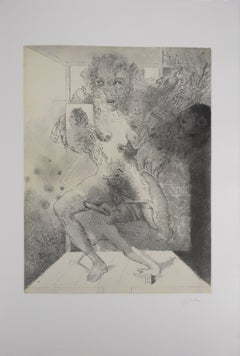
Art or Chance - Original Handsigned Etching
By Popovic Ljuba
Located in Paris, IDF
Popovic LJUBA (1934-2016) Art or Chance, 1975 Original etching (engraved by Alain Controu) Signed in pencil Printed in 119 unnumbered copies On Arches vellum 56 x 38 cm (22 x 14.9 ...
Etching
This commotion - Original Handsigned Etching
By Popovic Ljuba
Located in Paris, IDF
Popovic LJUBA (1934-2016) This Commotion, 1975 Original etching (engraved by Alain Controu) Signed in pencil Printed in 119 unnumbered copies On Arches vellum 56 x 38 cm (22 x 14.9...
Etching
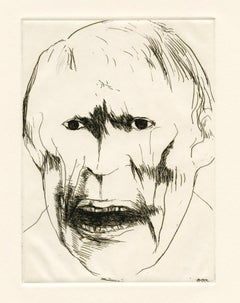
original etching
By Leonard Baskin
Located in Henderson, NV
Medium: original etching. Printed in 1984 on Cartiere Magnani paper at the atelier of Bruce Chandler in an edition of 1500. This work was executed by Leonard Baskin to illustrate the...
Etching