Want more images or videos?
Request additional images or videos from the seller
1 of 13

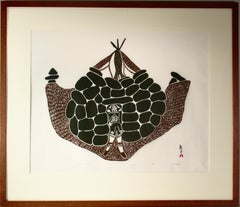
Pitseolak Ashoona
Birds Beast and Caribou

1968

$1,350
£1,023.56
€1,194.96
CA$1,930.37
A$1,960.13
CHF 1,118.95
MX$23,684.84
NOK 13,143.86
SEK 13,108
DKK 8,933.24

About the Item

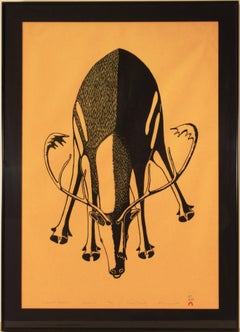
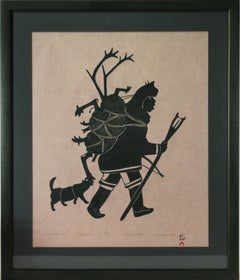
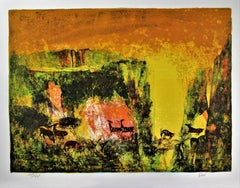
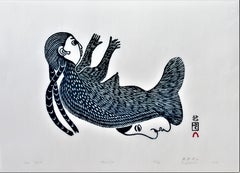
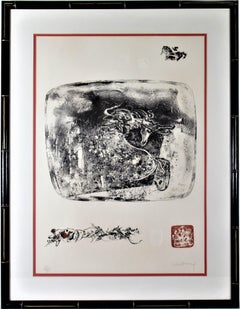
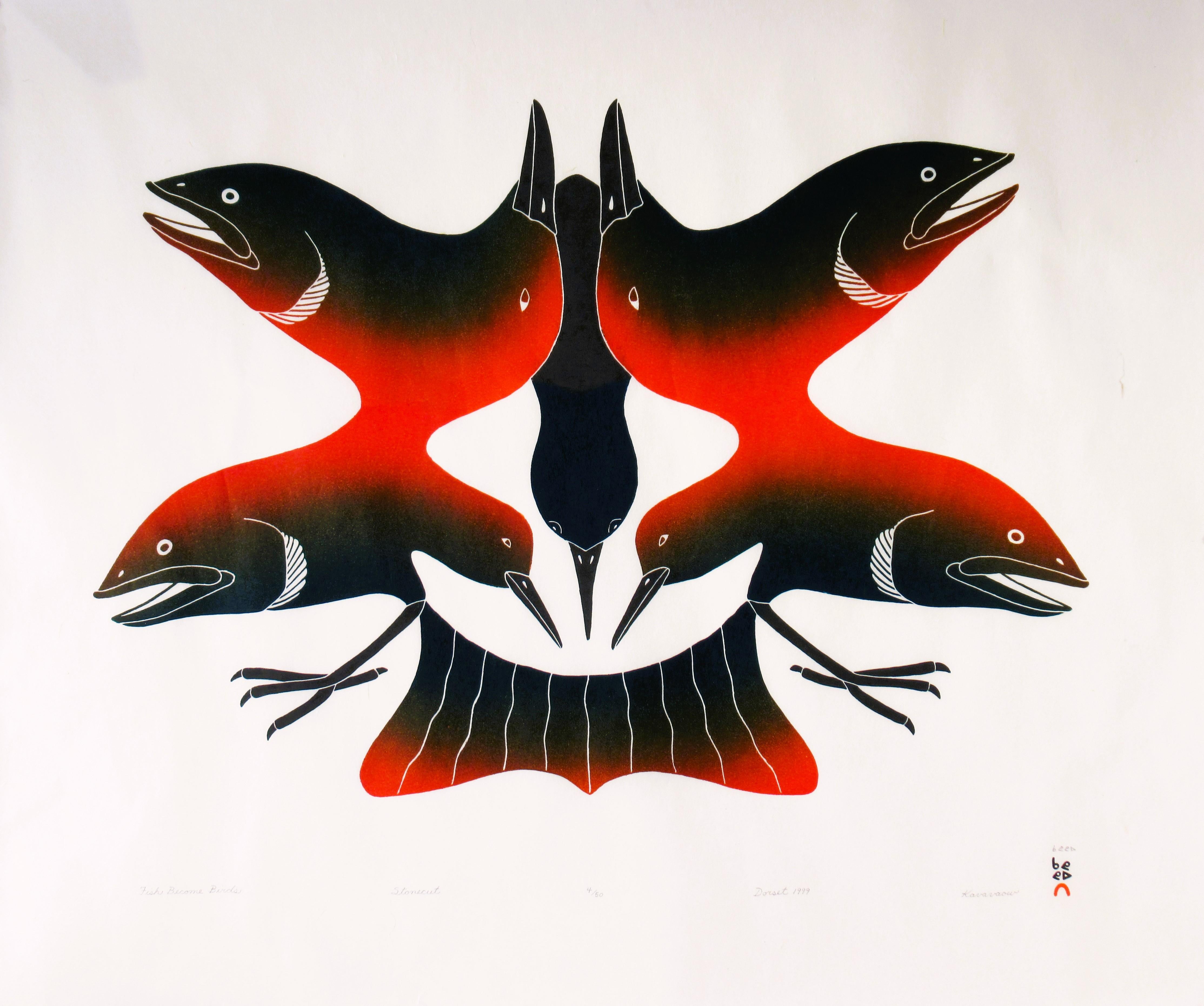
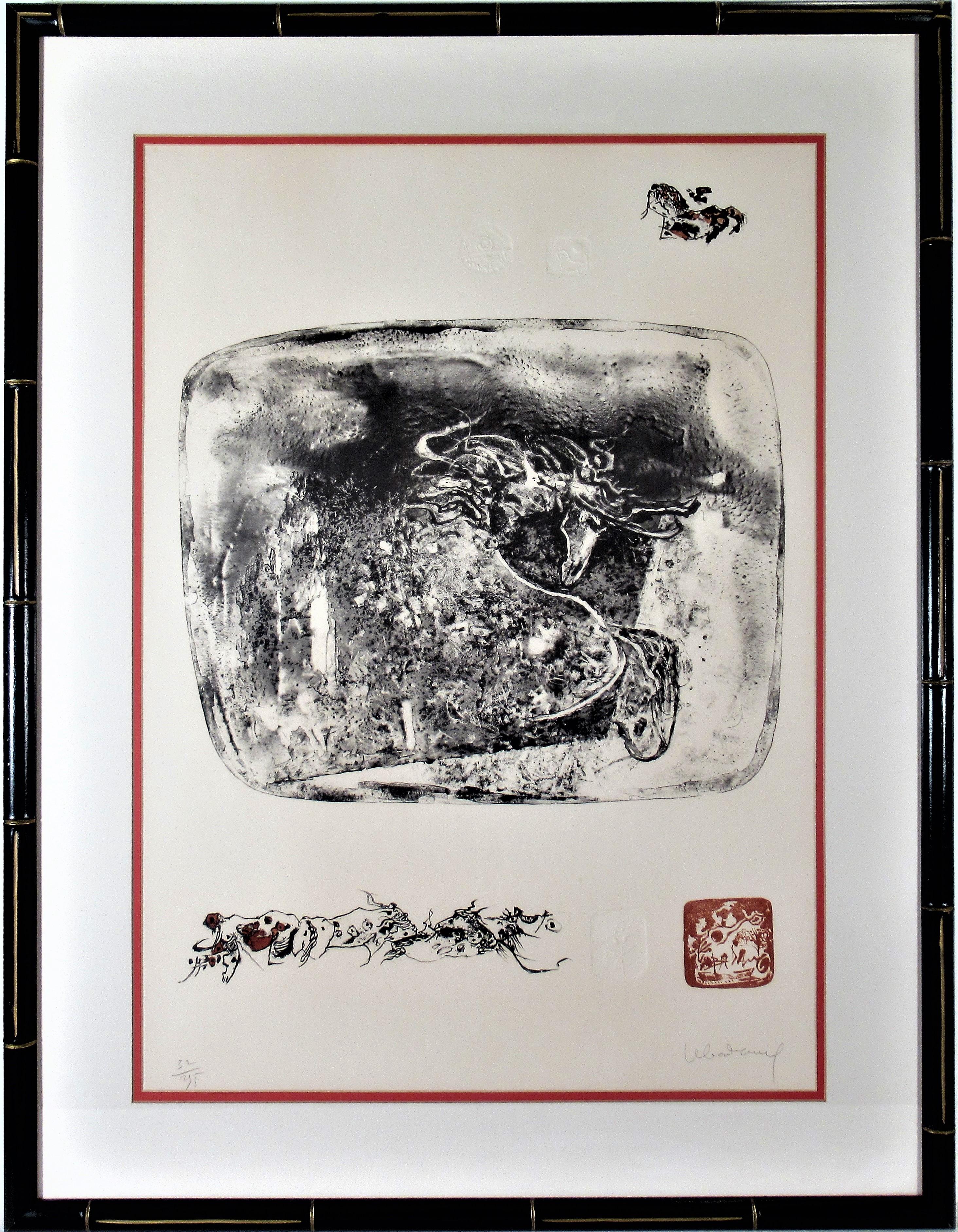
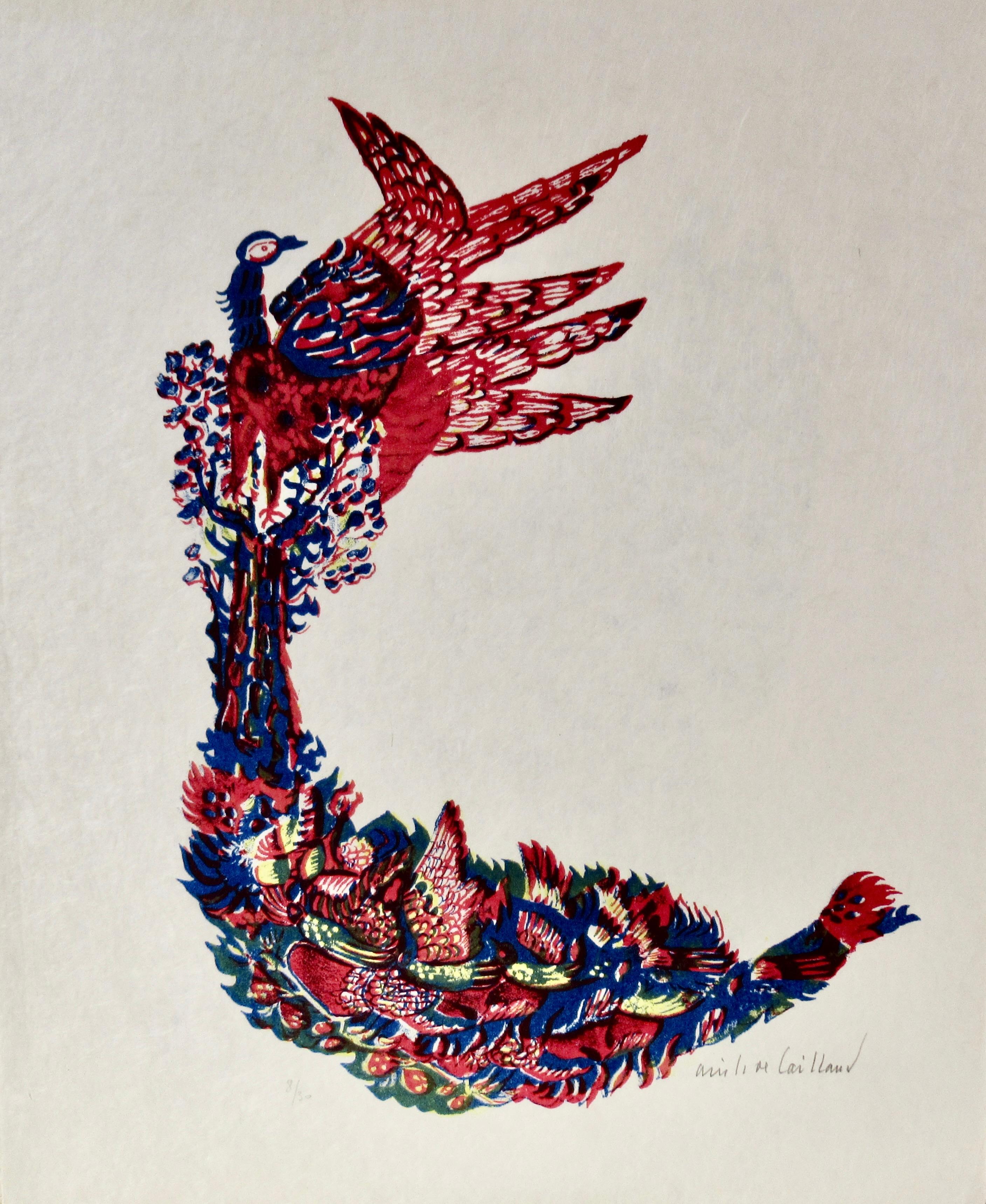
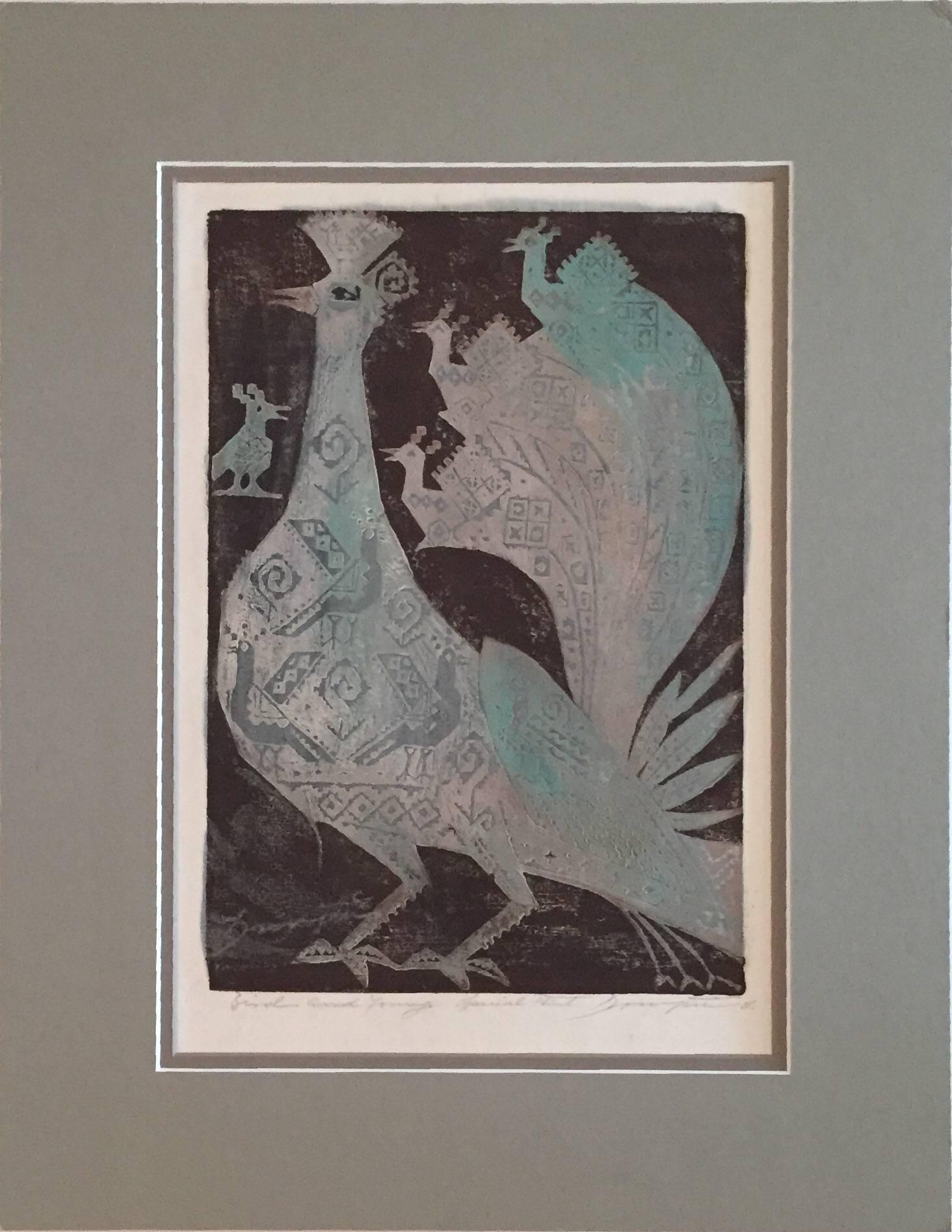
This artwork titled "Birds Beast and Caribou" 1968, is an original stone cut on thin handmade paper by noted Inuit artist Pitseolak Ashoona, 1904-1983. It is hand signed, dated, titled, numbered 6/50 and inscribed Dorset and Stone Cut in pencil by the artist. With the artist blind stamp at the lower right corner. The artwork (image) size is 14.5 x 17 inches, framed size is 26.75 x 31.25 inches. Custom framed in original light brown wood frame, with light grey/green color matting. It is in excellent condition, the frame have some very small minor restoration, barely visible. About the artist: Pitseolak was born to Timungiak and Oootochie on Nottingham Island in the Northwest Territories now Nunavut. Her name means "sea pigeon" in Inuktitut. She grew up in the traditional life of her people, with food dependent on hunting and gathering. Her culture relied on angakuit. In 1922 (or 1923), Pitseolak married Ashoona, a hunter, in the Foxe Peninsula of Baffin Island.[3] They had 17 children, though only six (Namoonie, Qaqaq, Kumwartok, Kiugak, Napachie, and Ottochie) lived with Pitseolak until adulthood. Some died in childhood, and others were adopted out according to custom, and raised by other Inuit families. After her husband died at the age of 40 from a viral sickness, Pitseolak raised four of the children, Kumwartok, Qaqaq, Kiawak or Kiugak, and daughter Napachie Pootoogook, herself. Years of hardship followed the death of Ashoona, which occurred sometime in the early to mid 1940s. He died in the early years of the Second World War, a time of decline in the market for furs. Over time the loss of Ashoona led Pitseolak to become an artist. Making prints eased her loneliness and she described her art as what made her "the happiest since he died". Pitseolak's artwork later enabled her to support her family. Though her art arose from painful circumstances, it expressed mostly positive memories and experiences. As Christine Lalonde notes in Pitseolak Ashoona: Life & Work: "scenes of deprivation and suffering almost never appear in her drawings, though certain images convey sadness and longing" about the passing of Ashoona. Pitseolak is recognized as one of the first Inuit artists to create autobiographical works. Her art contained images of traditional Inuit life and contributed to the establishment of a modern `Inuit art form, one that transmitted traditional knowledge and values while at the same time achieving worldwide popular and commercial success. Pitseolak died on May 28, 1983, in Cape Dorset now Kinngait. She was survived by a large family of artists, including: Pitseolak Ashoona was one of the first artists in the 1960s to make drawings for the print studio in Cape Dorset. She was a self-taught artist, who worked out solutions to artistic problems through what Lalonde described as "a self directed-program of repetitious drawing". Initially Pitseolak worked sewing and embroidering goods for sale as part of the arts and crafts program. It was initiated by the Department of Northern Affairs and National Resources as a way for Inuit to earn money. It was introduced by James Archibald Houston and Alma Houston at Cape Dorset in 1956. Upon seeing the work of her cousin Kiakshuk (1886–1966), who was part of the Cape Dorset graphic studio, Pitseolak decided to take up drawing. Her early work was well received and she soon became one of the most popular artists among those creating images for the Cape Dorset print collection. First working with graphite pencil, Pitseolak would later move on to coloured pencil and felt-tip pens. Lalonde said these became her favoured medium because their "rich and vibrant colours" best expressed "the joyfulness that characterizes her work". Pitseolak's cousin, Kiakshuk, and Houston both inspired her to try her hand at drawing. She also worked on copper plates, but did not enjoy this technique. In the last two decades of her life, from 1960 onwards, she produced a collection of more than 7,000 images, 233 of which were created as prints in her Cape Dorset Collection. She said these illustrated life pre-contact, "the things we did long ago before there were many white men. Her artwork focuses on both daily life and legends, or Taleelayu. Pitseolak was inspired by other artists in her community who started before her, saying: "I don't know who did the first print, but Kiakshuk, Niviaksiak, Oshawetok and Tudlik were all drawing at the beginning. I liked the first prints ... because they were truly Eskimo. Pitseolak was accepted into the Royal Canadian Academy of Arts in 1974 and was awarded the Order of Canada in 1977 for her work. Through the following decade and until her death in 1983, Pitseolak continued to draw, and to work with new media. An arts grant awarded to her in 1975 sparked experimentation in a new medium – acrylic paint on canvas. Initially, she approached painting like drawing, outlining in pencil and then filling in with colour. As she gradually adapted to the nuances of the medium, she began laying down bold colours side by side to achieve her vivid affect. Pitseolak found prints to be the most challenging, as she said in Dorothy Harley Eber's book Pitseolak: Pictures of My Life; "To make prints is not easy. You must think first and this is hard to do. But I am happy doing the prints." Though not active as a printmaker, Pitseolak experimented with drawing directly on copper plates and, to a lesser degree, lithographic stones.[4] In 1973 she narrated her story in the National Film Board's animated documentary Pictures out of My Life, directed by Bozenna Heczko and based on interviews from Eber's book.[13][14] Pitseolak was also featured on a stamp, issued on March 8, 1993, and designed by Heather J. Cooper, in commemoration of International Women's Day. Pitseolak's work has been featured in exhibitions at Canadian museums, including the National Gallery of Canada, the Winnipeg Art Gallery, the Art Gallery of Ontario, the Canadian museum of civilizations, and the Vancouver Art Gallery. In 1975 she had a retrospective at the Smithsonian Institution in Washington, D.C., organized by the Department of Indian and Northern Affairs Canada.
  • Creator:
    Pitseolak Ashoona (1904 - 1981, Canadian)
  • Creation Year:
    1968
  • Dimensions:
    Height: 26.75 in (67.95 cm)Width: 31.25 in (79.38 cm)Depth: 1 in (2.54 cm)
  • Movement & Style:
  • Period:
  • Condition:
  • Gallery Location:
    San Francisco, CA
  • Reference Number:
    Seller: ash/lbir/bea/011stDibs: LU666318056152

More From This Seller

View All
Lunik House

Lunik House

By Pitseolak Ashoona

Located in San Francisco, CA

This artwork titled "Lunik Home" 1971, is an original stone cut on thin handmade paper by noted Inuit artist Pitseolak Ashoona, 1904-1983. It is hand signed, dated, titled, numbered 10/50 and inscribed Dorset in pencil by the artist. With the artist blind stamp at the lower right corner. The artwork (image) size is 15 x 17.5 inches, framed size is 25 x 29 inches. Custom framed in original light brown wood frame, with of-white color matting. It is in excellent condition, the frame have some very small minor restoration, barely visible. About the artist: Pitseolak was born to Timungiak and Oootochie on Nottingham Island in the Northwest Territories now Nunavut. Her name means "sea pigeon" in Inuktitut. She grew up in the traditional life of her people, with food dependent on hunting and gathering. Her culture relied on angakuit. In 1922 (or 1923), Pitseolak married Ashoona, a hunter, in the Foxe Peninsula of Baffin Island.[3] They had 17 children, though only six (Namoonie, Qaqaq, Kumwartok, Kiugak, Napachie, and Ottochie) lived with Pitseolak until adulthood. Some died in childhood, and others were adopted out according to custom, and raised by other Inuit families. After her husband died at the age of 40 from a viral sickness, Pitseolak raised four of the children, Kumwartok, Qaqaq, Kiawak or Kiugak, and daughter Napachie Pootoogook, herself. Years of hardship followed the death of Ashoona, which occurred sometime in the early to mid 1940s. He died in the early years of the Second World War, a time of decline in the market for furs. Over time the loss of Ashoona led Pitseolak to become an artist. Making prints eased her loneliness and she described her art as what made her "the happiest since he died". Pitseolak's artwork later enabled her to support her family. Though her art arose from painful circumstances, it expressed mostly positive memories and experiences. As Christine Lalonde notes in Pitseolak Ashoona: Life & Work: "scenes of deprivation and suffering almost never appear in her drawings, though certain images convey sadness and longing" about the passing of Ashoona. Pitseolak is recognized as one of the first Inuit artists to create autobiographical works. Her art contained images of traditional Inuit life and contributed to the establishment of a modern `Inuit art form, one that transmitted traditional knowledge and values while at the same time achieving worldwide popular and commercial success. Pitseolak died on May 28, 1983, in Cape Dorset now Kinngait. She was survived by a large family of artists, including: Pitseolak Ashoona was one of the first artists in the 1960s to make drawings for the print studio in Cape Dorset. She was a self-taught artist, who worked out solutions to artistic problems through what Lalonde described as "a self directed-program of repetitious drawing". Initially Pitseolak worked sewing and embroidering goods for sale as part of the arts and crafts program. It was initiated by the Department of Northern Affairs and National Resources as a way for Inuit to earn money. It was introduced by James Archibald Houston and Alma Houston at Cape Dorset in 1956. Upon seeing the work of her cousin Kiakshuk (1886–1966), who was part of the Cape Dorset graphic studio, Pitseolak decided to take up drawing. Her early work was well received and she soon became one of the most popular artists among those creating images for the Cape Dorset print...

Category

Late 20th Century Modern Figurative Prints

Materials

Other Medium

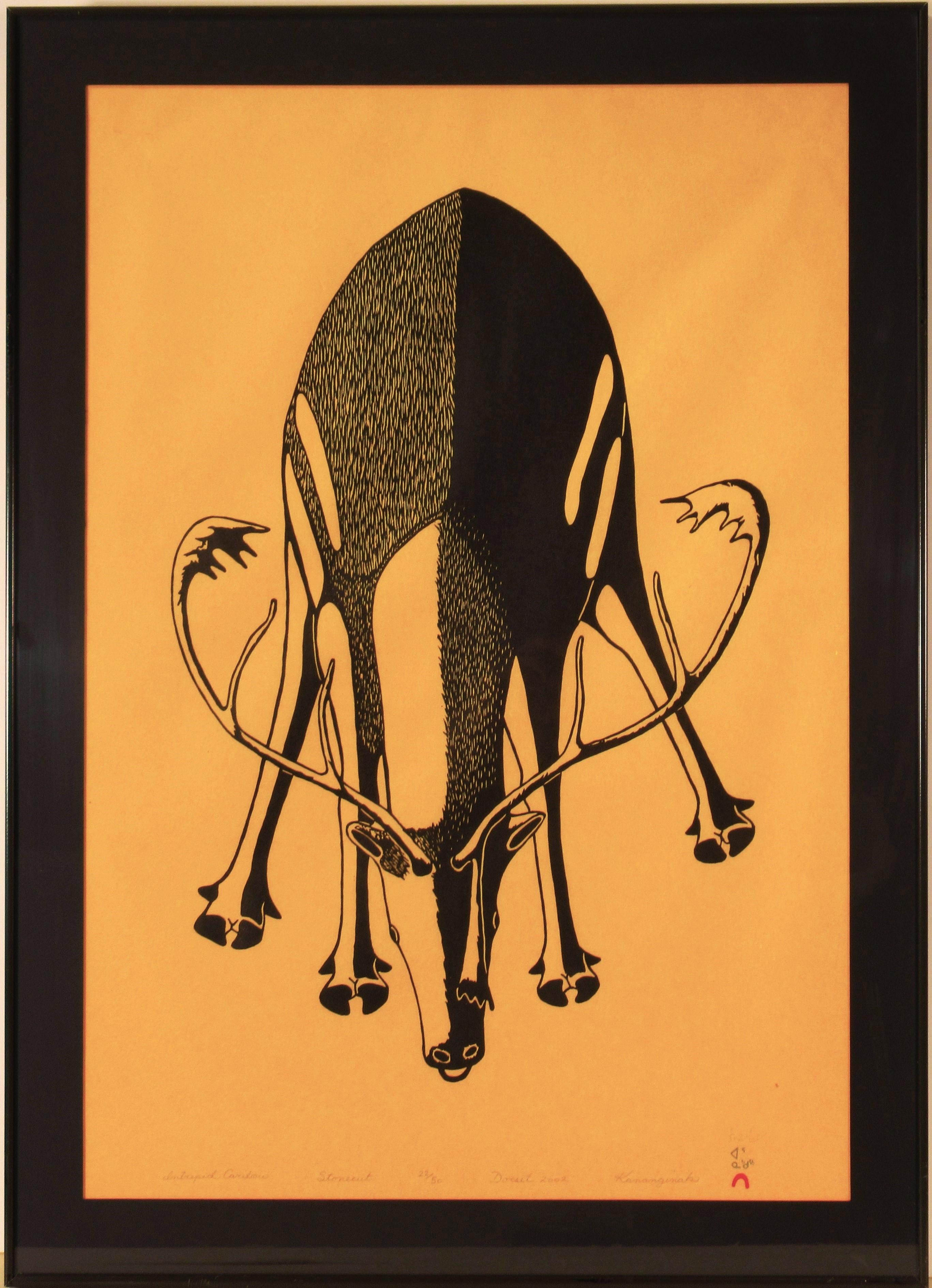
Intrepid Caribou

Intrepid Caribou

By Kananginak Pootoogook

Located in San Francisco, CA

This artwork titled "Intrepid Caribou" 2002 is an original color stone cut on Japan paper by noted Canadian/Inuit artist Kananginak Pootoogook, 1935-2010. It is hand signed, dated, titled, located, described and numbered 22/50 in pencil by the artist. The image size is 18.5 x 12.5 inches, sheet size is 23 x 16 inches, framed size is 24.85 x 29.65 inches. Custom framed in a black metal frame, with black matting. It is in excellent condition. About the artist: Kananginak Pootoogook was an Inuit sculptor and printmaker who lived in Cape Dorset, Nunavut, in Canada. He died as a result of complications related to surgery for lung cancer. Pootoogook was born at a traditional Inuit camp called Ikerasak, near Cape Dorset, Nunavut (then in the Northwest Territories) to Josephie Pootoogook, leader of the camp, and Sarah Ningeokuluk. The family lived a traditional lifestyle hunting and trapping while living in an iglu in the winter and a sod house in the summer and did not move into their first southern style house until 1942. In 1957 Pootoogook married Shooyoo, moved to Cape Dorset and began work for James Houston. Originally, Pootoogook did some carving, made prints and lithographs for other artists. At the same time he was a leader in setting up the West Baffin Eskimo Co-operative, the first Inuit owned co-op, now part of the Arctic Co-operatives Limited and served from 1959 until 1964 as the president. Although Kananginak had worked with his father, Josephie, in 1959, it was not until the 1970s that Kananginak began work as a full-time artist producing drawings, carvings and prints. According to Terry Ryan, former Co-op manager, Pootoogook was both influenced by and an admirer of the works of his uncle, photographer and historian Peter Pitseolak. The World Wildlife Commission released a limited edition set in 1977 that included four of Pootoogook's images and in 1980 he was elected to the Royal Canadian Academy of Arts. In 1997 Pootoogook built a 6 ft (1.8 m) inukshuk in Cape Dorset for former Governor General of Canada, Roméo LeBlanc. The inukshuk was dismantled and shipped to Ottawa and with the assistance of his son, Johnny, it was rebuilt at Rideau Hall and unveiled on 21 June, National Aboriginal Day. Pootoogook had several exhibitions and showings of his work. In 2010, he went to Vancouver for the 2010 Winter Olympics and to open a showing of his work at the Marion Scott Gallery. He also had a showing of his work, his first solo exhibition at a public institution, at the Museum of Inuit Art in Toronto from February to May 2010. He also received a 2010 National Aboriginal Achievement Award in the arts category from the National Aboriginal Achievement Foundation. While working on his final, and unfinished, drawing of a Peterhead owned by his father, he was struck by coughing spells, which he declared was cancer. Along with his wife, Shooyoo, he flew to Ottawa, staying at the Larga Baffin home, and was diagnosed with lung cancer. In October 2010, he underwent surgery and did not recover. He died 23 November 2010 in Ottawa. The work of Kananginak Pootoogook is held in numerous collections and museums, includingThe McCord Museum, the Dallas Museum of Art, Musee National des Baux Arts...

Category

Late 20th Century Other Art Style Figurative Prints

Materials

Other Medium

Silent Hunter

Silent Hunter

By Kananginak Pootoogook

Located in San Francisco, CA

This artwork titled "Silent Hunter" 2002 is an original color stonecut on beige Japan paper by noted Canadian/Inuit artist Kananginak Pootoogook, 1935-2010. It is hand signed, dated, titled, located, described and numbered 22/50 in pencil by the artist. The image size is 15 x 11.75 inches, framed size is 23.35 x 20 inches. Custom framed in a wooden dark green frame, with green matting. It is in excellent condition. About the artist: Kananginak Pootoogook was an Inuit sculptor and printmaker who lived in Cape Dorset, Nunavut, in Canada. He died as a result of complications related to surgery for lung cancer. Pootoogook was born at a traditional Inuit camp called Ikerasak, near Cape Dorset, Nunavut (then in the Northwest Territories) to Josephie Pootoogook, leader of the camp, and Sarah Ningeokuluk. The family lived a traditional lifestyle hunting and trapping while living in an iglu in the winter and a sod house in the summer and did not move into their first southern style house until 1942. In 1957 Pootoogook married Shooyoo, moved to Cape Dorset and began work for James Houston. Originally, Pootoogook did some carving, made prints and lithographs for other artists. At the same time he was a leader in setting up the West Baffin Eskimo Co-operative, the first Inuit owned co-op, now part of the Arctic Co-operatives Limited and served from 1959 until 1964 as the president. Although Kananginak had worked with his father, Josephie, in 1959, it was not until the 1970s that Kananginak began work as a full-time artist producing drawings, carvings and prints. According to Terry Ryan, former Co-op manager, Pootoogook was both influenced by and an admirer of the works of his uncle, photographer and historian Peter Pitseolak. The World Wildlife Commission released a limited edition set in 1977 that included four of Pootoogook's images and in 1980 he was elected to the Royal Canadian Academy of Arts. In 1997 Pootoogook built a 6 ft (1.8 m) inukshuk in Cape Dorset for former Governor General of Canada, Roméo LeBlanc. The inukshuk was dismantled and shipped to Ottawa and with the assistance of his son, Johnny, it was rebuilt at Rideau Hall and unveiled on 21 June, National Aboriginal Day. Pootoogook had several exhibitions and showings of his work. In 2010, he went to Vancouver for the 2010 Winter Olympics and to open a showing of his work at the Marion Scott Gallery. He also had a showing of his work, his first solo exhibition at a public institution, at the Museum of Inuit Art in Toronto from February to May 2010. He also received a 2010 National Aboriginal Achievement Award in the arts category from the National Aboriginal Achievement Foundation. While working on his final, and unfinished, drawing of a Peterhead owned by his father, he was struck by coughing spells, which he declared was cancer. Along with his wife, Shooyoo, he flew to Ottawa, staying at the Larga Baffin home, and was diagnosed with lung cancer. In October 2010, he underwent surgery and did not recover. He died 23 November 2010 in Ottawa. The work of Kananginak Pootoogook is held in numerous collections and museums, includingThe McCord Museum, the Dallas Museum of Art, Musee National des Baux Arts...

Category

Late 20th Century Other Art Style Figurative Prints

Materials

Other Medium

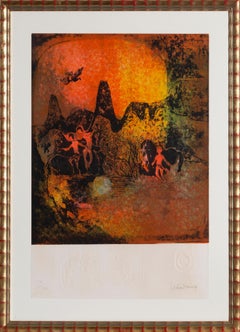
Landscape with Deer Herds

Landscape with Deer Herds

By Hoi Lebadang

Located in San Francisco, CA

This artwork "Landscape with Deer Herds" c.1970 is an original color lithograph by French/Vietnamese artist Hoi Lebadang, 1922-2015. It is hand sig...

Category

Late 20th Century Modern Animal Prints

Materials

Lithograph

Sea Spirit

Sea Spirit

Located in San Francisco, CA

This artwork titled "Sea Spirit" 1965 is an original stonecut on thin paper by Eskimo artist Egevadluq (Eegyvudluk) Ragee, 1920-1983. It is hand signed, titled, dated, described and numbered 20/50 in pencil by the artist. With the blind stamp of the artist at the lower right corner. It is in excellent condition. it has a minor thin crease at the middle center, at the edge of the sheet, barely visible, see picture #4 About the artist: Eegyvudluk Ragee was the oldest child born to Pamiaktok and Sorisolutu at the small campsite of Ikarasak, on the southern tip of Baffin Island in 1920. When Egevadluq travelled to Cape Dorset (Kinngait) to trade for supplies, she would buy graphite pencil and paper from the West Baffin Eskimo Co-operative. Her early works filled entire sheets of paper, mythical creatures, bird-animal-human transformations, and images from reality - all randomly intermingled . By the mid-1960s, Eegyvudluk was using wax crayons, or coloured felt pens on paper. In 1967, improved housing in Cape Dorset resulted in the Inuit abandoning most of the campsites. Eegyvudluk moved into the settlement, and by the early 1970s, explored the use of arcrylic washes, on which she drew her well-known figures and birds. "I started drawing because I was 'tususkuk' (when I saw other people doing it, I wanted to do the same things)...When I start to make a drawing, I have a picture in my mind, but when I try to put that picture on paper, my hands won't do what my mind wants. When I have the picture in my head, I can't get it out by my hands. Sometimes I find it hard to draw when my children are in the house; I find it hard to think with so much noise around me. I make the kids go outside." Eegyvudluk, Cape Dorset Print Catalogue, 1978. Exhibitions Alaska Eskimo Dolls/Inuit Prints, Provincial Museum of Alberta, sponsored by the Alaska State Council on the Arts ART ESKIMO, Galerie de France Art Inuit, Presented by l'Iglou Art Esquimau, Douai at Galerie Akenaton Art Inuit: Autour de la Collection de Cape Dorset 1991, Presented by l'Iglou Art Esquimau, Douai at Le Colombier Art/Facts, McMaster Art Gallery Art/Facts, McMaster Art Gallery Canadian Eskimo Art...

Category

Mid-20th Century Folk Art Figurative Prints

Materials

Other Medium

Horses #V

Horses #V

By Hoi Lebadang

Located in San Francisco, CA

This artwork "titled "Horses #V" 1974 is an original color lithograph, with embossing by French/Vietnamese artist Hoi Lebadang, 1922-2015. It is hand sign...

Category

Late 20th Century Modern Animal Prints

Materials

Lithograph

You May Also Like

Untitled, Canada Suite

Untitled, Canada Suite

By Yargo De Lucca

Located in Surfside, FL

Original serigraph silkscreen prints by German/Canadian expressionist Yargo de Lucca (1925-2008) from the “Canada Suite” series, a hand-signed and numbered Inuit-inspired silkscreen...

Category

20th Century Surrealist Animal Prints

Materials

Lithograph

Canada Suite Signed Serigraph Birds

Canada Suite Signed Serigraph Birds

By Yargo De Lucca

Located in Surfside, FL

Original serigraph silkscreen prints by German/Canadian expressionist Yargo de Lucca (1925-2008) from the “Canada Suite” series, a hand-signed and numbered Inuit-inspired silkscreen...

Category

20th Century Animal Prints

Materials

Lithograph

Deer, Folk art Acrylic and Watercolor Painting by Li Zhong-Liang

Deer, Folk art Acrylic and Watercolor Painting by Li Zhong-Liang

Located in Long Island City, NY

Li Zhong-Liang, Chinese (1944 - ) - Deer, Year: 1992, Medium: Acrylic, Watercolor on Laid Paper, signed and dated lower right, Size: 28.5 x 39 in. (72.39 x 99.06 cm)

Category

1990s Folk Art Animal Prints

Materials

Acrylic, Watercolor

Prehistorica, Abstract Lithograph by Hoi Lebadang

Prehistorica, Abstract Lithograph by Hoi Lebadang

By Hoi Lebadang

Located in Long Island City, NY

Prehisotrica by Hoi Lebadang, Vietnamese (1922 - 2015) Date: circa 1970 Medium: Lithograph with Intaglio, signed and numbered in pencil Edition: 72/120 Size: 25 x 18 inches Frame Siz...

Category

1970s Modern Figurative Prints

Materials

Lithograph

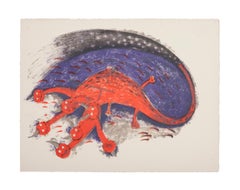
Monster - Original Lithograph - 20th Century

Monster - Original Lithograph - 20th Century

Located in Roma, IT

Monster is a beautiful original lithography artwork realized by an Anonymous Artist of the XX century. In good conditions. The artwork represents a monster-like creature with many...

Category

20th Century Modern Abstract Prints

Materials

Lithograph