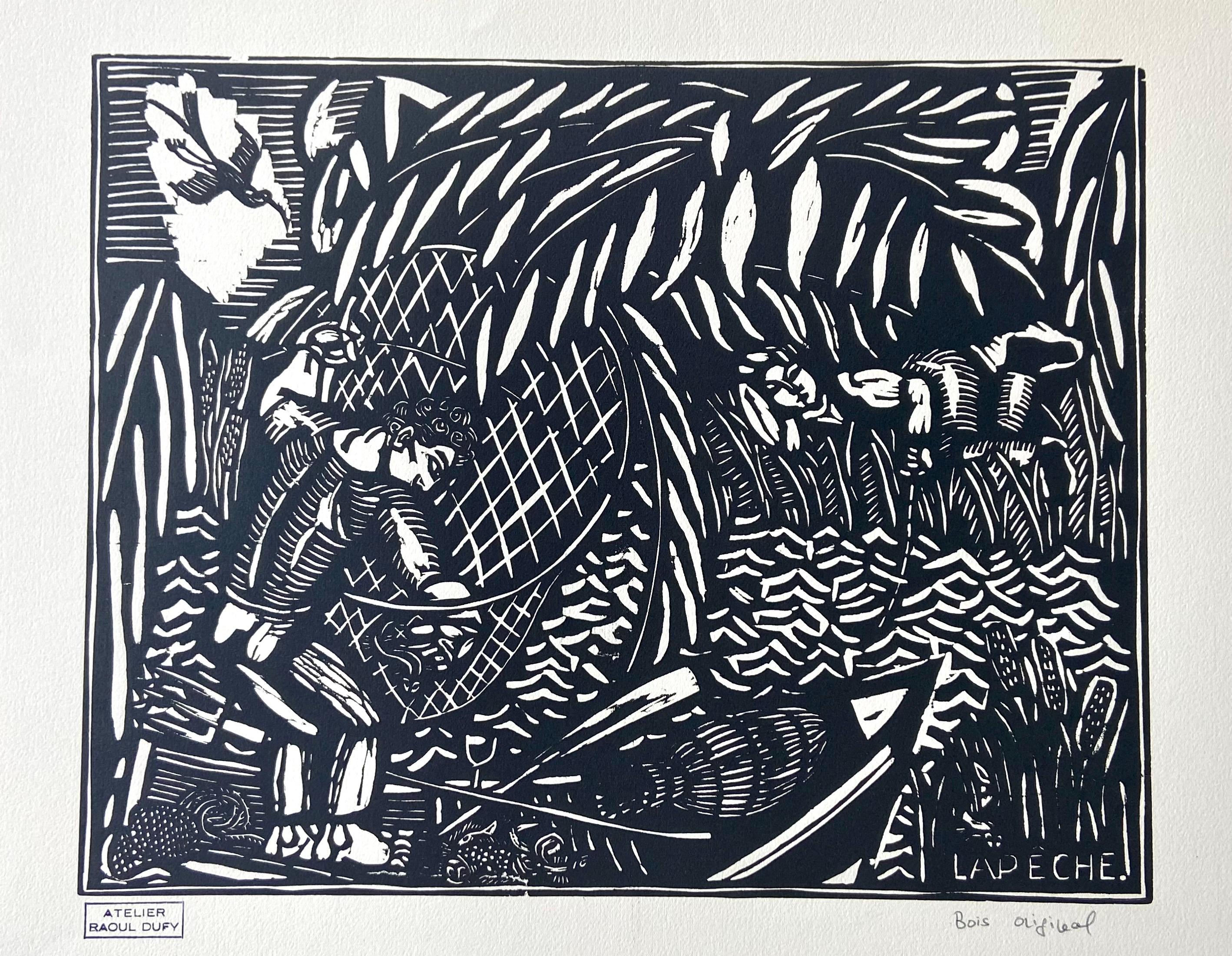
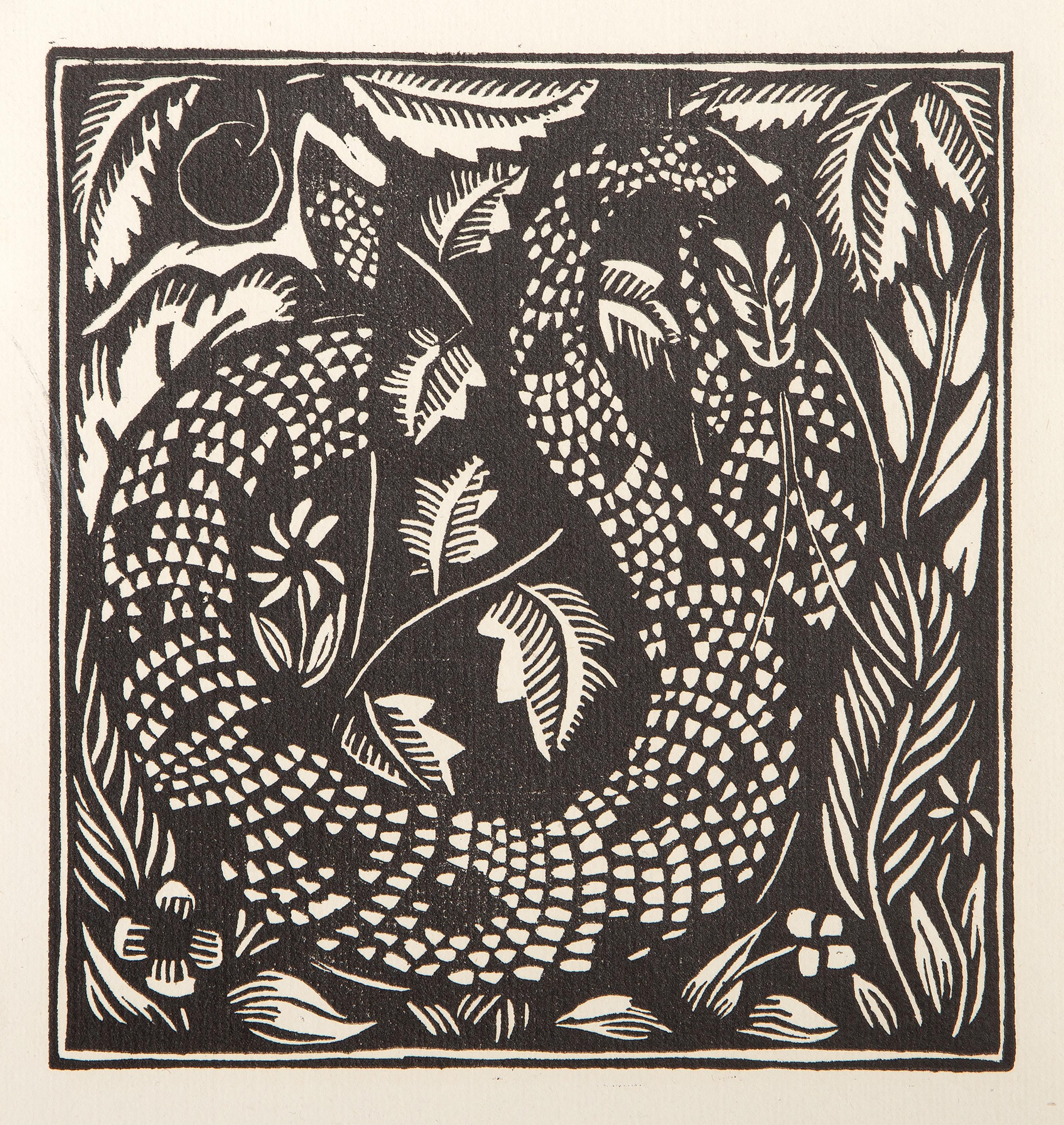
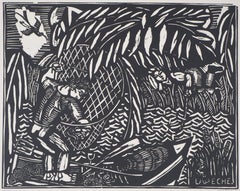
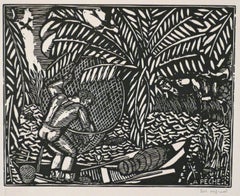
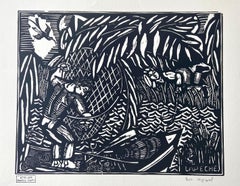
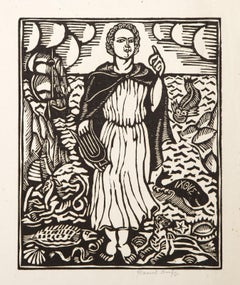
Raoul Dufy, 'La Pêche' (Fishing), woodcut, 1910, from the second edition of 220 printed in 1953. With the estate stamp 'ATELIER RAOUL DUFY' in the lower left margin. Numbered '106/220' in pencil, lower right. Titled in the block, lower right. A superb, richly-inked impression, on heavy, cream wove paper, the full sheet with wide margins (3 to 5 inches), slight toning at the sheet edges, well away from the image; otherwise in excellent condition. Archivally sleeved, unmatted.
Image size 12 1/2 x 15 13/16 inches (318 x 402 mm); sheet size 19 9/16 x 25 3/4 inches (497 x 654 mm).
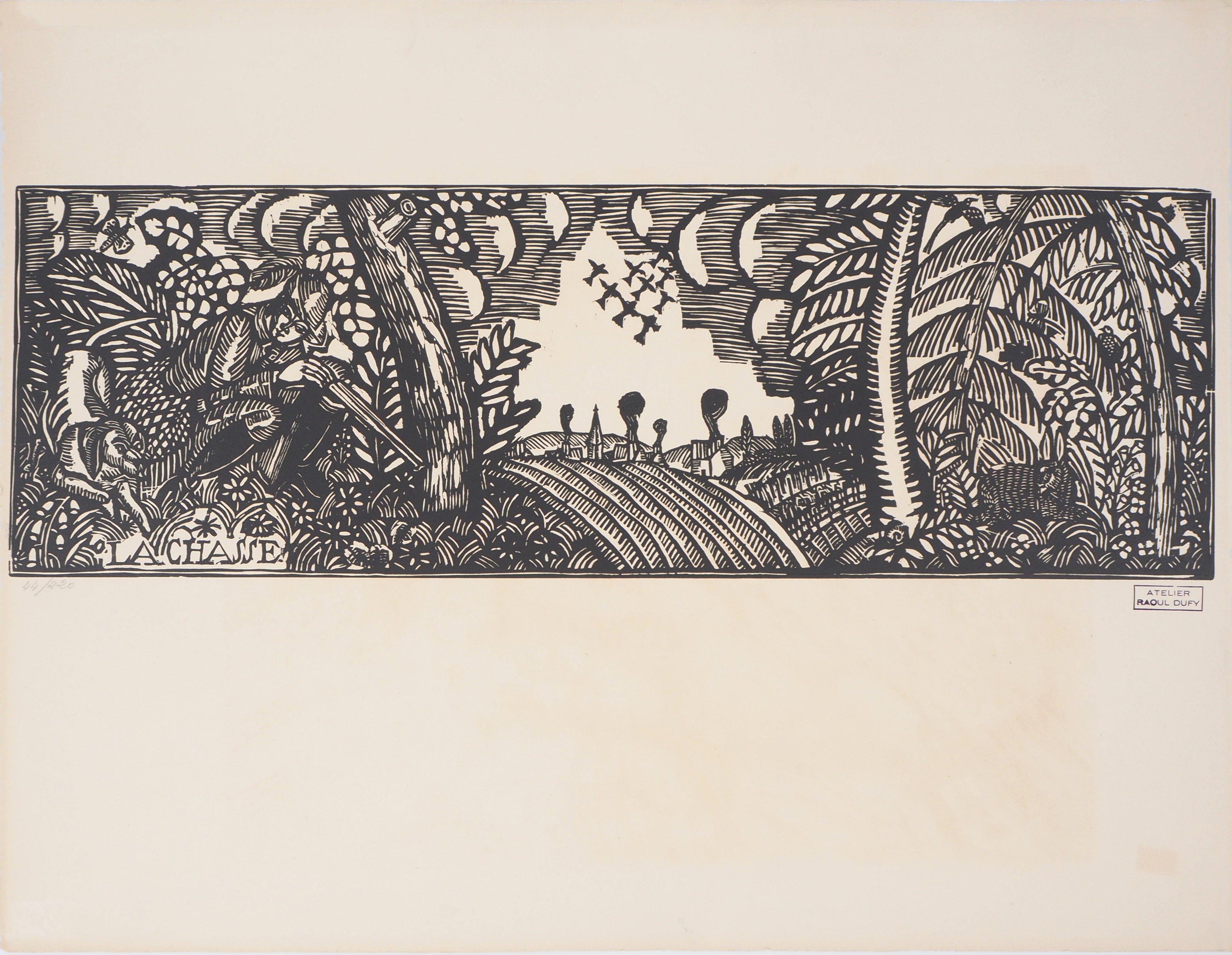
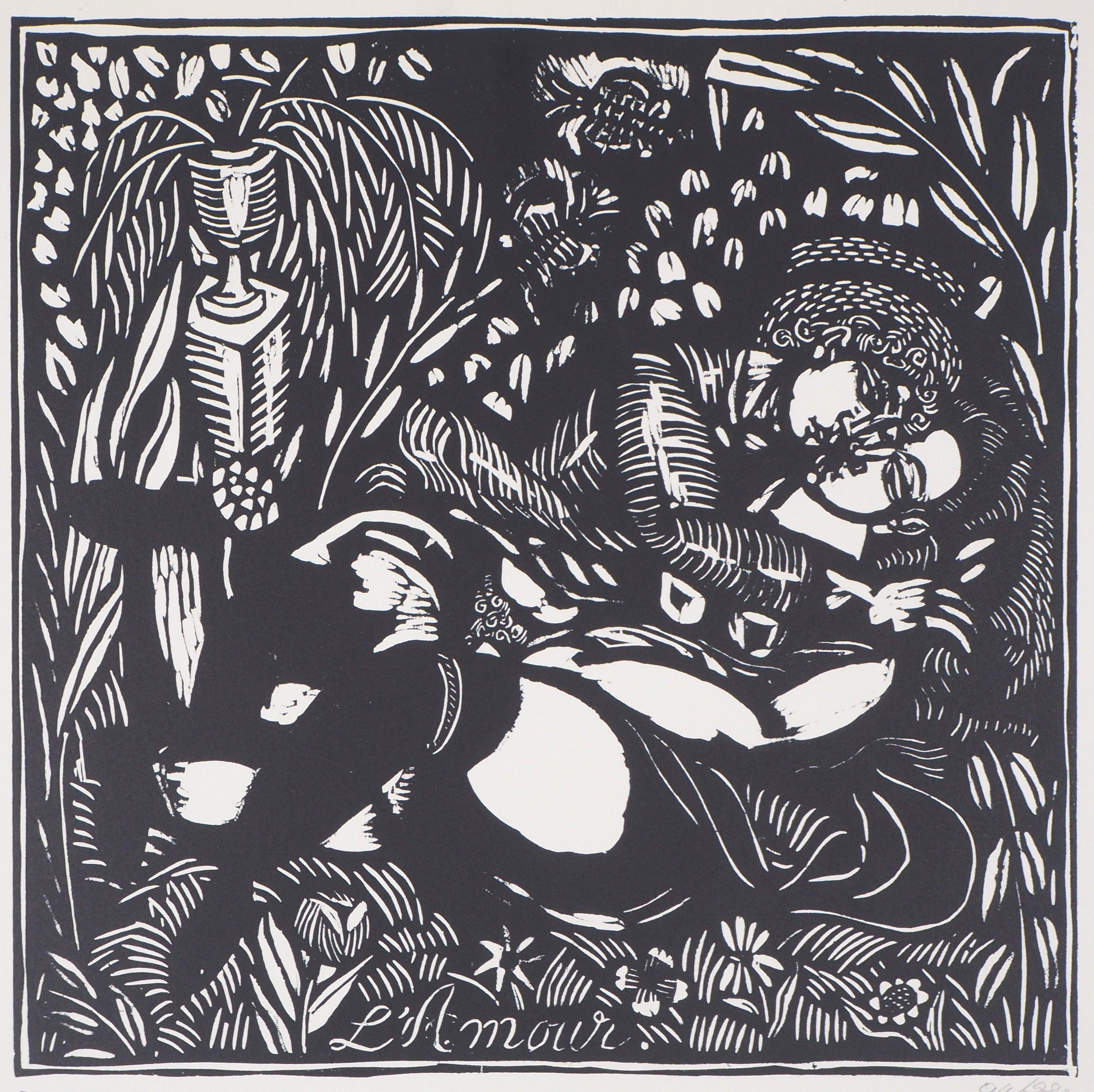
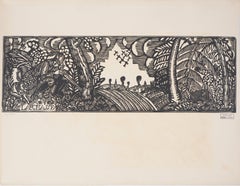
From the suite of four woodcuts entitled 'Les Plaisirs de la Paix' (The Pleasures of Peace), originally published by Éditions de La Sirène, Paris in 1926. The other three works in the series are 'La Danse' (The Dance), 'La Chase' (The Hunt), and 'L'amore' (Love). See our other listings for 'La Danse' and 'L'amore'.
Collections: Cleveland Museum of Art, Minneapolis Art Institute, National Gallery of Art, Yale University Art Gallery.
ABOUT THE ARTIST
French painter and designer Raoul Dufy (1877-1953) is widely admired for his spontaneous, brightly colored, decorative landscapes and social scenes, and for his accomplished work in the diverse disciplines of printmaking, fabric design, illustration, and ceramics.
In 1900 Dufy went to Paris to attend the École des Beaux-Arts. He painted in an Impressionist style in his early work, but by 1905 he had begun to employ the broad brushstrokes and bright colors typical of the Fauve artists. A 1907 exhibition of Paul Cézanne’s work inspired Dufy to adopt, albeit only temporarily, more subdued colors and structured compositions. He worked in a Cubist-influenced style with the painters Georges Braque and Émile-Othon Friesz between 1908 and 1909 but soon returned to his more spontaneous Fauvist approach.
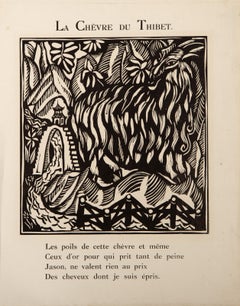
Dufy was also an accomplished printmaker, designer, and ceramicist. In 1910 he produced a series of woodcuts to illustrate poet Guillaume Apollinaire’s Bestiary. He began to create designs for a textile company in 1912, and in the 1920s, he designed ceramics and tapestries.
In the early 1920s, Dufy rededicated himself to painting and began to produce what are now his best-known works. His distinctive style is characterized by bright colors thinly spread over a white ground, with objects sketchily delineated by sensuously undulating lines. Dufy took as his subjects scenes of recreation and spectacle, including horse races, regattas, parades, and concerts. He spent much of his time on the French Riviera and produced a series of paintings of Nice (1927), the Bois de Boulogne (1929), and Deauville (1930). He also worked as an illustrator and printmaker, creating whimsical etchings and lithographs in the 1920s and ’30s. His lively, carefree, elegant style gained great popularity, and his works continue to enjoy widespread appreciation today.
Dufy’s work can be found in numerous museum collections throughout the United States and Europe, including the Art Institute of Chicago, Brooklyn Museum, City of Paris Museum of Modern Art, Design Museum Gent (Belgium), Detroit Museum of Art, LACMA Collections, Le Havre Museum (France), Madrid Museum, Metropolitan Museum of Art, Musée des Beaux-Arts de Nice (France), Museum Hundertwasser (Austria), Museum of Modern Art, Harvard Art Museums, National Gallery of Art, Staatliche Museen zu Berlin, Tate Modern (London), Thyssen-Bornemisza Museum (Madrid), and the Victoria & Albert Museum (London).