Nehmer, Rudolf (1912-1983), Blessed are the merciful, 1948
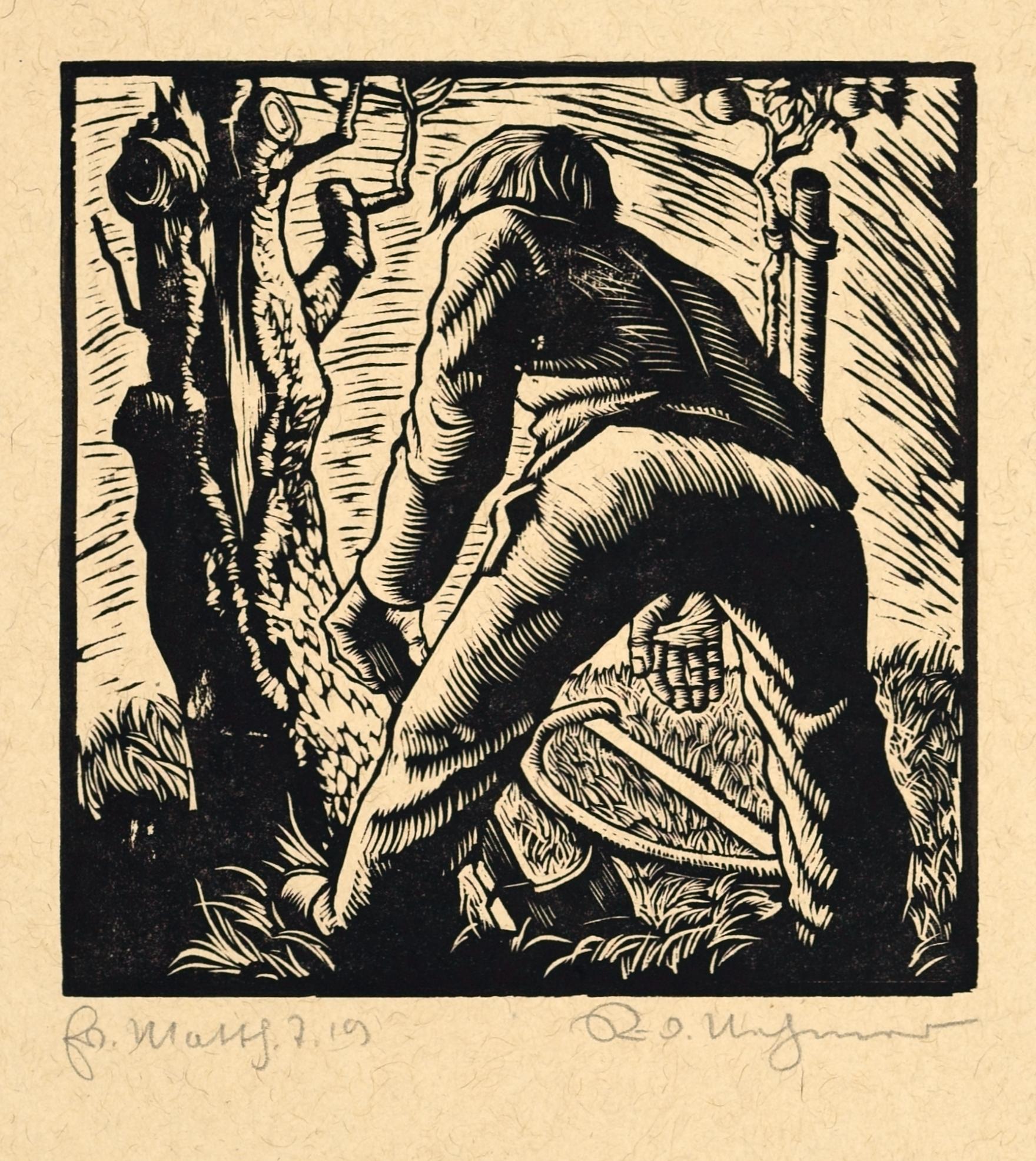
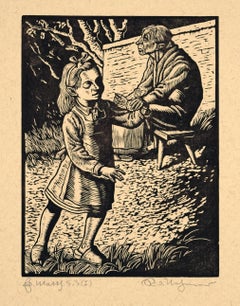
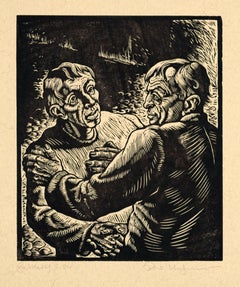
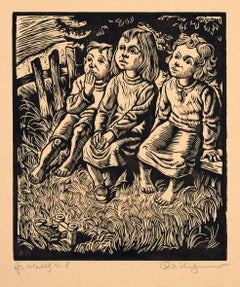
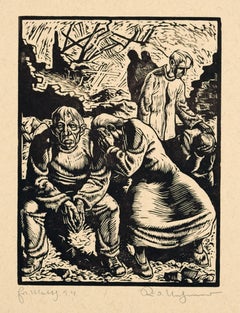
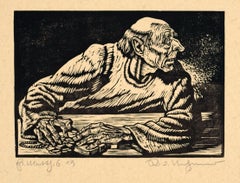
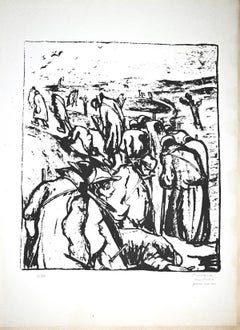
Rudolf Nehmer (1912 Bobersberg - 1983 Dresden), Blessed are the merciful, 1948. Woodcut on yellowish wove paper, 18.8 cm x 14.8 cm (image), 45 cm x 30 cm (sheet size), signed “Rud.[olf] Nehmer” in pencil lower right and inscribed “Matth. 5,7” lower left.
- The wide sheet margin with slight traces of creasing and somewhat wavy, the depiction in excellent, colorful condition.
- The support of care -
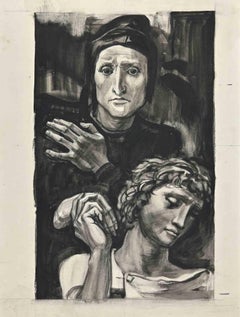
This woodcut is part of Nehmer's best-known series, his pictorial interpretation of the Sermon on the Mount (Matth. 5:1-7:29), created shortly after the end of World War II. The print illustrates the beatitude: Blessed are the merciful, for they shall obtain mercy (Mt 5:7).
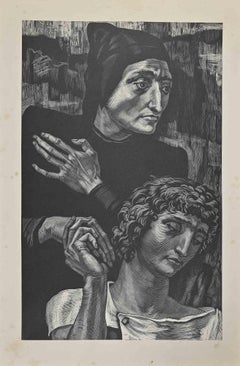
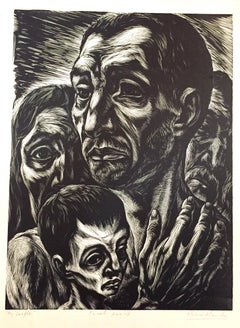
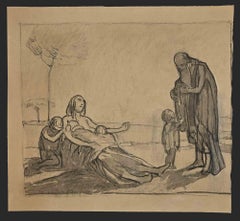
The path of life leads through the darkness of the world, where a child finds rest in the bosom of a man who looks like Christ and follows him, while at the end of the path of life an old woman is lovingly supported by a young woman.
About the artist
Rudolf Nehmer studied from 1932 to 1934 in Dresden at the private art academy founded by Ernst Oskar Simonson-Castelli under Woldemar Winkler and, after a brief interlude at the art academy, was a student in Willy Kriegel's studio until 1936. After his first one-man show in 1935 at the Kühl Art Exhibition in Dresden, which was progressive until the Nazi era, Nehmer was represented at the major German art exhibitions in the following years. In 1938 he stayed in Worpswede. From 1941 he was a soldier on the Western Front and in Denmark, returning to Dresden from British captivity in 1945. After the war, he had his first solo exhibition in 1945. Nehmer was a co-founder of the artists' association 'Das Ufer - Gruppe 1947' and in 1951 a founding member of the artists' cooperative 'Kunst und Zeit'. He had numerous solo and group exhibitions in the GDR, culminating in a retrospective at the Galerie Neuer Meister on the occasion of his 60th birthday.
GERMAN VERSION
Rudolf Nehmer (1912 Bobersberg - 1983 Dresden), Selig sind die Barmherzigen, 1948. Holzschnitt auf gelblichem Velin, 18,8 cm x 14,8 cm (Darstellung), 45 cm x 30 cm (Blattgröße), unten rechts in Blei mit „Rud.[olf] Nehmer“ signiert und unten links mit „Matth. 5,7“ bezeichnet.
- Der breite Blattrand mit leichten Knickspuren und etwas gewellt, die Darstellung in ausgezeichnetem farbkräftigem Zustand.
- Der Halt der Fürsorge -
Der Holzschnitt gehört zu Nehmers bekanntester Graphikfolge, seiner kurz nach dem Ende des Zweiten Weltkrieges geschaffenen bildlichen Auslegung der Bergpredigt (Matth. 5,1-7,29). Das Blatt veranschaulicht die Seligpreisung: Selig sind die Barmherzigen; denn sie werden Barmherzigkeit erlangen (Matth. 5,7).
Durch die Dunkelheit der Welt führt der Pfad des Lebens auf dem ein Kind im Schoße eines wie Christus aussehenden, ihm nachfolgenden, Mannes Ruhe findet, während am Ende des Lebensweges eine Greisin liebevoll von einer jungen Frau gestützt wird.
zum Künstler
Rudolf Nehmer studierte von 1932 bis 1934 in Dresden an der von Ernst Oskar Simonson-Castelli gegründeten privaten Kunstakademie bei Woldemar Winkler und war – nach einem kurzen Intermezzo an der Kunstakademie – bis 1936 Schüler im Atelier von Willy Kriegel. Nach einer ersten Einzelausstellung im Jahre 1935 in der bis in die NS-Zeit hinein progressiven Dresdner Kunstausstellung Kühl, war Nehmer in den Folgejahren in den Großen Deutschen Kunstausstellungen vertreten. 1938 weilte er in Worpswede. Ab 1941 war er Soldat an der Westfront und in Dänemark und kehrte 1945 aus britischer Kriegsgefangenschaft nach Dresden zurück. Nach dem Kriegsende erfolgte bereits 1945 die erste Einzelausstellung. Nehmer war Mitbegründer der Künstlervereinigung ‚Das Ufer – Gruppe 1947‘ und war 1951 Gründungsmitglied der Künstlergenossenschaft ‚Kunst und Zeit‘. In der DDR erfolgten zahlreiche Einzelausstellungen und Ausstellungsbeteiligungen, die in einer Retrospektive anlässlich seines 60. Geburtstags in der Galerie Neuer Meister gipfelte.