Want more images or videos?
Request additional images or videos from the seller
1 of 9

Rufino Tamayo
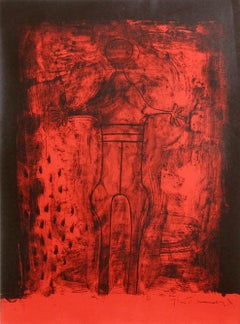
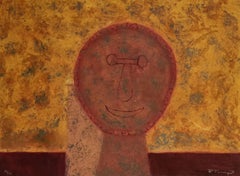
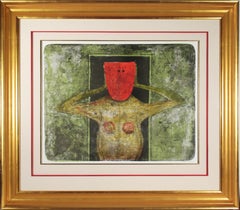
"Máscara Roja (Red Mask)" 1969 hand-signed numbered lithograph by Rufino Tamayo

1969

Price:$2,600
$3,000List Price

You May Also Like

Mascara Roja

Rufino TamayoMascara Roja, 1969

$5,750

H 37.25 in W 42 in D 2 in

Mascara Roja

By Rufino Tamayo

Located in San Francisco, CA

This artwork titled "Mascara Roja" 1969 is an original colors lithograph on B.F.K. Rives paper by renown Mexican artist Rufino Tamayo, 1899-1991. It is hand signed and inscribed H.C. (Hors Commerce) in pencil by the artist. The image size is 21 x 27.25 inches, framed size is 37.25 x 42 inches. Published by Touchtone Publisher, New York, printed by Ateliers Desjobert, Paris. Referenced and pictured in the artist's catalogue raisonne by Pereda, plate #124. Custom framed in a wooden gold leaf frame, with gold and red spacer and fabric matting. It is in excellent condition. About the artist: A native of Oaxaca in Southern Mexico, Rufino Tamayo's father was a shoemaker, and his mother a seamstress. Some accounts state that he was descended from Zapotec Indians, but he was actually 'mestizo' - of mixed indigenous/European ancestry. (Santa Barbara Museum of Art). He began painting at age 11. Orphaned at the age of 12, Tamayo moved to Mexico City, where he was raised by his maternal aunt who owned a wholesale fruit business. In 1917, he entered the San Carlos Academy of Fine Arts, but left soon after to pursue independent study. Four years later, Tamayo was appointed the head designer of the department of ethnographic drawings at the National Museum of Archaeology in Mexico City. There he was surrounded by pre-Colombian objects, an aesthetic inspiration that would play a pivotal role in his life. In his own work, Tamayo integrated the forms and tones of pre-Columbian ceramics into his early still lives and portraits of Mexican men and women. In the early 1920s he also taught art classes in Mexico City's public schools. Despite his involvement in Mexican history, he did not subscribe to the idea of art as nationalistic propaganda. Modern Mexican art at that time was dominated by 'The Three Great Ones' : Diego Rivera, Jose Clemente Orozco, and David Alfaro Siqueros, but Tamayo began to be noted as someone 'new' and different' for his blending of the aesthetics of post Revolutionary Mexico with the vanguard artists of Europe and the United States. After the Mexican Revolution, he focused on creating his own identity in his work, expressing what he thought was the traditional Mexico, and refusing to follow the political trends of his contemporary artists. This caused some to see him as a 'traitor' to the political cause, and he felt it difficult to freely express himself in his art. As a result, he decided to leave Mexico in 1926 and move to New York, along with his friend, the composer Carlos Chavez. The first exhibition of Tamayo's work in the United States was held at the Weyhe Gallery, New York, in that same year. The show was successful, and Tamayo was praised for his 'authentic' status as a Mexican of 'indigenous heritage', and for his internationally appealing Modernist aesthetic. (Santa Barbara Museum of Art). Throughout the late thirties and early forties New York's Valentine Gallery gave him shows. For nine years, beginning in 1938, he taught at the Dalton School in New York. In 1929, some health problems led him to return to Mexico for treatment. While there he took a series of teaching jobs. During this period he became romantically involved with the artist Maria Izquierdo...

Category

Mid-20th Century Modern Figurative Prints

Materials

Lithograph

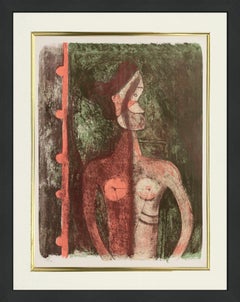
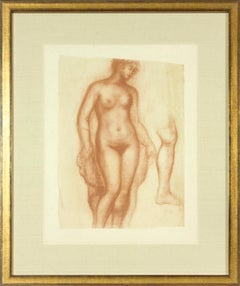
Torso De Jeune Fille, Hand Signed Lithograph, Pereda 112, 1969, Framed

Torso De Jeune Fille, Hand Signed Lithograph, Pereda 112, 1969, Framed

By Rufino Tamayo

Located in Aventura, FL

Lithograph in colors on Rives BFK paper from the Mujeres portfolio. Hand signed lower left margin by Rufino Tamayo. Hand numbered VI/XXV lower right margin (an artist proof of 25 a...

Category

1960s Contemporary Portrait Prints

Materials

Lithograph, Paper

Affiche avant Lettre (Mujer Suite), 1969 Lithograph by Rufino Tamayo

Affiche avant Lettre (Mujer Suite), 1969 Lithograph by Rufino Tamayo

By Rufino Tamayo

Located in Long Island City, NY

Affiche avant Lettre (Mujer Suite) Rufino Tamayo Mexican (1899–1991) Date: 1969 Lithograph Poster, signed in the plate Size: 32.5 x 24 in. (82.55 x 60.96 cm)

Category

1960s Prints and Multiples

Materials

Lithograph

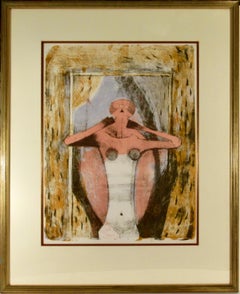
Torso de Mujer

Rufino TamayoTorso de Mujer, 1969

$4,000

H 40.75 in W 33 in D 1.25 in

Torso de Mujer

By Rufino Tamayo

Located in San Francisco, CA

This artwork titled "Torso de Mujer (Torso de Femmee)" from the suite "The Mujeres File" 1969 is an original colors lithograph on Wove paper by renown Mexican artist Rufino Tamayo, 1899-1991. It is hand signed and inscribed H.C. (Hors Commerce) in pencil by the artist. The image size is 26.85 x 21 inches, framed size is 40.75 x 33 inches. Published by Touchtone Publisher, New York, printed by Ateliers Desjobert, Paris. Referenced and pictured in the artist's catalogue raisonne by Pereda, plate #108 page 107. Custom framed in a wooden gold frame, with gold bevel and light beige fabric matting. It is in excellent condition. About the artist: A native of Oaxaca in Southern Mexico, Rufino Tamayo's father was a shoemaker, and his mother a seamstress. Some accounts state that he was descended from Zapotec Indians, but he was actually 'mestizo' - of mixed indigenous/European ancestry. (Santa Barbara Museum of Art). He began painting at age 11. Orphaned at the age of 12, Tamayo moved to Mexico City, where he was raised by his maternal aunt who owned a wholesale fruit business. In 1917, he entered the San Carlos Academy of Fine Arts, but left soon after to pursue independent study. Four years later, Tamayo was appointed the head designer of the department of ethnographic drawings at the National Museum of Archaeology in Mexico City. There he was surrounded by pre-Colombian objects, an aesthetic inspiration that would play a pivotal role in his life. In his own work, Tamayo integrated the forms and tones of pre-Columbian ceramics...

Category

Mid-20th Century Modern Figurative Prints

Materials

Lithograph

"Cabeza en Gris", Rufino Tamayo, Figurative Abstraction, Lithograph, 30x22 in.

"Cabeza en Gris", Rufino Tamayo, Figurative Abstraction, Lithograph, 30x22 in.

By Rufino Tamayo

Located in Dallas, TX

"Cabeza en Gris" by Rufino Tamayo is a Figurative Abstraction lithograph limited edition measuring 30x22 in. The piece is framed beautifully with a white mat with a silver liner and ...

Category

1970s Abstract Expressionist Figurative Prints

Materials

Etching

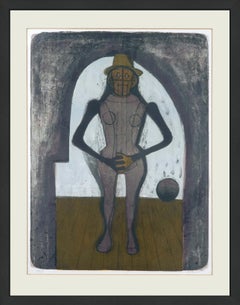
"Mujer Con Sombrero" Large lithograph

"Mujer Con Sombrero" Large lithograph

By Rufino Tamayo

Located in San Francisco, CA

This artwork titled "Mujer Con Sombrero (Woman with Hat)" 1972 is a large original colors lithograph on Arches paper by renown Mexican artist Rufino Tamayo, 1899-1991. It is hand signed and numbered 81/100. in pencil by the artist. The artwork size 36.35 x 25.85 inches, sheet size is 37.25 x 26.25 inches, framed size is 52.25 x 40.5 inches. Published by Transworld Art, New York , Printed by Bank Street Atelier, New York. Referenced and pictured in the artist's catalogue raisonne by Pereda, plate #132 page 123. Custom framed in a wooden black and silver frame, with silver bevel and fabric matting. It is in excellent condition. About the artist: A native of Oaxaca in Southern Mexico, Rufino Tamayo's father was a shoemaker, and his mother a seamstress. Some accounts state that he was descended from Zapotec Indians, but he was actually 'mestizo' - of mixed indigenous/European ancestry. (Santa Barbara Museum of Art). He began painting at age 11. Orphaned at the age of 12, Tamayo moved to Mexico City, where he was raised by his maternal aunt who owned a wholesale fruit business. In 1917, he entered the San Carlos Academy of Fine Arts, but left soon after to pursue independent study. Four years later, Tamayo was appointed the head designer of the department of ethnographic drawings at the National Museum of Archaeology in Mexico City. There he was surrounded by pre-Colombian objects, an aesthetic inspiration that would play a pivotal role in his life. In his own work, Tamayo integrated the forms and tones of pre-Columbian ceramics into his early still lives and portraits of Mexican men and women. In the early 1920s he also taught art classes in Mexico City's public schools. Despite his involvement in Mexican history, he did not subscribe to the idea of art as nationalistic propaganda. Modern Mexican art at that time was dominated by 'The Three Great Ones' : Diego Rivera, Jose Clemente Orozco, and David Alfaro Siqueros, but Tamayo began to be noted as someone 'new' and different' for his blending of the aesthetics of post Revolutionary Mexico with the vanguard artists of Europe and the United States. After the Mexican Revolution, he focused on creating his own identity in his work, expressing what he thought was the traditional Mexico, and refusing to follow the political trends of his contemporary artists. This caused some to see him as a 'traitor' to the political cause, and he felt it difficult to freely express himself in his art. As a result, he decided to leave Mexico in 1926 and move to New York, along with his friend, the composer Carlos Chavez. The first exhibition of Tamayo's work in the United States was held at the Weyhe Gallery, New York, in that same year. The show was successful, and Tamayo was praised for his 'authentic' status as a Mexican of 'indigenous heritage', and for his internationally appealing Modernist aesthetic. (Santa Barbara Museum of Art). Throughout the late thirties and early forties New York's Valentine Gallery gave him shows. For nine years, beginning in 1938, he taught at the Dalton School in New York. In 1929, some health problems led him to return to Mexico for treatment. While there he took a series of teaching jobs. During this period he became romantically involved with the artist Maria Izquierdo...

Category

Mid-20th Century Modern Figurative Prints

Materials

Lithograph

Cabeza Sobre Fondo Verde, Surrealist Etching by Rufino Tamayo

Cabeza Sobre Fondo Verde, Surrealist Etching by Rufino Tamayo

By Rufino Tamayo

Located in Long Island City, NY

Rufino Tamayo, Mexican (1899 - 1991) - Cabeza Sobre Fondo Verde, Portfolio: Rufino Tamayo 15 aquafuertes, Year: 1979, Medium: Etching, signed and numbered in crayon, Edition: 14/...

Category

1970s Surrealist Portrait Prints

Materials

Etching

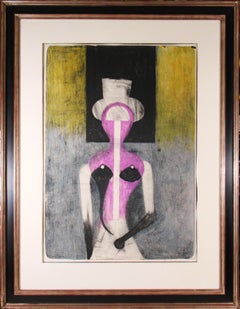
Femme Au Collant Rose, Hand Signed Lithograph, Pereda 116, Framed, 1969

Femme Au Collant Rose, Hand Signed Lithograph, Pereda 116, Framed, 1969

By Rufino Tamayo

Located in Aventura, FL

Femme Au Collant Rose (Mujer Con Mallas Rosas) from the Mujeres portfolio. Lithograph in colors on Rives BFK paper. Hand signed lower left margin by Rufino Tamayo. Hand numbered 3...

Category

1960s Contemporary Portrait Prints

Materials

Paper, Lithograph

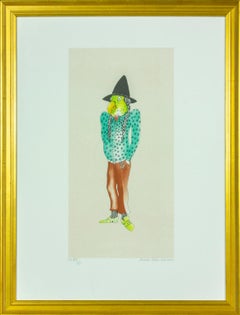
Rufino Tamayo, "Personaje con Sombrero" 1979

Rufino Tamayo, "Personaje con Sombrero" 1979

By Rufino Tamayo

Located in Los Angeles, CA

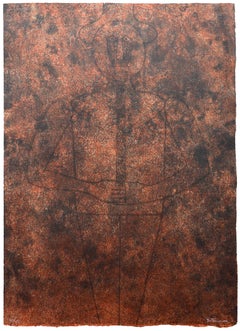
"Personaje con Sombrero" is a superb figurative abstraction by the renown Mexican artist Rufino Tamayo. An aquatint and etching in colors printed on a full sheet of watermarked woven handmade paper. The full sheet measures 29 5/8 inches H. x 22 inches W. Framed dimensions are 40 3/4 inches H. x 33 inches W. Signed "R Tamayo" and numbered "40/99" in white crayon by the artist. Printed and published by Poligrafa, Barcelona in 1979. Rufino Tamayo (1899-1991) is a modern master whose legacy is rooted in his contributions across a variety of media, including mural and easel painting, drawing, and the graphic arts. Produced between 1925 and 1991, his graphic work includes woodcuts, lithographs, etchings, and Mixografia prints — a new technique that was developed in the early 1970s to allow him to produce his prints in relief. Tamayo is one of the most celebrated Mexican Artists of the 20th Century. Heavily influenced by pre-Columbian art...

Category

1970s Modern Prints and Multiples

Materials

Etching, Aquatint

Capitulo XI, Signed Surrealist Lithograph by Rufino Tamayo

Capitulo XI, Signed Surrealist Lithograph by Rufino Tamayo

By Rufino Tamayo

Located in Long Island City, NY

Rufino Tamayo was born in Oaxaca, Mexico. He studied at the Academia de Bellas Artes in Mexico City and worked there until 1936 when he moved to New York, where he taught at the Dalt...

Category

1950s Surrealist Abstract Prints

Materials

Lithograph

More From This Seller

View All
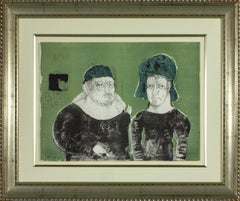
"Borgia" 1968 framed lithograph by Jose Luis Cuevas from "Crimes by Cuevas"

"Borgia" 1968 framed lithograph by Jose Luis Cuevas from "Crimes by Cuevas"

By José Luis Cuevas

Located in Boca Raton, FL

"Borgia" lithograph by Jose Luis Cuevas from his "Crimes by Cuevas" portfolio of 11 images which addresses criminality throughout history. This lithograph depicts brother and sister Cesare and Lucrezia...

Category

1960s Other Art Style Figurative Prints

Materials

Lithograph

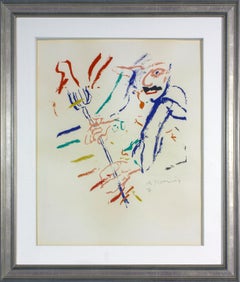
Violins (Red and Black) lithograph  by Arman, Edition 111 of 150

Violins (Red and Black) lithograph by Arman, Edition 111 of 150

By Arman

Located in Boca Raton, FL

Hand-numbered in front lower left corner. Hand-signed in front lower right corner. Framed under glass in natural wood frame. Framed dimensions are 32 1/2 x 24 1/2 inches. Image size ...

Category

1970s Modern More Prints

Materials

Lithograph

"Iran" lithograph from "Escultor" Suite Number 2 by Joan Miró from Poligrafa

"Iran" lithograph from "Escultor" Suite Number 2 by Joan Miró from Poligrafa

By Joan Miró

Located in Boca Raton, FL

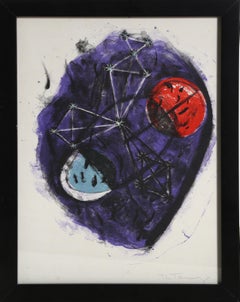
"Iran" abstract lithograph from "Escultor" suite of seven by Joan Miró. Plate-signed Miró on front. Unframed/never framed. #2 Suite Escultor Iran 1975 hand-written in pencil on back.

Category

1970s Abstract Abstract Prints

Materials

Lithograph