Want more images or videos?
Request additional images or videos from the seller
1 of 2

Secondo De Angelis
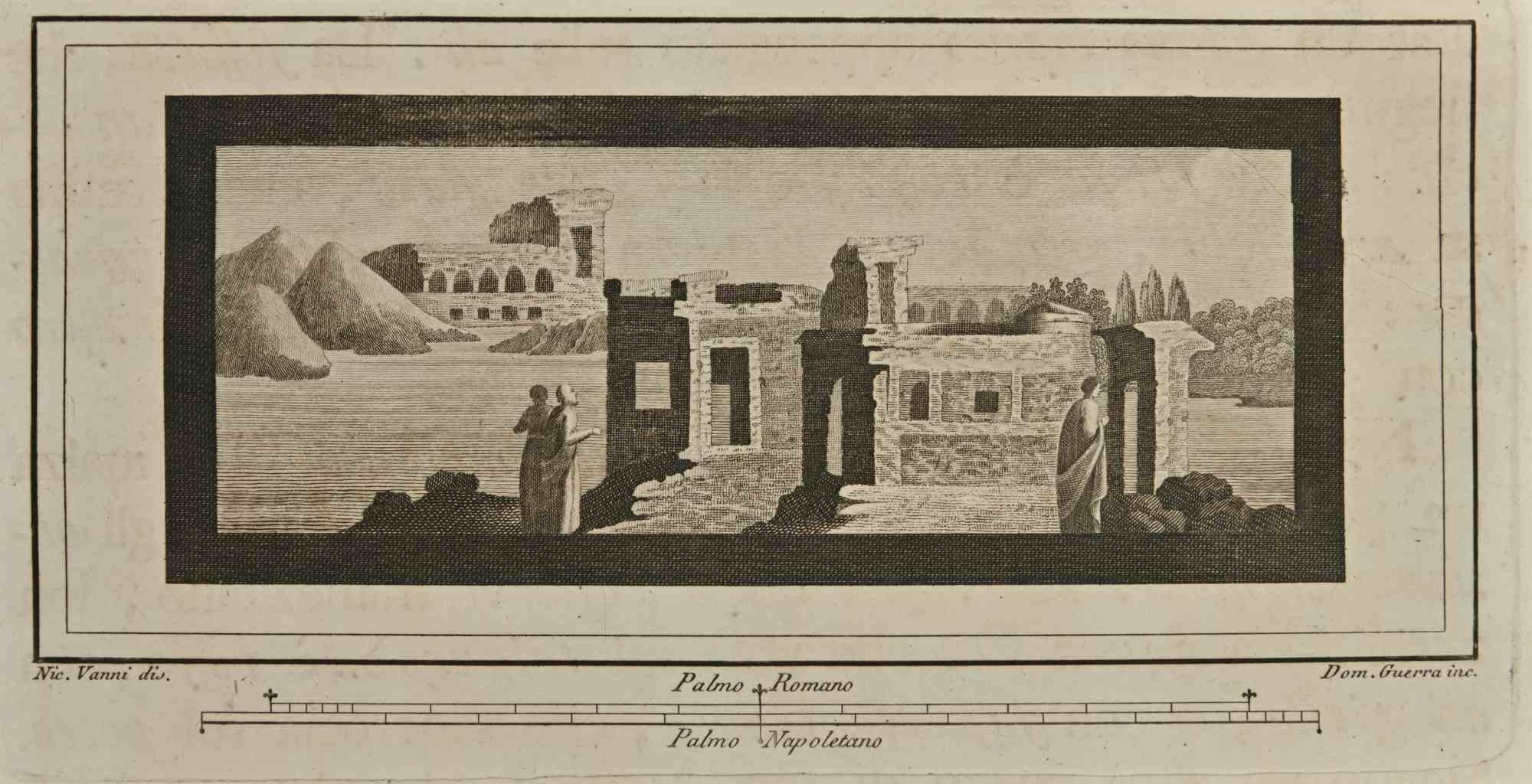
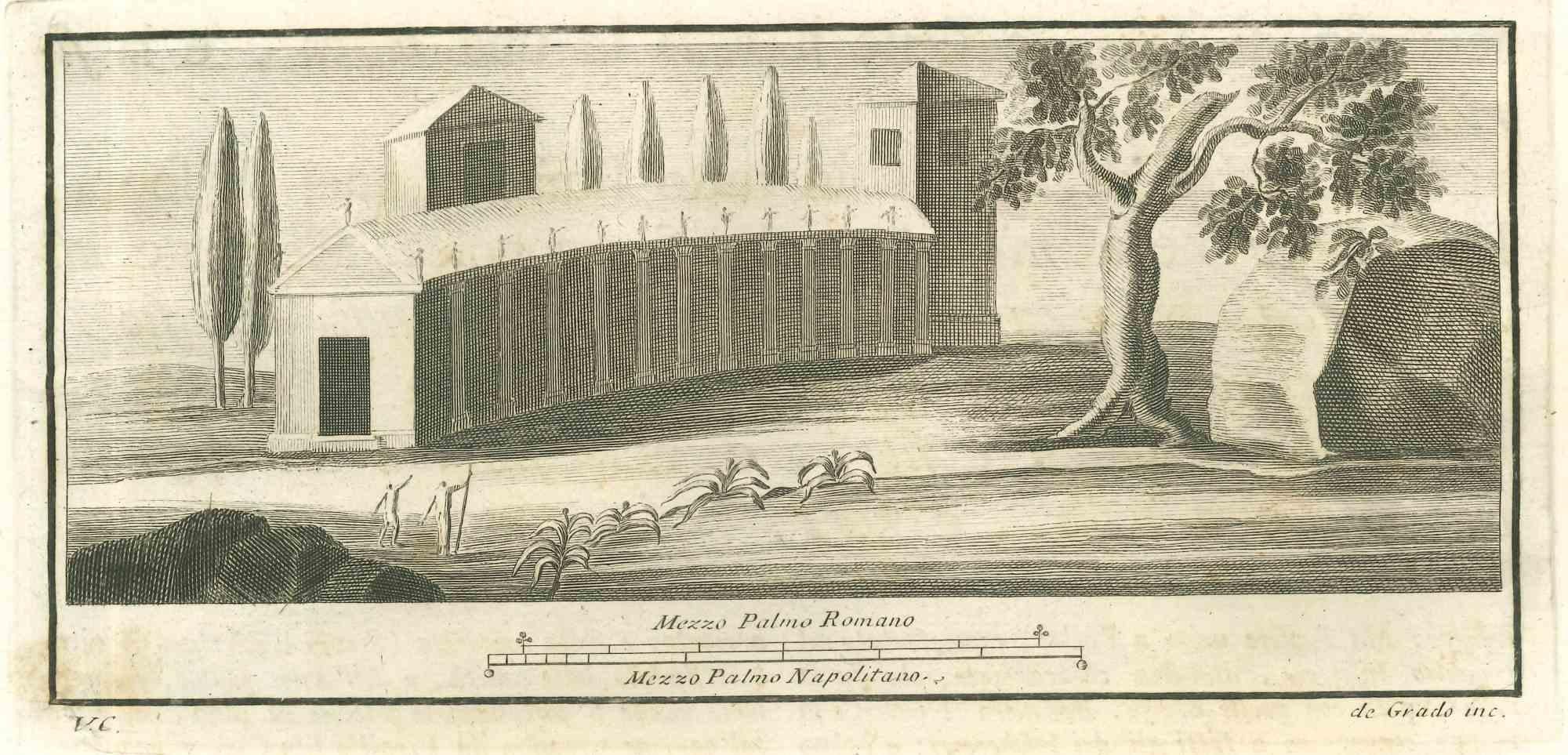
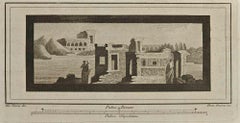
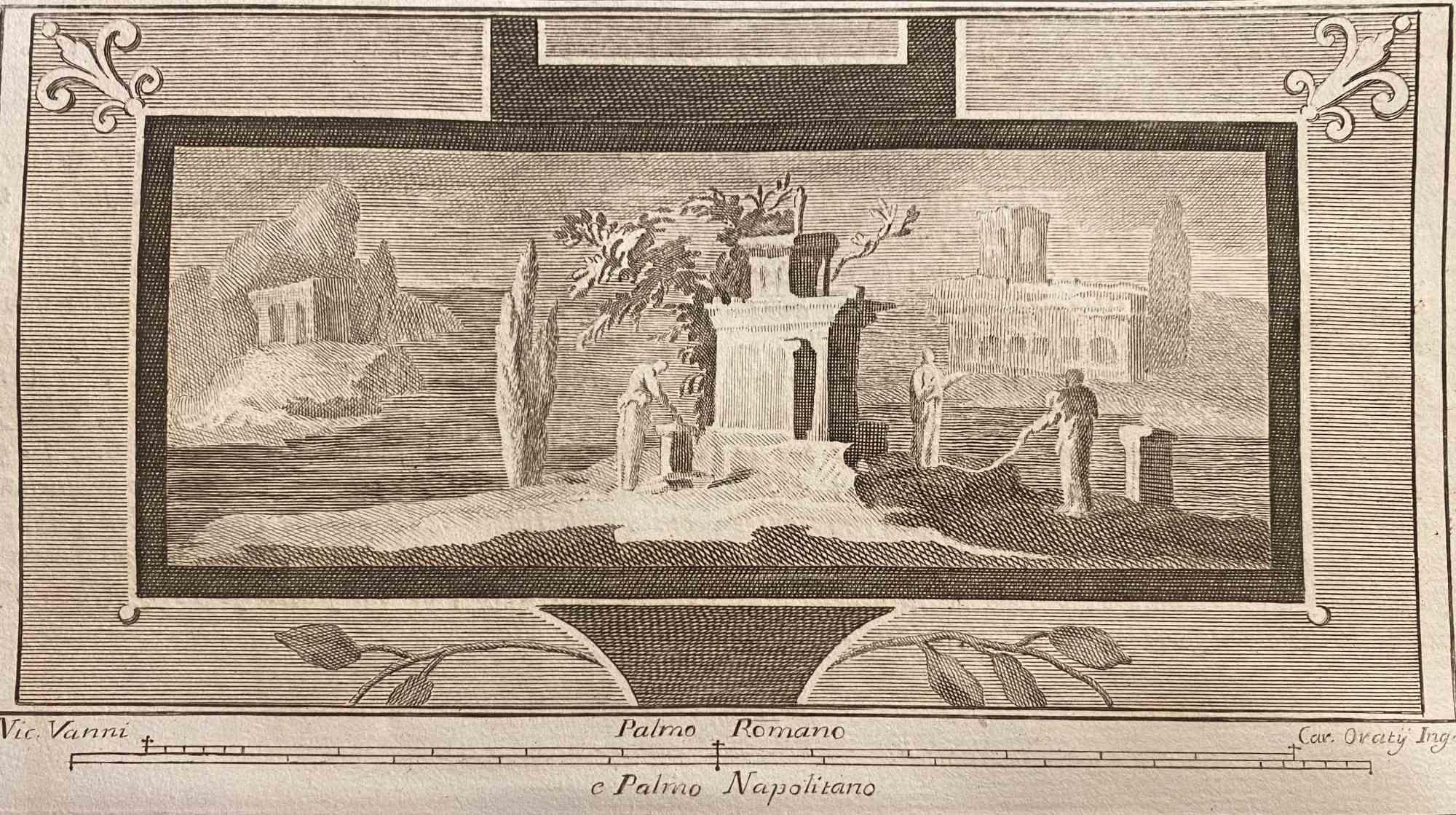
Roman Temple Fresco - Etching by Secondo De Angelis - 18th Century

18th Century

$283.56
£209.24
€240VAT Included
CA$393.17
A$399.34
CHF 230.13
MX$4,821.49
NOK 2,673.19
SEK 2,695.49
DKK 1,829.96

About the Item

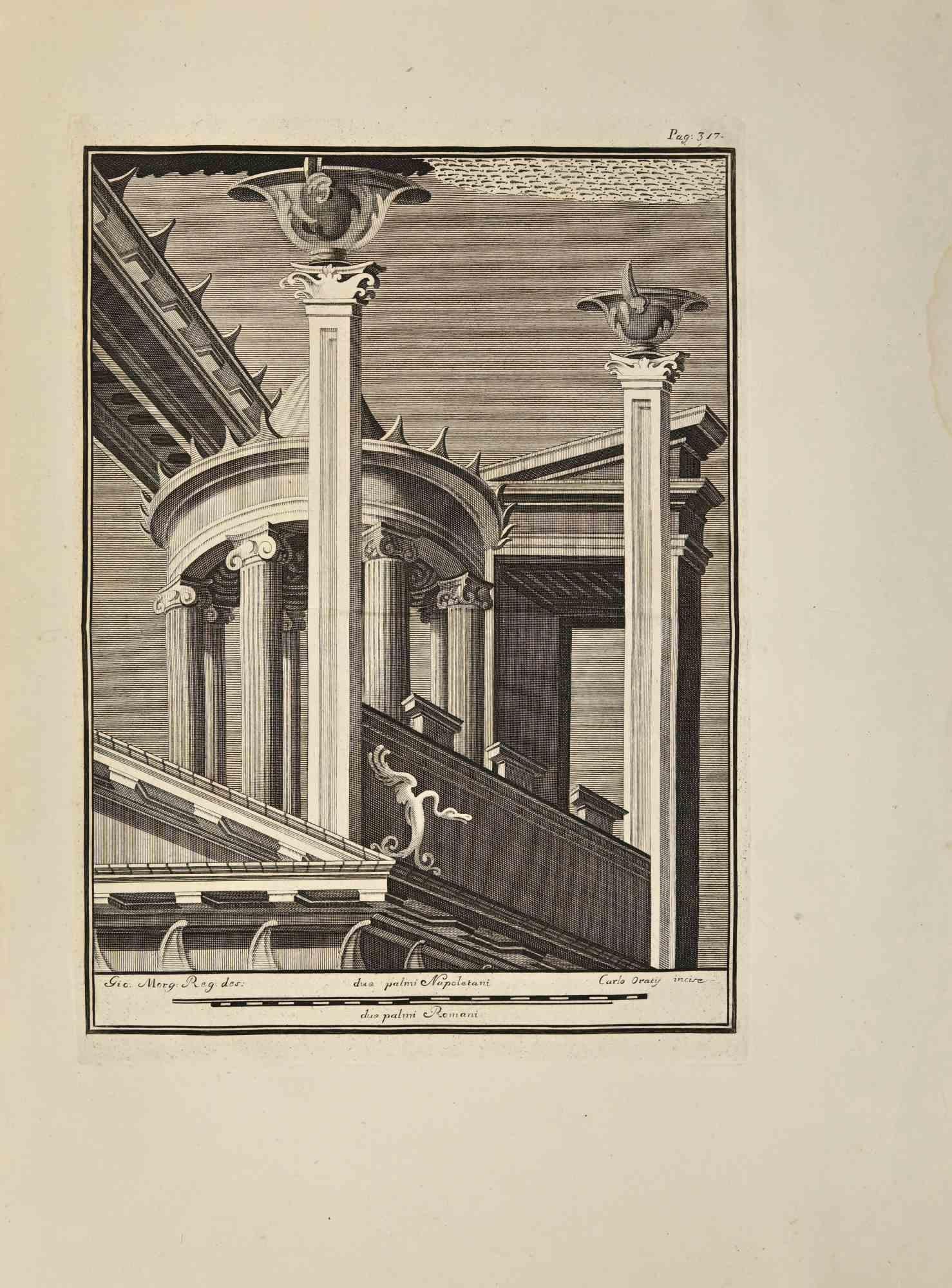
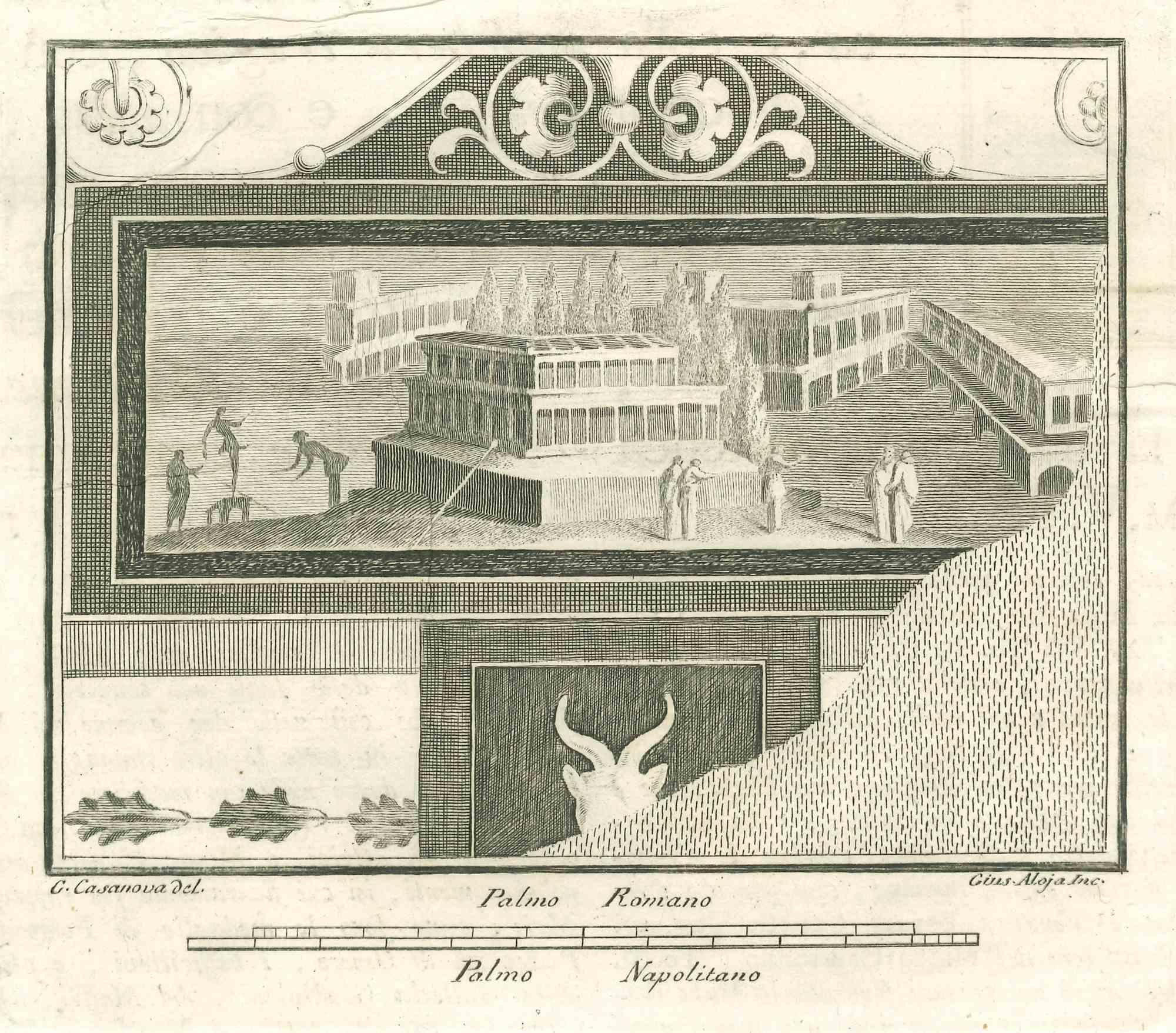
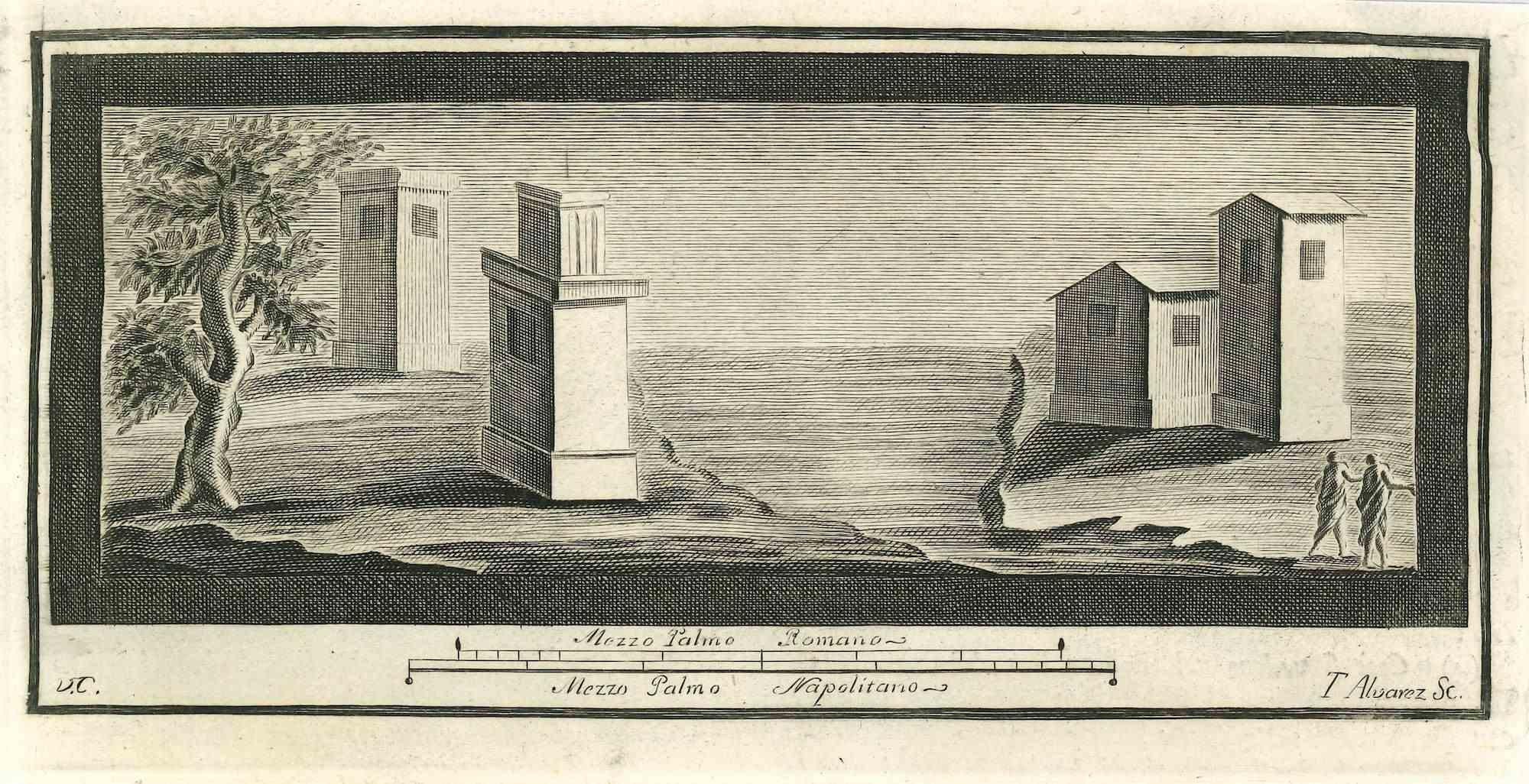
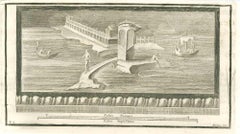
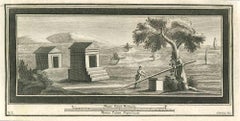
Roman Temple Fresco from "Antiquities of Herculaneum" is an etching on paper realized by Filippo De Grado in the 18th Century. Signed on the plate. Good conditions. The etching belongs to the print suite “Antiquities of Herculaneum Exposed” (original title: “Le Antichità di Ercolano Esposte”), an eight-volume volume of engravings of the finds from the excavation of the ruins of Herculaneum in the Kingdom of Naples (now Campania, Italy). It was published between 1757 and 1792 by the Regia Stamperia, and copies were delivered to selected recipients across Europe. Despite the title, the Antiquity of Herculaneum shows objects from all the excavations undertaken by the Bourbons in the Gulf of Naples. These include Pompeii, Stabia and two sites of Herculaneum: Resina and Portici. The Bourbon King Carlo appointed fifteen scholars creating a new “Herculaneum Academy” to study the artifacts and publish the results of the archaeological excavations of the sites. The engravings are of high quality and the accompanying text shows a large scholarship. They were realized by 25 prominent artists involved by the King to prepare drawings and engravings on the finds, among which we can find Giovanni Elia Morghen, Carlo Nolli, Luigi Vanvitelli, and Giovanni Battista Casanova. The “Antiquities” was designed more to amaze readers with the quality of the objects in the collection of the King of Naples than to be used in research., following and increasing the interest of 18th-century society for the classical culture and Art in particular. Through the exaltation of the classical concept of proportions and harmony, the book was of inspiration to the neoclassical movement in Europe, giving artists and decorators access to a huge shop of Hellenistic motifs.
  • Creator:
  • Creation Year:
    18th Century
  • Dimensions:
    Height: 4.34 in (11 cm)Width: 9.06 in (23 cm)Depth: 0.04 in (1 mm)
  • Medium:
  • Movement & Style:
  • Period:
  • Framing:
    Framing Options Available
  • Condition:
    Insurance may be requested by customers as additional service, contact us for more information.
  • Gallery Location:
    Roma, IT
  • Reference Number:
    Seller: T-1381661stDibs: LU650311908702

More From This Seller

View All

You May Also Like

Original Antique Print of Archaeological Excavations by Bertuch, c. 1800

Original Antique Print of Archaeological Excavations by Bertuch, c. 1800

Located in Langweer, NL

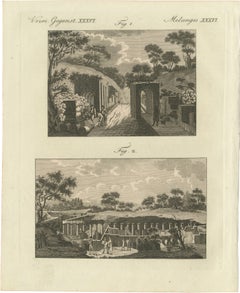
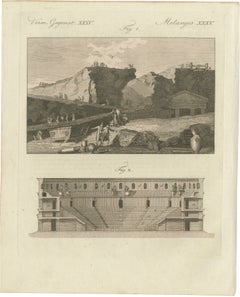
Original Antique Print of Archaeological Excavations by Bertuch, c. 1800 Original antique copper engraving depicting archaeological excavations and newly uncovered ancient architect...

Category

Antique Early 1800s German Neoclassical Prints

Materials

Paper

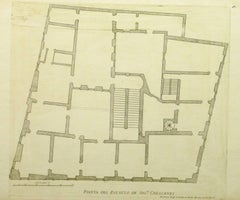
Antique Italian Engraving - Crescenzi Palace

Antique Italian Engraving - Crescenzi Palace

By Giovanni Giacomo de Rossi

Located in Houston, TX

Antique copper engraving of the floor plan to Crescenzi Palace in Rome, Italy by Italian Giovanni Giacomo de' Rossi, 1650. Original artwork on paper displayed on a white mat with a...

Category

15th Century and Earlier Interior Prints

Materials

Ink, Paper

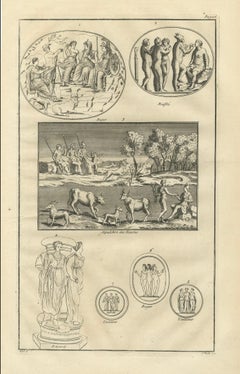
Classical Antiquities Engraving, Sepulchrum des Nasonii, Montfaucon 1721

Classical Antiquities Engraving, Sepulchrum des Nasonii, Montfaucon 1721

Located in Langweer, NL

Classical Antiquities Engraving, Sepulchrum des Nasonii, Montfaucon 1721 This original early eighteenth-century copper engraving presents a scholarly compilation of classical antiquities drawn from ancient Roman artworks, engraved gems, and sculptural sources. The plate originates from Bernard de Montfaucon’s influential publication *L’Antiquité expliquée et représentée en figures*, published in Paris in 1721, one of the most important antiquarian works of the Enlightenment and a cornerstone in the development of archaeology and classical art history. The composition assembles multiple mythological and archaeological subjects arranged in a structured, comparative format typical of Montfaucon’s method. At the center appears a detailed scene labeled “Sepulchrum des Nasonii,” referring to the celebrated Tomb of the Nasonii located along the Via Flaminia in Rome, an important Roman funerary monument known for its painted mythological decorations. The engraving records figures, animals, and pastoral imagery derived from ancient wall paintings, offering eighteenth-century scholars and collectors access to monuments that were otherwise difficult to study directly. Surrounding vignettes reproduce imagery taken from antique cameos, engraved gems, and sculptural fragments. Oval compositions depict mythological figures and allegorical scenes, while the lower section includes a classical statue and medallion studies attributed to antiquarian sources associated with collectors and scholars such as Maffei and Vaillant. These references reflect Montfaucon’s ambition to synthesize knowledge gathered from Europe’s major antiquities collections into a single visual encyclopedia. Executed with refined precision, the engraving demonstrates the clarity and balance characteristic of Parisian copperplate engraving of the early 1700s. Fine linework and careful tonal shading translate sculptural and painted sources into a harmonious graphic composition. Today, plates from Montfaucon’s work are appreciated both for their scholarly significance and for their elegant decorative qualities, making them highly suitable for libraries, study interiors, or contemporary gallery walls seeking classical visual depth. This original antique engraving is offered unframed, allowing flexibility to select a frame that best complements the intended interior. Condition: Good antique condition with age-related toning and light discoloration consistent with early eighteenth-century paper. Minor edge wear and handling marks mainly confined to the margins. Plate impression visible. Blank verso. Framing tips: A dark walnut, gilt, or ebonized frame with a generous ivory mat enhances the academic and neoclassical character of the engraving. For modern interiors, a slim black gallery frame with wide mat spacing provides a refined museum-style presentation. Technique: Copper engraving Maker: Bernard de Montfaucon, France, Paris, 1721 Keywords: Montfaucon engraving, Antiquité expliquée, Sepulchrum des Nasonii, Roman antiquities print, classical archaeology engraving, antique mythological engraving, 18th century copperplate engraving, French antiquarian print, Roman tomb illustration, Via Flaminia Rome print...

Category

Antique 1720s British Prints
Materials

Paper

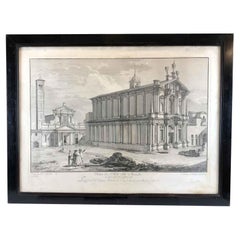
18th Century Italian Milan View Etching by Aspari Domenico 1788

18th Century Italian Milan View Etching by Aspari Domenico 1788

By Domenico Aspari

Located in Milano, MI

A rare view of Milan, an 18th century Italian etching and burin engraving with original ebonized walnut frame and glass depicting San Paolo delle Monache a Milan view, dated 1788, by...

Category

Antique Late 18th Century Italian Neoclassical Prints

Materials

Paper, Canvas, Walnut

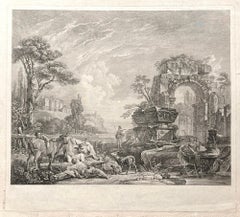
Les Bergers Romains, landscape with Roman ruins, 18th century engraving

Les Bergers Romains, landscape with Roman ruins, 18th century engraving

Located in Melbourne, Victoria

Les Bergers Romains Copper-line engraving by Jean Jacques Leveau (1729-1786) after Pierre Mettay (1728-1759). C1755. Proof, before lettering. Laid, watermarked paper. A landscap...

Category

18th Century French School Landscape Prints

Materials

Engraving

Original Antique Print of an Ancient Theatre and Archaeological Excavation, 1800

Original Antique Print of an Ancient Theatre and Archaeological Excavation, 1800

Located in Langweer, NL

Original Antique Print of an Ancient Theatre and Archaeological Excavation by Bertuch, c. 1800 Original antique copper engraving illustrating the excavation and reconstruction of an...

Category

Antique Early 1800s German Neoclassical Prints

Materials

Paper