Henri Edmond Cross
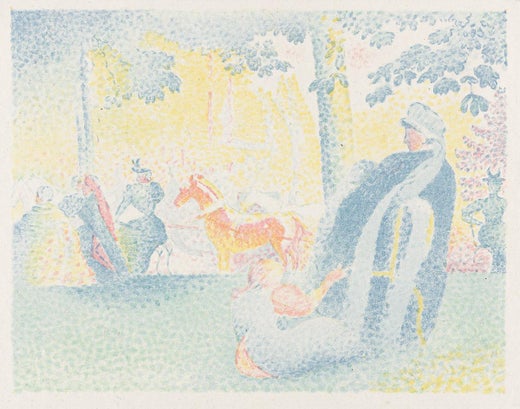
Henri Edmond Cross was born in the marches of Flanders. His mother, Fanny Woollett, was English. From 1890 he chose to spend most of the year in the Var region. Signac and Van Rysselberghe were regular visitors to St-Clair. During the Fin-de-siècle years, Cross was a friend of the Anarchists, sharing their dream of harmony between man and nature, and contributed to Jean Graves’s magazine Les Temps Nouveaux. In the early 1900s he travelled to Italy and was captivated by the works of Tintoretto in Venice. However, Cross was soon overcome by poor health, suffering bouts of rheumatism and eye problems. His stoicism during these difficult times astonished his friends, who also included Roussel, Vuillard, Bonnard, Valtat and Lucie Cousturier. The latter wrote that ‘these terrible bouts of arthritis which deformed and paralysed his joints always resulted in younger and younger paintings, like acts of revenge’. Towards the end of his life, Cross visited Tuscany and Rome before returning to Le Lavandou. He died from cancer on 16 May 1910, aged 54. At the age of 25, Cross exhibited for the first time at the 1881 Salon, from then on called the Salon des Artistes Français. He showed his work under his real name, H. E. Delacroix, which he quickly translated into English on the advice of Bonvin. He then exhibited at the Salon des Indépendants from 1884, the year it was founded, having been one of its promoters. His paintings and watercolours were exhibited in 1894 at the gallery rented by the Neo-Impressionists at 20 Rue Lafitte (alongside the works of the elegiac Neo-Impressionist painter Hippolyte Petitjean), in 1896 at the Salon de l’Art Nouveau, and in 1899 at the Galerie Durand-Ruel as part of the exhibition Homage to Odilon Redon (Hommage à Odilon Redon). The exhibitions at the Galerie Druet in 1905 (presented by Émile Verhaeren), then at the Galerie Bernheim two years later (with a catalogue prefaced by Maurice Denis), were considered a triumph of colour.
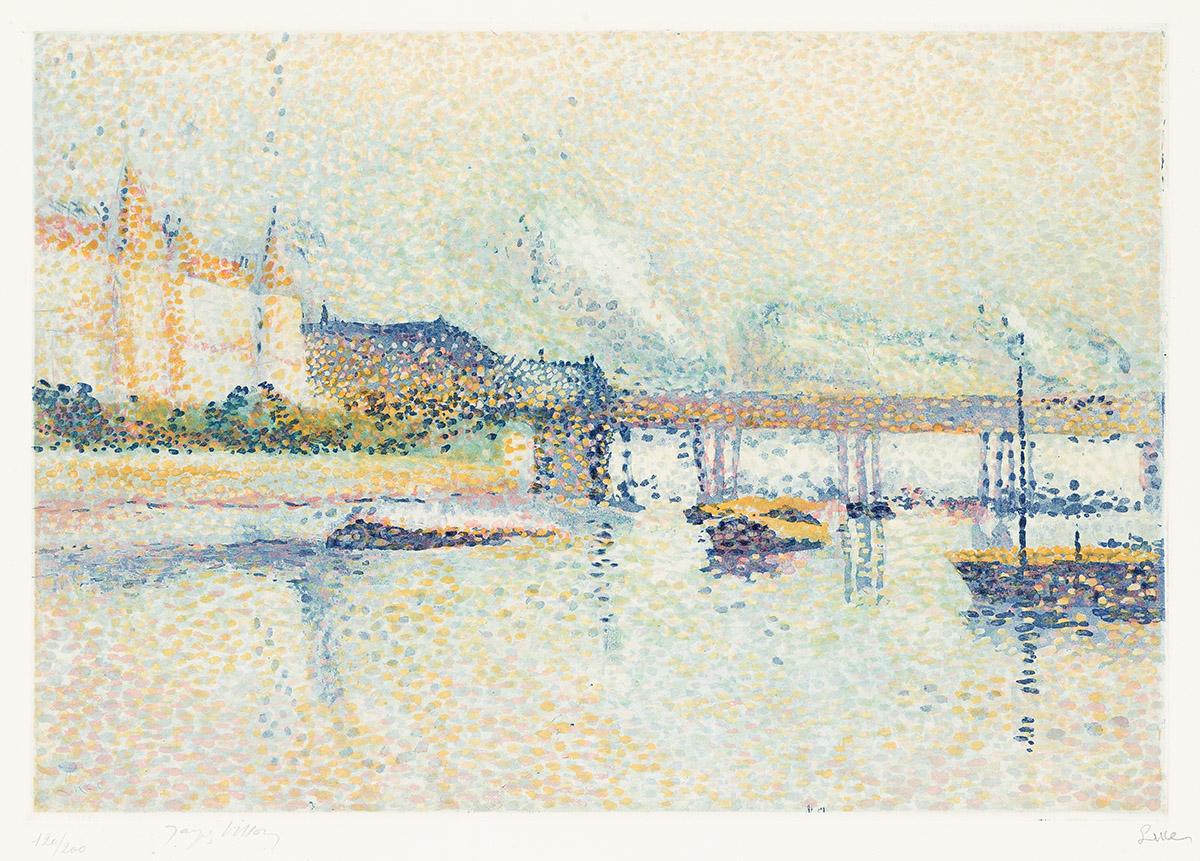
It was around the time of Seurat’s death that Cross turned to Neo-Impressionism, breaking with the aesthetic principles he had followed for 10 years, adopting instead those of the group who exhibited at the Salon des Indépendants. For his friends Angrand, Signac and Luce, he brought rare sensitivity and re-introduced Romanticism to painting in these last years of the 19th century. It was in the Var, while working on sunrises and sunsets, that Cross created some of his most important works, such as Farm in the Morning and Farm in the Evening (1893), and Mother Playing with her Child (1897). Cross achieved an almost Romantic liberation of the landscape in his painting Wave. Together with Signac and Van Rysselberghe, he revealed the beauty of Provence, a beauty that, until then, had been sought by the Impressionists mostly in the Île-de-France or Normandy.