English School Interior Prints

to
13
2
1
Overall Width
to
Overall Height
to
637
419
116
112
49
36
34
26
21
17
13
12
9
1
3
1
1
1
8
8
8
13
3
10
5
5
5
4
4
3
2
2
2
2
2
2
2
2
2
1
1
1
1
10
10
6
6
4
1
10
Style: English School
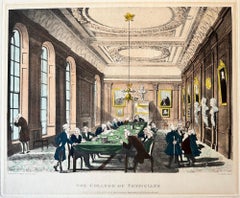
College of Physicians, from Ackermann's "Microcosm of London."

College of Physicians, from Ackermann's "Microcosm of London."

By Thomas Rowlandson

Located in Middletown, NY

Pugin, Augustus Charles & Rowlandson, Thomas (after). College of Physicians, from Ackermann's "Microcosm of London." London: Rudolph Ackermann, 1808. Hand-colored lithograph, 9 1/4 ...

Category

Early 19th Century English School Interior Prints

Materials

Watercolor, Handmade Paper, Lithograph

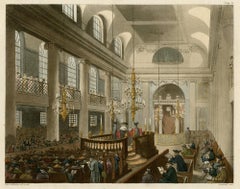
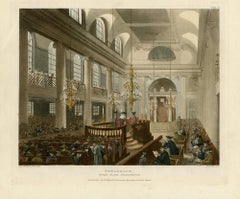
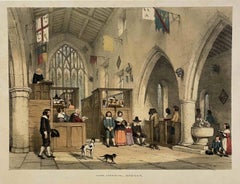
Synagogue Duke's Palace Houndsditch by Th. Sunderland after Pugin & Rowlandson

Synagogue Duke's Palace Houndsditch by Th. Sunderland after Pugin & Rowlandson

By Thomas Rowlandson

Located in Middletown, NY

A faithful architectural rendering of the earliest Ashkenazi synagogue constructed in London; built about 1690, and subsequently destroyed in the Blitz, 1941. London: Rudolph Ackerm...

Category

Early 19th Century English School Interior Prints

Materials

Handmade Paper, Engraving, Aquatint
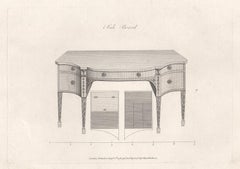
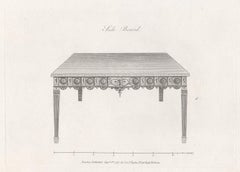
Side Board, Hepplewhite English Georgian furniture design engraving

Side Board, Hepplewhite English Georgian furniture design engraving

By George Hepplewhite 1

Located in Melbourne, Victoria

'Side Board' From George Hepplewhite's 'Cabinet-Maker and Upholsterer's Guide', published by I. and J. Taylor in 1788. These engravings are the only evidence of Hepplewhite's style ...

Category

Late 18th Century English School Interior Prints

Materials

Engraving

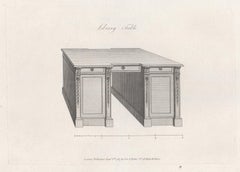
Library Table, Hepplewhite English Georgian furniture design engraving

Library Table, Hepplewhite English Georgian furniture design engraving

By George Hepplewhite 1

Located in Melbourne, Victoria

'Library Table' From George Hepplewhite's 'Cabinet-Maker and Upholsterer's Guide', published by I. and J. Taylor in 1788. These engravings are the only evidence of Hepplewhite's sty...

Category

Late 18th Century English School Interior Prints

Materials

Engraving

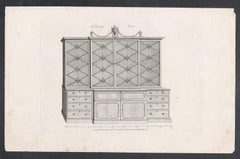
Library Case, Hepplewhite English Georgian furniture design engraving

Library Case, Hepplewhite English Georgian furniture design engraving

By George Hepplewhite 1

Located in Melbourne, Victoria

'Library Case' From George Hepplewhite's 'Cabinet-Maker and Upholsterer's Guide', published by I. and J. Taylor in 1788. These engravings are the only evidence of Hepplewhite's styl...

Category

Late 18th Century English School Interior Prints

Materials

Engraving

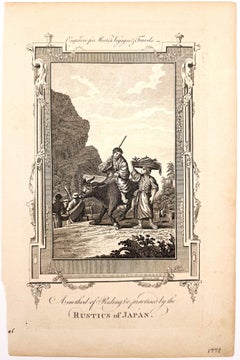
Rustics of Japan – English School, 18th century

Rustics of Japan – English School, 18th century

Located in Middletown, NY

A Method of Riding as Practised by the Rustics of Japan. One plate from A new and complete collection of voyages and travels containing all that have been remarkable from the earlies...

Category

Late 18th Century English School Interior Prints

Materials

Watercolor, Handmade Paper, Engraving

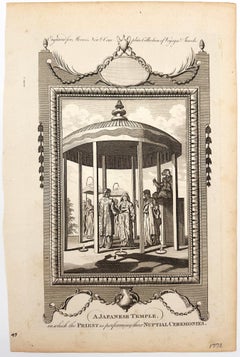
A Japanese Temple – English School, 18th century

A Japanese Temple – English School, 18th century

Located in Middletown, NY

18th century image of a priest presiding over a traditional Japanese nuptual ceremony. One plate from A new and complete collection of voyages and travels containing all that have b...

Category

Late 18th Century English School Interior Prints

Materials

Watercolor, Handmade Paper, Engraving

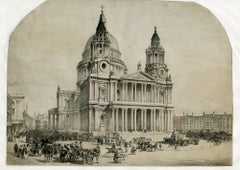
North View of St. Paul's Cathedral, London  English School, 19th century

North View of St. Paul's Cathedral, London English School, 19th century

Located in Middletown, NY

London: Tallis & Co., 1851 Lithograph on cream wove paper, 11 3/4 x 15 3/4 inches (297 x 398 mm), with vaulted margins at the top sheet edge. Significant toning, and some edge wear. ...

Category

Mid-19th Century English School Interior Prints

Materials

Handmade Paper, Lithograph

The Great Fire of London, 1666

The Great Fire of London, 1666

By James Stow

Located in Middletown, NY

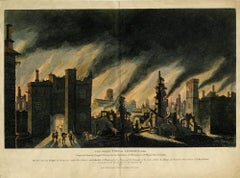
A rare early 19th century view of the Great Fire of London over Ludgate, enhanced with hand coloring. London: Robert Wilkinson, 1811. Copperplat...

Category

Early 19th Century English School Interior Prints

Materials

Handmade Paper, Engraving, Watercolor

Side Board, Hepplewhite English Georgian furniture design engraving

Side Board, Hepplewhite English Georgian furniture design engraving

By George Hepplewhite 1

Located in Melbourne, Victoria

'Side Board' From George Hepplewhite's 'Cabinet-Maker and Upholsterer's Guide', published by I. and J. Taylor in 1788. These engravings are the only evidence of Hepplewhite's style ...

Category

Late 18th Century English School Interior Prints

Materials

Engraving

Related Items
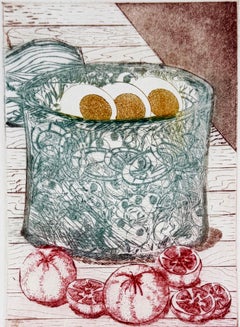
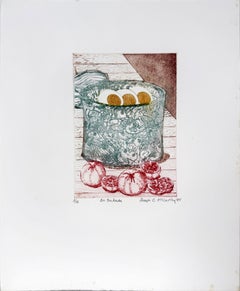
"En Salada" Salad Fixings Intaglio on Paper by Joseph C. MaCarthy

"En Salada" Salad Fixings Intaglio on Paper by Joseph C. MaCarthy

Located in Soquel, CA

"En Salada" Salad Fixings Etching on Paper by Joseph C. MaCarthy This Intaglio print, titled "En Salada," by San Francisco Bay area artist Joseph C. McCarthy (American, 20th C), cre...

Category

1980s English School Interior Prints

Materials

Watercolor, Laid Paper, Intaglio

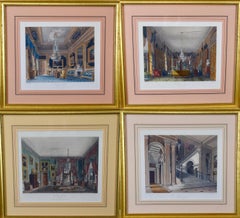
Four 19th Century Hand Colored Engravings Depicting English Royal Residences

Four 19th Century Hand Colored Engravings Depicting English Royal Residences

By Charles Wild

Located in Alamo, CA

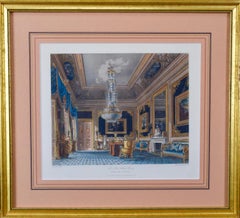
Four hand colored etchings and aquatints depicting interiors within English royal residences, including "The Blue Velvet Room at Carlton House", "The Queen's Library at Frogmore", "T...

Category

1810s English School Interior Prints

Materials

Engraving

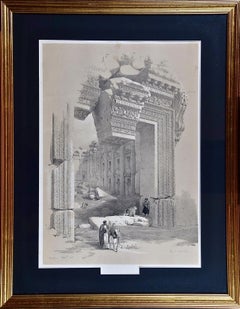
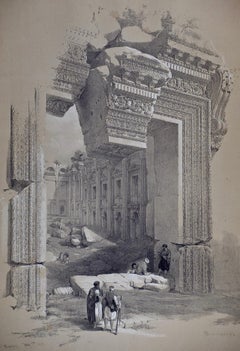
"The Doorway of Baalbec": A David Roberts' 19th Century Hand Colored Lithograph

"The Doorway of Baalbec": A David Roberts' 19th Century Hand Colored Lithograph

By David Roberts

Located in Alamo, CA

"The Doorway of Baalbec" is a 19th century full folio sized duotone lithograph, representing plate 81 in the Egypt and Nubia volumes of David Roberts’ large folio edition, published ...

Category

1840s English School Interior Prints

Materials

Lithograph

CHRISTO AND JEANNE-CLAUDE, VERPACKTE WEGE, 1983 - MIXED MEDIA

CHRISTO AND JEANNE-CLAUDE, VERPACKTE WEGE, 1983 - MIXED MEDIA

By Christo and Jeanne-Claude

Located in Pembroke Pines, FL

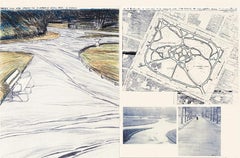
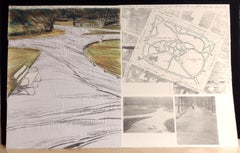
Christo and Jeanne-Claude Wrapped Walk Ways, 1983 Lithograph on Arches Cover White mounted on museum board, with collage of white cloth 28 × 44 in. - 71 × 112 cm Edition: 68/100 Sign...

Category

1980s English School Interior Prints

Materials

Board, Archival Paper, Lithograph

"King of the Friendly Islands" (Tonga); Engraving from Captain Cook's 3rd Voyage

"King of the Friendly Islands" (Tonga); Engraving from Captain Cook's 3rd Voyage

By John Webber

Located in Alamo, CA

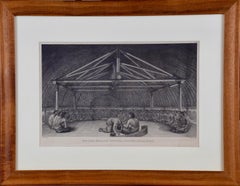
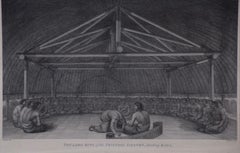
"Poulaho, King of the Friendly Islands, Drinking Kava" is an engraving created by William Sharp (1749-1824), from a drawing by John Webber (1752-1793), who was the artist on Captain James Cook's 3rd and final voyage of discovery. It was published in the atlas of "A Voyage to the Pacific Ocean Undertaken by the Command of His Majesty, for Making Discoveries in the Northern Hemisphere", the official British Admirality sanctioned journal published upon completion of the voyage in London in 1784 by Strahan & Cadell. Captain Cook visited Tonga on his 3rd voyage, which he named The Friendly Islands because of the warm welcome he and his crew received, unlike some of the other more hostile Pacific islands. The engraving depicts Cook and his men observed a kava ceremony at the village of Mu’a on Tongatapu. King Paulaho sits in the centre foreground, his back to the spectator with a man kneeling before him. The ceremonial mat depicted behind Paulaho indicates that nobody was allowed to sit behind him. The figure in the centre holds a single cup, referring to the Tongan custom of offering the cup to the king first. Kava is native to the islands of the South Pacific and was first described for English readers in 1768 by Captain James Cook. The kava root has been used for centuries as a central feature of ceremonies and celebrations because it was able to bring about a calming and pleasant social atmosphere. The root was crushed and processed into coconut milk to become the focal ceremonial beverage, simply referred to as kava. This engraving is presented in a Koa wood frame and a white mat. Koa wood is legendary in Hawaii. There are occasional faint spots, but the print is otherwise in very good condition. This amazing Koa wood is native to Hawaii and it is known for the deep rich colors and varied grain pattern. Koa has an honored heritage in Hawaii and is highly revered and sacred. The word “koa” means “warrior” in Hawaiian. The warriors of King Kamehameha the Great, created canoes and weapons from a wood plentiful on the Big Island of Hawaii. This wood became synonymous with the warriors themselves, and it became known as koa. There are three other engravings listed from the official journal of Captain Cook's 3rd voyage available that are presented in identical Koa wood frames and mats (LU117324682422, LU117324684052, LU117324684032). They would make a wonderful grouping for a display of 2, 3 or 4 prints. A discount is available for a grouping depending on the number of items included. Captain Cook is remembered as one of the greatest explorers and navigators in history. His explorations included Australia, New Zealand and islands of the South Pacific and the northwest coast of North America. Hawaii was discovered by Captain Cook during this voyage. Hawaii was originally called The Sandwich Islands in honor of The Earl of Sandwich...

Category

1780s English School Interior Prints

Materials

Engraving

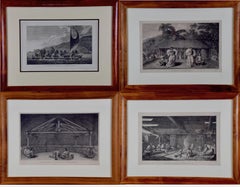
Four Koa Wood Framed 18th C. Engravings from Captain Cook's 3rd Voyage Journal

Four Koa Wood Framed 18th C. Engravings from Captain Cook's 3rd Voyage Journal

By John Webber

Located in Alamo, CA

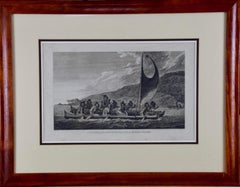
A grouping of four framed engravings of Hawaii, Tahiti, Tonga and Vancouver Island from the atlas of the official British Admiralty sanctioned journal of Captain Cook's 3rd Voyage entitled "A Voyage to the Pacific Ocean Undertaken by the Command of His Majesty, for Making Discoveries in the Northern Hemisphere", published upon completion of the voyage in London in 1784 by Strahan & Cadell. These engravings were made from drawings by John Webber (1752-1793), who was the artist on Captain James Cook's 3rd and final voyage of discovery. The set of engravings includes: "A Canoe of the Sandwich Islands, the Rowers Masked", Plate 65 in the atlas; "A Dance in Otaheite" (Tahiti), Plate 28; "King of the Friendly Islands" (Tonga), plate 20; "Inside of a House in Nootka Sound" (Canada), plate 42. These engravings are professionally framed in Koa wood, the same wood as was used to make the canoes of the ancient Hawaiians. Koa wood is legendary in Hawaii. Not only is this amazing wood native to Hawaii, but it is known for the deep rich colors and varied grain pattern. Koa has an honored heritage in Hawaii and is highly revered and sacred. The word “koa” means “warrior” in Hawaiian. The warriors of King Kamehameha the Great, created canoes and weapons from a wood plentiful on the Big Island of Hawaii. This wood became synonymous with the warriors themselves, and it became known as koa. These four engravings would make a wonderful grouping for a display of 2, 3 or 4 prints. They may be purchased separately or in groups on 1stDibs. Their listing Reference #'s are: LU117324682432, LU117324682022, LU117324684052 and LU117324684062. A discount is available for a grouping depending on the number of items included. Hawaii was discovered by Captain Cook (1728-1779) during this voyage. Hawaii was originally called The Sandwich Islands in honor of The Earl of Sandwich...

Category

1780s English School Interior Prints

Materials

Engraving

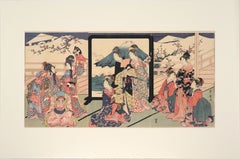
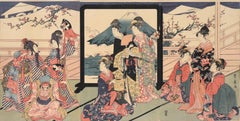
"House Cleaning in Preparation for the New Year" - Japanese Woodblock on Paper

"House Cleaning in Preparation for the New Year" - Japanese Woodblock on Paper

By Kitagawa Utamaro 1

Located in Soquel, CA

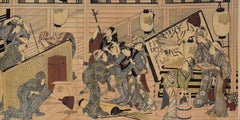
"House Cleaning in Preparation for the New Year" - Japanese Woodblock on Paper House cleaning scene by Kitagawa Utamaro (Japanese, 1753-1806). This print was originally published around 1796-1799, with this example being a later reprint. The full scene is five sheets - there are two more sheets to the right that show more members of the house. However, it is these three sheets that contain the majority of the action - a maid sweeping at a mouse, a lady fainting, and a painting moved aside to allow for cleaning. Presented in a new black mat. Mat size: 24"H x 38"W Paper size: 17.75"H x 33"W Print Impression: 14.63"H x 29.5"W Utamaro Kitagawa...

Category

18th Century English School Interior Prints

Materials

Rice Paper, Woodcut

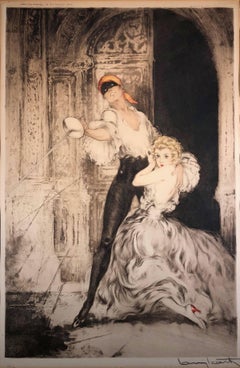
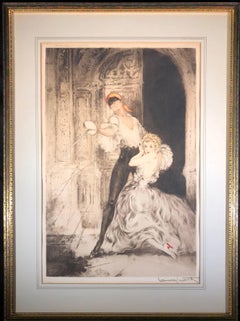
Don Juan
Don Juan

Louis IcartDon Juan, 1928

$2,800Sale Price|20% Off

H 28 in W 20.5 in

Don Juan

By Louis Icart

Located in Missouri, MO

Aquating Engraving Image Size: approx. 20 1/4 x 13 3/8 Framed Size: 28 x 20.5 inches Pencil Signed Lower Right Louis Justin Laurent Icart was born in Toulouse in 1890 and died in Paris in 1950. He lived in New York City in the 1920s, where he became known for his Art-Deco color etchings of glamourous women. He was first son of Jean and Elisabeth Icart and was officially named Louis Justin Laurent Icart. The use of his initials L.I. would be sufficient in this household. Therefore, from the moment of his birth he was dubbed 'Helli'. The Icart family lived modestly in a small brick home on rue Traversière-de-la-balance, in the culturally rich Southern French city of Toulouse, which was the home of many prominent writers and artists, the most famous being Henri de Toulouse-Lautrec. Icart entered the l'Ecole Superieure de Commerce de Toulouse in order to continue his studies for a career in business, particularly banking (his father's profession). However, he soon discovered the play writings of Victor Hugo (1802-1885), which were to change the course of his life. Icart borrowed whatever books he could find by Hugo at the Toulouse library, devouring the tales, rich in both romantic imagery and the dilemmas of the human condition. It was through Icart's love of the theater that he developed a taste for all the arts, though the urge to paint was not as yet as strong for him as the urge to act. It was not until his move to Paris in 1907 that Icart would concentrate on painting, drawing and the production of countless beautiful etchings, which have served (more than the other mediums) to indelibly preserve his name in twentieth century art history. Art Deco, a term coined at the 1925 Paris Exposition des Arts Decoratifs, had taken its grip on the Paris of the 1920s. By the late 1920s Icart, working for both publications and major fashion and design studios, had become very successful, both artistically and financially. His etchings reached their height of brilliance in this era of Art Deco, and Icart had become the symbol of the epoch. Yet, although Icart has created for us a picture of Paris and New York life in the 1920s and 1930s, he worked in his own style, derived principally from the study of eighteenth-century French masters such as Jean Antoine Watteau, François Boucher and Jean Honoré Fragonard. In Icart's drawings, one sees the Impressionists Degas...

Category

1920s English School Interior Prints

Materials

Engraving, Aquatint
Previously Available Items
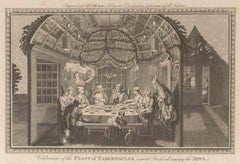
"Celebration of the Feast of Tabernacles"

"Celebration of the Feast of Tabernacles"

Located in Astoria, NY

English School, "Celebration of the Feast of Tabernacles", Etching, 18th century, from D. Hurd's Religious Ceremonies & Customs of all Nations, unmarked, giltwood frame. Image: 7.5"...

Category

18th Century English School Interior Prints

Materials

Paper, Etching

English School interior prints for sale on 1stDibs.

Find a wide variety of authentic English School interior prints available for sale on 1stDibs. Works in this style were very popular during the 19th Century, but contemporary artists have continued to produce works inspired by this movement. Many Pop art paintings were created by popular artists on 1stDibs, including and Thomas Rowlandson. Frequently made by artists working with Engraving, and Handmade Paper and other materials, all of these pieces for sale are unique and have attracted attention over the years. Not every interior allows for large English School interior prints, so small editions measuring 9.06 inches across are also available. Prices for interior prints made by famous or emerging artists can differ depending on medium, time period and other attributes. On 1stDibs, the price for these items starts at $90 and tops out at $400, while the average work sells for $90.