Want more images or videos?
Request additional images or videos from the seller
1 of 5

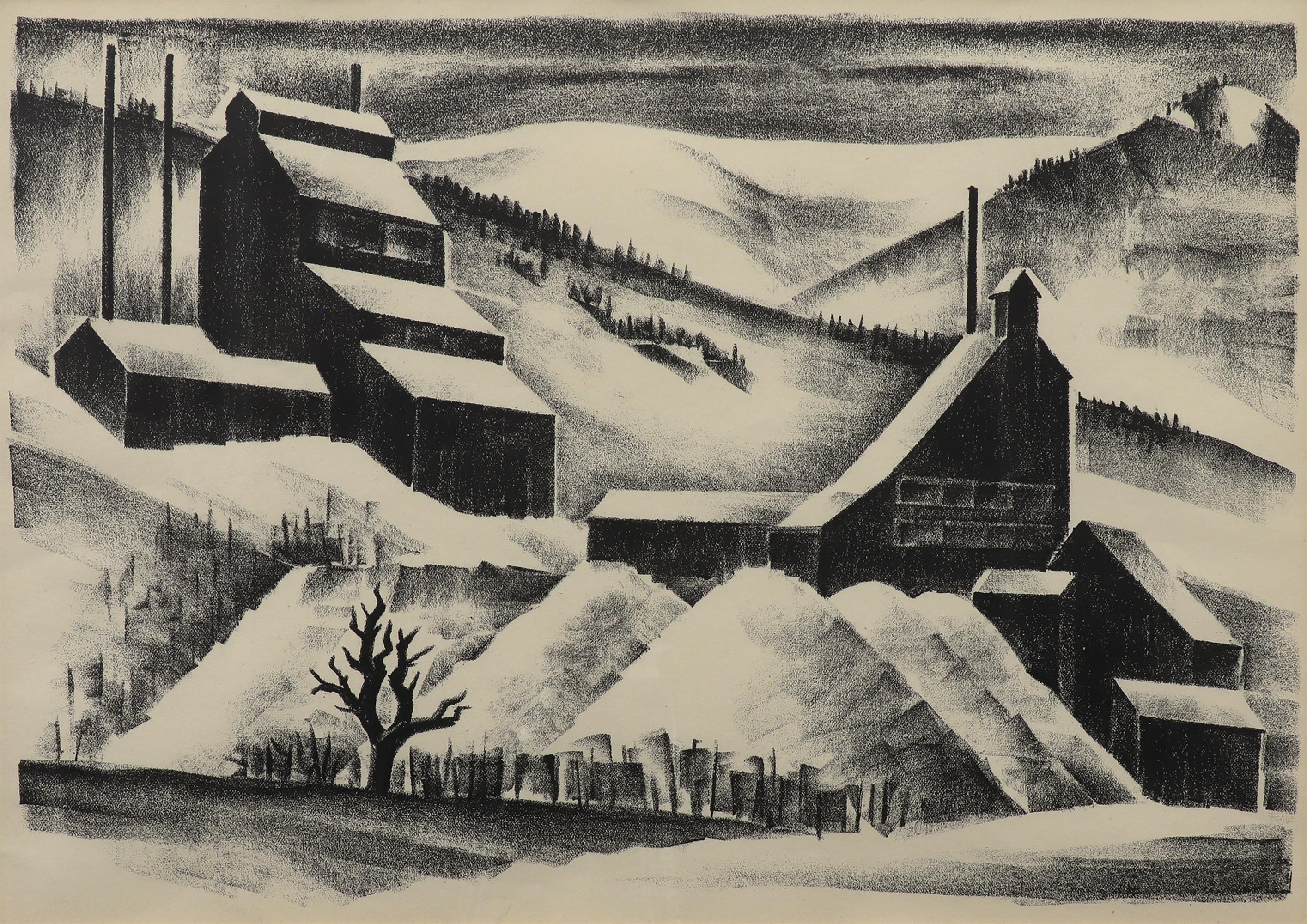
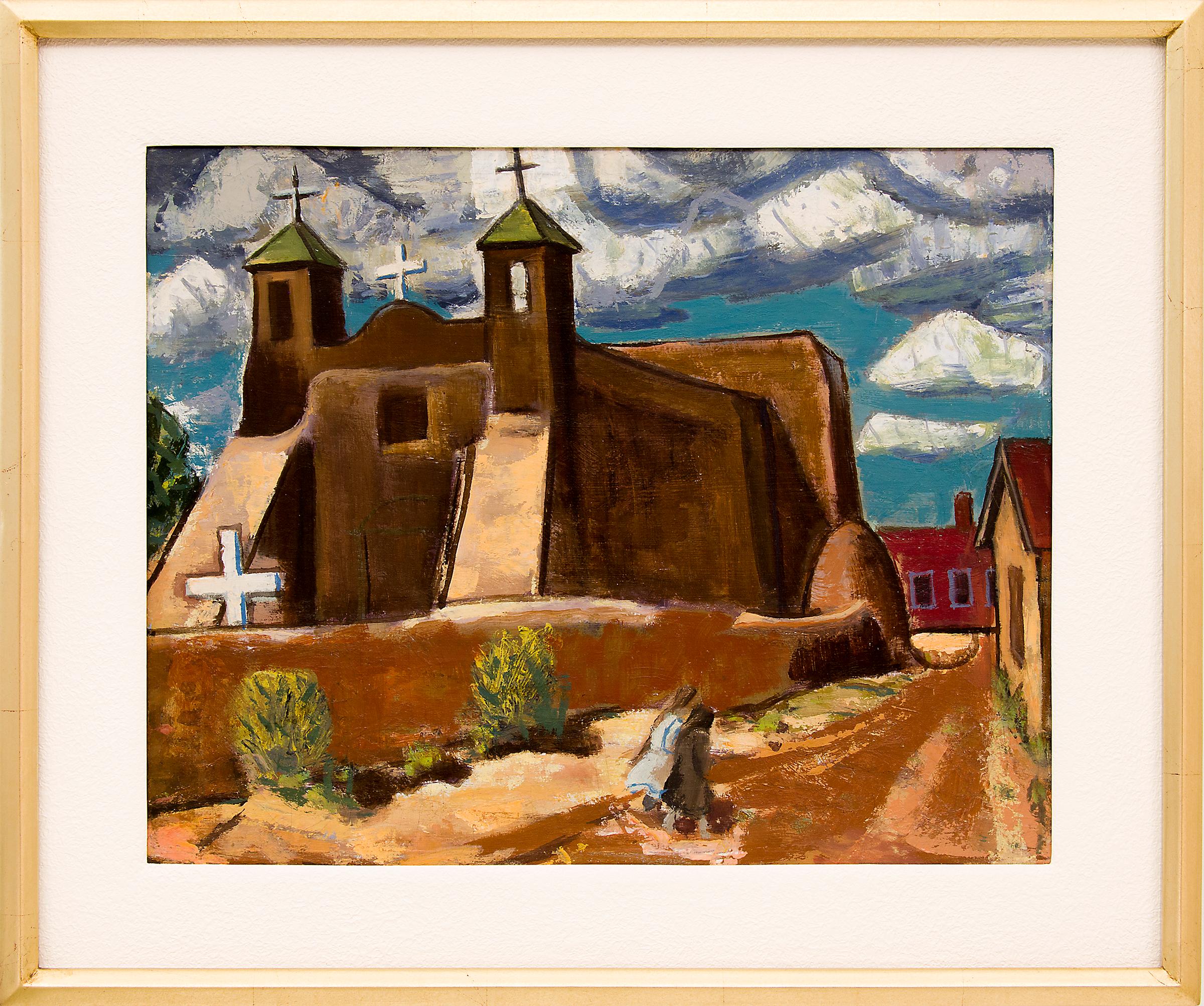
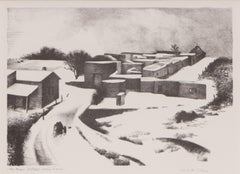
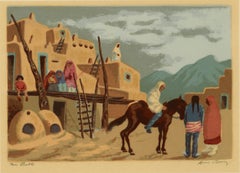
Doel Reed
PICURIS PUEBLO - WINTER

1954

$2,500
£1,884.84
€2,204.17
CA$3,538.51
A$3,602.20
CHF 2,074.46
MX$43,409.93
NOK 24,078.63
SEK 24,293.85
DKK 16,474.53

About the Item

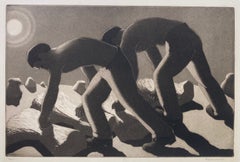
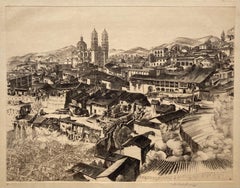
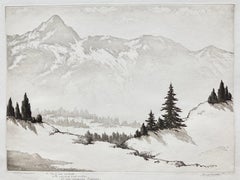
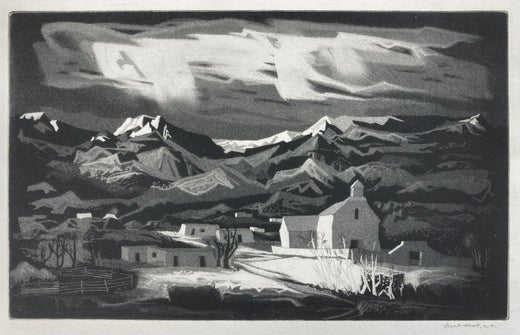
DOEL REED (1894 - 1958) PICURIS PUEBLO - WINTER ca. 1954 Aquatint, signed in pencil. Image. 9 7/8 15 ¾”, Sheet 13 ¼ x19” with deckle edges. Very good rich impression. Very small repair visible only on the verso. There exists a charcoal & pastel study for this print
  • Creator:
    Doel Reed (1894 - 1985, American)
  • Creation Year:
    1954
  • Dimensions:
    Height: 9.875 in (25.09 cm)Width: 15.75 in (40.01 cm)
  • Medium:
  • Movement & Style:
  • Period:
  • Condition:
  • Gallery Location:
    Santa Monica, CA
  • Reference Number:
    1stDibs: LU411318298352

More From This Seller

View All
DESERT VISTA (Death Valley)

DESERT VISTA (Death Valley)

By Frances H. Gearhart

Located in Santa Monica, CA

FRANCES H. GEARHART (1869 – 1958) DESERT VISTA (Death Valley) c. 1930 Color linocut signed and titled in pencil. Image 8 3/8 x 8 7/8”. On fibrous japon paper. Sheet 11 ¾ x 8 ¼”. Gen...

Category

1920s American Modern Landscape Prints

Materials

Color, Linocut, Woodcut

A Winter - Seeming Summers Night

A Winter - Seeming Summers Night

By June Wayne

Located in Santa Monica, CA

JUNE WAYNE (1918 - 2011) A WINTER - SEEMING SUMMER'S NIGHT, 1957 From the John Donne Series. (Conway 122, Basket 106: Gilmour 50) Lithograph signed, title...

Category

1950s American Modern Figurative Prints

Materials

Lithograph

DESOLATION VALLEY

DESOLATION VALLEY

Located in Santa Monica, CA

AUGUSTA (Payne) RATHBONE 1897 – 1990) DESOLATION VALLEY ca. 1930 Color aquatint and etching, Signed in pencil an annotated “artist proof” & “Plate 1”. Rich etching lines. Image: 12...

Category

1930s American Modern Landscape Prints

Materials

Etching, Aquatint

HARVESTERS

HARVESTERS

By Doel Reed

Located in Santa Monica, CA

DOEL REED (1894 - 1958) HARVESTERS, c. 1954 Aquatint in sepia. Signed and numbered in pencil, Image 11 1/2 x 17 ¾". Sheet with deckle edges 13 ¾ x19 3/8”. In good condition save ...

Category

1950s American Modern Landscape Prints

Materials

Aquatint

WESTERN GRANDEUR

WESTERN GRANDEUR

By Harold Lukens Doolittle

Located in Santa Monica, CA

HAROLD LUKENS DOOLTTLE (1883 - 1974) WESTERN GRANDEUR c. 1945 Aquatint, signed titled and dedicated. Image 9 ¾ x 13 5/8 inches. Large full sheet with deckle edges 15 ½ x 19 inches...

Category

1940s American Realist Landscape Prints

Materials

Aquatint

You May Also Like

Taos Pueblo

Taos Pueblo

By Anna Barry

Located in Fairlawn, OH

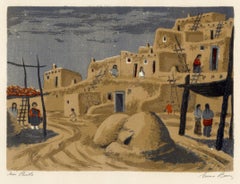
Taos Pueblo Screen print in colors, c. 1945 Signed and titled in pencil by the artist Printed in Taos Taos is the oldest continually inhabited city/village in North America. How old ...

Category

1940s American Modern Landscape Prints

Materials

Screen

Taos Pueblo Screen Print, American Modern, Signed, Circa 1940s

Taos Pueblo Screen Print, American Modern, Signed, Circa 1940s

By Anna Barry

Located in Fairlawn, OH

Taos Pueblo Screen print, late 1940's Signed in pencil lower right (see photo) Titled in pencil lower left (see photo) Edition: Unknown Clasic depiction of Ranchos de Taos, the oldest continually inhabited city in North America. Condition: Excellent Image size: 5 x 6 3/4 inches Sheet size: 6 1/4 x 7 5/16 inches Anna Barry (1970-2001) “In 1944, after several prior trips to the area during which they had become friends with several of the Taos Founders, Ira and his wife, the artist Anna Barry moved to Taos, New Mexico. They would reside in the area on and off until 1955. Like many others, Moskowitz was entranced by New Mexico's light, landscapes, and cultures. By the time Ira arrived there, the region had already attracted Georgia O'Keeffe, Robert Henri, and Leon Gaspard; the Southwest was starting to be recognized as an art center. Moskowitz and his wife became acquainted with Oscar Berninghaus, Andrew Dasburg, Ernest Blumenschein, and Mabel Dodge Lujan, among others. Ira wrote of that time that "Our house was always open and we had scarcely a single meal without visitors dropping in." "Anna Barry was an artist/printmaker. She married Ira Moskowitz (from a long line of Polish rabbinical leaders) in New York in 1938. They soon visited Taos and Santa Fe in New Mexico, returning there for extended periods until in 1944 they moved there permanently—staying until 1949 when they returned to New York. Her work in New Mexico depicts mostly the pueblos and their people, capturing ritual ceremonial dances in colorful serigraph prints and other artworks. She and Ira (also an artist) worked closely together during their New Mexico sojourns. The pueblos seemed their favored subjects there. She signed her New Mexico work as, "Anna Barry." Her prints are colorful and often detailed. The only ones I have seen (6 in all) were 5"x7" in size. Anna probably lived longest in New York, but perhaps was also in both Europe and Israel for extended periods. (See the AskART Ira Moskowitz biography.)" Courtesy of Fred McCraw "Anna Barry (née Anna Barshefsky), painter, printmaker and teacher, was born to Russian émigrés Max and Ida Goldberg Barshefsky on 20 May 1909 in Philadelphia, Pennsylvania. In the 1930 U.S. Federal Census her family name is changed to Barish and they are listed as living in Bronx, New York. It is not yet known where she had formal art training but she was listed as a teacher on the 1940 U.S. Census. She married artist Ira Moskowitz on 13 November 1938 and they began frequenting New Mexico. They befriended such luminaries as Mabel Dodge Lujan, Georgia O’Keeffe, Oscar Berninghaus, and many others who had become attracted to the unique landscape. Barry and Moskowitz moved to Taos, New Mexico in 1944 and remained until 1949 when they returned to New York. One can’t help but wonder if Anna Barry studied with serigrapher/painter Louie Ewing...

Category

1940s American Modern Landscape Prints

Materials

Screen

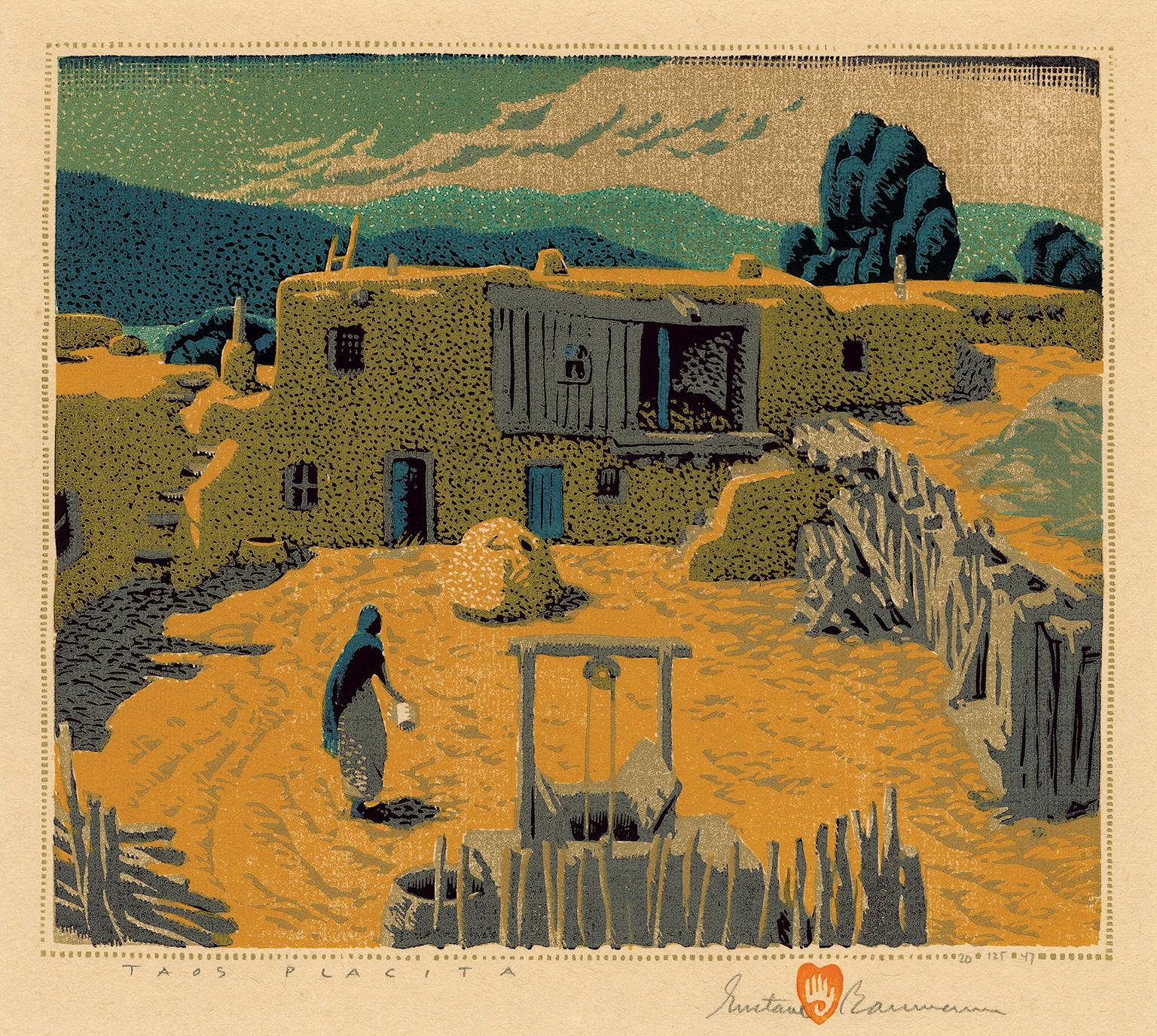
'Taos Placita' — American Southwest Masterwork, Signed Color Woodcut

'Taos Placita' — American Southwest Masterwork, Signed Color Woodcut

By Gustave Baumann

Located in Myrtle Beach, SC

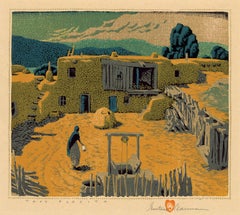
Gustave Baumann, 'Taos Placita', color woodcut, 1947, edition 125. Baumann 132. Signed, titled, and numbered '20-125' in pencil; with the artist’s Hand-in-Heart chop. A superb, richly-inked impression, with fresh colors, on fibrous oatmeal wove paper; the full sheet with margins (2 to 3 1/8 inches); slight rippling at the left sheet edge, in excellent condition. Matted to museum standards, unframed. Image size 9 5/8 x 11 1/4 inches (244 x 286 mm); sheet size 13 1/4 x 17 inches (337 x 432 mm). Collections: Harwood Museum of Art, New Mexico Museum of Art, Phoenix Art Museum, Scottsdale Art Museum, Wichita Art Museum. ABOUT THE ARTIST Gustave Baumann (1881-1971) was a renowned printmaker and a leading figure of the American color woodcut revival whose exquisite craftsmanship and vibrant imagery captured the essence of the Southwest. "A brilliant printmaker, Baumann brought to the medium a full mastery of the craft of woodworking that he acquired from his father, a German cabinetmaker. This craftsmanship was coupled with a strong artistic training that resulted in the handsome objects we see in the exhibition today. After discovering New Mexico in 1918, Baumann began to explore in his woodblock prints of this period the light. color, and architectural forms of that landscape. His prints of this period are among the most beautiful and poetic images of the American West." —Lewis I. Sharp, Director, Denver Art Museum Baumann, the son of a craftsman, immigrated to the United States from Germany with his family when he was ten, settling in Chicago. From 1897 to 1904, he studied in the evenings at the Art Institute of Chicago, working in a commercial printmaking shop during the day. In 1905, he returned to Germany to attend the Kunstwerbe Schule in Munich, where he decided on a career in printmaking. He returned to Chicago in 1906 and worked for a few years as a graphic designer of labels. Baumann made his first prints in 1909 and exhibited them at the Art Institute of Chicago the following year. In 1910, he moved to the artists’ colony in Nashville, Indiana, where he explored the creative and commercial possibilities of a career as a printmaker. In 1915, he exhibited his color woodcuts at the Panama-Pacific International Exposition in San Francisco, winning the gold medal. Among Baumann’s ongoing commercial activities was his work for the Packard Motor Car Company from 1914 to 1920 where he produced designs, illustrations, and color woodcuts until 1923. In 1919, Baumann’s printmaking work dominated the important exhibition of American color woodcuts at the Detroit Institute of Arts. Twenty-six of his prints were included, far more than the works of any other artist. A set of his blocks, a preparatory drawing, and seven progressive proofs complemented the exhibition. That same year, Baumann worked in New York and, over the summer, in Provincetown, Massachusetts. His airy images of Cape Cod employed soft, pastel colors and occasionally showed the influence of the white-line woodcut technique. Many of his Chicago artist friends had traveled to the southwest, and Baumann became intrigued by their paintings, souvenirs, and stories of an exotic place named Taos, New Mexico. In the summer of 1918, he spent the summer in Taos sketching and painting before visiting Santa Fe. Paul Walter, the director of the Museum of New Mexico, offered him a studio in the museum's basement. Inspired by the rugged beauty of the Southwest—the vibrant colors and dramatic landscapes of the region became a central theme in his work, influencing his artistic style and subject matter for the remainder of his career. Later in the decade, he traveled to the West Coast and made prints of California landscape. Baumann's prints became synonymous with the Southwest, capturing the spirit of its place in America's identity with a unique sense of authenticity and reverence. His iconic images of desert vistas, pueblo villages, and indigenous cultures served as visual tributes to the region's rich cultural heritage, earning him a dedicated following among collectors and curators alike. A true craftsman and artist, Baumann completed every step of the printmaking process himself, cutting each block, mixing the inks, and printing every impression on the handmade paper he selected. His dedication to true craftsmanship and his commitment to preserving the integrity of his artistic vision earned him widespread acclaim and recognition within the art world. About the vibrant colors he produced, Baumann stated, “A knowledge of color needs to be acquired since they don’t all behave the same way when ground or mixed...careful chemistry goes into the making of colors, with meticulous testing for permanence. While complicated formulae evolve new colors, those derived from Earth and metal bases are still the most reliable.” In the 1930s, Baumann became interested in puppet theater. He designed and carved his own marionettes and established a little traveling company. From 1943 to 1945, the artist carved an altarpiece for the Episcopal Church of the Holy Faith in Santa Fe. In 1952, a retrospective exhibition of his prints was mounted at the New Mexico Museum of Fine Arts. Throughout his prolific career, Baumann executed nearly four hundred color woodcuts. Baumann’s woodcuts...

Category

1940s American Modern Landscape Prints
Materials

Woodcut

Canyon Road, Sante Fe

Canyon Road, Sante Fe

By Will (William Howard) Shuster

Located in Missouri, MO

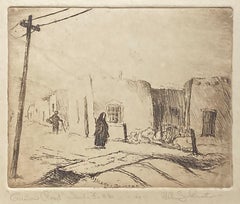
Canyon Road, Santa Fe By. William Howard Shuster (American, 1893-1969) Signed Lower Right Edition of 100 Lower Center Titled Lower Left Unframed: 4" x 4.75" Framed: 15.75" x 15.25" A realist and early modernist painter, graphic artist, illustrator, and sculptor, Will Shuster became known primarily for his work in New Mexico where in 1920, he settled in Santa Fe, having been encouraged to come there by John Sloan. He had studied electrical engineering at the Drexel Institute in Philadelphia and later was a student of Sloan's in Santa Fe in both etching and painting. He was in World War I, where he suffered a gas attack. On his return, he studied with J William Server in Philadelphia but was advised to go West for his health. In Santa Fe in 1921, he became one of the founding members of Los Cinco Pintores...

Category

20th Century American Modern Landscape Prints
Materials

Etching