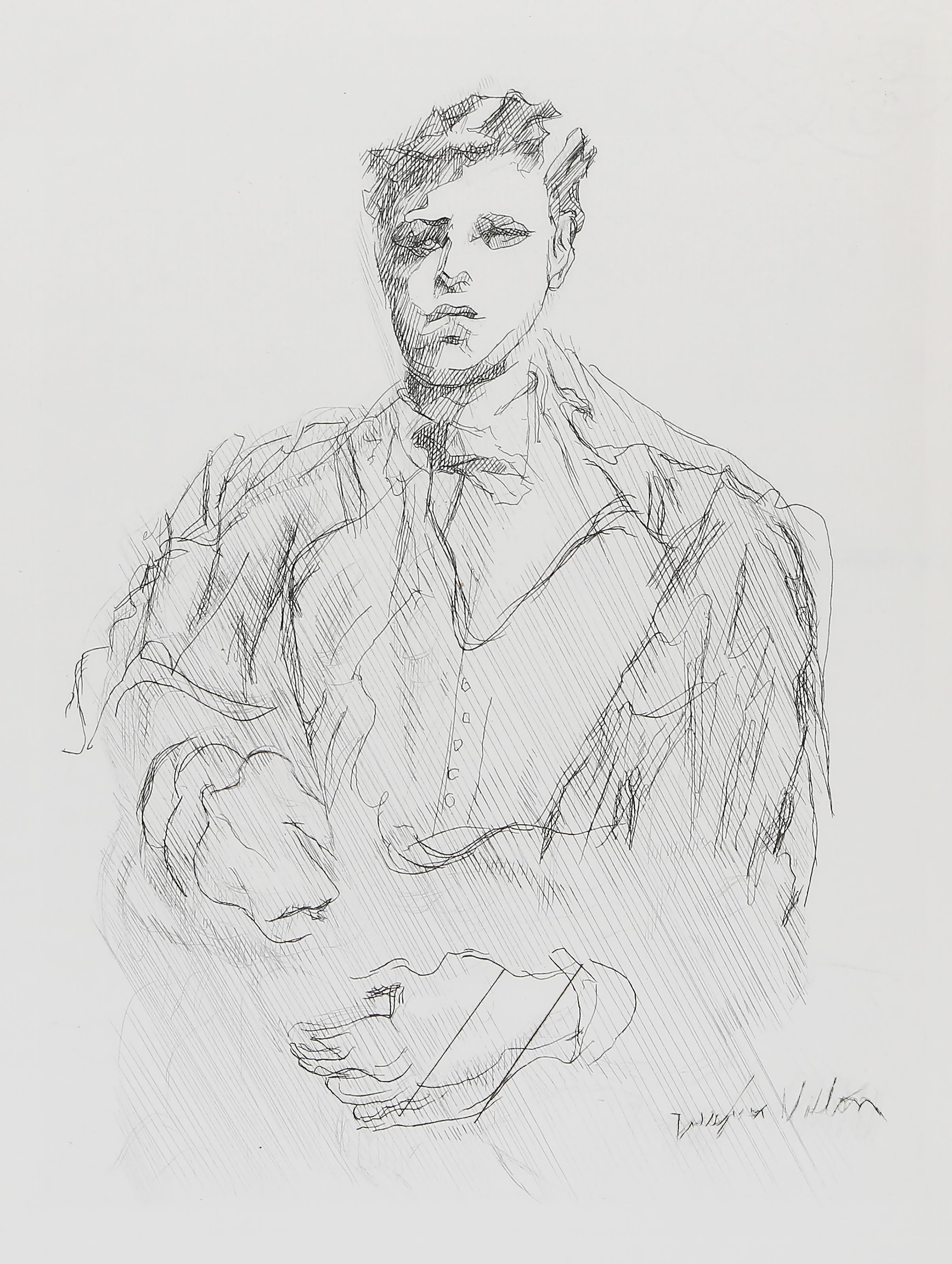
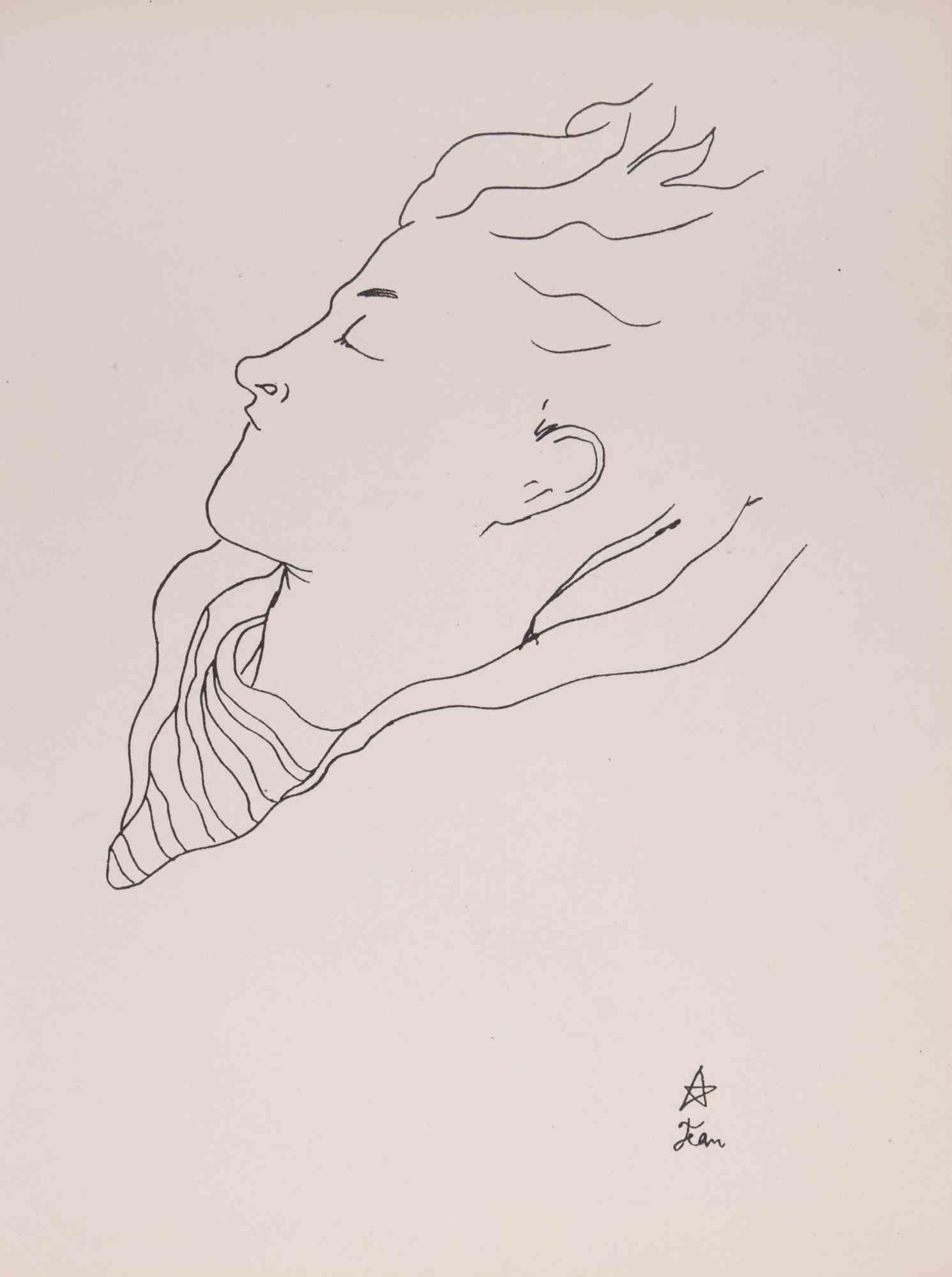
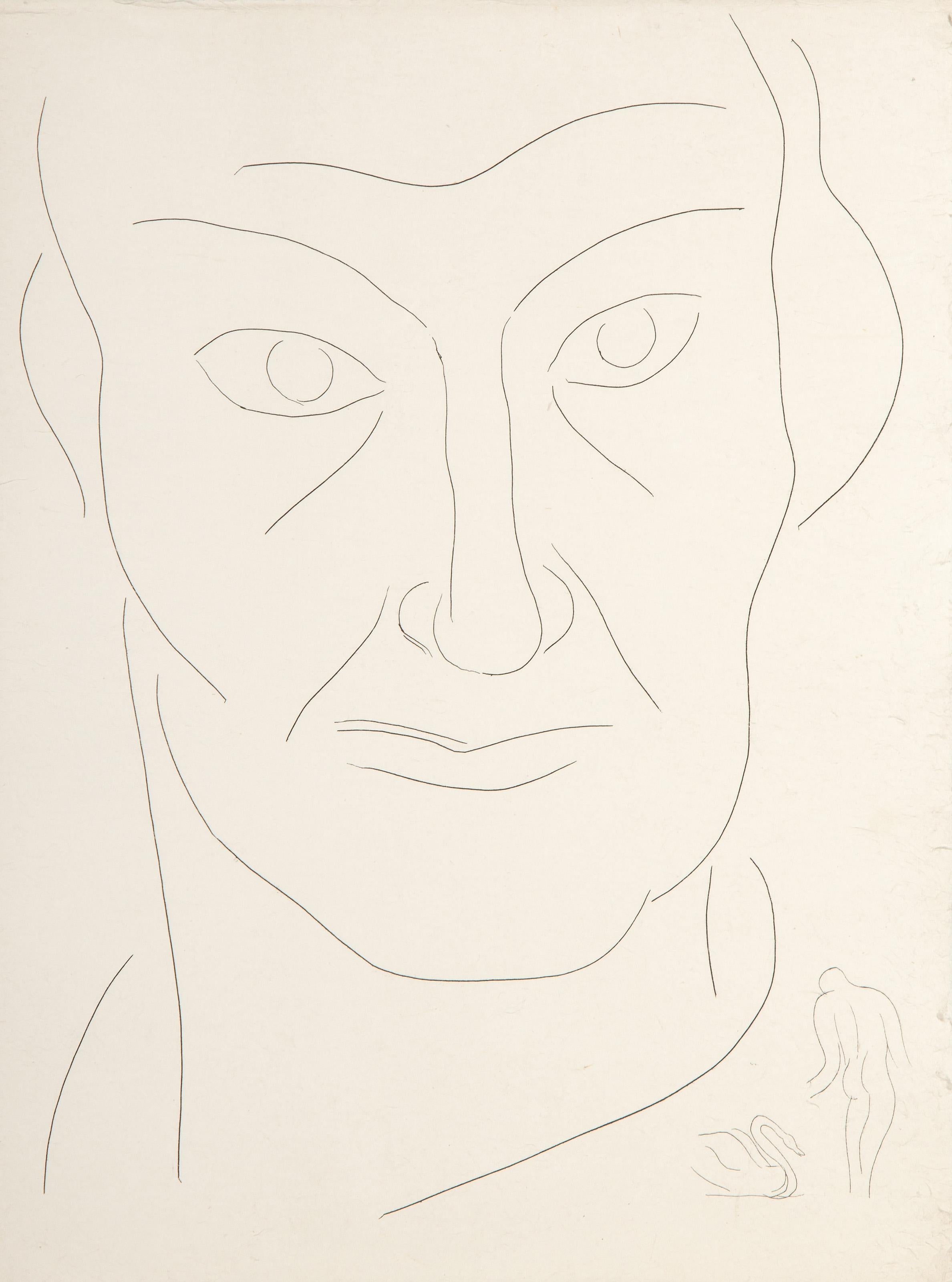
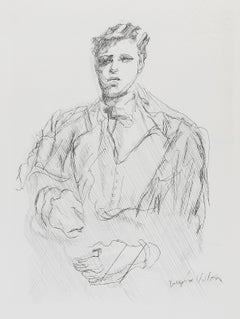
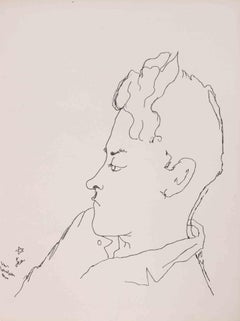
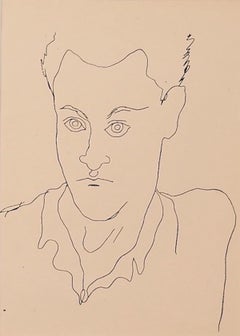
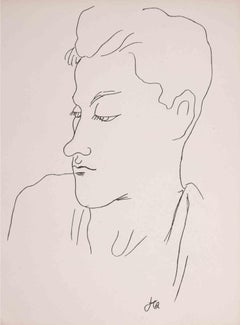
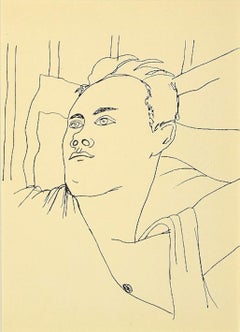
This exquisite burin etching, engraving by Louis Marcoussis (1878–1941), titled Rimbaud, from the album XXe siecle, Chroniques du jour, 13 rue Valette (5e), Directeur G. di San Lazzaro, Sommaire du no. 5/6, 1939, originates from the 1939 edition published by Gualtieri di San Lazzaro, editeur, Paris, in collaboration with Societe Internationale d'Art XXe siecle, Paris, and printed by Mourlot Freres, Paris. Rimbaud exemplifies Marcoussis’s mastery of poetic abstraction and precision engraving, uniting Cubist geometry with literary symbolism in a refined homage to the visionary French poet Arthur Rimbaud.
Executed as a burin etching, engraving on velin paper, this work measures 12.5 × 9.75 inches (31.75 × 24.77 cm). Signed in the plate and unnumbered, as issued. The edition exemplifies the superb craftsmanship of Mourlot Freres, Paris.
Artwork Details:
Artist: Louis Marcoussis (1878–1941)
Title: Rimbaud, from the album XXe siecle, Chroniques du jour, 13 rue Valette (5e), Directeur G. di San Lazzaro, Sommaire du no. 5/6, 1939
Medium: Burin etching, engraving on velin paper
Dimensions: 12.5 × 9.75 inches (31.75 × 24.77 cm)
Inscription: Signed in the plate and unnumbered, as issued
Date: 1939
Publisher: Gualtieri di San Lazzaro, editeur, Paris, in collaboration with Societe Internationale d'Art XXe siecle, Paris
Printer: Mourlot Freres, Paris
Condition: Well preserved, consistent with age and medium
Provenance: From the album XXe siecle, Chroniques du jour, 13 rue Valette (5e), Directeur G. di San Lazzaro, Sommaire du no. 5/6, 1939, published by Gualtieri di San Lazzaro, editeur, Paris
About the Publication:
Gualtieri di San Lazzaro’s XXe Siecle (Twentieth Century) was one of the most influential art journals of the modern era, founded in Paris in 1938 as a platform for the greatest painters, sculptors, and writers of the 20th century. San Lazzaro—a visionary editor, critic, and champion of modernism—believed that art and literature should coexist as expressions of a shared human imagination. Under his direction, XXe Siecle became a cultural bridge between Europe and the wider world, publishing special issues devoted to leading figures such as Picasso, Matisse, Chagall, Braque, Calder, Miro, Kandinsky, and Leger. Each edition combined essays by renowned critics and poets with original lithographs printed by the foremost ateliers of Paris, including Mourlot, Arte, and Bellini, creating a uniquely rich dialogue between text and image. Through XXe Siecle, San Lazzaro preserved the creative spirit of the avant-garde during and after World War II, championing freedom of expression and the evolution of abstraction, Surrealism, and modern thought. Over nearly four decades, the journal shaped international taste and defined the intellectual landscape of postwar art publishing. Today, XXe Siecle remains celebrated for its extraordinary synthesis of art, literature, and design—an enduring testament to Gualtieri di San Lazzaro’s belief that the visual arts are the soul of the modern age.
About the Artist:
Louis Marcoussis (1878–1941) was a Polish-born French painter, draughtsman, and master printmaker whose intellectual depth, poetic precision, and technical brilliance made him one of the most refined and influential figures of early modernism. Born Ludwik Kazimierz Wladyslaw Markus in Warsaw, he moved to Paris in 1903 and, under the suggestion of poet Guillaume Apollinaire, adopted the name Louis Marcoussis, immersing himself in the vibrant avant-garde circles of Montparnasse. There he became close with Pablo Picasso, Alexander Calder, Alberto Giacometti, Salvador Dali, Joan Miro, Wassily Kandinsky, Marcel Duchamp, and Man Ray, all of whom shaped and inspired his vision of art as a bridge between intellect and emotion, structure and spirit. Initially influenced by Impressionism, Marcoussis soon turned toward Cubism, developing a more lyrical and contemplative interpretation of the movement characterized by subdued palettes, geometric precision, and an inner calm that set him apart from his contemporaries. His compositions—such as *Nature morte au compotier* and *Guitare et bouteille*—demonstrate a mastery of proportion and rhythm, revealing his belief that painting, like music, should embody harmony and thought. Deeply influenced by Kandinsky’s spiritual abstraction and Duchamp’s conceptual rigor, Marcoussis pursued an art of balance—where reason met feeling and form became a reflection of consciousness. During the 1920s and 1930s, his style evolved toward greater poetic abstraction, incorporating textual fragments, musical notations, and dreamlike structures that bridged Cubism and Surrealism. As a printmaker, Marcoussis achieved international renown, producing exquisite etchings for Guillaume Apollinaire, Paul Eluard, and Tristan Tzara, and collaborating with Picasso at Atelier Lacouriere on engraving innovations that advanced modern printmaking. His technical mastery and quiet lyricism influenced generations of artists—from Serge Poliakoff and Nicolas de Stael to Pierre Soulages and Ellsworth Kelly—who found in his work a model of discipline, geometry, and poetic restraint. Represented in major museum collections including the Museum of Modern Art (New York), Tate Modern (London), Centre Pompidou (Paris), and the Guggenheim Museum, Marcoussis’s art is celebrated for its architectural clarity, musical rhythm, and meditative intelligence. Standing alongside Pablo Picasso, Alexander Calder, Alberto Giacometti, Salvador Dali, Joan Miro, Wassily Kandinsky, Marcel Duchamp, and Man Ray, he remains one of the great intellectual architects of modernism—a poet of geometry whose art united precision, emotion, and timeless beauty. His highest auction record was achieved by *Nature morte au compotier* (circa 1920s), which sold for $1.08 million USD at Sotheby’s, Paris, on December 6, 2012, reaffirming his enduring legacy as one of the most visionary, refined, and collectible artists of the early 20th century.
Louis Marcoussis Rimbaud, Marcoussis XXe siecle, Marcoussis Mourlot, Marcoussis 1939 engraving, Marcoussis velin paper, Marcoussis Cubism, Marcoussis collectible print.