Want more images or videos?
Request additional images or videos from the seller
1 of 8

Manuel Robbe
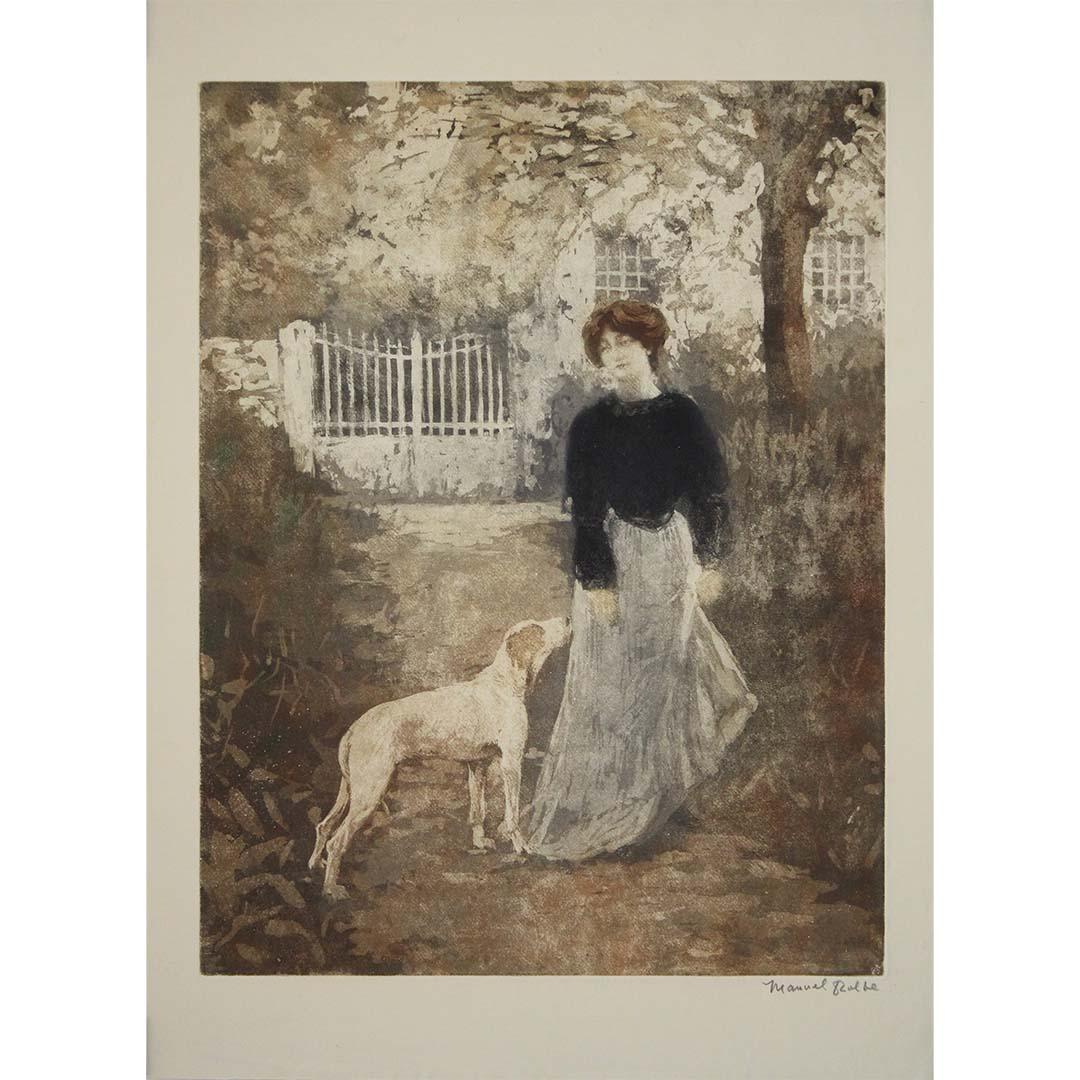
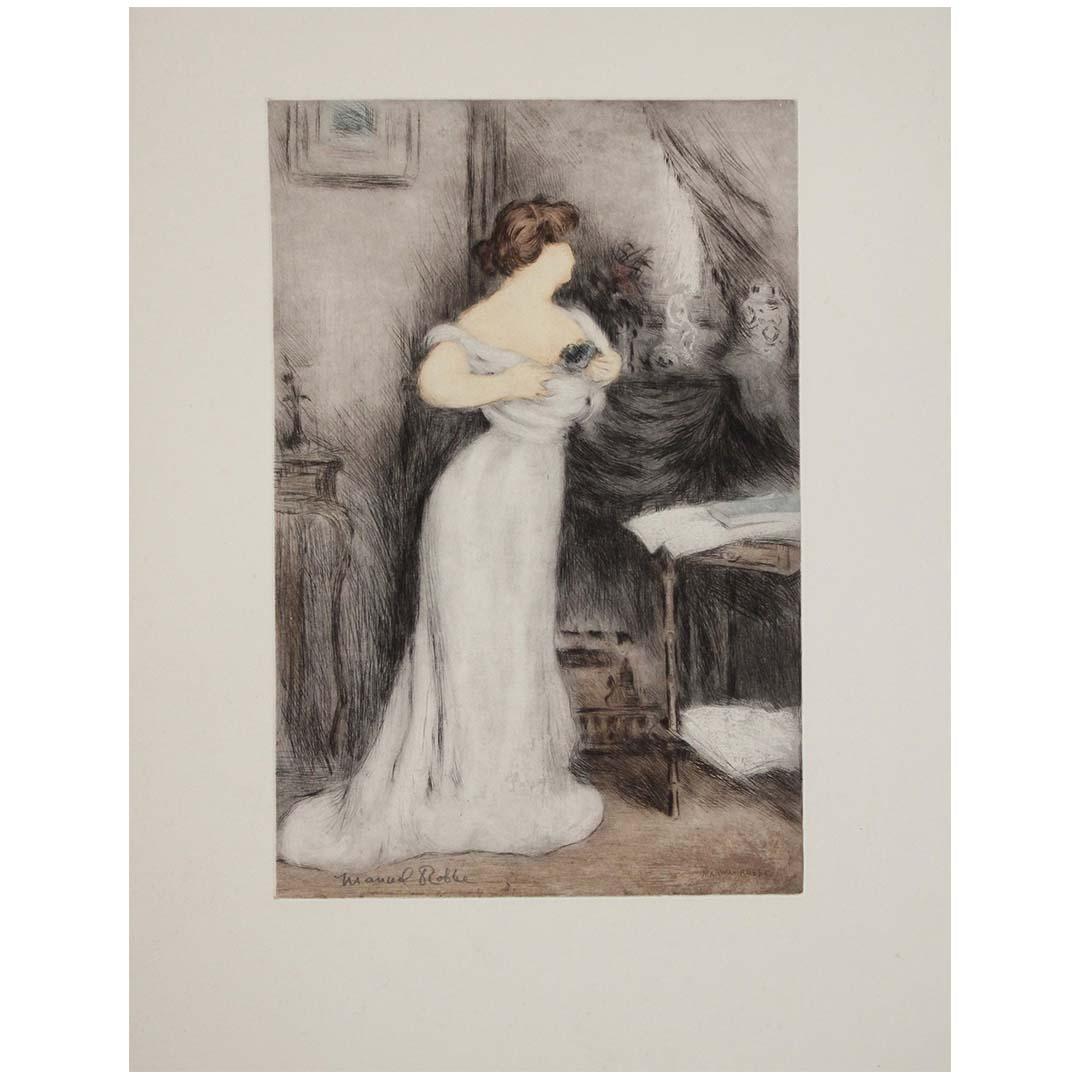
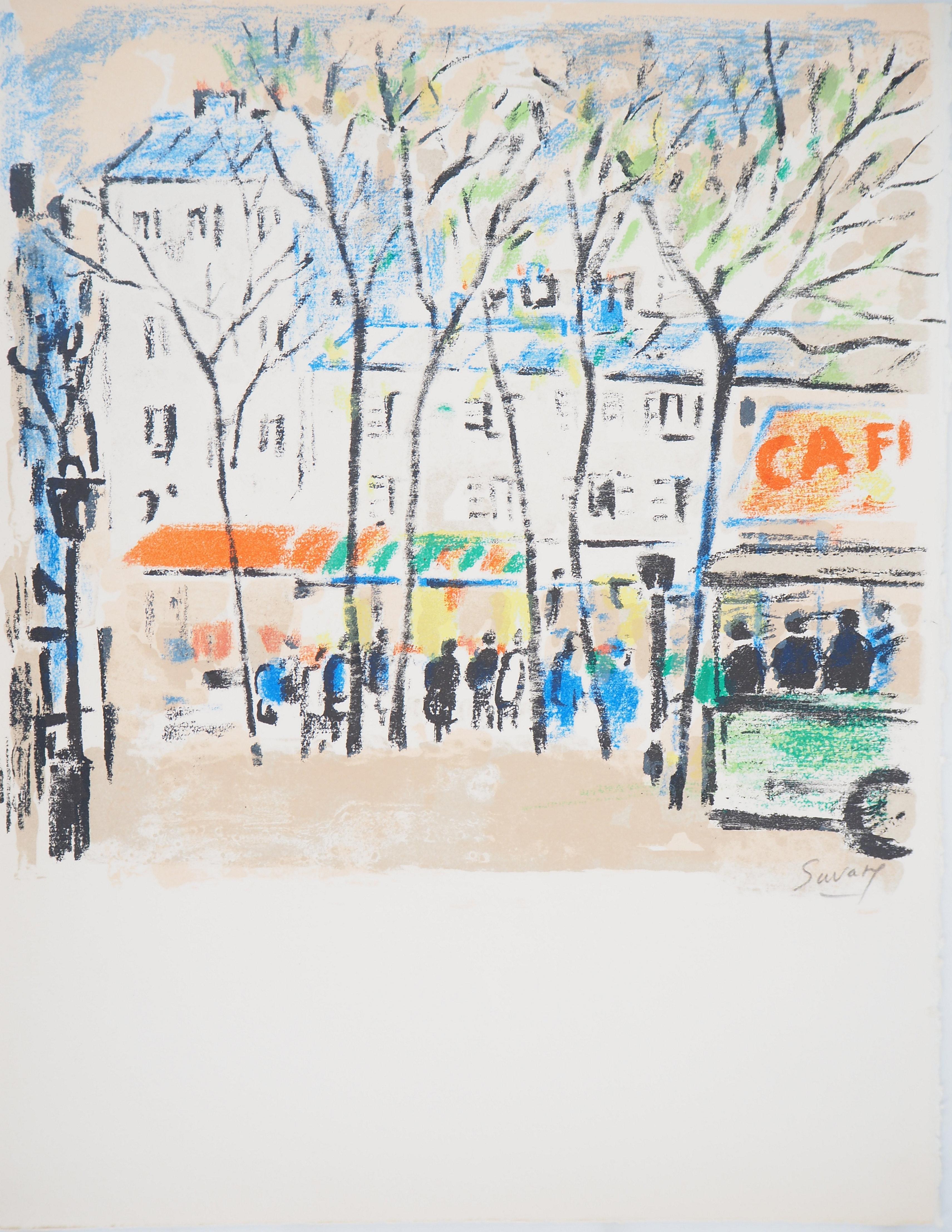
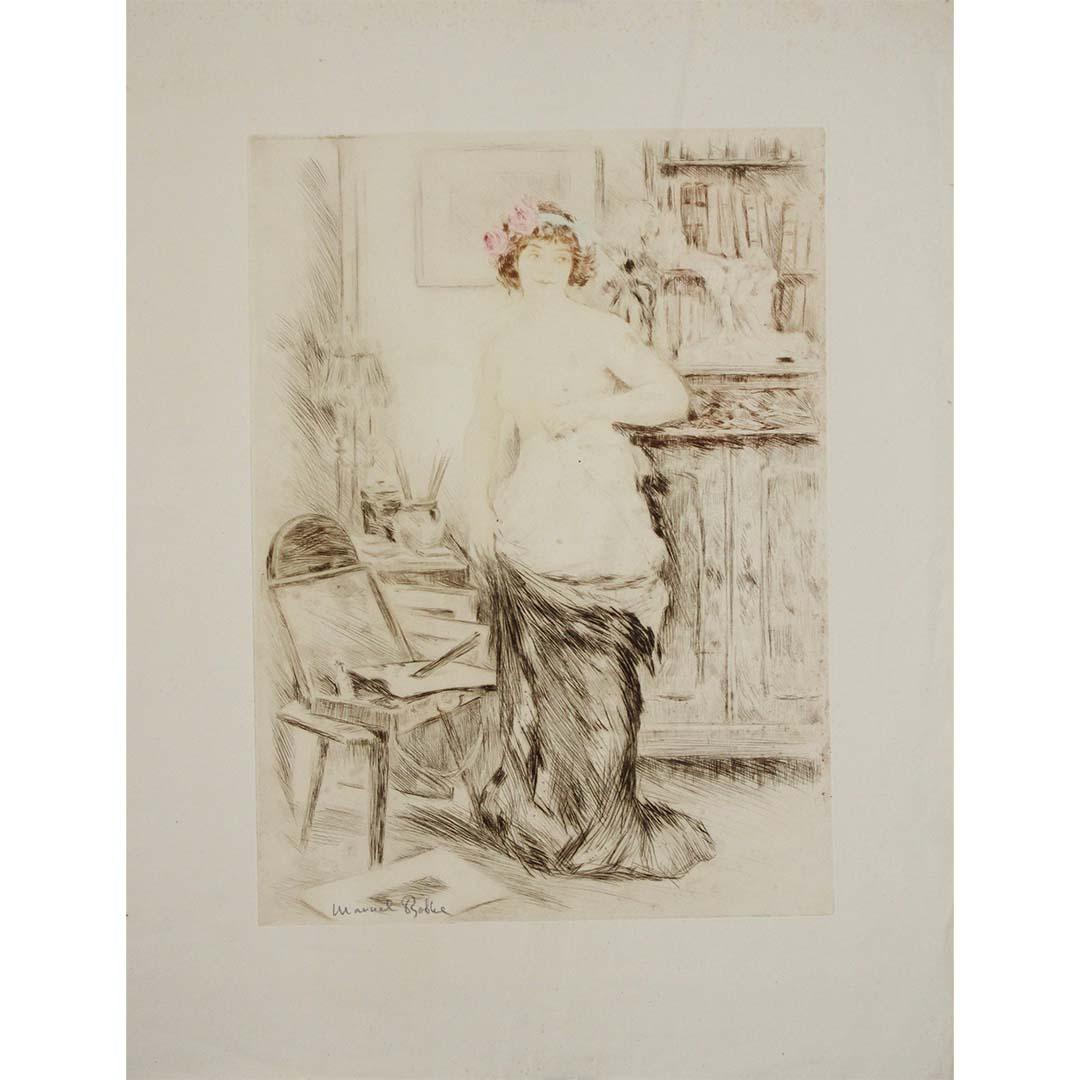
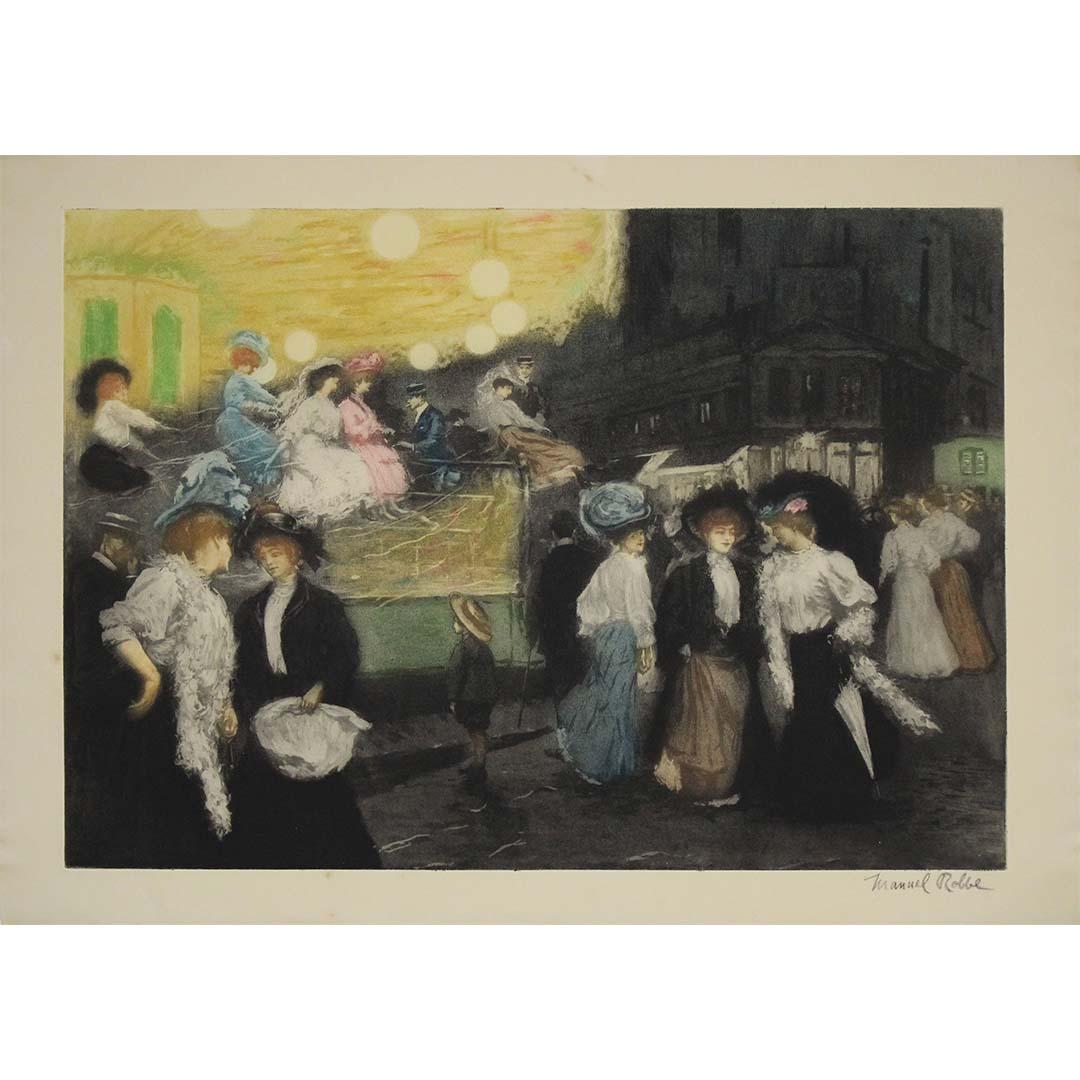
Original aquatint "Le manège ou la Place Blanche à Paris" by Manuel Robbe

Circa 1920

$3,301.84
£2,447.44
€3,360VAT Included
CA$4,606.23
A$4,672.86
CHF 2,667.95
MX$56,581.01
NOK 31,408.33
SEK 31,304.09
DKK 21,356.31

About the Item

The original aquatint "Le manège ou la Place Blanche à Paris" by Manuel Robbe is a captivating representation of early 20th-century Parisian life. This artwork, created by the renowned French artist Manuel Robbe, beautifully captures the bustling charm and vibrant atmosphere of Place Blanche, a well-known square in Paris. Robbe, celebrated for his mastery in the aquatint technique, employs delicate tones and intricate details to bring this lively Parisian scene to life. The piece portrays a merry-go-round (manège) situated in the heart of Place Blanche, surrounded by a lively crowd of Parisians. The use of aquatint allows for a rich gradation of colors and textures, enhancing the overall depth and realism of the scene. The artwork reflects Robbe's keen eye for detail and his ability to depict the nuances of everyday life in Paris. The merry-go-round, with its whimsical horses and joyful riders, serves as the focal point, symbolizing the carefree spirit and leisure of the time. The surrounding architecture and bustling street life further encapsulate the essence of early 20th-century Paris, making the viewer feel as if they are part of the vibrant scene. Robbe's technique is particularly noteworthy in this piece. Aquatint, a variant of etching, involves a meticulous process that produces a range of tonal effects. Robbe's skillful application of this method results in a harmonious blend of light and shadow, creating a sense of movement and vitality. His attention to detail is evident in the delicate rendering of the merry-go-round, the lively expressions of the people, and the intricate background elements. "Le manège ou la Place Blanche à Paris" is more than just an artwork; it is a historical snapshot of Parisian culture and leisure. It captures the essence of a specific time and place, offering a glimpse into the daily life and social interactions of Parisians. This aquatint is a testament to Robbe's talent and his ability to convey the spirit of Paris through his art. For collectors and enthusiasts of early 20th-century French art, this original aquatint by Manuel Robbe is a prized piece. Its historical significance, coupled with Robbe's exceptional artistry, makes it a valuable addition to any collection. The piece not only showcases Robbe's technical prowess but also his deep appreciation for the vibrancy and charm of Parisian life. In summary, "Le manège ou la Place Blanche à Paris" by Manuel Robbe is a masterful aquatint that captures the lively essence of Place Blanche in early 20th-century Paris. Through his exquisite technique and keen observation, Robbe immortalizes a moment of joy and movement, inviting viewers to experience the magic of Paris in a bygone era. Paris - France 42 x 59.5 cm
  • Creator:
    Manuel Robbe (1872 - 1936, French)
  • Creation Year:
    Circa 1920
  • Dimensions:
    Height: 21.66 in (55 cm)Width: 27.56 in (70 cm)
  • Medium:
  • Period:
  • Condition:
    Good condition.
  • Gallery Location:
    PARIS, FR
  • Reference Number:
    1stDibs: LU1792214660862

More From This Seller

View All
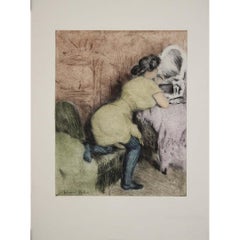
Original engraving by Manuel Robbe - Promenade Au Parc Monceau

Original engraving by Manuel Robbe - Promenade Au Parc Monceau

By Manuel Robbe

Located in PARIS, FR

Bathed in the gentle light of a Parisian afternoon, this charming original aquatint by Manuel Robbe captures an idyllic moment of bourgeois leisure in the Parc Monceau, one of the ca...

Category

1910s More Prints

Materials

Paper, Engraving, Aquatint

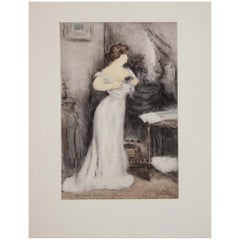
Original aquatint engraving created in 1906 by Manuel Robbe - La jupe otée

Original aquatint engraving created in 1906 by Manuel Robbe - La jupe otée

By Manuel Robbe

Located in PARIS, FR

With La Jupe Ôtée (1906), Manuel Robbe once again captures the delicate boundary between modesty and sensuality—a recurring theme in his celebrated Belle Époque prints. The title, wh...

Category

Early 1900s More Prints

Materials

Paper, Engraving

Original aquatint engraving created in 1903 by Manuel Robbe

Original aquatint engraving created in 1903 by Manuel Robbe

By Manuel Robbe

Located in PARIS, FR

This delicate composition, titled "Le Bouquet de Violettes", is a masterful original aquatint engraving created in 1903 by the French artist Manuel Robbe (1872–1936). A refined examp...

Category

Early 1900s More Prints

Materials

Paper, Engraving

You May Also Like

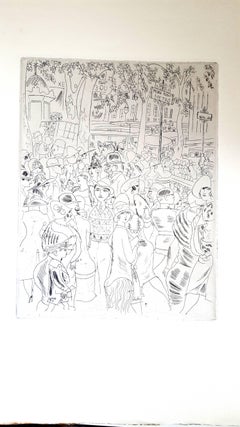
Chas Laborde - Paris - Capucine's Boulevard - Original Etching

Chas Laborde - Paris - Capucine's Boulevard - Original Etching

By Chas (Charles) Laborde

Located in Collonge Bellerive, Geneve, CH

Chas Laborde - Paris - Capucine's Boulevard - Original Etching Dimensions : 13 x 10". Paper : Rives vellum. Edition : 225 copies. 1927 From Tableaux de Paris, Emile-Paul Freres, Paris Chas LABORDE Charles Laborde was born in Buenos Aires on August 8, 1886. He was the youngest of the five sons of Adolphe-Sylvestre Laborde-Pinou, a Basque-Bearne millionaire who had made a fortune selling spirits to the Indians and luxury goods imported from France to wealthy Argentines. The family returned to France when Charles was six months old. His mother died when he was two. He spent his childhood at their family château d’Escout outside Oloron-Sainte-Marie in the Pyrenees. His brothers went to a boarding-school, his father was often in Paris on business, and little Charles was left to his devices. Though it was a lonely childhood, he was a darling of his generous and magnanimous father. Charles got his early drawing skills from a village artist and found support in his brother Jean-Felix. Charles frequently accompanied his father visiting artisans and helped him choose de luxe objects to be sold in Argentine. He first attended the Rollin college in Paris, then a lyceum in Pau, where he lived with full board and lodging after his father’s death in 1901. From childhood Charles wanted to be an artist and tried several pseudonyms for himself: Ch. Laborde, Carlos Laborde,Carlos Edrobal and Carl Lab. He started wearing a velvet suit and a large hat. At 17, the timid shortsighted teenager wearing big glasses was expelled from college for smoking and drinking alcohol and went to Paris into the custody of his elder brother Jean-Felix, who carried on his father’s business. Charles enrolled in the prestigious l’Académie Julian, studying under Henri Royer and Marcel Baschet. Simultaneously he was a pupil of William Bouguereau and Luc-Olivier Merson at l’École des Beaux-Arts. The latter was famous for being the designer of the 50 and 100 franc banknotes, and he believed that he was teaching a “little Daumier”. In England, where he went every year from 1905 to 1914 with the family of his friend Cooper, a classmate at l’Académie Julian, he found not only his pseudonym Chas (short for Charley), but also the land of his dreams. Peculiarities of London and its inhabitants were reflected in drawings of William Hogarth and Thomas Rowlandson, whose album The Microcosm of London (1808) prompted Charles to make his London Streets Scenes (1928). Owing to those trips Charles took a liking to the atmosphere of England and its reserved and terse humor. In 1905 the château d’Escout and the Buenos Aires Commercial Fund were sold. After coming into inheritance, Laborde became financially independent and obtained an atelier in Montmartre at 11 bis Rue des Saules. His neighbors were de la Butte, Francis Carco and Pierre Mac Orlan, who sympathized with the easy-going young man with a positive attitude to life. His friend Pierre Falke...

Category

1920s Modern Landscape Prints
Materials

Etching

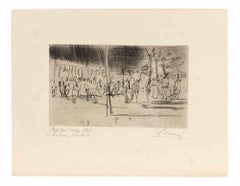
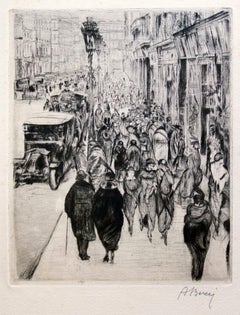
Paris qui Bouge - Rumeur Sinistre - Etching by Anselmo Bucci - 1909

Paris qui Bouge - Rumeur Sinistre - Etching by Anselmo Bucci - 1909

By Anselmo Bucci

Located in Roma, IT

Paris qui bouge - Rumeur sinistre is an artwork realized by the artist Anselmo Bucci in 1909. Drypoint on paper. Titled and dated on the left corner. Hand-signed on the right lower ...

Category

Early 1900s Modern Figurative Prints

Materials

Etching

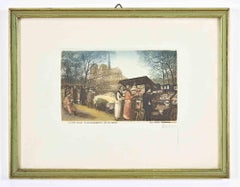
Notre-Dame et les Bouquinistes sur les Quais, Paris - Etching - 1953

Notre-Dame et les Bouquinistes sur les Quais, Paris - Etching - 1953

Located in Roma, IT

Original color etching (eau-forte originale), hand signed and dated Paris, Septembre 1953 on the reverse. A charming and atmospheric original colour etching depicting the celebrated...

Category

1950s Contemporary Figurative Prints

Materials

Etching

"La rue de la Paix" original etching

"La rue de la Paix" original etching

By Tony Minartz

Located in Henderson, NV

Medium: original etching. This impression on laid paper was printed in 1909 and published in Paris for the Revue de l'art ancien et moderne. Plate size: 9 1/2 x 6 3/8 inches (241 x 1...

Category

Early 1900s Prints and Multiples

Materials

Etching