Post-Impressionist More Prints

POSTIMPRESSIONIST STYLE

In the revolutionary wake of Impressionism, artists like Vincent van Gogh, Georges Seurat, Paul Cézanne and Paul Gauguin advanced the style further while firmly rejecting its limitations. Although the artists now associated with Postimpressionist art did not work as part of a group, they collectively employed an approach to expressing moments in time that was even more abstract than that of the Impressionists, and they shared an interest in moving away from naturalistic depictions to more subjective uses of vivid colors and light in their paintings.

The eighth and final Impressionist exhibition was held in Paris in 1886, and Postimpressionism — also spelled Post-Impressionism — is usually dated between then and 1905. The term “Postimpressionism” was coined by British curator and art critic Roger Fry in 1910 at the “Manet and the Postimpressionists” exhibition in London that connected their practices to the pioneering modernist art of Édouard Manet. Many Postimpressionist artists — most of whom lived in France — utilized thickly applied, vibrant pigments that emphasized the brushstrokes on the canvas.

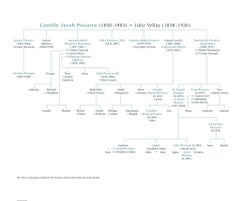
The Postimpressionist movement’s iconic works of art include van Gogh’s The Starry Night (1889) and Seurat’s A Sunday on La Grande Jatte (1884). Seurat’s approach reflected the experimental spirit of Postimpressionism, as he used Pointillist dots of color that were mixed by the eye of the viewer rather than the hand of the artist. Van Gogh, meanwhile, often based his paintings on observation, yet instilled them with an emotional and personal perspective in which colors and forms did not mirror reality. Alongside Mary Cassatt, Cézanne, Henri Matisse and Gauguin, the Dutch painter was a pupil of Camille Pissarro, the groundbreaking Impressionist artist who boldly organized the first independent painting exhibitions in late-19th-century Paris.

The boundary-expanding work of the Postimpressionist painters, which focused on real-life subject matter and featured a prioritization of geometric forms, would inspire the Nabis, German Expressionism, Cubism and other modern art movements to continue to explore abstraction and challenge expectations for art.

Find a collection of original Postimpressionist paintings, mixed media, prints and other art on 1stDibs.

to
4
14
4
3
Overall Width
to
Overall Height
to
2,078
941
938
745
726
121
101
86
67
43
32
31
26
2
1
1
1
19
2
2
5
1
2
11
10
1
1
1
1
1
1
12
4
4
3
1
5
4
12
9
Style: Post-Impressionist
Londres (London)

Londres (London)

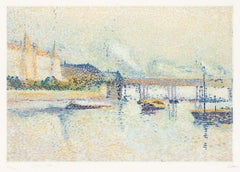
By Maximilien Luce

Located in New York, NY

Pencil signed by both Luce and Jacques Villon (Villon etched the image) and numbered 120/200 in pencil, lower margin. Published by Galerie Bernheim-Jeune, Paris. Catalogue Raisonne:...

Category

1920s Post-Impressionist More Prints

Materials

Etching, Aquatint, Color

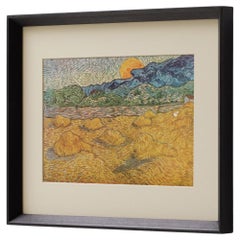
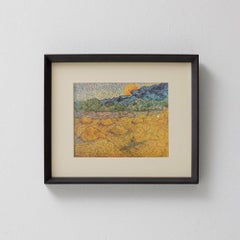
Vincent van Gogh Framed Color Print of Landscape with Wheat Sheaves, 1947

Vincent van Gogh Framed Color Print of Landscape with Wheat Sheaves, 1947

By (After) Vincent van Gogh

Located in Barcelona, ES

A highly decorative framed color print after Vincent van Gogh, depicting Landscape with Wheat Sheaves and Rising Moon, one of the artist’s most evocative late landscapes. Published i...

Category

1940s Post-Impressionist More Prints

Materials

Wood, Paper

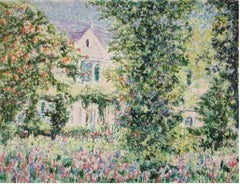
Series - Monet's House by Lélia Pissarro - Screenprint

Series - Monet's House by Lélia Pissarro - Screenprint

By Lelia Pissarro

Located in London, GB

Series - Monet's House by Lélia Pissarro (B. 1963) Serigraph 38 x 48 cm (15 x 18 ⁷/₈ inches) Signed and numbered Printed in an edition of 300 Artist's Biography: Born in Paris in 19...

Category

21st Century and Contemporary Post-Impressionist More Prints

Materials

Screen

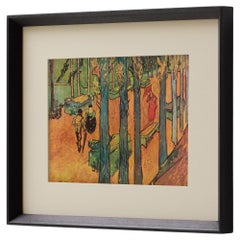
Vincent van Gogh Framed Color Print of Public Garden in Arles, Editions du Chêne

Vincent van Gogh Framed Color Print of Public Garden in Arles, Editions du Chêne

By (After) Vincent van Gogh

Located in Barcelona, ES

A highly decorative framed color print after Vincent van Gogh, depicting a vivid public garden scene in Arles with tall trees, figures walking, and benches arranged within a richly c...

Category

1940s Post-Impressionist More Prints

Materials

Wood, Paper

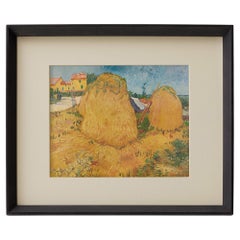
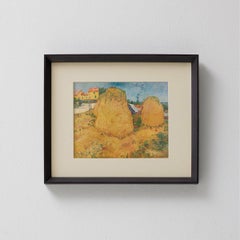
Framed 1947 Vincent van Gogh Landscape Print with Haystacks by Editions du Chêne

Framed 1947 Vincent van Gogh Landscape Print with Haystacks by Editions du Chêne

By (After) Vincent van Gogh

Located in Barcelona, ES

A highly decorative framed color print after Vincent van Gogh, depicting a sunlit rural landscape with haystacks, cottages, and expansive sky. Published in Paris by Editions du Chêne...

Category

1940s Post-Impressionist More Prints

Materials

Paper, Wood

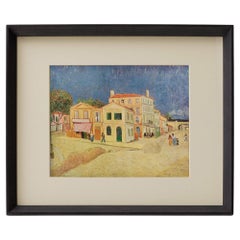
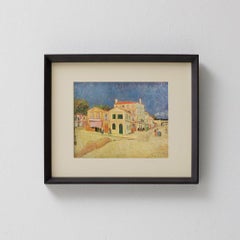
Framed Vincent van Gogh Print of The Yellow House in Arles, French Mid-Century

Framed Vincent van Gogh Print of The Yellow House in Arles, French Mid-Century

By (After) Vincent van Gogh

Located in Barcelona, ES

A highly decorative framed color print after Vincent van Gogh, depicting The Yellow House (The Street), one of the most recognizable views from the artist’s time in Arles. Published ...

Category

1940s Post-Impressionist More Prints

Materials

Wood, Paper

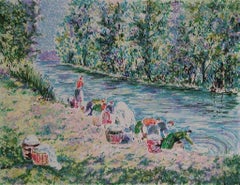
Series - Les Lavandières by Lélia Pissarro - Screenprint

Series - Les Lavandières by Lélia Pissarro - Screenprint

By Lelia Pissarro

Located in London, GB

SOLD UNFRAMED Series - Les Lavandières by Lélia Pissarro (B. 1963) Serigraph 38 x 48 cm (15 x 18 ⁷/₈ inches) Signed and numbered Printed in an edition of 300 Artist's Biography: B...

Category

21st Century and Contemporary Post-Impressionist More Prints

Materials

Screen

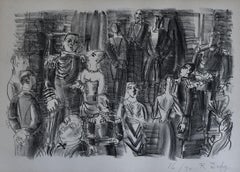
The Admiral’s Ball
The Admiral’s Ball

The Admiral’s Ball

By Raoul Dufy

Located in London, GB

RAOUL DUFY 1877-1953 Le Havre 1877-1953 Forcalquier (French) Title: The Admiral’s Ball Le Bal chez l'amiral, ca. 1925 Technique: Original Hand Signed and Numbered Lithograph on Wove Paper Paper size: 32.5 x 39.5 cm. / 12.8 x 15.6 in. Image size: 20.5 x 29 cm. / 8.1 x 11.4 in. Additional Information: This original lithograph is hand signed in pencil by the artist "R Dufy...

Category

1920s Post-Impressionist More Prints

Materials

Lithograph

Related Items
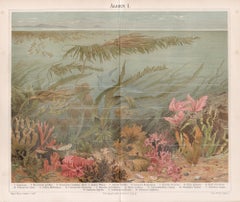
Seaweeds, German antique underwater botanical chromolithograph print

Seaweeds, German antique underwater botanical chromolithograph print

Located in Melbourne, Victoria

'Algen I' (Seaweeds) German chromolithograph, circa 1895. Central vertical fold as issued. 240mm by 305mm (sheet)

Category

Late 19th Century Post-Impressionist More Prints

Materials

Lithograph

Vincent van Gogh Framed Color Print of Public Garden in Arles, Editions du Chêne

Vincent van Gogh Framed Color Print of Public Garden in Arles, Editions du Chêne

By (After) Vincent van Gogh

Located in Barcelona, ES

A highly decorative framed color print after Vincent van Gogh, depicting a vivid public garden scene in Arles with tall trees, figures walking, and benches arranged within a richly c...

Category

1940s Post-Impressionist More Prints

Materials

Wood, Paper

India Listed artist 19th Century Hand Coloured Lithograph Village scene palms

India Listed artist 19th Century Hand Coloured Lithograph Village scene palms

Located in Norfolk, GB

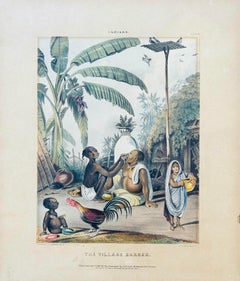
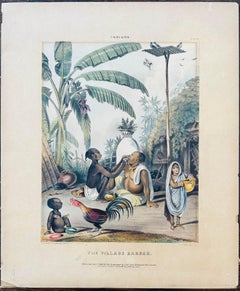
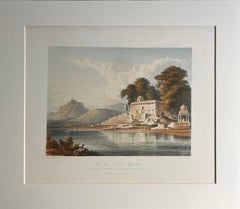
A 19th century, hand coloured lithograph, the colours fresh and in good condition for its age. Artist: Captain Philip Meadows Medium: Hand coloured lithograph Plate 6 Created: 1842 Paper Size: 39 x 32.5 cm Plate Size: 27.5 x 21.2 cm With the description sheet on verso TAYLOR, Captain Philip Meadows (1808-1876). Plate from Sketches in the Deccan. London: published by J McLean 1842 Plate 6 From a series of views of the Deccan, at this time the state of Hyderabad. The suite of plates includes views, scenes and settings of places and buildings at Goa, Arungabad, Tooljapoor, Golcondag, Hyderabad, Ellors, Rozah, and the Tandoor hills, among others. Meadows Taylor arrived in India as a young man to work with a Bombay merchant, but quickly accepted a military commission...

Category

1840s Post-Impressionist More Prints

Materials

Paper, Lithograph

Birds, German antique natural history chromolithograph print

Birds, German antique natural history chromolithograph print

Located in Melbourne, Victoria

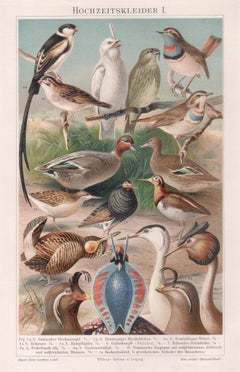
'Hochzeitskleider I' (Birds) German chromolithograph, circa 1895. 240mm by 155mm (sheet)

Category

Late 19th Century Post-Impressionist More Prints

Materials

Lithograph

Previously Available Items
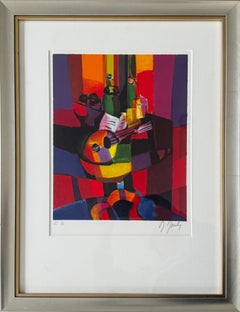
Mandoline à la partition

Mandoline à la partition

By Marcel Mouly

Located in Indianapolis, IN

Marcel Mouly (1918) Mandoline à la partition (2004) Lithograph in color Frame size: 21.5 x 16.5 in (54.61 x 41.91 cm) An épreuve d'artiste outside the edition of 300 An artist proof...

Category

20th Century Post-Impressionist More Prints

Materials

Lithograph

India 19th Century Original 1826 Three Hand-Colored Aquatints Landscapes Rare

India 19th Century Original 1826 Three Hand-Colored Aquatints Landscapes Rare

Located in Norfolk, GB

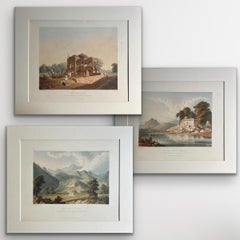
Acknowledged as, ‘One of the most attractive early 19th century colour-plate books on India’ Three rare, hand-coloured aquatints from: GRINDLAY, Robert Melville (1786-1877). Scenery, Costumes and Architecture, Chiefly on the Western Side of India. London: Smith, Elter & Co., [1826]-1830. Each work: Image size: 28 x 19.7 cm (11 x 7.7 Inches) Sheet size: 40.7 x 31.8 cm (16.2 x 12.5 Inches) Including mount: 16” x 18.5” Original Hand-colored aquatints. A remarkable group of prints with no rips or tears. The colours are fresh with no fading and no signs of foxing. Ancient Temple at Hulwud Plate 4 Painted by F Witherington from a Drawing by Captain Grindlay. Drawn by G Hunt Coloured by J Hogarth Published London by R Ackermann, Strand 1826 View near Tonk in Rajpootana Plate 24 From a drawing by Capt. Cha. Auber of the Quarter Mast. Gen. Department, Ceylon Drawn by W Westall Engraved by R G Reeve...

Category

19th Century Post-Impressionist More Prints

Materials

Paper, Aquatint

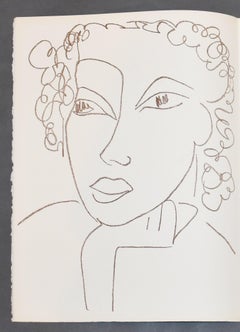
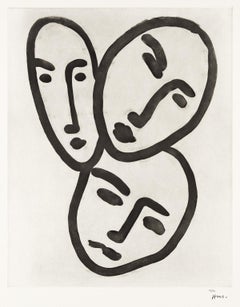
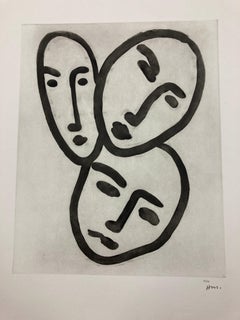
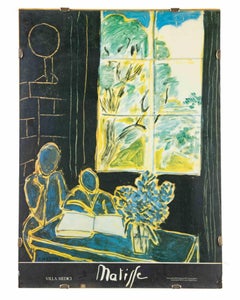
Trois Têtes; À l'amitié (Masques d'Apollinaire, Matisse et Rouveyre)

Trois Têtes; À l'amitié (Masques d'Apollinaire, Matisse et Rouveyre)

By Henri Matisse

Located in New York, NY

A very good impression of this extremely scarce aquatint. With the artist's initials ink stamp and numbered 15/15 with an ink stamp, lower right. Matisse created this work to be included in the volume "Apollinaire" by André Rouveyre...

Category

1950s Post-Impressionist More Prints

Materials

Aquatint

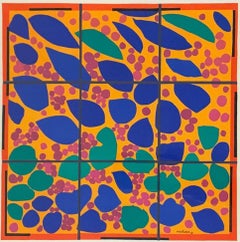
Lierre en Fleur
Lierre en Fleur

Lierre en Fleur

By (after) Henri Matisse

Located in Washington, DC

Artist: Henri Matisse (after) Title: Lierre en Fleur Portfolio: The Last Works of Henri Matisse Medium: Lithograph Date: 1958 Edition: 2000 Frame Size: 17" x 17" Sheet Size: 14" x 10...

Category

1950s Post-Impressionist More Prints

Materials

Lithograph

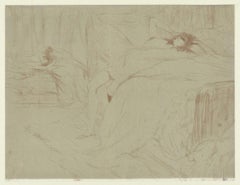
Femme sur le dos-Lassitude

Femme sur le dos-Lassitude

By Henri de Toulouse-Lautrec

Located in New York, NY

A superb impression of this extremely scarce color lithograph on Japan paper. From an edition of 100. Inscribed "Serie no. 43 Gp" in ink, lower right by Lautrec. G. Pellet/T. Lautrec...

Category

1890s Post-Impressionist More Prints

Materials

Color, Lithograph

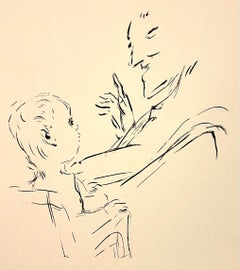
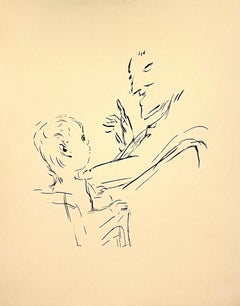
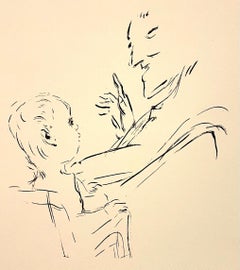
Pierre Bonnard Ltd Ed Lithograph Printed at Mourlot Paris 1958 Father and Son

Pierre Bonnard Ltd Ed Lithograph Printed at Mourlot Paris 1958 Father and Son

By Pierre Bonnard

Located in Surfside, FL

This is from a limited edition portfolio of original lithographs print Fernand Mourlot in Paris in 1958 from work done in collaboration with Bonnard which began in 1928. This is from the rare first edition, No. VII of 20 unbound sets, specially printed for Hans P. Kraus, with Henry de Montherlant inscription to him signed and dated March 3, 1960 These are not individually hand signed or numbered. On BFK Rives French velin art paper Pierre Bonnard (1867 – 1947) was a French painter, illustrator and printmaker, known especially for the stylized decorative qualities of his paintings and his bold use of color. A founding member of the Post-Impressionist group of avant-garde painters Les Nabis, (the Naive artists) his early work was strongly influenced by the work of Paul Gauguin, as well as the prints of Hokusai and other Japanese artists. Bonnard was a leading figure in the transition from Impressionism to Modernism. He painted landscapes, urban scenes, portraits and intimate domestic scenes, where the backgrounds, colors and painting style usually took precedence over the subject. Pierre Bonnard was born in Fontenay-aux-Roses, Hauts-de-Seine on 3 October 1867. His mother, Élisabeth Metzdorff, was from Alsace. His father, Eugène Bonnard, was from the Dauphiné, and was a senior official in the French Ministry of War. He had a brother, Charles, and a sister, Andrée, who in 1890 married the composer Claude Terrasse. He received his education in the Lycée Louis-le-Grand and Lycée Charlemagne in Vanves. He showed a talent for drawing and water colors, as well as caricatures. He painted frequently in the gardens of his parent's country home at Grand-Lemps near the Cote Saint-André in the Dauphiné. He also showed a strong interest in literature. He received his baccalaureate in the classics, and, to satisfy his father, between 1886 and 1887 earned his license in law, and began practicing as a lawyer beginning in 1888. While he was studying law, he also attended art classes at the Académie Julian in Paris. At the Académie Julien he met his future friends and fellow artists, Paul Sérusier, Maurice Denis, Gabriel Ibels and Paul Ranson. In 1888 Bonnard was accepted by the École des Beaux-Arts, where he met Édouard Vuillard and Ker Xavier Roussel. He also sold his first commercial work of art, a design for poster for France-Champagne, which helped him convince his family that he could make a living as an artist. He set up his first studio at on rue Lechapelais and began his career as an artist. From 1893 until her death, Bonnard lived with Marthe de Méligny (1869–1942), and she was the model for many of his paintings, including many nude works. Her birth name was Maria Boursin, but she had changed it before she met Bonnard. They married in 1925. In the years before their marriage, Bonnard had love affairs with two other women, who also served as models for some of his paintings, Renée Monchaty (the partner of the American painter Harry Lachmann) and Lucienne Dupuy de Frenelle, the wife of a doctor; it has been suggested that Bonnard may have been the father of Lucienne's second son. Renée Monchaty committed suicide shortly after Bonnard and de Méligny married. In 1891 he met Toulouse-Lautrec and in December 1891 showed his work at the annual exhibition of the Société des Artistes Indépendants. In the same year Bonnard also began an association with La Revue Blanche, for which he and Edouard Vuillard designed frontispiece In March 1891, his work was displayed with the work of the other Nabis at the Le Barc de Boutteville. The style of Japanese graphic arts became an important influence on Bonnard. In 1893 a major exposition of works of Utamaro and Hiroshige was held at the Durand-Rouel Gallery, and the Japanese influence, particularly the use of multiple points of view, and the use of bold geometric patterns in clothing, such as checkered blouses, began to appear in his work. Because of his passion for Japanese art, his nickname among the Nabis became Le Nabi le trés japonard. He devoted an increasing amount of attention to decorative art, designing furniture, fabrics, fans and other objects. He continued to design posters for France-Champagne, which gained him an audience outside the art world. In 1892 he began to produce lithographs, and painted two of his early notable works, Le Corsage a carreaux and La Partie de croquet. He also made a series of illustrations for the music books of his brother-in-law, Claude Terrasse. In 1895 he became an early participant of the movement of Art Nouveau, designing a stained glass window, called Maternity, for Tiffany. In 1895 he had his first individual exposition of paintings, posters and lithographs at the Durand-Ruel Gallery. He also illustrated a novel, Marie, by Peter Nansen, published in series by in La Revue Blanche. The following year he participated in a group exposition of Nabis at the Ambroise Vollard Gallery. In 1899, he took part in another major exposition of works of the Nabis. Throughout the early 20th century, as artistic styles appeared and disappeared with almost dizzying speed, Bonnard kept refining and revising his personal style, and exploring new subjects and media, but keeping the distinct characteristics of his work. Working in his studio at 65 rue de Douai in Paris, he presented paintings at the Salon des Independents in 1900, and also made 109 lithographs for Parallèment, a book of poems by Verlaine. He also took part in an exhibition with the other Nabis at the Bernheim Jeune gallery. He presented nine paintings at the Salon des Independents in 1901. In 1905 he produced a series of nudes and of portraits, and in 1906 had a personal exposition at the Bernheim-Jeune Gallery. In 1908 he illustrated a book of poetry by Octave Mirbeau, and made his first long stay in the South of France, at the home of the painter Manguin in Saint-Tropez. in 1909, and in 1911 began a series of decorative panels, called Méditerranée, for the Russian art patron Ivan Morozov. During the years of the First World War, Bonnard concentrated on nudes and portraits, and in 1916 completed a series of large compositions, including La Pastorale, Méditterranée, La Paradis Terreste and Paysage de Ville. His reputation in the French art establishment was secure; in 1918 he was selected, along with Renoir, as an honorary President of the Association of Young French Artists. In the 1920s, he produced illustrations for a book by Andre Gide (1924) and another by Claude Anet (1923). He showed works at the Autumn Salon in 1923, and in 1924 was honored with a retrospective of sixty-eight of his works at the Galerie Druet. In 1925 he purchased a villa in Cannes. In 1938 his works and Vuillard were featured at an exposition at the Art Institute of Chicago. The outbreak of World War II in September 1939, forced Bonnard to depart Paris for the south of France, where he remained until the end of the war. Under the German occupation, he refused to paint an official portrait of the French collaborationist leader, Marechal Petain, but accepted a commission to paint a religious painting of Saint Francis de Sales, with the face of his friend Vuillard, who had died two years earlier. He finished his last painting, The Almond Tree in Blossom, a week before his death in his cottage on La Route de Serra Capoue near Le Cannet, on the French Riviera, in 1947. The Museum of Modern Art in New York City organized a posthumous retrospective of Bonnard's work in 1948, although originally it was meant to be a celebration of the artist's 80th birthday. Bonnard particularly used the model of Japanese art in a series...

Category

20th Century Post-Impressionist More Prints
Materials

Lithograph

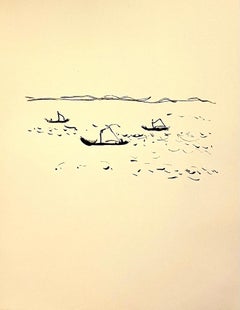
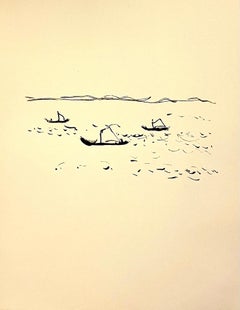
Pierre Bonnard Ltd Ed Lithograph Printed at Mourlot Paris 1958 Sail Boats, Lake

Pierre Bonnard Ltd Ed Lithograph Printed at Mourlot Paris 1958 Sail Boats, Lake

By Pierre Bonnard

Located in Surfside, FL

This is from a limited edition portfolio of original lithographs print Fernand Mourlot in Paris in 1958 from work done in collaboration with Bonnard which began in 1928. This is from the rare first edition, No. VII of 20 unbound sets, specially printed for Hans P. Kraus, with Henry de Montherlant inscription to him signed and dated March 3, 1960 These are not individually hand signed or numbered. On BFK Rives French velin art paper Pierre Bonnard (1867 – 1947) was a French painter, illustrator and printmaker, known especially for the stylized decorative qualities of his paintings and his bold use of color. A founding member of the Post-Impressionist group of avant-garde painters Les Nabis, (the Naive artists) his early work was strongly influenced by the work of Paul Gauguin, as well as the prints of Hokusai and other Japanese artists. Bonnard was a leading figure in the transition from Impressionism to Modernism. He painted landscapes, urban scenes, portraits and intimate domestic scenes, where the backgrounds, colors and painting style usually took precedence over the subject. Pierre Bonnard was born in Fontenay-aux-Roses, Hauts-de-Seine on 3 October 1867. His mother, Élisabeth Metzdorff, was from Alsace. His father, Eugène Bonnard, was from the Dauphiné, and was a senior official in the French Ministry of War. He had a brother, Charles, and a sister, Andrée, who in 1890 married the composer Claude Terrasse. He received his education in the Lycée Louis-le-Grand and Lycée Charlemagne in Vanves. He showed a talent for drawing and water colors, as well as caricatures. He painted frequently in the gardens of his parent's country home at Grand-Lemps near the Cote Saint-André in the Dauphiné. He also showed a strong interest in literature. He received his baccalaureate in the classics, and, to satisfy his father, between 1886 and 1887 earned his license in law, and began practicing as a lawyer beginning in 1888. While he was studying law, he also attended art classes at the Académie Julian in Paris. At the Académie Julien he met his future friends and fellow artists, Paul Sérusier, Maurice Denis, Gabriel Ibels and Paul Ranson. In 1888 Bonnard was accepted by the École des Beaux-Arts, where he met Édouard Vuillard and Ker Xavier Roussel. He also sold his first commercial work of art, a design for poster for France-Champagne, which helped him convince his family that he could make a living as an artist. He set up his first studio at on rue Lechapelais and began his career as an artist. From 1893 until her death, Bonnard lived with Marthe de Méligny (1869–1942), and she was the model for many of his paintings, including many nude works. Her birth name was Maria Boursin, but she had changed it before she met Bonnard. They married in 1925. In the years before their marriage, Bonnard had love affairs with two other women, who also served as models for some of his paintings, Renée Monchaty (the partner of the American painter Harry Lachmann) and Lucienne Dupuy de Frenelle, the wife of a doctor; it has been suggested that Bonnard may have been the father of Lucienne's second son. Renée Monchaty committed suicide shortly after Bonnard and de Méligny married. In 1891 he met Toulouse-Lautrec and in December 1891 showed his work at the annual exhibition of the Société des Artistes Indépendants. In the same year Bonnard also began an association with La Revue Blanche, for which he and Edouard Vuillard designed frontispiece In March 1891, his work was displayed with the work of the other Nabis at the Le Barc de Boutteville. The style of Japanese graphic arts became an important influence on Bonnard. In 1893 a major exposition of works of Utamaro and Hiroshige was held at the Durand-Rouel Gallery, and the Japanese influence, particularly the use of multiple points of view, and the use of bold geometric patterns in clothing, such as checkered blouses, began to appear in his work. Because of his passion for Japanese art, his nickname among the Nabis became Le Nabi le trés japonard. He devoted an increasing amount of attention to decorative art, designing furniture, fabrics, fans and other objects. He continued to design posters for France-Champagne, which gained him an audience outside the art world. In 1892 he began to produce lithographs, and painted two of his early notable works, Le Corsage a carreaux and La Partie de croquet. He also made a series of illustrations for the music books of his brother-in-law, Claude Terrasse. In 1895 he became an early participant of the movement of Art Nouveau, designing a stained glass window, called Maternity, for Tiffany. In 1895 he had his first individual exposition of paintings, posters and lithographs at the Durand-Ruel Gallery. He also illustrated a novel, Marie, by Peter Nansen, published in series by in La Revue Blanche. The following year he participated in a group exposition of Nabis at the Ambroise Vollard Gallery. In 1899, he took part in another major exposition of works of the Nabis. Throughout the early 20th century, as artistic styles appeared and disappeared with almost dizzying speed, Bonnard kept refining and revising his personal style, and exploring new subjects and media, but keeping the distinct characteristics of his work. Working in his studio at 65 rue de Douai in Paris, he presented paintings at the Salon des Independents in 1900, and also made 109 lithographs for Parallèment, a book of poems by Verlaine. He also took part in an exhibition with the other Nabis at the Bernheim Jeune gallery. He presented nine paintings at the Salon des Independents in 1901. In 1905 he produced a series of nudes and of portraits, and in 1906 had a personal exposition at the Bernheim-Jeune Gallery. In 1908 he illustrated a book of poetry by Octave Mirbeau, and made his first long stay in the South of France, at the home of the painter Manguin in Saint-Tropez. in 1909, and in 1911 began a series of decorative panels, called Méditerranée, for the Russian art patron Ivan Morozov. During the years of the First World War, Bonnard concentrated on nudes and portraits, and in 1916 completed a series of large compositions, including La Pastorale, Méditterranée, La Paradis Terreste and Paysage de Ville. His reputation in the French art establishment was secure; in 1918 he was selected, along with Renoir, as an honorary President of the Association of Young French Artists. In the 1920s, he produced illustrations for a book by Andre Gide (1924) and another by Claude Anet (1923). He showed works at the Autumn Salon in 1923, and in 1924 was honored with a retrospective of sixty-eight of his works at the Galerie Druet. In 1925 he purchased a villa in Cannes. In 1938 his works and Vuillard were featured at an exposition at the Art Institute of Chicago. The outbreak of World War II in September 1939, forced Bonnard to depart Paris for the south of France, where he remained until the end of the war. Under the German occupation, he refused to paint an official portrait of the French collaborationist leader, Marechal Petain, but accepted a commission to paint a religious painting of Saint Francis de Sales...

Category

20th Century Post-Impressionist More Prints

Materials

Lithograph

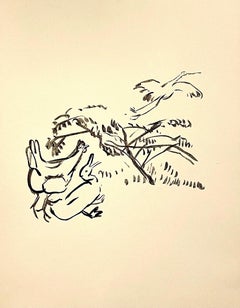
Pierre Bonnard Ltd Ed Lithograph Printed at Mourlot Paris 1958 Chickens and Swan

Pierre Bonnard Ltd Ed Lithograph Printed at Mourlot Paris 1958 Chickens and Swan

By Pierre Bonnard

Located in Surfside, FL

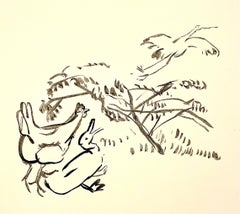
This is from a limited edition portfolio of original lithographs print Fernand Mourlot in Paris in 1958 from work done in collaboration with Bonnard which began in 1928. This is from the rare first edition, No. VII of 20 unbound sets, specially printed for Hans P. Kraus, with Henry de Montherlant inscription to him signed and dated March 3, 1960 These are not individually hand signed or numbered. On BFK Rives French velin art paper Pierre Bonnard (1867 – 1947) was a French painter, illustrator and printmaker, known especially for the stylized decorative qualities of his paintings and his bold use of color. A founding member of the Post-Impressionist group of avant-garde painters Les Nabis, (the Naive artists) his early work was strongly influenced by the work of Paul Gauguin, as well as the prints of Hokusai and other Japanese artists. Bonnard was a leading figure in the transition from Impressionism to Modernism. He painted landscapes, urban scenes, portraits and intimate domestic scenes, where the backgrounds, colors and painting style usually took precedence over the subject. Pierre Bonnard was born in Fontenay-aux-Roses, Hauts-de-Seine on 3 October 1867. His mother, Élisabeth Metzdorff, was from Alsace. His father, Eugène Bonnard, was from the Dauphiné, and was a senior official in the French Ministry of War. He had a brother, Charles, and a sister, Andrée, who in 1890 married the composer Claude Terrasse. He received his education in the Lycée Louis-le-Grand and Lycée Charlemagne in Vanves. He showed a talent for drawing and water colors, as well as caricatures. He painted frequently in the gardens of his parent's country home at Grand-Lemps near the Cote Saint-André in the Dauphiné. He also showed a strong interest in literature. He received his baccalaureate in the classics, and, to satisfy his father, between 1886 and 1887 earned his license in law, and began practicing as a lawyer beginning in 1888. While he was studying law, he also attended art classes at the Académie Julian in Paris. At the Académie Julien he met his future friends and fellow artists, Paul Sérusier, Maurice Denis, Gabriel Ibels and Paul Ranson. In 1888 Bonnard was accepted by the École des Beaux-Arts, where he met Édouard Vuillard and Ker Xavier Roussel. He also sold his first commercial work of art, a design for poster for France-Champagne, which helped him convince his family that he could make a living as an artist. He set up his first studio at on rue Lechapelais and began his career as an artist. From 1893 until her death, Bonnard lived with Marthe de Méligny (1869–1942), and she was the model for many of his paintings, including many nude works. Her birth name was Maria Boursin, but she had changed it before she met Bonnard. They married in 1925. In the years before their marriage, Bonnard had love affairs with two other women, who also served as models for some of his paintings, Renée Monchaty (the partner of the American painter Harry Lachmann) and Lucienne Dupuy de Frenelle, the wife of a doctor; it has been suggested that Bonnard may have been the father of Lucienne's second son. Renée Monchaty committed suicide shortly after Bonnard and de Méligny married. In 1891 he met Toulouse-Lautrec and in December 1891 showed his work at the annual exhibition of the Société des Artistes Indépendants. In the same year Bonnard also began an association with La Revue Blanche, for which he and Edouard Vuillard designed frontispiece In March 1891, his work was displayed with the work of the other Nabis at the Le Barc de Boutteville. The style of Japanese graphic arts became an important influence on Bonnard. In 1893 a major exposition of works of Utamaro and Hiroshige was held at the Durand-Rouel Gallery, and the Japanese influence, particularly the use of multiple points of view, and the use of bold geometric patterns in clothing, such as checkered blouses, began to appear in his work. Because of his passion for Japanese art, his nickname among the Nabis became Le Nabi le trés japonard. He devoted an increasing amount of attention to decorative art, designing furniture, fabrics, fans and other objects. He continued to design posters for France-Champagne, which gained him an audience outside the art world. In 1892 he began to produce lithographs, and painted two of his early notable works, Le Corsage a carreaux and La Partie de croquet. He also made a series of illustrations for the music books of his brother-in-law, Claude Terrasse. In 1895 he became an early participant of the movement of Art Nouveau, designing a stained glass window, called Maternity, for Tiffany. In 1895 he had his first individual exposition of paintings, posters and lithographs at the Durand-Ruel Gallery. He also illustrated a novel, Marie, by Peter Nansen, published in series by in La Revue Blanche. The following year he participated in a group exposition of Nabis at the Ambroise Vollard Gallery. In 1899, he took part in another major exposition of works of the Nabis. Throughout the early 20th century, as artistic styles appeared and disappeared with almost dizzying speed, Bonnard kept refining and revising his personal style, and exploring new subjects and media, but keeping the distinct characteristics of his work. Working in his studio at 65 rue de Douai in Paris, he presented paintings at the Salon des Independents in 1900, and also made 109 lithographs for Parallèment, a book of poems by Verlaine. He also took part in an exhibition with the other Nabis at the Bernheim Jeune gallery. He presented nine paintings at the Salon des Independents in 1901. In 1905 he produced a series of nudes and of portraits, and in 1906 had a personal exposition at the Bernheim-Jeune Gallery. In 1908 he illustrated a book of poetry by Octave Mirbeau, and made his first long stay in the South of France, at the home of the painter Manguin in Saint-Tropez. in 1909, and in 1911 began a series of decorative panels, called Méditerranée, for the Russian art patron Ivan Morozov. During the years of the First World War, Bonnard concentrated on nudes and portraits, and in 1916 completed a series of large compositions, including La Pastorale, Méditterranée, La Paradis Terreste and Paysage de Ville. His reputation in the French art establishment was secure; in 1918 he was selected, along with Renoir, as an honorary President of the Association of Young French Artists. In the 1920s, he produced illustrations for a book by Andre Gide (1924) and another by Claude Anet (1923). He showed works at the Autumn Salon in 1923, and in 1924 was honored with a retrospective of sixty-eight of his works at the Galerie Druet. In 1925 he purchased a villa in Cannes. In 1938 his works and Vuillard were featured at an exposition at the Art Institute of Chicago. The outbreak of World War II in September 1939, forced Bonnard to depart Paris for the south of France, where he remained until the end of the war. Under the German occupation, he refused to paint an official portrait of the French collaborationist leader, Marechal Petain, but accepted a commission to paint a religious painting of Saint Francis de Sales, with the face of his friend Vuillard, who had died two years earlier. He finished his last painting, The Almond Tree in Blossom, a week before his death in his cottage on La Route de Serra Capoue near Le Cannet, on the French Riviera, in 1947. The Museum of Modern Art in New York City organized a posthumous retrospective of Bonnard's work in 1948, although originally it was meant to be a celebration of the artist's 80th birthday. Bonnard particularly used the model of Japanese art in a series...

Category

20th Century Post-Impressionist More Prints
Materials

Lithograph

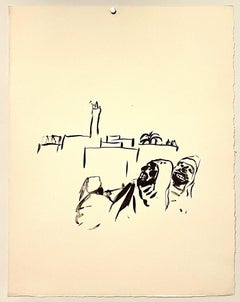
Pierre Bonnard Lithograph Printed at Mourlot Paris 1958 Mosque Minaret, Village

Pierre Bonnard Lithograph Printed at Mourlot Paris 1958 Mosque Minaret, Village

By Pierre Bonnard

Located in Surfside, FL

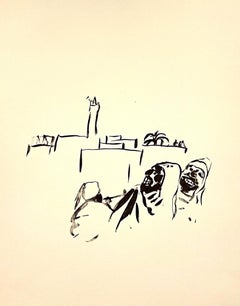
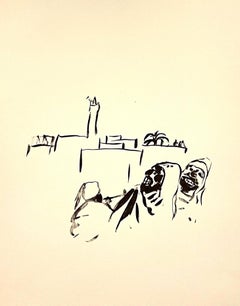
This is from a limited edition portfolio of original lithographs print Fernand Mourlot in Paris in 1958 from work done in collaboration with Bonnard which began in 1928. A walled city with a mosque with a minaret with Arabs standing in the foreground. This is from the rare first edition, No. VII of 20 unbound sets, specially printed for Hans P. Kraus, with Henry de Montherlant inscription to him signed and dated March 3, 1960 These are not individually hand signed or numbered. On BFK Rives French velin art paper Pierre Bonnard (1867 – 1947) was a French painter, illustrator and printmaker, known especially for the stylized decorative qualities of his paintings and his bold use of color. A founding member of the Post-Impressionist group of avant-garde painters Les Nabis, (the Naive artists) his early work was strongly influenced by the work of Paul Gauguin, as well as the prints of Hokusai and other Japanese artists. Bonnard was a leading figure in the transition from Impressionism to Modernism. He painted landscapes, urban scenes, portraits and intimate domestic scenes, where the backgrounds, colors and painting style usually took precedence over the subject. Pierre Bonnard was born in Fontenay-aux-Roses, Hauts-de-Seine on 3 October 1867. His mother, Élisabeth Metzdorff, was from Alsace. His father, Eugène Bonnard, was from the Dauphiné, and was a senior official in the French Ministry of War. He had a brother, Charles, and a sister, Andrée, who in 1890 married the composer Claude Terrasse. He received his education in the Lycée Louis-le-Grand and Lycée Charlemagne in Vanves. He showed a talent for drawing and water colors, as well as caricatures. He painted frequently in the gardens of his parent's country home at Grand-Lemps near the Cote Saint-André in the Dauphiné. He also showed a strong interest in literature. He received his baccalaureate in the classics, and, to satisfy his father, between 1886 and 1887 earned his license in law, and began practicing as a lawyer beginning in 1888. While he was studying law, he also attended art classes at the Académie Julian in Paris. At the Académie Julien he met his future friends and fellow artists, Paul Sérusier, Maurice Denis, Gabriel Ibels and Paul Ranson. In 1888 Bonnard was accepted by the École des Beaux-Arts, where he met Édouard Vuillard and Ker Xavier Roussel. He also sold his first commercial work of art, a design for poster for France-Champagne, which helped him convince his family that he could make a living as an artist. He set up his first studio at on rue Lechapelais and began his career as an artist. From 1893 until her death, Bonnard lived with Marthe de Méligny (1869–1942), and she was the model for many of his paintings, including many nude works. Her birth name was Maria Boursin, but she had changed it before she met Bonnard. They married in 1925. In the years before their marriage, Bonnard had love affairs with two other women, who also served as models for some of his paintings, Renée Monchaty (the partner of the American painter Harry Lachmann) and Lucienne Dupuy de Frenelle, the wife of a doctor; it has been suggested that Bonnard may have been the father of Lucienne's second son. Renée Monchaty committed suicide shortly after Bonnard and de Méligny married. In 1891 he met Toulouse-Lautrec and in December 1891 showed his work at the annual exhibition of the Société des Artistes Indépendants. In the same year Bonnard also began an association with La Revue Blanche, for which he and Edouard Vuillard designed frontispiece In March 1891, his work was displayed with the work of the other Nabis at the Le Barc de Boutteville. The style of Japanese graphic arts became an important influence on Bonnard. In 1893 a major exposition of works of Utamaro and Hiroshige was held at the Durand-Rouel Gallery, and the Japanese influence, particularly the use of multiple points of view, and the use of bold geometric patterns in clothing, such as checkered blouses, began to appear in his work. Because of his passion for Japanese art, his nickname among the Nabis became Le Nabi le trés japonard. He devoted an increasing amount of attention to decorative art, designing furniture, fabrics, fans and other objects. He continued to design posters for France-Champagne, which gained him an audience outside the art world. In 1892 he began to produce lithographs, and painted two of his early notable works, Le Corsage a carreaux and La Partie de croquet. He also made a series of illustrations for the music books of his brother-in-law, Claude Terrasse. In 1895 he became an early participant of the movement of Art Nouveau, designing a stained glass window, called Maternity, for Tiffany. In 1895 he had his first individual exposition of paintings, posters and lithographs at the Durand-Ruel Gallery. He also illustrated a novel, Marie, by Peter Nansen, published in series by in La Revue Blanche. The following year he participated in a group exposition of Nabis at the Ambroise Vollard Gallery. In 1899, he took part in another major exposition of works of the Nabis. Throughout the early 20th century, as artistic styles appeared and disappeared with almost dizzying speed, Bonnard kept refining and revising his personal style, and exploring new subjects and media, but keeping the distinct characteristics of his work. Working in his studio at 65 rue de Douai in Paris, he presented paintings at the Salon des Independents in 1900, and also made 109 lithographs for Parallèment, a book of poems by Verlaine. He also took part in an exhibition with the other Nabis at the Bernheim Jeune gallery. He presented nine paintings at the Salon des Independents in 1901. In 1905 he produced a series of nudes and of portraits, and in 1906 had a personal exposition at the Bernheim-Jeune Gallery. In 1908 he illustrated a book of poetry by Octave Mirbeau, and made his first long stay in the South of France, at the home of the painter Manguin in Saint-Tropez. in 1909, and in 1911 began a series of decorative panels, called Méditerranée, for the Russian art patron Ivan Morozov. During the years of the First World War, Bonnard concentrated on nudes and portraits, and in 1916 completed a series of large compositions, including La Pastorale, Méditterranée, La Paradis Terreste and Paysage de Ville. His reputation in the French art establishment was secure; in 1918 he was selected, along with Renoir, as an honorary President of the Association of Young French Artists. In the 1920s, he produced illustrations for a book by Andre Gide (1924) and another by Claude Anet (1923). He showed works at the Autumn Salon in 1923, and in 1924 was honored with a retrospective of sixty-eight of his works at the Galerie Druet. In 1925 he purchased a villa in Cannes. In 1938 his works and Vuillard were featured at an exposition at the Art Institute of Chicago. The outbreak of World War II in September 1939, forced Bonnard to depart Paris for the south of France, where he remained until the end of the war. Under the German occupation, he refused to paint an official portrait of the French collaborationist leader, Marechal Petain, but accepted a commission to paint a religious painting of Saint Francis de Sales...

Category

20th Century Post-Impressionist More Prints

Materials

Lithograph

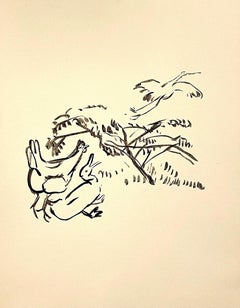
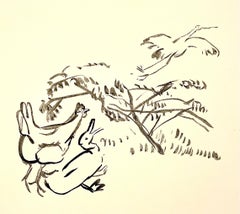
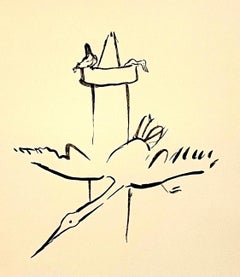
Pierre Bonnard Lithograph Printed at Mourlot Paris 1958 Mosque Minaret, Swan

Pierre Bonnard Lithograph Printed at Mourlot Paris 1958 Mosque Minaret, Swan

By Pierre Bonnard

Located in Surfside, FL

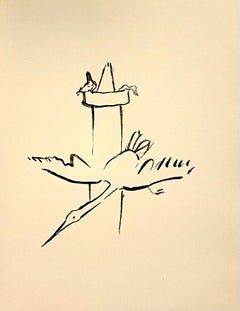
This is from a limited edition portfolio of original lithographs print Fernand Mourlot in Paris in 1958 from work done in collaboration with Bonnard which began in 1928. A mosque with a minaret with an Arab standing at its top, and a bird, I believe a swan, flying by. This is from the rare first edition, No. VII of 20 unbound sets, specially printed for Hans P. Kraus, with Henry de Montherlant inscription to him signed and dated March 3, 1960 These are not individually hand signed or numbered. On BFK Rives French velin art paper Pierre Bonnard (1867 – 1947) was a French painter, illustrator and printmaker, known especially for the stylized decorative qualities of his paintings and his bold use of color. A founding member of the Post-Impressionist group of avant-garde painters Les Nabis, (the Naive artists) his early work was strongly influenced by the work of Paul Gauguin, as well as the prints of Hokusai and other Japanese artists. Bonnard was a leading figure in the transition from Impressionism to Modernism. He painted landscapes, urban scenes, portraits and intimate domestic scenes, where the backgrounds, colors and painting style usually took precedence over the subject. Pierre Bonnard was born in Fontenay-aux-Roses, Hauts-de-Seine on 3 October 1867. His mother, Élisabeth Metzdorff, was from Alsace. His father, Eugène Bonnard, was from the Dauphiné, and was a senior official in the French Ministry of War. He had a brother, Charles, and a sister, Andrée, who in 1890 married the composer Claude Terrasse. He received his education in the Lycée Louis-le-Grand and Lycée Charlemagne in Vanves. He showed a talent for drawing and water colors, as well as caricatures. He painted frequently in the gardens of his parent's country home at Grand-Lemps near the Cote Saint-André in the Dauphiné. He also showed a strong interest in literature. He received his baccalaureate in the classics, and, to satisfy his father, between 1886 and 1887 earned his license in law, and began practicing as a lawyer beginning in 1888. While he was studying law, he also attended art classes at the Académie Julian in Paris. At the Académie Julien he met his future friends and fellow artists, Paul Sérusier, Maurice Denis, Gabriel Ibels and Paul Ranson. In 1888 Bonnard was accepted by the École des Beaux-Arts, where he met Édouard Vuillard and Ker Xavier Roussel. He also sold his first commercial work of art, a design for poster for France-Champagne, which helped him convince his family that he could make a living as an artist. He set up his first studio at on rue Lechapelais and began his career as an artist. From 1893 until her death, Bonnard lived with Marthe de Méligny (1869–1942), and she was the model for many of his paintings, including many nude works. Her birth name was Maria Boursin, but she had changed it before she met Bonnard. They married in 1925. In the years before their marriage, Bonnard had love affairs with two other women, who also served as models for some of his paintings, Renée Monchaty (the partner of the American painter Harry Lachmann) and Lucienne Dupuy de Frenelle, the wife of a doctor; it has been suggested that Bonnard may have been the father of Lucienne's second son. Renée Monchaty committed suicide shortly after Bonnard and de Méligny married. In 1891 he met Toulouse-Lautrec and in December 1891 showed his work at the annual exhibition of the Société des Artistes Indépendants. In the same year Bonnard also began an association with La Revue Blanche, for which he and Edouard Vuillard designed frontispiece In March 1891, his work was displayed with the work of the other Nabis at the Le Barc de Boutteville. The style of Japanese graphic arts became an important influence on Bonnard. In 1893 a major exposition of works of Utamaro and Hiroshige was held at the Durand-Rouel Gallery, and the Japanese influence, particularly the use of multiple points of view, and the use of bold geometric patterns in clothing, such as checkered blouses, began to appear in his work. Because of his passion for Japanese art, his nickname among the Nabis became Le Nabi le trés japonard. He devoted an increasing amount of attention to decorative art, designing furniture, fabrics, fans and other objects. He continued to design posters for France-Champagne, which gained him an audience outside the art world. In 1892 he began to produce lithographs, and painted two of his early notable works, Le Corsage a carreaux and La Partie de croquet. He also made a series of illustrations for the music books of his brother-in-law, Claude Terrasse. In 1895 he became an early participant of the movement of Art Nouveau, designing a stained glass window, called Maternity, for Tiffany. In 1895 he had his first individual exposition of paintings, posters and lithographs at the Durand-Ruel Gallery. He also illustrated a novel, Marie, by Peter Nansen, published in series by in La Revue Blanche. The following year he participated in a group exposition of Nabis at the Ambroise Vollard Gallery. In 1899, he took part in another major exposition of works of the Nabis. Throughout the early 20th century, as artistic styles appeared and disappeared with almost dizzying speed, Bonnard kept refining and revising his personal style, and exploring new subjects and media, but keeping the distinct characteristics of his work. Working in his studio at 65 rue de Douai in Paris, he presented paintings at the Salon des Independents in 1900, and also made 109 lithographs for Parallèment, a book of poems by Verlaine. He also took part in an exhibition with the other Nabis at the Bernheim Jeune gallery. He presented nine paintings at the Salon des Independents in 1901. In 1905 he produced a series of nudes and of portraits, and in 1906 had a personal exposition at the Bernheim-Jeune Gallery. In 1908 he illustrated a book of poetry by Octave Mirbeau, and made his first long stay in the South of France, at the home of the painter Manguin in Saint-Tropez. in 1909, and in 1911 began a series of decorative panels, called Méditerranée, for the Russian art patron Ivan Morozov. During the years of the First World War, Bonnard concentrated on nudes and portraits, and in 1916 completed a series of large compositions, including La Pastorale, Méditterranée, La Paradis Terreste and Paysage de Ville. His reputation in the French art establishment was secure; in 1918 he was selected, along with Renoir, as an honorary President of the Association of Young French Artists. In the 1920s, he produced illustrations for a book by Andre Gide (1924) and another by Claude Anet (1923). He showed works at the Autumn Salon in 1923, and in 1924 was honored with a retrospective of sixty-eight of his works at the Galerie Druet. In 1925 he purchased a villa in Cannes. In 1938 his works and Vuillard were featured at an exposition at the Art Institute of Chicago. The outbreak of World War II in September 1939, forced Bonnard to depart Paris for the south of France, where he remained until the end of the war. Under the German occupation, he refused to paint an official portrait of the French collaborationist leader, Marechal Petain, but accepted a commission to paint a religious painting of Saint Francis de Sales...

Category

20th Century Post-Impressionist More Prints

Materials

Lithograph

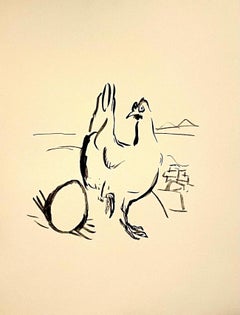
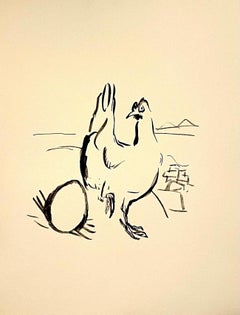
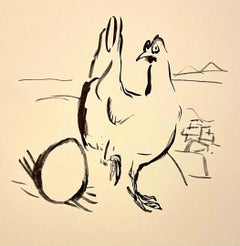
Pierre Bonnard ltd edition Lithograph Printed at Mourlot Paris 1958 Chicken, Egg

Pierre Bonnard ltd edition Lithograph Printed at Mourlot Paris 1958 Chicken, Egg

By Pierre Bonnard

Located in Surfside, FL

This is from a limited edition portfolio of original lithographs print Fernand Mourlot in Paris in 1958 from work done in collaboration with Bonnard which began in 1928. This is from the rare first edition, No. VII of 20 unbound sets, specially printed for Hans P. Kraus, with Henry de Montherlant inscription to him signed and dated March 3, 1960 These are not individually hand signed or numbered. On BFK Rives French velin art paper Pierre Bonnard (1867 – 1947) was a French painter, illustrator and printmaker, known especially for the stylized decorative qualities of his paintings and his bold use of color. A founding member of the Post-Impressionist group of avant-garde painters Les Nabis, (the Naive artists) his early work was strongly influenced by the work of Paul Gauguin, as well as the prints of Hokusai and other Japanese artists. Bonnard was a leading figure in the transition from Impressionism to Modernism. He painted landscapes, urban scenes, portraits and intimate domestic scenes, where the backgrounds, colors and painting style usually took precedence over the subject. Pierre Bonnard was born in Fontenay-aux-Roses, Hauts-de-Seine on 3 October 1867. His mother, Élisabeth Metzdorff, was from Alsace. His father, Eugène Bonnard, was from the Dauphiné, and was a senior official in the French Ministry of War. He had a brother, Charles, and a sister, Andrée, who in 1890 married the composer Claude Terrasse. He received his education in the Lycée Louis-le-Grand and Lycée Charlemagne in Vanves. He showed a talent for drawing and water colors, as well as caricatures. He painted frequently in the gardens of his parent's country home at Grand-Lemps near the Cote Saint-André in the Dauphiné. He also showed a strong interest in literature. He received his baccalaureate in the classics, and, to satisfy his father, between 1886 and 1887 earned his license in law, and began practicing as a lawyer beginning in 1888. While he was studying law, he also attended art classes at the Académie Julian in Paris. At the Académie Julien he met his future friends and fellow artists, Paul Sérusier, Maurice Denis, Gabriel Ibels and Paul Ranson. In 1888 Bonnard was accepted by the École des Beaux-Arts, where he met Édouard Vuillard and Ker Xavier Roussel. He also sold his first commercial work of art, a design for poster for France-Champagne, which helped him convince his family that he could make a living as an artist. He set up his first studio at on rue Lechapelais and began his career as an artist. From 1893 until her death, Bonnard lived with Marthe de Méligny (1869–1942), and she was the model for many of his paintings, including many nude works. Her birth name was Maria Boursin, but she had changed it before she met Bonnard. They married in 1925. In the years before their marriage, Bonnard had love affairs with two other women, who also served as models for some of his paintings, Renée Monchaty (the partner of the American painter Harry Lachmann) and Lucienne Dupuy de Frenelle, the wife of a doctor; it has been suggested that Bonnard may have been the father of Lucienne's second son. Renée Monchaty committed suicide shortly after Bonnard and de Méligny married. In 1891 he met Toulouse-Lautrec and in December 1891 showed his work at the annual exhibition of the Société des Artistes Indépendants. In the same year Bonnard also began an association with La Revue Blanche, for which he and Edouard Vuillard designed frontispiece In March 1891, his work was displayed with the work of the other Nabis at the Le Barc de Boutteville. The style of Japanese graphic arts became an important influence on Bonnard. In 1893 a major exposition of works of Utamaro and Hiroshige was held at the Durand-Rouel Gallery, and the Japanese influence, particularly the use of multiple points of view, and the use of bold geometric patterns in clothing, such as checkered blouses, began to appear in his work. Because of his passion for Japanese art, his nickname among the Nabis became Le Nabi le trés japonard. He devoted an increasing amount of attention to decorative art, designing furniture, fabrics, fans and other objects. He continued to design posters for France-Champagne, which gained him an audience outside the art world. In 1892 he began to produce lithographs, and painted two of his early notable works, Le Corsage a carreaux and La Partie de croquet. He also made a series of illustrations for the music books of his brother-in-law, Claude Terrasse. In 1895 he became an early participant of the movement of Art Nouveau, designing a stained glass window, called Maternity, for Tiffany. In 1895 he had his first individual exposition of paintings, posters and lithographs at the Durand-Ruel Gallery. He also illustrated a novel, Marie, by Peter Nansen, published in series by in La Revue Blanche. The following year he participated in a group exposition of Nabis at the Ambroise Vollard Gallery. In 1899, he took part in another major exposition of works of the Nabis. Throughout the early 20th century, as artistic styles appeared and disappeared with almost dizzying speed, Bonnard kept refining and revising his personal style, and exploring new subjects and media, but keeping the distinct characteristics of his work. Working in his studio at 65 rue de Douai in Paris, he presented paintings at the Salon des Independents in 1900, and also made 109 lithographs for Parallèment, a book of poems by Verlaine. He also took part in an exhibition with the other Nabis at the Bernheim Jeune gallery. He presented nine paintings at the Salon des Independents in 1901. In 1905 he produced a series of nudes and of portraits, and in 1906 had a personal exposition at the Bernheim-Jeune Gallery. In 1908 he illustrated a book of poetry by Octave Mirbeau, and made his first long stay in the South of France, at the home of the painter Manguin in Saint-Tropez. in 1909, and in 1911 began a series of decorative panels, called Méditerranée, for the Russian art patron Ivan Morozov. During the years of the First World War, Bonnard concentrated on nudes and portraits, and in 1916 completed a series of large compositions, including La Pastorale, Méditterranée, La Paradis Terreste and Paysage de Ville. His reputation in the French art establishment was secure; in 1918 he was selected, along with Renoir, as an honorary President of the Association of Young French Artists. In the 1920s, he produced illustrations for a book by Andre Gide (1924) and another by Claude Anet (1923). He showed works at the Autumn Salon in 1923, and in 1924 was honored with a retrospective of sixty-eight of his works at the Galerie Druet. In 1925 he purchased a villa in Cannes. In 1938 his works and Vuillard were featured at an exposition at the Art Institute of Chicago. The outbreak of World War II in September 1939, forced Bonnard to depart Paris for the south of France, where he remained until the end of the war. Under the German occupation, he refused to paint an official portrait of the French collaborationist leader, Marechal Petain, but accepted a commission to paint a religious painting of Saint Francis de Sales, with the face of his friend Vuillard, who had died two years earlier. He finished his last painting, The Almond Tree in Blossom, a week before his death in his cottage on La Route de Serra Capoue near Le Cannet, on the French Riviera, in 1947. The Museum of Modern Art in New York City organized a posthumous retrospective of Bonnard's work in 1948, although originally it was meant to be a celebration of the artist's 80th birthday. Bonnard particularly used the model of Japanese art in a series...

Category

20th Century Post-Impressionist More Prints
Materials

Lithograph

Post-impressionist more prints for sale on 1stDibs.
Find a wide variety of authentic Post-Impressionist more prints available for sale on 1stDibs. Works in this style were very popular during the 21st Century and Contemporary, but contemporary artists have continued to produce works inspired by this movement. If you’re looking to add more prints created in this style to introduce contrast in an otherwise neutral space in your home, the works available on 1stDibs include elements of orange, yellow and other colors. Many Pop art paintings were created by popular artists on 1stDibs, including Lelia Pissarro, Georges Braque, (After) Henri Toulouse Lautrec, and Raoul Dufy. Frequently made by artists working with Lithograph, and Screen Print and other materials, all of these pieces for sale are unique and have attracted attention over the years. Not every interior allows for large Post-Impressionist more prints, so small editions measuring 10 inches across are also available. Prices for more prints made by famous or emerging artists can differ depending on medium, time period and other attributes. On 1stDibs, the price for these items starts at $55 and tops out at $26,100, while the average work sells for $650.