Want more images or videos?
Request additional images or videos from the seller
1 of 22

Marco Dente
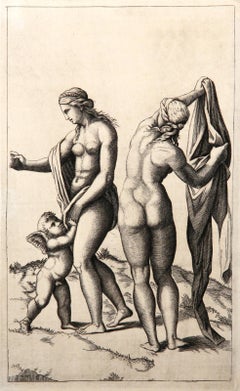
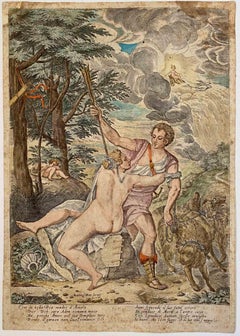
Venere e Amore sui Delfini (Venus and Cupid on Dolphins) /// Old Masters Raphael

1515-1520

$4,000
£3,024.37
€3,540.89
CA$5,691.01
A$5,788.79
CHF 3,322.18
MX$69,588.09
NOK 38,753.06
SEK 39,117.89
DKK 26,471.37

About the Item

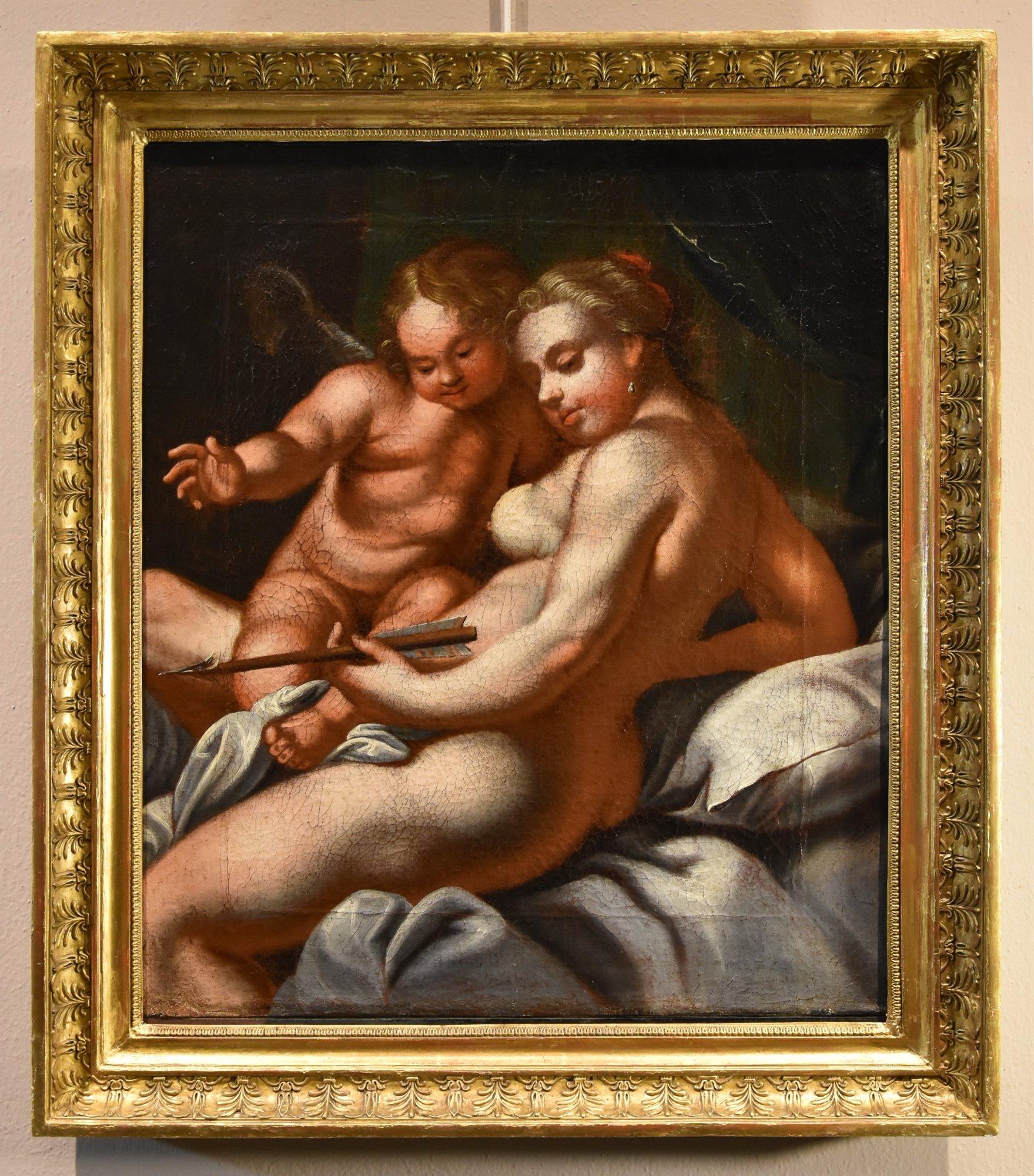
Artist: Marco Dente da Ravenna (Italian, 1493-1527) Title: "Venere e Amore sui Delfini (Venus and Cupid on Dolphins)" *Monogram signed by Dente in the plate (printed signature) lower left Circa: 1515-1520 (second state of three) Medium: Original Engraving on laid paper Limited edition: Unknown Printer: Unknown Publisher: Antonio Salamanca, Rome, Italy Framing: Recently beautifully framed, the sheet is museum mounted, floated over a 100% cotton rag mat in a modern gold moulding and Museum glass Framed size: 16.88" x 13.07" Sheet size: 10.63" x 6.94" Reference: Bartsch XIV, page 244, No. 324; Passavant VI, page 69, No. 32; Le Blanc, II, page 111, No. 16; Imolesi Pozzi pages 71-72, 113, No. 10 Condition: Thread margins. A strong impression in excellent condition Very rare Notes: Provenance: private collection - Périgueux, France. This work is also sometimes referred to as "Venus and Cupid riding two sea monsters, Cupid raises an arrow in his right hand, two heads representing wind in the clouds above". The engraver's monogram "SR" lower left. Published by Antonio Salamanca (1478-1562) in Rome, Italy with his address printed lower right: "Ant. Sal. Exc.". No watermark found. This engraving is after a drawing by Italian artist Raphael aka Raffaello Sanzio da Urbino (1483-1520). "This engraving by Marco Dente is after a design by Raphael, now lost, used by Giulio Romano for his fresco on the south wall of the Stufetta of cardinal Bibbiena - a small room in the Apostolic Palace, at the Vatican, that originally served as a washroom for the cardinal. The engraving differs from the fresco in some details, such as the cityscape in the background and the two winds above, which may indicate that these elements were present in Raphael's drawing. " - Christie's, London Biography: Marco Dente da Ravenna (1493–1527), usually just called Marco Dente, was an Italian engraver born in Ravenna in the latter part of the 15th Century. He was a prominent figure within the circle of printmakers around Marcantonio Raimondi in Rome, and is known for the imitative nature of the reproductive prints or close copies of other prints that were most of his output. His prints in specific cases are also of certain interest in that we can see the impact and design of sculptural restorations. Marco Dente was killed in the tumult of the Sack of Rome in 1527. He used the accompanying monogram, D-B; albeit sparingly. Marco Dente is not a well-known figure in the Renaissance. The reproductive nature of his works contributed to the subversion of his identity. There was much debate surrounding the attribution of artists within Marcantonio Raimondi's School, and their respective plates. Also contributing to the subversion of his identity was that every plate in Dente's studio was destroyed during the Sack of Rome. Marco Dente was killed in the same war; and very few of his plates were later reissued by publishers. The artist was a member of a patrician family who grew up and lived in Ravenna for the majority of his life. He was an integral member of Marcantonio Raimondi's school of art, joining in 1516; Dente was likely an apprentice alongside Agostino di Musi, another Italian engraver. Dente and Agostino di Musi formed the first generation of Marcantonio's school. However, between the two artists, Dente was considered to have come closest to mastering the technique of engraving. The characteristic that defines Marco Dente's work is the reproductive nature of his works. The reproductive nature of Dente's work served three functions. The first was to replicate an event in history; the second was to advance financially; the third was to produce with an intent to distribute the print, and as an extension, the print's conceptual elements too. There was a growing demand for depictions of antique relief in the middle of the sixteenth century. The school's commercial function was facilitated by the markets within La Bottega del Cartolaio; this is largely where prints by Marcantonio and Marco Dente were able to be exchanged or acquired. Raphael (Italian, 1483-1520) was a seminal Italian painter of the High Renaissance period. Admired for his ability to organize forms and color into clear and graceful compositions, Raphael portrayed scenes with delicate lines and subtle shading, evoking a Platonic ideal of serenity and beauty. In perhaps his best-known work, The Sistine Madonna (1513-1514), the artist conveyed an elaborate scene in which wistful cherubs gaze up at the Virgin Mary, two saints, and her son. Born Raffaello Sanzio on April 6, 1483 in Urbino, Italy, his father was the painter Giovanni Santi who became the young artist’s first instructor. By the age of 17, Raphael was already considered a precocious talent, producing paintings influenced by the work Piero della Francesca. Around the year 1500, he apprenticed with Pietro Perugino, helping the elder artist to produce an important fresco commission in Perugia, an experience that had a profound influence on the young Raphael. Moving to Florence in 1504, he was immersed in the milieu of the one the great epochs of art history, while in the city he studied the works of both Leonardo da Vinci and Michelangelo. Called by Pope Julius II to Rome in 1508, Rapahel was hired to complete a cycle of frescoes in the papal apartments inside the Vatican, he would live in the city the next 12 years. The artist died on his 37th birthday on April 6, 1520 in Rome, Italy. According to his biographer Giorgio Vasari, Raphael’s premature death was caused by a fever brought on by excessive lovemaking with his mistress Luti. Today, his works are held in the collections of the Alte Pinakothek in Munich, the Hermitage Museum in St. Petersburg, the Louvre Museum in Paris, the National Gallery in London, the Rijksmuseum in Amsterdam, and the Metropolitan Museum of Art in New York, among others.
  • Creator:
    Marco Dente (1493 - 1527, Italian)
  • Creation Year:
    1515-1520
  • Dimensions:
    Height: 16.88 in (42.88 cm)Width: 13.07 in (33.2 cm)
  • Medium:
  • Movement & Style:
  • Period:
  • Condition:
  • Gallery Location:
    Saint Augustine, FL
  • Reference Number:
    1stDibs: LU121217369532

More From This Seller

View All
Aurora sive Tempus Matutinum; Der Wohl und Übel angewandte Morgen /// Old Master

Aurora sive Tempus Matutinum; Der Wohl und Übel angewandte Morgen /// Old Master

By Johann Daniel Preissler

Located in Saint Augustine, FL

Artist: (after) Johann Daniel Preissler (German, 1666-1737) Title: "Aurora sive Tempus Matutinum; Der Wohl und Übel angewandte Morgen (Dawn or Morning Time; The Morning Used for Better or For Worse)" Portfolio: Die Vier Tageszeiten (The Four Times of Day) Year: 1723 Medium: Original Etching and Engraving on laid paper Limited edition: Unknown Printer: likely Johann Balthasar Probst, Augsburg, Germany Publisher: Jeremias Wolff (Erben), Augsburg, Germany Sheet size: 22.57" x 16.38" Image size: 17.75" x 14" Reference: Le Blanc No. 255, 38; Nagler No. 23 Condition: Soft handling creases, folds, and scattered faint areas of discoloration to sheet. Three tears skillfully repaired from verso. Has been professionally stored away for decades. It is otherwise a strong impression in good condition with full margins Extremely rare Notes: Provenance: private collection - Aspen, CO. Engraved by German artist Johann Balthasar Probst (1673-1750) after a drawing by German artist Johann Daniel Preissler (1666-1737). Comes from Preissler's 1723 "Die Vier Tageszeiten (The Four Times of Day)" portfolio of four etchings and engravings. Printed from one copper plate in one color: black. Descriptions of the portrayed image are printed in Latin and German. Biography: Johann Daniel Preissler, or Preisler (1666–1737) was a German painter and director of Nuremberg's Academy of Fine Arts. He was a notable member of a German artistic family, originating in Bohemia. His children included Johann Justin Preissler (1698–1771), Georg Martin Preisler (1700–1754), Barbara Helena Preisler (1707–1758; married to Oeding), Johan Martin Preisler (1715–1794), and Valentin Daniel Preisler (1717–1765), all in their time renowned artists. Most notable for his portraits, nudes and history paintings, Johann Daniel Preissler also produced drawings and frescoes. He was particularly known beyond his native Nuremberg for his "Die durch Theorie erfundene Practic", a sequence of works on art theory – the individual works were translated into several other languages and served as textbooks for students such as the Swiss Salomon Gessner...

Category

1720s Old Masters Figurative Prints

Materials

Laid Paper, Engraving, Etching

The New Testament /// Old Masters Biblical Religious Engraving Dutch Angel Art

The New Testament /// Old Masters Biblical Religious Engraving Dutch Angel Art

By Michael Burghers

Located in Saint Augustine, FL

Artist: Michael Burghers (Dutch, c.1647/1648-1727) Title: "The New Testament" Portfolio: Holy Bible *Signed by Burghers in the plate (printed signature) lower left Year: 1680 Medium...

Category

1680s Old Masters Figurative Prints

Materials

Watercolor, Laid Paper, Engraving, Etching, Intaglio

La Femme Muse /// Allegorical Symbolism Romantic Old Masters European Drawing

La Femme Muse /// Allegorical Symbolism Romantic Old Masters European Drawing

Located in Saint Augustine, FL

Artist: Unknown (Likely French, 18th Century) Title: "La Femme Muse" *No signature found Circa: 1780 Medium: Original Pastel Drawing on heavy laid paper Framing: Recently beautifully...

Category

1780s Old Masters Figurative Drawings and Watercolors

Materials

Pastel, Laid Paper

Vespera; Der Abend (Evening; The Evening) /// Johann Daniel Preissler Old Master

Vespera; Der Abend (Evening; The Evening) /// Johann Daniel Preissler Old Master

By Johann Daniel Preissler

Located in Saint Augustine, FL

Artist: (after) Johann Daniel Preissler (German, 1666-1737) Title: "Vespera; Der Abend (Evening; The Evening)" Portfolio: Die Vier Tageszeiten (The Four Times of Day) Year: 1723 Medium: Original Etching and Engraving on laid paper Limited edition: Unknown Printer: likely Johann Balthasar Probst, Augsburg, Germany Publisher: Jeremias Wolff (Erben), Augsburg, Germany Sheet size: 22.5" x 16.63" Image size: 17.38" x 13.63" Reference: Le Blanc No. 255, 38; Nagler No. 23 Condition: Soft handling creases and folds to sheet. Some scattered foxmarks in left margin. Two small tears skillfully repaired from verso in margins. Has been professionally stored away for decades. It is otherwise a strong impression in good condition with full margins Extremely rare Notes: Provenance: private collection - Aspen, CO. Engraved by German artist Johann Balthasar Probst (1673-1750) after a drawing by German artist Johann Daniel Preissler (1666-1737). Comes from Preissler's 1723 "Die Vier Tageszeiten (The Four Times of Day)" portfolio of four etchings and engravings. Printed from one copper plate in one color: black. Descriptions of the portrayed image are printed in Latin and German. Biography: Johann Daniel Preissler, or Preisler (1666–1737) was a German painter and director of Nuremberg's Academy of Fine Arts. He was a notable member of a German artistic family, originating in Bohemia. His children included Johann Justin Preissler (1698–1771), Georg Martin Preisler (1700–1754), Barbara Helena Preisler (1707–1758; married to Oeding), Johan Martin Preisler (1715–1794), and Valentin Daniel Preisler (1717–1765), all in their time renowned artists. Most notable for his portraits, nudes and history paintings, Johann Daniel Preissler also produced drawings and frescoes. He was particularly known beyond his native Nuremberg for his "Die durch Theorie erfundene Practic", a sequence of works on art theory – the individual works were translated into several other languages and served as textbooks for students such as the Swiss Salomon Gessner...

Category

1720s Old Masters Figurative Prints

Materials

Laid Paper, Engraving, Etching

Set of Two Engravings after Cipriani "Four Muses" & "Father and Two Daughters"

Set of Two Engravings after Cipriani "Four Muses" & "Father and Two Daughters"

By Francesco Bartolozzi

Located in Saint Augustine, FL

Artist: Francesco Bartolozzi (Italian, 1727-1815) Titles: "Four Muses" & "Father and Two Daughters" Portfolio: Rudiments of Drawing *Issued unsigned, though both are signed by Bartol...

Category

1780s Old Masters Figurative Prints

Materials

Engraving, Etching

You May Also Like

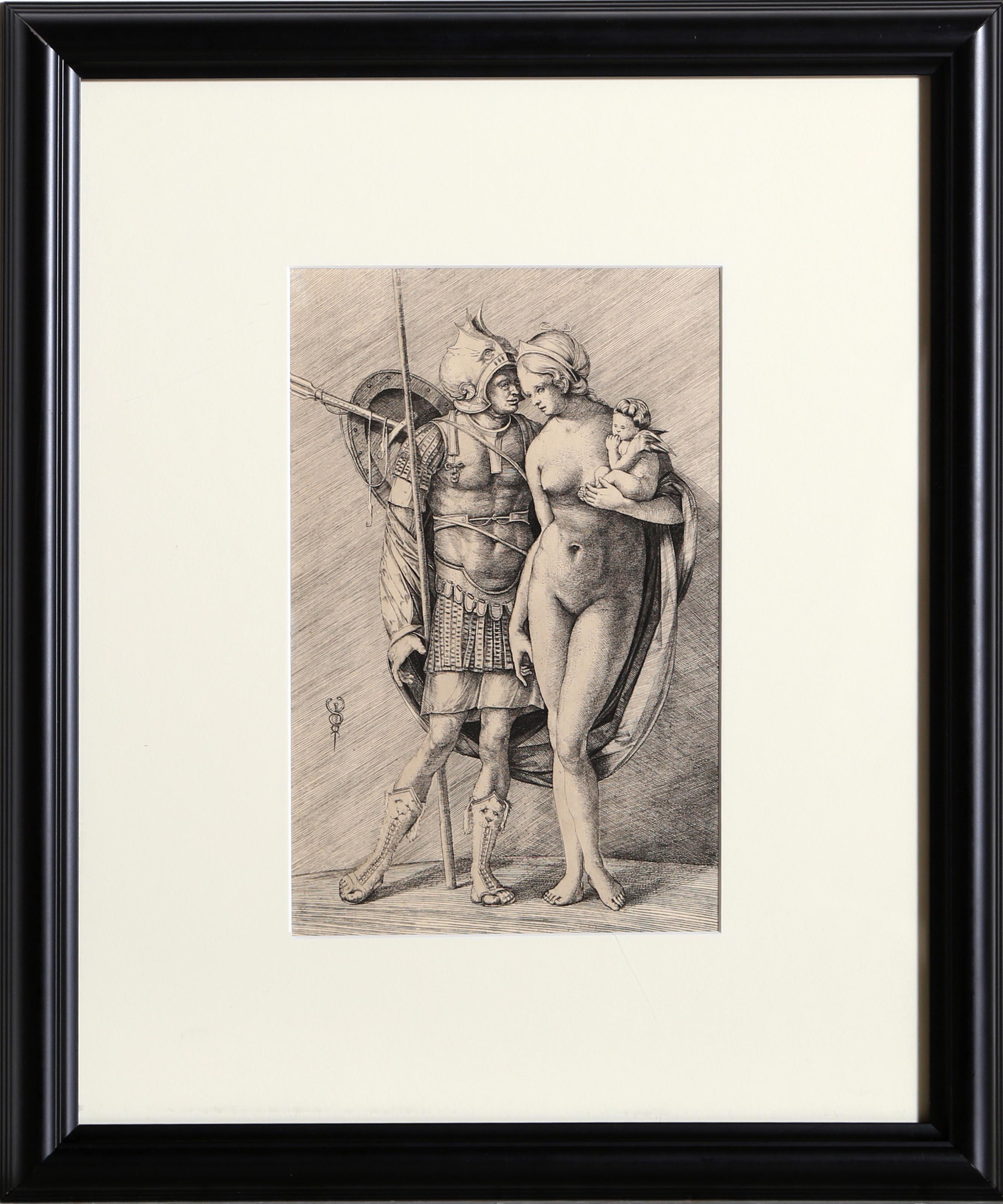
Mars et Venus, Heliogravure by Jacopo de' Barbari

Mars et Venus, Heliogravure by Jacopo de' Barbari

By Jacopo de' Barbari

Located in Long Island City, NY

Jacopo de' Barbari, After by Amand Durand, Italian/Belgian (1450 - 1516) - Mars et Venus, Year: Printed 1878, Medium: Heliogravure, Image Size: 10.5 x 6.75 inches, Size: 11.5 x 7.5...

Category

1870s Old Masters Prints and Multiples

Materials

Etching