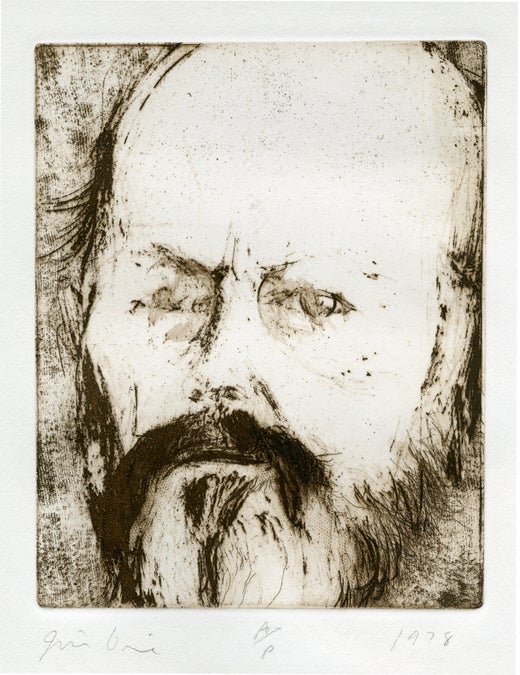
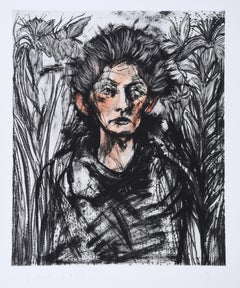
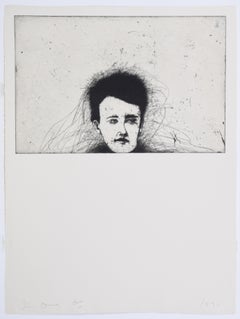
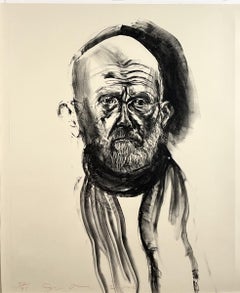
September-Apelton 2020 (self Portrait)
Lithograph, 2020
Signed along the left sheet edge (see photo)
Annotated along the left sheet edge by sgnature "AP" (see photo)
Edition 50, plus 10 AP (as here) and 10 PP
Printers Christoph Chavanne at Steindruck Studio, Apelton
Created Octoner-December 2020
Publisher: Cristea Roberts Gallery, London
Printed and edition in conjunction with the de luxe edition of the boo: I Print Jim Dine, Catalogue Raisonne of Prints 2001-2020
Condition: Excellent
Image/Sheet size: 11 x 9 1/16 inches
Reference: Tallman 576
Jim Dine: The Printed Self
Few artists of the postwar era have explored the idea of self-portraiture with the persistence, inventiveness, and emotional intensity of Jim Dine. Across more than six decades, Dine has returned repeatedly to the question of how an artist might represent himself without relying solely on physical likeness. His answer has been one of the most distinctive bodies of graphic self-portraiture in contemporary art.
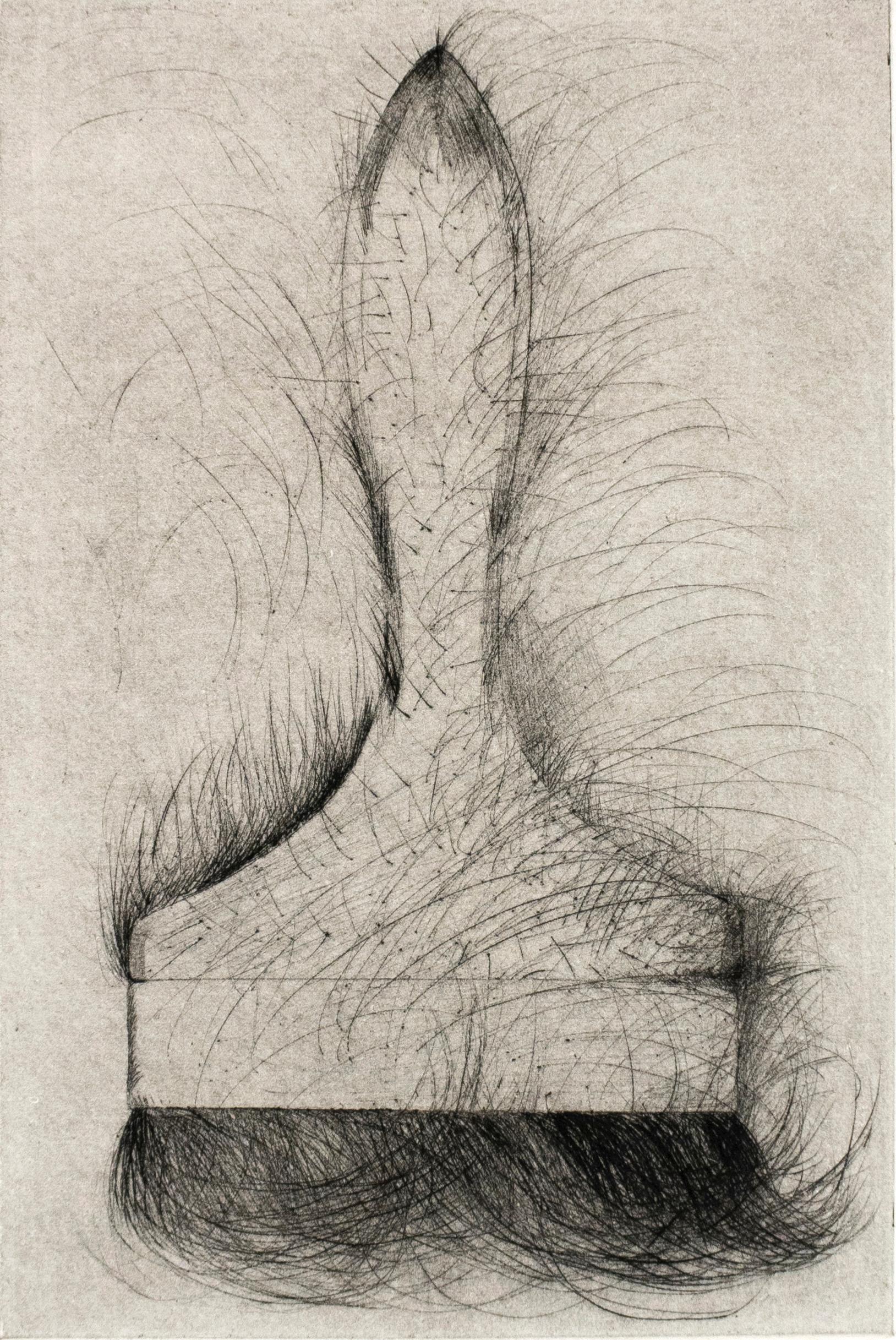
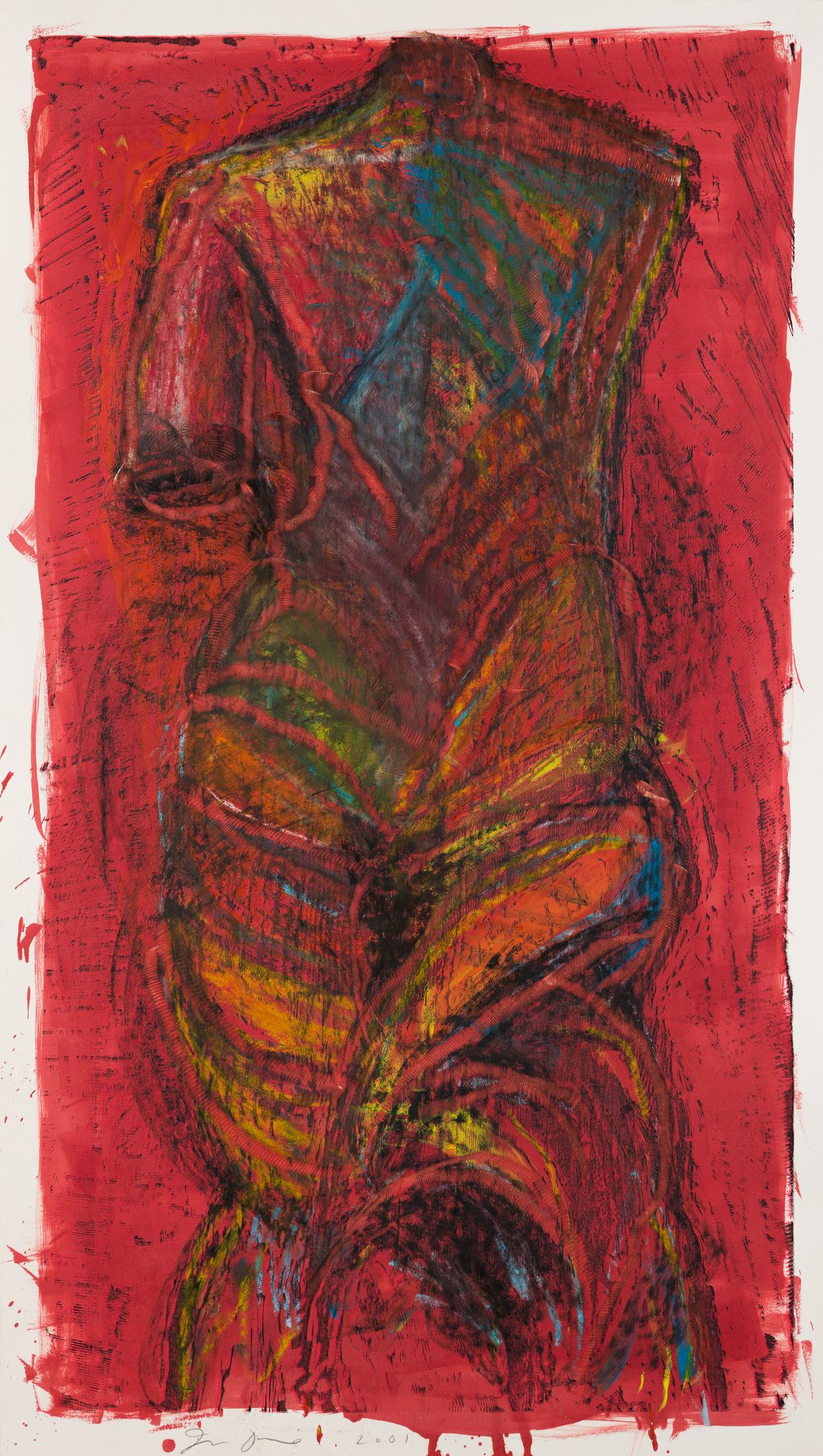
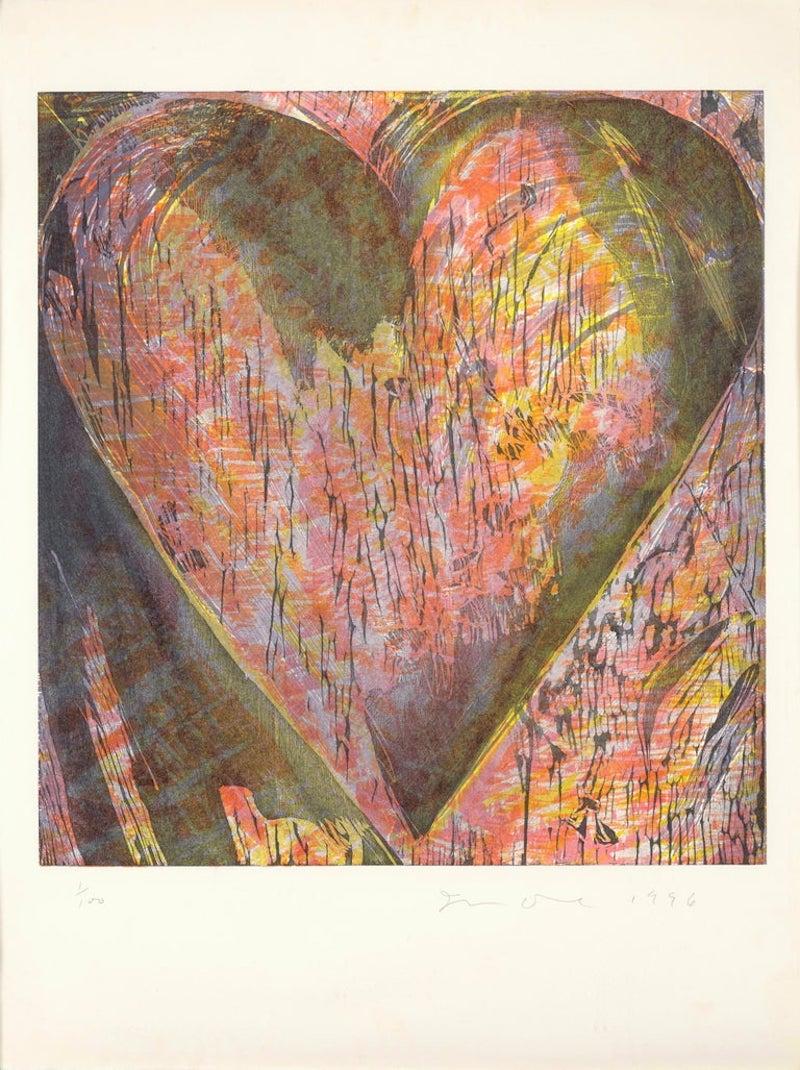
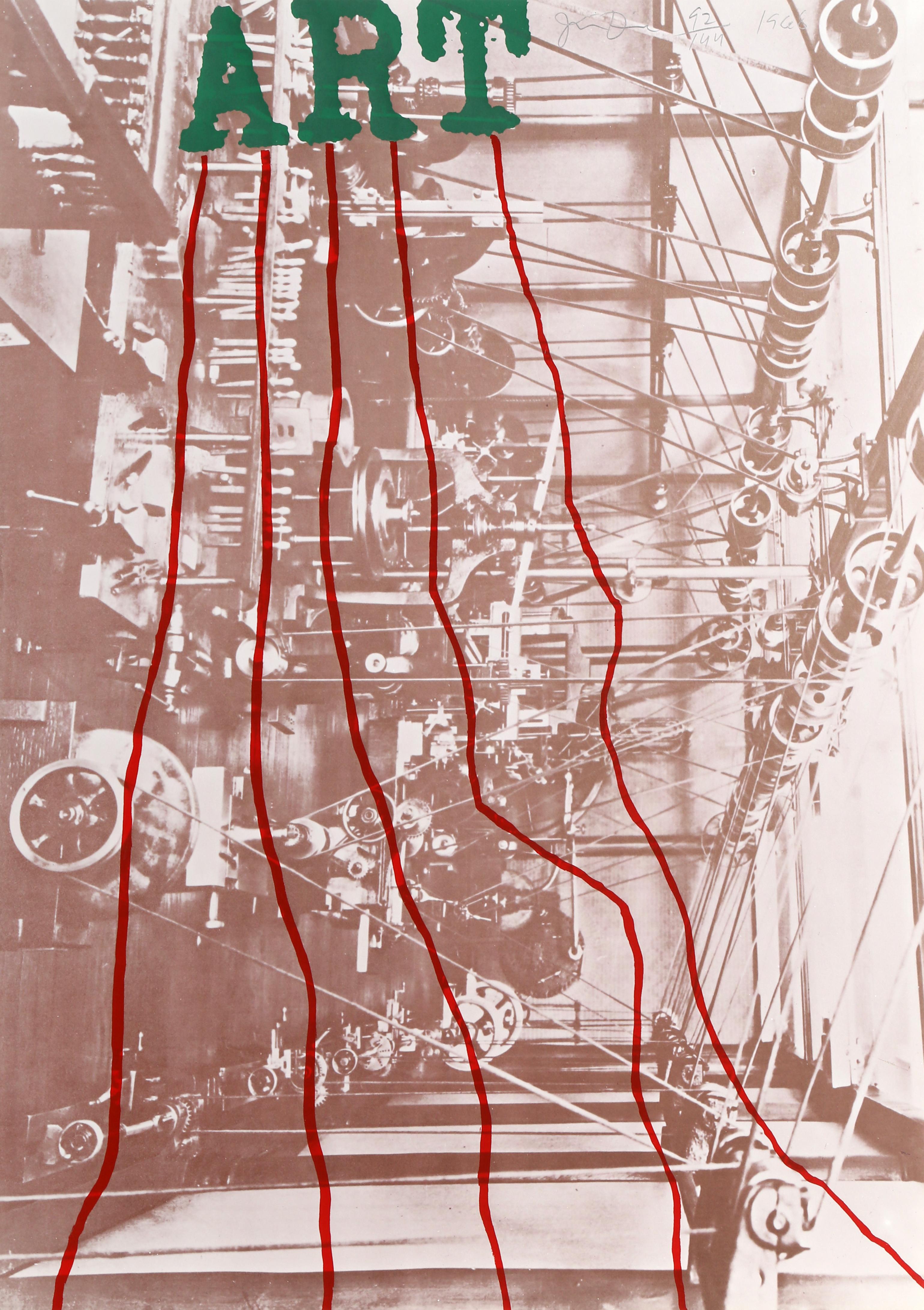
Although Dine produced numerous traditional self-portraits throughout his career, many of his most revealing graphic works contain no recognizable image of the artist at all. Instead, he developed a rich personal vocabulary of objects, tools, bathrobes, hearts, skulls, paintbrushes, classical sculptures, and fragments of language that function as stand-ins for the self. Through these recurring motifs, Dine transformed the genre of self-portraiture from a representation of appearance into an exploration of memory, identity, and artistic experience.
Dine emerged in the late 1950s alongside artists often associated with Pop Art, yet his work differed fundamentally from that of many of his contemporaries. Rather than appropriating images from mass culture, he turned inward, drawing upon personal history and private associations. The tools that appear throughout his prints recall his childhood in Cincinnati, where his family operated a hardware store. Hammers, pliers, wrenches, paintbrushes, and saws became autobiographical symbols—objects invested with memories of labor, craftsmanship, and creative transformation.
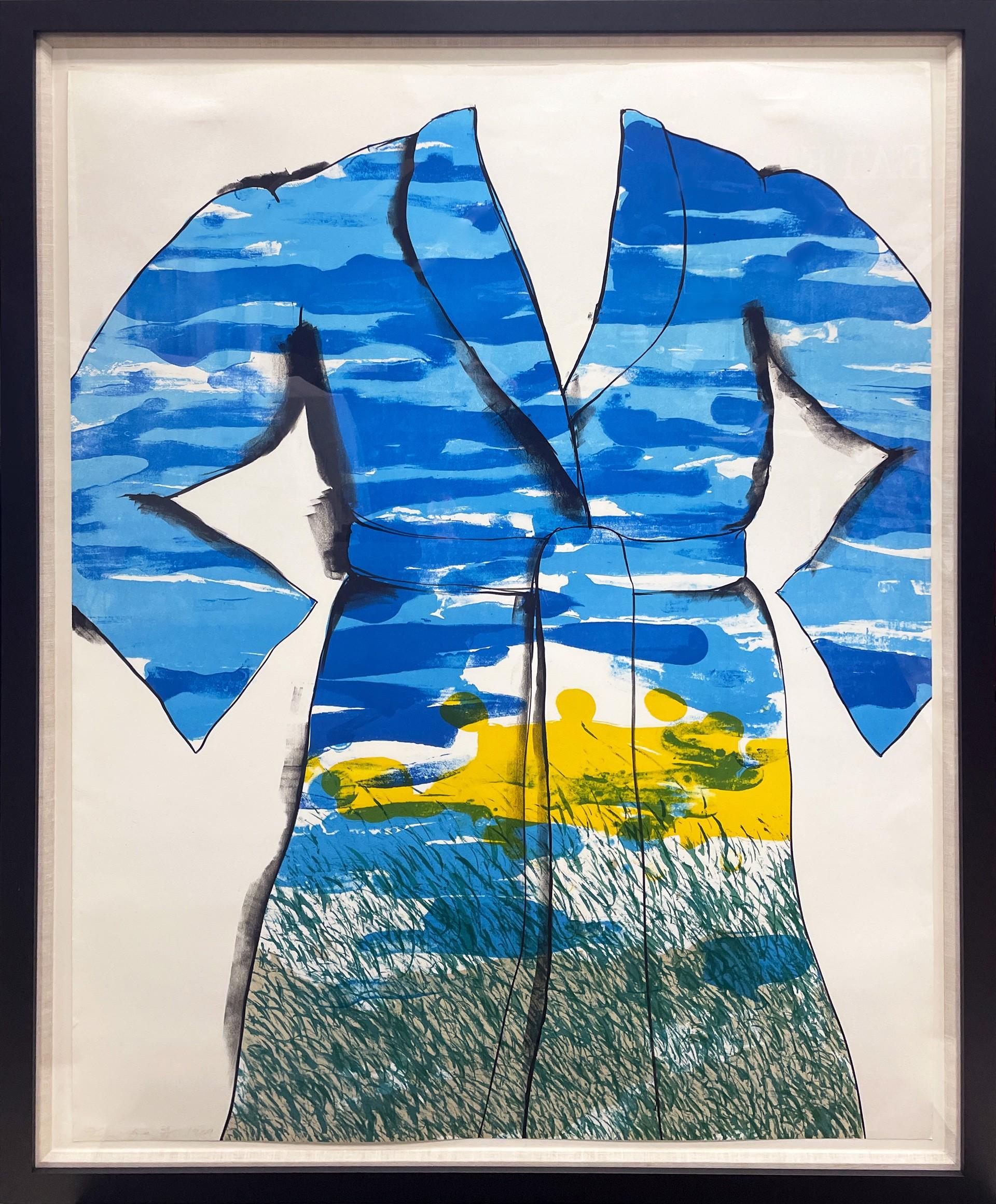
Among Dine's most celebrated self-portrait surrogates is the bathrobe. First appearing in the 1960s, the bathrobe emerged after the artist encountered a mail-order advertisement depicting an empty garment without a wearer. Dine immediately recognized its potential as a portrait without a face. The robe became an absent presence, a stand-in for the artist himself. In countless lithographs, etchings, woodcuts, and mixed-media prints, the robe appears isolated, monumental, fragmented, or transformed, embodying the artist while simultaneously concealing him.
Similarly, Dine's iconic hearts are often misunderstood as symbols of romance. For the artist, however, the heart functions as a formal structure and emotional container through which he explores feeling, memory, and the act of painting itself. Repeated endlessly across decades of printmaking, the heart becomes another form of self-portrait, a visual field upon which experience and emotion accumulate.
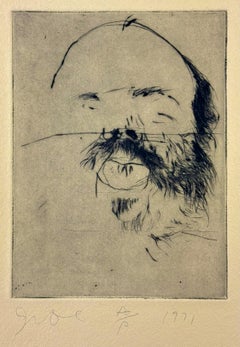
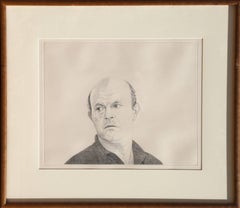
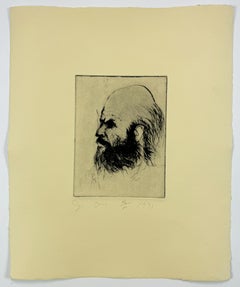
Beginning in the 1970s and continuing throughout his career, Dine expanded his concept of self-portraiture through direct representations of his own features. Prints such as Red Beard, Self-Portrait in a Convex Mirror, The Realistic Poet Assassinated, and numerous later etchings reveal an artist increasingly willing to confront aging, mortality, and self-examination. Yet even these works often blur the distinction between face and symbol. A paintbrush may become a beard; a classical sculpture may assume autobiographical significance; a tool may function as a surrogate for the artist's hand.
Printmaking proved an ideal medium for this sustained investigation of identity. Unlike painting, which often emphasizes the singular image, printmaking allowed Dine to revisit motifs repeatedly through multiple states, variations, and editions. Works such as Five Paintbrushes and Tools and Dreams demonstrate his fascination with transformation and repetition. Each successive state becomes a record of thought and revision, mirroring the evolving nature of selfhood itself.
Dine's graphic self-portraits are also remarkable for their physicality. He embraced printmaking not as a reproductive process but as a form of direct artistic engagement. Etching, drypoint, aquatint, lithography, woodcut, and innovative techniques involving power tools, abrasion, and hand coloring enabled him to create surfaces that record the gestures and decisions of their making. The resulting prints possess an intensity that reflects the artist's conviction that identity is not fixed but continually shaped through experience and action.
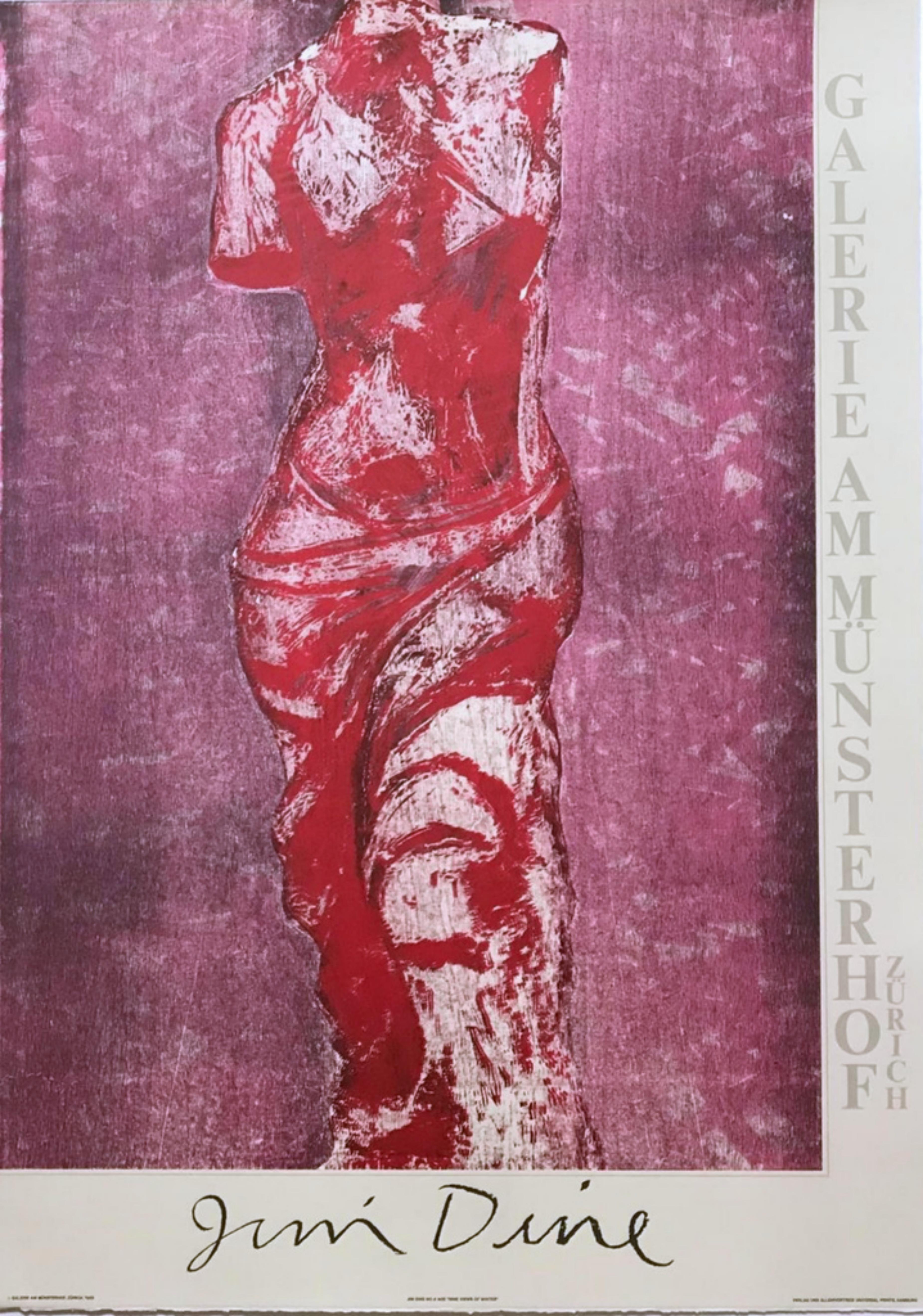
Throughout his career, Dine has often remarked that all art is, in some sense, self-portraiture. His graphic work demonstrates this belief with extraordinary clarity. Whether depicting a bathrobe, a hammer, a heart, a Venus figure, or his own face, Dine consistently transforms image into autobiography. The printed self that emerges from these works is not a static likeness but a living accumulation of memories, objects, emotions, and artistic acts.
Today, Jim Dine's graphic self-portraits stand among the most ambitious explorations of identity in contemporary printmaking. Through a uniquely personal iconography and an unparalleled commitment to the expressive possibilities of the medium, he has expanded the very definition of self-portraiture, revealing that the artist may be found not only in his image, but in every mark he leaves behind.