Want more images or videos?
Request additional images or videos from the seller
1 of 5

William H. Bailey
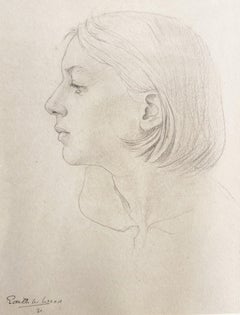
Untitled (Portrait)

1974

$950
£717.50
€840.02
CA$1,349.68
A$1,373.12
CHF 786.94
MX$16,533.27
NOK 9,197.84
SEK 9,238.21
DKK 6,279.93

About the Item

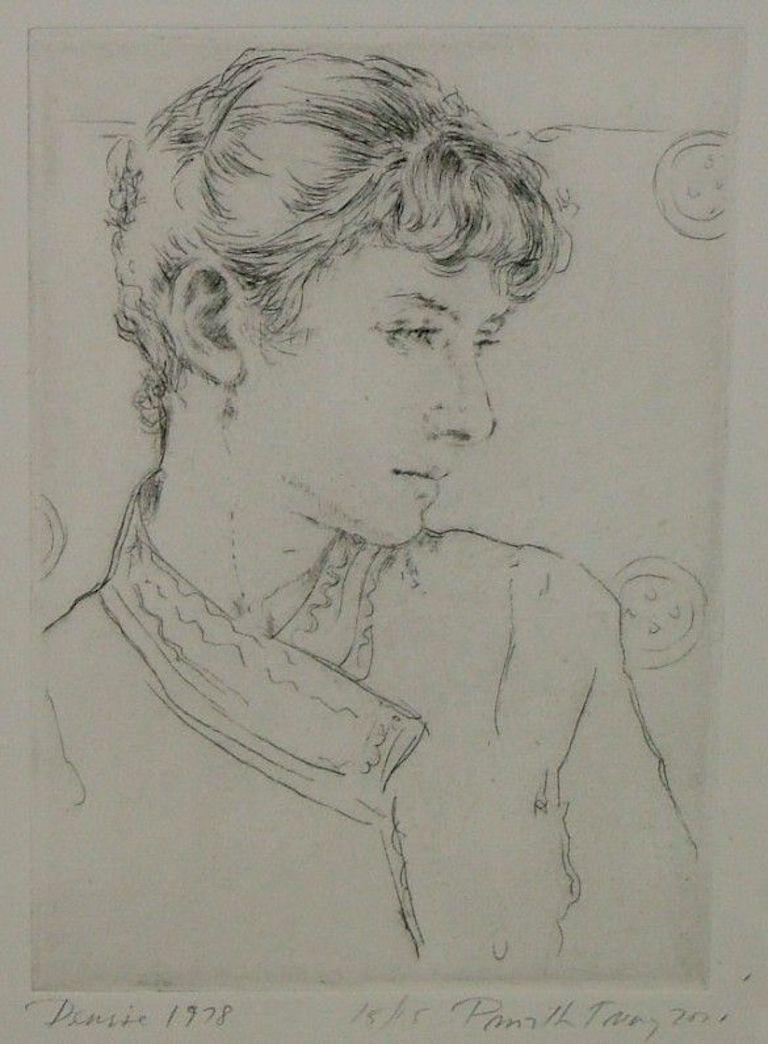
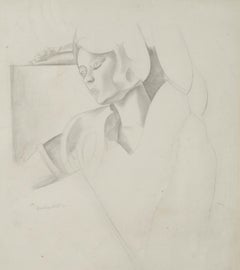
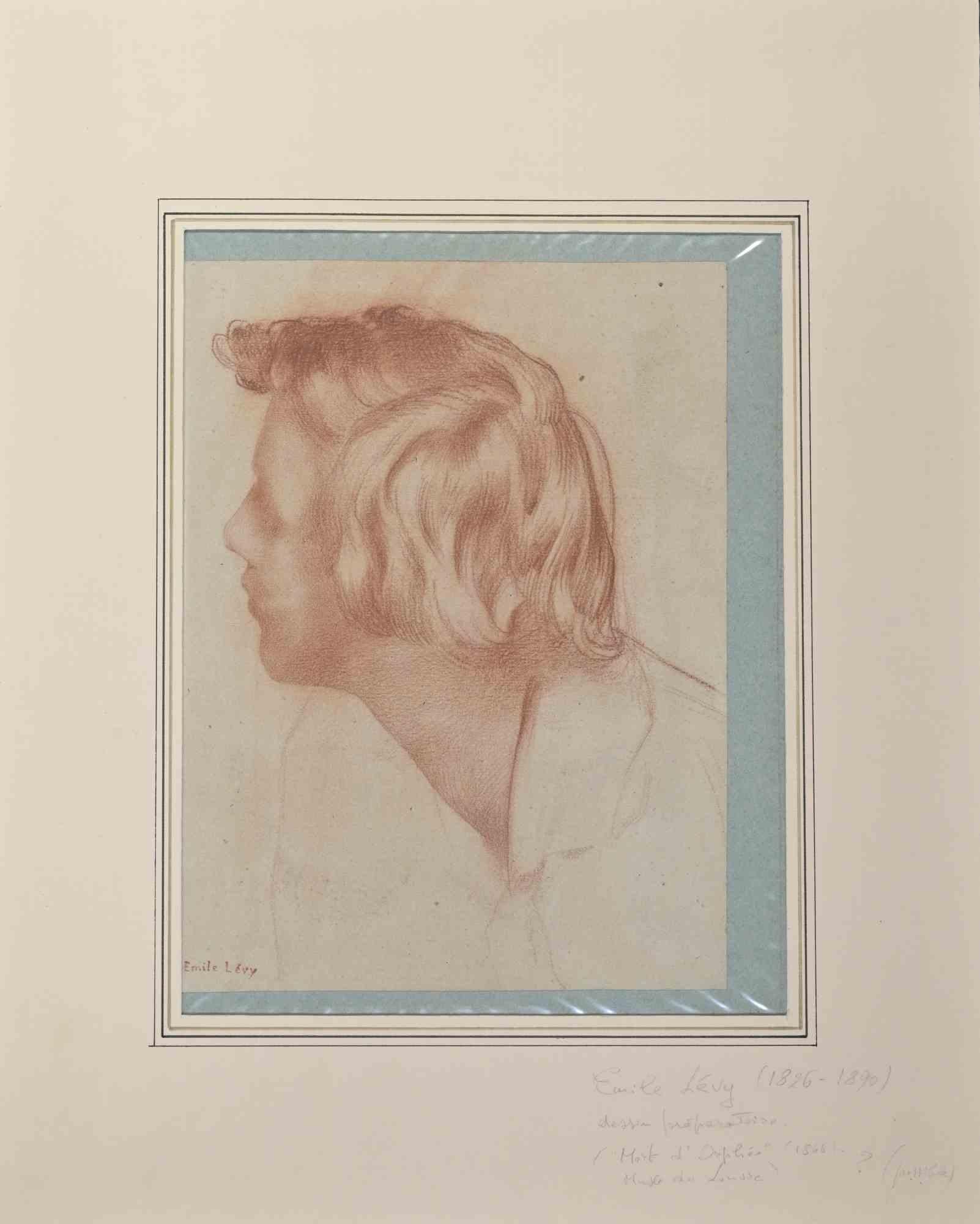
Untitled (Portrait) Drypoint printed in blue-black graphite mixed with silver, 1974 Signed and dated lower ight (see photo) From: Series entitled Six Drypoints Edition: 23 (4/23) Numbered lower left (see photo) Print Shop: Crown Point Press Printer: Jeannie Fine Publisher: Parasol Press, New York Note: A portfolio is in the collection of the National Gallery, Australia, Fine Arts Museums of San Francisco- de Young/Legion of Honor, Davis Museum at Wellesley College and the Yale University Art Gallery. Condition: Excellent Image/Plate size: 6 3/8 x 5 3/8 inches Sheet size: 24 x 20 inches From a portfolio of six drypoints, printed with unqiue combination of blue-black graphite shavings combined with silver to create the appearence of an original drawing. I know of no other artist to use a similar printing technique. William Bailey studied art at the University of Kansas, Yale University and Yale School of Art where he studied with Josef Albers receiving his MFA in 1957. Mr. Bailey’s first exhibition in New York was at Robert Schoelkopf Gallery in 1968, where he showed regularly until its closing in 1990. During the 90’s he exhibited at the Andre Emmerich Gallery and on its closing, exhibited at the Robert Miller Gallery. In 2004 Bailey moved to the Betty Cuningham Gallery where his most recent exhibition was held from April 30 - June 11, 2016. Mr. Bailey’s work has been exhibited extensively in both America and Europe. He is represented in the collections of The Whitney Museum of American Art, The Museum of Modern Art, the Pennsylvania Academy of Fine Arts, and the Hirschhorn Museum and Sculpture Garden, among others. He was awarded a Guggenheim Fellowship in painting in 1965. Mr. Bailey was elected to The National Academy of Design in 1983 and to The American Academy of Arts and Letters in 1986. Mr. Bailey taught at The Yale School of Art from 1958 to 1962 and from 1969 to 1995. He has also taught at The Cooper Union, University of Pennsylvania and Indiana University. He maintains studios in New Haven and in Umbertide, Italy. Courtesy Betty Cunningham Gallery Tribute to William Bailey THE NEW YORK TIMES William Bailey, whose pristine, idealized still lifes and female nudes made him one of the leading figures in the return of figurative art in the 1980s, died on April 13 at his home in Branford, Conn. He was 89. His death was confirmed by his daughter, Alix Bailey. Beyond his painting, Mr. Bailey influenced generations of students in his many years as a teacher at the Yale School of Art. In some of his best-known work, Mr. Bailey arranged simple objects — the eggs, bowls, bottles and vases that he once called “my repertory company” — along a severe horizontal shelf, or on a plain table, swathing them in a breathless, deceptively serene atmosphere heavy with mystery. William Bailey, Modernist Figurative Painter, Dies at 89 He swathed his nudes and still lifes of eggs, vases, bottles and bowls in a breathless, deceptively serene atmosphere heavy with mystery. The painter William Bailey in 2009. He was never given a career survey in a major museum, but his influence, particulary on students at Yale, was deep. Ford Bailey By William Grimes for the New York Times April 18, 2020 William Bailey, whose pristine, idealized still lifes and female nudes made him one of the leading figures in the return of figurative art in the 1980s, died on April 13 at his home in Branford, Conn. He was 89. His death was confirmed by his daughter, Alix Bailey. Beyond his painting, Mr. Bailey influenced generations of students in his many years as a teacher at the Yale School of Art. In some of his best-known work, Mr. Bailey arranged simple objects — the eggs, bowls, bottles and vases that he once called “my repertory company” — along a severe horizontal shelf, or on a plain table, swathing them in a breathless, deceptively serene atmosphere heavy with mystery. His muted ochres, grays and powdery blues conjured up a still, timeless world inhabited by Platonic forms, recognizable but uncanny, in part because he painted from imagination rather than life. “They are at once vividly real and objects in dream, and it is the poetry of this double life that elevates all this humble crockery to the realm of pictorial romance,” Hilton Kramer wrote in The New York Times in 1979. Mr. Bailey’s female figures, some clothed in a simple shift or robe and others partly or entirely nude, are disconcertingly impassive, implacable and unreadable, fleshly presences breathing an otherworldly air. The critic Mark Stevens, writing in Newsweek in 1982, credited Mr. Bailey with helping to “restore representational art to a position of consequence in modern painting.” But his version of representation was entirely idiosyncratic, seemingly traditional but in fact “a modernism so contrarian,” the artist Alexi Worth wrote in a catalog essay for the William Harrison Bailey was born on Nov. 17, 1930, in Council Bluffs, Iowa. His father, Willard, worked in radio advertising and moved the family from city to city in the Midwest. Bill was in his early teens when his father died. His mother, Marjorie (Cheyney) Bailey, was a homemaker who later worked as an accountant for her second husband, Fred Baker, who ran a business training investigators. A revival of interest in figurative painting in the early 1980s propelled Mr. Bailey to the cover of Newsweek, which chose his seminude “Portrait of S” to epitomize the trend. Shocked retailers across the country pulled the magazine from their shelves. Mr. Bailey studied art at the University of Kansas but left before graduating and enlisted in the Army. He saw combat as a platoon sergeant in Korea and later served in Japan. On returning to the United States, he enrolled in Yale University’s art school, where he studied with the abstract painter Josef Albers. He earned a bachelor of fine arts degree in 1955 and a master’s degree two years later. In 1958 he married Sandra Stone, a fellow Yale student who paints under her maiden name. In addition to her and his daughter, he is survived by a son, Ford, and five grandchildren. Mr. Bailey remained at Yale as a teacher of drawing and painting until 1962, when he accepted a teaching position at Indiana University. He returned to Yale as a tenured professor in 1969 and taught there until 1995, a period when Yale gained recognition as one of the premier art programs in the United States. “When we come to look at the artists influenced by him and his way of seeing, we see some of the more prominent names of the late 20th century,” said Mark D. Mitchell, a curator at the Yale University Art Gallery. The names include Nancy Graves, Richard Serra, Rackstraw Downes, Sylvia Mangold, John Currin and Lisa Yuskavage. On Mr. Bailey’s visits to Italy, France and Greece, his encounters with Greek sculpture and the cool classicism of painters like Piero della Francesca and Ingres proved decisive. “When my work changed around 1960, I was thinking, ‘There’s so much noise in contemporary art. So much gesture,’” he told Yale News in 2010. “ I realized it wasn’t my natural bent to make a lot of noise, and I’m not very good at rhetorical gesture.” Reacting to a colleague who proposed the egg as the ultimate example of pure, simplified form, Mr. Bailey painted an egg on a shelf, then two, seeing rhythmic possibilities. A dozen of them appear in the 1974 painting “Eggs.” Before long the eggs were sharing space with cups, bowls and vases. Although his studio was filled with these props, Mr. Bailey painted entirely from memory. He had his first solo show at the Robert Schoelkopf Gallery in Manhattan in 1968. In 1970 he was included in a major survey, “Twenty-two Realists,” at the Whitney Museum of American Art. Interest in figurative painting gathered steam, propelling Mr. Bailey to the cover of Newsweek, which in 1982 chose the semi-nude “Portrait of S” (1979-80) to epitomize the trend. Proving that the bourgeoisie could still be shocked, retailers across the country pulled the magazine from their shelves, although newsstand sales of Newsweek doubled in Manhattan. Feminists saw something like bondage in the dress straps that held the subject’s arms close to her body. Mr. Bailey, who always spoke of his work in purely formal terms and rejected the label “realist,” was aghast. “I admire painters who can work directly from nature, but for me that seems to lead to anecdotal painting,” he once said. “Realism is about interpreting daily life in the world around us. I’m trying to paint a world that’s not around us.” Like the Italian still life painter Giorgio Morandi, one of his heroes, Mr. Bailey pursued his ideas single-mindedly, playing variations on his arranged objects and female figures throughout his career. He was never given a career survey in a major museum, but last year the Yale University Art Gallery mounted a retrospective,
  • Creator:
    William H. Bailey (1930, American)
  • Creation Year:
    1974
  • Dimensions:
    Height: 6.38 in (16.21 cm)Width: 5.38 in (13.67 cm)
  • Medium:
  • Movement & Style:
  • Period:
  • Condition:
  • Gallery Location:
    Fairlawn, OH
  • Reference Number:
    Seller: FA124671stDibs: LU14015914132

More From This Seller

View All
Portrait of Gladys Anne Hoskyns

Portrait of Gladys Anne Hoskyns

Located in Fairlawn, OH

Portrait of Gladys Anne Hoskyns Collotype after a Wyndham Lewis drawing, 1923 Singed in the plate and reinforced in pencil Published by The Dial Publishing Company in Living Art...

Category

1920s Modern Figurative Prints

Materials

Lithograph

Seated Woman, Left Hand to Chin

Seated Woman, Left Hand to Chin

By William H. Bailey

Located in Fairlawn, OH

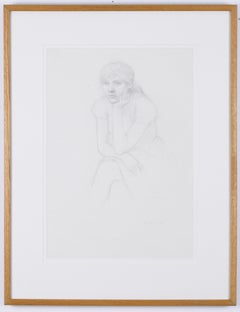
Seated Woman, Left Hand to Chin Graphite on laid paper, 1984 Signed and dated in pencil (see photo) Provenance: Donald Morris Gallery, Inc. Birmingham, MI Chern...

Category

1980s American Realist Figurative Drawings and Watercolors

Materials

Graphite

Untitled (Seated Young Woman)

Untitled (Seated Young Woman)

Located in Fairlawn, OH

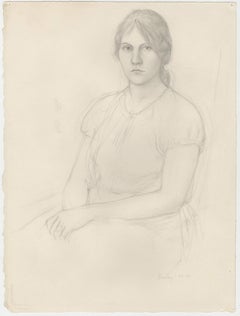
Untitled (Seated Young Woman) Graphite on Veritable Papier d'Arches wove paper, 1970 Signed and dated lower right (see photo) Condition: Excellent Image/sheet size: 15 x 11 1/4 inch...

Category

1970s American Realist Figurative Drawings and Watercolors

Materials

Graphite

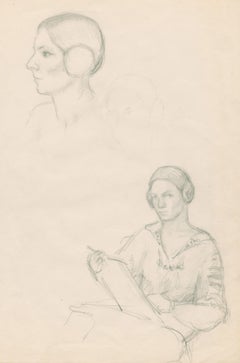
Self Portrait sketching with Vignette in Profile

Self Portrait sketching with Vignette in Profile

Located in Fairlawn, OH

Self Portrait sketching with Vignette in Profile Graphite on thin wove paper, c. 1940's Unsigned Condition: Small nicks in the right margin, not affecting the image Sheet size: 14 1/2 x 10 inches Provenance: Paul Cadmus Jon F. Anderson (1937-2018) Born in Hoboken, New Jersey, Margaret Hoening (1906–1998) was a painter and an etcher perhaps best known for her photographs as part of the PaJaMa photography collective. After attending Smith College, she settled in New York, where she pursued formal artistic training at the Art Students League. There, she met the artist couple Paul Cadmus and Jared French. In 1937, she married French, fifteen years her junior, who had spent the previous decade with Cadmus. The trio formed a tight bond, with Cadmus and French continuing their relationship. Born in Hoboken, New Jersey, Margaret Hoening (1906–1998) was a painter and an etcher perhaps best known for her photographs as part of the PaJaMa photography collective. After attending Smith College, she settled in New York, where she pursued formal artistic training at the Art Students League. There, she met the artist couple Paul Cadmus and Jared French. In 1937, she married French, fifteen years her junior, who had spent the previous decade with Cadmus. The trio formed a tight bond, with Cadmus and French continuing their relationship. Together, the three formed PaJaMa (a mashup of their first names, Paul, Jared, and Margaret). Using Hoening’s Leica, they captured themselves, their artist friends, and members of the gay community posing in artful tableaux on the beaches of Fire Island, Provincetown, and Nantucket over the following eight years. Those captured by their camera include the photographer George Platt Lynes; Cadmus’s sister and artist Fidelma; artist Bernard Perlin; and Monroe Wheeler, director of exhibitions at the Museum of Modern Art, among others. Though she produced few canvases, Hoening’s paintings demonstrate the influences of French and Cadmus, particularly with her adoption of the time-intensive, traditional medium of egg tempera that they championed. In the 1940s, the Frenches’ social circle continued to expand. They befriended the British author E.M. Forster, who stayed with them on his first trip to New York in 1947, spending a few days with them in Provincetown, and visiting them again in 1949. When Cadmus began a relationship with the young artist George Tooker in 1944, the trio became a foursome, with Tooker regularly vacationing with the group and appearing in PaJaMa’s photographs...

Category

1940s American Modern Portrait Drawings and Watercolors

Materials

Graphite

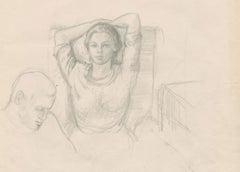
Self Portrait with Arms Over Head, vignette on Paul Cadmus on left

Self Portrait with Arms Over Head, vignette on Paul Cadmus on left

Located in Fairlawn, OH

Self Portrait with Arms Over Head, vignette on Paul Cadmus on left Graphite drawing on thin wove paper, c. 1940's Unsigned Provenance: Paull Cadmus Jon F. Anderson (1937-2018) Condition: Sheet size: 15 x 10 1/4 inches Born in Hoboken, New Jersey, Margaret Hoening (1906–1998) was a painter and an etcher perhaps best known for her photographs as part of the PaJaMa photography collective. After attending Smith College, she settled in New York, where she pursued formal artistic training at the Art Students League. There, she met the artist couple Paul Cadmus and Jared French. In 1937, she married French, fifteen years her junior, who had spent the previous decade with Cadmus. The trio formed a tight bond, with Cadmus and French continuing their relationship. Born in Hoboken, New Jersey, Margaret Hoening (1906–1998) was a painter and an etcher perhaps best known for her photographs as part of the PaJaMa photography collective. After attending Smith College, she settled in New York, where she pursued formal artistic training at the Art Students League. There, she met the artist couple Paul Cadmus and Jared French. In 1937, she married French, fifteen years her junior, who had spent the previous decade with Cadmus. The trio formed a tight bond, with Cadmus and French continuing their relationship. Together, the three formed PaJaMa (a mashup of their first names, Paul, Jared, and Margaret). Using Hoening’s Leica, they captured themselves, their artist friends, and members of the gay community posing in artful tableaux on the beaches of Fire Island, Provincetown, and Nantucket over the following eight years. Those captured by their camera include the photographer George Platt Lynes; Cadmus’s sister and artist Fidelma; artist Bernard Perlin; and Monroe Wheeler, director of exhibitions at the Museum of Modern Art, among others. Though she produced few canvases, Hoening’s paintings demonstrate the influences of French and Cadmus, particularly with her adoption of the time-intensive, traditional medium of egg tempera that they championed. In the 1940s, the Frenches’ social circle continued to expand. They befriended the British author E.M. Forster, who stayed with them on his first trip to New York in 1947, spending a few days with them in Provincetown, and visiting them again in 1949. When Cadmus began a relationship with the young artist George Tooker in 1944, the trio became a foursome, with Tooker regularly vacationing with the group and appearing in PaJaMa’s photographs...

Category

1940s American Modern Portrait Drawings and Watercolors

Materials

Graphite

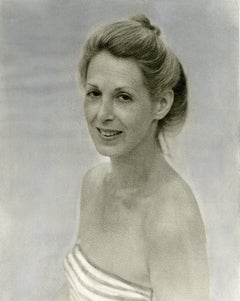
Roberta Kimmel Cohn (1937-2015)

Roberta Kimmel Cohn (1937-2015)

By Naomi Savage

Located in Fairlawn, OH

Roberta Kimmel Cohn (1937-2015) Toned sliver gelatin print, c. 1981 Unsigned (Signed and dedicated on the sketchbook page) see photo Condition: Excellent Image size: 13 1/4 x 10 5/8 ...

Category

1980s American Modern Figurative Photography

Materials

Silver Gelatin

You May Also Like

Portrait Study, 20th Century Graphite Artwork, Female Artist

Portrait Study, 20th Century Graphite Artwork, Female Artist

Located in London, GB

Graphite on paper, signed bottom left Image size: 7 1/2 x 9 3/4 inches (19 x 25cm) Contemporary frame A characterful portrait of a woman in profile. The artist has captured much of ...

Category

Mid-20th Century Portrait Drawings and Watercolors

Materials

Paper, Graphite

Portrait of a Girl

Portrait of a Girl

By Harry Sudman

Located in Surfside, FL

Harry Sudman is a realist painter and photographer who has worked out of Chicago for over twenty-five years. He grew up on the south side, and currently resides uptown. In the late 1...

Category

20th Century Realist Figurative Prints

Materials

Charcoal

Portrait of a Woman

Portrait of a Woman

By William Barnett

Located in Wilton Manors, FL

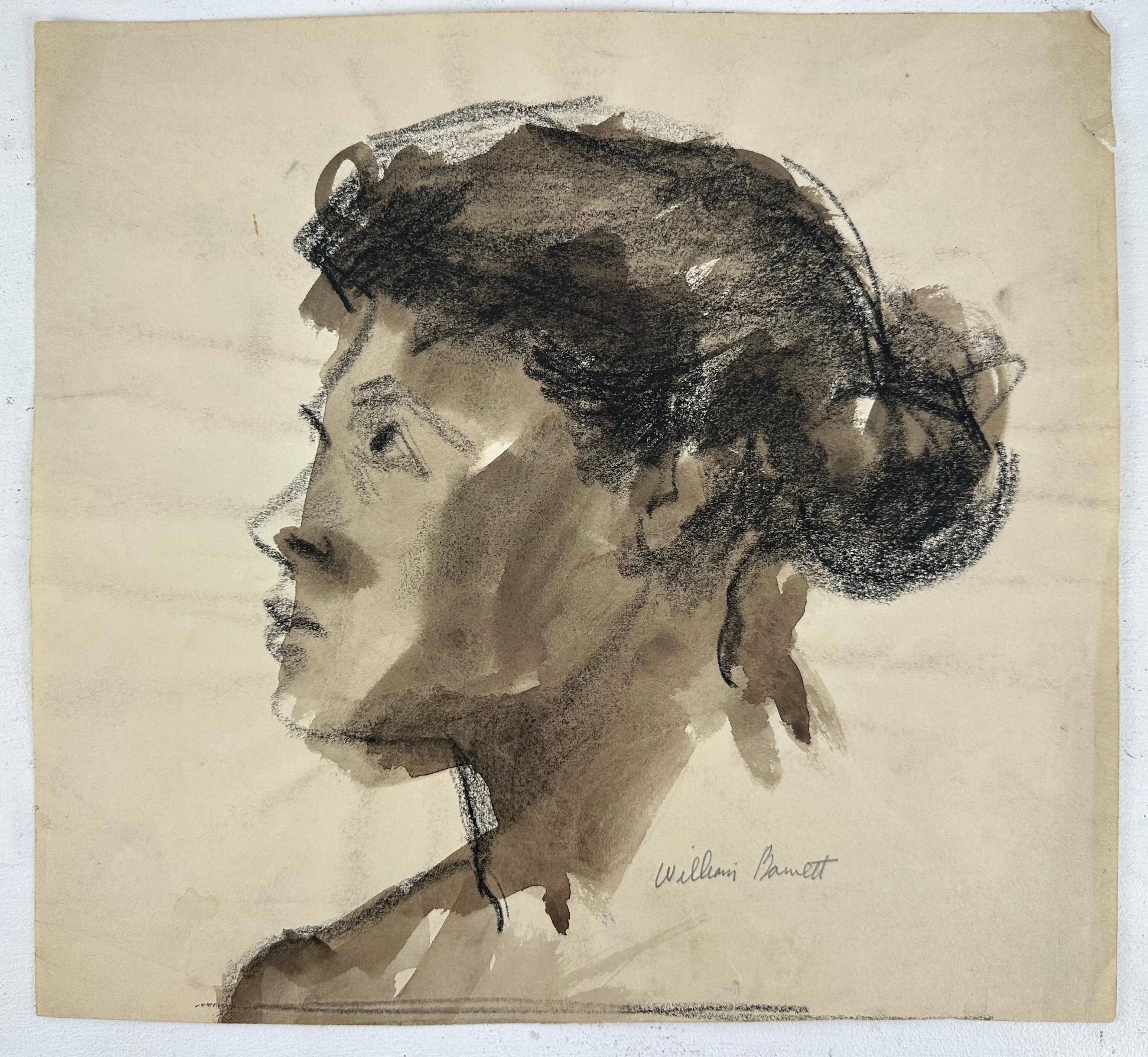
William Barnett (1918-1992). Portrait of a Reclining Woman ca. 1950's. Pencil and Ink on paper measuring 8 3/4 x 8 3/4 inches. Signed lower right. Unframed. William Barnett ( c...

Category

Mid-20th Century American Realist Portrait Paintings

Materials

Ink, Pencil

The Portrait - Drawing by Leo Guida - 1970s

The Portrait - Drawing by Leo Guida - 1970s

By Leo Guida

Located in Roma, IT

The portrait is an original drawing in pencil on paper realized by Leo Guida in the 1970s. Good condition. Leo Guida (1992 - 2017). Sensitive to current issues, artistic movements ...

Category

1970s Contemporary Portrait Drawings and Watercolors

Materials

Pencil

Portrait - Pencil on Paper by Eugène Berman - 1970s

Portrait - Pencil on Paper by Eugène Berman - 1970s

By Eugene Berman

Located in Roma, IT

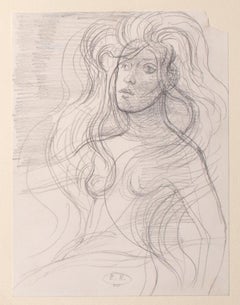
Portrait is an original contemporary artwork realized by Eugène Berman (Petersbourg, 1932 - Rome, 1972) in the 1970s. Original pencil drawing on paper. Monogram of artist on the lower center in pencil. Included a Passepartout: 50 x 40 cm Good conditions, except for the small missing piece of paper at the top right margin. Depicting the portrait of artist's wife, through strong strokes, full of emotion with a deep look. Eugène Berman (Petersbourg, 1932 - Rome, 1972). He worked especially for the theater (Brecht's Threepenny Opera...

Category

1970s Modern Figurative Drawings and Watercolors

Materials

Pencil

Portrait of a Young Woman

Portrait of a Young Woman

Located in Wilton Manors, FL

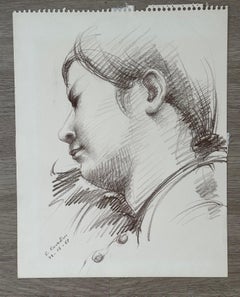
PORTRAIT of a young woman, 1967 Giuseppe Cavaliere (b.1932) Conte crayon on paper, sheet measuring 11 x 14 inches. Signed and dated lower left. Unframed.

Category

1960s Realist Figurative Drawings and Watercolors

Materials

Conté