Want more images or videos?
Request additional images or videos from the seller
1 of 9

Pascal Mourgue
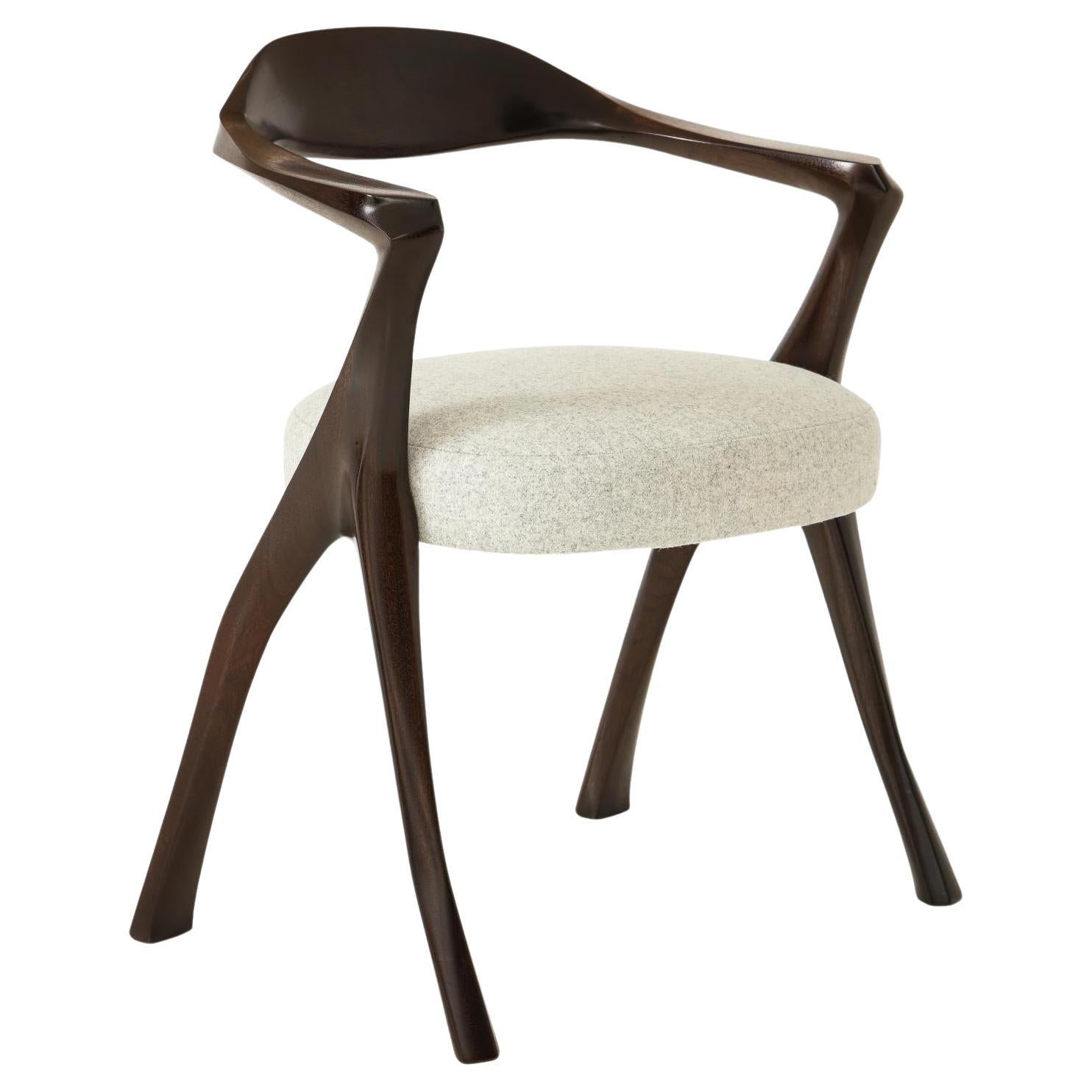
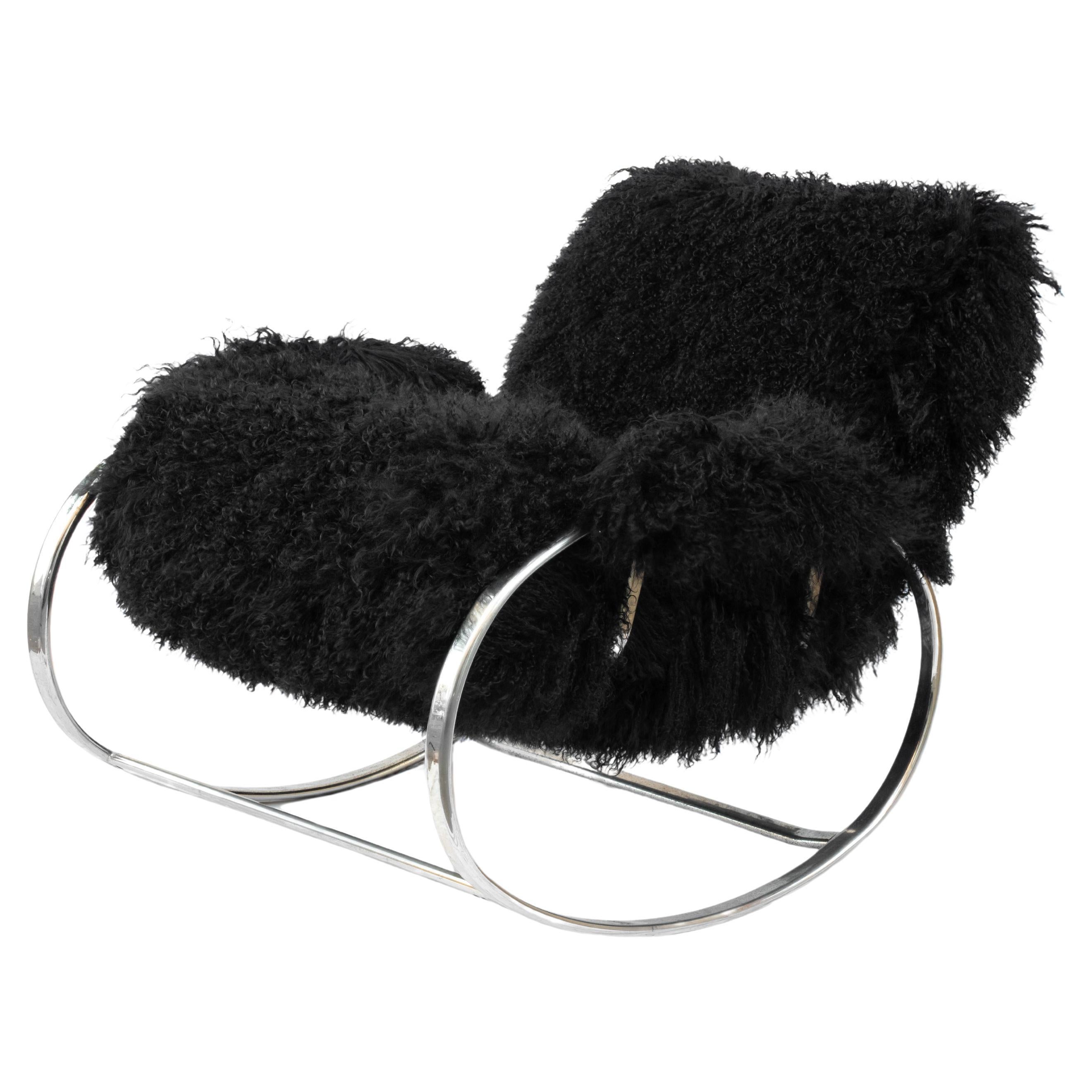
Vintage 1980's Pascal Mourgue Iconic French Sculptural Contraste Rocking Chair

c.1982

$2,600
£1,956.92
€2,289.47
CA$3,677.13
A$3,734.84
CHF 2,152.28
MX$45,092.61
NOK 25,000.75
SEK 25,209.34
DKK 17,114.55

About the Item

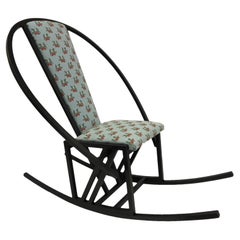
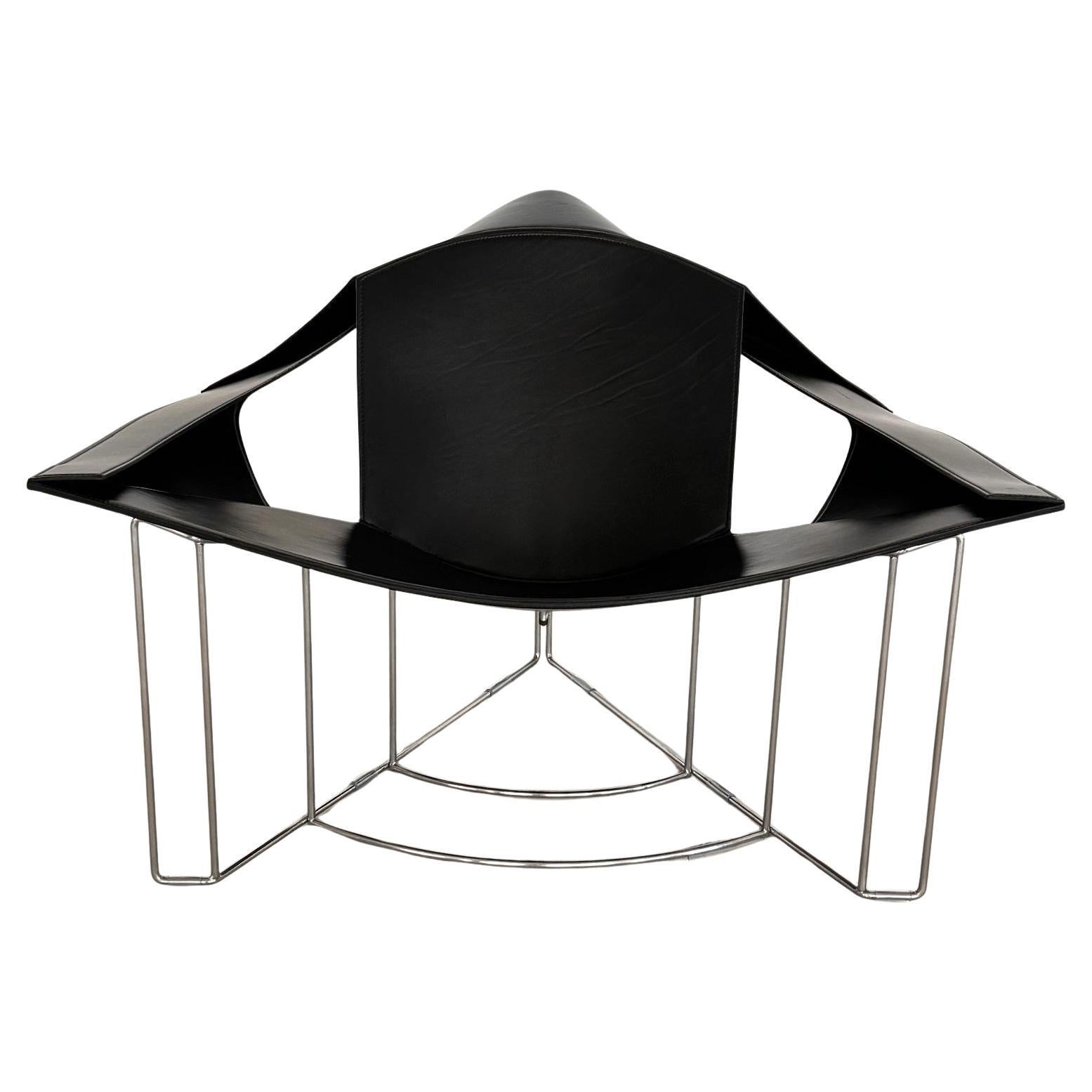
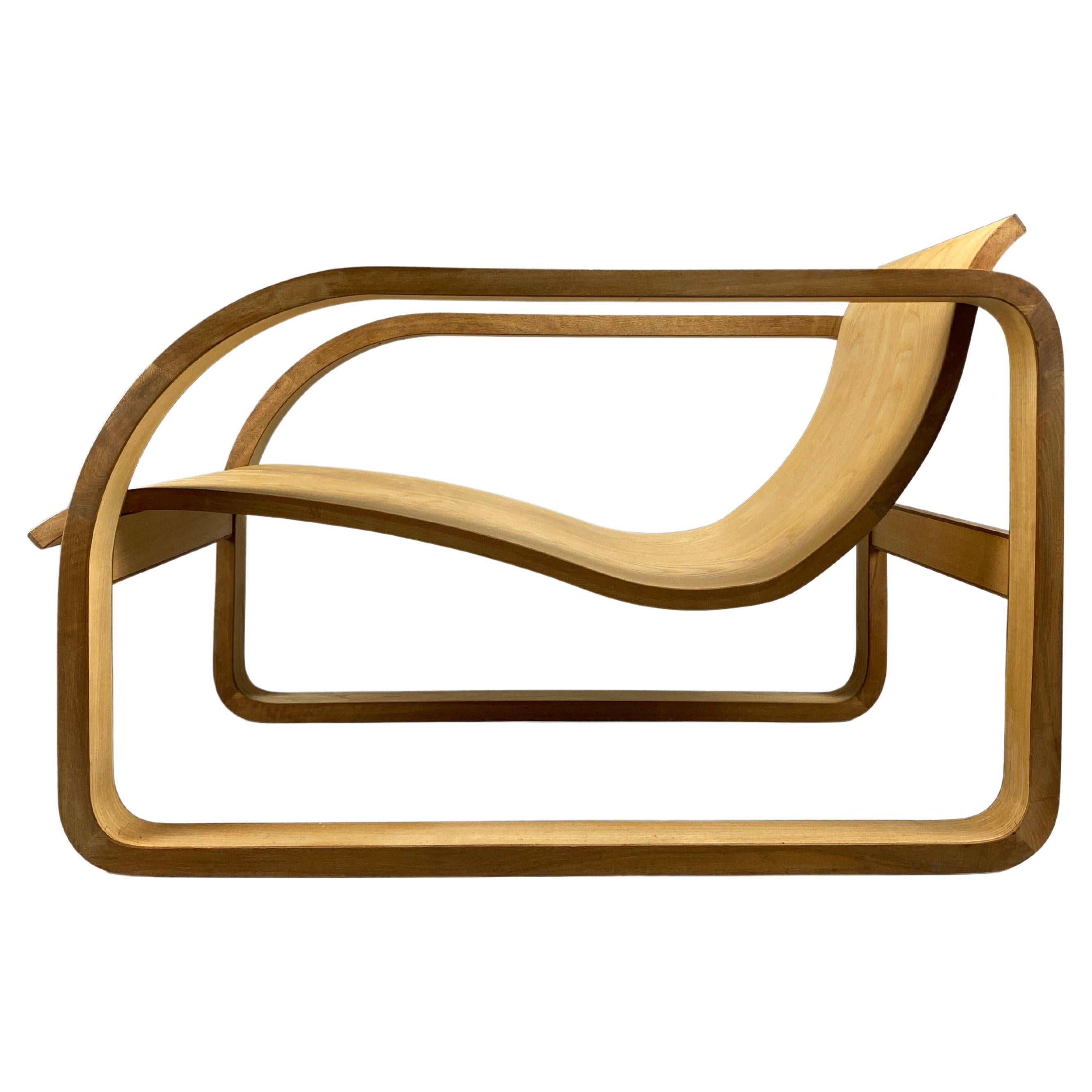
Pascal Mourgue (France, 1943-2014) Model Contraste Rocking chair, late 20th century. A blackened wooden frame with a sculptural elliptical backrest and rocker base, paired with an upholstered ivory or off-white seat cushion Balances minimalist design with ergonomic function. Materials: powder-coated wood and upholstered seat. No apparent maker's mark or label. Dimensions: 42.5 X 33.5 X 52 in. This was also designed as an armchair and chair. It was also produced from 1982 by Pamco Interior, Scarabat and Forum Diffusion. He also did work for Ligne Roset and Knoll. Along with Philippe Starck, Ettore Sottsass, Elizabeth Garouste & Bonetti he is an emblematic designer of 1980's design. Regarding this iconic design chair the designer made an evocative statement to Sophie Anargyros, a French art journalist and writer, speaking of "simplicity in form, playing with a square and a circle, but drawn by hand: to inscribe tensions. Working with wood, glued laminated and solid: a material whose constraints are so well known that they are integrated from the start, at the moment of conception. On some projects, we have to adapt the idea to the needs of the material, it's completely different." Pascal Mourgue in 1957 he began his studies at the école Boulle, at the age of 14-and-a-half. 1962 : made the acquaintance of Charlotte Perriand by telephone. 1968 : began designing furniture. 1988 : exhibition at the Victoria & Albert Museum, London. 1994 : designed his first collection for Cinna, including most notably the Calin armchair. 1995 : designed the Mourgue bed for Cinna. 1996 : awarded the Grand Prix National de la Création Industrielle du Ministère de la Culture. 1997 : designed In Fine for Cinna. 2000 : designed Smala for Cinna. Label VIA 2000 IF Design Award and Red Dot Best of the Best 2001. 2007 : designed Pas si Classique for Cinna. SInce 1982 he focused on furniture as well as tapestry design. He was awarded the best French designer of the year in 1984 and won the Grand Prix of contemporary furniture criticism in 1986. His creations are included among others at MoMA in New York. His products, numerous and international in their reach, reflect a constant desire for modernity and simplicity. He accords as much importance to functionality and aesthetics as to the profitability of his products. Pascal Mourgue is above all else an artist and sculptor. He graduated from Boulle school (sculpture) and Ensad (Ecole Nationale Supérieure des Arts Décoratifs). He began designing contemporary and modern furniture in 1962, while continuing to be a prolific artist. At the end of his career, Pascal Mourgue turned to artistic creation, drawing, sculpture and painting, influenced by the sculptor Ossip Zadkine whom he met in his youth.
  • Creator:
    Pascal Mourgue (1943, French)
  • Creation Year:
    c.1982
  • Dimensions:
    Height: 42.5 in (107.95 cm)Width: 33.5 in (85.09 cm)Depth: 52 in (132.08 cm)
  • Medium:
  • Movement & Style:
  • Period:
  • Condition:
    Good overall vintage condition, having typical surface with small areas of discoloration on the white fabric upholstery.
  • Gallery Location:
    Surfside, FL
  • Reference Number:
    1stDibs: LU38216945122

More From This Seller

View All
In the style of Henry Moore, Mother and Child in Rocking Chair

In the style of Henry Moore, Mother and Child in Rocking Chair

Located in Surfside, FL

This is a cast metal sculpture of a woman and child, mother and baby in a rocking chair. It has a patina on a white metal. Not sure if it is steel or aluminum. It is and older vintage piece and has wear to patina where it sits and rocks on table. It is not signed or numbered and there is no foundry mark. Hence it is being sold as being after or in the manner of Henry Moore. Henry Spencer Moore (1898 – 1986) Moore was born in Castleford, the son of a coal miner. He became well-known through his carved marble and larger-scale abstract cast bronze sculptures, and was instrumental in introducing a particular form of modernism to the United Kingdom later endowing the Henry Moore Foundation, which continues to support education and promotion of the arts. After the Great War, Moore received an ex-serviceman's grant to continue his education and in 1919 he became a student at the Leeds School of Art (now Leeds College of Art), which set up a sculpture studio especially for him. At the college, he met Barbara Hepworth, a fellow student who would also become a well-known British sculptor, and began a friendship and gentle professional rivalry that lasted for many years. In Leeds, Moore also had access to the modernist works in the collection of Sir Michael Sadler, the University Vice-Chancellor, which had a pronounced effect on his development. In 1921, Moore won a scholarship to study at the Royal College of Art in London, along with Hepworth and other Yorkshire contemporaries. While in London, Moore extended his knowledge of primitive art and sculpture, studying the ethnographic collections at the Victoria and Albert Museum and the British Museum. Moore's familiarity with primitivism and the influence of sculptors such as Constantin Brâncuși, Jacob Epstein, Henri Gaudier-Brzeska and Frank Dobson led him to the method of direct carving, in which imperfections in the material and marks left by tools became part of the finished sculpture. After Moore married, the couple moved to a studio in Hampstead at 11a Parkhill Road NW3, joining a small colony of avant-garde artists who were taking root there. Shortly afterward, Hepworth and her second husband Ben Nicholson moved into a studio around the corner from Moore, while Naum Gabo, Roland Penrose, Cecil Stephenson and the art critic Herbert Read also lived in the area (Read referred to the area as "a nest of gentle artists"). This led to a rapid cross-fertilization of ideas that Read would publicise, helping to raise Moore's public profile. The area was also a stopping-off point for many refugee artists, architects and designers from continental Europe en route to America—some of whom would later commission works from Moore. In 1932, after six year's teaching at the Royal College, Moore took up a post as the Head of the Department of Sculpture at the Chelsea School of Art. Artistically, Moore, Hepworth and other members of The Seven and Five Society would develop steadily more abstract work, partly influenced by their frequent trips to Paris and their contact with leading progressive artists, notably Pablo Picasso, Georges Braque, Jean Arp and Alberto Giacometti. Moore flirted with Surrealism, joining Paul Nash's modern art movement "Unit One", in 1933. In 1934, Moore visited Spain; he visited the cave of Altamira (which he described as the "Royal Academy of Cave Painting"), Madrid, Toledo and Pamplona. Moore made his first visit to America when a retrospective exhibition of his work opened at the Museum of Modern Art in New York City.[28] Before the war, Moore had been approached by educator Henry Morris, who was trying to reform education with his concept of the Village College. Morris had engaged Walter Gropius as the architect for his second village college at Impington near Cambridge, and he wanted Moore to design a major public sculpture for the site. In the 1950s, Moore began to receive increasingly significant commissions. He exhibited Reclining Figure: Festival at the Festival of Britain in 1951, and in 1958 produced a large marble reclining figure for the UNESCO building in Paris. With many more public works of art, the scale of Moore's sculptures grew significantly and he started to employ an increasing number of assistants to work with him at Much Hadham, including Anthony Caro and Richard Wentworth. Moore produced at least three significant examples of architectural sculpture during his career. In 1928, despite his own self-described "extreme reservations", he accepted his first public commission for West Wind for the London Underground Building at 55 Broadway in London, joining the company of Jacob Epstein and Eric Gill. At an introductory speech in New York City for an exhibition of one of the finest modernist sculptors, Alberto Giacometti, Sartre spoke of "The beginning and the end of history...

Category

1950s Modern Abstract Prints

Materials

Metal

EZ Rider Functional Sculpture Motorcycle Chair Featured in Book

EZ Rider Functional Sculpture Motorcycle Chair Featured in Book

By Bruce Gray

Located in Surfside, FL

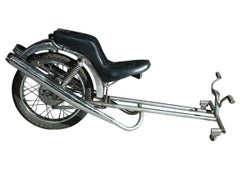
Genre: Contemporary Functional Sculpture Subject: Abstract Medium: Metal, Assemblage Surface: Metal Country: United States Dimensions: 30 x 65 x 24 EZ Rider Chair is a unique functional art chair sculpture constructed from various motorcycle parts by Bruce Gray. This one is in a private collection. Variations on this theme are only limited by how much you wish to spend, such as including a custom gas tank or even a complete engine of your choice. The EZ Rider Chair is featured along with 7 other of Bruce's chairs in the book Chairs, Chairs, Chairs. (the Italian original version of the book was titled Sillas Sillas Sillas) Bruce Gray was (born 1956 Orange, New Jersey) is an artist residing in Los Angeles. His work includes kinetic art such as rolling ball machines, mobiles, stabiles, and suspended magnetic sculptures. He also creates found objects sculptures such as a lifesize motorcycle sculpture constructed from train parts, and giant objects...

Category

Late 20th Century Still-life Sculptures

Materials

Metal

Mid Century Modern Brutalist Welded Abstract Expressionist Sculpture

Mid Century Modern Brutalist Welded Abstract Expressionist Sculpture

Located in Surfside, FL

Neo-Dada Abstract Sculpture: Assemblages In contrast, abstract sculpture followed a slightly different course. Rather than focusing on non-figurative subject matter, it concentrated...

Category

Mid-20th Century Abstract Expressionist Abstract Sculptures

Materials

Metal

Mid Century Brutalist Iron, Stone Sculpture, Israeli Master David Palombo

Mid Century Brutalist Iron, Stone Sculpture, Israeli Master David Palombo

By David Palombo

Located in Surfside, FL

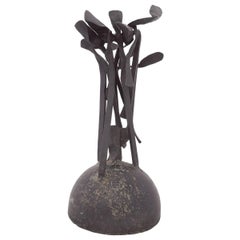
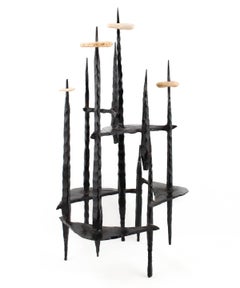
Hand Forged Iron and Drilled Stone Candelabra Holocaust Memorial Judaic Menorah Sculpture David Palombo was an Israeli sculptor and painter. He was born in Turkey to a traditional family and immigrated to the Land of Israel with his parents in 1923. They lived in the Nahalat Shiva neighborhood of Jerusalem. In 1940 he began his studies at Bezalel Academy of Arts and Design, and from 1942 was a student of sculptor Ze’ev Ben-Zvi. For a period of time, Palombo was an assistant at Ben-Zvi’s studio and also taught at Bezalel. During this period he was also a member of the “Histadrut HaNoar HaOved VeHaLomed” (The General Federation of Students and Young Workers in Israel). In the 1940s he took art lessons at night. In 1948 he went to Paris, where he visited the studio of the sculptor Constantin Brancusi whose work influenced him. Around 1958 he married the artist Shulamit Sirota. In 1960 he quit his job to devote himself to art. In 1964 he married for the second time to the artist Yona Palombo. The two of them went to live in an abandoned home on Mount Zion in Jerusalem. In 1966 he was killed when the motorcycle on which he was riding ran into a chain stretched across the street to prevent the desecration of Shabbat. His widow opened a museum in their home that was active until the year 2000. Work by Palombo is included in the Judaic collection of the Jewish Museum (a well known Hanukkah menora). Palombo executed the impressive metal gates of the Tent of Remembrance at the Yad Vashem, the memorial to the martyrs of the holocaust, as well as the gates to the Knesset Building the United Nations Educational Scientific and Cultural Organization (Unesco award) awarded him a scholarship for study in Japan. He worked in marble, granite, bronze, iron and steel. as well as with glass mosaic tiles. Palombo’s early works, in the 1950s, were influenced by modernist sculptors such as Brancusi. These works were composed of abstract images from nature and were carved out of stone or wood. At the end of the 1950s he began making metal sculptors, using the technique of welding. His work took on a more abstract and expressive character. Education 1940 Painting with Isidor Ascheim, New Bezalel School for Arts and Crafts, Jerusalem 1942 Sculpture with Zeev Ben Zvi, Jerusalem 1956 Mosaic, Ravenna, Italy 1958 Welding Course Awards And Prizes 1966 UNESCO Award Exhibitions: Sculpture in Israel, 1948-1958 Mishkan Museum of Art, Kibbutz Ein Harod Artists: Zvi Aldouby, Yitzhak Danziger, Arieh Merzer, Dov Feigin, Aaron Priver, David Palumbo, Menashe Kadishman, Kosso Eloul, Yehiel Shemi, Zahara Schatz. The Spring Exhibition of Jerusalem Artists, Artists' House, Jerusalem Artists: Palombo, David Bezalel Schatz, Mordechai Levanon, Fima, Ludwig Blum 12 Artists, The Bezalel National Museum, Jerusalem Avraham Ofek, Aviva Uri, Avigdor Arikha, Yosl Bergner, Lea Nikel, Palombo, Ruth Zarfati...

Category

Mid-20th Century Arte Povera Abstract Sculptures

Materials

Stone, Iron

You May Also Like

Pascal Mourgue Rocking Chair

Pascal Mourgue Rocking Chair

Located in New York, NY

Pascal Mourgue rocking chair with a stained birch frame. Frame is well constructed.

Category

Vintage 1980s French Rocking Chairs

Materials

Fabric, Wood

Art Deco Rocking Chair J. Halabala from 1960

Art Deco Rocking Chair J. Halabala from 1960

Located in Kraków, Małopolska

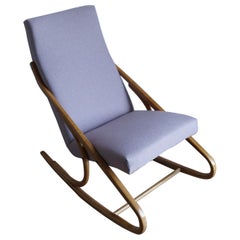
We present the rocking chair by the famous Czech designer J. Halabala coming from Prague, the Czech Republic. Jindrich Halabala - (a Czech designer ranked among the most outstanding ...

Category

Vintage 1950s Czech Art Deco Armchairs

Materials

Ash

Rare Rocking chair par Joaquim Tenreiro

Rare Rocking chair par Joaquim Tenreiro

By Joaquim Tenreiro

Located in SAINT-OUEN-SUR-SEINE, FR

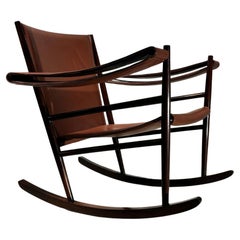
Rare rocking chair par Joaquim Tenreiro, vers 1947.

Category

Vintage 1940s Brazilian Mid-Century Modern Rocking Chairs

Materials

Leather, Rosewood

Prototype Rocking Chair by Arturo Pani

Prototype Rocking Chair by Arturo Pani

By Arturo Pani

Located in Chicago, IL

Prototype hand-forged, steel rocker designed by Arturo Pani and executed by Telleres Chacon, Mexico City. The piece has been reupholstered in hand-stitched, Edelman leather with custom piping. This piece was acquired from Telleres Chacon upon the retirement of Manuel Chacon, master metalsmith in the 1980s. This design is based on a Maison Jansen rocker...

Category

Vintage 1960s Mexican Modern Chairs

Materials

Steel

French style  iron chair in the manner of Andre Dubreuil

French style iron chair in the manner of Andre Dubreuil

By André Dubreuil

Located in Winnetka, IL

A vintage sculptural iron chair in the style of Andre Dubreuil. Very comfortable if one chooses to sit or you may choose to admire this chair as an entryway or hallway sculpture .

Category

Vintage 1980s Unknown Post-Modern Chairs

Materials

Iron