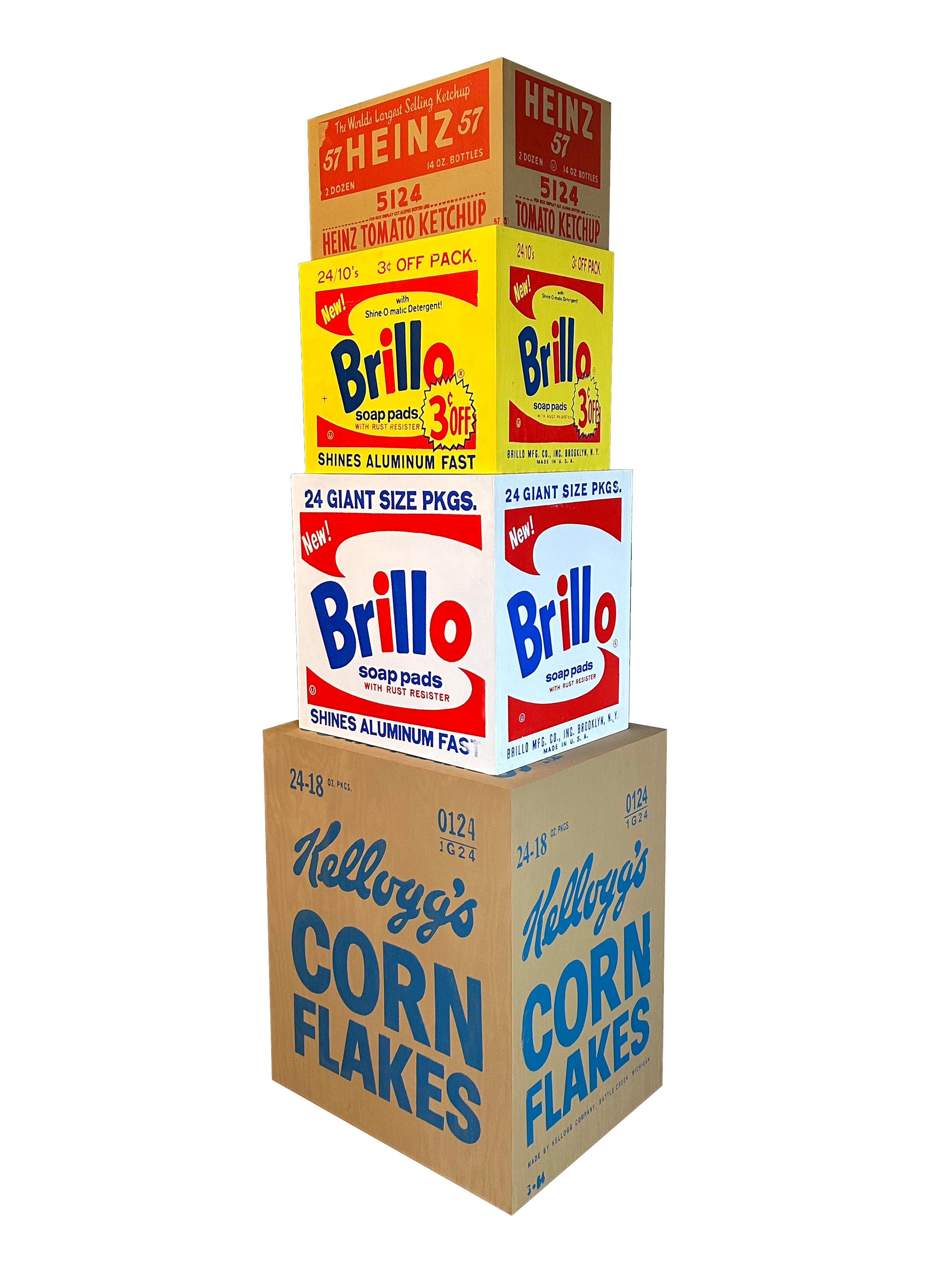
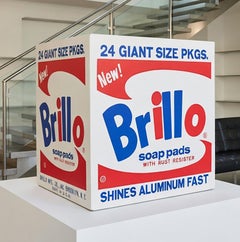
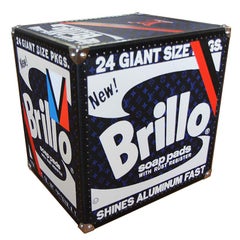
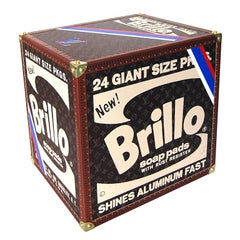
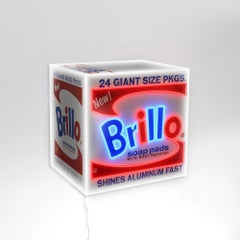
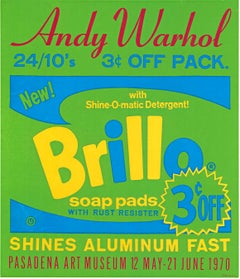
Denied Warhol Brillo Box Yellow Contemporary Pop Art Sculpture by Charles Lutz.
Silkscreen and latex paint on wood, stamped Denied with the Andy Warhol Art Authentication Board's mark.
13 x 16 x 11.5"
2008
Lutz's 2007 ''Warhol Denied'' series gained him international attention calling into question the importance of originality or lack thereof in the work of Andy Warhol. The authentication/denial process of the [[Andy Warhol Art Authentication Board]] was used to create value by submitting recreations of Warhol works for judgment with the full intention for the works to be formally marked "DENIED". The final product of the conceptual project being "officially denied" "Warhol" works authored by Lutz.
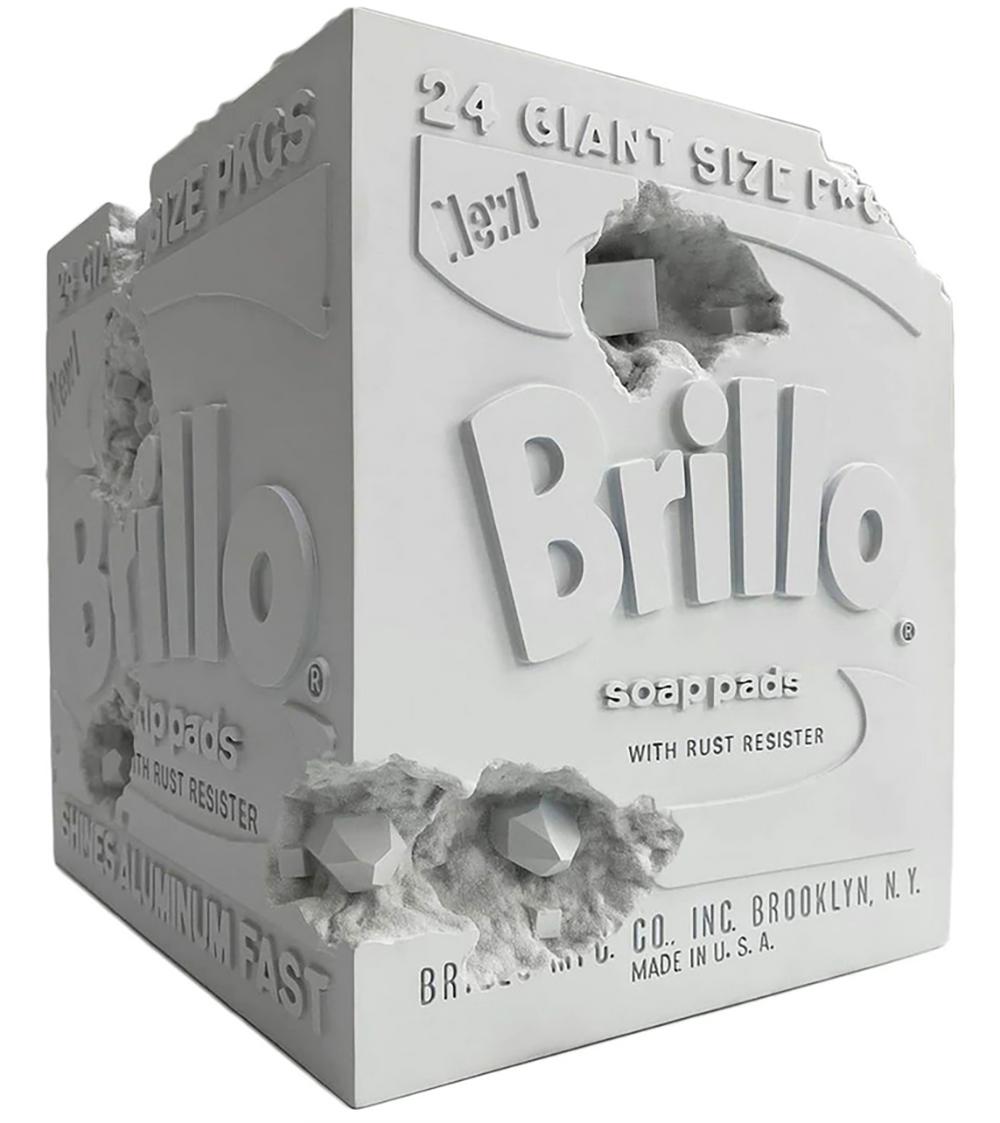
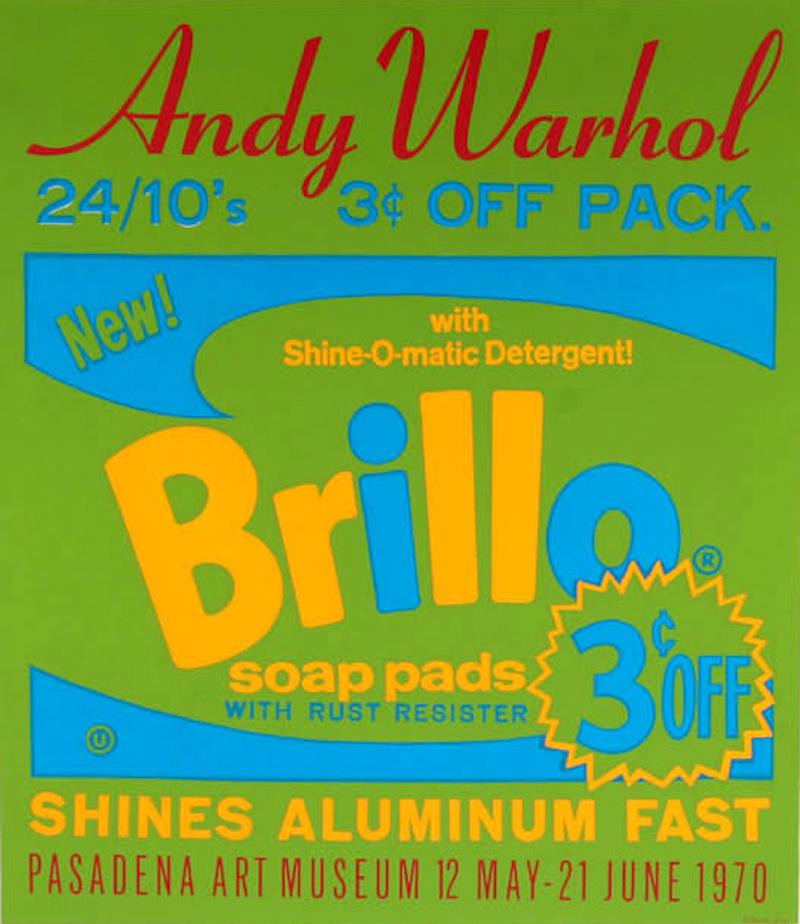
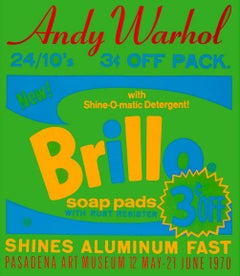
Andy Warhol's Brillo Boxes were originally created in 1964 and are easily his most iconic sculptures, rivaling paintings like Liz Taylor, Marilyn Monroe, Elvis, Campbell's Soup Cans, Flowers and Electric Chairs. These highly prized sculptures continue to soar in value and were the subject of a recent HBO documentary, “Brillo Box (3¢ Off)”, which also included Charles Lutz.
Lutz, also known for the installation work Babel, exhibited at the 2013 Armory Fair in New York City which caused near riots as he invited the fair goers to take cardboard versions of the Brillo Box Sculptures.
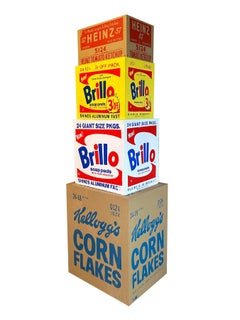
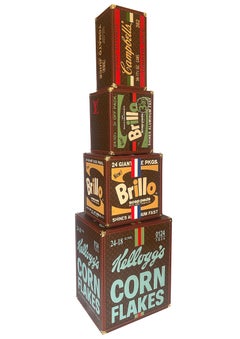
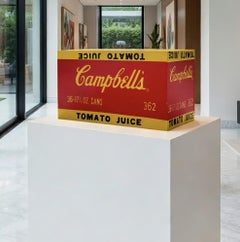
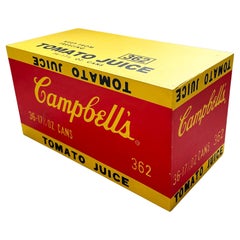
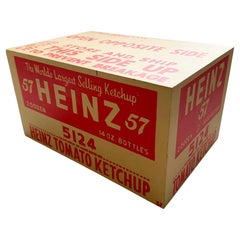
"In the mid-1960s, Warhol carried his consumer-product imagery into the realm of sculpture. Calling to mind a factory assembly line, Warhol employed carpenters to construct numerous plywood boxes identical in size and shape to supermarket cartons. With assistance from Gerard Malanga and Billy Linich, he painted and silkscreened the boxes with different consumer product logos: Kellogg’s Corn Flakes, Brillo soap pads, Mott’s apple juice, Del Monte peaches, and Heinz ketchup. The finished sculptures were virtually indistinguishable from their cardboard supermarket counterparts. Warhol first exhibited these at the Stable Gallery in 1964, cramming the space with stacked boxes that recalled a cramped grocery warehouse. He invited collectors to buy them by the stack, and, though they did not sell well, the boxes caused controversy. In reference to his boxes, Warhol later said that he “wanted something ordinary,” and it was this mundane, commercial subject matter that infuriated the critics. The perfectly blank “machine-made” look of Warhol’s boxes contrasted sharply with the gestural brushstrokes of abstract expressionist paintings." - The Andy Warhol Museum
Lutz has been exhibited and done major projects with The New Museum, New York, NY, The Armory Show, New York, NY, Carnegie Museum, Pittsburgh, PA, The Andy Warhol Museum, Pittsburgh, PA, Witte de With Center for Contemporary Art, Rotterdam, Netherlands, Artipelag Museum, Stockholm Sweden amongst others. Lutz lives and works in Brooklyn, New York.
Also used as a functional object like a side table, end table, or coffee table, it is common for collectors to encase these sculptures in plexiglass to protect the work while it is being enjoyed in the home.