Want more images or videos?
Request additional images or videos from the seller
1 of 2

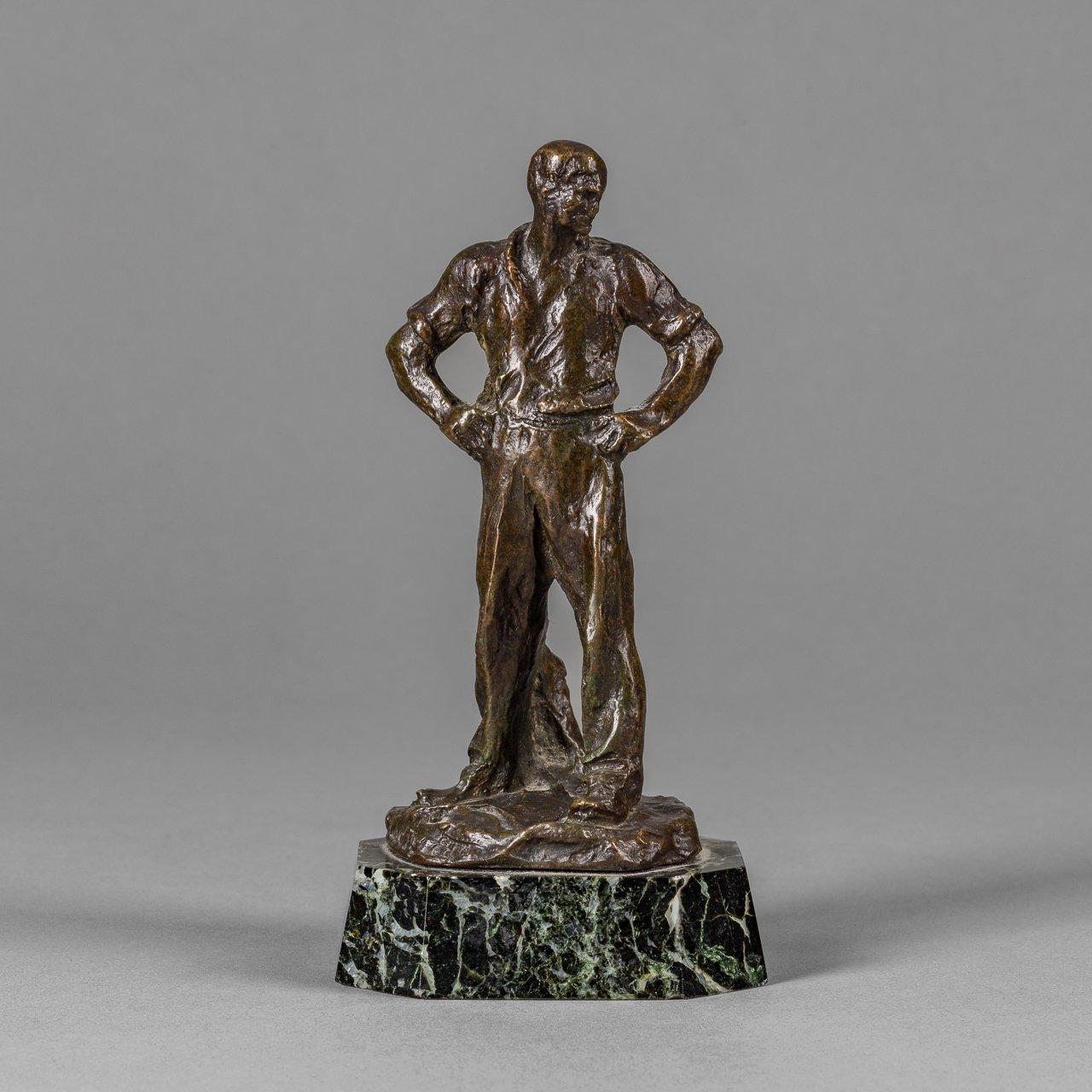
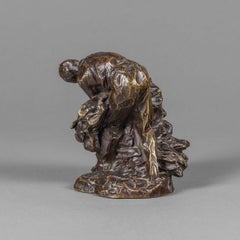
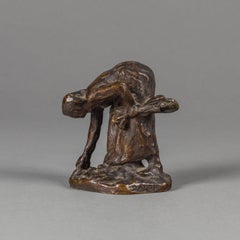
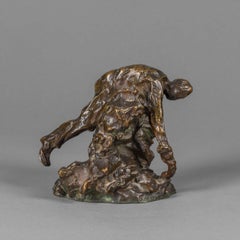
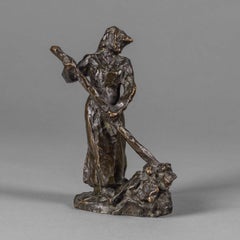
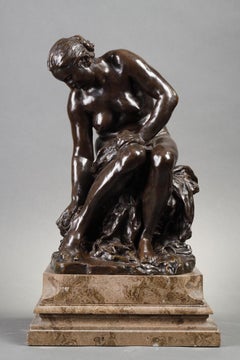
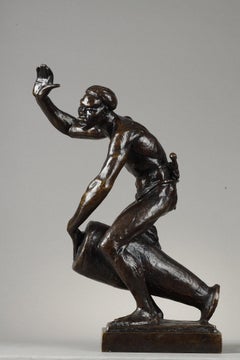
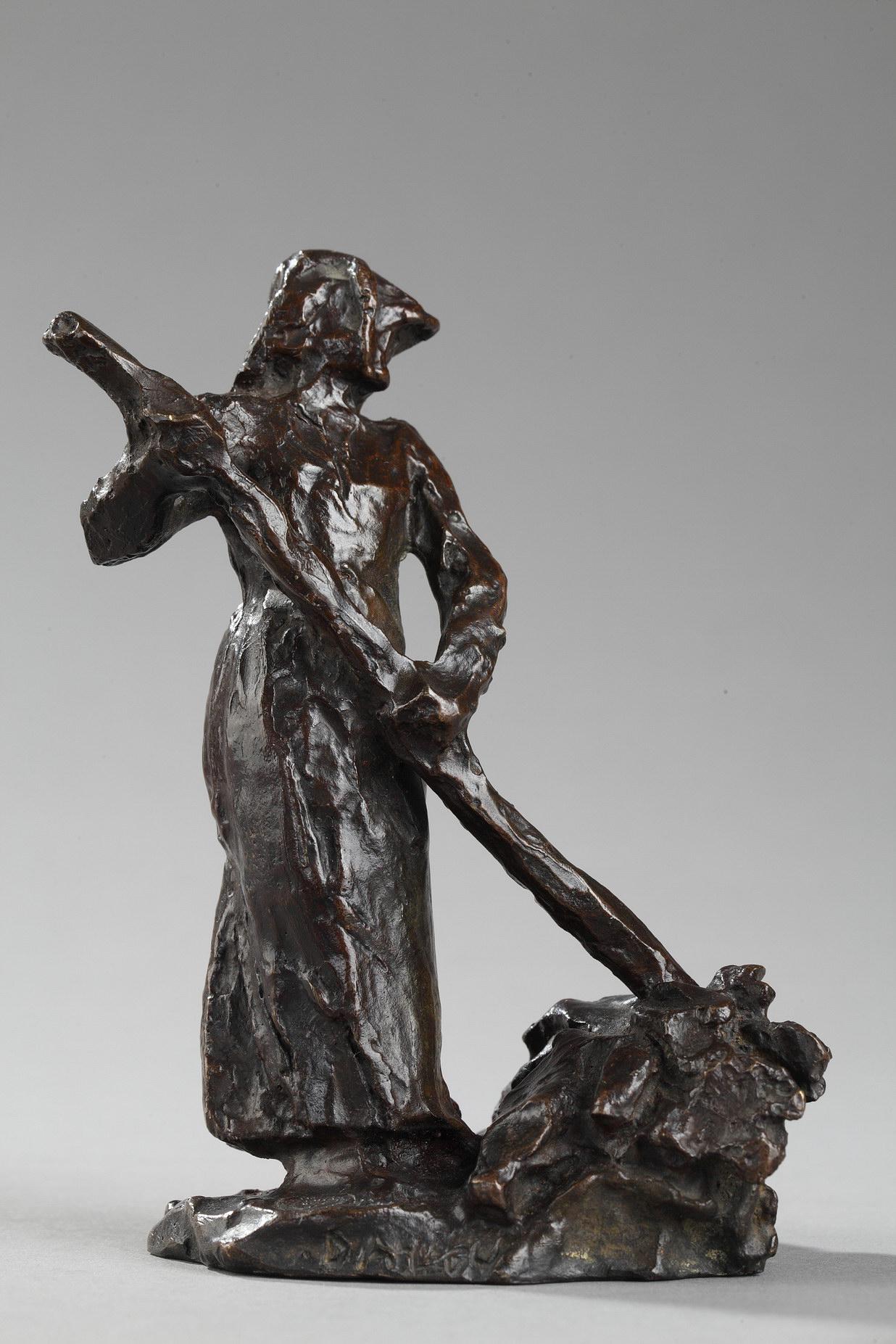
Aimé-Jules Dalou
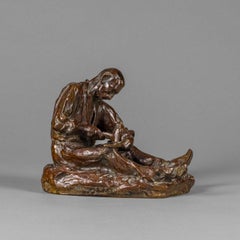
The Baler

Concieved 1890-1902, cast 1905-10

$3,743.37
£2,997.50VAT Included
€3,269.43
CA$5,260.48
A$5,385.26
CHF 3,053.02
MX$65,340.95
NOK 35,980.75
SEK 36,181.65
DKK 24,439.22

About the Item

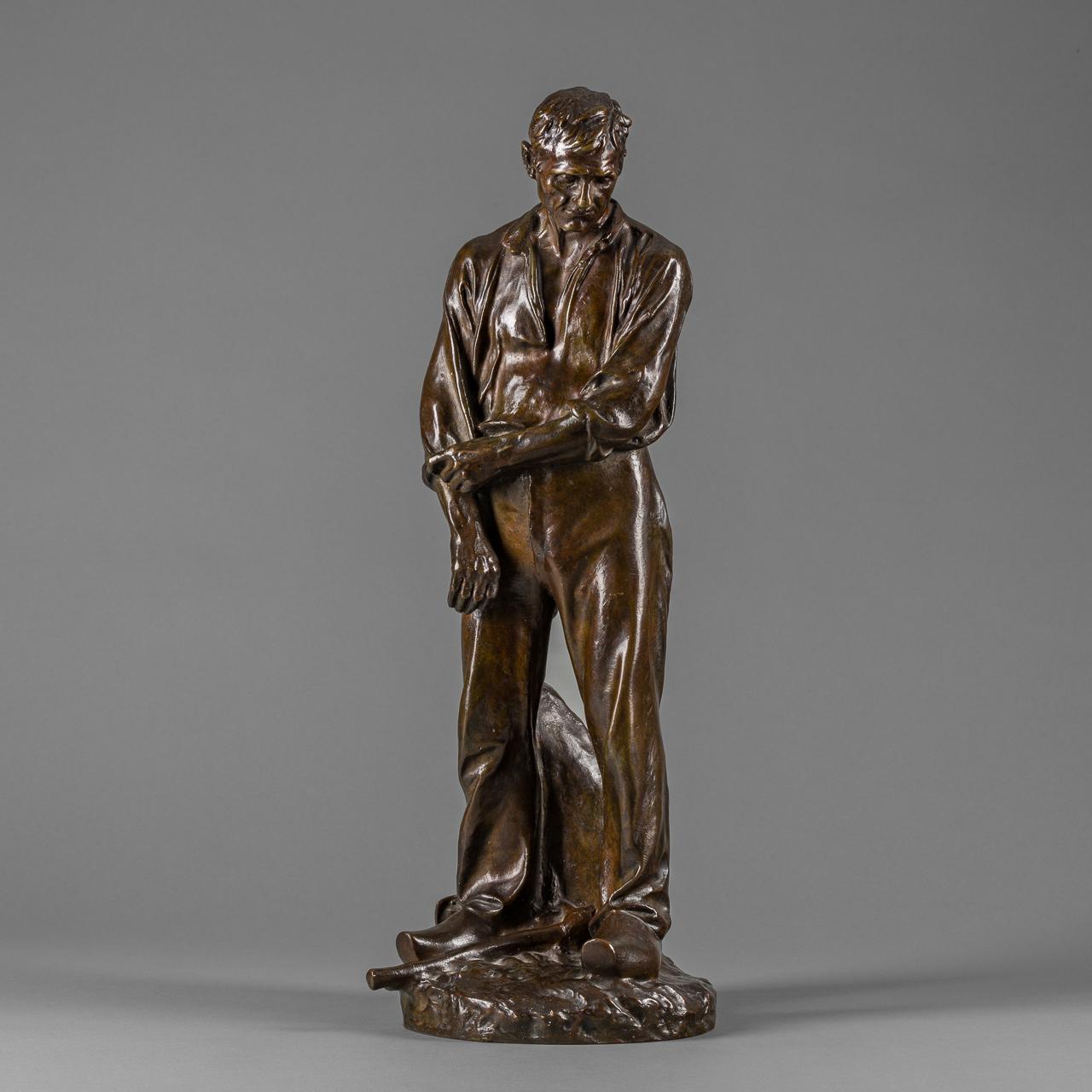
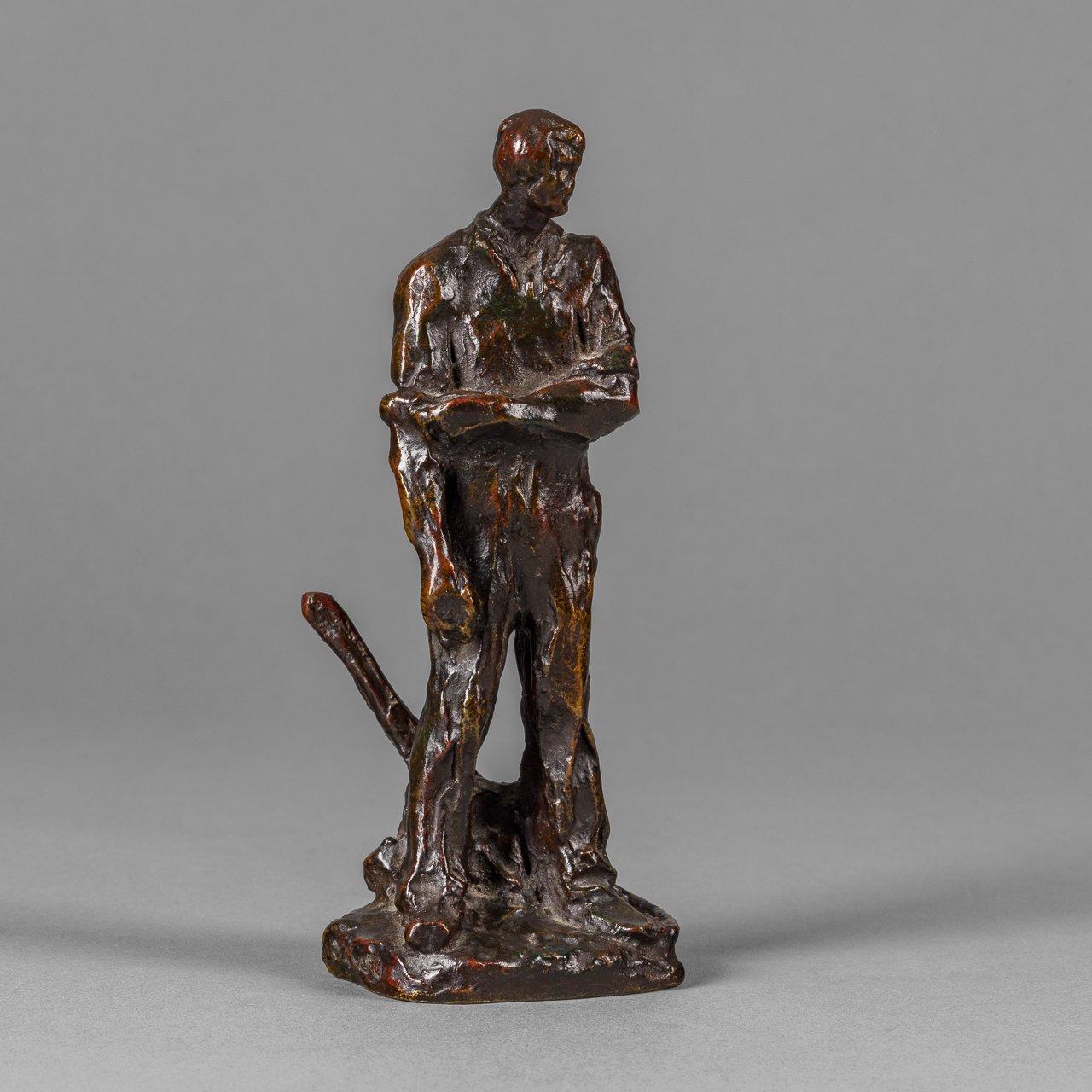
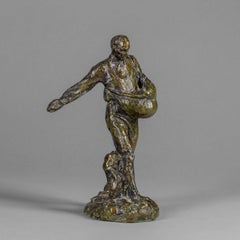
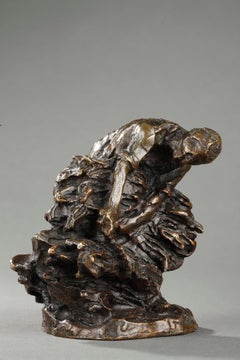
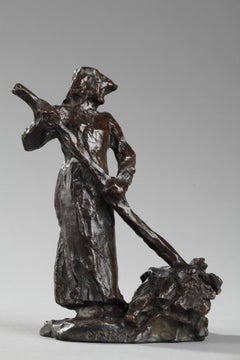
Aimé-Jules Dalou (1838-1902) was one of only a handful of leading late-nineteenth century French Sculptors, whose reputation was perhaps second only to his contemporaries, Henri Chapu (1833-1891) and Marius Jean Antonin Mercié (1845-1916). Dalou was hugely influential and was a founding member of the Société des Artistes Français and later a founder of the Société Nationale des Beaux-Arts. He was officially rewarded with the highest rank of the Légion d'Honneur two years before his death, with the inauguration of the Triumph of Republic, in 1899. He started his artistic training in 1852 at the Petite Ecole after being encouraged to do so by Jean-Baptiste Carpeaux, where he studied drawing and modelling. Carpeaux continued to support Dalou throughout his career and influenced his sculpture greatly. Dalou began employment in the field of decorative sculpture working for two companies in Paris, Lefèvre and Favière goldsmiths. During this time he contributed towards the architectural features of Hôtel de la Païva, the then home of the infamous French courtesan Esther Lachmann known as La Païva. Dalou's unique approach lay in his broad range of subject, painterly and sculptural source material, though which he absorbed an impressive spectrum of inspiration. The work of an eighteenth-century sculptor, Louis-François Roubiliac, played a significant role in Dalou's artistic development, whose sculptures he studied whilst in London. Dalou's work includes friezes, maquettes, reliefs, and individual bronze figures. He is known for Baroque-inspired allegorical group compositions, as much as for his depictions of the French rural labouring classes. Dalou encouraged students of art to free themselves from the constrainsts of established traditions, with his style and teachings thought to have awakened a new generation of young British sculptors whose work was later aligned to the New Sculpture movement. Throughout his extraordinary career, Dalou's dedication to the working classes was unwavering. Man with Shovel is one of twenty two bronzes which make up the Monument to the Workers series. Dalou's centerpiece to this series is entitled Larger Sower on Column, and is the only figure in the series to be depicted on a column. This series was intended to be a tribute to the members of society who he considered to be the most deserving of recognition but who were ultimately the most overlooked. Maurice Dreyfus, Dalou’s biographer explains that the celebration on 22 September 1889 to mark the unveiling of Triumph of the Republic was the catalyst for this project. Dalou was furious that the working classes were sidelined at this event in favour of the army and military dignitaries. Dreyfus states that ‘from that day on, he resolved to muster all his talent and knowledge to create a monument that would glorify the soldiers of the work of love, peace and labor, and which he dreamed would be more superb than any ever erected to the workers of the destructive work of war...No more symbols, no more allegories; men themselves, depicted as they are in reality, would be the only ornament’. He was tired of war and the celebrations of battle and wanted to turn his focus to the people he believed to be worthy of commemorating. Although this ambitious monument was sadly never realised, Dalou worked tirelessly on it’s creation for over a decade, completing numerous sketches and maquettes. To depict the workers as authentically as he could he left Paris and ventured into the countryside, visting a fishing village near Sainte-Adresse to sketch fisherman and Toul in north-eastern France where he studied metal workers. The labourers he was most fixated on however were farmers, he created countless models of men and women carrying hay bales, sowing seeds and working the land. His maquettes share commonalities such as their muscular veined arms, their plain clothes and strong, powerful stances. The hands of his figures are often enlarged symbolsing years of manual labour. Signed & dated: Signed DALOU inscribed Susse Frs Edts / Paris and cire perdue, plus the Susse Pastille Provenance: Private collection, London Exhibitions: 2023: RODIN DALOU, Eros Gallery, 1-22 December. Literature: Duck and Hamnett, RODIN DALOU exh. cat (London: Eros Gallery, 2023), 1-22 December 2023.
  • Creator:
    Aimé-Jules Dalou (1838 - 1902, French)
  • Creation Year:
    Concieved 1890-1902, cast 1905-10
  • Dimensions:
    Height: 4.02 in (10.2 cm)Width: 4.38 in (11.1 cm)Depth: 4.02 in (10.2 cm)
  • Medium:
  • Movement & Style:
  • Period:
  • Condition:
  • Gallery Location:
    London, GB
  • Reference Number:
    1stDibs: LU2915217928722

More From This Seller

View All
The Hay Baler

The Hay Baler

By Aimé-Jules Dalou

Located in London, England

Aimé-Jules Dalou (1838-1902) was one of only a handful of leading late-nineteenth century French Sculptors, whose reputation was perhaps second only to his contemporaries, Henri Chap...

Category

1890s Victorian Figurative Sculptures

Materials

Bronze

The Gleaner

The Gleaner

By Aimé-Jules Dalou

Located in London, England

Aimé-Jules Dalou (1838-1902) was one of only a handful of leading late-nineteenth century French Sculptors, whose reputation was perhaps second only to his contemporaries, Henri Chap...

Category

1890s Victorian Figurative Sculptures

Materials

Bronze

The Picker

The Picker

By Aimé-Jules Dalou

Located in London, England

Aimé-Jules Dalou (1838-1902) was one of only a handful of leading late-nineteenth century French Sculptors, whose reputation was perhaps second only to his contemporaries, Henri Chap...

Category

1890s Victorian Figurative Sculptures

Materials

Bronze

The Haymaker

The Haymaker

By Aimé-Jules Dalou

Located in London, England

Aimé-Jules Dalou (1838-1902) was one of only a handful of leading late-nineteenth century French Sculptors, whose reputation was perhaps second only to his contemporaries, Henri Chap...

Category

1890s Victorian Figurative Sculptures

Materials

Bronze

The Tinker

The Tinker

By Aimé-Jules Dalou

Located in London, England

Aimé-Jules Dalou (1838-1902) was one of only a handful of leading late-nineteenth century French Sculptors, whose reputation was perhaps second only to his contemporaries, Henri Chap...

Category

1890s Victorian Figurative Sculptures

Materials

Bronze

The Sower

The Sower

By Aimé-Jules Dalou

Located in London, England

Aimé-Jules Dalou (1838-1902) was one of only a handful of leading late-nineteenth century French Sculptors, whose reputation was perhaps second only to his contemporaries, Henri Chap...

Category

1890s Victorian Figurative Sculptures

Materials

Bronze

You May Also Like

Hay Baler

Hay Baler

By Aimé-Jules Dalou

Located in PARIS, FR

This Hay baler is a subject that is included in the famous suite commonly called "little workers" by Jules Dalou (1838-1902) Bronze with dark brown patina c...

Category

Late 19th Century French School Figurative Sculptures

Materials

Bronze

Hay Picker

Hay Picker

By Aimé-Jules Dalou

Located in PARIS, FR

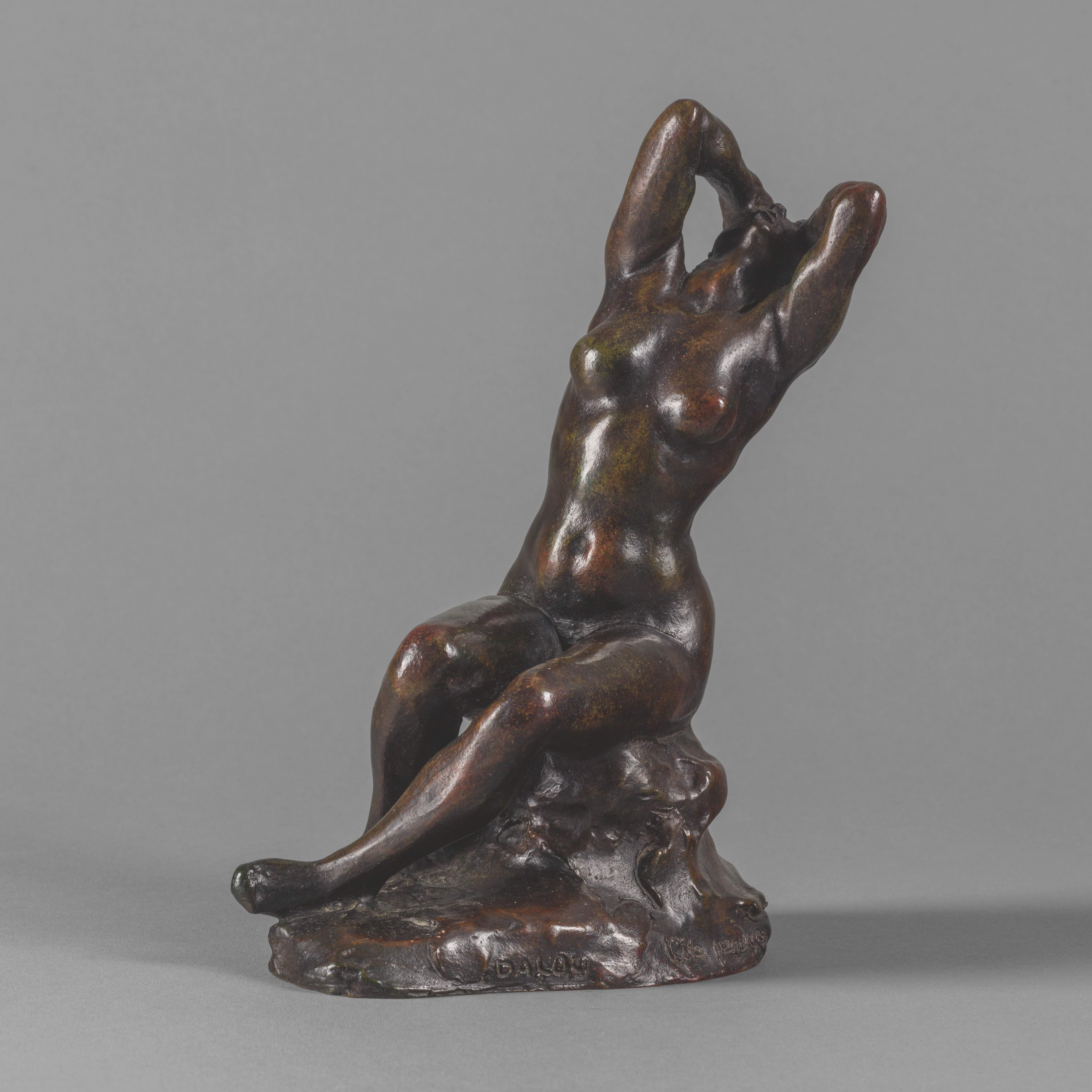
This Peasant resting is a subject that is included in the famous suite commonly called "little workers" by Jules Dalou (1838-1902) Bronze with nuanced dark brown patina cast by Susse Frères - stamped with the founder's seal France created around 1890 and cast after his death height 12,5 cm A similar model reproduced inJules Dalou, le sculpteur de la République, Exhibition held at the Musée du Petit Palais, Paris, 2013, page 288, n°220. Biography : Aimé-Jules Dalou, said Jules Dalou (1838-1902) was a French sculptor, born from Protestants glovers craftsmen who raised in secularism and love of the Republic. Jules Dalou was very young talented for modeling and drawing, which earned him the attention of Jean-Baptiste Carpeaux, who made him entered in 1852 in the Little School, the future National School of Decorative Arts in Paris. In 1854, he was admitted to the School of Fine Arts in Paris, where he studied painting in the workshop of Abel de Pujol and sculpture in the workshop of Francisque Duret...

Category

Late 19th Century French School Figurative Sculptures
Materials

Bronze

Suzanne

Suzanne

By Aimé-Jules Dalou

Located in PARIS, FR

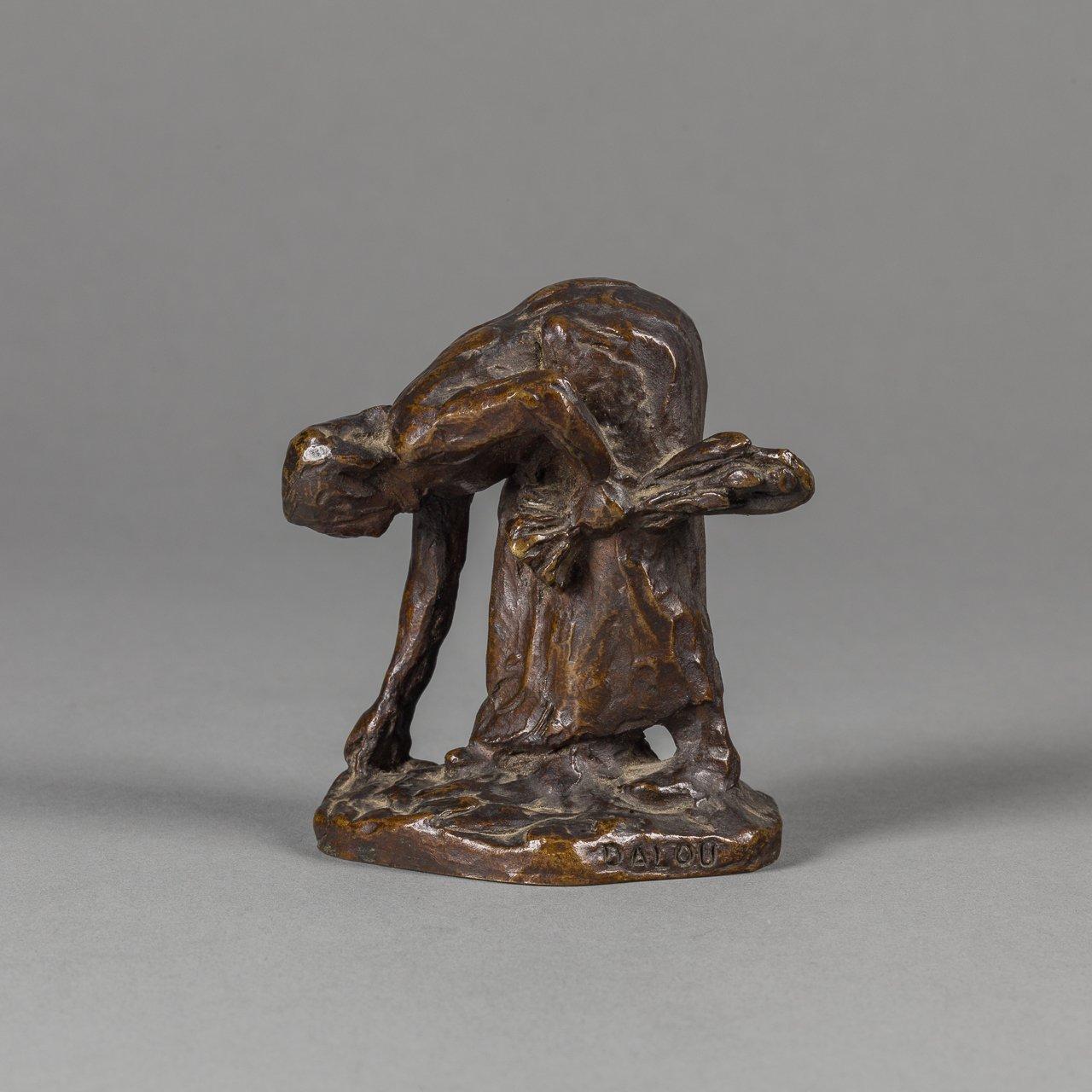
Bathing woman drying her right foot also known as "Suzanne" by Aimé-Jules DALOU (1838-1902) A bronze sculpture with a nuanced dark brown patina Signed on the base " Dalou " A very...

Category

Early 20th Century French School Figurative Sculptures
Materials

Bronze

Tam-tam player

Tam-tam player

Located in PARIS, FR

Tam-tam player by Arthur DUPAGNE (1895-1961) A bronze sculpture with a nuanced dark brown patina Signed on the base « Dupagne » Cast by « Susse Fres Ed...

Category

1930s French School Figurative Sculptures
Materials

Bronze

The Gleaner Small Bronze Late 19th Century

The Gleaner Small Bronze Late 19th Century

Located in Lake Worth Beach, FL

The Gleaner Henri Godet 1863 Paris - 1937 Vincennes - The Gleaner -Late 19Th Century Small Bronze with patina, artist signed, founder mark Model No. 2772.. On the base: "Gleaner by...

Category

1890s Figurative Sculptures
Materials

Bronze

Louis Hottot (1834-1905)

Louis Hottot (1834-1905)

By Louis Hottot

Located in Porto, PT

"Girl with Binoculars". Bronze sculpture on a marble base. Signed. Height: 63 cm.

Category

Antique 19th Century French Figurative Sculptures
Materials

Bronze