Dubucand Alfred 1828-1894
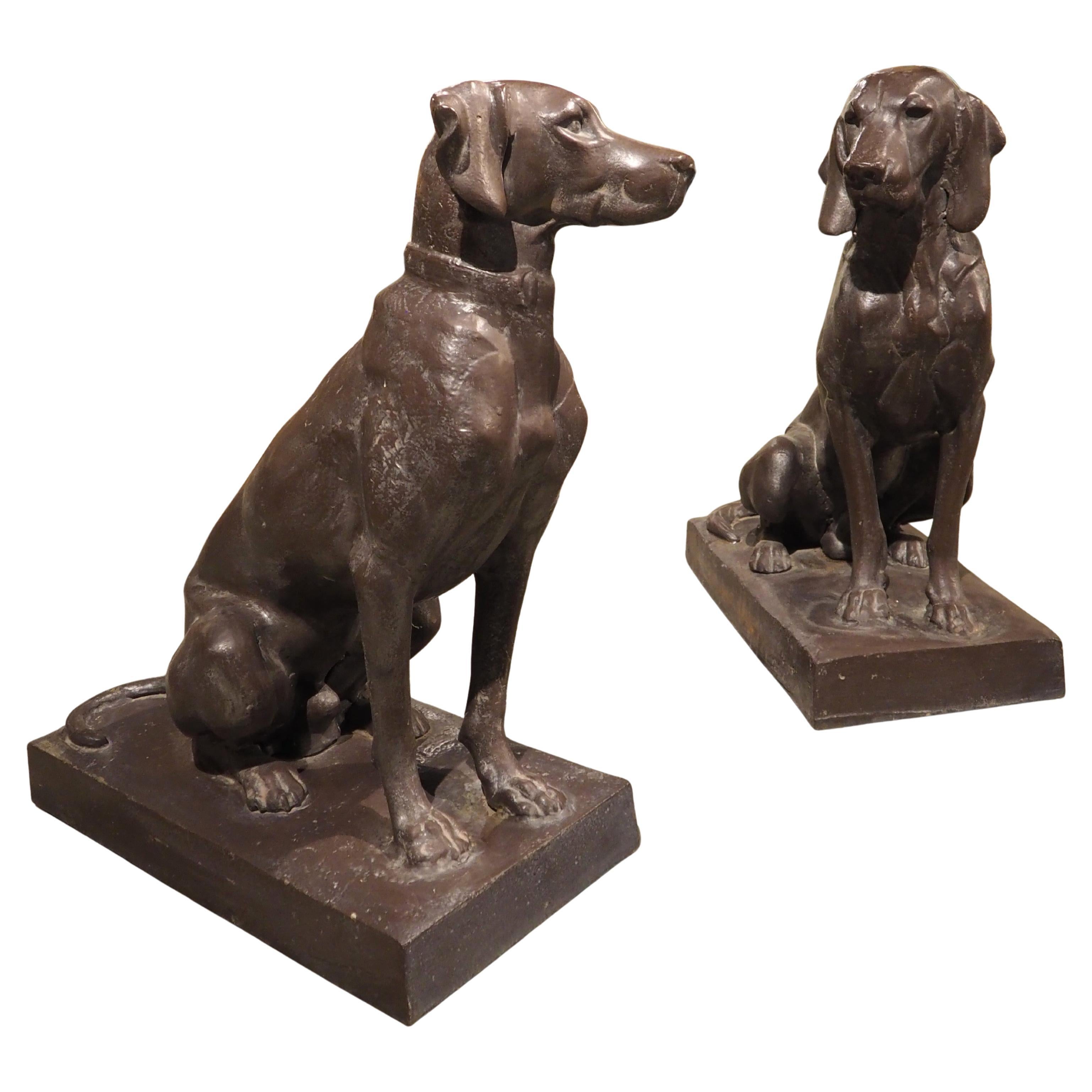
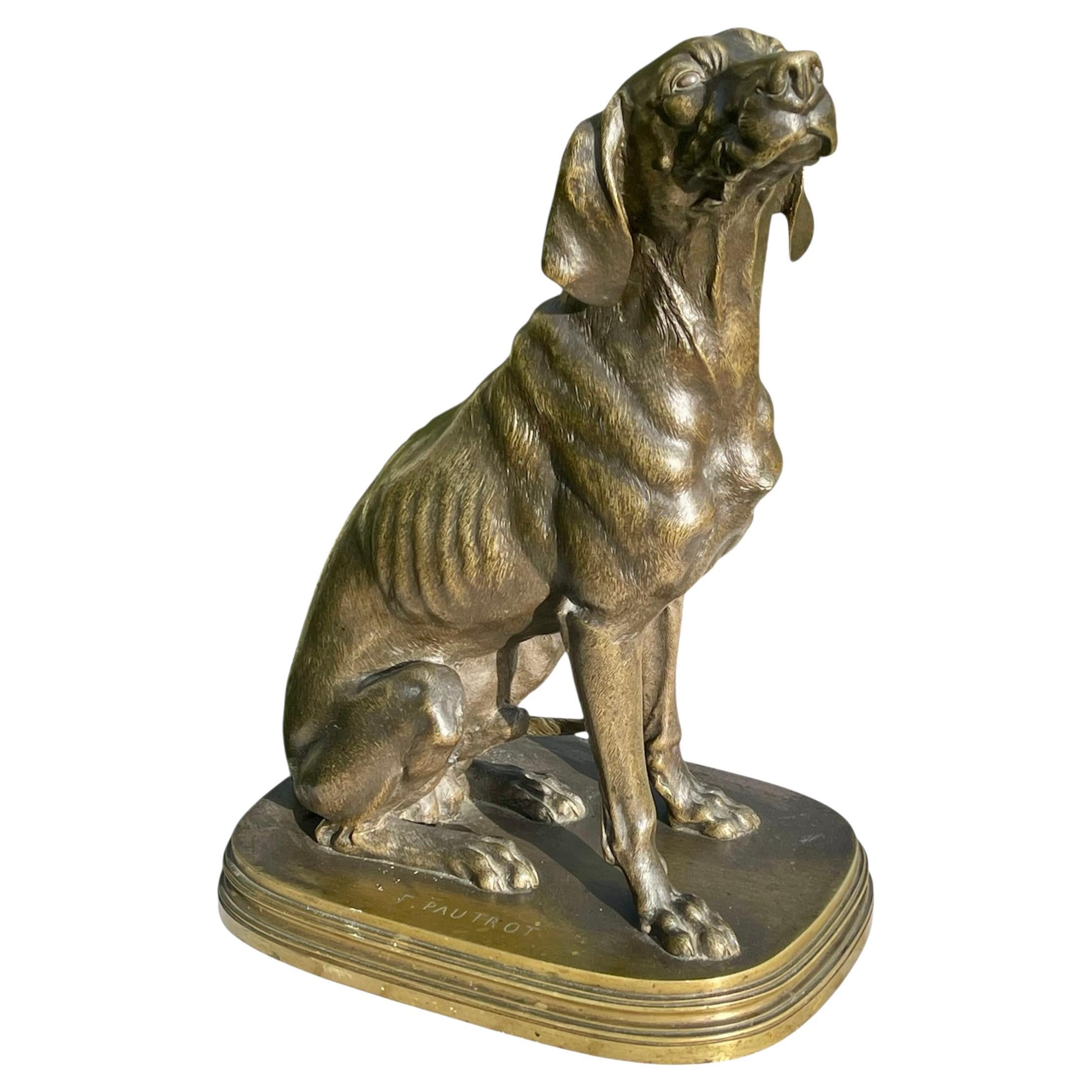
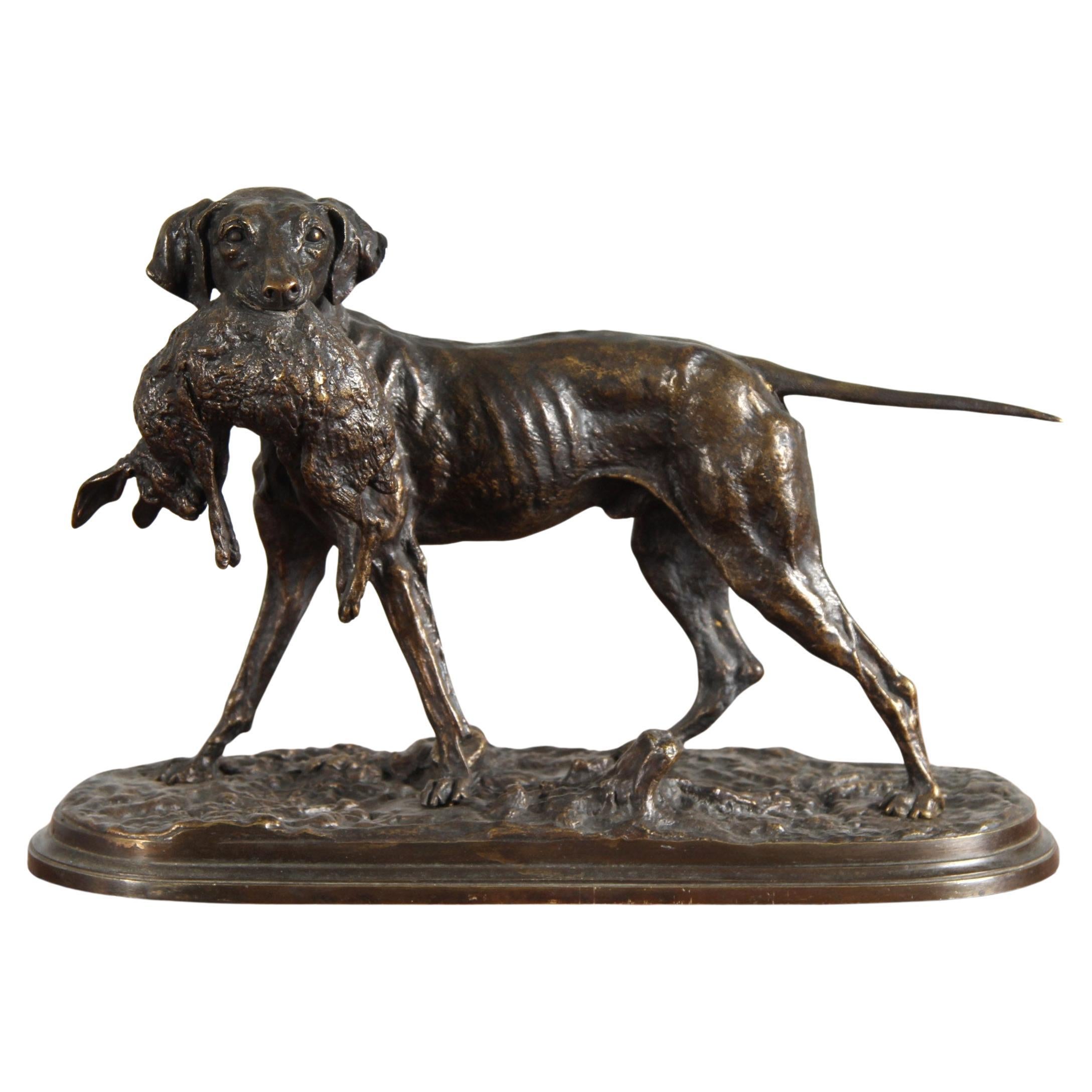
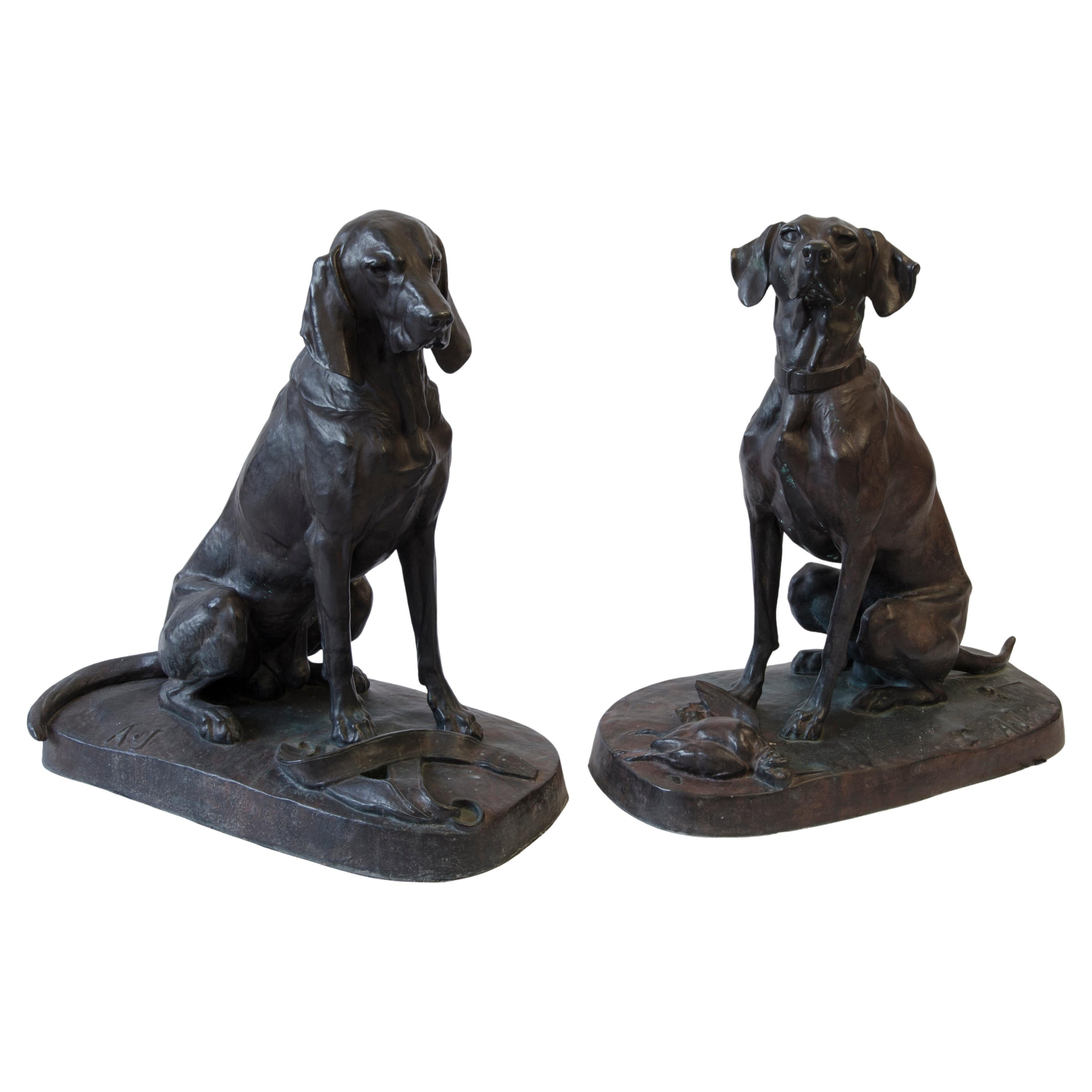
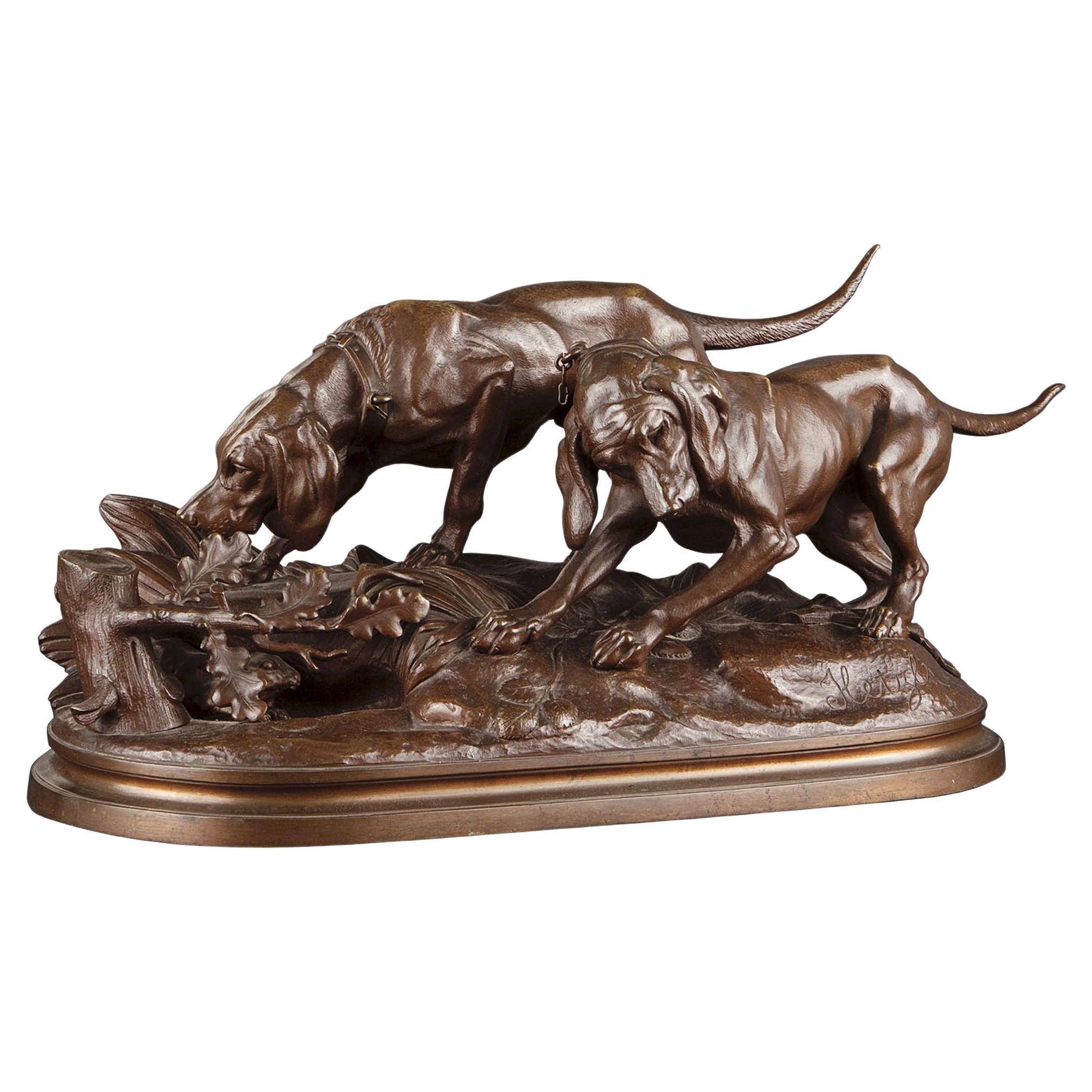
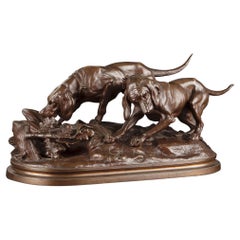
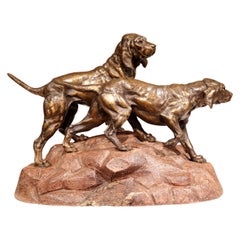
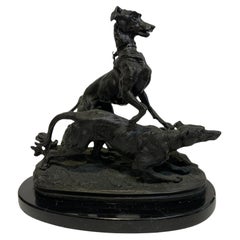
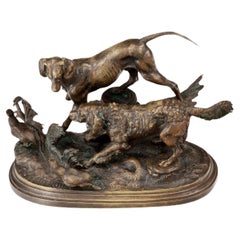
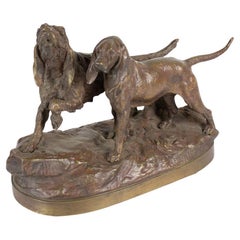
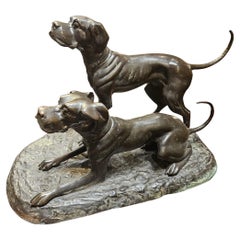
Two Hunting Dogs, Bronze on a Marble Base
The Bronze with the monogram 'E.V.' and the number '2958'
Two Hunting Dogs, Group Signed Alfred Dubucand, French School (1828/1894)
Alfred Dubucand (1828-1894) was a prominent French sculptor, best known as an "Animalier" – an artist specializing in animal sculpture. He was highly regarded for his realistic and dynamic bronze depictions of animals, as well as Orientalist subjects featuring figures and animals from North Africa.
Here's a summary of his life and work:
Birth and Education: Born in Paris, France, on November 25, 1828, Dubucand studied sculpture under Justin-Marie Lequien and, notably, under the renowned Antoine-Louis Barye, a master of the Animalier school. This tutelage greatly influenced his attention to anatomical detail and realistic portrayal.
Artistic Style and Subjects: Dubucand's work is characterized by romantic realism. He strove for natural poses and imbued his sculptures with a lively sense of movement. While he primarily created small-scale animal bronzes, including dogs, horses, and various game animals (such as stags, pheasants, and partridges), he also produced portrait busts and scenes with camel-riding Arabs, reflecting his fascination with North African people and wildlife. His "Orientalist" pieces often depicted Arab tribesmen and nomads with their horses, donkeys, or camels.
Exhibitions and Recognition: He made his debut at the prestigious Paris Salon in 1867 with a wax model of a "Dead Pheasant." He continued to exhibit regularly at the Salon until 1883, often presenting wax models initially and later submitting them as bronze casts. A significant achievement was earning a gold medal at the Paris Salon of 1879 for his bronze group "Un Chasseur Persan au Guépard" (A Persian Hunter with a Cheetah). Other notable exhibited works included "Valet Restraining Dogs" (1868), "Griffon Attacking a Duck" (1868), "Spaniel and Hare" (1869), "Stag and Hind" (1870), "Return from the Hunt at Courre" (1870), "Egyptian Gazelle Hunt" (1873), "Hunting in the Sahara" (1874), "Ostrich Hunt" (1875), and "The Donkey Driver of Cairo" (1876).
Bronze Casting and Patination: Dubucand created his original works in wax or clay, which were then cast in bronze, primarily using the lost-wax method, though some pieces were also done through sand casting. He paid meticulous attention to the patination of his bronzes, a skill he honed under Barye. His works often feature warm, mid-brown patinas, sometimes with lighter shades or even subtle red, yellow, or verde hues, demonstrating his experimentation with chemical patinas.
Legacy: Alfred Dubucand died in Paris in 1894. His works remain highly sought after by collectors, appreciated for their exceptional detail, anatomical accuracy, and the lifelike quality of the animals he depicted. His bronzes are found in numerous private collections and museums worldwide.
Alfred Dubucand (November 25, 1828 – 1894) was a French animal sculptor who worked in the mid- to late 19th century. His works were often included in the annual art exhibition of the Salon in Paris, to which he contributed throughout his career.
Dubucand would have been a student of Barye and Rouillard, as well as Lequien.
Kjellberg, Pierre. Les bronzes du XIXe siècle. Dictionnaire des sculpteurs, Paris