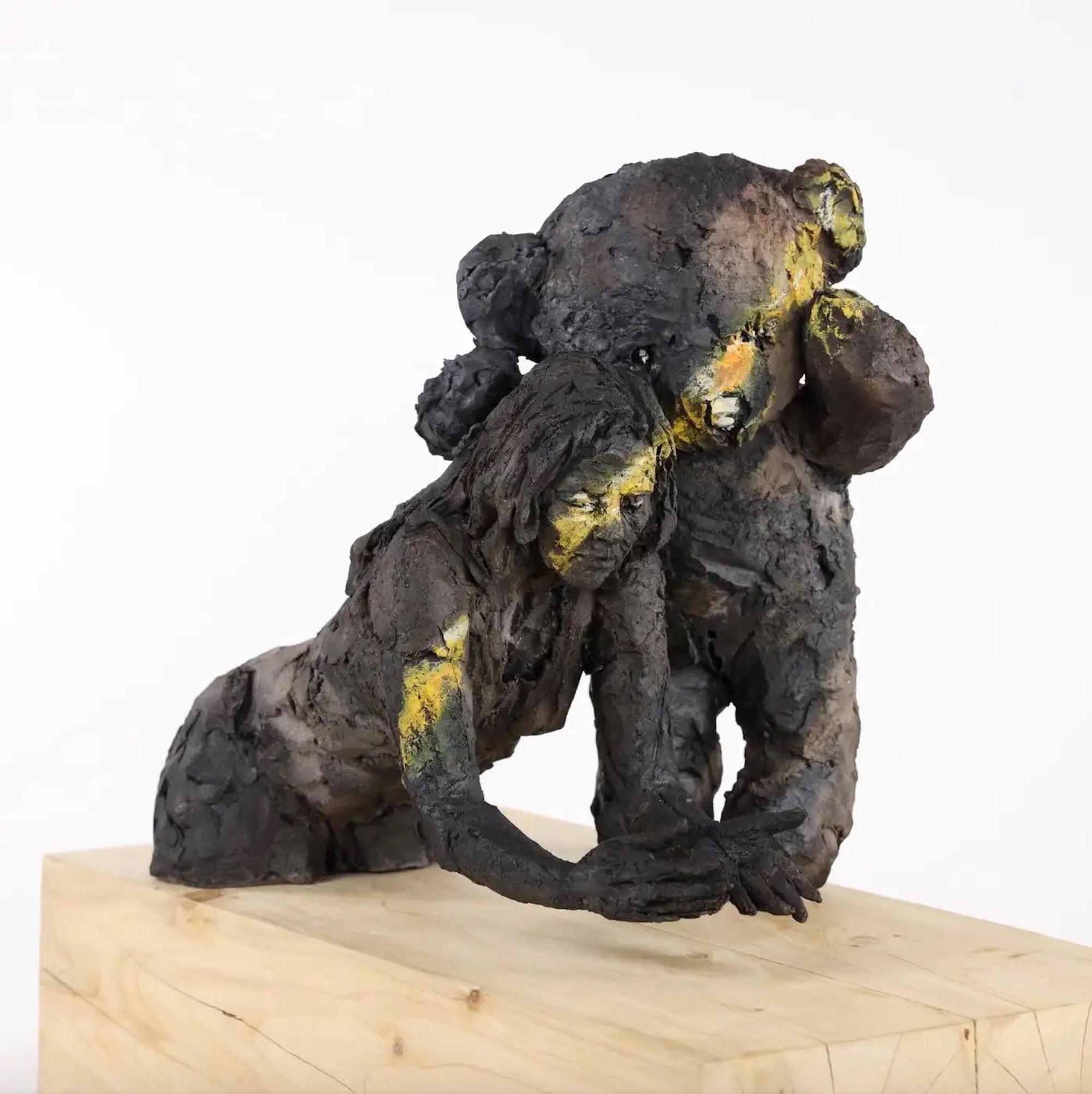
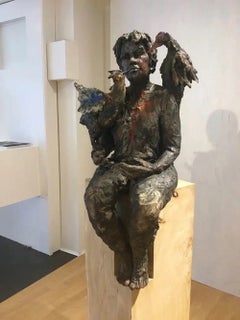
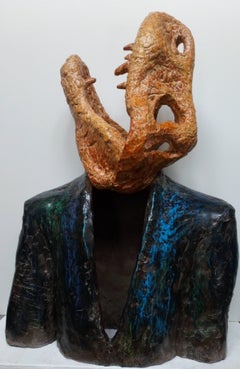
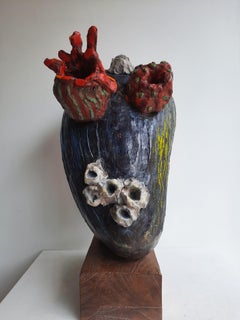
Cephalophore is a unique smoke-fired stoneware, resin, plaster and clay sculpture by French contemporary artist Cécile Raynal, dimensions are 84 × 40 × 58 cm (33.0 × 15.7 × 22.8 in). This sculpture is unique and comes with an authenticity certificate.
The dimensions and weight include both the sculpture and its base, which is fixed and is part of the sculpture.
A cephalophore—derived from the Greek meaning “head-carrier”—is a saint traditionally shown holding their own severed head. In Christian iconography, this image typically symbolizes martyrdom by beheading, underscoring the saint’s sacrifice and unwavering faith. The artist offers a contemporary take on the cephalophore through a sculpture that portrays a hybrid figure, part human, part plant. Here, myth and tragedy are closely entwined—but so too is a sense of hope. Though headless, the cephalophore gives rise to a living form, somewhere between plant and animal: a symbol of regeneration and metamorphosis.
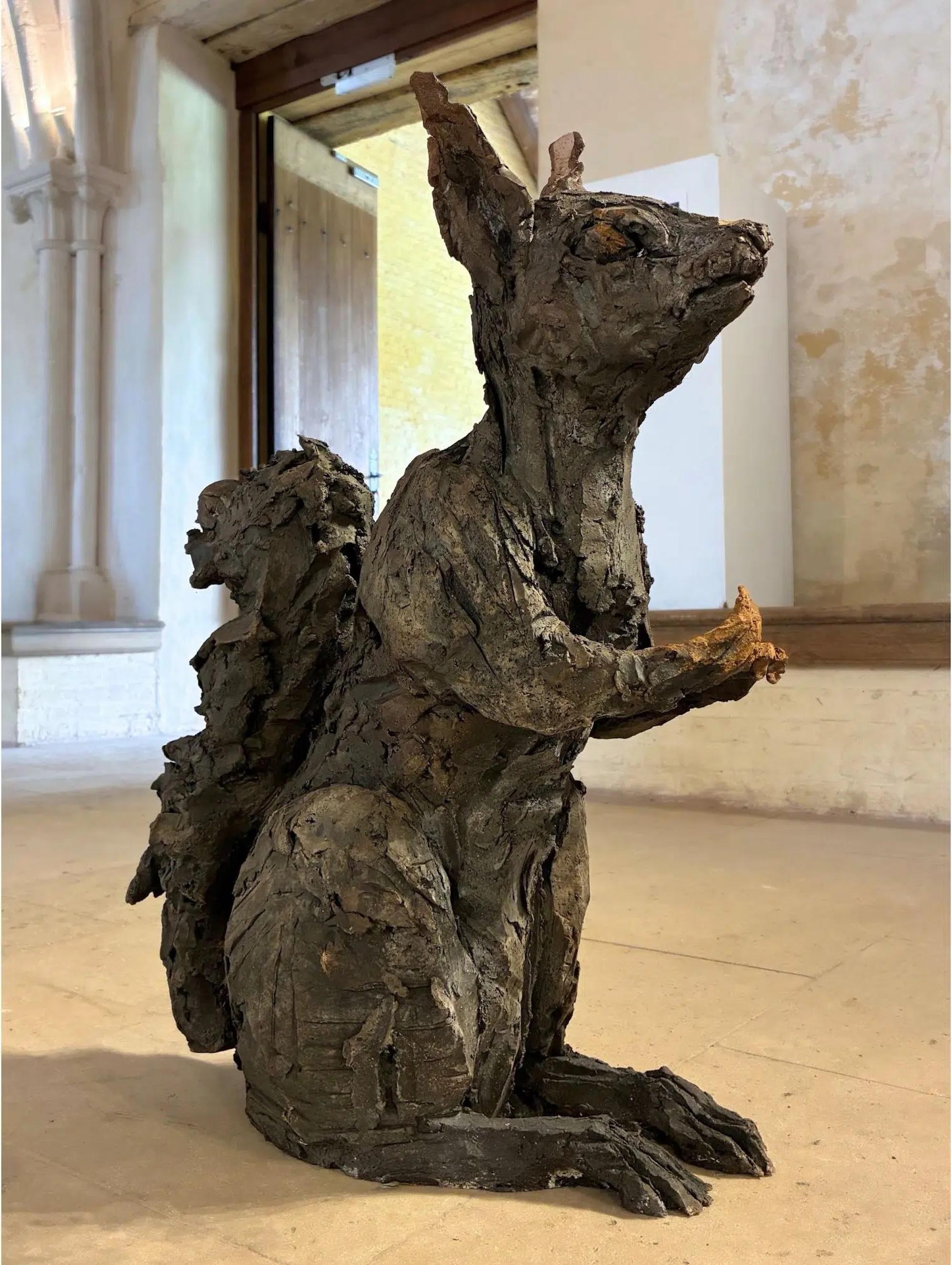
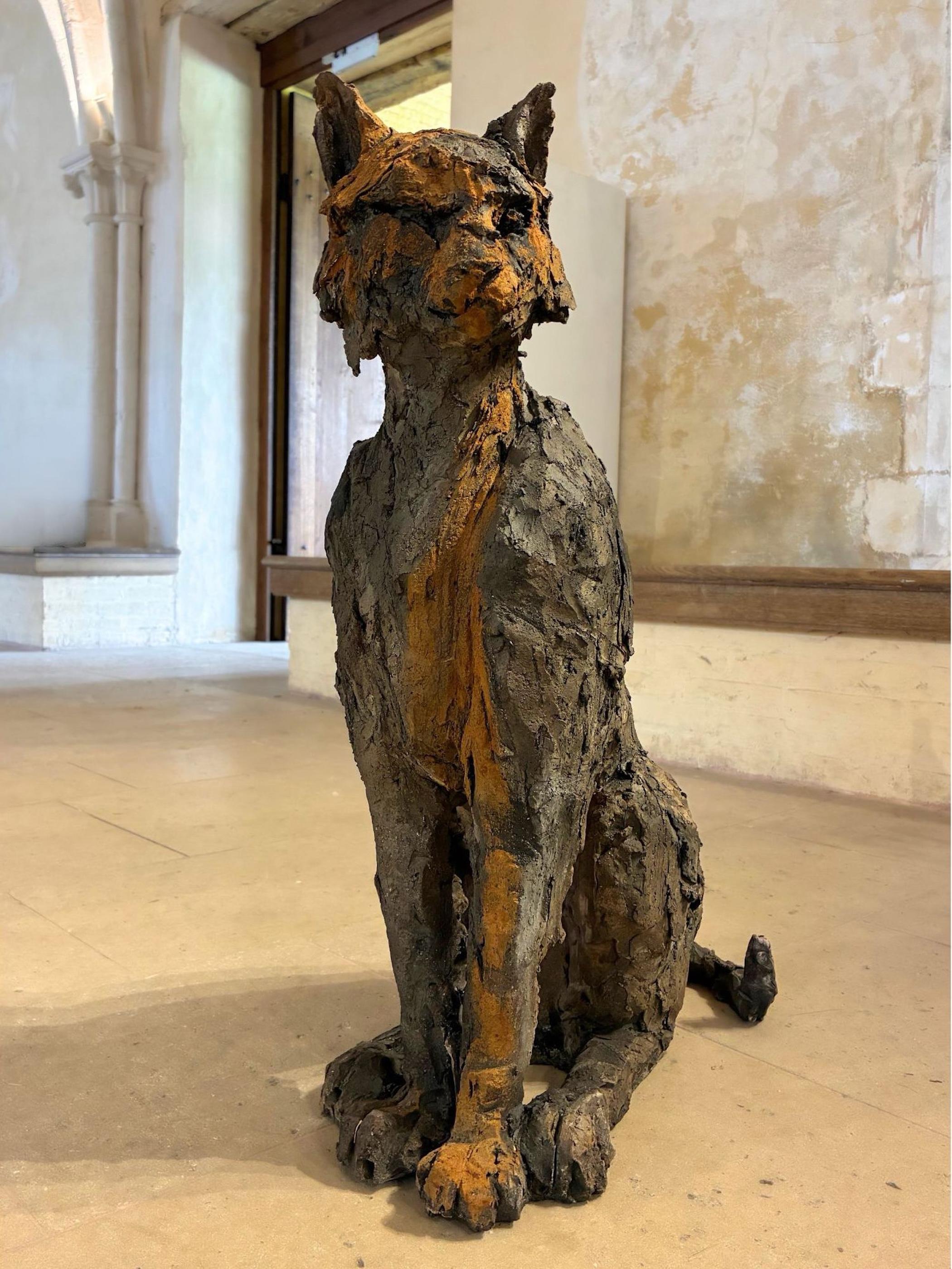
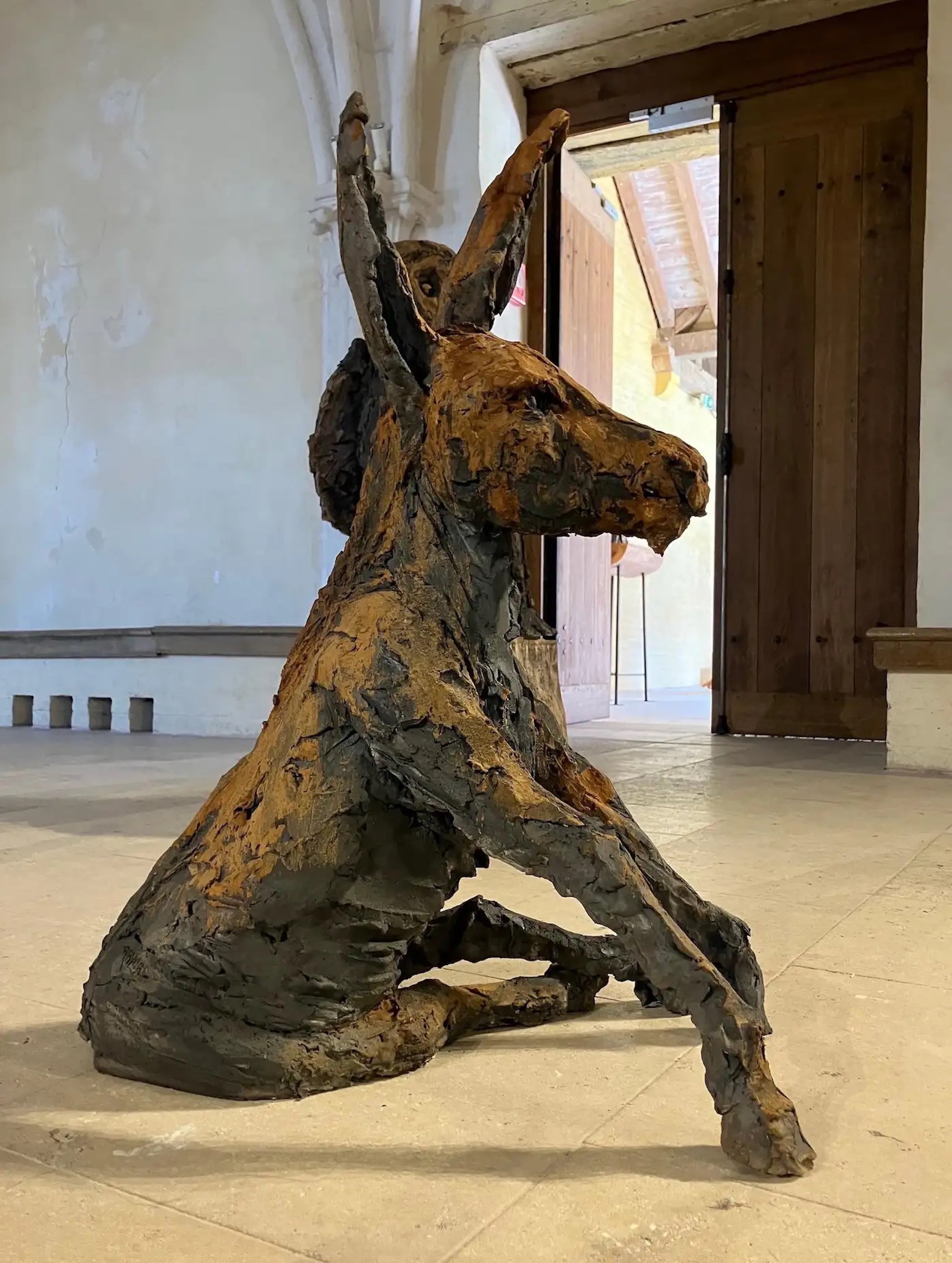
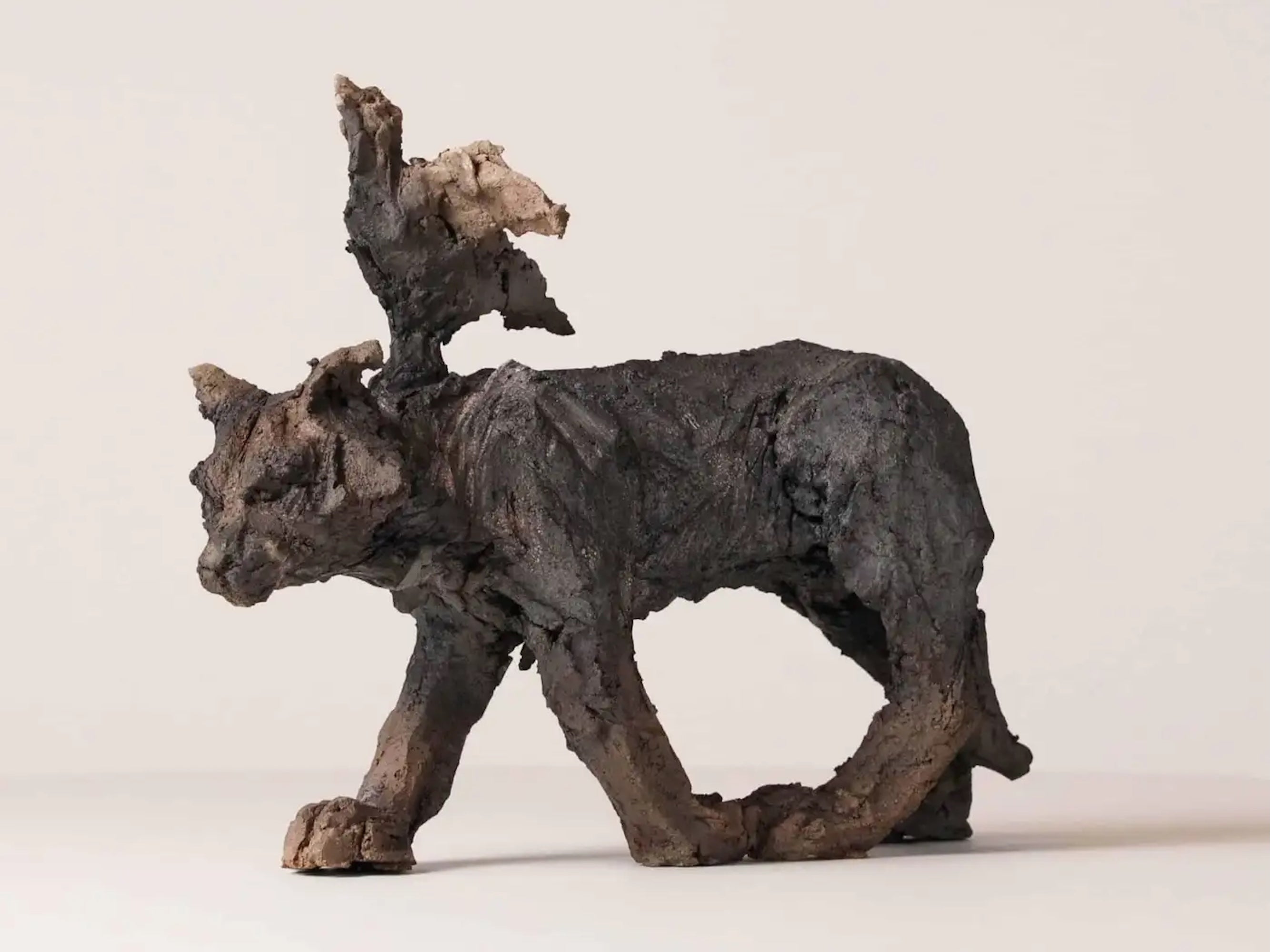
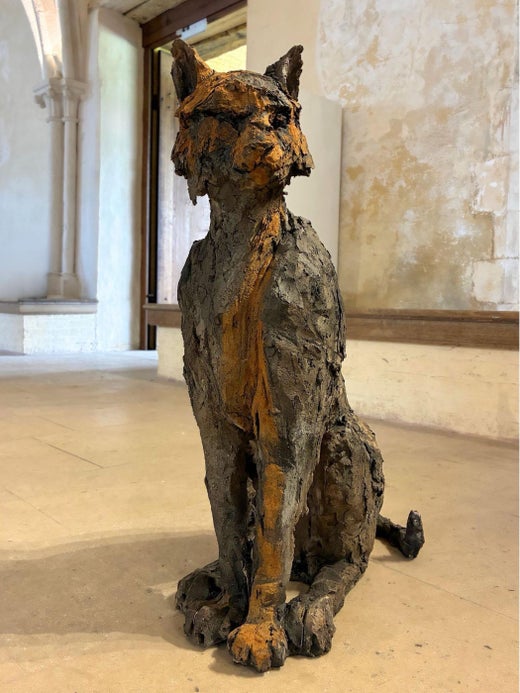
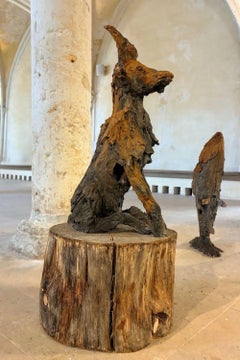
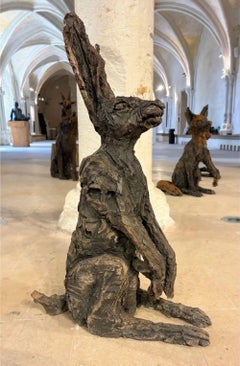
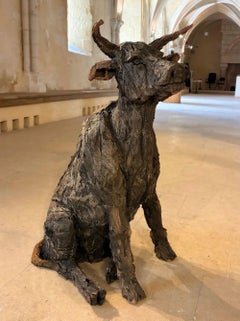
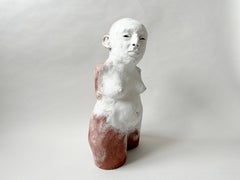
The figure is draped in a striking ochre cape that contrasts with the deeper hues of the body. The textured surface and subtle color variations bring the sculpture to life, drawing the viewer in. This work forms part of the sculptural installation Chœur de bêtes (Choir of Beasts), which features eleven animals gathered around the central cephalophorous figure. These animals, all similarly sized, defy natural proportions and adopt sometimes surreal postures, enhancing the enigmatic atmosphere of the scene. The artist describes the installation in these words: “Hybrid beasts and creatures, peoples, mass-culture: wolf, hare, fox, raccoon, goat, donkey, crow, feline, badger, world-tree, birder.
So many motifs, subjects, metaphorical presences. […] They embody other spirits, other imaginations, other ways of seeing, moving and being moved. The peoples of the beasts suffer us, deplore us, since always and everywhere, we fabulate them. They represent us, they duplicate us. […] So I model great silences between man and beast, envisaging possible alliances. The future is only possible in an alliance, a common field, an earthy and spiritual heart.”
The installation Chœur de bêtes (Choir of Beasts)—a long-term project—was recently exhibited as part of Cécile Raynal’s solo show À la table des Dames (At the Ladies’ Table) at Montivilliers Abbey in Normandy (2025). This historic site, long inhabited by women, nuns, and abbesses, provided the ideal backdrop for Raynal’s exploration of portraits blending female figures with animals. Her sculptures do not aim to please; they can even disturb. Raw and expressive, they bear the traces of their creation—of struggle, of process—yet they rise, full of life. They evoke a world in which the animal, feminine, instinctive, and rebellious are embraced as vital forces. Within the restored Abbey, the exhibition traces the past fifteen years of the French sculptor’s unique artistic journey (more information on the exhibition here).
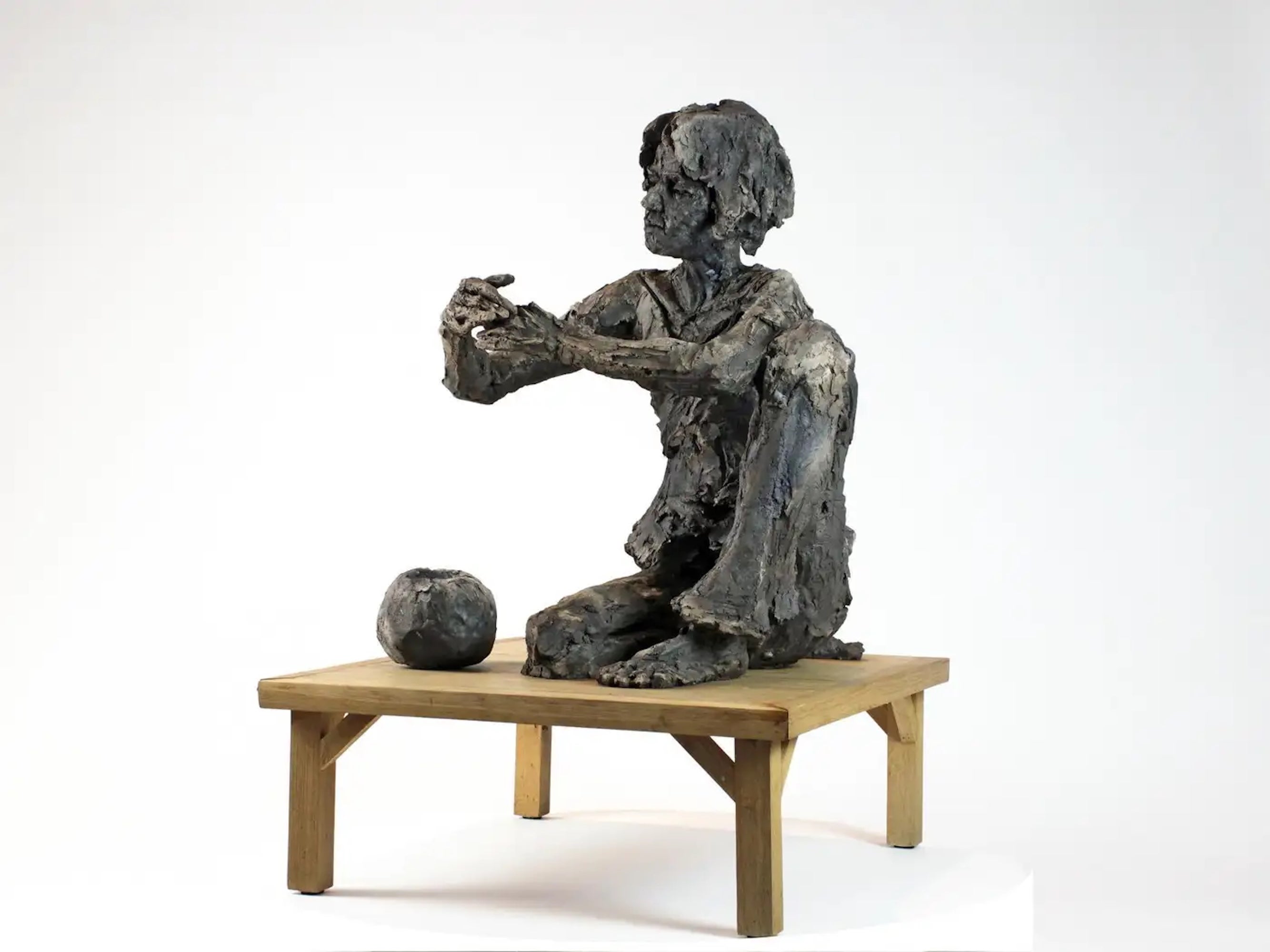
Cécile Raynal’s practice shifts between her studio in Normandy and residencies in marginal spaces—prisons, hospitals, convents—where she sculpts clay portraits based on encounters with those she meets. Back in the studio, she deepens this approach by drawing on a vast array of stories, myths, and literary references, which inspire hybrid figures that are part human, part animal. Through these animal forms, Raynal offers viewers a glimpse of the shared language and subtle exchanges that exist between humans and beasts.