Want more images or videos?
Request additional images or videos from the seller
1 of 5

Chenjerai Chiripanyanga
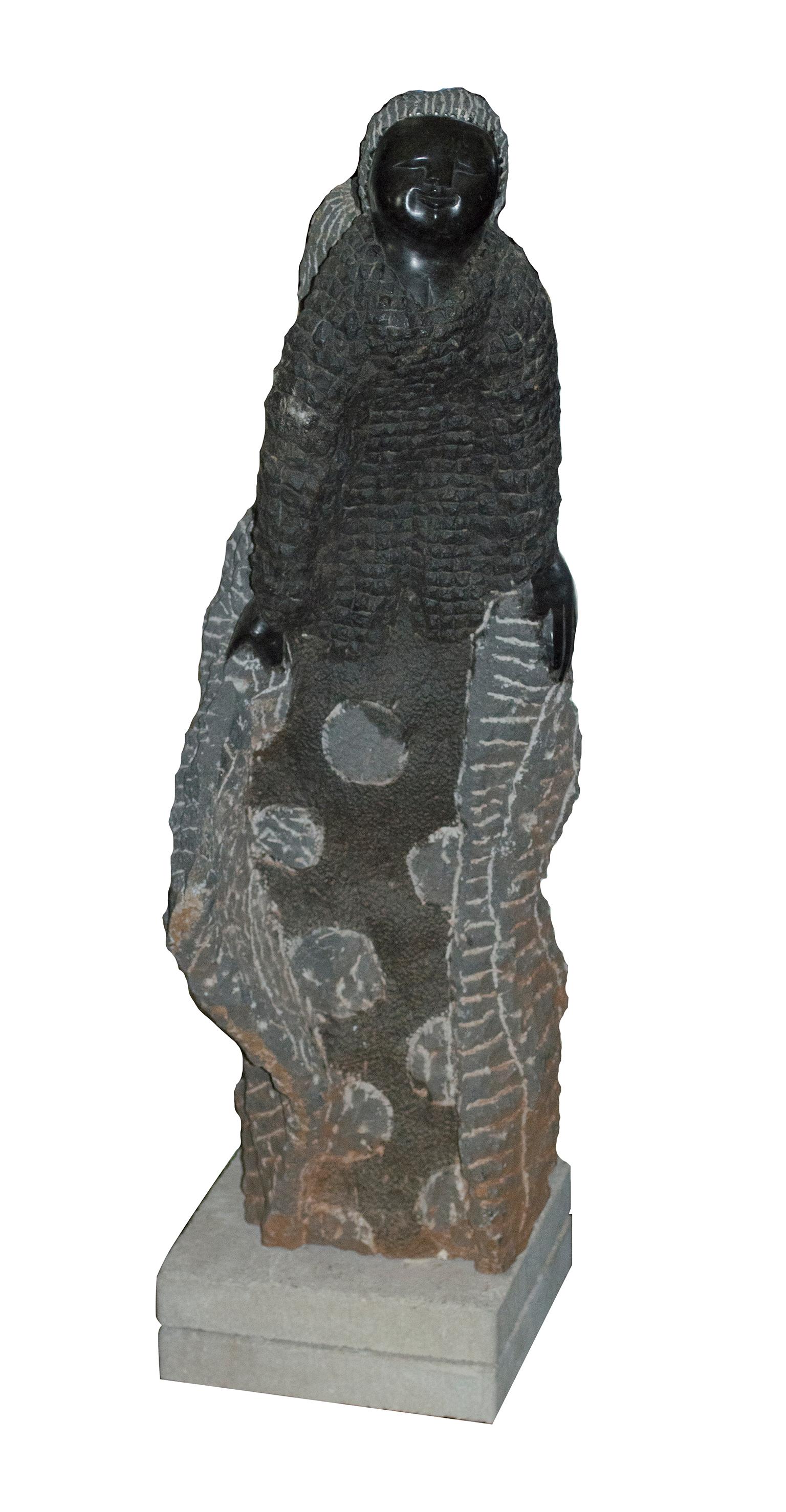
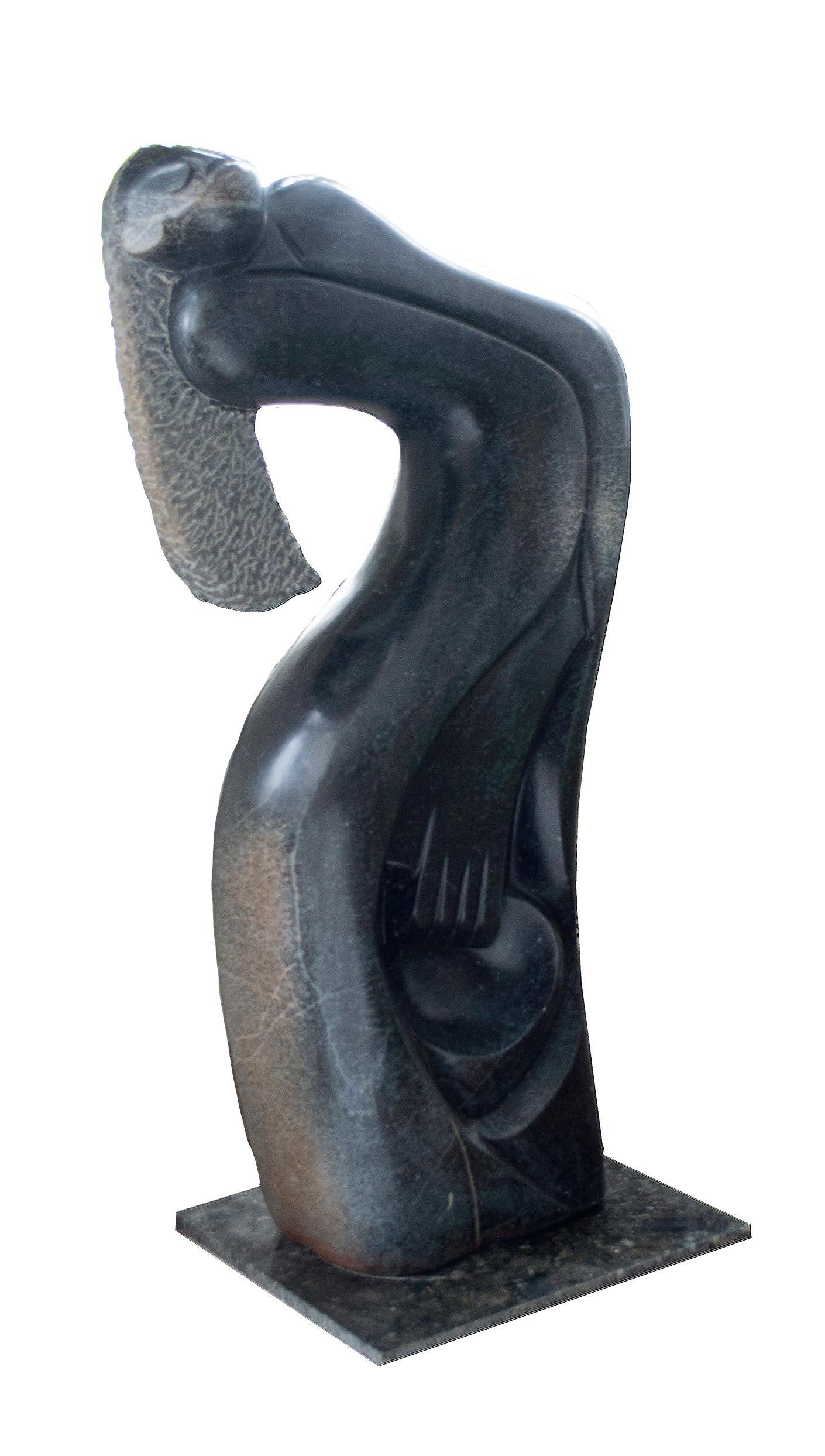
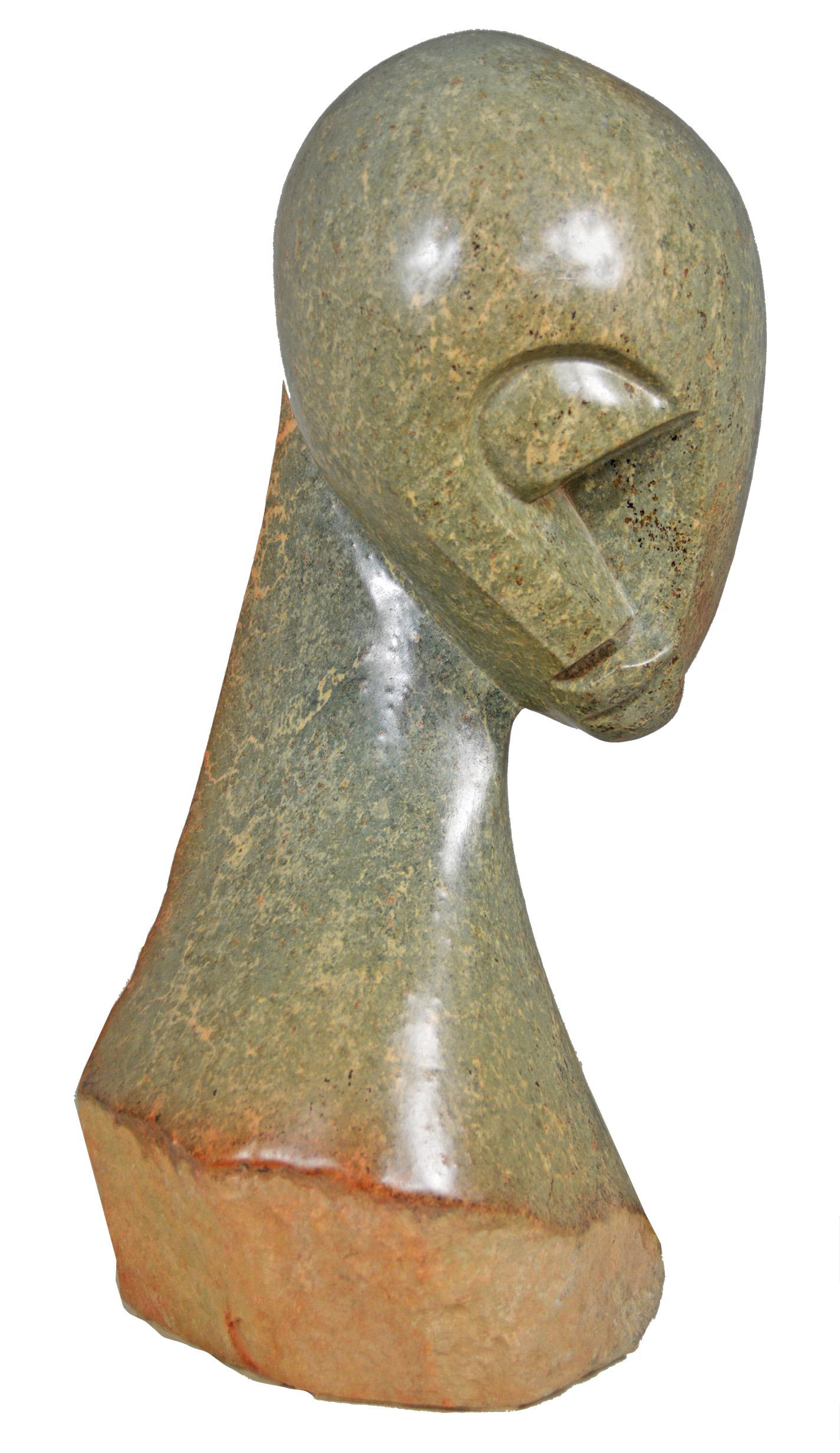
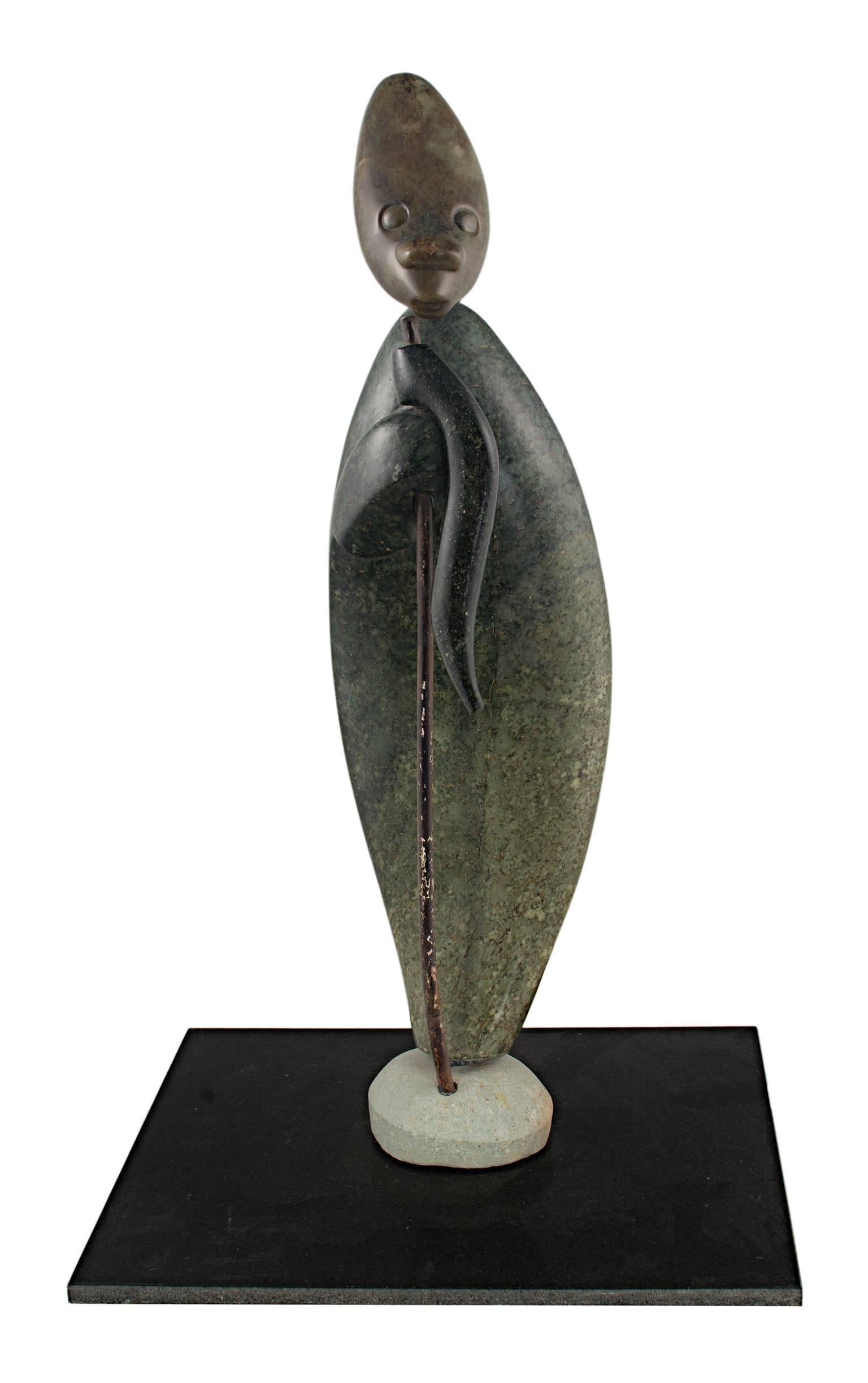
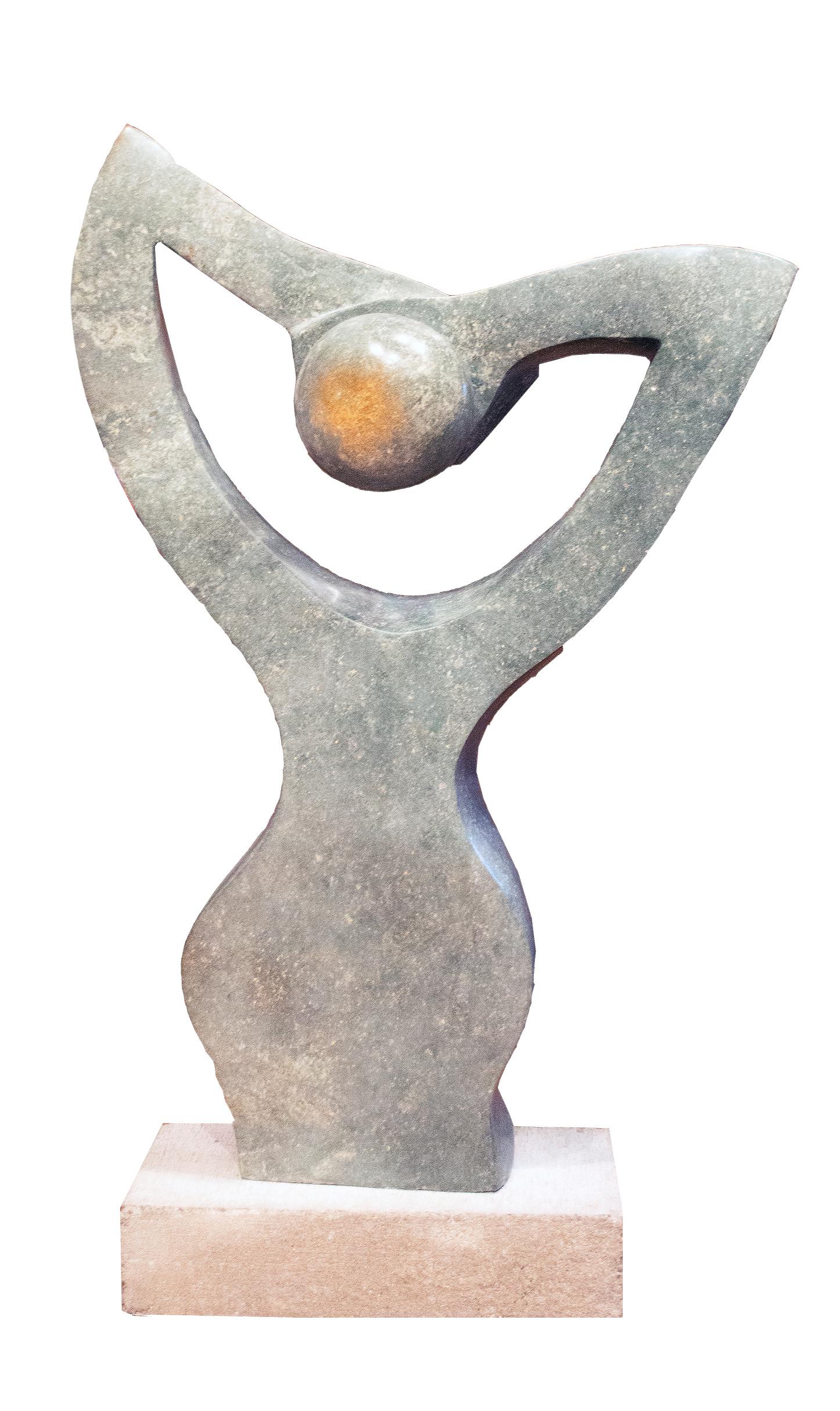
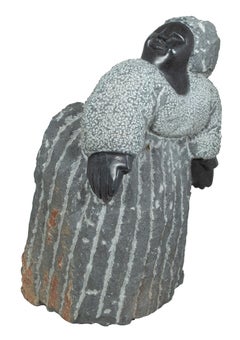
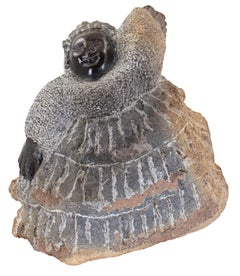
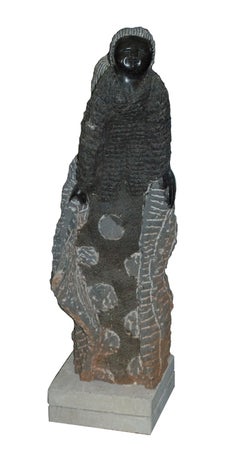
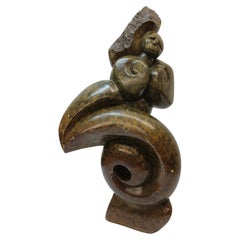
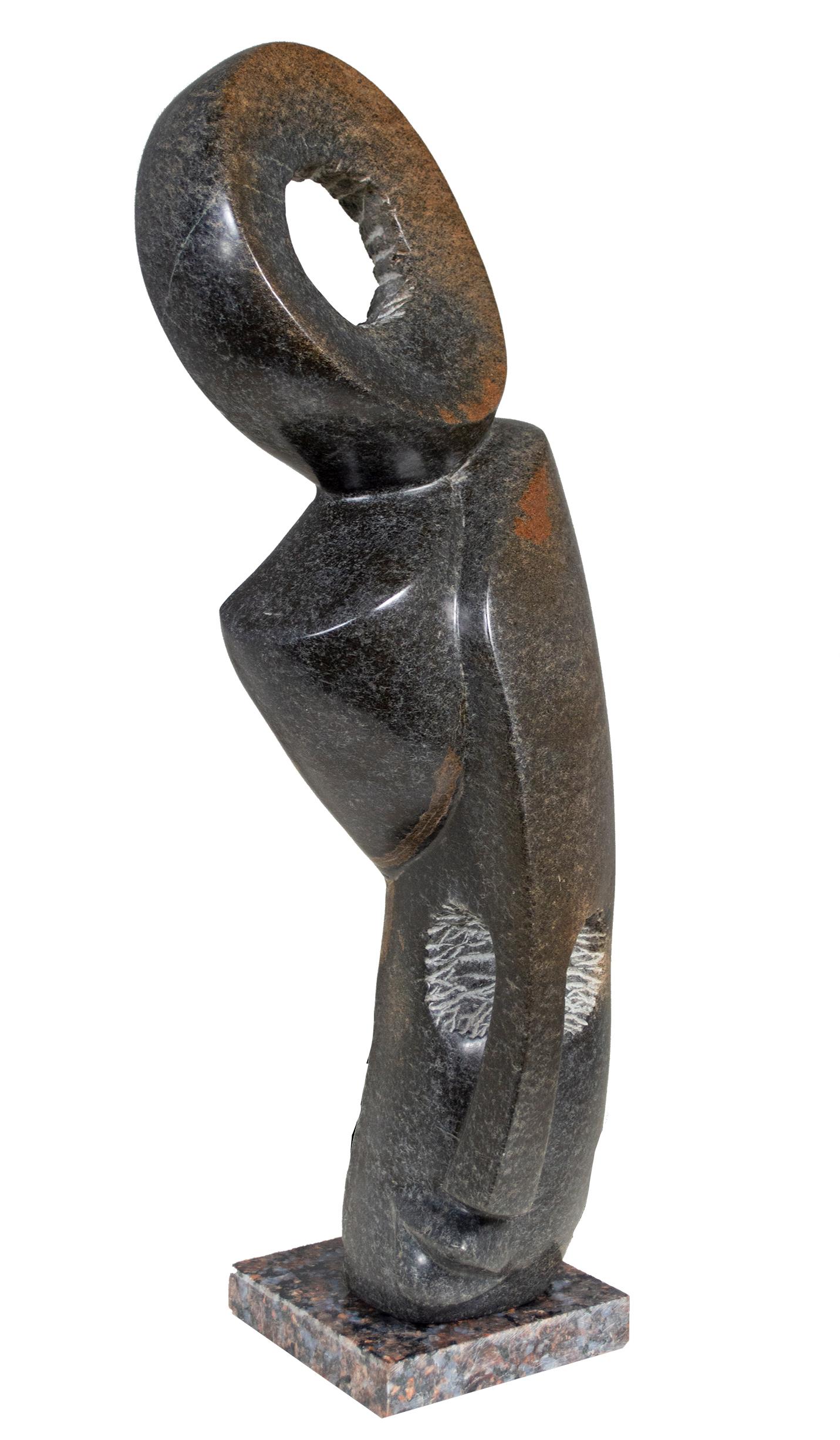
'Proud Woman' original Shona stone sculpture by Chenjerai Chiripanyanga

2002

$6,500
£4,860.35
€5,676.61
CA$9,132.49
A$9,250.73
CHF 5,311.58
MX$112,162.36
NOK 61,634.05
SEK 62,736.38
DKK 42,438.63

About the Item

'Proud Woman' is an original opal serpentine stone sculpture by the contemporary Zimbabwean artist Chenjerai Chiripanyanga. The artist presents in this sculpture a highly abstracted figure of a woman, her body gracefully lilting to the side as she gazes upward. Behind her head, her hair reaches backward like a waterfall, and ultimately helping to support the sculpture from the back. Though Chiripanyanga is trained in the Shona stone carving tradition, the languid figure ultimately reminds of such modern masters as Matisse and Picasso in its simple yet elegant curving lines and forms. opal (serpentine) 31.5 x 14 x 10 inches not signed, accompanied by a certificate of authenticity from the artist Overall good condition with no signs of wear, chips or cracks. Chenjerai Chiripanyanga is a professional artist working in Harare. He is one of the few sculpture artists from Zimbabwe who not only works with serpentine stone but also with rusty iron, bicycle and car parts or wood in his sculptures. The subjects of Chenjerai's work are emotional, refreshing and sometimes political. His carvings often focus on musical instruments. According to Chenjerai, "Music is the heart of our art in Zimbabwe, either traditional music or modern music influences our feelings. This directs our hands when we create." He goes further to say, “Music is important to all cultures, it's like a common language between every culture. I wish people in power would really listen to the music more closely. Maybe then we could live in unity." Chenjerai's first exhibition was held in Europe in The Hague, Netherlands in 1993. While there he demonstrated his great talent as a sculptor as well as being a very fine painter. Chenjerai continues to participate in various local and international exhibitions and has won many prizes including the National Heritage Exhibition in 1992. His work has been sold to collectors all over the world. Shona artists and crafts people have been working in different media for generations. These include paintings, pottery, basket ware, wood carvings, and sculpture done in metal as well as the stone carvings. While there is not a long standing tradition of sculpture in what is now Zimbabwe (formerly Southern Rhodesia), stone carvings dating from the 15th century were seen in Great Zimbabwe, an excavated temple near Bulawayo. Most of the artifacts from this location have been moved to museums in Cape Town, South Africa or London. It is generally agreed that Zimbabwean stone sculpture as seen today began during the late colonial period of the 1950's and 1960's. During this period the artists and artisans depicted many of the traditional Shona and other tribal spiritual myths. Out of all the nations in Africa, the large varieties and abundant supplies of rock formations present throughout the Zimbabwe landscape provide artists with a medium for sculpture and carvings unique to their country. The Shona art sculpture of Zimbabwe combines the wonderful varieties presented by the stone with images drawn both from reality and abstract symbolism. Much of the stone used by Shona artists is quarried in areas which are adjacent or quite near the villages where the work is created. Often the land on which the stone is found is owned by the village or the local artists. The artists use stone such as Serpentine (somewhat old, having been formed about 2.6 billion years ago), with more than 200 color variations. The hardest and darkest of the Serpentine varieties is black, commonly known as Springstone or Africa stone. Less seen is Lepidolite, with its beautiful pale mauve coloration; and the very hard Verdite, found mostly in darker shades of green but with other variations as well. Commonly referred to as Rapoko stone in Zimbabwe, Steatite is a natural soft stone that falls under the general category of soapstone. Rapoko is found on every continent in the world with the possible exception of Antarctica. Its remarkable qualities have made this stone one of the most widely used minerals on earth. Over 10 million years old, Rapoko is a natural mineral, prized since ancient times for its durability, workability, beautiful character and ability to retain and radiate heat and resist chemicals. Native cultures, the world over, have carved Rapoko/Steatite into vessels, art objects, memorial and cultural items. Carved items have been found in the tombs of Pharaohs, in the igloos of the far north, in temples and palaces of China and India, in the mountains and river valleys of the Americas and the arid plains of Africa. There is a manmade ceramic product, also called Steatite, which uses the natural Rapoko stone as one of its raw materials but has no other connection to the skillful efforts of talented Shona and other African artists. The wonderful natural character of stone is used both in its rough cut and textured state, or heated and burnished to a high gloss to reveal rich greens, browns, blacks and grays. The hardness, shape, density and quantity used of serpentine, verdite, sandstone, granite, steatite and other stones define the ultimate presentation of completed Shona art sculptures and carvings.
  • Creator:
  • Creation Year:
    2002
  • Dimensions:
    Height: 31.5 in (80.01 cm)Width: 14 in (35.56 cm)Depth: 10 in (25.4 cm)
  • Medium:
  • Movement & Style:
  • Period:
  • Condition:
    Overall good condition with no signs of wear, chips or cracks.
  • Gallery Location:
    Milwaukee, WI
  • Reference Number:
    Seller: G11091g1stDibs: LU60537086432

More From This Seller

View All
'Proud Woman' original Shona stone sculpture by Wellington Karuru

'Proud Woman' original Shona stone sculpture by Wellington Karuru

Located in Milwaukee, WI

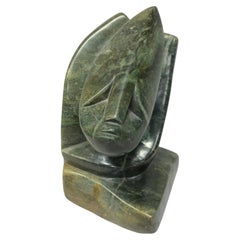
'Proud Woman' is an original opal serpentine sculpture by the Zimbabwean artist Wellington Karuru. In the sculpture, the figure's head leans to one side, eyes closed, as if carefully listening to the viewer. The head of the figure is carved onto a wedge shape: the choice to depict the face off-center reminds of the later paintings of Pablo Picasso, and the tall and narrow form reminds of the stone sculptures of Amadeo Modigliani. As the viewer walks around the sculpture, they can see that Jemali has left parts of the figure as natural stone, allowing the rough-hewn texture to create an exquisite contrast of surface with the mesmerizing polish. lemon opal stone (serpentine) signed 'W. Karuru' along the base, on the reverse 12 x 4 x 5 inches, sculpture 0.5 x 5.88 x 5.88 inches, base Overall excellent condition with no signs of wear Born on August 17, 1976, Wellington Karuru is the first born to a family of five children and has two brothers and two sisters. As the first born child in a Zimbabwean family, many responsibilities were shouldered upon Wellington. Both his brothers, Gilbert and Esau, are also talented sculptors. He completed his primary and secondary education in Mashonaland West Province and was involved in almost every sporting activity at the school. After he graduated, he was employed at National Foods LTD where he worked as a machine operator for a period of four years and was later promoted to work as a sales clerk. In his free time he assisted some well known artists in sculpting, was able to learn much from them and soon thereafter started to develop his own talent and unique style. Inspired by such well known sculptors such as Gardener Sango and Garison Muchinjili, Wellington started sculpting small pieces for himself and soon found a buyer for his favorite piece titled ‘A Cry For Help’. From that day forward, he has never looked back. He eventually went to work with Garison Machinjili whose influence is clearly shown in his work. Some of his pieces have been chosen already for international exhibitions and galleries. Well established and internationally renowned artists like Joe Mutasa...

Category

Early 2000s Contemporary Figurative Sculptures

Materials

Stone

'Grandmother' original Shona stone sculpture signed by Colleen Madamombe

'Grandmother' original Shona stone sculpture signed by Colleen Madamombe

By Colleen Madamombe

Located in Milwaukee, WI

'Grandmother' is an original black serpentine sculpture by the celebrated second-generation Shona artist Colleen Madamombe. The sculpture presents a character common to Madamombe's w...

Category

Early 2000s Contemporary Figurative Sculptures

Materials

Stone

You May Also Like

Decorative African Stone Sculpture, Abstract Female Bust, Signed Zimbabwe Status

Decorative African Stone Sculpture, Abstract Female Bust, Signed Zimbabwe Status

Located in Wembley, GB

African Stone Sculpture, Female Bust, Signed and Numbered, Zimbabwe, 20th Century A powerful and contemplative African stone sculpture depicting a stylised female bust, carved from ...

Category

Vintage 1920s Zimbabwean Art Deco Abstract Sculptures

Materials

Metal, Gold Plate, Sheet Metal, Gold Leaf

Signed African Stone Sculpture by Morning Chijumani, Zimbabwe, 20th C.

Signed African Stone Sculpture by Morning Chijumani, Zimbabwe, 20th C.

Located in Wembley, GB

Signed African Stone Sculpture by Morning Chijumani, Zimbabwe, 20th Century Height: 24 cm Width: 13 cm Material: Carved stone Signature: MORNING CHIJUMANI Origin: Zimbabwe, Southern...

Category

Vintage 1960s Zimbabwean Art Deco Figurative Sculptures

Materials

Metal, Gold Plate, Sheet Metal, Gold Leaf

Shona Stone Sculpture "Sheltering Soul"  Norbert Shamuyarira (Zimbabwe, b. 1962)

Shona Stone Sculpture "Sheltering Soul" Norbert Shamuyarira (Zimbabwe, b. 1962)

Located in Los Angeles, CA

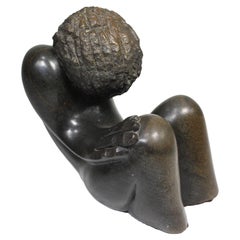
An African Shona Stone Sculpture titled "Sheltering Soul" by Norbert Shamuyarira (Zimbabwean, Born 1962), depicting an abstract polished Shona stone figure of a crouched and bowing h...

Category

Late 20th Century Zimbabwean Tribal Sculptures and Carvings

Materials

Stone

African Bongo Hand-Carved Stone Female Sculpture, Mid-20th Century

African Bongo Hand-Carved Stone Female Sculpture, Mid-20th Century

Located in South Burlington, VT

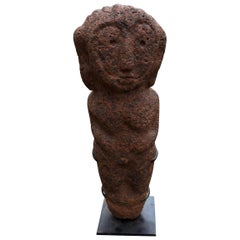
Africa, Bongo Peoples, stone female commemorative figure from Southern Sudan. A fine specimen in naturally weathered condition; hand carved from a porous orange-black stone, 20th century. Similar funerary stone sculptures in various sizes were likely crafted over many centuries. Original patina from appropriate age. A nice custom base included. Dimensions: 30 inches high and 9.5 inches wide and 8 inches deep mounted on a custom iron base. Provenance: Old Brussels, Belgium collection acquired in 1998. History: The Bongo are an ethnic group living in South Sudan, mostly in the Tonj District. They speak the Bongo language, one of the Bongo-Baka languages. Unlike the Dinka and other Nilotic groups, the Bongo are not a cattle herding people and do not use cows for bride price. Subsistence farming is the primary source of food, though money is obtained by working in forestry, building, selling honey, and other various means. For similar examples see Barakat Gallery...

Category

Mid-20th Century Sudanese Sculptures and Carvings

Materials

Stone

Stone Sculptue by R.Mteki

Stone Sculptue by R.Mteki

By R. Mteki

Located in Water Mill, NY

Stylized sculpture by R.Mteki.

Category

20th Century Nigerian Sculptures